Tag: Apple

  • Podcast #145 — Restaurant Karma; Hotel Breakfasts

    Podcast #145 — Restaurant Karma; Hotel Breakfasts

    How Much Extra For A Plate?

    Just regular domestic business travel since the last podcast, trying to dodge Hurricane Florence to get back to Charlottesville.  Thinking back to last month’s European travels, we talk about a tight connection through Amsterdam and some odd concierge lounge rules, which gets me thinking about hotel breakfasts. And a listener request for restaurant recommendations gets me thinking about the balance of visiting good and not-so-good restaurant towns. All this and more at the direct link to the podcast file or listening to it right here by clicking on the arrow below.

    Here is the transcript of TravelCommons podcast #145:

    • Intro music — Warmth by Makkina
    • Coming to you today from the TravelCommons studios outside of Chicago, IL after 3 weeks of “normal” travel — no vacation, no international travel, just a couple of trips to Charlottesville, VA on sandwiching a quick shot down to Dallas. And no delays. And empty seats beside me. Indeed, I even scored an upgrade on the late United flight from IAD to ORD, the long leg of one of my flights home from Charlottesville. Feels like we’re at the start of maybe a 6-week travel lull between the final end of summer vacations and the early starts of Thanksgiving travel.
    • There was a bit of drama around the Charlottesville trip in the middle of September. I had to fly out Sunday night — the weekend that Hurricane Florence hit the Carolina coast. The storm track forecast had Florence plowing west through the Carolinas and then taking a right hand turn at the Appalachians and heading north over Virginia. The question for me — when would it make the turn; would my Sunday flight make it through before or after the turn or would Florence be in my way on Sunday? Thursday night and Friday, I spent a bit of time hitting the Refresh button on the Nat’l Hurricane Center’s website. By Friday, Florence had dropped a couple of category levels and slowed down, and by Saturday, I could see that my Sunday flight would beat Florence to Charlottesville. It was a smooth flight that Sunday, though Monday was a bit wet.
    • Going through TSA Pre-Check in ORD that Sunday night, I watched a guy use the electronic boarding pass on his Apple Watch. It looked a bit awkward, and if you think about it, it’s understandable. Boarding pass readers face up; you put your boarding pass or phone face down on them to read. But a watch is on face up on the top of your wrist. So the guy ends up standing on his toes and twisting his arm around to get his Apple Watch face down on the reader. You’d think he would’ve shifted to his phone after that, but I saw him twist himself up again about 30 minutes later when boarding his flight. Seems like it would’ve been easier to spin the watch on his wrist so it was facing down — at least until Apple fires up the old Steve Jobs distortion field to convince airports to reorient all their readers for the convenience of Apple Watch users.
    • Bridge Music — Dub the Uke by Kara Square (c) copyright 2016 Licensed under a Creative Commons Attribution Noncommercial (3.0) license. http://dig.ccmixter.org/files/mindmapthat/53340 Ft: DJ Vadim

    Following Up

    • Allan Marko, a long-time listener and even longer-time friend, sent me an article that dove into an interesting part of Apple’s new partnership with Salesforce. The two of them are working with Marriott to put Siri in hotel rooms. You could ask Siri to turn up the heat, order room service, or get an Uber through an Apple HomePod in the room. That’s the Apple piece of it. The Salesforce piece lets Siri remember what you asked her, say your room temperature, at the next Marriott. Useful or creepy? And how do you make sure you wipe Siri’s memory before the next guest checks into the room so you can’t ask her things like “Hey Siri, tell me all about the last guest that was here…” or “Order me the same sandwich the last guy ordered”. I dunno. I don’t even like using these new Enseo TVs to log into my own Netflix account, let alone having Marriott listening to me through a HomePod and remembering everything I mutter. Some guys are making a nice living selling shutters that you can stick over your laptop webcam. Are earplugs for hotel HomePods the next thing?
    • In the last episode, I mentioned flying SAS from Chicago to Copenhagen. It was an odd schedule — leaving Chicago around 10pm, arriving Copenhagen after 1 in the afternoon. Leaving that late and having a long taxi, I fell asleep before we left the ground, and before putting my phone in Airplane mode. I woke up, I dunno, an hour or so later, looked at my phone for the time, and noticed some new e-mails. Huh? That’s weird. And then I noticed that my phone didn’t say “No Service”; it was connected to some cellular service, which turned out to be SAS’s in-flight cellular service. And as opposed to in-flight WiFi which you usually have to log into, my iPhone automatically started roaming on the SAS cellular service, that then continued to check/pull e-mail for a couple of hours until I flipped it to airplane mode. I got my AT&T mobile bill a couple of weeks back and ended up with a $25 roaming charge for those half-dozen meaningless e-mails. A pain, but not too painful. Unlike the guy four years ago who rang up a $1,200 WiFi bill on Singapore Air when he fell asleep with his data still connected.
    • On the third leg of that trip, going from BRU to EDI, our best option was KLM through AMS. I’ve been in and out and through Schiphol a number of times over the past 20-some odd years and have always liked it. Nothing flashy, but it works — not too big, reasonable facilities. Booking this BRU-EDI trip on the KLM website, I had two options — a tight 40-min connection or a 2-hr one. While I don’t mind Schiphol, I wasn’t looking to make an afternoon of it. So I broke one of my cardinal travel rules — never book a connection shorter than an hour — and booked the 40-min connection, knowing that we had a back-up if it didn’t work out. One factor I didn’t completely think through was that we’d have to cross the Schengen border during those 40 minutes too. The first leg — Brussels to Amsterdam — was within Schengen so it was just like an domestic US flight — no passport control, no customs. But in Schiphol, we had switch concourses and go through passport control because the UK is outside of Schengen. We made it through, though, with time to spare because – we walked real fast; like I said before, Schiphol isn’t that big, so switching concourses wasn’t a long walk; but most importantly, my wife spotted the “short connection” line at passport control. We had gotten in the regular line, but then we saw on a display screen that our EDI flight was classified a “short connection”, so we switched to the much shorter line — I earned a “Hey” from a security guard when I ducked under the tape — and quickly passed through what was a well-staffed and brisk passport control line (Munich Airport, you could take some lessons here). We get to the gate with more than enough time — boarding hasn’t been called yet. So while we made the 40-minute connection, the question now was — would the checked luggage make it? As we were queuing to board, I looked out the terminal window. There’s our plane, and there, next to the baggage loader, was Irene’s and Claire’s luggage — stationary, not rolling along like in that YouTube video. A very good sign, but there wasn’t anybody loading luggage. As I walk up to board, I tap one of the KLM guys standing around. Pointing out the window, I say “See those bags on the tarmac? Those are ours. It would be great if they made it onto this plane.” He laughed — him a bit more than me. I was happy to see them appear on the EDI baggage carousel.
    • I’m thinking that I need another carry-on bag; something between my maximum legal size 22-incher and my leather duffel overnighter. On that BRU-EDI trip, I carried my 22-incher on, but not without agents at Brussels and Amsterdam challenging me, even after showing them it fit in their baggage sizer. A few weeks after that trip, KLM added an augmented reality baggage sizer to their iPhone app. You fire up the app, point your iPhone camera at your bag and the app overlays a properly sized rectangle over your bag. If your bag is within the rectangle, you’re good to go. Would’ve been easier — and much cooler — than slamming my bag into those metal sizers, but somehow, with those gate agents, I don’t think the outcome would’ve been any different.
    • OK, one last thing from that trip. The concierge lounges in both the Copenhagen Marriott and the London St Pancras Renaissance had prominent “rules” signs at their entrances, and one of those rules was a ban on “fitness clothes”. Now, this wasn’t a big deal on this trip because I was on vacation, and wasn’t toting work-out gear. My normal program when I’m on business travel is to get up before 6, work out, go straight to the lounge in my “fitness gear” for some breakfast while cooling down, then head back to my room to shower, change, and head out. Having to separate the cool down from breakfast would add 15-20 minutes to what is an already tight morning routine. So I hope that rule doesn’t spread to the US lounges. The rest of the rules seemed pretty reasonable, though one — no wearing a bathrobe in the lounge — seemed a bit superfluous. I’ve never seen someone walk into a concierge lounge in a bathrobe… until in Copenhagen at 3 in the afternoon with it not looking like there was anything on under the robe. So, OK, I’m now completely on-board with the no robe rule.
    • And if you have any travel questions, a story, a comment, a travel tip – the voice of the traveler, send it along. The e-mail address is comments@travelcommons.com — you can send in an audio comment; a Twitter message to @mpeacock, post your thoughts on the TravelCommons’ Facebook page or our new Instagram account at travelcommons — or you can always go old-school and post your thoughts on the web site at TravelCommons.com.
    • Bridge Music — Emma by Doxent Zsigmond (c) copyright 2015 Licensed under a Creative Commons Attribution Noncommercial (3.0) license. http://dig.ccmixter.org/files/doxent/50905 Ft: Martijn de Boer

    Restaurant Karma

    • Casey Milch sent me a note a few weeks back — “Greetings. Love the podcast. I know you mention frequent trips to Charlottesville and I’m finding myself there every six weeks for work myself now. Any restaurant suggestions?”
    • One of the compensations for getting on an airplane just about every week is that you get to try a lot of restaurants. Now, in the last episode, we talked about the downside of that — rapid waistline expansion — but if you’re thoughtful about it, and you like trying different food (I hate the word “foodie”), business travel has its benefits. I sent Casey a few recommendations — Fitzroy, a meat place — burger, double pork chop, fried chicken — on the Main Street pedestrian mall; Lampo, a small Neapolitan pizza place with a big wood oven that is — I forgot to tell Casey this — a 5-minute walk from Champion Brewing Company’s taproom; and The Alley Light, a speakeasy in an small alcove (a bit too short to be a proper alley) with no sign though there is a light over the door, that took 3 tries to find the first time in the pouring rain, which led to the question “How many consultants does it take to work Google Maps”. Putting the list together for Casey reminded me that we hadn’t been to Alley Light in a while, so we ate there last Tuesday night — found it on the first try this time — and had roasted bone marrow, pork rillette, duck confit — oh, and some carrots. So much for thoughtfulness.
    • Charlottesville punches above its weight for good restaurants, maybe because of University of Virginia. The 2 ½ years I spent in New Orleans was one of definitely one of my food high points, especially when crawfish were in season. 3 months in Portland, OR was fun with the food truck scene, and of course, it is ground-zero for the craft beer explosion. Stays in Manhattan, San Francisco, and London were that much more enjoyable with someone else picking up the dinner tab. Indeed, in San Francisco, I used to stay in different hotels so I could try different neighborhood joints.
    • But karma always seeks balance, and for all these great food locations, there have been other, let’s say, less-than-stunning places. Dover, OH — about 30 miles south of Canton — had, when I was doing a project there — two places to eat — an Arby’s and the lunch counter of the Walmart knock-off. And the Walmart knock-off was the better of the two. Oldsmar, FL was a bit too far outside of Tampa for us to head in for dinner every night, so the near-by Buffalo Wild Wings – B-Dubs – and Applebee’s were our best shots. And downtown Detroit in the early 2000’s, working, eating, and sleeping in the urban fortress that is the Renaissance Center was brutally monotonous.
    • But even when in London and New York, we weren’t splurging on big meals every night. We have reasonable expense budgets that we have to live within. So again, we find balance — one night we’re underspending at a dive (but good) pizza-by-the-slice joint, so that the next night, we eat at nice place. Some guys will extend balancing act to travel — sucking up the inconvenience of a cheaper connecting flight to pay for better meals. One colleague told me — “I’ll happily travel cheap to eat great food”
    • Bridge Music — Astral Travel by Astral (c) copyright 2013 Licensed under a Creative Commons Attribution (3.0) license. http://dig.ccmixter.org/files/Astral/44282

    Hotel Breakfasts

    • Growing up, those of us of a certain age heard that breakfast is the most important meal of the day — usually from a cereal commercial. I mentioned a bit early earlier my morning hotel pattern — work out, hit the concierge lounge for breakfast and then get on with my day. Most lounge breakfasts are pretty industrial — chafing dishes of stiff scrambled pasteurized eggs, thin slices of oven-baked bacon, vat of oatmeal, a few cartons of yogurt, and a bowl of fruit. It gets the day started. I may be judging it a bit harshly though. My daughter Claire loves those scrambled eggs. Go a little more upscale and you’ll see maybe a platter of smoked salmon, some sliced meats and cheeses, bran muffins…
    • So when I see something different, it gets my attention. Like roasted green chiles in New Mexico, Albuquerque and Santa Fe, to season those scrambled eggs, or the King Cake at the Canal St Sheraton in New Orleans during Mardi Gras season. Now, it’s not the best king cake I’ve had – and my wife has dragged me through a king cake tasting crawl there, so I speak with some knowledge — but I look forward to it whenever I’m there in the spring. I remember one morning I walked in — no king cake! I found one of the staff — “you guys stop doing king cake?!” “No! I didn’t know we were out.” And they immediately brought out a new one. Crisis averted!
    • It doesn’t even have to be anything big. The Copenhagen Marriott lounge had rhubarb juice. As a kid, my mother made pies from rhubarb growing in our backyard, that I think her mother had planted. So something different and nostalgic all in one. Was it life-changing? Not necessarily, but I’d never seen it before.
    • A little more life-changing was the bowl of bun bo hue that we got for breakfast when staying at a local, non-chain, hotel in Hue in central Vietnam. Kind of a spicier, funkier version of the pho you see in the US, and tougher to find here. Not like any hotel breakfast I’d had, and I immediately switched my breakfast choice over to it or pho for the rest of the trip.
      Back in May, when I was in Pune, we stayed at a Marriott Courtyard, a chain which, as I’ve complained about before in prior episodes, doesn’t have a concierge lounge but they had a nice breakfast buffet with what I guess is a typical two-track system — one side with the usual Western breakfast foods, and the other side with Indian food. The waiter pointed me to the omelette station. I was about ready to order when I noticed another station to my right with what looked like a super-sized crepe griddle. “What’s that?” I asked. “Oh, that’s to make dosas.” “Cool, I have one of those.” “Do you know what a dosa is?” “Nope, but I’ll take one, however it normally comes.” I watched him make this foot-wide diameter stiff crepe, rolled it up and put it, sticking up out of a cup of some sort of stew or curry. I walk back to the table. Everyone else has eggs, bacon, toast, arranged horizontally on their plate. I’m the only one with a vertical breakfast. But I liked that. Kinda flying the flag for something different at breakfast .

    Closing

    • Closing music — Pictures of You by Evangeline
    • OK, that’s it, that’s the end of TravelCommons podcast #145
    • I hope you all enjoyed this podcast and I hope you decide to stay subscribed.
    • Find TravelCommons on Stitcher, SoundCloud, TuneIniTunes, and now on Spotify
    • If you have a story, thought, comment, gripe – the voice of the traveler — send ‘em along, text or audio file, to comments@travelcommons.com or to @mpeacock on Twitter, or post them on the TravelCommons’ Facebook pageInstagram account,  or website at travelcommons.com. Thanks to everyone who has taken the time to send in e-mails, Tweets and post comments on the website
    • Bridge music from dig.ccmixter.org
    • Follow me on Twitter
    • “Like” the TravelCommons Facebook page
    • Direct link to the show
  • Podcast #118 — Danger In the Travel Bubble; Switching Back to Apple

    Podcast #118 — Danger In the Travel Bubble; Switching Back to Apple

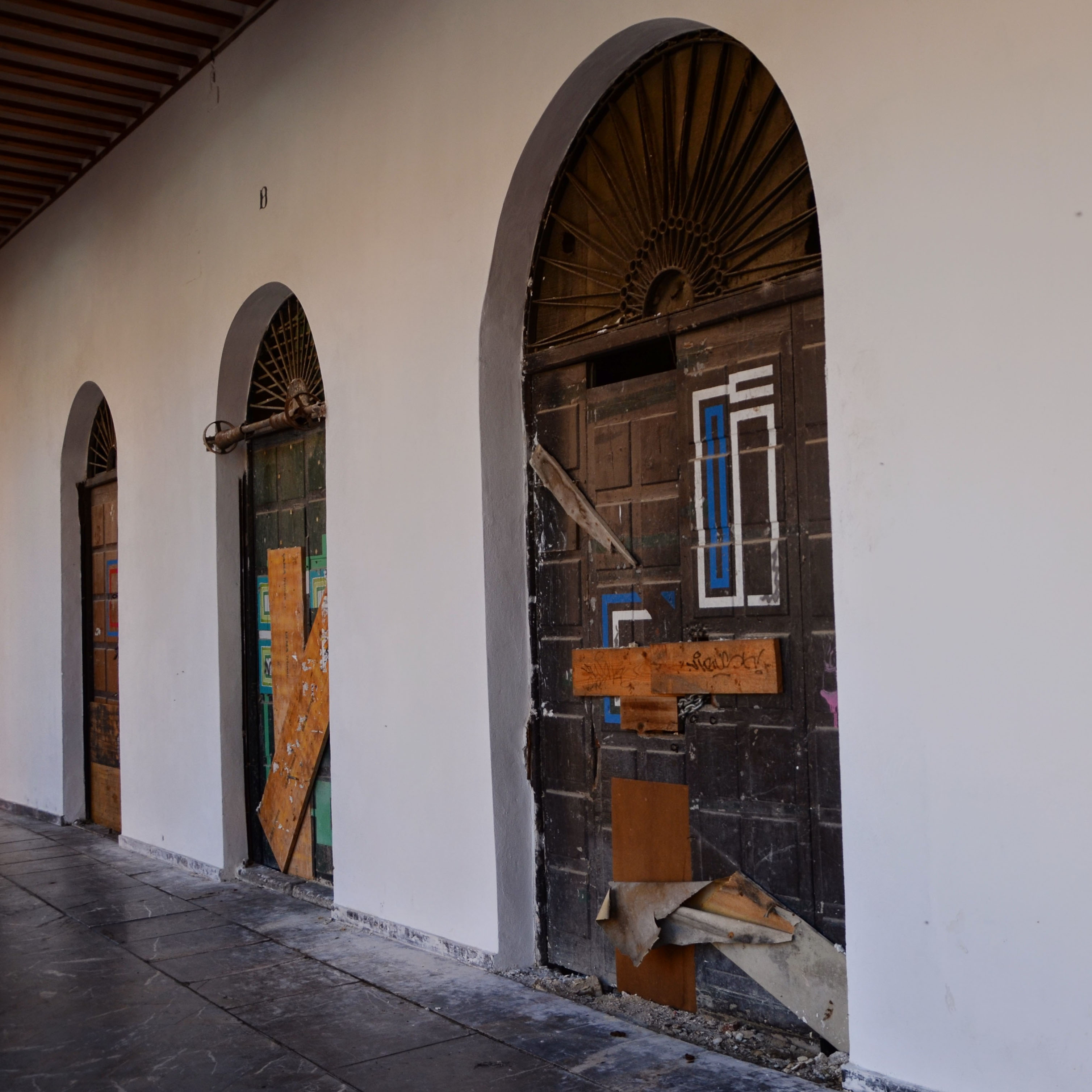
    This hotel door could use some work
    This hotel door could use some work

    A bit less of a random walk than the last episode, we talk about safety, physical safety, when traveling. While we sometimes put ourselves in the midst of dodgy surroundings, we usually feel safe when we retreat back into the “travel bubble” What about when the bubble is no longer safe? Smartphones are the frequent traveler’s most important tool. So when an upgrade to my HTC One killed its usefulness, I found myself heading back to Apple.  All this and more at the direct link to the podcast file or listening to it right here by clicking on the arrow below.


    Here are the transcript of TravelCommons podcast #118:

    • Intro music — Warmth by Makkina
    • Coming to you from the TravelCommons studios outside of Chicago, IL, less than a month since the last episode. There’s a shocker. It’s been one of my lighter travel months. No international travel, no up-and-backs across the US. Indeed, there were a couple of weeks where I didn’t even pack a bag — just did day trips to Detroit and Atlanta. There is something liberating about that — just carrying a briefcase or backpack. I guess that would’ve been the ideal situation to check out Spirit Airlines, but I don’t hate myself that much.
    • No rush to get to the gate for the start of boarding. Stroll up, sit down and then  stay seated while the agent works through the cadence of status boarding groups — really important customers, kinda important customers, fake important customers, and then everyone else. No roller board meant no need for the boarding scrum. I just waited for last call and walked on board. Kinda reminded me of the days when I first started flying when, rather than racing to be first on the plane, we’d see who could be last — how late you could show up and still get on the plane. My boss won when he talked his way past an agent, got onto the jet bridge, knocked on the plane door, which the crew opened and let him on. I don’t think I’ll push it quite that far.
    • A few of this month’s trips have been in and out of Boston Logan Airport. And for as much stick as I give United Airlines — broken planes, late flights, just general lousy service — I have to give them credit for their gate area at Logan. Parts of it look like a hip hotel lounge — cool hanging lights, non-bench seating. There’s stand-up/high-top counter space for laptops with lots of plugs. And even the self-serve boarding gates — with modern subway-style turnstiles that scan your boarding pass before letting you in — worked well. It’s probably one of the nicest gate areas I’ve been in in a long time. Nice job, United!
    • Bridge Music — Paint the Sky by Hans Atom (c) 2015 Licensed under a Creative Commons Attribution (3.0) license. http://ccmixter.org/files/hansatom/50718 Ft: Miss Judged

    Following Up

    • I got a good bit of commentary from the last episode, so thank everyone very much.
    • Rob Cheshire posted this comment on the web site:
      • “In defense of British Airways, you stepped into the middle of their new hand-luggage policy roll-out, which is designed to reign-in the amount of cabin baggage, which had really gotten out of hand. They are being strict across the board, on elite members, as well as everyone else, and it is definitely having a positive impact on bin-space, as well as minimising the amount of messing around (checking the last few wheelie bags that can’t be stowed) that the cabin crew have to take care of in the minutes prior to push-back.”
    • Rob, thanks for that. One thing I did like BA’s luggage approach was tagging the second bag meant to go underseat — in my case, a backpack — with a bright yellow tag to keep people from putting 2 bags overhead. There is not much that’s ruder in plane travel than early boarders — status fliers — maximizing their leg space at the expense of the rest the plane. Tagging that second bag makes it easy for flight attendants or later boarders to call out bin hogging. I’d love to see that move across the Atlantic.
    • Andrew Gill left a comment on the TravelCommons’ Facebook page building on my thoughts about using the new Revolut debit card during my September trip to Scotland. Andrew said:
      • “The piece of Revolut was interesting. I’ve just spent six months living and working in The Philipines. I was lucky to be involved in the pilot of Supercard from Travelex UK (https://supercard.io/). It’s a physical card, complete with chip and pin, that can be used in retail stores and for online purchases too.
      • “The card is free, and transactions are processed at the Visa Europe Exchange rate, with no foreign exchange fees or commission added on, but the *killer* feature is it’s linked to an existing debit or credit card so there’s no need to pre-load money onto the card. transactions are processed in my home currency, so again, there are no foreign exchange fees or commission added on
      • “The pilot program has closed now, so fingers crossed, it comes out of pilot and into general release
    • Andrew, thanks for that pointer. I agree that being able to link the Travelex Supercard back to a debit or credit card is very useful vs. the Revolut model which is more like a pre-paid debit card. Looking at the Supercard website, it looks like the pilot was only for UK card holders. Hopefully, they’ll be able to expand their geographic footprint when they fully launch the card. Interesting that Revolut is also a UK-based company. Seems like London is a hotspot for these fintech companies. Last week, I was talking to a guy who moved from London to Chicago to start up the US operations for a different London-based fintech company — more based on lending than payments. He said that HSBC looked hard at buying Revolut because they were doing something HSBC couldn’t even given their global reach and scale. Between Revolut and Supercard, and big banks like Chase dropping foreign exchange fees on their credit cards, the money hassles of international travel keep going down. It’s a far cry from having to cash an American Express travelers check at the airport exchange desk so you could get a cab to your hotel.
    • In an earlier episode, I talked about evaluation criteria for my TripAdvisor reviews — the bathroom, room size, workout room, location, service quality. I decided during one of my trips last month that I’m adding a new criterion — accessible bedside electrical outlets. Most frequent travelers I know use their phone or tablet as an alarm, eliminating the need to discern operating instructions for each hotel’s unique brand of clock radio. Most hotels have figured this out and provide outlets on the nightstand — in wall, along the side of the nightstand, on the lamp base…. But last month, I hit one of those knuckle draggers — a hotel in Vegas. I practically had to disassemble one of the beds to find an outlet hidden behind it. Luckily, I carry long power cords.
    • And if you have any thoughts, questions, a story, a comment, a travel tip – the voice of the traveler, send it along.  The e-mail address is comments@travelcommons.com — you can use your smartphone to record and send in an audio comment; send a Twitter message to mpeacock, or you can post your thoughts on the TravelCommons’ Facebook page — or you can always go old-school and post your thoughts on the web site at TravelCommons.com.
    • Bridge Music — Perfect Stranger by stellarartwars (c) 2014 Licensed under a Creative Commons Attribution (3.0) license. http://ccmixter.org/files/stellarartwars/45510 Ft: TheDice

    Danger Within The Travel Bubble

    • In the last episode, I talked about attending the Papal Mass at Catholic University in northeast DC which has never been one of the nicer sections of DC. I had taken the Metro up from the airport and would be getting back on it to catch my evening flight to Detroit. The Brookland stop at Catholic isn’t a big stop and I figured it would get overwhelmed at the end of the Mass by the 25,000 people there. I started thinking of alternatives. Getting a cab or an Uber would probably be just as tough, so my best alternative would be to walk down to the next stop south on the Red Line — Rhode Island Ave. From my days in DC, I remember that neighborhood being a particularly rough one. That would not be a pleasant walk. I decided to skip Communion and leave the Pope early to beat the crowds at the Brookland stop.
    • Most of the times when we talk about travel security, we talk about airport security or digital security, but not often about physical security. Yet very often, travel drops in unfamiliar settings — usually by our own choice — where we could unknowingly wander into a very unsafe situation
    • I did exactly this some years ago when visiting Cape Town, South Africa. I was shopping through some craft stalls set up in a park and just kept wandering along. I kinda looking at the buildings, up and around… Oh, and I have my big Nikon SLR slung over my shoulder. Not sure I could’ve looked any more like a tourist unless I was wearing a big “Don’t Mess With Texas” t-shirt and a Dallas Cowboys baseball cap. At some point, I finally regain some situational awareness — and, from my university years living in Northeast DC and on the Southside of Chicago, realize that I’m not in the best neighborhood right now. I move to the middle of the street — so I don’t get jumped from a doorway — and walk, with purpose now, back the way I came.
    • I did a little better this spring in New Orleans. I was standing on St Charles St in the Garden District watching a Mardi Gras parade. After a while, I got a bad feeling about the atmosphere around me. Nothing that I could put my finger on, but enough to make me give up a prime spot on the parade round and walk up the street a bit. In the next morning’s paper, I read there had been a gun fight at that spot about 30 minutes after I’d left.
    • There have been other times in Joburg, Bangalore, Guadalajara, but considering how much I travel, they’re rare events — I’ve wandered all through Madrid, Beijing, Tokyo, Edinburgh, Saigon and never felt unsafe — but they get your attention. But then again, that’s outside the “travel bubble”. We’ve talked about that in past episodes, how travelers can often seem to float above the places they visit unless they make the effort to “pop” the travel bubble and engage.
    • When those outside problems penetrate our bubble, now that’s more disturbing. Like the time some years back when I was visiting Rio — years before the World Cup. I was checking in with a colleague who had done a lot of business there. He saw my room was on the second floor. “No, that won’t do,” he said, “we need to get you on a double-digit floor. At least 10 if not higher” “Why?” I asked. “Because,” he explained, “when the smash-and-grab gangs break in, they start on the first floor and work their way up until their bags are full. The higher you are, the more likely they’ll fill up before they get to you.” The logic was brutally impeccable. And this from a guy still sporting a couple of bruises from an earlier mugging on Copacabana Beach.
    • Or a few years ago, when another colleague had to take a taxi to connect between Delhi’s domestic and international terminal — before the latest renovation. He’d forgotten to print out his international itinerary, so they wouldn’t let him on the transfer bus (I’ve talked about, in prior episodes, the need to have a printed flight itinerary in India). He couldn’t find anyone in the terminal to print one out for him so he walked out to the cab rank. He piles his bags into and on top of a taxi and off he goes — to some out-of-the-way place under a highway overpass where the cab driver and a friend shake him down for most of his money and his watch — they leave him with his luggage and enough money for cab fare to the international terminal. A polite mugging; no bruises with this one.
    • My most disturbing bubble burst happened in the US — in a Westin in Connecticut. A friend checked in and, since the hotel was oversold, was given one of those rooms that’s a conference room with a bathroom. They rolled out the tables and rolled in a bed for him. The next morning, as he’s getting dressed, he’s missing his watch, his ring, and the money and credit cards from his wallet — all which were next to him on the nightstand. As he put it together, someone had broken into the room — he saw that the conference room’s double doors had enough of a gap between them that you could open the lock by slipping a credit card or room key through the gap — and they had stood next to him going through his stuff on the night stand. He’s lucky he’s a sound sleeper.
    • And I consider myself lucky. I don’t lock myself away in the hotel. I make an effort to step outside the travel bubble — to engage — and after 30 years of heavy travel, other than having my camera and passport stolen, I’m really no worse the wear. Certainly no bruises to show for it. I’m not sure I’d do it any other way. Though I do pay more attention to hotel door construction than I used to.
    • Bridge Music — Foolish Game by copperhead (c) 2014 Licensed under a Creative Commons Attribution (3.0) license. http://ccmixter.org/files/copperhead/46390 Ft: Snowflake,Sackjo22

    Switching Back to Apple

    • After your government ID, the smartphone is probably the most important thing you travel with. And while I quickly whip out my ID a few times a trip to prove my identity  — to the TSA agent, to hotel clerks, to car rental check out folks, I use my smartphone constantly — maybe too constantly. Be that as it may, the smartphone is the critical tool for today’s frequent traveler. A carpenter has his framing hammer, the auto mechanic his Snap-On wrench — for the road warrior, it’s the smart phone.
    • And so it wasn’t without a good bit of thought that I bit the bullet a few weeks ago and switched back to Apple; dumping my HTC One for a new iPhone 6S. I wasn’t thrilled to do it; I put it off for at least a month. And in the end, it was more a frustration with hardware — with the slouching-toward-bankruptcy mess that HTC has become than it was excitement for the latest iThing.
    • Which I guess is the pattern for me. My first smartphone was an iPhone 3G and I’d had just about every iPhone model up to the 5. And it was the frustration with its truly horrid battery life that led me to the HTC. The cause this time was the lousy performance of my HTC One after they pushed their Android upgrade — “Lollipop” — at the beginning of this year. It just trashed the phone — the lag was awful. The hardware components have the specs to handle the new version; it’s just that HTC’s implementation of it is crap. Now, it’s not like Apple nails their OS upgrades every time. The IOS 8 release didn’t exactly cover them in glory. But at least they worked to resolve the problem by iterating through releases in a fairly timely manner. After the initial “Lollipop” release, Google iterated through updates  — I think ver 5.1.1 is the most recent — and I’m waited for HTC to use that as an opportunity to clean up their 5.0 mess. They would say on Twitter “It’s coming, just wait”, And then “Oh, we’ll just skip 5.1 and give you 6.0 by the end of the year”. That was it. I’d suffered through 6 months of lousy performance and now they were saying I would have at least 3 more — not that I have any reason to think that the near-bankrupt company has gotten any better at software estimating.
    • I don’t think that either Apple’s or Google’s operating systems are inherently better than the other. I’ve used them both. They both work. There are things I like about each of them, and since they seem to be stealing/emulating (?) each other’s best features, they’re more or less converging on each other.
    • For me, the difference is the hardware — which is what is actually in our hands each day. I’ve always thought Apple is a better hardware company than a software one. I loved my MacBook Air, but was very “meh” about OS X. It’s really the Android equipment manufacturers that are pushing me away. It seems that most of the Android hardware innovation is at the large end — large screen sizes — 5 ½ inches and up — which is way bigger than what want. And then there are the delays in Android upgrades as each manufacturer gooses Google’s release — my 18-month old Samsung tablet is still on version 4.4 “Kit Kat”, now two version levels down, with no update in sight, let alone any security patches. With mobile devices becoming more vital, that foot dragging on upgrades and security patching very uncomfortable.
    • I was holding out for Google’s updated Nexus line, reading all rumor articles with spec leaks and blurred pictures. The 6P was too big for me, but the 5X — I could do a 5.2-in screen with fast updates and patches. But then, when they unveiled the 5X, it topped it out at 32 GB with no expansion slots. For me, that is just too tight for my music, podcasts, pictures, video. So that’s it, I walked into the Apple store and bought a 64GB unlocked GSM 6S on their new upgrade plan — new phone comes out, I trade mine in. It’s like leasing a car — some people like the newest model. It’s all about the hardware.
    • Now if I can just keep iTunes from crashing on my Windows 10 box…

    Closing

    • Closing music — iTunes link to Pictures of You by Evangeline
    • OK, that’s it, that’s the end of TravelCommons podcast #118
    • I hope you all enjoyed this podcast and I hope you decide to stay subscribed.
    • If you have a story, thought, comment, gripe – the voice of the traveler — send ‘em along, text or audio file, to comments@travelcommons.com or to @mpeacock on Twitter, or post them on our website at travelcommons.com. Thanks to everyone who has taken the time to send in e-mails, Tweets and post comments on the website
    • Bridge music from dig.ccmixter.org
    • Find TravelCommons on Stitcher, SoundCloud, and iTunes
    • Follow me on Twitter
    • “Like” the TravelCommons fan page on Facebook
    • Direct link to the show
  • Podcast #92 — Not-So-Upbeat Traveler; iPad 2 vs. Samsung Galaxy Tab 10.1

    Podcast #92 — Not-So-Upbeat Traveler; iPad 2 vs. Samsung Galaxy Tab 10.1

    Train Crash at Montparnasse 1895
    Train Crash at Montparnasse 1895

    Into the summer travel rhythm with a mix of vacation and business travel. Using an Apple iPad 2 and Samsung’s new Galaxy Tab 10.1 Android tablet during this mix gave me enough real world experience to make some recommendations. A couple of recent web links describe this podcast as “not as upbeat as others” which is true, but because it focuses on traveling, not destinations. Perhaps this non-chipper attitude is partially explained by a recent study placing 4 US airline companies in the top 8 most hated companies in America. And a listener suggests ways to reduce roaming voice and data costs. Here’s a direct link to the podcast file or you can listen to it right here by clicking on the arrow below.


    Here are the transcript from TravelCommons podcast #92:

    • Intro music — Warmth by Makkina
    • Travel since the last podcast has been pretty evenly split between personal and business travel.  First couple of weeks was summer vacation in the UK — the Lake District, Scotland, and a couple of days in London.  Had phenomenal weather the whole time we were there — one afternoon of rain, and the rest of the time was warm and sunny.  Almost too warm for the clothes we packed. And everyone was amazed.  All the bed & breakfast owners were marveling at the weather. “It’s luvly,” said our landlady in Edinburgh, “Last week it was hailing”. Lucky us because we certainly didn’t pack for that.
    • Just to make sure I didn’t forget we were on vacation, we stayed at bed & breakfasts the whole time — until we hit London, when I made the reservations. Actually, when I think about it, it’s not all that different from the service I get in the concierge lounges at big hotels. Breakfast comes with the room — though the full cooked breakfast, complete with black puddling in England and haggis in Scotland, was a bit heartier than the continental breakfasts I normally get in concierge lounges.  And there’s a bit of nice chit-chat when we walk in, though the B&B owners are typically a bit older/more seasoned that the typical lounge staff.  The main differences — most hotels I stay in don’t have dogs living there, and they prefer credit cards over cash.
    • Of course, back in the US, the weather’s been sweltering.  I was in South Florida a couple weeks ago and it was cooler there than Chicago.  But that wasn’t good enough, so last week, I was down in Phoenix, where it was hitting 105-107 degrees during the day and wasn’t getting below 100 any time while I was awake.
    • Tough weather to take advantage of the convertible red Mustang that Avis was nice enough to upgrade me to.
    • Wednesday night after dinner, though, I decided I just had to drop the top.  The dashboard said the external temperature was 102 — and it felt it when I dropped that top.  Soon, though, I found that the key to driving top-down in 102 degrees is the pretty much the same as driving top-down in 55 degree weather. Set the fan to High and remember to have the knob set to A/C.
    • Bridge music — Crazy Love-The Alex & Lang mix by J.Lang

    Following Up

    • Let’s take a run through the comment bag.
    • Sarah, who’s been a listener since 2006, posted a comment on the website on episode #85 (!) — she says “I was playing catch up after all my driving trips this past two months.” In that episode, I talked about how the hotel industry seems to be focused on spiffing up their lobbies and putting whizzy new technology in the rooms, and that they were making a mistake ignoring what I think is critical to the hotel experience — the bathroom.  Sarah says “I say ‘heck yeah’ to the bathroom being one of the most important parts of a stay.  I ended in a bed and breakfast in the middle of nowhere, with no wifi.  And the bathroom made me want to tell everyone about it. It had a hot tub and a beautifully large bathroom. But even though I knew no one who was going to the area, I wanted to tell everyone about it. It’s the Inn in New Berlin, PA (in case you care).”
    • Sarah, thanks for the note — and thanks for the pointer to the Inn in New Berlin.  I do think we look for luxurious touches in hotels. And it doesn’t have to be anything big.  The first thing my wife looks for in a hotel room is to see if there are robes in the bathroom.  It’s a helluva lot cheaper than a tricked-out media panel, and it makes a much bigger impression.
    • Sarah’s comment about wanting to tell everyone about her find reminded me of some stats I saw a few days ago.  It said on average 24% of a hotel guests first heard about it from a friend or family member; 16% from a review site like TripAdvisor. I would guess that if anyone could calculate the cost of creating an enthusiastic recommender like Sarah — it would turn out to be a lot cheaper to do it with a great bathroom than a posh new lobby.
    • Fast forwarding to episode #90, Andrew Gill left a comment on the TravelCommons Facebook wall
      • Thanks for podcast #90, it’s great to hear how 170 degrees isn’t as comfortable as fully flat when my company has a different approach to travel. UK to Australia in Economy has to be tried
      • You talked about using large chunks of roaming data in a recent trip and I’ve a couple of hints to share.
      • Google Maps is great but try City Maps 2Go. I’ve been using it for over a year having tried other off-line mapping products. It uses the built in compass so I don’t have to walk a block either way to figure out if I’m going in the right direction.
      • I’ve also become a real convert to local SIM cards. Now this may not be perfect for a business trip, but I had two weeks in Chile in January and my iPhone bill was $500, compare this to two weeks in Australia using the AU$2 a day plan from Optus and my bill was $22. In Australia I didn’t worry about when I used my phone or finding the next hotspot, because I had unlimited calls, SMS and internet usage all for AU$2 a day.
    • Thanks Andrew.  Sorry about the whinging on 10 degrees of seat recline. I paid for it on my flight over to Manchester last month — 8 hrs of suffering in coach in a packed American Airlines 757. Even United gives you free beer in coach, but not American.
    • Thanks for the tip on City Maps 2 Go.  I looked at it for our UK vacation and since we were spending most of our time in the hinterlands — the Lake District, the Isle of Arran, around Loch Lomond, it wasn’t going to give us enough coverage.  I found, though, a great app from Phil Endecott called “UK Map”.  For $11 you get all the Ordnance Survey maps, 2D and 3D views, combined with OpenStreetMap.org info downloaded so you can use it off line.  It’s a universal app so I have it on my iPhone and iPad.  If you’re touring the UK, I highly recommend it.  I may end up back in Madrid in a couple of months.  If I do, I’ll be downloading its map from City Maps 2 Go.
    • I did find an unexpected but valuable benefit from my Starbucks obsession. I have a couple of Starbucks gift cards that I’ve registered.  I kinda did it on a whim.  They send me a card for a free drink after every 15 coffees I buy.  I don’t use them — it would be wasted on a tall coffee or cappuccino.  I give ‘em to my kids who use them for venti frappuccinos.  But anyways, while in London, I found that my US Starbucks Rewards credentials gave me free WiFi in UK Starbucks. Since I was limiting my mobile data usage and there’s a Starbucks about every 200 ft in London, it was very handy.
    • How big, exactly, is Starbucks’ new ‘Trenta’ size?
      How big, exactly, is Starbucks’ new ‘Trenta’ size?

      Speaking of Starbucks, when I was flying out of ORD last week, one of the Starbucks in Terminal 3 advertised “trenta is here” — Starbucks’ new “BigGulp” serving size. I thought about this while waiting in line to order my tall bold coffee.  Should they really be selling the trenta in airports?  I mean, does it make sense to sell someone 31 fluid ounces of a beverage right before they will be strapped into a seat for the next 2-4 hours?  And odds are that the person ordering a trenta will be in the window seat.  Meaning that he/she’s rousting two people at least twice during the flight to drain that trenta.

    • And then, reacting to my comments about Ryanair in the last episode, Leo Vegoda wrote
      • What you say about Ryanair reminds me of how Irish comedian Andrew Maxwell described them: ‘Ryanair is what flying would be like if it was illegal’. I think that says it all.”
    • That is perfect — and I think perfectly describes Ryanair and Spirit and all that ilk.
    • And it shouldn’t be too surprising then that 4 of the top 8 most hated companies in America are airlines.  The latest American Customer Satisfaction Index has American Airlines at #8, United at #7, US Airways at #6, Delta Airlines at #2(!), beat out by just 2 points for #1 by Potomac Electric utility.  Impressive results all around.
    • If you have a question, a story, a comment, a travel tip – the voice of the traveler, send it along.  The e-mail address is comments@travelcommons.com — use the Voice Memo app on your iPhone or something like Virtual Recorder on your Android phone to record and send in an audio comment – or iMovie if you want to send in some video; send a Twitter message to mpeacock, or you can post your thoughts on the TravelCommons’ Facebook page — or you can always go old-school and post your thoughts on the web site at travelcommons.com.
    • Bridge music — August (Reggae Rework) by el-B

    The Not-So-Upbeat Traveler

    • This podcast is a hobby, not a business, for me — as if you couldn’t tell that from my haphazard posting schedule. So, I don’t obsess over podcast or website statistics, how many downloads, how many page views, all the stuff that real web business live and breathe and monitor on a real-time basis. I do, though, check in every couple of days to make sure everything’s running, clean the spam bin, and to look at site stats to see if anyone is coming by.
    • I didn’t do any of this while on vacation, but when I got back and checked in, I saw that I’d gotten flooded with visits the first week in July.  Following the source links, I found most of the traffic came in from StumbleUpon, while another bit came from a recent post by Chris Christensen on his Amateur Traveler blog.
    • The StumbleUpon pointer was from “sher1lock,” a “woman from Ontario”.  She recommended episode #88, where I reported from the floor of the Travel Goods show and talked about losing elite status. Her comment — “A neat travel site. Not as upbeat as some.”
    • Which actually lined up very nicely with Chris’ post.  Titled “Where is the Darker Side of Travel?”, Chris was responding to a listener’s letter that suggested his Amateur Traveler Podcast sugar-coats the travel experience a bit; the listener challenged Chris to “bring attention to the darker side of travel”. Chris gave a good, straight up response that boiled down to — “Guilty as charged; I’m an optimistic guy” and “If you want a podcast about travel from the point of view of how bad can be, listen to Mark Peacock’s Travel Commons. Mark is a friend and fellow podcaster but I describe his show as the anti-Amateur Traveler.”
    • OK, so I’m not always the cheeriest guy about travel, but I didn’t think I was a complete “Debbie Downer”.  But, because I talk about more about the journey — the act of transiting, travel as a verb — rather than being a tourist — what you are when you get to your destination, my travel stories are going to naturally follow what we all think is the dramatic decline in the travel experience — airplanes as flying cattle cars, beat-up high-mileage rental cars, ….  Any podcast whose major characters are 4 of the top 8 most hated companies in America just isn’t going to be “as upbeat as some.”
    • I have varying degrees of success in being cheery about my travels.  It’s always easier to be chipper when there’s something new in the mix — new destination, new air carrier, new plane,…  A couple podcasts ago, when I talked about flying to Madrid on USAir — the USAir service was definitely a 9-hour drag, but it couldn’t dull the excitement of a new destination. But this last trip to Phoenix? Going to the same place for the umpteenth time, on American, on old MD-80’s (one of which — with a 1983 birth date — treated me to yet another 2 hour delay), to temperatures in the 100’s every day.  I had to drag myself to the airport. The best thing about the trip — a toss-up between  the convertible Mustang from Avis and the Tempe In-n-Out Burger where I killed some of that 2-hour delay.
    • But then again, who really enjoys their commute to work?  Most of the times, that’s what my travel is — a commute to work.  Some people drive 45 minutes to work; I fly 3 hours.  And just like you should avoid road rage, I try to avoid travel rage. Specifically, when my commute goes wrong, I try to limit the collateral damage.
    • First off, I try not to call anybody. There’s just nothing to be gained from talking to family or colleagues live.
      • “I’m going to be late coming home/getting to the office.  American/United/Southwest/Joe’s Cattle Car decided to skip preventative maintenance this month in order to make payroll and so I’m waiting out a maintenance decision.  The delay’s going to be either 30 minutes or 3 hours — depends on whether duct tape can fix the problem.”
      • “Oh, that’s too bad.  I’m sorry to hear that”
      • “Not half as sorry as I am to be living it”
    • See?  That’s just not a good exchange for anyone. I’m not feeling any better, and worse yet, I’ve passed along my frustration, my lousy day to a completely innocent bystander.  Best to rely on e-mail or text messages. Just make sure you immediately delete the inevitable frowny face emoticon from your significant other. Leaving it fester in your inbox will just lead to bad things.
    • Same goes with airline gate agents and hotel clerks. They didn’t overbook the hotel or break the plane.  On a good day, these folks are just barely breaking minimum wage.  They’re just trying to get on the other side of 8 hours.  Unless they’re pre-emptively snotty to me — they take an attitude before I even open my mouth — I give them a pass.
    • So we’ve identified a lot of people who aren’t responsible for botching up my commute.  Who is, then? Who can I dump this rage on? Well, that’s the challenge.  When you’re driving down the freeway and a guy cuts you off, you see the culprit. You can yell, you glare, you can flip him off.  You vent and, if you’re a normal person, you move on.
    • Airlines, hotels, car rentals — you’ll never see the person that made your morning miserable. You can’t find them to flip them off; they don’t even know you exist. They’re sitting inside some operations center combining the output of some linear revenue optimization programs with the weather forecast and sending out e-mails that will complete jack up my day.  Nothing personal — I’m just collateral damage.
    • Without that outlet, though; that ability to vent directly to the culprit, the frustration festers. The undisciplined take it out on innocent workers. The introverts mutter to themselves under their breaths.  The majority of us, though, inhale, exhale and then make for closest repository of the three cure-alls for travel frustration — fat, salt, and beer.
    • Bridge music — I Will Writhe by SackJo22

    Tablet Wars: Apple iPad 2 vs. Samsung Galaxy Tab 10.1

    • Regular listeners know that, over the past couple of years, I’ve migrated to an all Apple technology kit — the 11-in MacBook Air, an iPhone 4, and an iPad 2. This isn’t a religious sort of fanboy thing — the desktop unit that I create this podcast on is a custom-built dual monitor Windows 7 64-bit rig with 3 hard drives and a Blu-Ray DVD burner.
    • Attending Google I/O earlier this summer, I received a Samsung Galaxy Tab 10.1 with the Honeycomb tablet version of Android — I think Honeycomb translates to version number 3.1 for non-Google-ites — and a Samsung Chromebook. During the summer I’ve been traveling with both the Google and Apple kit — a significant increase in carry-on weight, but the only way I know to truly compare equipment is live in the field.  I’ll compare the tablets this episode and talk about my Chromebook experiences next time.
    • Not only did I carry both tablets for business over the past couple of months, I also took them both with me on vacation to the UK, leaving my laptop at home — a real pressure test.
    • To cut to the chase — which do I like better? — it’s a real toss-up.  Both tablets are nice pieces of hardware — the screen sizes are a bit different (the Galaxy has a bit more of an HD aspect ratio while the iPad’s dimensions are more like a sheet of paper) and the Samsung is a few ounces lighter than the iPad, but in the real world — it’s a push.  They feels the same, both screens are beautiful, and their response times are great.
    • As you would expect, the iPad has a better selection of apps — the Android tablet just launched this summer while the iPad has been out for over a year.  However, for apps that I use, the delta isn’t as huge as the raw number of apps — iPad vs. Honeycomb — would suggest.  Apps that I use regularly — Evernote, Kindle, Pandora, Dropbox, Skype, Concur expense reporting, Angry Birds — are all available for Android.  The Evernote app is the only tablet-specific one — and it’s really nice — but the others work fine.  The only MIA apps that have any real impact on me are WebEx and GoTo Meeting. I think the tablet form is the best way to watch an on-line presentation and so I do miss those apps.
    • The operating system — Apple’s iOS vs. Google’s Android and the accompanying apps — the comparison seems to be less of a “better-worse” and more a difference in philosophies.  The Apple experience is pretty much locked down — there’s only one place to get apps, the screen layout not very customizable, there’s no independent access to the file system. Now that’s not necessarily bad — most people never change the default settings on their technology and there’s a lot to be said for not letting users screw things up beyond recovery. It’s Apple’s point of view. It’s a valid one, but it does have some impact.
    • When we were in the UK with only the two tablets, I wanted to replace my Facebook profile picture with one taken that afternoon in the Glengoyne Distillery near Loch Lomond.  My daughter had taken the picture with my iPhone. Plunking around the Facebook app, I couldn’t find a way to change my profile. So I e-mailed the photo from my iPhone to my Gmail account.  Logging onto the Facebook site on the iPad Safari browser, I couldn’t save the picture from the Mail app to a place where the browser could access it — for security reasons, all the apps seem to exist within their own sandboxes.  Opening up Gmail on the Samsung tablet, I could save the picture to the folder of my choice, and then upload the picture from that folder to the Facebook site through the Android browser.
    • It’s a little thing, but it illustrates why I found working solely with the Android system — being without my PC — easier than the iPad. The Android design philosophy is to give the users much greater control over their experience.  Which means I can spelunk around the file system, tweak the technical operations, create truly horrid screen designs, and view Flash-based web sites to my heart’s content
    • I also found it interesting that my daughter who’s starting high school this year, tends to pick up the Samsung tablet over the iPad. A lot of it probably has to do with the fact that she has an Android phone, but she seemed to prefer the Google experience.
    • So as I said at the top, it’s a toss-up.  I think the iPad is a more polished experience.  It feels 1-2 releases ahead of the Android tablet — which it is.  The Samsung tablet, though, keeps right up with Apple in hardware and fit-and-finish, and Android lets the advanced user customize it better to his/her specific needs.  Final recommendation — at the same price, I’d recommend the casual/non-technical user go with the iPad, but if you like to pop the hood on your technology, you won’t go wrong with the Samsung.

    Closing

    • Closing music — iTunes link to Pictures of You by Evangeline
    • OK, that’s it, that’s the end of TravelCommons podcast #92
    • I hope you all enjoyed this podcast and I hope you decide to stay subscribed.
    • Bridge music from the ccMixter site
    • If you have a story, thought, comment, gripe – the voice of the traveler — send ‘em along, text or audio file, to comments@travelcommons.com or to @mpeacock on Twitter, or post them on our website at travelcommons.com. Thanks to everyone who has taken the time to send in e-mails, Tweets and post comments on the website
    • Follow me on Twitter
    • “Like” the TravelCommons fan page on Facebook
    • Direct link to the show