Tag: Avios

  • Podcast #174 — How the Pros Plan Their Taproom Tourism

    Podcast #174 — How the Pros Plan Their Taproom Tourism

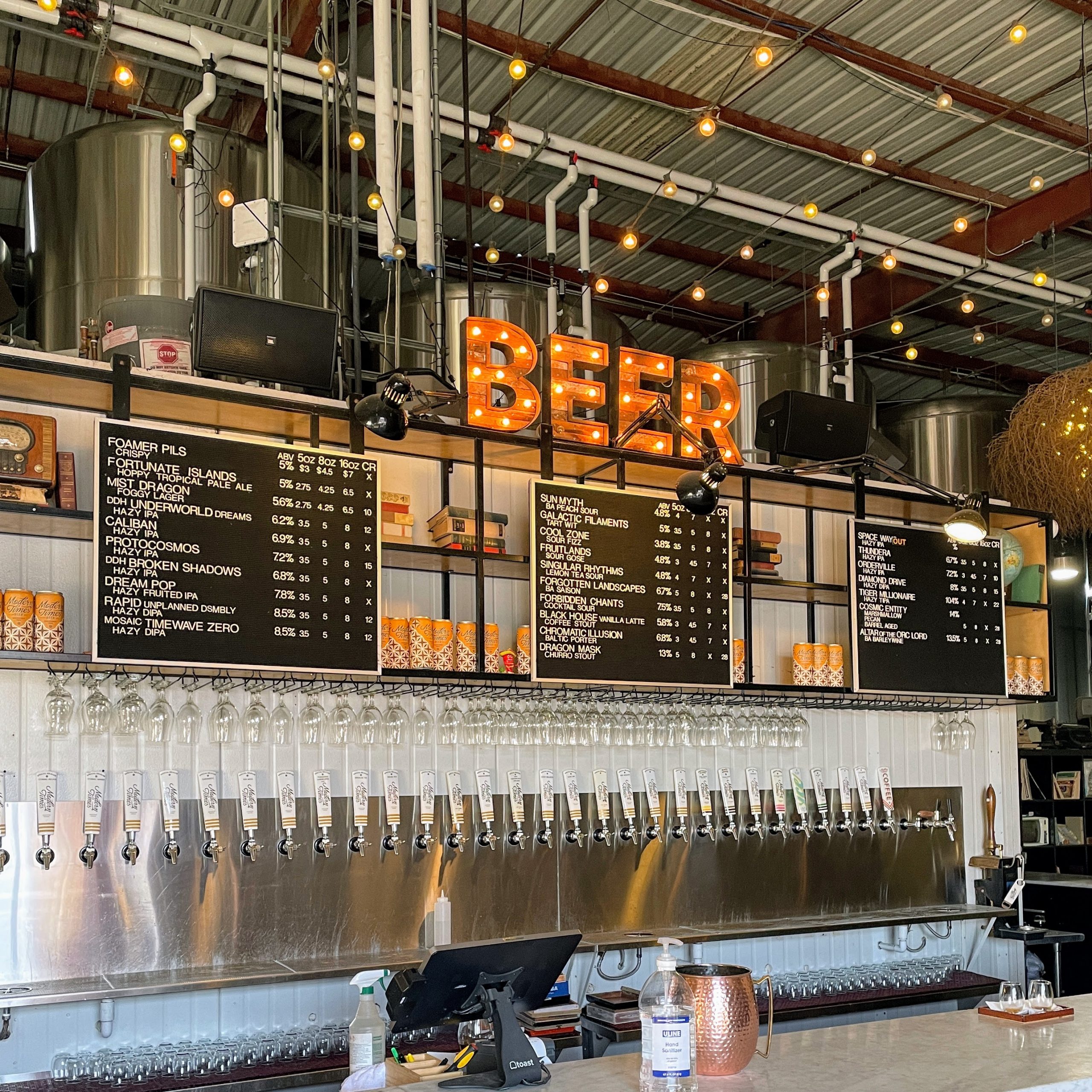
    Bar at Modern Times' Taproom
    I wonder what they serve here

    Looking at the Beer section of this new website design, I saw I needed more content. So I got hold of Rob Cheshire of the This Week in Craft Beer podcast to talk about our approaches to taproom tourism and to trade taproom travel stories. I also talk about mask hassles on a couple of recent flights, Hertz’s continuing downward service spiral, and Uber and Lyft driver shortages. All this and more – click here to download the podcast file, go up to the Subscribe section in the top menu bar to subscribe on your favorite site, or listen right here by clicking on the arrow below.

    Here is the transcript of TravelCommons podcast #174:

    This Week

    • Intro music — Warmth by Makkina
    • Coming to you again from the TravelCommons studio in Chicago, Illinois as things here start to open up from winter and COVID shutdowns. Increasing temperatures and vaccination rates have people out and about. Irene and I got a jump start on the better weather by flying out to San Diego on St Patrick’s Day to hang out at an Airbnb in Ocean Beach a block off the ocean and a couple of blocks south of Newport Avenue, the main drag that surprised me with its kinda hippy/surfer vibe. Which I liked. It reminded me of Huntington Beach in the mid-80’s when my folks moved there, before they tarted it all up. I give Ocean Beach credit for resisting the face lift, even if I meant I had to avoid the homeless guy changing his pants on the sidewalk when walking back with the morning coffee and doughnuts.
    • It was a low-key trip. Nothing scheduled, no real itinerary; mostly walking the coast during the day — beaches or rocks — and then at night, chipping away at the list of some 150 microbrewery taprooms in the San Diego area; a lost cause for sure, but one I willingly threw myself at. Indeed, the only time we looked closely at the time was Sunday afternoon to make sure I could get to all my “gotta go” taprooms before they closed since we were flying back Monday after lunch.
    • The bookends to the trip, the flights out and back on United, were a bit more stressful. The flights were just about completely full. And for some reason, United kept shoving me out of my aisle seat to the adjacent middle seat. But because I checked our seats after receiving United’s “We’re full; you can move to another flight for free” e-mail before each flight, there was enough time to rejigger our seats to adjacent aisles, which gave each of us a bit of room to lean away from a full middle seat. The bigger and, honestly, more surprising hassles were mask compliance. On the flight out of ORD, the guy in the row behind me had a loud, extended grumble session with his seatmate after the flight attendant told him to pull his mask up over his nose. I thought he was winding himself up for a protest, but he eventually calmed down. The flight back was worse for Irene. A young couple with an infant landed in the middle and window seats next to her. Both continually pulled their masks down below their chins; at some point, the husband fell asleep and started snoring with his down. And this is after the flight attendants made a number of very clear and pointed announcements on mask rules.
    • This all really surprised me. All my prior flights — to Nashville, Philly, Phoenix — there wasn’t any of this. Now I’m no mask scold, but like I said in the last episode, everyone agrees to wear one before they can check-in. So if you have a personal objection or don’t think you can handle it for 4 hours, don’t get on the plane. And if you do, treat yourself to a new mask before the flight; one with new elastic so it says up over your nose.
    • Bridge music — Dreaming by Astral (c) copyright 2013 Licensed under a Creative Commons Attribution Noncommercial (3.0) license.

    Following Up

    • Long-time TravelCommons listener Nick Gassman sent in a note about last episode’s travel insurance update and COVID-related coverage. Nick writes:
      • “In the UK, a recent survey found that whilst insurers would give you emergency medical cover if you caught COVID when you were away, none would cover you if the government advised against travel because of COVID and you therefore could not travel. Some would give you cancellation cover if you are diagnosed with COVID before travel, and others would further give cancellation cover if you had to self-isolate even without a positive test.
      • As ever with insurance, the thing is to make sure you understand the small print and to compare policies.
    • Nick, thanks for that. I think the advice to “read the small print” is valid in life in general, and in travel insurance in particular. I think the pandemic and known event carve-outs lurking in the small print caught a lot of travel insurance holders back when the initial lockdowns hit. I wonder, a year on after all that, how many more people are clicking through the “Buy Travel Insurance” box at the bottom of their Expedia booking page to the full rider and doing a Control-F in their browser to search for the word “COVID”.
    • In the last couple of episodes, I’ve been talking about my efforts to decipher the activity rules for British Airways’ frequent flier program to stave off a year-end extinction event for my non-insignificant stash of Avios points. Since I’m not planning to fly BA anytime soon, I booked our Ocean Beach Airbnb through a link on BA’s site and, to my surprise, I saw 1,800 Avios points automagically hit my account a week later. I can’t seem to find the expiration date to see if it updated, but I’m pretty sure this reset the 36-month clock. And it was a nice find, the Airbnb-Avios link. It let me double-dip on Avios and Chase Ultimate points. Not sure when I’ll get to spend them, but it was a nice little get.
    • In the last episode, I talked about having to work through a lot of cars in the Hertz PHX lot to find one with less than 24,000 miles. In SAN, I had to work to find a car — period. We walked to the Five Star aisle and it was empty. I tried to flag down a Hertz employee, but he just waved me off. After 5 minutes or so, a car showed up. I didn’t bother to look at the mileage; we just got in and drove off. I was late for a lunch date with a fish taco. Returning the car, I did my normal drill – top off the tank, get a receipt, and then when dropping it off, place the receipt under the keys on the dashboard so the check-in guy will see it. It usually works — except this time. The receipt hits my e-mail as we’re trundling the perimeter of the airfield in the rental bus. I open it up and see a fuel charge! Really? The last time this happened was about 4 years ago in ATL. I hit Twitter and the Hertz team fixed it in a half-hour. This time, the Twitter team got back to me pretty quick asking for the rental agreement details, but then… nothing. I pinged them the next day, nothing. And the next day, nothing. So I challenged it with Amex and got the fueling charge and associated taxes credited back in a couple of days and then moved on. Until earlier this week, two weeks later, Hertz popped up on my Twitter DMs asking for more information. It’s amazing how fast their service has cratered during this bankruptcy, which makes me wonder how long it’ll take them to recover. I gotta get some good discount codes for Avis.
    • There was a spate of articles this week about Uber and Lyft driver shortages. We experienced it first hand trying to get a morning ride out to ORD for our San Diego flight. I swallowed hard and agreed to a good-sized surge, waited for a while, and still had the Uber driver cancel on us at the last minute. It shouldn’t be surprising, though. Drivers left the platforms when demand cratered at the start of the pandemic, when Uber said (and this was last May when everything was shutdown) that their volume was down by 80% vs. the prior May (May 2019). And in Chicago, the run of Uber drivers getting carjacked at the beginning of this year probably didn’t help either. But with stimulus checks in the bank and vaccine rates rising, demand has snapped back, a lot faster than driver supply. The headline of the Financial Times article reads “Uber and Lyft ‘throwing money’ at US drivers to ease shortage” and says that Uber is spending $250 million on a one-time “stimulus” package of driver incentives. But even with that, it takes time to on-board even returning drivers — re-doing vehicle inspections, background checks. In episode #160, my last pre-pandemic episode back in February 2020, I talked about the shrinking difference between Uber and Lyft, and how I found myself beginning to shift back to regular cabs. These recent experiences are only accelerating that. I’m thinking I may need to reload taxi dispatch numbers back into my iPhone.
    • And if you have any travel stories, questions, comments, tips, rants – the voice of the traveler, send ’em along to comments@travelcommons.com — you can send a Twitter message to mpeacock, post your thoughts on the TravelCommons’ Facebook page or the Instagram account at travelcommons — or you can post comments on our fab new web site at TravelCommons.com.
    • Bridge Music — Emily and the Djembe by mghicks (c) copyright 2008 Licensed under a Creative Commons Noncommercial Sampling Plus license. Ft: Emily via Briareus

    Taproom Tourism

    • Putting together the new website, I was thinking about what to put on the top menu. “Subscribe” and “Episodes” were given, but I also put “Food” and “Beer” because, well, I write and talk about them a lot. But then, when I clicked through the new “Beer” menu, it felt a bit sparse. I needed to add some content. And so in the craft beer tradition of collaboration beers, I pinged Rob Cheshire, a long time TravelCommons listener and now craft beer podcaster with his This Week in Craft Beer podcast, to talk about why we go out of our way to find brewery taprooms, and how he organizes his travels to hit the most taprooms he can on each visit.
      • Mark: So what are you drinking?
      • Rob: I’ve got a Bio Machine Brew Co I had on the podcast about six weeks ago.
      • Mark: I’m doing a Springbock from Half Acre, about 6.8%. It’s not a shy beer
      • Rob: Good Lunchtime beer. Yeah.
      • Mark: Taproom Tourism. Why do we go and search out brewery tap rooms as opposed to the cool beer bar?
      • Rob: You want to be drinking at the source I think is the first point. So it’s just in terms of freshness and, quite frankly, value for money, but also variety. And just everything’s better without the middleman. If I can sit and chat to the brewer while I’m drinking their beer, then so much the better. At least even the guy behind the bar is going to know a lot more about products and the nature of the business than our average barman. And, you know, as good as they might be, it’s always better dealing direct, I think.
      • Mark: As I was thinking about it, I had that same set of thoughts. First of all, there’s more selection and especially if you want to go past the usual suspects. So if you want to go past the usual IPAs, maybe random stouts and stuff like that, and the light wheat that they’ll put on to keep the non-beer drinkers happy. If you want to get past that and you want to see where that brewer is stretching their muscles a little bit, then you’re right. You gotta go to the taproom because nobody else is going to take it. And to your point also, from a cost standpoint, you’re going to be able to do flights or at least small pours, which means you’re going to be more willing to try the wacky beer.
      • Rob: Yes, definitely. I want to taste every single beer in the taproom if I can. Another aspect, I just like the atmosphere in taprooms. Some of them are super slick and fabulously well fitted out. And others are literally some barrels to sit on or empty pallets. Complete extremes of decor, but they’re always sort of charming in their own way. And there’s something about being in a brewery that pleases me, even if I’m not drinking.
      • Mark: My undergraduate degree is in chemical engineering and I never practiced as a chemical engineer. But having said that, I really like to go and look at breweries. There was one time we were in Portland. The brewery was in the basement. I’m kind of looking at going “How in the hell did they get these tanks down here?” Because there was no obvious way that you could get a massive steel tank down into this basement. And then we ended up sitting wedged in a table between three fermentation tanks. It wasn’t like we were looking at the brewery; we were in the brewery.
      • Rob: You were actually in an integral part of it. I had a very similar experience, actually, one of the new local breweries that’s opened up here in Reading that I’ve become quite friendly with called Crafty Cats, and they are brewing in an impractical barn, terribly difficult to sanitize everything. It’s a broken concrete floor. We went round this brewery, and we started actually with the finished beer and he said, Well, taste this and taste this and this and which we’re getting right back to the last one we tasted. It was the first time I’ve ever tasted what I can only describe as the overwhelming smell of brewer’s yeast you get in a brewery. That was what this liquid tasted like, and I’ve never tasted anything quite like it before. It was a really interesting experience.
      • Mark: How do you plan your taproom visits?
      • Rob: It’s all driven through Google for me. I might have some idea based on previous reading about some big-name places that I want to visit in a particular city. But beyond that, I’m just going to Google. First of all, I’ll plot a Google map for the city. I’ll end up with 50-60, maybe even 100 pins on the map. Pretty quickly, I’ll go to Untappd and look at the average brewery rating. And this really makes brewers cross how much I rely on Untappd for this type of thing because I had this conversation a load of times on the podcast with them. But I do rely on brewery ratings on Untappd, and I find it very reliable, quite frankly. If a brewery has an average rating of anything close to 4, then, obviously it’s a massive generalization to say whatever they brew, but most of their beers are gonna be great. If the brewery rating is anywhere close to 3.5, it’s going to be very mediocre at best. And somewhere in between is where most people land. So 3.6, eh…;  3.8, it’s a good brewery; 3.9 is a terrific brewery; 4 is a great brewery. And so I’m looking for those 3.8 and 3.9 average brewery ratings. But what I’m looking for, really, is that district where I can walk from one to another and really make an afternoon of it.
      • Mark: But that’s kind of the DIY spin. And I know, Rob, that you’re doing with This Week In Craft Brewing, you guys are launching tours, the Good Lord willing and COVID don’t rise…
      • Rob: Yeah. I’ve been lucky enough to travel pretty frequently to East Coast of the US for business trips, particularly the past 10 years. And so I’ve always been comfortable with traveling in the US, And in the last few years, I’ve been basing my travel around taproom visits quite frankly. And so I’ve been doing business trips where I have some business meetings, but really, what I’m doing is trying to plan my schedule so I’m in the right place at the right time each evening to visit the tap room that I want to visit. And so, I’ve become quite familiar with the tap rooms most of the way down the East Coast. Since then, I’ve got my This Week In Craft Beer business (if you want to call it a business) off the ground. It’s a fun side project. We publish a weekly newsletter and we do a weekly podcast doing a different interview with the UK Craft Brewery each week. And so, in conversation with the brewers, I started to float the idea with them, either before or afterwards, when we’re wrapping up and finishing off the beer and whatever. I would say, “Well, I’m thinking about putting together tours to the US. Does that sound like something you’d be interested in?” And so, on the back of a few of those conversations, I started to figure out that what we could do is actually promote it with the brewer and basically sell it to the brewer’s customers and have the brewer come on the tour. So we’ll put together a schedule where we’re going to visit, hopefully, some amazing tap rooms. From what I know about how brewers react to being visited by other brewers, usually they get the red carpet out. Brewers are very hospitable. It’s almost like a private members club. You know, one brewer visits another brewer, and they may be supremely welcome. So I’m hoping that we can leverage that, and I think we can put together a pretty killer 5-day, 4-night tour where we visit 2 tap rooms a day and have a fantastic curated experience at each one.
      • You may be seeding a whole other series of collabs, of cross-Atlantic collabs.
      • Rob: That would be nice. Yeah, I hope so.
      • Mark: Here’s the last thing I wanted to think about – best, worst, most unusual taproom experience. It got me thinking about the number of times that going to tap rooms, search them out, and then going out to them has taken me to parts of town that I would not normally go. I mean, it gets you out of it, busts you out of what I’ve called in the travel bubble or the tourist route.
      • Rob: I’ve been to a few places where I probably shouldn’t have been in search of tap rooms. You know, that’s the thing. Isn’t as well as you know. I think I remember once in Baltimore where I, you know, I ended up probably in a slightly down-on-its-luck neighborhood. Let’s call it that for one of the better turn of phrase. And that’s when you start to think “Well, maybe, you know, is there a taproom down here? And maybe I shouldn’t perhaps be wandering this district.” I don’t know, but I do. What I do know when I’m in the US is I can always break out my British accent and that, you know, it doesn’t matter how sort of threatening the bad guys look as soon as they hear I’m from the UK, they immediately become unofficial tour guides. And, you know, they want to point me in the right direction and give me advice and make sure I’m enjoying my visit to the city. And it is an extraordinary experience and this, you know, it’s overwhelming that level of hospitality that we always get from Americans. And that’s it’s not an exaggeration to say that I don’t think I could find myself in any part of any city where that didn’t work, and it hasn’t happened yet anyway. So probably once too many. I’ll push that luck too far. It’s worked so far anyway.
      • Mark: And again, you talk about doing business trips? I was in mid Jersey, and I found this place Demented Brewing, and I found it on Untappd. And so we head out there, we find it. It’s across the street from a glass repair shop and sort of kitty corner from a motorcycle repair shop. But no food, no food trucks or anything and said “Okay, well, we’re gonna need to lay a base here.” And so, across the street was this little place with an El Salvadorian flag hanging out the front of it. And it’s some little family restaurant/bodega thing, and we roll in there. They look at us like, “Who in the hell are you guys?” We go. We like the menu posted up on the wall. It’s like pupusa is I don’t know. We’re like, give us all of them, right? Just like give us one of all; we’re gonna do a flight of pupusas and then we went back across the street, but at that time in New Jersey, they had to give you a tour.
      • Rob: You have to do a tour. Yeah, yeah, yeah.
      • Mark: Okay, so you hit that too. You had to do a tour before you could do the sample.
      • Rob: I’ve been to more places in Jersey than probably anywhere else, actually.
      • Mark: It’s the only place I’ve had that happen has been in Jersey. Okay, “Well, you got to do a tour, then you can have beer at the tap room.” I was like, “Okay, fine. Cool.” It was a very abbreviated tour.
      • Rob: Yeah. I actually watched that policy evolve in 2018 from at the start of the year, where they were quite strict about saying yet we’ve got to give you a bit of a tour, you know. And after a while, it got to the stage where they just had laminates printed where they have shown you the map of the brewery. If you’d like us to come and show you any particular feature on this, please let us know. But just otherwise, you can just sit at the bar and look at it while you have your beer and say that obviously sort of figured out that that was sufficient to satisfy the local regulations.
      • Rob: Probably my best taproom experience in Asia was in Hanoi, Vietnam, and there’s a bar there called the Standing Bar, which I think is by far the most celebrated craft beer bar in probably the whole of Vietnam. Actually, a great selection of beer. When we were there, they had a comedy night and they’d flown in English- speaking comedy acts from a number of different Asian capitals. And it was fantastic. There’s a big local beer scene in Vietnam. It’s called Bia Hoi. It’s basically lager, 3.5-3.8% alcohol I think, but served almost ice cold in ice glasses. So it’s drunk extremely cold, and it’s very hot and humid there, of course, and these Bia Hoi bars are — to say they’re on every street is understating it. About every third shop front is a Bia Hoi bar, and they’re mostly… they’re not bars in the way that you would recognize that term. They’re oftentimes just a little sort of plastic furniture, almost in, but the front room on the ground floor, you know, So you walk in there and you sit down and they’re always really tiny because we’re obviously taller than the Vietnamese. So you know, you sort of get your knees under your chin. It felt like going back to kindergarten, where you’re going to the parents’ evening at school and you’re sitting on the tiny chairs that are designed for five- and six-year-olds. It was exactly like that, these bia hoy bars. It was a good experience drinking bia hoi.  Crap beer, of course, but you know, it was just, you know, it’s cold and very refreshing. You can drink lots of it because it’s very weak. But the point is, bia hoi is like 20 cents a pint. Something like; that is super super cheap. And the beer in the Standing Bar was, quite frankly, Western European craft beer prices and then some. You know, you were paying probably $10 plus for a pint, maybe more than that. So this was a good beer, you know, They had some good Vietnamese beers. They had imported beers from around Asia. So it was a good choice of craft beer, as I would recognize that. But 20-30 times the price of the local beers, you know. And it was bringing it back to the comedy night. Several of the comedians were absolutely ripping into the crowd, saying, “You know what? Are you guys doing it? How on earth can you justify paying the price of the beer in this bullshit bar when you could be next door drinking pints of bia hoi with the locals for 20 cents a pint? You know, it’s ridiculous. You should be ashamed of yourselves” and you are absolutely right. It was a good experience.
    • Thanks again to Rob Cheshire for that collab. I hope you could tell that it was a lot of fun. Indeed, the full session ran around an hour and a half and a bit more beer. If you want to hear more of our taproom stories, head over to Rob’s This Week in Craft Beer podcast feed, he posted a longer version as a bonus Easter episode, or check out the TravelCommons website, Facebook page or YouTube channel for the full video.

    Closing

    • Closing music — Pictures of You by Evangeline
    • OK, that’s it, that’s the end of TravelCommons podcast #174
    • I hope you all enjoyed the show and I hope you decide to stay subscribed.
    • The new website makes it a lot easier to subscribe. There’s a drop down menu at the top of each page, a set of subscribe links at the bottom, and a big red “Subscribe” button in the middle of the home page. You can use all those buttons, links and menus or you can just search for us on Apple Podcasts, Spotify, Stitcher, SoundCloud, Google Podcasts, and Amazon Music. Or you can also ask Alexa, Siri, or Google to play TravelCommons on your smart speakers. And across the bottom of each page on the web site, you’ll find links to the TravelCommons’ social  — Facebook, Twitter, Instagram, and the YouTube channel.
    • If you’re already subscribed, how ‘bout leaving us a review on one of the sites.
    • Thanks to Nick Gassman, not only for the e-mails, but for calling out TravelCommons in the Recommended Podcast section of his blog site.
    • If you have a story, thought, comment, gripe – the voice of the traveler — send ‘em along, text or audio file, to comments@travelcommons.com or to @mpeacock on Twitter, or post them on the TravelCommons’ Facebook pageInstagram account,  or website at travelcommons.com. Thanks to everyone who has taken the time to send in e-mails, Tweets and post comments on the website
    • Follow me on Twitter
    • “Like” the TravelCommons Facebook page
    • Direct link to the show
  • Podcast #173 — What’s New in Travel Insurance; Keeping Ahead of Expiring Miles

    Podcast #173 — What’s New in Travel Insurance; Keeping Ahead of Expiring Miles

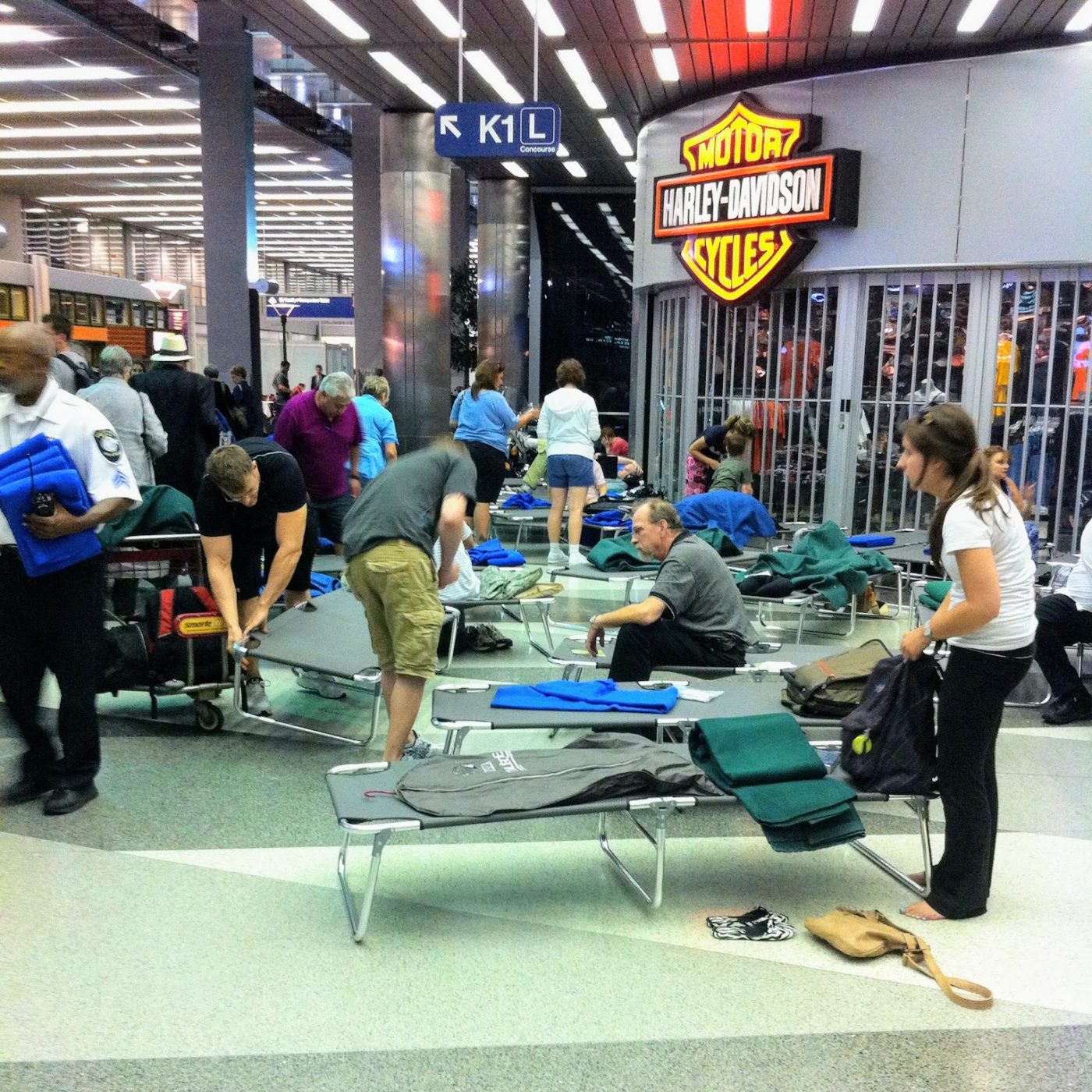
    People Camping Out on Airport Cots
    Wait Here ’til Your COVID Test is Negative

    As travel bookings beginning to rise with vaccination rates, we talk with Michael Giusti of InsuranceQuotes.com to find out what’s changed over the last year. I make the rounds through all my frequent traveler programs to reset impending expiration dates. We also talk about yet another travel data breach, a favorite beer bar is a COVID casualty, and bankrupt Hertz is starting to let its cars get old. All this and more – click here to download the podcast file, go up to the Subscribe section in the top menu bar to subscribe on your favorite site, or listen right here by clicking on the arrow below.

    Here is the transcript of TravelCommons podcast #173:

    This Week

    • Intro music — Warmth by Makkina
    • Coming to you again from the TravelCommons studio in Chicago, Illinois on what has been a nice week. Temps got into the 60’s at the beginning of the week, so I broke out the bike for a ride along the lake — sunny in most parts, but a bit chillier in the shady parts, riding narrow paths cut through 5-ft ice and snow mounds, the remnants of what were really impressive pile-ups of shore ice during the February deep freeze.
    • No travel since the last episode, but heading out next week to hang out on the beach in San Diego, reloading from our January pivot away from California because of their lockdown. A couple of months on, COVID cases are down, the state’s order banning hotel and Airbnb hosts from renting to out-of-state’er is gone, outdoor dining has re-opened and, most importantly, the craft brewery taprooms are open again. I pointed my little Python Untappd script at San Diego and can see a lot of Brewery check-ins. In between those taproom visits, I think we’ll manage to squeeze in some biking and kayaking. 
    • And like many folks, we’re building our travel calendar for the rest of the year. Nashville, New York City, Northern Michigan, and Maine written in pen through the first half of the year. We’re penciling in the UK for November, booking it now to lock in no-fee cancelations in case of another winter spike, or what might be more likely, lingering resistance to dropping international quarantine requirements. But I’m optimistic (hopeful?) that the US and UK will get enough people vaccinated by then.
    • I was on a Zoom call a couple of nights ago with a bunch of college friends. “Do you think we can all get together in person in September for Homecoming?” someone asked. “Absolutely,” I said, “we just need to lean into it.” And it feels like that’s what more people are doing — leaning into visits to physically get together with family and friends they haven’t seen for a year now. It’s always dangerous drawing a straight trend line, but it feels like travel might come back quicker than expected. 
    • Bridge Music — Madrugada(rmx) by savoyard (c) copyright 2007 Licensed under a Creative Commons Attribution Noncommercial (3.0) license. http://dig.ccmixter.org/files/savoyard/10743 Ft: Curve

    Following Up

    • I finally pushed out the refreshed website last week. First change since 2006. Figured website aesthetics have changed a bit over the last 15 years and so changed things up a bit. Thanks to everyone who responded to my request on Facebook and Twitter to hit the new site for a bit of crowd-sourced end-user testing. A bit like the meme you’ll see posted in a lot of IT shops; a picture of Dos Equis “most interesting man in the world” with the line — “I don’t always test my code, but when I do, I test it in Production.” There’s still some tweaks I need to make, but it seems pretty solid. Check it out if you get a chance — travelcommons.com — and drop me a line at comments@travelcommons.com with your thoughts.
    • Following up on last episode’s rant about the guy living unnoticed in ORD for 3 months, I tweeted out an article about people living years in airports. Written by a history prof from University of Dayton who researches the history of airports (hey, everyone’s gotta have their niche), the article talks about other airport residents, an Iranian refugee who lived in CDG for 18 years, and most recently, an Estonian guy who was transiting through Manila Int’l Airport last March as the shutdowns hit was stuck there for 100 days until the Estonian embassy could get him on a repatriation flight. That one is brutal. I spent 3 hours in that airport a few years back and even, with everything open, it felt 2½ hours too long. Check out the article — there’s a link in the show notes and at the top of the Twitter and Facebook feeds. It’s a good read.
    • Jim McDonough hit the Facebook page, responding to last episode’s margarita instruction story with one of his own.
      • I know how you feel about teaching the bartender how to make a margarita. We ended a week-long trip to Switzerland by staying our last night at a hotel by the Zurich airport. At dinner, we each asked for a Scotch and water. They brought out this big tray, with a bowl of ice cubes, a pitcher of water, a bottle of Scotch, and two glasses. A crowd of hotel employees gathered to watch. Evidently, they don’t do Scotch and water in Zurich. When I filled the glasses with ice, they gasped. I explained that we live in a hot climate. I went ahead and added Scotch and topped off with a little water, and they winced when I took a sip. A cultural exchange, I guess.
    • Jim, I love you, man, but I gotta tell you — I’d probably be wincing with the hotel staff. My usual Scotch order is — Scotch and glass. But you paid for it (and in Zurich, it’s not going to be a small amount), so even if they couldn’t quite figure out what you wanted, they at least gave you all the tools you needed.
    • One of my absolute favorite beer bars, Bailey’s Taproom in Portland, Oregon, has shut off their taps permanently. I started a project in downtown Portland in January 2013. Found Bailey’s the second night I was there and just settled in; my last beer there was my last night in Portland. The owner said “After reopening to limited seating (after the initial shutdown), it was clear that people were not interested in coming downtown. When the PPP money ran out, I decided to close the doors”  Another reminder that we should try to be purposeful about where we spend our discretionary dollars, thinking about what businesses we would miss if they closed up and then go out of our way to buy something from them. In my case, it helps rationalize a rather full beer shelf in our pantry.
    • After Hertz declared bankruptcy at the end of last May, I predicted in episode #164 that I’d be paying more attention to the mileage on the cars in the Five Star aisle because that’s the first place I see signs of financial distress — a lot less 500-mile cars and a lot more 24,000-mile cars. And while 24,000 miles on a car doesn’t seem like a lot, remember that rental car miles are kinda like dog years — you gotta multiply them by, like, 7 to get to regular car miles. And true to form, when picking up our Hertz car in PHX at the end of January, every car I looked at had over 24,000 miles, a few with a lot more. Will be interesting to see what’s on offer at SAN in a few weeks. 
    • If you have any status on a Star Alliance or One World carrier, you probably got an email from your carrier about a data breach at SITA. I got them from United and American saying my name, account number, and status was potentially exposed and that I should change my password, which I did. And then thought about how this is yet another data leak from some unknown player in what is an incredibly fragmented travel tech tool chain. We talked about this back in November in episode #169 when an obscure Spanish company used by hotels to update information on on-line booking sites leaked 24 GB of names, emails, credit card data and reservation records. And in this case, if you’re not in the airline industry, you probably don’t know about SITA. It’s a industry consortium started back in 1949 by 11 European airlines to share infrastructure costs and has expanded to provide all sorts of travel technology including the exchange of passenger data between airlines — in this case, the exchange of frequent flyer status so that, say, Lufthansa recognizes your elite status with United on your flight with them. It’s one thing when the breach is from a company that you did business with — the Marriott hacks in 2018 and 2020, the 2018 breaches at British Airways and Cathay Pacific. But it’s a whole other thing when you find out some unknown third party coughed up your data. But actually, when you get a look at the spaghetti that is travel technology, and see all the places your data is getting sent to — often small companies that can’t afford state-of-the-art cybersecurity, it’s kinda surprising — in a sad way — that not more of this happens.
    • Type “plane mask” into the Google search box and one of the first 5 suggestions is “plane mask fight”. Click through and you get what seems to be an endless stream of news reports and cellphone videos of passengers fighting about having to wear a mask during a flight. What is getting a lot less coverage, though I’m hearing snatches of it here and there, are people getting chewed out by their row mates when taking their masks off to eat or drink something, getting something like “Hey, can you not drink during the flight? I’d rather not die for your convenience.”  And I’m afraid this is going to get worse as more people start traveling again and aircraft load factors get back into the 80% range. But honestly, both sides are being idiots. You know the rules before you buy your ticket and you’re reminded of them by emails before you travel, and again by gate agents before you board the plane. If you can’t handle the rules — all of them, not just the ones you agree with — then don’t walk down the jetway. Drive; charter a jet. But don’t try to bend the rules to your own personal belief system and hassle the rest of us who are just trying to get from Point A to Point B on-time and with the minimum amount of heartache.
    • And if you have any travel stories, questions, comments, tips, rants – the voice of the traveler, send ’em along to comments@travelcommons.com — you can send a Twitter message to mpeacock, post your thoughts on the TravelCommons’ Facebook page or the Instagram account at travelcommons — or you can post comments on our fab new web site at TravelCommons.com.
    • Bridge music — Tools of the Trade by Doxent Zsigmond (c) copyright 2017 Licensed under a Creative Commons Attribution Noncommercial  (3.0) license. http://dig.ccmixter.org/files/doxent/56512 Ft: Abstract Audio, Mr Yesterday, Martijn de Boer, Speck

    What’s New in Travel Insurance

    • A little over a year ago, the first coronavirus lockdowns started, and the execution of them was, to be charitable, mostly a mess. Borders were quickly shut; planes grounded. People were stranded in foreign countries with no way home; we just talked about the Estonian guy stuck in Manila airport for 100 days. And all of a sudden, people started paying attention to travel insurance. What was once a check box at the bottom of a booking webpage that most of us clicked “no” on so we could finish our reservation quickly became very important. Last May in episode #163, as people were beginning to think about their first post-lockdown trips, we talked about the state of travel insurance. Now, with travel bookings beginning to rise as vaccination rates rise, I wanted to check back in and see what’s changed with travel insurance. So I asked Michael Giusti, senior writer at InsuranceQuotes.com, to come onto the podcast and give us an update: 
      • Mark: Michael, last May, Eric Josowitz of InsuranceQuotes.com was on the podcast. We were talking about travel insurance after the initial lockdown. Back then, in the midst of all that travel disruption, many travelers were finding:  a) they didn’t actually know what their insurance covered; they’d just checked the box at the end of their booking process, paid some additional amount moved on; and  b) the insurance that they had bought had exclusions for communicable diseases, WHO-declared pandemics, cancellations in cases of fear. And then, after that, insurers stopped offering travel insurance. So, Michael, that was May. This is now the end of February. What’s the current situation regarding travel insurance?
      • Michael: Not many people were thinking about pandemics back when this started. But the few people who were thinking about it were insurers. They saw the SARS epidemic and they started writing in pandemic exclusions from that point on. And then there’s a second little provision in these insurance policies called the Known Events Provisions. So once the pandemic declared, even if there wasn’t a specific exclusion, they can turn around and say, “Well, we’re not going to cover because it’s now a known event.” It would be like there’s a hurricane that’s bearing down on your city and you buy a plane ticket while the hurricane is there, and then you get mad because you can’t fly. It’s a known event, and so they’re not going to cover that. So that’s where we came from. And then, you’re right, they stopped and they said, “Well, we have no idea what’s going on, so let’s regroup.”  And now they’ve regrouped, and it’s really interesting because in a lot of the insurance industry, they’ve stopped covering pandemics. But in travel insurance, they specifically started including Covid 19, saying “We will cover it under these conditions.”
      • Mark: Michael, travel requirements have been changing quickly; the restrictions have been going in and out. I mean, most recently, the need to provide a negative COVID test just to be able to get on a plane.  If you look at what Canada did, they basically gave travelers one-week notice of the rule change at the end of 2020. But if you’ve bought a travel insurance policy when you booked travel six weeks prior, what’s the best way to cover these late breaking requirements that pop up a week or two before our trip?
      • Michael: Two main things… One is the policy language. You do need to say what’s specifically included, what’s specifically excluded? Because whether they’re going to cover not having a negative test very much depends on the policy language. The other thing that it’s going to come down to is whether it’s out of your control. If it’s something that you’ve neglected to do, it’s never going to be covered. The policies I’ve reviewed, I haven’t seen any that specifically kick in if you haven’t got a negative test. So if you’re worried about that, you really do need to ask the agent or really read that fine print. I do know that if you’re delayed at security while you’re being tested, that’s not covered. So you do have to get there in time to make sure if they do rapid tests on the spot, that you’re going to have time to get through security.
      • Mark: Okay, let me unpack that just a little bit, Michael. So I booked my flight, and I’ve booked it a month ago. And now I go to take my test 72 hours before departure, and I come up positive. If I’ve bought the right policy, would that typically cover delay or cover cancellation?
      • Michael: Delay is always the first preference. So if we can just push this trip back a week or whatever, that’s going to be everyone’s favorite outcome. But there are cancellation provisions where, say, you can’t move it because the wedding is not going to be moved, in which case the cancellation provisions might kick in.
      • Mark: So now let’s flip that. I’ve taken my test, it’s been negative, I get on the plane, I fly down to Costa Rica. And now a week on, I’ve taken my test to get back into the US and now that test comes out positive. So now, potentially, I can’t get back into the US. How does insurance help me there?
      • Michael: There’s a couple places where this insurance is going to really beneficial in that situation. First and foremost, the medical provisions in most of these comprehensive policies are going to actually help you pay for your healthcare. Many of them are going to be secondary coverage, meaning they’re going to want your primary health care to kick in first and then they’ll jump in and cover anything that’s not covered. Some of them are primary, especially with the overseas trips. So, that’s a really nice benefits that are built into a lot of these policies. The other place that will help is, if you’re delayed because you can’t travel because of a restriction like that, and that’s outside of your control, a lot of them will cover a hotel while you’re waiting and meals while you’re waiting, and they’ll get you back home safely. So that’s actually a really positive outcome that can happen with these policies.
      • Mark: Michael, how do I make sure that I’ve actually got one of those policies? If we go back to the April/May timeframe, people were finding that they didn’t actually know what they had. How do I make sure I’ve actually bought that coverage?
      • Michael: Well, best case scenario would be if you found a human and you asked them in plain English.
      • Mark: Yeah, good luck with that, right?
      • Michael: I know, calling 1 800 numbers anymore – that’s not in the cards. What I would do if I was doing that, I’d click through the terms of service and see who’s offering that policy. If it doesn’t really go into much detail, or if it’s really garbly legalese, I’d go through to the provider’s website. Most of them have FAQ pages that specifically address COVID. So that’s gonna be probably your best resource.
      • Mark: Michael, people are starting to think about big trips as vaccination rates start to step up. You know, the back half of the year, if I’m thinking about booking, say, a week’s biking tour in Tuscany or Provence in September/October, what kind of travel insurance should I be looking for? Should I pony up for a cancel- for-any-reason rider? Or are there some cheaper alternatives for more limited scenarios like, “Hey, the EU still isn’t letting Americans in” but won’t cover the more generic “Oh, I’m afraid to travel” kind of reason.
      • Michael: The question of “if you’re afraid to travel” is never going to be covered unless you do have that cancel-for-any-reason policy. But travel insurance is meant to cover things that are out of your control. So you know, if it’s not laid out your policy, it’s not gonna be covered. So that’s kind of the most expensive option. You know, you’re going to pay the most for a cancel-for-any-reason policy. That middle ground is the standard policy where you say “I’m taking a little bit of the risk on myself. I’m going to bravely travel wherever I’m allowed.” The least expensive option is really kind of a DIY. And a lot of the destinations that I’m seeing, they’re waiving cancellation and change fees. And so you can kind of make your DIY travel insurance by only booking places that would let you change for no fee. That’s kind of the cheapest “I’m feeling brave” policy. “I’m feeling skittish” policy Is that cancel-for-any-reason.
      • Mark: Super. Michael Giusti, senior writer at InsuranceQuotes.com, thank you very much for joining us. This was a great update.
      • Michael: Thank you so much.
    • Bridge music — Crazy Love-The Alex & Lang mix by J.Lang (c) copyright 2007 Licensed under a Creative Commons Attribution Noncommercial (3.0) license. http://dig.ccmixter.org/files/djlang59/10579 Ft: FHC and Alex & Bradsucks

    Keeping Ahead of Expiring Miles

    • Like most road warriors of a certain tenure, I have cards in my desk of some 30-odd frequent traveler programs — those that I know of — and am probably a member of another dozen or so that I’ve forgotten about. Of those, I have meaningful balances — enough for at least one free flight or a free hotel night — at the Big 4 US carriers, a couple of European carriers, and two of the big hotel chains. Most of the rest are random programs like IcelandAir or AirBaltic or Omni Hotels that I used for a specific trip or project but had some spiff, like seat selection or free WiFi, that was reason enough to put in the effort to sign up.
    • When I was traveling every week or so, keeping those main programs active wasn’t a big effort. And if I hadn’t flown, say, BA for a while, I’d code maybe a short American commuter flight, something where my status was a bit meaningless, to my BA account to reset the expiration clock.
    • But now, hitting the first anniversary of the first travel lockdown and with business travel still mostly on hold, some of those expiration cliffs are starting to become visible
    • Last episode, I talked about getting emails from BA and Iberia warning me of pending Avios expirations, and so I transferred my Iberia points to my BA account. But I can’t tell from the BA website if that was enough activity to change the BA expiration. So I spelunked some more thru the website and found where they call out Airbnb bookings as “recognized activity” that’ll reset the 36-month clock. So, I booked our San Diego Airbnb through a link on BA’s site, just had to enter my BA account number before moving to the booking screen. It’ll be interesting to see if the activity flows seamlessly into my BA account or if I’ll have to chase it down through a manual credit claim. I’m betting on the latter, but am hoping to be pleasantly surprised.
    • But that got me cycling through my other accounts. I wasn’t worried about my US carrier accounts. The trend there has been to do away with expiration dates, first Southwest, then Delta, most recently United. American, not surprisingly, is the knuckle dragger, clinging to their stingy 18-month policy, but I flew them last fall to PHL, so I’m fine there.
    • But Flying Blue, the KLM/Air France program? I last flew KLM the fall of 2018, so that had to be coming up. I hit the website; those miles were also expiring at the end of this year. And, they, like BA and Iberia, have managed to make resetting that data way overly complex.  First, there’s “overall extending activities” which are flights or purchases on their co-branded credit card; they extend all Flying Blue miles by 2 years. “Partial extending activities” extend miles earned through, say, hotel or car rental partners. Please note, says the website, “‘Partial extending activities’ do not extend the validity of Miles earned from ‘Overall extending activities’”. OK, then. Looking at it this way, I only had 500 miles from that 2018 flight, but 38,000 miles from when I had to quickly stash points from a corporate Amex account before leaving a company. So, a “partial” activity should suffice. I set myself a reminder for Dec 1st to push the minimum 1,000 points from my personal Amex.
    • And the expiration periods are kinda all over the place. BA is 36 months; KLM, Marriott, and Hyatt are 2 years; American is 18 months; Hilton is 15 months (weird number); and IHG is the stingiest at 12. 
    • Seems like there should be a technology solution to this, right? There are a few. If you use TripIt to consolidate your trip itineraries, the $49/year upgrade to the Pro version gives you program tracking. I had used it one year when they upgraded me for free; probably by mistake. AwardWallet is another popular tool, but there too, you need to upgrade to the paid version (a little cheaper at $30/year) to track expirations.
    • But beyond the cost, for these programs to work, you have to give them access to your accounts — your account numbers and passwords. And cycling back to what I was saying at the top of the show, with the travel industry’s kinda poor track record on data protection, and just after having to reset passwords to United, American, Lufthansa, BA, and Iberia because of SITA’s leak, do I really want to put all my frequent traveler logins into one spot? I think a simple spreadsheet on the hard drive of the PC in my office can do the job just fine.

    Closing

    • Closing music — Pictures of You by Evangeline
    • OK, that’s it, that’s the end of TravelCommons podcast #173
    • I hope you all enjoyed this podcast and I hope you decide to stay subscribed.
    • Nothing new on the tech front this month, but I should have the website freshened up by the next episode. I’ve had the current look since the beginning of 2006 courtesy of TravelCommons listener Hilary Baumann and her Fascination Design firm. The change is absolutely not a knock against Hilary’s work. It’s just that, after 15 years, I wanted to freshen things up a bit. So look for that by the end of February or beginning of March.
    • Find TravelCommons on Stitcher, SoundCloud, TuneIniTunes, Spotify, and Amazon Music, as well as asking Alexa, Siri, and Google to play TravelCommons on your smart speakers. The links, along with the RSS feeds, are on the right-hand side of the TravelCommons website, under the heading Subscribe.
    • Right below that, in the Social Media section, are links to the TravelCommons Facebook page, and Twitter and Instagram feeds.
    • If you’re already subscribed, how ‘bout leaving us a review on one of the sites.
    • If you have a story, thought, comment, gripe – the voice of the traveler — send ‘em along, text or audio file, to comments@travelcommons.com or to @mpeacock on Twitter, or post them on the TravelCommons’ Facebook pageInstagram account,  or website at travelcommons.com. Thanks to everyone who has taken the time to send in e-mails, Tweets and post comments on the website
    • Follow me on Twitter
    • “Like” the TravelCommons Facebook page
    • Direct link to the show
  • Podcast #172 — Timeshares Without the Pitch; Notes on Tucson

    Podcast #172 — Timeshares Without the Pitch; Notes on Tucson

    Escaped the Chicago winter for a week of hiking in the mountains around Tucson and searching for good Sonoran food. We also talk with Mike Kennedy, CEO and Co-Founder of Koala about how he’s making it easy to rent timeshares without buying into them. All this and more – click here to download the podcast file, go over to the Subscribe section on the right to subscribe on your favorite site, or listen right here by clicking on the arrow below.

    Here is the transcript of TravelCommons podcast #172:

    This Week

    • Intro music — Warmth by Makkina
    • Coming to you again from the TravelCommons studio in Chicago, Illinois on, depending where you are, Fat Tuesday or Shrove Tuesday or Pancake Tuesday. Here in Chicago, with a big Polish population, it’s Pączki Day and I had mine for breakfast — Polish-filled donuts; I went for a raspberry jam and a custard one. What had been one of the mildest winters on record started reverting to the mean in February. The last day the temperature cracked freezing was almost 2 weeks ago and it has snowed 13 of the past 17 days. We were all waiting for this, veterans of Midwest winters. It got me thinking that maybe Irene and I should’ve delayed our trip to Tucson from the third week of January when the temperatures here were hitting the mid-40’s, to last week or this week when we could’ve enjoyed 50-60° temperature differentials.
    • But even without the guilty pleasure of posting schadenfreude-trolling Instagram pictures of sunshine and temperature readings, we had a good week in Tucson. The flights out and back on Southwest were uneventful, and not full; the Airbnb was fine; the desert hikes were great, and we hit some good restaurants and taprooms, which, as I talked about in the last episode, was the main reason we pivoted from original destination, locked-down/shutdown San Diego to Tucson. Probably our only disappointment was not finding a great margarita — which we fixed in the Amex Centurion Lounge in PHX while waiting for our flight home. I’ll talk more about Tucson later in the episode, but I also wrote up a blog post with all the details. If you go to the episode description in your podcast app, there’s a link that should be clickable to take you straight to the post.
    • Even though Southwest’s open middle seat pledge expired in December (Delta’s the last one standing), no one landed in our middle seat on our MDW-PHX flight. That flight was a lot longer than I remember it being last year. I think it had something to do with the mask. Before getting on the plane, I switched from my standard EvolveTogether surgical style mask to a Korean version of the N-95 mask, decided to dial it up not knowing if I was going to be shoulder-to-shoulder with a stranger for 3+ hours. The KN-95 wasn’t too uncomfortable, as masks go, so I didn’t swap it out for my other mask when the middle seat stayed empty. My strategy with Southwest’s open seating was to go ¾’s of the way to the back of the plane, about halfway past the exit row. I figured this would mean fewer people walking past us but far enough away from the rear lavs to avoid the in-flight queues. And, since people still want to deplane quickly, if the last boarding groups, the C groups, were left with just middle seats, they’d take them in the front of the cabin. As it turned out, I probably over-thought that a bit; I didn’t see any occupied middle seat in the front or the back.
    • Then, a couple of days before our flight home, I got the dreaded e-mail from Southwest — the flight “may not allow for an open middle seat next to you.” I waited until the night before to tell Irene. She’s a little more COVID risk-averse than me and didn’t want her stewing on it. But it turned out OK. She grabbed the 2-seat second exit row — aisle and middle seat; no window seat. And looking behind us, I didn’t see any row with an occupied middle seat, so either people swapped their flights after receiving that email, or the flight was just a shade over ⅔’s full with any occupied middle seats in the front of the plane. And, those margaritas from the Centurion Lounge helped the flight home go by just a wee bit easier.
    • Bridge Music — P.I.H.E. by Budapest BluesBoy (c) copyright 2010 Licensed under a Creative Commons Attribution license. http://dig.ccmixter.org/files/hepepe/26362 Ft: Inna Barmash – Zhurbin

    Following Up

    • The story of the guy who lived for 3 months on the secure side of O’Hare’s domestic terminals after getting off his flight from LA using an airport ID badge that an airport operations manager had reported missing back in October.  Shades of Tom Hanks’ character in “The Terminal”. Now, O’Hare is a big airport but it’s not “hang out for 3 months unnoticed” big. There are hundreds of TSA, Chicago Police, and airport security staff — not to mention all the airline gate agents, wheelchair porters, restaurant workers, and airport maintenance staff. And not one of them noticed this guy wandering around at all hours with an expired badge, even when passenger volumes are cut in half — until finally, 2 United Airlines workers asked to see his ID. This is bad — like Cats, The Movie-level bad, like Fyre Festival bad. Seems that, 20 years on from 9/11, “see something, say something” has faded. The TSA and Chicago Dept of Aviation should have to come up with some answers — but a month on, I think they’ll quietly drop the charges and bury this thing, hoping that the next guy is a bit more obvious.
    • In the last episode, I wondered what the airlines and hotels will do about elite status protection if travel continues to be slow through the summer and closed saying “it’ll be interesting to see what they offer come May”. Well, I was off by, say 4-5 months. Things are moving fast. A week after posting that episode, I got an email from Southwest saying they were extending my Companion Pass from June to Dec, and then offers from American and United for status qualifier accelerators. The slooow roll-out of coronavirus vaccines is cutting into what was an end-of-year travel planning spurt. ValuePenguin — we’ve talked to them in prior episodes about travel credit cards — they did a survey in December and found people getting rev’d up for travel — 16% of respondents booked travel as a result of vaccine approvals, 34% had bought plane tickets within the last month, and, in a turnaround from earlier in the year, 47% had increased use of travel credit cards to earn miles to fund their next trip. But two months on from that survey, you already hear some folks starting to write off the summer. Which, with airlines talking about new furloughs and hotel unemployment back up to 23% in January, isn’t great news for anyone.
    • I also got emails from Iberia and British Airways reminding me that I have Avios balances with each of them that are expiring; Iberia’s at the end of March; BA’s the end of the year (interesting difference in warning periods). Iberia and BA merged 10-11 years ago to form IAG which later bought Aer Lingus, and all 3 use Avios points for their frequent flyer programs but they keep their programs separate. So I have different Avios balances at all three. For most of these programs, you need to have some activity over 24-36 months to keep your point balance. Some airlines have extended these timelines for COVID, but apparently not Iberia or BA. In the past, the easiest thing to do was transfer over the minimum number of credit card points from Chase or Amex — usually 1,000 points — and that activity would reset the clock. I was about to run that play again, but something made me check out the rules first. And, sure as hell, the Iberia website says that transferring miles doesn’t count as activity. Now while Iberia’s and BA’s Avios programs are separate, you can transfer points between them if you dig hard enough — I talked about burning a Saturday afternoon on this back in episode #136. But they’ve made it easier in the intervening years; I scrounged around and found the page I needed to transfer all my Iberia Avios points to my BA account. I’ll give it a month to see if BA considers this transfer as enough “activity” to reset the 36-month clock. If not, I have until the end of the year to try an Amex transfer or, failing that, code a night’s Marriott or Hyatt stay to my BA account. Reminds me to make the rounds of my other odds-n-ends loyalty programs and see what else might be expiring.
    • I mentioned in the last segment that we hit the PHX Amex Centurion Lounge before flying home from our desert hiking week. I’ve talked in past episodes about how these lounges are head-and-shoulders above the regular US airline lounges — great food, open bars. The only problems — not enough of them and, because they’re a great deal, they get crowded. Or did pre-COVID. Walking into the PHX lounge, we saw maybe a dozen people. They’re still serving food, but they now have staff dishing it out for you from the buffet line. But we’d picked up a couple of sandwiches from Pizzeria Bianco, a great pizza and panini place, so we were just looking for drinks. I thought about a beer, walking up to the bar, the tequila bottle caught my eye, reminding me we hadn’t been able to find a good margarita in Tucson. The bartender solved that problem; she made two great margaritas. So good, that I wanted to squeeze one more in before heading down to the gate. I walked up to the bar; different bartender; I hoped her margaritas were as good. She looked at me for a moment and then said, “I have to be honest with you; I’ve never made a margarita before, but I’ll give it a try.” She was one of the girls from the buffet line standing in for the bartender while she was on break. I could’ve pivoted to a beer, but when she said “I’ll give it a try.” “No problem,” I said, “I’ll walk you through it.” Grab the shaker, fill it with ice. Take the tequila bottle, fill the large end of the jigger, pour it into the shaker. Now turn the jigger over and fill the short end with Cointreau. Pour that in. Now a short shot of lime juice. Now put the lid on and shake it. Now strain it into that martini glass; we’ll skip the salt rim. She was great; a little nervous, but game for it. We thanked each other — me thanking her for yet another good margarita; she thanking me… but for what, not being another miserable, entitled Platinum card holder? Absolutely my best Centurion Lounge experience yet.
    • And if you have any travel stories, questions, comments, tips, rants – the voice of the traveler, send ’em along to comments@travelcommons.com — you can send a Twitter message to mpeacock, post your thoughts on the TravelCommons’ Facebook page or our Instagram account at travelcommons — or you can post comments on the web site at TravelCommons.com.
    • Bridge music — ~aether theories~ by Vidian (c) copyright 2018 Licensed under a Creative Commons Attribution (3.0) license. http://dig.ccmixter.org/files/Vidian/57398 Ft: Gurdonark, White-throated Sparrow

    Timeshares Without The Pitch

    • For our Tucson trip, Irene ended up booking on Airbnb what turned out to be someone’s timeshare rental in a golf resort west of Tucson. It was a new one for us, and a little different than the typical Airbnb experience — we had to put down a credit card for incidentals, and then had to check-out and check back in halfway thru the stay — but it was a nice place and, better yet, we didn’t get trapped in a small room for an hour-long sales pitch.
    • And so when we got back home and I got a note from Mike Kennedy introducing me to Koala, the timeshare rental search platform he co-founded and launched last August, I asked him to come onto the podcast to talk about timeshare rentals and how they fit into the travel eco-system:
      • Mark: Mike, help us understand how timeshare rental fits into that spectrum of accommodations that travelers might be more familiar with. If I think about that spectrum, I could go from hotels to B & Bs to vacation rentals to private home rentals. Where does timeshare rental fit?
      • Mike: That’s a great question. There’s kind of a natural bifurcation in options when you’re selecting accommodations for vacations. You’re either going down the route of an Airbnb or a VRBO.  You want to rent a home because you want some space, or you want to stay in something that is a hotel. But in those two scenarios, you typically have compromises, and the compromise with hotels is that, especially if you have a family, you’re typically getting one hotel room in cramming your family in or getting adjoining hotel rooms. But you get the confidence that it’s managed by Mariott or Hilton, etc. Conversely, if you’re getting a home rental, it’s the opposite. You have the ability to rent a whole home. You don’t have to leave three times a day for meals. However, you don’t know who it’s being cleaned by, or what protocols are being upheld. And in today’s world, those things are really important. The timeshare product is the only natural hybrid product in the marketplace. You have all the benefits and features of your vacation rentals like the living rooms, the shared bedrooms, washer and dryer; all that space that you want from a vacation rental. But it’s managed by a Marriott or Hilton, and it has resort amenities like swimming pools, check-in desks; things like that that give you the confidence again in today’s world with that, people really want. Before us, the options to get one of these was to pay a lot of money on these OTAs, these online travel agencies through a rental, or to go and buy into one of these programs. And that’s not really either affordable or even appealing to a lot of people.
      • Mark: What does Koala offer travelers that, say, Airbnb doesn’t? I recently rented a Club Wyndham timeshare in Tucson from an owner on Airbnb. So how would that transaction be different/better/more optimized on Koala?
      • Mike: So, a couple things. One. You don’t see a lot of timeshare inventory on Airbnb for the reasons I’m about to discuss. And that is because it is not a platform that is built for that product.
      • Mark: What are some of the unique pieces that make Airbnb not optimized for timeshare rental?
      • Mike: If you own a home, you can open up a calendar for 365 and you can set different prices and different availability based off of that open calendar. If you own a timeshare, you typically own a seven-day interval.  And how do you fit that into some place where it gets visibility for someone that may not be searching for those exact beginning and end dates? So, what ends up happening is that a lot of people show up to the resorts and the reservations are incorrect or wrong, or just not there at all. You know, it is a system because there’s a little bit of a square peg in a round hole. Don’t get me wrong. It sounds like you had a fine experience, but they don’t manage that in a way that is designed to be managed. There’s a third party involved in this, the resort.  When it’s an Airbnb, it’s a host and it’s a traveler, and those two will figure out and arrange something. With a resort stay, there is a third party. There’s a guest certificate transfer that happens on the back end to ensure that your name as a traveler gets switched to the reservation ledger in the system to ensure that the guest gets to walk into that check-in successfully. We do all that. There are extra steps involved that we ensure. And we handle all of that.
      • Mark: So it feels like you’re acting as an OTA, an online travel agency like an Orbitz or an Expedia, to provide search, discovery and then booking.
      • Mike: Correct, yes
      • Mark: As you were working towards your August launch, what were some of the biggest challenges you faced in getting that inventory so that people could search and book?
      • Mike: That is the question, right? So, I know this from my time in Hilton Club that there was a problem in how people underutilize their timeshares but still had fees to pay. And that went from “I bought this thing; I don’t understand it” all the way up to “I loved it for 10 years; I’m just done with it and now what?” and everything in between. But at the end of the day, if you have a $2000 annual fee to pay, it becomes a problem. So, I knew that it was something that if we connected with these owners, we could help solve that problem for them. What we didn’t understand was that, in many cases, these owners don’t even know what they own. They don’t know where to start. It’s not like you have a vacation rental, and you’re like “Oh, here’s the house; I take some photos; I’m going to throw up a price and I’m going to rent a couple nights out, and I’ll adjust the cost per night based off of rentals.” You have this thing that is either a fixed week or it’s not; it’s a specific resort or it’s not. And in many cases, people don’t really know what they bought. And in some cases, they bought something and then upgraded to something else. So that was by far the biggest problem was getting people to understand what they own. How do you create an asset out of that and leverage that asset in a way that could earn you some revenue? It’s still a process that we’re going through, like really making it very, very simple. You know, we’re not really just tapping into this supply; we’re really empowering a whole group of people to understand this process.
      • Mark: Mike, last question. How did you get this idea? How’d you get started on this down this path?
      • Mike: Yeah, good question. I was a musician when I was in my twenties, and I kind of meandered into residential real estate. And the real estate market in 2007 in New York, everywhere was just kind of flat. So, one of my good friends was like, “You should come check out this condo hotel; it’s fractional real estate.” I ask “What the heck is fractional real estate?” “No, come check it out. It’s Hilton.” “Alright.” I went in there. I’m like, This is cool. There’s a lot of hustle and bustle. My office is kind of dead; this office is moving. So, I joined the team. Three weeks into training, I ask “Is this a timeshare?”  They’re like “Yeah…”, but I was already hired in the job. It really started to resonate with me — the more and more time I spent with people that I sold, after they’re coming in over and over again, and we’re trying to upgrade them into something else. It was cool, this product is great, but now people are looking for ways out, and I don’t have answers for them. The solutions weren’t there on the back end that I was hoping for. So, it really was a direct result of me being in touch with those situations that I felt like I could help. And yeah, I took the leap and I said, Look, this is where this is a problem we’re solving. I think the industry is great. I think there’s a lot of upside. I think it’s got a bad rap, but I think if we mitigate some of that and amplify what people love about this industry, I think it will go a long way.
      • Mark: Fantastic. Mike Kennedy, CEO and Co-Founder of KOALA. Mike, thanks for joining us on the TravelCommons podcast
      • Mike: Thanks, Mark.
    • Bridge music — The Long Goodbye by John Pazdan (c) copyright 2008 Licensed under a Creative Commons Attribution license. http://dig.ccmixter.org/files/flatwound/14476

    Notes on Tucson

    • As I said at the top of the show, Irene and I had a good trip to Tucson at the end of January — pretty much just hiking, eating, and drinking. I wrote it up in a blog post on the TravelCommons website — “Quick Notes on our Trip to Tucson”, though at over 1,700 words, I’m not sure it necessarily qualified as “quick.” But there are some pictures, and links to all the parks, restaurants, and taprooms we enjoyed. Also a link to the Tucson Instagram story on the TravelCommons Instagram page if you want to see some more informal pictures.
    • We flew into PHX rather than TUS because the non-stop flights were cheaper and there were more of them. I was going to rent a car anyways, so the 100-mile drive straight down I-10 seemed a good trade-off for better flights. The only hitch in that plan was the bus between the terminal and the rental car center. They limited capacity to 15 people, which made sense. However, they didn’t add buses to make up that lost capacity. Wasn’t a problem when we got on the bus at the terminal, but the queue at the rental car center stretched the length of the center; hundreds of people trying to get back to make their flight. I saw some folks bailing out and calling Ubers. Made a note to add an extra 30 minutes to our return time. Turned out we didn’t need it; walked straight from the Hertz lot onto a bus. But that was OK. I used that time for my margarita lesson — definitely a greater good.
    • Tucson sits kinda at the bottom of five sets of small-ish mountains; they’re an awkward size — bigger than hills, but except for the Santa Catalinas, don’t feel big enough to be “mountains”. Which was OK because all we wanted to do was hike, well really walk, the trails. To be outside under blue skies in the high 60’s/low 70’s; that’s what we really wanted to do; to take a break from grey Chicago and to be far enough away from people that we could walk around without masks. 
    • Back in episode #168, we talked about traveling for food, that food is one experience of a place that can’t be easily exported and bought on-line. In that episode, I talked about eating our way through South Philly and a pasty tour of Michigan’s Upper Peninsula. In Tucson, it was the hunt for Sonoran food, a type of Mexican cuisine that you don’t see much outside of, well, the Sonoran desert — Southern Arizona and the Mexican state of Sonora. It hasn’t “broken out” the way that, say, Tex-Mex and Baja and Oaxacan styles have. It’s all about beef, mostly carne asada grilled over mesquite and served in a thin flour tortilla that’s more like the wrappers you get with Chinese Mandarin food than the thick flour tortillas you get with fajitas. Cross-referencing a couple of local food blogs, I had a list of places to try. And honestly, it was a bit of hit-and-miss; mostly misses the first couple of nights, but then we hit gold at the end of our stay. Looking back, I think we tried the nicer places on the list first. They weren’t bad; they were fine, but not places I’d go out of my way to recommend. And after that — disappointment is too strong of a word, we kinda said, screw it. We found the Sonoran hot dog truck and ate a couple of $3 bacon-wrapped hot dogs topped with chopped tomatoes and onions, pinto beans, mayonnaise, mustard, and salsa verde off the hood of our rental car. And then drove over to a restaurant that’s website made it look very foody — scrolling photos of nicely plated dishes — but almost passed the building by; it looked like a repurposed Arby’s or Hardee’s with a vinyl sign pulled over the original one. But the food, especially the cabrito, the goat tacos, were phenomenal. Not all the dives were great; some disappointed, some were “meh”. But the ones that were great made it worth the “meh’s”.
    • But the absolute highlight of the trip? I was standing out on the back patio of our timeshare watching the sun set over the Tucson Mountains; it was beautiful; when I heard some rustling off to the right. What looked like a good-sized wild pig walked out from between two bushes and across the backyard. And then another one. They stopped, turned to look at me, and then kept walking. More kept coming – walking the same path across the backyard. They were javelinas, and Wikipedia told us that their groups are called “squadrons”.  Well, our squad looked comfortable here, like they were taking their usual end-of-day stroll back to wherever they bed down to stay safe from mountain lions. And the next morning, a couple came back sniffing around the patio door. I wondered if they smelled the egg and toast I made for breakfast. They reminded us to keep that patio door closed.

    Closing

    • Closing music — Pictures of You by Evangeline
    • OK, that’s it, that’s the end of TravelCommons podcast #172
    • I hope you all enjoyed this podcast and I hope you decide to stay subscribed.
    • Nothing new on the tech front this month, but I should have the website freshened up by the next episode. I’ve had the current look since the beginning of 2006 courtesy of TravelCommons listener Hilary Baumann and her Fascination Design firm. The change is absolutely not a knock against Hilary’s work. It’s just that, after 15 years, I wanted to freshen things up a bit. So look for that by the end of February or beginning of March.
    • Find TravelCommons on Stitcher, SoundCloud, TuneIniTunes, Spotify, and Amazon Music, as well as asking Alexa, Siri, and Google to play TravelCommons on your smart speakers. The links, along with the RSS feeds, are on the right-hand side of the TravelCommons website, under the heading Subscribe.
    • Right below that, in the Social Media section, are links to the TravelCommons Facebook page, and Twitter and Instagram feeds.
    • If you’re already subscribed, how ‘bout leaving us a review on one of the sites.
    • If you have a story, thought, comment, gripe – the voice of the traveler — send ‘em along, text or audio file, to comments@travelcommons.com or to @mpeacock on Twitter, or post them on the TravelCommons’ Facebook pageInstagram account,  or website at travelcommons.com. Thanks to everyone who has taken the time to send in e-mails, Tweets and post comments on the website
    • Follow me on Twitter
    • “Like” the TravelCommons Facebook page
    • Direct link to the show
  • Podcast #151 — Traveler Data Leaks; Brittany Street Food

    Podcast #151 — Traveler Data Leaks; Brittany Street Food

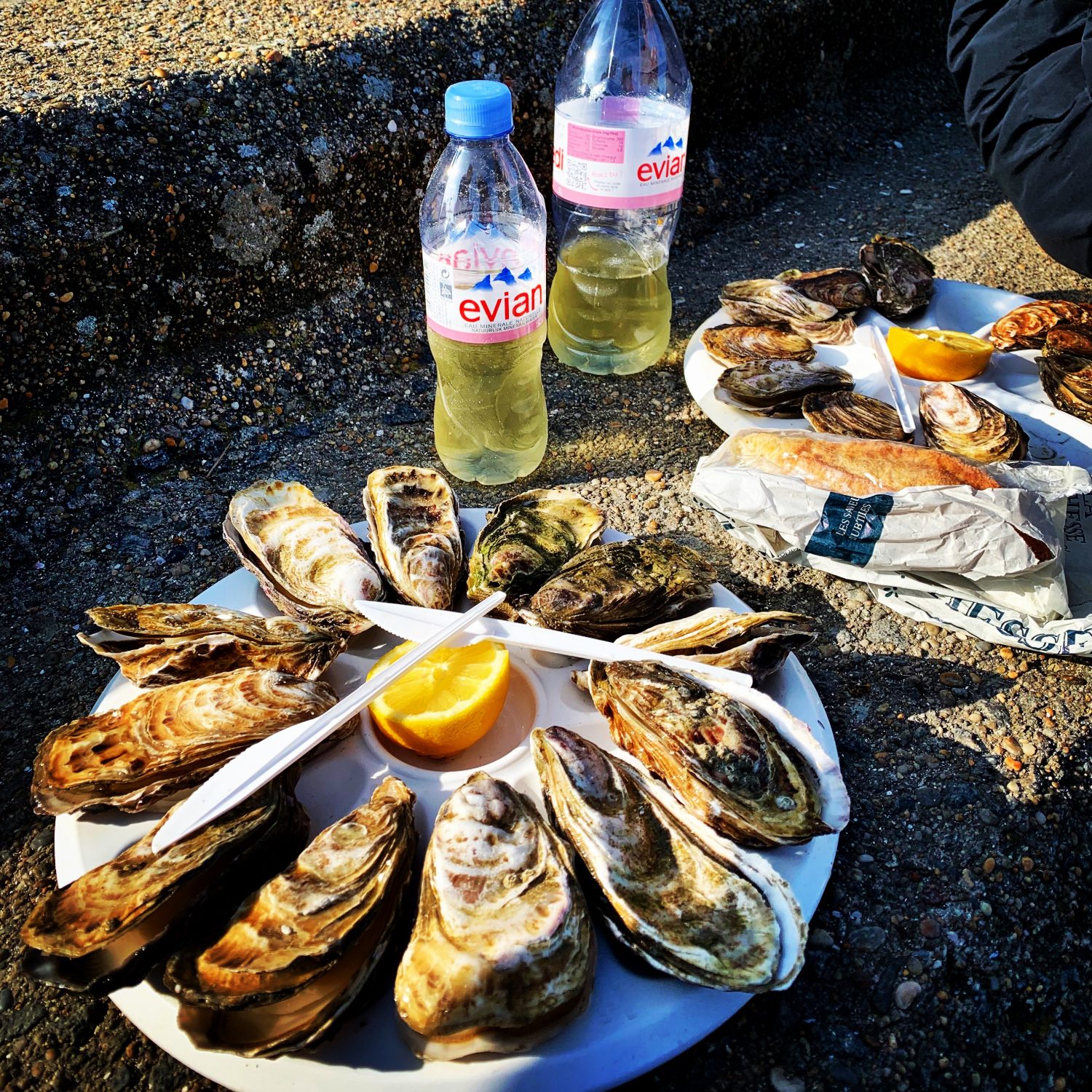
    Cancale Oysters with a nice Evian Sancerre

    Squeezing in another episode before moving the TravelCommons studios, we talk with Candid Wueest of Symantec about websites that leak traveler data and what we can do to protect ourselves. I talk about yet more frustration with the Avios frequent flyer program, while a listener writes in about his great experience with Freebird, a new flight rebooking service. I wrap up talking about great street food we had while touring Brittany, France last month. All this and more at the direct link to the podcast file or listening to it right here by clicking on the arrow below.

    Here is the transcript of TravelCommons podcast #151:

    • Intro music — Warmth by Makkina
    • Coming to you today from the TravelCommons studios outside of Chicago, IL, for the last time…. Not the last time for TravelCommons, just the last time for the studios “outside of Chicago”. We’re picking up stakes and moving about 20 miles east-northeast to Chicago’s Lakeview neighborhood. Hence the reason for the short-cycle on this episode. We’ll be breaking down and packing up the studio and production bay next week and probably won’t have everything reassembled until the end of the month. The recording isn’t really the issue — I could always go back to my roots and find a spare bathroom to record in. It’s more about the production. I’m not sure I want to shrink my workflow down from a beefy dual 22-inch monitor Windows 10 mini-tower rig to my 2014 vintage 11-inch MacBook Air.
    • Being consumed by the move logistics vortex also means I haven’t done any real travel in the 2 weeks since the last episode — but, given my most recent travel experiences, as laid out in last episode’s Travel Interruptus epic, I’ve appreciated the break. Especially when yet another yet another April snowstorm that blew up 700 flights last weekend. Instead, I’ve been wrestling once again with Avios — the British Airways, Iberia, and now Aer Lingus frequent flyer program — trying to book a Chicago-Dublin-Edinburgh Aer Lingus itinerary for my daughter’s graduation from University of St Andrews next month. I’ve been pretty vocal about my challenges with Avios over the years. In this go-around, the first wackiness was just trying to use the Avios website. To search for flights, you need to log in with your BA, Iberia, or Aer Lingus credentials. I try with all three; and fail with all three. Seems that the passwords given out by BA and Iberia don’t meet Avios’ security rules, so they fail. I assumed the username for my Aer Lingus account was my email address and the password seemed strong enough, but that kept failing too. Finally, after digging around my Aer Lingus profile, I found a separate username, which I’d never seen or used before, and that worked. Finally through the gate and onto the second wackiness — the difference between the value of an Avios point on the Aer Lingus and Avios web sites. The award offers on both sites were points + cash. Taking the “market rate” for the ticket (pulled from Expedia), subtracting out the required cash payment, and dividing by the number of required Avios points gives the value of the Avios point for that award offer. My rule of thumb is — get at least 2 cents/point or pay cash. The Aer Lingus site valued an Avios point at 0.7 cents while the Avios site hit my 2-cent minimum. I couldn’t quite understand that 65% difference, but I booked our tickets on the wonkier Avios site before it went away. If I remember anything from my University of Chicago business school courses, it’s that markets are efficient; 65% price differences don’t last forever. Though in this case, that difference may linger because the Avios website makes it so damn hard to find.
    • Bridge Music — Lakeside Jam by spinningmerkaba (c) copyright 2017 Licensed under a Creative Commons Noncommercial Sampling Plus license. http://dig.ccmixter.org/files/jlbrock44/55998

    Following Up

    • Veteran TravelCommons listener Mika Pyyhkala sent in a note this week talking about his great experience with a flight rebooking service, Freebird. Mika writes:
      • I was flying with a companion from (Wichita) ICT-STL and STL-DTW.  Just as the plane was descending to DTW, I received text messages from WN and Freebird that STL-DTW on WN had been cancelled.  Freebird then manually advised that the only flight for that day was a DL STL-DTW, and they were going to book it in case I wanted it; if they waited longer there might not be enough time to issue the new ticket on Delta through their travel agent.  They just asked me to confirm that I in fact wanted the Delta ticket.
      • I confirmed we wanted the 2 Delta tickets, and by the time the door opened in STL we had a confirmation number to check in for the Delta flight leaving in 47 minutes. We got seats together on the Delta flight that were assigned by the Freebird process, and they even gave us free drinks!
      • I think we actually arrived in DTW a few minutes earlier than we were scheduled on the original flight, and it made for a great travel story and adventure!  This was my first time using Freebird as well!
      • It costs $19 to protect a one way trip per traveler.  It’s simple to work with them: unlike insurance, there are no claim forms, long waits, or papers to sign
    • Mika, thanks for this. I hadn’t heard of Freebird before Mika’s note. Hitting their website, they’re selling their service to companies, travel agencies, and to individual travelers. Clicking through to a TechCrunch article about them, it says they’re also talking to Amex and Citibank about including Freebird as a credit card benefit. The article quotes the CEO, Ethan Bernstein – “It’s funny what happens when people deal with uncertainty; uncertainty is the worst. As soon you give people information, human support and technology to help them solve their problems, they experience the event so much differently.”  Which is exactly right. Certainty lets you plan; uncertainty just leaves you to stew… and drink at the airport bar… and eat bad airport food… and bitch Tweet. Yup, uncertainty leads to lots of bad things
    • One more-fun-than-necessarily-good thing on last month’s trip was getting to try out an alpha version of a new augmented reality feature for Google Maps. I used it first in Stockholm; we got off the Arlanda Express at the Central Train station and wanted make our way over to the Östermalms Saluhall for lunch. When I chose “Walking” as our transport mode, a “Start AR” button showed up next to the usual button to start the directions. With AR, I’d hold my phone up, the display would use the camera to show the streetscape in front of me with the  directions — street names, arrows — overlaid on the real-time image. I thought it was a nice add; reduced any ambiguity about where the next turn was. One interesting feature — when I started walking, the screen dimmed and a message popped up telling me to stop looking at the phone and look straight ahead. All in all, it’s kinda fun. At least I thought so; Andrew and Irene seemed much less impressed. It worked very well for what was billed as an alpha product. It’ll be interesting to see how it develops, and how fast Google rolls it out.
    • But even without a broader AR roll-out, Google Maps seems on track to become the next “super app” — sorta the Western counterpart to China’s WeChat — the first “super app”, a Swiss Army Knife-kind of “it does everything” app. Now Google Maps isn’t to that level — yet — but it is growing. It started as a mapping app, then added driving directions, then ride share — showing Uber and Lyft prices, then public transit directions with real-time arrival times, replacing the core use case for apps like Transit. Then the “Explore Nearby” became more prominent — which, for me, has supplanted Yelp when looking for a restaurant because it’s so much more convenient, and with deep links to OpenTable for reservations; and for nearby hotels, direct booking links to Expedia and Booking.com. I wasn’t surprised when I saw a stat that those “Near Me” searches grew 150 percent the last year. I’m not quite sure what I think about this — loving a free service that keeps becoming more valuable vs. becoming more enslaved to the Google overlords. Back in episode #132, I listed all the travel apps on my smartphone, and Google Maps was the most important — “Indeed, it’s the only travel app with its own screen real estate rather than sharing space in the Travel folder,” I said. And it only keeps getting more indispensable.
    • Thinking back to our last day in Paris when both Ubers that we ordered were nice black Mercedes, I couldn’t help thinking how the quality of US Uber and Lyft vehicles has slipped. I remember when I started using Uber in 4-5 years ago, the cars were pristine. I remember working in Baltimore one summer; I was more than happy to wait 5 minutes for an Uber rather than take one of the cabs waiting at the stand right outside the building I was in. Those cabs were so beat up, so full of trash, and most of the time, without working air conditioning. Today, cabs haven’t gotten much cleaner, but Uber and Lyft seem to be lowering their standards. I dunno if it’s because of falling unemployment rates or trying to keep up with growth or squeezing driver pay to improve their post-IPO margins — or all of the above — but I’m seeing a real drop in quality.
    • Long-time TravelCommons listeners will recall that I’ve spent a lot of time in New Orleans airport and other than serving beer in go cups French Quarter-style so you can walk around the terminal with it, there’s not much good to say about it. Especially with regards to food and restaurants. For such a great food town to have such mediocre airport concessions has always been beyond me. But then again, the original terminal was built in 1959, and then expanded in the mid-70’s and mid-90’s. The new $1 billion replacement terminal was originally scheduled to open last year during New Orleans’ tricentennial, but that then slipped to February of this year, then to May, and now to a “to be determined” date sometime in the fall. The restaurant selection is supposed to be much better but I hope they don’t change that beer policy though. One time, waiting out yet another thunderstorm delay, I’d bought a beer and was standing by the gate drinking it because the bar was full. American called boarding and I walked up to the gate. The agent stopped me — “You can drink that beer anywhere in the airport — except on the jetway.” I looked down; I’d forgotten that I was still carrying that beer. I stepped to the side, chugged it, and then got on the plane. Felt like a very New Orleans thing to do.
    • And if you have any travel rants, questions, a story, a comment, a travel tip – the voice of the traveler, send it along.  The e-mail address is comments@travelcommons.com — you can send in an audio comment; a Twitter message to mpeacock, post your thoughts on the TravelCommons’ Facebook page or our Instagram account at Travelcommons — or you can post comments on the web site at TravelCommons.com.
    • Bridge Music — A Thousand And None by Speck (c) copyright 2018 Licensed under a Creative Commons Attribution (3.0) license. http://dig.ccmixter.org/files/speck/57256 Ft: Mr_Yesterday

    Traveler Data Leaks

    Brittany Street Food

    • I’ll write a proper “Road Trip” post about our Brittany trip later this spring, after we get settled in the new digs, but after streaming a few episodes of Netflix’s “Street Food” series, I started thinking about some of the Breton street food we enjoyed while touring last month. If you’ve seen any of the Netflix series, you know that it’s more about the vendors than the food. But my French trails off after “oui,” “non,” “merci,” and “S’il vous plaît” so I wasn’t able to get much of the vendor’s life stories. So this will be all about the food.
    • The first place we stayed was Cancale, and we went there for one reason – oysters. Like people have been doing for 300-some odd years. When the tide is out, you can see miles of oyster beds with big farm tractors moving through the rows, hauling out trailers of oysters. Lining the ramp where the tractors drive up out of the beds is a little oyster market — 8 stalls selling oysters fresh from the beds for €5-6/dozen. After adding another couple of euros for shucking, a half lemon and the use of a plastic platter, we’d have our afternoon snack — sitting on the sea wall by the market, slurping through a couple dozen very briny oysters while watching the tractors work, and then pitching the empty shells back onto the beach for the seagulls to pick through. Our first afternoon, we only had a couple of cans of beer in our jacket pocket. The next couple of afternoons, we’d pour a nice white wine into some empty Evian bottles (Claire and I preferred a Sancerre) and make sure we had a good supply of wet wipes. We didn’t miss an afternoon on that sea wall while in Cancale.
    • Buckwheat is a big thing in Brittany. It’s been grown in Brittany for half a millennium or more, and for almost that long, it seems, has been turned into a galette. a buckwheat crêpe. But a crêpe in form and shape only. Instead of a soft white wheat flour crêpe filled with jam or Nutella, the galette is crisper/firmer and savory. Fine on its own smeared with Breton butter, or with egg and cheese and ham inside. We got into Concarneau, on the southwest coast of Brittany about an hour before the weekly Friday outdoor market closed.  I counted a half-dozen galette trucks. We walked up to the closest one. The cook was finishing up what looked like a weekend’s worth of galettes for the person in front of us — flipping them, then pulling them off two hot metal disks, buttering them, and adding them to the stack. It was Friday in Lent, so I went for the egg, onion, and cheese galette. The creaminess of the cheese played nicely against the nutty graininess of the buckwheat.
    • The next day we drove to Rennes, our last stop in Brittany. We dropped the rental car at the train station and took the subway to Place des Lices for the huge Saturday market. We walked down from the subway station, through the fruit and vegetable stands lining the street — beautiful stuff, but we’re leaving the next day, so we’re not doing a lot of green grocery shopping. There, between the two market halls, is a collection of food trucks; about 70% of them selling what we were looking for — galette-saucisse — the classic Breton street food that is pretty much what the straight translation from French to English suggests — a sausage in a galette. Kinda like a Breton hot dog, it’s a cooked pork sausage wrapped in a cool galette, maybe with some grilled onions and dijon mustard added. There were lines tailing back from all the trucks serving these. A local guy pointed one truck out to Irene — “They’re the best”, he said. She and Claire stood in queue while Andrew and I searched for drinks. Around the corner, we found a local cider maker; a couple of tables surrounded by crates of cider bottles. Through a mangled bit of Franglais, we bought a bottle of dry cider that had stayed cool in the shade and four cups, and got back to the food truck line just in time to be handed my galette-saucisse. After finishing the sausage and cider, I swung past the cider stand to give him the empty bottle — kinda in-person recycling. There wasn’t much time to catch up on his life story, but it was a sunny Saturday and he had a full line; looked like he was having a good day.

    Closing

    • Closing music — Pictures of You by Evangeline
    • OK, that’s it, that’s the end of TravelCommons podcast #151
    • I hope you all enjoyed this podcast and I hope you decide to stay subscribed.
    • Find TravelCommons on Stitcher, SoundCloud, TuneIniTunes, and Spotify
    • If you have a story, thought, comment, gripe – the voice of the traveler — send ‘em along, text or audio file, to comments@travelcommons.com or to @mpeacock on Twitter, or post them on the TravelCommons’ Facebook pageInstagram account,  or website at travelcommons.com. Thanks to everyone who has taken the time to send in e-mails, Tweets and post comments on the website
    • Follow me on Twitter
    • “Like” the TravelCommons Facebook page
    • Direct link to the show