Tag: breakfast

  • Podcast #166 — What Is The Meaning of Travel?

    Podcast #166 — What Is The Meaning of Travel?

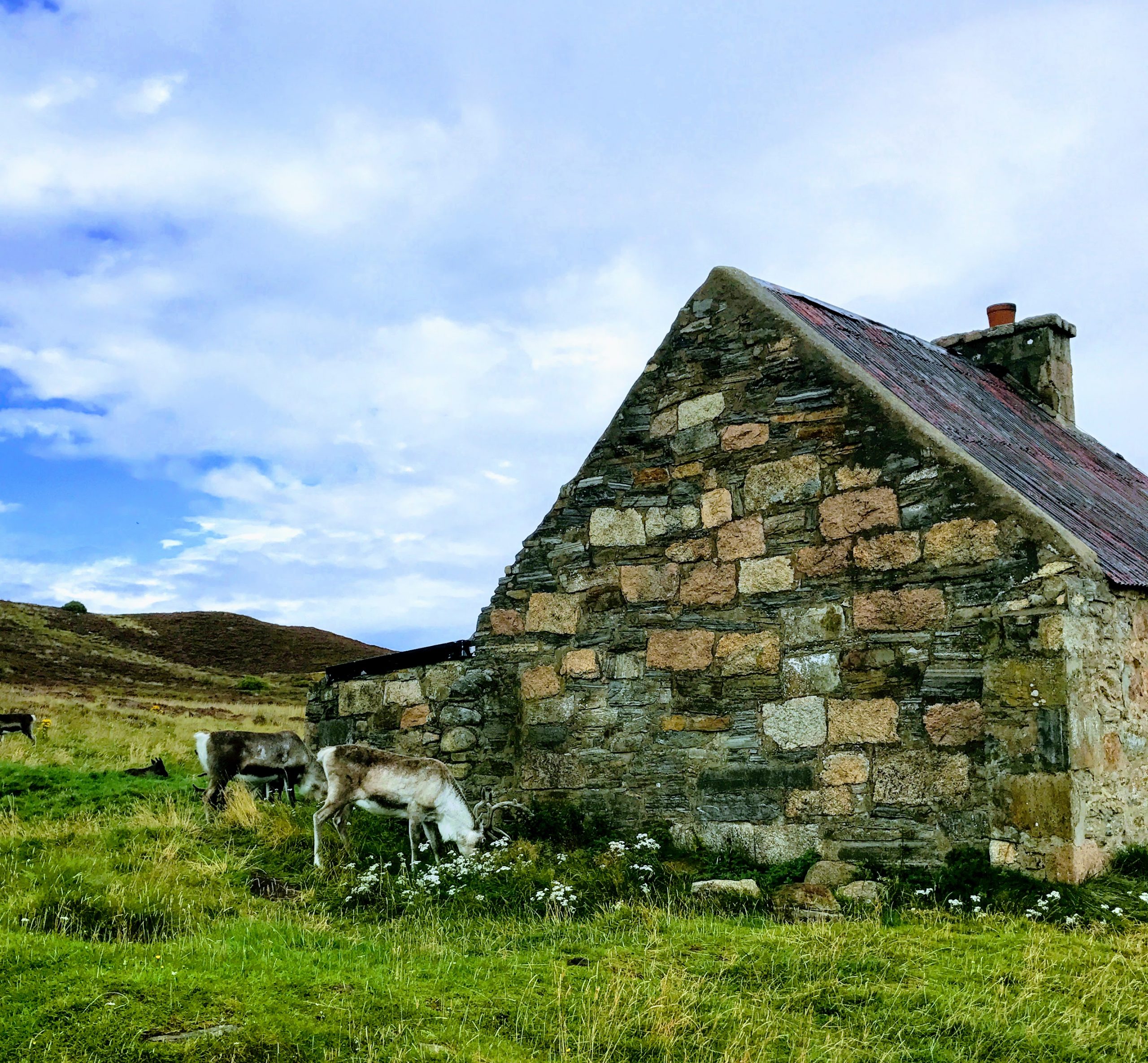
    Reindeer are ruining my cabin porn

    Trying to plan an August trip amidst dueling state quarantine lists and rapid lockdown changes while writing off my September plans for Barcelona. What’s worse – hotels cutting back on housekeeping or breakfasts? And talking with Emily Thomas about her new book The Meaning of Travel: Philosophers Abroad. All this and more, or listen to it right here by clicking on the arrow below or by following this direct link to download the podcast file .

    Here is the transcript of TravelCommons podcast #166:

    • Intro music — Warmth by Makkina
    • Coming to you from the TravelCommons studio in Chicago, Illinois after managing to front-run the city’s quarantine order on Wisconsin. Went up to Milwaukee to meet up with some friends and do a bit of biking a couple of weekends before the Chicago Health Department added Wisconsin to their list of 22 states where you’re required to self-quarantine for 14 days after returning from a trip. Mind you, they’re not setting up roadblock checkpoints like New York City is — at least not as of the time of this recording. Reasonable people can differ on this — New York’s governor claimed similar efforts back in March by Rhode Island and Florida aimed at New Yorkers were “unconstitutional” but seems OK with it when it’s pointed the other way — but it does make travel planning for law abiding citizens a bit more of a challenge. And making me wonder about our downsizing move into Chicago last year — was missing the yard, the extra rooms, and the basement gym in the suburbs during the lockdown earlier in the year; now after Chicago’s quarantine rules, am missing freedom of travel.
    • All this adds a couple orders of magnitude of complexity to our efforts to plan a week out of the city in a couple of weeks. Not only do we need to check Chicago’s quarantine list, but also the quarantine plans of any potential destinations. While New York isn’t on Chicago’s quarantine list, Illinois is on New York’s. Mapping it all out, we take the “clean destination” intersection of that quarantine Venn diagram and then look at what restrictions are in those places; if nothing’s open, it’s not worth traveling there. I’ve eaten more meals in my hotel rooms over the past 3 months than I have in the last couple of years. 
    • But things are changing so fast, that even after you figure out what’s open now, we then start following local papers on Twitter to get any early warnings on new restrictions. Which also means paying a lot more attention to hotel cancellation policies than I ever did. And then overloading our itinerary with outdoor activities like hiking and biking so last-minute closures or restrictions don’t leave us with nothing to do. Which means spending more time trolling the AccuWeather and Weather Channel web sites because an outside-heavy itinerary is more vulnerable to big storm fronts and hurricanes. And to think I used to bitch about having to navigate TripAdvisor ratings.
    • Bridge Music — funkyGarden by Jeris (c) copyright 2020 Licensed under a Creative Commons Noncommercial Sampling Plus license. http://dig.ccmixter.org/files/VJ_Memes/61356 Ft: airtone, SackJo22, Analog By Nature

    Following Up

    • First, a couple of shout-outs to folks who are helping me spread the word about the podcast
    • Thanks to GHLGB, an apparently long-time TravelCommons listener, who gave us a 5-star iTunes review the day after the last month’s episode dropped, writing:
      • “Mark does a great job of relating the world of the road warrior with a bit of branching out to those of us who are miles and points nutty. Always a calm and reasonable voice one that’s been in my ears for four years”
      • Thanks for that. I appreciate the words, and the effort of wading through the iTunes interface to leave them
    • Also, in last month’s episode, I mentioned Kev Monteith, a TravelCommons listener and Amtrak travel blogger, but didn’t thank him for calling us out in his 2020 Favorite Podcast list on his Travels With Kev website. So, I’m fixing that right now. Thanks, Kev! Check out the show notes for links to his site.
    • Back in episode #164, we talked about how hotels are pulling back on housekeeping during stays — the Hampton Inn in Spring Hill, TN said they’d be 3 days between room visits while the Residence Inn up the road in Franklin said 7 days, which seems a bit excessive; more like a COVID-washing a cost-cutting move. Replacing the breakfast buffet with a “grab-&-go” breakfast bag makes all the sense in the world, but here again, hotels are grabbing the opportunity to trim costs. Most of what I’ve seen is a brown lunch bag with a bottle of water, a NutriGrain breakfast bar, and an apple — a banana if I’m lucky. But the Residence Inn in Wauwatosa, WI, just outside of Milwaukee, was having none of that a couple of weeks back. You had 4 options for the main breakfast course in your bag — a turkey and waffle sandwich, a peanut and strawberry sandwich, an egg and cheese quiche, or one of 13 kinds of cereal boxes, accompanied by your choice of chocolate milk, or orange or apple juice. I’m not passing judgement on the food choices, but I was awfully impressed by their ambition — yeah, we can’t lay out a breakfast buffet spread, but we’re gonna try our damndest to give you a decent alternative. I just had to give the turkey & waffle sandwich a go. I had visions of a Fyre Festival-like trainwreck of a sandwich — a deli slice of turkey breast between two Eggo waffles. But it was a little more reasonable — a small wrapped sandwich of turkey sausage between two small waffles, meant to be heated in the microwave. I grabbed it on the way out for a bike ride, so missed the microwave step, which, I think, was critical. But like I said, I give that RI team huge props for the effort.
    • But outside the Wauwatosa gang, if this stripped down hotel service stays the norm for the next 12-18 months, it’s probably going to drive some big changes in the year-end traveler gift guides — shifting from Away luggage and Aesop travel kits, last year’s big recommendations, to sets of wine tumblers, collapsible bowls, and camping mess kits. And, of course, all sorts of upscale sporks.
    • Back in episode #161, at the end of March, still in a bit of shock from the COVID lockdown and trying to figure out how long it was going to last, I said “I’m nothing if not an optimist. In the midst of this week’s unraveling, I found a deal on a direct American Air flight from ORD to Barcelona — 8½ hr 787 flight — so I booked it — 2 weeks in Barcelona at the end of September.”  But here we are five months later and as we all know, things haven’t “re-raveled”. At the beginning of July, American announced that direct 787 ORD-BCN flight won’t restart until next summer. I checked our reservation on the AA iPhone app after I read this. It still showed us on that direct flight — until I clicked through, which then, I guess, forced the app to pull the latest information from Dallas, and now showed us flight BA through Heathrow. Not that it really matters. The EU isn’t letting Americans in any time in the near future, and, last time I checked, Barcelona is in a voluntary lockdown because of a new spike in COVID cases. News articles are showing shuttered-up stalls at the La Boqueria market; like I said earlier, if nothing’s open, why go? It was a gamble, and really, not even a big one. There’s no change fee, so it’s a push. We won’t lose any money — unless American goes belly-up, but that’d never happen — would it?!
    • Last year, in episode #150, (these show notes are gonna be chock full of backlinks), I talked about switching my carryon bag — from a Timbuk2 backpack to a Timbuk2 messenger bag. I gave two reasons for the switch: I wanted to carry something a little smaller that would stand up under a plane seat; and I wanted a non-black interior, I kept losing things in my backpack — my tablet, my Bose headphone case. But also because the backpack was breaking down a bit – the seam on one of the side pockets had blown out and one of the strap clips had broken. I was going to pitch it during our last downsizing binge before moving into the city and a friend said “You know, Timbuk2 bags have lifetime warranties.” Huh. So I hung onto it because I still like the bag. And about 14 months later, I finally got around to sending it back to them in San Francisco. I wasn’t sure if they’d re-opened their factory, so I was ready for it to take awhile for them to process the bag and repair it. Tracking the package, I could see they received it on a Friday. I got a note from them the following Monday saying they’d inspected it and yes, it was covered by the warranty, and had the bag back in my hands that Saturday. I have to tell you that I am pretty damned impressed. I won’t be switching back from my messenger bag, but I have found that the backpack can carry 4 four-packs of 16-oz cans, perfect when I’m biking a circuit of Chicago microbreweries using curbside no-contact pick-up to grab whatever’s their newest thing. Timbuk2 is definitely “TravelCommons Approved.”
    • And if you have any travel stories, questions, comments, tips, rants – the voice of the traveler, send ’em along — text or audio comment to comments@travelcommons.com — you can send a Twitter message to mpeacock, post your thoughts on the TravelCommons’ Facebook page or our Instagram account at travelcommons — or you can post comments on the web site at TravelCommons.com.
    • Bridge Music — Xena’s Kiss / Medea’s Kiss by mwic (c) copyright 2018 Licensed under a Creative Commons Attribution (3.0) license. http://dig.ccmixter.org/files/mwic/58883

    The Meaning of Travel

    • This seems to be the existential question for a lot of travelers — why do we travel? — now that can’t, or at least can’t as easily and, well thoughtlessly is too strong a word, but when we could travel without having to plan as much. It’s been a whipsaw — from overtourism to 36% unemployment in the travel and hospitality sector in the the US — so a bit soul-searching/navel-gazing is to be expected, if not encouraged. So when I saw the new book, The Meaning of Travel: Philosophers Abroad by Dr. Emily Thomas, associate professor in philosophy at Durham University in the UK, immediately bought it and read it — and then thought that I needed to have her on the podcast. Lucky for me, she’s a very nice person and agreed to spend a bit of time talking about “the meaning of travel”. It was a fun conversation; I hope you enjoy it.
      • Mark: I’ve got to admit that, as an engineer and an IT guy, my philosophy knowledge pretty much starts and ends with buying a T shirt that said “I Drink Therefore I Am.” It was a fundraiser for the Philosophy club for my undergrad. Emily, the first chapter “Why Do Philosophers Care About Travel” got me because you get straight into a topic we’ve discussed often on the TravelCommons podcast about how travelers build travel bubbles around themselves. They isolate themselves from the places that they traveled to. Oftentimes they do it in the name of efficiency, maybe to keep themselves safe from experiencing what you call the “otherness of travel.” What do philosophers say about that difference between everyday journeys and traveling?
      • Emily: So, I think the difference between these kinds of everyday journeys, like popping to the grocery store, visiting your grandmother and what we think of as travel lies in how much unfamiliarity or otherness we experience along the way. And it seems to me that when I popped to the grocery store, everything is super familiar. I know how things work; I know the roads; I know the products I’m going to buy. If I were to go grocery shopping in an unfamiliar country, that experience is going to be really different. I don’t know how the roads work anymore; I don’t necessarily recognize the writing on the signs of the products; I may not understand the languages that I’m overhearing. And so, an everyday experience becomes much more unfamiliar. And then seems to be much more about travel in the deeper sense. And several philosophers, including folks like René Descartes and Michel de Montagne, have talked about how the benefits of travel lie in experiencing otherness, that this broadens your mind, that it forces you to think past the familiar everyday world of your experience and think about how things might be otherwise, how they could be in other places and they think that’s a really good thing.Frequent travelers often build travel bubbles around themselves that isolates them from the places they travel to; doing it in the name of efficiency, but also perhaps to keep themselves safe from experiencing what philosophers call “the otherness” of travel
      • Mark: I was thinking about this — is there a spectrum of otherness? I’ve got the complete travel bubble at one end; in the middle, curated sidebar experiences — you find a local restaurant, or hunting down a microbrewery or a taproom in a not-great section of town that you would not normally go; and then at the other end, full immersion – I live here, I’ve got a flat.
      • Emily: I definitely think there’s a spectrum. And you can imagine, in your bubble, it might not be the full-blown experience of taking all the same clothes with you and you using all familiar airports. But even if you have your laptop and your mobile phone with you, part of the way that you’ll be connecting with the world is through these really familiar mediums. Maybe you’re going there, and you’re still using Trip Advisor to look for recommendations like you would back home or you’re still using Google maps to navigate your way around the streets. And again, I think that’s going to provide you with this kind of buffer between you and the unfamiliar.
      • Mark: Later on in the book, you riff on Henry David Thoreau and Walden and Cabin Porn and Solitude. When the lock down started, I just decided I was going to dig into some early American literature that I had been threatened with in high school and college but never really got into. And so I kind of flipped a coin between Thoreau and Whitman’s Leaves of Grass and, heads so it was Thoreau. I will admit I did this in the beginning of April, and I still have not finished Walden yet, and here we are in August. So it has been a bit of a slog, but I’m still working it. But before I get into that, I gotta ask – “cabin porn.” That’s a new one on me – the term, not so much the porn. But the term cabin porn, what is that?
      • Emily: And so despite what you might think (laughter), Cabin Porn refers to photography of beautiful, isolated cabins. So, picture wood-built cabins nestled in the woods with smoke curling from the chimney. Or maybe they are stone cottages perched on the edge of a cliff, looking out over a crevasse. And there’s this whole industry dedicated to people taking photographs of these gorgeous cabins. The idea is that they’re kind of aspirational. If you stick these into Google images, you will find some of the most astounding dwellings; places that you can rent and live for a little. Walden seemingly kicked this whole thing off. So, Thoreau describes building a cabin in the woods by Walden Pond and while the book can be a little bit of a slog in places, there are beautiful bits of the book. When he’s describing living in nature in this really kind of rustic way, lots of people credit their cabin aspirations to Walden.
      • Mark: What is the strain about solitude and travel and in the balance with “otherness”?
      • Emily: Solitude is often held up is one of the things we can get through travel that’s hard to get home. Although it seems like you can go out into a crowded cafe or a bar and be alone there, it seems like it’s much easier to do that by venturing out into wilderness, that you’re not going to meet other human beings and you have objects in front of you – trees, plants, creatures – that you can connect with. So the idea is that you’re not being solitary in the sense of just introspection, but you’re also connecting with some part of the world around you. It might in turn cause you to reflect on that world, and then your own part in that wider network. And that’s very much what Thoreau is all about. He thinks that being alone in wilderness allows you to better understand wilderness and your own part in the wider universe.
      • Mark: I often find when I’m traveling, it is kinda easy to hold yourself at a distance, especially if, where you are, you don’t speak that language. It’s almost like white noise.
      • Emily: Yes, when you spend large chunks of time without hearing words that you understand is a strange experience. I think it allows you to focus on other things. I think then you end up paying more attention, maybe to like the sights and the smells, the things that you can understand. I quite enjoy it, actually, the experience of being somewhere and not understanding anything that’s going on.
      • Mark: (laughter) The only challenge, though, is because you’re so used to people saying things and you don’t understand it that you just don’t listen. And then when you actually come back to the UK or the US and people are talking to you and you’re just so used to tuning them out, just like “Oh, wait, you said something to me?” There was another piece in the book that you talked about global homogenization. And I’ve felt this, I would say over the past 10-15 years. I started traveling a lot in the mid-80’s, back in the Dark Ages. In that chapter you talk about that it’s an old complaint. You talk about Rousseau bitching about it, and John Stuart Mills…. Are we just repeating the same thing?
      • Emily: So, people like Mills and Rousseau are writing a couple of hundred years ago, and they are bitching about how Paris and Rome “seemed to me to be the same city” and reading this now, it just seems so implausible! I am sure that a large part of this feeling has to do with context. I would imagine that these men are moving in intellectual circles and then they’re going to be around people who speak the same kind of languages, and value the same kind of things that you would like to hope that if they had broken free of those circles that they might have found things that were more unfamiliar. I do suspect that the world has been becoming more the same now than it was before, and simply because of the rise of global companies – that was just not around before. And the idea that you can go into a city and find the same shops and restaurants that you do back home is really strange. I mean, that would not have been there back in the 17th and 18th centuries. That said, I do think what we were talking about before – using technology to find your way around – I think that’s going to give you the impression that things are all the same because you’re looking at them through the same medium. That is an illusion. The real world is not all the same. New York is very different than Paris. Something in the US that I personally am really fond of is investigating small towns that are not listed in guidebooks, in search of what Bill Bryson once described as Anywhere, USA. I really enjoy that. Seeing how these small towns do differ from each other, but also what they have in common. For me, there’s a reall attraction in that, especially in the US.
      • Mark: Are there any that are top of the list for you?
      • Emily: Yes, Silverton, Colorado. I enjoyed that enormously. As a British tourist, so much of it is totally unfamiliar, even though I got the impression that, to the people who lived there and are from Colorado, this is all just par for the course. It’s regular looking houses, it’s regular looking shops that, as is a non-American trying the local bars, seeing the local kind of pancake breakfast, all of this was completely new and really stunningly beautiful.
      • Mark: Just to wrap up, if you look forward and you think about philosophy and travel, what are some of the new things that philosophers are thinking about on travel?
      • Emily: I think the big thing right now it is the ethics of climate change and how best to travel responsibly. I think that issue is going to dwarf everything else in the philosophy of travel for several decades to come. Whether or not we are partaking in carbon off-setting schemes is enough, whether or not we should be looking to educate ourselves more about the places that we travel, possibly even traveling less but aiming for higher quality experiences. I think that stuff is really going to dominate. However, there is other stuff going on too. Looking at the issues posed by space travel and space tourism, which I don’t think is that far away, actually. I mean in the immediate decades, it’s going to be the province of the super wealthy, but I think past that it will become more and more accessible and that’s also going to pose some ethical issues like the cost of fuel to get people up out of the atmosphere is gonna be enormous. But also, that will prompt us to think about our place in the world. I obviously have not been up into space, but were I to go, I imagine it would cause me to reflect on how little the planet Earth is in the grand scheme of things. And I wonder whether that will lead us to reconsider our place in the world and how we’re treating the planet that we live on. I think space travel is going to be really rife with opportunities for philosophical reflection.

    Closing

    • Closing music — Pictures of You by Evangeline
    • OK, that’s it, that’s the end of TravelCommons podcast #166
    • I hope you all enjoyed this podcast and I hope you decide to stay subscribed.
    • Find TravelCommons on Stitcher, SoundCloud, TuneIniTunes, and Spotify The links, along with the RSS feeds, are on the right-hand side of the TravelCommons website, under the heading Subscribe.
    • Right below that, in the Social Media section, are links to the TravelCommons Facebook page, and Twitter and Instagram feeds.
    • If you’re already subscribed, how ‘bout leaving us a review on one of the sites.
    • If you have a story, thought, comment, gripe – the voice of the traveler — send ‘em along, text or audio file, to comments@travelcommons.com or to @mpeacock on Twitter, or post them on the TravelCommons’ Facebook pageInstagram account,  or website at travelcommons.com. Thanks to everyone who has taken the time to send in e-mails, Tweets and post comments on the website
    • Follow me on Twitter
    • “Like” the TravelCommons Facebook page
    • Direct link to the show
  • Podcast #145 — Restaurant Karma; Hotel Breakfasts

    Podcast #145 — Restaurant Karma; Hotel Breakfasts

    How Much Extra For A Plate?

    Just regular domestic business travel since the last podcast, trying to dodge Hurricane Florence to get back to Charlottesville.  Thinking back to last month’s European travels, we talk about a tight connection through Amsterdam and some odd concierge lounge rules, which gets me thinking about hotel breakfasts. And a listener request for restaurant recommendations gets me thinking about the balance of visiting good and not-so-good restaurant towns. All this and more at the direct link to the podcast file or listening to it right here by clicking on the arrow below.

    Here is the transcript of TravelCommons podcast #145:

    • Intro music — Warmth by Makkina
    • Coming to you today from the TravelCommons studios outside of Chicago, IL after 3 weeks of “normal” travel — no vacation, no international travel, just a couple of trips to Charlottesville, VA on sandwiching a quick shot down to Dallas. And no delays. And empty seats beside me. Indeed, I even scored an upgrade on the late United flight from IAD to ORD, the long leg of one of my flights home from Charlottesville. Feels like we’re at the start of maybe a 6-week travel lull between the final end of summer vacations and the early starts of Thanksgiving travel.
    • There was a bit of drama around the Charlottesville trip in the middle of September. I had to fly out Sunday night — the weekend that Hurricane Florence hit the Carolina coast. The storm track forecast had Florence plowing west through the Carolinas and then taking a right hand turn at the Appalachians and heading north over Virginia. The question for me — when would it make the turn; would my Sunday flight make it through before or after the turn or would Florence be in my way on Sunday? Thursday night and Friday, I spent a bit of time hitting the Refresh button on the Nat’l Hurricane Center’s website. By Friday, Florence had dropped a couple of category levels and slowed down, and by Saturday, I could see that my Sunday flight would beat Florence to Charlottesville. It was a smooth flight that Sunday, though Monday was a bit wet.
    • Going through TSA Pre-Check in ORD that Sunday night, I watched a guy use the electronic boarding pass on his Apple Watch. It looked a bit awkward, and if you think about it, it’s understandable. Boarding pass readers face up; you put your boarding pass or phone face down on them to read. But a watch is on face up on the top of your wrist. So the guy ends up standing on his toes and twisting his arm around to get his Apple Watch face down on the reader. You’d think he would’ve shifted to his phone after that, but I saw him twist himself up again about 30 minutes later when boarding his flight. Seems like it would’ve been easier to spin the watch on his wrist so it was facing down — at least until Apple fires up the old Steve Jobs distortion field to convince airports to reorient all their readers for the convenience of Apple Watch users.
    • Bridge Music — Dub the Uke by Kara Square (c) copyright 2016 Licensed under a Creative Commons Attribution Noncommercial (3.0) license. http://dig.ccmixter.org/files/mindmapthat/53340 Ft: DJ Vadim

    Following Up

    • Allan Marko, a long-time listener and even longer-time friend, sent me an article that dove into an interesting part of Apple’s new partnership with Salesforce. The two of them are working with Marriott to put Siri in hotel rooms. You could ask Siri to turn up the heat, order room service, or get an Uber through an Apple HomePod in the room. That’s the Apple piece of it. The Salesforce piece lets Siri remember what you asked her, say your room temperature, at the next Marriott. Useful or creepy? And how do you make sure you wipe Siri’s memory before the next guest checks into the room so you can’t ask her things like “Hey Siri, tell me all about the last guest that was here…” or “Order me the same sandwich the last guy ordered”. I dunno. I don’t even like using these new Enseo TVs to log into my own Netflix account, let alone having Marriott listening to me through a HomePod and remembering everything I mutter. Some guys are making a nice living selling shutters that you can stick over your laptop webcam. Are earplugs for hotel HomePods the next thing?
    • In the last episode, I mentioned flying SAS from Chicago to Copenhagen. It was an odd schedule — leaving Chicago around 10pm, arriving Copenhagen after 1 in the afternoon. Leaving that late and having a long taxi, I fell asleep before we left the ground, and before putting my phone in Airplane mode. I woke up, I dunno, an hour or so later, looked at my phone for the time, and noticed some new e-mails. Huh? That’s weird. And then I noticed that my phone didn’t say “No Service”; it was connected to some cellular service, which turned out to be SAS’s in-flight cellular service. And as opposed to in-flight WiFi which you usually have to log into, my iPhone automatically started roaming on the SAS cellular service, that then continued to check/pull e-mail for a couple of hours until I flipped it to airplane mode. I got my AT&T mobile bill a couple of weeks back and ended up with a $25 roaming charge for those half-dozen meaningless e-mails. A pain, but not too painful. Unlike the guy four years ago who rang up a $1,200 WiFi bill on Singapore Air when he fell asleep with his data still connected.
    • On the third leg of that trip, going from BRU to EDI, our best option was KLM through AMS. I’ve been in and out and through Schiphol a number of times over the past 20-some odd years and have always liked it. Nothing flashy, but it works — not too big, reasonable facilities. Booking this BRU-EDI trip on the KLM website, I had two options — a tight 40-min connection or a 2-hr one. While I don’t mind Schiphol, I wasn’t looking to make an afternoon of it. So I broke one of my cardinal travel rules — never book a connection shorter than an hour — and booked the 40-min connection, knowing that we had a back-up if it didn’t work out. One factor I didn’t completely think through was that we’d have to cross the Schengen border during those 40 minutes too. The first leg — Brussels to Amsterdam — was within Schengen so it was just like an domestic US flight — no passport control, no customs. But in Schiphol, we had switch concourses and go through passport control because the UK is outside of Schengen. We made it through, though, with time to spare because – we walked real fast; like I said before, Schiphol isn’t that big, so switching concourses wasn’t a long walk; but most importantly, my wife spotted the “short connection” line at passport control. We had gotten in the regular line, but then we saw on a display screen that our EDI flight was classified a “short connection”, so we switched to the much shorter line — I earned a “Hey” from a security guard when I ducked under the tape — and quickly passed through what was a well-staffed and brisk passport control line (Munich Airport, you could take some lessons here). We get to the gate with more than enough time — boarding hasn’t been called yet. So while we made the 40-minute connection, the question now was — would the checked luggage make it? As we were queuing to board, I looked out the terminal window. There’s our plane, and there, next to the baggage loader, was Irene’s and Claire’s luggage — stationary, not rolling along like in that YouTube video. A very good sign, but there wasn’t anybody loading luggage. As I walk up to board, I tap one of the KLM guys standing around. Pointing out the window, I say “See those bags on the tarmac? Those are ours. It would be great if they made it onto this plane.” He laughed — him a bit more than me. I was happy to see them appear on the EDI baggage carousel.
    • I’m thinking that I need another carry-on bag; something between my maximum legal size 22-incher and my leather duffel overnighter. On that BRU-EDI trip, I carried my 22-incher on, but not without agents at Brussels and Amsterdam challenging me, even after showing them it fit in their baggage sizer. A few weeks after that trip, KLM added an augmented reality baggage sizer to their iPhone app. You fire up the app, point your iPhone camera at your bag and the app overlays a properly sized rectangle over your bag. If your bag is within the rectangle, you’re good to go. Would’ve been easier — and much cooler — than slamming my bag into those metal sizers, but somehow, with those gate agents, I don’t think the outcome would’ve been any different.
    • OK, one last thing from that trip. The concierge lounges in both the Copenhagen Marriott and the London St Pancras Renaissance had prominent “rules” signs at their entrances, and one of those rules was a ban on “fitness clothes”. Now, this wasn’t a big deal on this trip because I was on vacation, and wasn’t toting work-out gear. My normal program when I’m on business travel is to get up before 6, work out, go straight to the lounge in my “fitness gear” for some breakfast while cooling down, then head back to my room to shower, change, and head out. Having to separate the cool down from breakfast would add 15-20 minutes to what is an already tight morning routine. So I hope that rule doesn’t spread to the US lounges. The rest of the rules seemed pretty reasonable, though one — no wearing a bathrobe in the lounge — seemed a bit superfluous. I’ve never seen someone walk into a concierge lounge in a bathrobe… until in Copenhagen at 3 in the afternoon with it not looking like there was anything on under the robe. So, OK, I’m now completely on-board with the no robe rule.
    • And if you have any travel questions, a story, a comment, a travel tip – the voice of the traveler, send it along. The e-mail address is comments@travelcommons.com — you can send in an audio comment; a Twitter message to @mpeacock, post your thoughts on the TravelCommons’ Facebook page or our new Instagram account at travelcommons — or you can always go old-school and post your thoughts on the web site at TravelCommons.com.
    • Bridge Music — Emma by Doxent Zsigmond (c) copyright 2015 Licensed under a Creative Commons Attribution Noncommercial (3.0) license. http://dig.ccmixter.org/files/doxent/50905 Ft: Martijn de Boer

    Restaurant Karma

    • Casey Milch sent me a note a few weeks back — “Greetings. Love the podcast. I know you mention frequent trips to Charlottesville and I’m finding myself there every six weeks for work myself now. Any restaurant suggestions?”
    • One of the compensations for getting on an airplane just about every week is that you get to try a lot of restaurants. Now, in the last episode, we talked about the downside of that — rapid waistline expansion — but if you’re thoughtful about it, and you like trying different food (I hate the word “foodie”), business travel has its benefits. I sent Casey a few recommendations — Fitzroy, a meat place — burger, double pork chop, fried chicken — on the Main Street pedestrian mall; Lampo, a small Neapolitan pizza place with a big wood oven that is — I forgot to tell Casey this — a 5-minute walk from Champion Brewing Company’s taproom; and The Alley Light, a speakeasy in an small alcove (a bit too short to be a proper alley) with no sign though there is a light over the door, that took 3 tries to find the first time in the pouring rain, which led to the question “How many consultants does it take to work Google Maps”. Putting the list together for Casey reminded me that we hadn’t been to Alley Light in a while, so we ate there last Tuesday night — found it on the first try this time — and had roasted bone marrow, pork rillette, duck confit — oh, and some carrots. So much for thoughtfulness.
    • Charlottesville punches above its weight for good restaurants, maybe because of University of Virginia. The 2 ½ years I spent in New Orleans was one of definitely one of my food high points, especially when crawfish were in season. 3 months in Portland, OR was fun with the food truck scene, and of course, it is ground-zero for the craft beer explosion. Stays in Manhattan, San Francisco, and London were that much more enjoyable with someone else picking up the dinner tab. Indeed, in San Francisco, I used to stay in different hotels so I could try different neighborhood joints.
    • But karma always seeks balance, and for all these great food locations, there have been other, let’s say, less-than-stunning places. Dover, OH — about 30 miles south of Canton — had, when I was doing a project there — two places to eat — an Arby’s and the lunch counter of the Walmart knock-off. And the Walmart knock-off was the better of the two. Oldsmar, FL was a bit too far outside of Tampa for us to head in for dinner every night, so the near-by Buffalo Wild Wings – B-Dubs – and Applebee’s were our best shots. And downtown Detroit in the early 2000’s, working, eating, and sleeping in the urban fortress that is the Renaissance Center was brutally monotonous.
    • But even when in London and New York, we weren’t splurging on big meals every night. We have reasonable expense budgets that we have to live within. So again, we find balance — one night we’re underspending at a dive (but good) pizza-by-the-slice joint, so that the next night, we eat at nice place. Some guys will extend balancing act to travel — sucking up the inconvenience of a cheaper connecting flight to pay for better meals. One colleague told me — “I’ll happily travel cheap to eat great food”
    • Bridge Music — Astral Travel by Astral (c) copyright 2013 Licensed under a Creative Commons Attribution (3.0) license. http://dig.ccmixter.org/files/Astral/44282

    Hotel Breakfasts

    • Growing up, those of us of a certain age heard that breakfast is the most important meal of the day — usually from a cereal commercial. I mentioned a bit early earlier my morning hotel pattern — work out, hit the concierge lounge for breakfast and then get on with my day. Most lounge breakfasts are pretty industrial — chafing dishes of stiff scrambled pasteurized eggs, thin slices of oven-baked bacon, vat of oatmeal, a few cartons of yogurt, and a bowl of fruit. It gets the day started. I may be judging it a bit harshly though. My daughter Claire loves those scrambled eggs. Go a little more upscale and you’ll see maybe a platter of smoked salmon, some sliced meats and cheeses, bran muffins…
    • So when I see something different, it gets my attention. Like roasted green chiles in New Mexico, Albuquerque and Santa Fe, to season those scrambled eggs, or the King Cake at the Canal St Sheraton in New Orleans during Mardi Gras season. Now, it’s not the best king cake I’ve had – and my wife has dragged me through a king cake tasting crawl there, so I speak with some knowledge — but I look forward to it whenever I’m there in the spring. I remember one morning I walked in — no king cake! I found one of the staff — “you guys stop doing king cake?!” “No! I didn’t know we were out.” And they immediately brought out a new one. Crisis averted!
    • It doesn’t even have to be anything big. The Copenhagen Marriott lounge had rhubarb juice. As a kid, my mother made pies from rhubarb growing in our backyard, that I think her mother had planted. So something different and nostalgic all in one. Was it life-changing? Not necessarily, but I’d never seen it before.
    • A little more life-changing was the bowl of bun bo hue that we got for breakfast when staying at a local, non-chain, hotel in Hue in central Vietnam. Kind of a spicier, funkier version of the pho you see in the US, and tougher to find here. Not like any hotel breakfast I’d had, and I immediately switched my breakfast choice over to it or pho for the rest of the trip.
      Back in May, when I was in Pune, we stayed at a Marriott Courtyard, a chain which, as I’ve complained about before in prior episodes, doesn’t have a concierge lounge but they had a nice breakfast buffet with what I guess is a typical two-track system — one side with the usual Western breakfast foods, and the other side with Indian food. The waiter pointed me to the omelette station. I was about ready to order when I noticed another station to my right with what looked like a super-sized crepe griddle. “What’s that?” I asked. “Oh, that’s to make dosas.” “Cool, I have one of those.” “Do you know what a dosa is?” “Nope, but I’ll take one, however it normally comes.” I watched him make this foot-wide diameter stiff crepe, rolled it up and put it, sticking up out of a cup of some sort of stew or curry. I walk back to the table. Everyone else has eggs, bacon, toast, arranged horizontally on their plate. I’m the only one with a vertical breakfast. But I liked that. Kinda flying the flag for something different at breakfast .

    Closing

    • Closing music — Pictures of You by Evangeline
    • OK, that’s it, that’s the end of TravelCommons podcast #145
    • I hope you all enjoyed this podcast and I hope you decide to stay subscribed.
    • Find TravelCommons on Stitcher, SoundCloud, TuneIniTunes, and now on Spotify
    • If you have a story, thought, comment, gripe – the voice of the traveler — send ‘em along, text or audio file, to comments@travelcommons.com or to @mpeacock on Twitter, or post them on the TravelCommons’ Facebook pageInstagram account,  or website at travelcommons.com. Thanks to everyone who has taken the time to send in e-mails, Tweets and post comments on the website
    • Bridge music from dig.ccmixter.org
    • Follow me on Twitter
    • “Like” the TravelCommons Facebook page
    • Direct link to the show
  • Podcast #99 — Downgrading Elite Fliers; Finding Time Off the Road

    Podcast #99 — Downgrading Elite Fliers; Finding Time Off the Road

    Thanks for flying with us © Chris Freeland / Flickr

    United Airlines’ CFO garnered some less-than-desired attention last month when he said that “certain groups” in the Mileage Plus program were “over-entitled”.  United is the most recent airline to work on “realigning benefits” — downgrading their elite fliers, especially those in the lower status tiers. We talk about how that impacts frequent flier strategies. We also talk about adjustments needed when frequent travelers come off the road — how to find time to yourself. Here’s a direct link to the podcast file or you can listen to it right here by clicking on the arrow below.


    Here are the transcript of TravelCommons podcast #99:

    • Intro music — Warmth by Makkina
    • Been off the road more than I’ve been on it since the last episode.  Just another trip to Dallas allowing me to take advantage again of the TSA’s PreCheck line. Getting envious and puzzled looks from other American Airlines elite fliers, getting waved through the special gate, tossing my bags on the X-Ray conveyer belt, sauntering through the metal detector, and then on my way to the gate. A 45-second exercise while they’re taking off their jackets, shoes, belts; emptying their pockets of coins, gum wrappers, business cards; pulling out their laptops, iPads, Kindles, 1-quart baggie of liquid toiletries; holding their arms up in the full-body scanner, waiting behind the tape until someone radios the “OK”; then reassembling their bags and getting re-dressed – belt, shoes, jacket, making sure nothing’s left behind before heading to the gate.
    • And this is in the status line.  I’m seriously thinking of limiting my travels to only those places with TSA PreCheck lines…
    • Bridge Music — Leviathan by Kirkoid

    Following Up

    • While my podcasting cadence has slowed, I’ve written a few more blog posts of late.  In one, I disagreed with some surveys that called free WiFi the most important hotel amenity.  I made the case for free breakfast.  First, it’s a great convenience.  Unless you’re staying downtown in a city, like in London or New York or San Francisco, getting breakfast outside of the hotel means involves a car ride.  Which usually then translates into Starbucks – and I’m a big fan of the spinach feta cheese wrap – or McDonald’s – where I’ll fall back to 1 breakfast burrito no matter how many times they try to sell me two – or Dunkin Donuts where they inevitably give me a hard time about walking in with a cup of Starbucks coffee.  And, as Rich Fraser puts it, a great way to stretch your per diem dollars…
      • “Can’t beat it on value, although you have to get quite creative when it comes to those reconstituted eggs. Various combinations of cheese, ham, and hot sauce make them much more palatable. That, some yogurt, a cup of oatmeal and a piece of fruit, and I’m good until lunch without snacking. Just have to avoid the biscuits and gravy at all costs!”

      Free Hotel Coffee
    • Leo Vegoda, however is suspicious of the whole “free” thing
      • I would prefer to have good Internet access that I pay for or a good breakfast that I pay for than something free, which will inevitably be of lower quality. After all, on a business trip, sustenance and network access are reasonable business expenses. That being said, I think the best “amenity” I want at a hotel is a fantastic concierge. A superb concierge is much better than a quick search on yelp.com and will help make your stay in a city far more fulfilling.
    • Thanks to both Rich and Leo for leaving their comments on the TravelCommons web site.
    • Scott Drake pinged me on Twitter – “Just heard the first 2 minutes of episode #97”, he wrote, which was about my first trip to Beijing in January. “You could taste the pollution.  Yes!  People look at me like I’m crazy when I say that!  Glad I’m not alone.” Oh no, you’re not alone.  The other 3 guys with me on that trip thought the same thing – you could taste it when you breathed in and when you coughed it back out. Don’t know which I enjoyed more on our Saturday trip out to the Great Wall – the breathtaking views or the fact that you could take a breath without coughing…
    • In the last episode, I talked about restaurants pushing their own sort of BYOD – bring your own device – agenda on customers; taking advantage of customers’ smartphones to do things that restaurant-provided devices like pagers or credit card machines used to.  Not that it’s a bad thing; it actually makes a lot of sense.  I tried LevelUp, one of the mobile payment apps I mentioned, last week at a food truck – Duck n’ Roll – in downtown Chicago. I’m not sure the truck took cash.  The owner had an iPhone with a Square credit card reader and also accepted LevelUp.  I started the app on my iPhone – I had already run through the set-up routine, linking it to one of my credit cards.  It displayed a QR code that the truck owner read with the camera on her iPhone.  She pressed a couple of buttons and, boom, we were done.  While she got me my miso short rib bahn mi sandwich, the receipt showed up in my e-mail.  Much easier that paying with a credit card – or even cash.
    • Setting up the cots at Camp O’Hare…

      As we get into summer, we get into thunderstorm season, and in the middle of the US, tornado season.  Which reminds me of an incident about this time last year in O’Hare.  I was connecting through O’Hare on my way from a customer meeting in London to a conference in Austin, TX.  No direct flights there. My theory is – if I have to connect through a US airport, I might as well do it through O’Hare. I live 25 minutes from the airport. If things go bad, I can always sleep in my own bed.  It doesn’t work for everyone – check the shownotes for a picture of someone setting themselves up in “Camp O’Hare” for the night – but it does for me.

    • Anyhow, I arrive from Heathrow early, breeze through Immigration, no problems getting through the TSA in Terminal 3, board my American flight to Austin…  The pilot says that a front is moving in and he’s going to try and get us out before it hits.  Hmmm, I’ve never seen anyone sprint out of O’Hare before – it’s just too big and too crowded.
    • And it didn’t happen this day.  The front came hit and started rocking that MD-80 like nothing I’ve ever experienced.  We evacuated the plane.  People in the back of the plane began to panic.  “Get moving,” they yelled – or a cleaned-up version of what they yelled.
    • Sprinting out of the shaking jet bridge back into Terminal 3, we were told “ah, you guys should stay away from the windows” which is a tough order in a concourse with windows on each side. People congregated around the McDonalds and a couple of bars – only windows on one side – and waited for the front to blow through.
    • Over in Terminal 1 – the United terminal – they moved everyone down into the tunnel between the two concourses.  Much safer and, for those who’ve connected on United through O’Hare, you know it’s much more entertaining with the ceiling neon lights chasing themselves down the tunnel. Though I would guess the soothing New Age music would get on your nerves after a while.
    • Of course, after all this entertainment, I still needed to get to Austin.  After the front blew through, they reopened the runways and started to untangle the delays – flights trying to get in so they could unload and leave again. After two hours of hemming and hawing, American admitted that our MD-80 was damaged by the jet bridge banging on the rockin’-and-rollin’ airplane during the worst of the winds. No surprise there.
    • And there were no other flights left to take us to Austin because American had waited so long to cancel. No problem there – I just caught a cab home and slept in my own bed. I was surprised that the first available flight the next day was at 3 in the afternoon. Given I was due to fly back the following morning, that would’ve given me about 12 hours in Austin – 6 of which I would’ve been asleep. I decided to skip it.  But here’s the kicker – American charged me a $150 change fee to cancel my ticket and use it later.  Really?  Weather, they said. No, it was a damaged airplane because your gate agent didn’t pull back the jet bridge.  Weather, they said.  I didn’t fly American for another 6 months.
    • If you have a question, a story, a comment, a travel tip – the voice of the traveler, send it along.  The e-mail address is comments@travelcommons.com — use the Voice Memo app on your iPhone or something like Virtual Recorder on your Android phone to record and send in an audio comment – or iMovie if you want to send in some video; send a Twitter message to mpeacock, or you can post your thoughts on the TravelCommons’ Facebook page — or you can always go old-school and post your thoughts on the web site at TravelCommons.com.
    • Bridge music — My Flaming Heart by Wired Ant

    Downgrading Elite Fliers

    • Last month, United’s CFO said this about their Mileage Plus program
      • We had certain groups in this program that were over-entitled if you will. And now we’ve re-aligned the benefits of that program with what the customers and program participants are actually providing to the program, it’s a good change going forward.
    • Let’s parse that statement.  The first sentence – certain groups, which I assume means elite Mileage Plus members, were “over-entitled”.  Even if it’s true, you’d think the CFO would be smart enough to follow one of the golden rules of sales – “If it feels good, don’t say it.”  Coming off the industry-worst performance in on-time arrivals and baggage complaints, who would think it’s a good idea to insult a loyal subset of customers – those who bore the brunt of your lousy performance?
    • The second sentence – we’ve “re-aligned the benefits” with what those customer are providing.  In other words, we were giving those customers too much value for the revenue they were providing us – so we’ve taken away some of what we were giving them so as to balance things out.
    • In other words, downgrading elite fliers.  United is just the most recent – and probably the most egregious example of late.  Using the Continental merger as cover, United took away probably the most valuable perk from the lowest status level – free advanced booking of Economy Plus seats, seats with extended legroom.  And added a new status level – Platinum – at the 75,000-mile level – effectively devaluing their mid-tier status — Platinum Exec – now “Gold”.  There were other tweaks – none of them positive – but that’s to be expected from an industry that continues to nickel-and-dime its customers for every last bit of revenue it can.
    • And it’s not just United.  Delta recently reduced the number of free bags its lowest status level fliers can check – from two to one. One more sign that the 25,000-mile status fliers don’t mean that much to the airlines – they really don’t get much more recognition than the guys paying $95/year for an airline credit card.
    • Which makes sense if you look at the numbers.  When American Airlines started the Advantage program in 1981, it was a loyalty rewards program meant to give frequent fliers a reason to stick with American as deregulation commoditized the industry — increasing flight choices and lower fares from new competitors.
    • Today, it’s a major revenue source – a line of business is estimated to have added $7 billion to the top line of North American carriers last year
    • For a frequent traveler, these downgrades drive a change in strategy. It used to be that you would always want to concentrate as much of your travel as you could on a single airline in order to hit some level of status because even the bottom tier – the 25,000-mile level, American’s Advantage Gold, United’s Premiere, Delta’s Silver Medallion — had value.  Today, since you can pretty much buy the bottom tier privileges for a $95 credit card fee (and even there, you can usually get the first year free), it only makes sense to concentrate if you think you can hit the 50,000-mile tier – American’s Advantage Platinum or Delta’s Gold Medallion.  The reduced rewards for bottom-tier status aren’t worth the hassles of twisting your schedule – or paying $50 extra – to fly a single airline.
    • And the airlines are probably OK with this. The act of flying passengers is probably the least profitable part of an airline nowadays, while selling frequent flier miles to credit card companies is the most profitable. Airlines are shifting from rewarding their most loyal customers to the most profitable.  United’s top-top tier – Global Services – has always been for their highest-spending customers, not their highest-mileage ones.  In some ways, this makes life a bit easier.  Instead of working to earn special treatment, now you can just buy it.
    • Bridge music — Fall to pieces – Silence by mika

    Finding Time When Off The Road

    • I’ve been off the road for 3 weeks now.  Not out of the ordinary for most people. But for me, this is the longest stretch I’ve been home in over a year.  And as always, there’s a bit of an adjustment.
    • And that’s not to imply that adjustment is negative. I’ve increased the mileage I’ve put on my bike by an order of magnitude. Rather than getting 1, maybe 2 rides a week if I really push it – get up early on a Sunday – I’m getting 3 or 4 a week — and more mileage because I don’t feel pressure to get off the road so I can do other things.
    • Indeed, that’s probably the biggest change – the release from the pressure to pack a week’s worth of errands, to do’s, and family time into a 2-3 day window.
    • Which kinda dovetails into another adjustment – finding alone time. When you travel, there’s plenty of alone time – even when you’re surrounded by people – in TSA queues, in boarding lines, in a center seat on a full plane.  And eating dinner solo at a bar and channel surfing in your hotel room at night.  These are certainly not the highlights of travel, but they do offer you time alone – to think, to listen to music (and podcasts), to read, or just to stare off into space.
    • Coming off the road, you’re still geared to maximize family or friend or significant other time – even if it means watching lousy TV shows or playing Scrabble.  It’s takes some adjustment to figure out how and where you’ll grab/recreate that alone time – figuring out which lousy TV show you don’t have to watch, where you go off to read or listen to music.
    • Sunday nights are a good time for me.  When I’m traveling, Sunday night after dinner is pretty much lost.  I lose that last bit of the weekend to getting ready for my Monday morning flight out of ORD – ordering a cab, checking into the flight, packing, checking/topping off the charges on the myriad of electronic devices I seem to now require for travel….  Since my family is used to me disappearing into my home office after Sunday dinner, I’ve kept it up – but I’m reading or writing instead of packing.  It’s that little bit of alone time.
    • Of course the real adjustment is having to pay for my morning Starbucks stop.  It’s then that you really appreciate the power of the expense report…

    Closing

    • Closing music — iTunes link to Pictures of You by Evangeline
    • OK, that’s it, that’s the end of TravelCommons podcast #99
    • I hope you all enjoyed this podcast and I hope you decide to stay subscribed.
    • Bridge music from the ccMixter
    • If you have a story, thought, comment, gripe – the voice of the traveler — send ‘em along, text or audio file, to comments@travelcommons.com or to @mpeacock on Twitter, or post them on our website at travelcommons.com. Thanks to everyone who has taken the time to send in e-mails, Tweets and post comments on the website
    • Follow me on Twitter
    • “Like” the TravelCommons fan page on Facebook
    • Direct link to the show
  • Best Hotel Amenity? Free Breakfast

    Best Hotel Amenity? Free Breakfast

    Any Way for Breakfast © Mark Peacock

    Recent surveys by TripAdvisor and Hotels.com report that the most popular hotel amenity is free WiFi. If they both didn’t misplace a decimal point, then they surveyed the wrong travelers.  Experienced travelers know that the most important amenity is the free hotel breakfast.

    Now I’m not denying that the growth of mobile devices — smartphones, tablets, laptops — has made network access vital. And with everyone posting experiences and photos on Facebook, Twitter, Foursquare, Instagram, TripAdvisor,… network access is important to every guest — business travelers and vacationing families. But frequent travelers have learned that free hotel WiFi is a tease — reasonably fast at 1pm when no one is in the hotel; an exercise in frustration at 9pm when you’re trying to Skype with your kids or download tomorrow’s presentation.  Most of us long ago ponied up the extra $40-50/month to tether our laptops to our smartphones or bought a separate mobile WiFI hotspot (preferably from someone other than our smartphone carrier). So free WiFi as the most important hotel amenity? Not so much. For me, a good breakfast is much more important.

    Growing up, we all heard that breakfast is the most important meal of the day, but it’s also is the easiest to skip when you’re on the road. A 2011 survey estmated that 31 million Americans skipped breakfast while two university studies found that eating breakfast reduced overeating throughout the day and subsequent weight gain.

    Which is all well and good, but for me the free hotel breakfast is about convenience. Unless you’re in a dense urban area like Manhattan or the Chicago Loop or Central London, your hotel is likely centered in a large parking lot off a busy intersection.  Running around the corner for a quick breakfast sandwich probably isn’t an option. And I’m not interested in dropping $20 on the breakfast buffet, not for a 10-minute bite.  I typically just want an egg, a couple of slices of bacon and a cup of coffee while I cool down from 30 minutes on the elliptical trainer. Grabbing that in the hotel makes it easy; saves one stop on the drive into the office. And it let’s me brush my teeth after breakfast for a fresh start to the day.