Tag: Coronavirus

  • Podcast #170 — Show Me the Proof; Hereditary Road Warriors

    Podcast #170 — Show Me the Proof; Hereditary Road Warriors

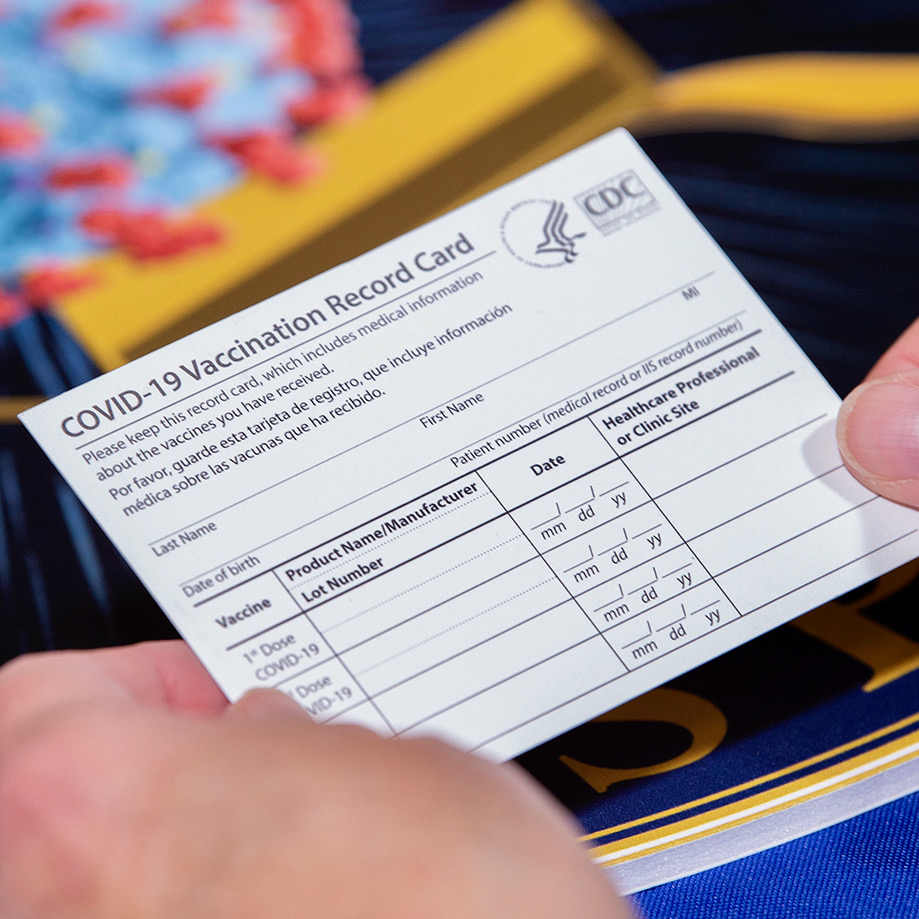
    How Do I Insert This Into My iPhone
    (DoD photo by EJ Hersom)

    No Thanksgiving travel, but looking at the travel volume for this, the busiest travel week of the year, shows just how far things have fallen. The Qantas CEO said “No vax, no fly”, so we dig into the emerging world of digital vaccine passports. And then I trace my travel genealogy, wondering if road warrior-ism is hereditary. All this and more – click here to download the podcast file, go over to the Subscribe section on the right to subscribe on your favorite site, or listen right here by clicking on the arrow below.

    Here is the transcript of TravelCommons podcast #170:

    • Intro music — Warmth by Makkina
    • Coming to you again from the TravelCommons studio in Chicago, Illinois. And again, no travel since the last episode. Not too surprising given the way things are going right now. Back in April, I’d jumped on one of those smokin’ American Airlines’ promotions to book flights to London for Thanksgiving. Which then — not surprisingly — got cancelled at the beginning of September.  So I was back to what has been my typical Thanksgiving travel pattern for the past 10-15 years — staying at home to avoid the crowds on what is always the busiest travel week of the year. PK — pre-kids — Irene and I would always travel over the holidays, splitting Thanksgiving and Christmas between my family in Southern California and hers in Chicago. But post-kids — which is also PK, so I guess it should be AK — after kids — we started staying at home. And I’d figure out how to “ground” myself from business travel also. I found that the challenge of holiday travel wasn’t necessarily the crowds; it’s the make-up of the crowds; what some road warriors might call “clueless” travelers. I think “amateur” is certainly a more charitable and probably more accurate term. Even more so this year with so many road warriors out of practice after being off the road since March. Lots of those folks definitely in danger of losing their “professional” traveler status.
    • I saw an interesting graph the other day comparing last year’s and this year’s day-by-day airport travel volumes over the Thanksgiving weekend. No surprises comparing the Wednesday travel volumes, what is traditionally the busiest travel day of the year. Last year’s Wednesday saw 2.6 million passengers, almost 2½ times busier than this year. I expected that. But what really caught my eye was that this year’s peak day — Sunday at about 1.2 million — was still a lot less than last year’s slowest day, Thanksgiving, at about 1.6 million. I didn’t travel last year at Thanksgiving, but did in 2018.  Irene and I broke our no-travel rule and flew down to Santa Fe, NM on Thanksgiving Day. Back in episode #147, I said that Thanksgiving Day flight was one of the least stressful travel experiences I’d ever had — no traffic on the drive to ORD, no lines. The TSA agents were hanging around just looking for people to screen. And that day, there were around 25% more people in airports than this year’s busiest day. I shouldn’t be surprised, but all the pictures I saw in the news coverage made it look like airports were a lot more crowded. 
    • Our apartment is just south of one of the northern approaches to ORD. Flights from the east come in over the lake — seats A, B, and C get a great view of the city skyline while seats D, E, and F get to look down into Wrigley Field — then  over the northwest side of the city, landing on one of the runways north of the terminal. I’ve always been impressed by the choreography of ORD. On a clear Friday afternoon, driving up the tollway that runs east of the airport, I’d see planes on parallel approaches landing simultaneously — one to the north of the terminal and one to the south — and looking up, see the lights of planes on approach behind them — 2, 3, 4…. Back in April, during Chicago’s lockdown, I’d sit out on the rooftop deck — because what else was I going to do? — and maybe see one plane coming in over the lake on that approach. But now I’m seeing more planes — sometimes 3, 4 in a row. Don’t know that they’re all carrying passengers — some could be temporary cargo carriers taking some of that e-commerce money, with boxes instead of seats under the overhead bins. But I can feel travel starting to pick up. It could be a tough winter, but I’m trying to look out over the horizon a bit; trying to look forward to spring.
    • Bridge Music — Leviathan by Kirkoid (c) copyright 2011 Licensed under a Creative Commons Attribution Noncommercial (3.0) license. http://dig.ccmixter.org/files/Kirkoid/31109

    Following Up

    • TravelCommons contributor Allan Marko commented on my little lockdown game with my Google Mini — changing the voice to, say, an English accent and then asking about the weather in London.  Allan wrote:
      • I often change the Siri voice for a bit of variety. Currently “Australian Female” is providing my CarPlay directions. you can also ask Siri to “Play TravelCommons”…
    • Which immediately got me digging into Siri’s settings, looking for the Voice options. I found I had a choice of American, Australian, British, Indian, Irish, and South African. Since I’d already used the first three with my Google Mini, it was between the last three. I chose Irish for now, but will probably switch to South African before the end of the month. Actually, Waze, the nav app, always impressed me with the number of voice and language options. Every once in a while, I switch Irene’s Waze over to Hungarian before she’s heading out somewhere. For some reason, I get more of a laugh out of it than she does.
    • TravelCommons listener Dan Grabon and I have been trading notes as we’ve each slogged through Thoreau’s Walden. We both started it back in April, in the height of the lockdown. Everybody was deciding that, with nothing much else to do, it was a good time to pick up that classic you’ve always been meaning to get to. Dan started out with The Brothers Karamazov, which I thought was damned impressive. I first reached for Whitman’s Leaves of Grass, but then thought I needed something a bit more down-to-earth, something that wouldn’t need quite that level of interpretation and abstract thinking. And Walden, about Thoreau’s self-isolation in the woods outside of Concord, MA, seemed a better fit with the lockdown. Dan finished last month, at the beginning of November. I was 50 pages behind, so I didn’t finish ‘til Thanksgiving — it was tough cutting through the tryptophan fog, but I gutted it through. Dan said he was staying with Thoreau, moving onto Civil Disobedience before shelving the book. I pivoted to non-fiction, Why We Sleep, where a neuroscientist and sleep expert spends some 300+ pages saying “If you don’t sleep 8 hours, you’re killing yourself” which got me doing some mental math. Between jet lag from all the  international flights and waking up at 4am to make 6am flights to LGA, I’ve probably dropped 5 years off my life. Though, given some dementia running through my family history, I might not have remembered those years anyways.
    • And I show up on the other side of the mic talking travel pro tips with Matt Wilson on his Millennial Travel Podcast.  I’m trying to remember when we recorded this — had to be pre-April 2019 because I was still in the suburban TravelCommons studio and Matt was hanging out down in Costa Rica. The connection fuzzes out now and again, but it was a fun conversation. I’ll put a link in the episode in the show notes but fair warning — it’s mostly me rattling on for an hour. Listening back to it, I’m kinda embarrassed that I don’t give Matt much of a chance to get a word in edgewise.
    • In the last episode, I talked about the work-from-hotel offerings from Marriott, Hilton, and Hyatt. They all had their own twists, but Hyatt’s was the most unique in that their “Work from Hyatt” offer was resort-focused and had a 7-night minimum. I said it wasn’t so much a WeWork replacement as a digital nomad trial. Well, I’m guessing that they didn’t get much uptake on it because I just got another email from Hyatt with a new offering — “Office for the Day” — that pretty much matches Marriott’s Day Pass. Like I said last month, these offerings all feel a bit “toe in the water”, a bit opportunistic. And now that we’re starting to get better visibility into post-vaccine timelines, I wonder how long they’ll last — will people still want to pay to work in a hotel room after all the Starbucks stores have reopened.
    • I’ve talked in past episodes about how I’m a bit of a knuckle-dragger regarding printed travel guides. I still find a physical book useful when traveling. But I’ve been wondering how quickly these physical guides will be able to push out post-COVID editions to reflect the closures of bars, restaurants, and independent shops they’ve recommended. I was running through my own Chicago recommendation list from 2019. A bunch of my favorite places have closed; it’s about an even split between “Closed forever, good-bye, we’ve taken down our sign” and “Closed until Spring… we hope.” The final proofs of the 2021 editions have to already be baked if not already at the printers. I dunno, maybe they’ll all post errata pages that you can download, print off, and then stick in your books.
    • In a massive intersection of all things social media, I posted a CNN article on the TravelCommons Facebook page that a friend, a hotel company CIO, sent me on LinkedIn that showed TikTok videos of people cooking meals in hotel rooms using an iron for a griddle, a hot water kettle for a steamer, a pants presser as an oven, and the one that really wowed me — a coffee maker as a sous vide water bath. I don’t know if I should be impressed by the ingenuity or looking to set up as a ghost kitchen/delivery service wherever they are because I’ve never seen anyone go to that extent to cook their own meal in a hotel room. Even guys I knew trying to squeeze the last pennies out of their per diems wouldn’t do much more than boil water for their Cup O’Noodles or work hard not to burn their microwave popcorn. I’ll also put a link in the show notes to the TikTok account of one of the guys, Jago Randles. His TikTok series, Isolation Kitchen, has about 150,000 followers. He does some impressive stuff. But I will make sure, going forward, that I rinse out the coffee maker and wipe down the iron before using them.
    • For many frequent travelers, a key early milestone of the pandemic was when airlines and hotels gave them a year’s push on their status — moving the expiration date from Jan 2021 to Jan 2022. Big sigh of relief. Then for Southwest fliers, another milestone — drink coupon expiration dates all got pushed to the end of this year. Whew! All’s right in the traveling world. But a couple of days ago, I was rummaging around in my messenger bag and out tumbled 5 Southwest drink coupons — one with a Sept expiration date; the rest, December 31. Look Southwest, I don’t want to seem greedy. I did get a year’s push on A-List and 6 months on Companion Pass. But I’d love you even more if you gave me another 6 months on those drink coupons. Nope, don’t say anything now; just think about it.
    • And if you have any travel stories, questions, comments, tips, rants – the voice of the traveler, send ’em along to comments@travelcommons.com — you can send a Twitter message to mpeacock, post your thoughts on the TravelCommons’ Facebook page or our Instagram account at travelcommons — or you can post comments on the web site at TravelCommons.com.
    • Bridge music — Ethereal (nop mix) by @nop (c) copyright 2011 Licensed under a Creative Commons Attribution (3.0) license. http://dig.ccmixter.org/files/Lancefield/34818

    Prove My Vax So I Can Fly

    • Last month, I saw that quote from the Qantas CEO — “We will ask people to have a vaccination before they can get on the aircraft” — and thought, well it’s kinda the next logical step from Delta’s ATL-Rome and United’s EWR-LHR flights were you have to take COVID test and prove you’re negative before you can board. 
    • I remember going to a travel clinic before my first flight to India; getting shot up with MMR, DTP, Hepatitis, and Typhoid vaccines and being given my Yellow Card — officially my International Certificate of Vaccination or Prophylaxis — listing all my shots. They told me to carry that with me to India, which I did and to Vietnam and Thailand and Singapore and China. No one ever asked to see it, not in an airport, an immigration line, a hotel,….  It looks like the plans are that we’ll get a vaccination card from the CDC after receiving the first dose of COVID-19 vaccine. But that card isn’t meant as a validated proof of vaccination; it’s more of a reminder to go back in a couple of weeks for the second shot. 
    • That handwritten piece of paper probably won’t pass muster at the Qantas boarding gate, and so that’s why we’re starting to see a bit of a vaccine passport app land grab going on. United has been testing the CommonPass app on their COVID-free EWR-LHR flight. You get your COVID test at the United Club near gate C93 and the results are uploaded into the app which then will display a QR code to the gate agent. CommonPass is being spun up with support from the World Economic Forum. Cathay Pacific, Lufthansa, SwissAir, and JetBlue also have plans to use it. Delta and Alitalia are trialing the AOKPass developed by the Int’l Chamber of Commerce on their COVID-free ATL-Rome flight. It uses blockchain for medical certificate storage, so bonus points to them in technology buzzword bingo. IATA, the Int’l Air Transport Association, an airline trade group, says they’re finishing up their app, Travel Pass, and will be piloting it with IAG, the parent of British Airways, Iberia, and Aer Lingus, in early 2021. And the World Health Organization says they’re looking at Estonia’s e-vaccination certificates as the basis of a sort of “smart” Yellow Card app.
    • I’m sure I’m missing a whole lot more; I just got tired of reading the same rehashed press release verbiage about secure and verifiable storage of health certifications. Going through this, it starts to feel like the health equivalent of those scooter apps, where I need half-a-dozen of them on my phone so I can rent the closest scooter to me. Unless someone blinks, it seems like I’ll need 3 or 4 of these vaccine passports to cover all my travel bases. But after reading through all the press releases and the infographics and the FAQs, none of these apps were real clear on how I get my physical CDC vaccine card into their digital storage vault. And I’m guessing that doctors and clinics are going to be more focused on taking care of patients and keeping their COVID vaccines cold, and not all that interested in entering my vaccination information into all those apps. Maybe Australia is further ahead with electronic health records, but I’m thinking, at least for the next year or so, that my CDC card is gonna be the best that Qantas and the gang are going to get.
    • Bridge music — My Flaming Heart by Wired Ant (c) copyright 2012 Licensed under a Creative Commons Attribution Noncommercial  (3.0) license. http://dig.ccmixter.org/files/Wired_Ant/36862 Ft: Javolenus

    Hereditary Road Warriors

    • I was reading some research, as one does during a lockdown advisory when one gets caught up running down a clickhole, about jobs running in the family. Some of the stats — a son with a military father is 5 times more likely to enlist himself while if his mother is a lawyer, he’s 6.6 times more likely to follow her to the bar; a daughter with a scientist father is almost 4 times more likely to be a scientist. Indeed, when I was deciding my college major, I was leaning toward  chemistry but chose chemical engineering mostly because my grandfather and father were both engineers.
    • Which got me thinking — does traveling — careers that require frequent traveling — run in the family? Again, looking back on my family, my grandfather traveled a lot when he worked for Sears, checking out vendors for hard goods — tools, small machinery — and working with them on new products. My dad designed farm machinery — things like hay balers and cotton pickers — for International Harvester. He’d often be on the road for weeks at a time, testing prototypes at farms around the country, looking for different crop and field conditions, and then at plants helping to set up the manufacturing lines for the finished machine. And so I grew up seeing that rhythm of travel — Dad at home, Dad packing, saying good-bye, and then getting on with our lives until he came back. This was back in the late ‘60’s and into the 70’s, so no cheap long-distance let alone messaging or email or video calls. He was gone, with the exception of a postcard or two, until he came back.
    • And then when I joined the workforce, the first day of my first real job out of school, I got on a plane and made the first of what’s been hundreds of flights between ORD and DFW.  So many that, pretty soon, I got to know the women working the front desk at the DFW Admirals Club. One morning, one of them asks me if I’d maybe like to meet her daughter. Awkward. I asked her, “Would you want your daughter dating someone who’s out of town as much as I am?” She paused for a moment and then said, “No, not really”. 
    • Also around this time, my dad had gotten promoted past the level of going out to the field and so was traveling a lot less. But my mother took a purchasing executive role and with that, the need for a lot of travel to vendors. So while travel was generational/ “hereditary” from my father to me, my mother and I started road warrior-ing at the same time, so we were more like travel “siblings” — comparing hotel notes, competing on frequent flier status and perks. 
    • Will traveling for a living continue to a 4th generation? Tough to tell right now; both kids measure their commute in feet rather than miles during the lockdown, and friends running consulting operations tell me the current state is great for staff productivity — an hour sales call takes an hour, rather than a day’s worth of travel for that hour, and working remotely with clients saves the client money and consultants don’t get burnt out trying to balance work and home needs. As I said back in the March and July episodes, I don’t buy that 100% remote is the “new normal”, but I also don’t believe it will snap back to 2019 levels, not after what will have been a year’s-plus time working out the mechanics of virtual working. But will there be another generation of road warriors in my family? It’ll probably take a couple of years to figure that out.

    Closing

    • Closing music — Pictures of You by Evangeline
    • OK, that’s it, that’s the end of TravelCommons podcast #170
    • I hope you all enjoyed this podcast and I hope you decide to stay subscribed.
    • I’ve made another little tweak to the RSS feed — the file that all the podcast apps use to pull new episodes for your subscribed podcasts. This tweak affects the episode descriptions in the top podcast apps. For those apps that support it, there are now clickable links in the episode notes or descriptions. In last month’s episode, there were clickable links to the gift ideas blog post on the TravelCommons website as well as the episode show notes page. Going forward, there will always be a link to the episode’s show notes page. I’ve tested that this works on Apple Podcasts, Overcast (which is what I use), Stitcher, Pocket Casts, Podcast Addict, and Google Podcasts — all of which make up 70-80% (depending on who’s doing the counting) of the TravelCommons downloads. So, if you get a chance, flip over to the episode description right now and check it out.
    • Find TravelCommons on Stitcher, SoundCloud, TuneIniTunes, Spotify, and Amazon Music, as well as asking Alexa, Siri, and Google to play TravelCommons on your smart speakers. The links, along with the RSS feeds, are on the right-hand side of the TravelCommons website, under the heading Subscribe.
    • Right below that, in the Social Media section, are links to the TravelCommons Facebook page, and Twitter and Instagram feeds.
    • If you’re already subscribed, how ‘bout leaving us a review on one of the sites.
    • If you have a story, thought, comment, gripe – the voice of the traveler — send ‘em along, text or audio file, to comments@travelcommons.com or to @mpeacock on Twitter, or post them on the TravelCommons’ Facebook pageInstagram account,  or website at travelcommons.com. Thanks to everyone who has taken the time to send in e-mails, Tweets and post comments on the website
    • Follow me on Twitter
    • “Like” the TravelCommons Facebook page
    • Direct link to the show
  • Podcast #169 — Pandemic Holiday Gift Guide; Year-End Status Offers

    Podcast #169 — Pandemic Holiday Gift Guide; Year-End Status Offers

    Locking Down The Christmas Tree

    No travel since the last episode, so I had some time to think back through my post-lockdown travel and come up with my top 10 gift ideas for your pandemic travelers. We look at the start of the year-end efforts by airlines, hotels, and credit card companies to keep their grounded travelers, unpack the work-from-hotel offerings from Marriott, Hilton, and Hyatt, and dissect the latest hotel reservation system data breach. All this and more – click here to download the podcast file, go over to the Subscribe section on the right to subscribe on your favorite site, or listen right here by clicking on the arrow below.

    Here is the transcript of TravelCommons podcast #169:

    • Intro music — Warmth by Makkina
    • Coming to you from the TravelCommons studio in Chicago, Illinois. No travel, but a November week with temps in the 70’s felt like I was someplace other than Chicago. But the weather reverted to the mean yesterday, which chased me back indoors to finish this podcast.
    • Last week was a boon to Chicago’s bars and restaurants. The week before, the governor banned indoor service again as COVID cases began to rise. The bonus week of warm sunny weather gifted them with some needed outdoor dining revenue. Last Friday, a friend and I met for lunch at a neighborhood place that had been able to expand their outdoor seating by putting tables on the sidewalk in front of the shuttered retailer next door to them. We showed up at 11:30; the tables were full by 12.
    • One of the things we talked about was travel; how, over the past 8 months, we’d more or less adjusted to all of the COVID restrictions, the masks, the social distance, all of it — except for travel. Yes, we’ve done the car trips and long weekends, but we miss the big trips — I’d just cancelled our Thanksgiving trip to London and he’s trying to think through their annual Christmas trip to December. Now, I know this is definitely a “First World problem” for folks who’ve had families, friends, and even themselves hit with COVID, so I’m not trying to overplay this. But as the end of the year approaches, and I start hearing more public health experts reset expectation — for the worse, saying “Well, it’s probably more like the end of 2021 or maybe into the beginning of 2022 before things start feeling normal” — I dunno, for people who love travel, I don’t think they want to put it on hold for another year or two. You start hearing about people looking for openings — Mexico, Costa Rica — as they figure out their own personal risk profiles. Maybe United Airlines’ testing program that they’re trialing on flights to Hawaii and London is part of the answer; certainly Pfizer’s release of preliminary vaccine results on Monday got everybody hopeful again. I don’t think anyone expects — or really wants — an immediate snap-back to 2019. But the ability to stretch things a bit more would be greatly appreciated.
    • Bridge Music — Static by Darkroom (c) copyright 2010 Licensed under a Creative Commons Attribution (3.0) license. http://dig.ccmixter.org/files/mactonite/29469

    Following Up

    • First, a quick program note. As I tweak things with the underlying TravelCommons infrastructure — the audio file, the RSS feed, the website — I’ll talk about the changes at the end of the podcast, so I don’t muck up the content that you come to listen to with the “inside baseball” sorta podcast stuff. If you’re not interested, you can skip to the end without missing anything. I will say, though, that I was pleasantly surprised when I looked at the Apple Podcast stats showing about 80% of you stay through the end of an episode. I’d fully expected to see at least 50% of folks hitting the “skip to next podcast” button when they heard the “Pictures of You” song clip. Thanks to everybody for sticking all the way through.
    • And congrats to Emily Thomas, our guest on the August episode, for winning the Leverhulme prize last month. The prize recognizes the achievement of outstanding researchers across a broad range of disciplines whose work has already attracted international recognition and whose future career is exceptionally promising. I interviewed Emily about her book The Meaning of Travel: Philosophers Abroad and had a great time talking to her. A well-deserved award. I just may go back and listen to that interview again.
    • I got an email from Marriott last week announcing their work-from-hotel offerings. We’ve talked about this trend in the past couple of episodes — first as a way for downtown hotels to do something/anything about their low occupancy rates, and then in the last episode with the FBI’s cyber security advisory to people moving from work-at-home to work-at-hotels. The Day Pass gives you a room from 6am to 6pm, wi-fi, bottled water, and lounge access if you’re a high-status Marriott Bonvoy member. They’re piloting it in Atlanta, Dallas, New York, and Phoenix. Scanning the pricing, the range looked to be in the $60-$90 range, though the Phoenician in Scottsdale did price out at $260. If you looked hard, you could probably get a day pass at a co-working place for cheaper, but if you can expense it, the Marriott offer is probably not a bad deal — especially for those days that you have a big sales presentation or maybe a webinar, where you need that guaranteed alone time to focus on preparation and then delivery, and a video backdrop that’s not your closet door or a semi-made bed or random people walking past. Hilton and Hyatt are also offering work-from hotel plans, but with different spins. Hilton’s WorkSpaces will give you 10,000 Honors points for your first booking and, unlike Marriott, is across all of their properties, but it doesn’t feel as put together as Marriott’s. You have to ring up the property directly; looks like Hilton can’t figure out a way to shoehorn this day rate concept into their reservation system. Work from Hyatt, on the other hand, isn’t so much a WeWork replacement as a digital nomad trial package with its 7-night minimum stay requirement and a focus on resort locations like the Grand Hyatts in Kauai or Vail, CO. Kinda the complete opposite of spending 12 hours in a room at the Marriott by DFW. They all feel a bit “toe in the water”, a bit opportunistic in their own way. 
    • At the beginning of this week, Candid Wueest, a cyber security researcher who joined us last year in episode #151 to talk about hotel websites that leaked traveler data, tweeted out a link to yet another hotel data breach. This time it was channel management software, something that hotels use to automate the task of updating room availability and rates across all the on-line booking sites like Expedia and Booking.com and Hotels.com and on and on. Turns out this channel manager, Prestige Software, stored 24 GB of names and emails and credit card data and reservation records — 10 million log files going back to 2013 — in a misconfigured AWS S3 bucket — storage space on Amazon’s cloud. The pandemic has massively accelerated companies moving from their own data centers to cloud services like Amazon and Microsoft. But sometimes it feels like the speed of that migration has overrun the skills of the teams supporting it.  What can you do about it? In this case, not much. You would’ve booked your room on Expedia or Trivago and not known anything about something called a channel manager piping your data down to the hotel. We’ve talked about these breaches in so many past episodes. What I said then still stands: you need to be realistic — it’s not if your personal data will get breached, it’s when. If you can, put your on-line purchases on a separate card and watch those transactions on the bank’s website or mobile app so you can quickly shut it down if you see something that doesn’t look right. I remember one time, years ago, seeing a Northwest Air flight from Tokyo to Beijing show up on my card. Struck me as odd because I was in Chicago with no plans to be in Asia. Immediately called the bank, disputed the charge, and they closed down the card. Interesting thing is that the crook had booked an economy class ticket. You’d think if you’re going to risk it, go big — book the front of the plane — business class if not first. 
    • The quarantine theater we talked about in the last episode just keeps keeping on. Chicago now has 43 states on its list, 31 of which have lower COVID rates than Chicago. And, I guess in admission that no one’s paying attention, they’re moving from weekly updates to every other week. I guess ‘cause there’s not that many more states they can add. New York gave up on its quarantine list when COVID rates in neighboring Connecticut and New Jersey qualified them for the list. “There will be no quarantine list, there will be no metrics,” Governor Cuomo says. Everyone needs to test negative, except for people coming in from Connecticut, New Jersey, and Pennsylvania because, at some point, you just gotta be realistic. Especially in the face of this, what is it, a third wave? I’ve lost count.
    • And just to show how deeply all of this — the quarantine, the lack of travel has gotten me, here’s a fun game I now play with my Google Mini. I dug around in the Google Home app and found where I can change the voice. I’ll switch to the British Racing Green voice to check the weather in London and then click over on Sydney Harbour Blue to check the weather there. Then I flip back to the default voice to get the weather at the Googleplex. And, of course, I ask it to play TravelCommons.
    • And if you have any travel stories, questions, comments, tips, rants – the voice of the traveler, send ’em along — text or audio to comments@travelcommons.com — you can send a Twitter message to mpeacock, post your thoughts on the TravelCommons’ Facebook page or our Instagram account at travelcommons — or you can post comments on the web site at TravelCommons.com.
    • Bridge music — Another Way by Psykick (c) copyright 2016 Licensed under a Creative Commons Attribution (3.0) license. http://dig.ccmixter.org/files/Psykick/52938

    Holiday Gift Guide for the Pandemic Traveler

    • Like I mentioned at the top of the show, hearing public health officials saying things like “it will be easily by the end of 2021 and perhaps into the next year before we start having some semblance of normality” got my attention; got me thinking that this year’s travel gift guide needs to be a bit different. So I flipped through my 2020 travel journal, thought back through all of my post-lockdown travel to come up with my top shopping ideas for your pandemic travelers.
    • Check out this year’s pandemic gift guide on the front page of the TravelCommons’ website or here at https://migrate.travelcommons.com/2020/11/04/10-best-travel-gift-ideas-for-these-unprecedented-times/
    • Bridge Music — Slinky Blues by Admiral Bob (c) copyright 2010 Licensed under a Creative Commons Attribution Noncommercial (3.0) license. http://dig.ccmixter.org/files/admiralbob77/28792 Ft: unreal_dm

    End of Year “Don’t Leave Me” Offers

    • Back in September, in episode #167, we talked with Matt Schulz, chief credit analyst at LendingTree, about travel credit cards. Matt told us that their late summer surveys showed trends toward people canceling travel cards and cashing out points. But then earlier this week, American Express’ CFO said that their card customers weren’t cashing out points, and instead stocking them up to travel.  The two comments aren’t necessarily at odds. If you’re laid off, you can use those miles to buy groceries or clothes via gift cards or on Amazon. But if you don’t have to, the best value you’ll get for those points will be on travel. You’ll get less than a penny a point when cashing out Amex points on Amazon, but you can double that when you use them to book flights on, say, Singapore Air or KLM.  So the hoarding makes sense — if you can.
    • One of Matt’s points in our interview was that card companies will continue to tweak their rewards to keep people holding and using their cards because travelers are a valuable customer segment because, well, they typically spend chunks of money to travel. So as we come up on the end of the year, it’ll be interesting to see what those tweaks will be. Chase keeps extending the 5x grocery and gas bonus on their Southwest card while Amex just announced a 10x grocery and gas bonus as well as a 75K sign-up bonus for their Platinum card.
    • Airlines and hotels are also rolling out their year-end offers. Back in the spring, all the majors gave existing status holders a push, extending elite expiration dates to Jan 2022 to keep them in the fold. So that settled everyone down for 2020. But now, with 2021 coming up and travel still in the hole, we’re starting to see new offers. American opened the bidding last month, knocking 20% off of 2021 status qualifying mileage clip levels (e.g., 40,000 instead of 50,000 to qualify for AAdvantage Platinum) and trying to get whatever they can for this year by counting October (last month), November, and December flights  towards earning status in 2021, which is then good through Jan 2023. This afternoon, I got an email from United announcing their deal. United’s status qualification methodology has gotten ridiculously complex over the past couple of years, but by at least one of their metrics, it looks like they’re dropping their status qualifying point (PQP — don’t ask) clip levels by at least 30% and offering double points for flights taken in Q1 — January, February, March — next year. Hilton, though, made the simplest and deepest offer — knocking 50% off of all status qualifying measures — stays, nights, points — boom, mike drop.
    • It makes sense. Most statused travelers are business travelers and depending on which CEO is talking, business travel is down 85% (Delta), 90% (Southwest), and will be 3-4 years before it’s back to pre-pandemic levels (United). And those business travelers are the airlines’ and hotels’ most profitable customers. So expect to see Delta and Southwest and Marriott announcements soon, and maybe again this time next year if that “Well, it’s probably more like the end of 2021 or maybe into the beginning of 2022 before things start feeling normal” forecast turns out to be true.

    Closing

    • Closing music — Pictures of You by Evangeline
    • OK, that’s it, that’s the end of TravelCommons podcast #169
    • I hope you all enjoyed this podcast and I hope you decide to stay subscribed.
    • As I mentioned at the end of the last episode, I restructured the RSS feed a bit so that I shouldn’t accidently trigger any more episode re-downloads. And I moved the episode number from the title to its own XML tag just to clean up how everything looks in your podcast app. Also, a few months ago, I tweaked the production workflow to add chapter markers in each episode. So, if your app supports them (Apple Podcasts and Overcast do), you can skip forward to the next section or, if you wanted to go back and listen to, say, the interview with Emily Thomas, you can go straight to it.
    • Find TravelCommons on Stitcher, SoundCloud, TuneIniTunes, Spotify, and Amazon Music, as well as asking Alexa and Google to play TravelCommons on your smart speakers. The links, along with the RSS feeds, are on the right-hand side of the TravelCommons website, under the heading Subscribe.
    • Right below that, in the Social Media section, are links to the TravelCommons Facebook page, and Twitter and Instagram feeds.
    • If you’re already subscribed, how ‘bout leaving us a review on one of the sites.
    • If you have a story, thought, comment, gripe – the voice of the traveler — send ‘em along, text or audio file, to comments@travelcommons.com or to @mpeacock on Twitter, or post them on the TravelCommons’ Facebook pageInstagram account,  or website at travelcommons.com. Thanks to everyone who has taken the time to send in e-mails, Tweets and post comments on the website
    • Follow me on Twitter
    • “Like” the TravelCommons Facebook page
    • Direct link to the show
  • Podcast #168 — Surviving Quarantine Theater; Traveling for Food

    Podcast #168 — Surviving Quarantine Theater; Traveling for Food

    My mission is clear

    Trying to recover from a long weekend of eating and drinking through the neighborhoods of South Philly. Our movable feast reminded me that food may be the one experience of a place left that can’t be easily exported and bought on-line. We talk about the FBI’s cybersecurity warning to work-from-home types using hotels for getaway offices, and are a bit amazed at how fast last year’s “flight shaming” gave way to “flights to nowhere.” And we think about “quarantine theater” — how cities and states are focusing on activities to signal they are serious about COVID, but that most folks know aren’t really effective. All this and more – download the podcast file, go over to the Subscribe section on the right to subscribe on your favorite site, or listen right here by clicking on the arrow below.

    Here is the transcript of TravelCommons podcast #168:

    • Intro music — Warmth by Makkina
    • Coming to you from the TravelCommons studio in Chicago, Illinois after a long weekend of eating and drinking and eating some more with friends in Philadelphia, a family we’ve traveled with before – South Africa, Singapore, Spain… and now, with COVID lockdowns, Philly. And while we’ll do a cultural thing or two, what we really like to do together is eat. It is the kind of group where comments like: “OK, we need to stop eating at 1:30 because we have 5:30 reservations” and “We’re only going to order the half-kilo of barbacoa because we’re eating again in 4 hours” are met with “Yeah, that’s a good point,” and “makes sense” rather than “I think we have a problem here.” 
    • And Pennsylvania’s reopening regulation about needing to buy food when getting a beer didn’t help. After sneaking in a cheesesteak right before that 1:30 cutoff, we had to order some food with our afternoon beers — the beer, of course, not subject to that 1:30 deadline because it’s liquid, so it’s not really food, so it doesn’t count. But we had to order some real, solid food with our beers. So we look at the menu — ah, brussels sprouts, it’s a vegetable, that’s kinda healthy. Five minutes later, our beers arrive with a wire basket full of deep-fried brussels sprouts doused in a sweet chili sauce. So much for healthy.
    • But some of the bars, the smaller ones, the neighborhood ones, gamed it — as these places are wont to do — by putting a $1 food item on the menu — 2 hard boiled eggs at one bar, a PB&J at another. The best, though, was the Pop Tart we had with our last beer at Ray’s Happy Birthday Bar in South Philly. That one won the prize.
    • Which we found because we skipped the usual downtown/Center City/Society Hill hotels and grabbed an Airbnb in South Philly – kinda sandwiched between the older Italian neighborhoods and the newer Little Saigon area. We spent a lot of time outdoors, walking the neighborhoods — and walking off our food — and stopping in at neighborhood joints. One day, we’re picking up salamis and cheese from the Italian Market; another day, we’re buying banh mi’s from a Vietnamese bakery. I’ll write up a list of our favorite places for the TravelCommons website in a couple of weeks — after my cholesterol level gets back to some semblance of normal.
    • Bridge Music — Another Girl (instrumental) by duckett (c) copyright 2009 Licensed under a Creative Commons Attribution Noncommercial (3.0) license. http://dig.ccmixter.org/files/duckett/23334 Ft: fourstones, miafas

    Following Up

    • First, a big “Thank You” to Gary Learned who goes by Denrael on social media for his review in Apple Podcasts. Gary is a long-time TravelCommons listener. Indeed, he’s pointed me to some great restaurants in places like Seattle and Memphis. Gary wrote a couple of weeks ago:
      • “When people ask where I live, I usually just say airports and hilton. As someone who lives the life of the road warrior, I find this podcast strikes an all-to-familiar chord with my own experiences. A definite must-listen to understand the life of the traveller.
      • “I wrote the above a number of years ago and it is as true now as it was then, I look forward to Mark’s take on travel, it’s more about the journey, and cannot count the number of times when I’ve shook my head, laughed and said “yep, been there.”
    • Gary, thanks for that. And thanks for staying with me this long.
    • The FBI pushed out a consumer alert last week to remind folks about the risks when using hotel wi-fi. We’ve talked about this many times and I think most frequent travelers know the drill when accessing any shared wi-fi, whether it be in a hotel or an airport or a bar or a Starbucks. Nothing new there, so why the FBI alert? Because the “FBI has observed a trend where individuals who were previously teleworking from home are beginning to telework from hotels. US hotels, predominantly in major cities, have begun to advertise daytime room reservations for guests seeking a quiet, distraction-free work environment.” So people who used to work in offices and have been working from home since March, are looking for a change of scenery, but either can’t or aren’t keen to go back to the group office setting. Enter downtown hotels, many of whom, we mentioned last month, are slouching towards bankruptcy because of low occupancy. Don’t want a bed for the night? How ‘bout a desk for the day? I just got an email from Omni Hotels pitching just that — “Trade up your classroom for everything you need for a productive day of work plus downtown Los Angeles views.” I guess the FBI thinks these displaced office workers, used to working on secure corporate or home networks, might not be as careful. But even for frequent travelers, the alert is a good read:  talking about the dangers of an “evil twin” attack, logging onto what looks like a hotel wi-fi but is actually a hacker’s network; logging into the actual hotel wi-fi which has been compromised through exploits in out-of-date or unpatched network hardware. The FBI’s top recommendations are ones we’ve repeated numerous times – use a VPN when you connect to public wi-fi, or avoid them altogether with a mobile hotspot. Even when I’ve had a corporate VPN, I’ve always used one of the top paid VPN providers – NordVPN, PIA or ExpressVPN – because their software is so much better. I’m using NordVPN now, and whenever I’m not on a private network, I fire up the Nord client and it handles everything — connects to the best server, reconnects automatically when I open the lid to wake up my Mac again. I don’t have to think about it. Indeed, half the time I forget to shut it off at home, until I’m wondering why I can’t move a file to another PC. Also, only access secure websites; I used to say “look for https://” but I guess that was too geeky, so you need to look for lock icons instead. And, of course, enable 2-factor authentication whenever you can. Nothing new, but a good reminder nonetheless. I’ll put a link to the alert in the show notes, but you can also find links on the TravelCommons Facebook page and Twitter account.
    • OK, I gotta ask “what happened to Greta Thunberg’s ‘flygskam’ or ‘flight shaming’ — the 2019 existential travel threat? Because the whole Asian thing of “flights to nowhere” — EVA Air from Taiwan filling up its “Hello Kitty” plane, All Nippon doing a fake flight to Hawaii, and then Qantas selling out a 787 for a lap around Australia. Singapore Air scrapped their “flight to nowhere” at the last minute, instead turning one of their A380s into a pop-up restaurant. I have to tell you that, honestly, I just don’t get this. For me, the flight is a means to an end — something I’ve got to bear to get where I want to go. Getting on that American 737 in ORD last week didn’t fill me with joy; it was just simple math — 2 hrs in a plane vs. 11 hrs in a car. And all that I just said… goes double for the idea of voluntarily buying airplane meals to eat at home. Words fail me.
    • At the end of September, the CDC did an early release of an article slated for the November issue of their peer-reviewed journal Emerging Infectious Diseases (and I thought Walden Pond was a cure for insomnia). The article analyzed the in-flight transmission of coronavirus from one business class passenger to 14 other passengers and a crew member on a 10-hour Vietnam Air flight from London to Hanoi. Most of the reactions in the press and on Twitter were “Yikes! Single passenger infects 15 people!”. While noting the CDC’s disclaimer “Early release articles are not considered as final versions” (which I didn’t see mentioned in any of the press articles), I came away with a less-than- “Yikes” after reading the whole paper. The flight was on March 2nd, so while the world was still trying to figure this novel coronavirus thing out and way before mandatory in-flight masks. And the passenger was symptomatic with a cough and a sore throat. Of the 14 passengers infected, 12 were in the same business class cabin and of those, all but one were within a 2-seat radius. And the authors aren’t sure if the 2 economy class infections were from the business class index case or from a different source. My takeaways: 1) Don’t let symptomatic people on planes – even if temperature checks aren’t perfect, it might catch some folks and will certainly make people think about their condition before flying; 2) Because this appears to validate the risk of being kept in close proximity to an infected person over a prolonged period; 3) Which, to me, justifies the airlines’ no-excuses mask requirements; but 4) In spite of a symptomatic un-masked passenger coughing away in the front of the plane, no non-adjacent passengers got infected — so maybe the airline execs’ confidence in HEPA filters kinda justified. I’ll put a link to the CDC paper in the show notes. It’s not that long. It’s interesting to read the source document rather than just a headline or a short USAToday blurb.
    • Having said all that, I’m in no way, shape, or form justifying the “hygiene theater” that the travel industry seems to be trying to use to bring folks back. I talked back in the July episode about the “Hertz Gold Standard Clean” sticker Hertz is slapping across driver-side doors. And there are some hotels now scheduling cleaning during the day rather than overnight so guests can see it. And then, on my American flights between Chicago and Philly last week, the banner across the top of the American Way magazine cover in the seatback pocket – “This magazine has been treated with an antimicrobial process” — which I guess means “Please, feel safe to open it up and look at the advertisements.” I dunno, it feels a bit like the “security theater” we all went through after 9/11 – it was less about actually making things safer and more about making us “feel” safer — and so, more willing to get on a plane. But maybe if I’m an airline or hotel exec facing down the pain of laying off thousands or tens of thousands of people if travelers don’t come back, that distinction is meaningless; I’m just trying to survive.
    • Bridge Music — Rise Up (Like the Sun) by Snowflake (c) copyright 2017 Licensed under a Creative Commons Attribution Noncommercial (3.0) license.  Ft: Bluemillenium, Sackjo22, Martin Luther King, Kara Square

    Quarantine Theater

    • While some folks in the hospitality industry are talking about “hygiene theater”, what about “quarantine theater”? Back in the August episode, I talked about the complexity local and state travel bans and quarantine measures are causing for people trying to plan some sort of travel. 
    • My son Andrew and his significant other headed out to Portland, ME last month for work. The week before they left, the Marriott emailed him a form – “Please certify one of the following is true – I have received a negative COVID test performed no later than 72 hours prior to my arrival, or will quarantine for 14 days upon my arrival in Maine.” Since they were only going to be in Portland for 4 days, they trundled down to the nearest testing site for the quick test 2 days before they left — where they got chewed out by one of the testers. “We’re running out of the quick tests. You should’ve planned better.” OK, how long to get results from the other test? “5 days” But that won’t meet Maine’s 3-day requirement. Tester just walks away. But they got their negative test results and got on their plane to Portland — where no one in the airport or the hotel asked to see it.  OK, not harm done other than the discomfort of a Q-tip probing their sinuses and a random bit of yelling, but waste scarce testing resources?
    • Chicago’s quarantine is also a bit of kabuki. Once a week the city’s health commission gets in front of the press to scold another state or two — this week was Indiana and Wisconsin. There’s now 25 states and Puerto Rico that if you’re traveling from there to Chicago, you’re supposed to self-quarantine for 14 days or face fines up to $7,000. More interesting is that Chicago’s threshold for getting on the list is 15 new daily cases per 100,000 residents. On this week’s tally, Indiana is running in the 20-30 range, but so is the state of Illinois. You could call it hypocritical or pragmatic or keeping its powder dry for when the city needs another bucket of money from the state, but Chicago hasn’t put the rest of Illinois on its quarantine list.
    • Now, I’ve yet to hear of anyone who has actually self-quarantined and as of last week, no one has been rung up for not doing so. But last month, a friend told me about how Chicago’s quarantine theater hit her last month. She finally got ‘round to taking some vacation at the end of the summer. She lives in Chicago, but is a big outdoors person; looking at airfares and tossing some darts at a map, she decided to go hit Bryce Canyon and Zion National Parks in Southern Utah. So she’s down there for a couple of days when her boss calls her. “They just announced that Utah is going on the city’s quarantine list. It’s not official until Friday, so I guess if you get out of there by Thursday, you won’t have to quarantine for 2 weeks before coming back to work.” And, it didn’t need to be said, those 2 weeks of self-quarantine wouldn’t be paid. My friend is unique in that she works for maybe the one company in Chicago that takes the city’s quarantine order seriously. So my friend fought through lousy cell coverage to see what she could salvage of the back half of her vacation. Luckily, she has friends in Oregon, which isn’t on the city’s list. So Thursday, she cut her hiking short, schlepped the 4½ hours back up to SLC and caught the last flight out to Portland — which let her come back to work and make some money the next week.
    • Theater isn’t a new thing. If you’re, say, a mature traveler, you got to play a bit part in the security theater that premiered after 9/11 and the underwear bomber. While not a perfect analogy (and really, nothing ever is), we can see some similar theatrics — government agencies (TSA then, health departments now) investing in activities that signal they are serious, but that most folks know aren’t really effective. For me and I think for most frequent travelers, the security theater ended with TSA PreCheck — it seemed, again to most of us, as a reasonable balance between risk and getting on with our traveling lives. I don’t know what that looks like for quarantine theater, but I sure hope it doesn’t take the 10 years it took to figure out PreCheck.
    • Bridge Music — release.JOY.release by SackJo22 (c) copyright 2015 Licensed under a Creative Commons Attribution Noncommercial (3.0) license.  Ft: essesq, Haskel (hej31)

    Traveling For Food

    • I talked at the start of the episode about eating my way through Philadelphia a couple of weeks back, and it was just that. We landed Thursday around 11:30a and were hitting our favs at Reading Terminal Market by 1:30p. I went straight for Tommy Dinic’s for the roast pork sandwich with sharp provolone and broccoli rabe while Irene and Claire made for the Mennonite pretzel place and Termini Brothers for fresh-filled cannolis. And then as we were leaving, I swung past one of the PA Dutch stands to buy a 1-lb block of scrapple for breakfast the rest of the stay.
    • Back in the August episode in the interview with Emily Thomas about her book The Meaning of Travel, we talked about a chapter on global homogenization. One of the bits that I edited out was the observation that, back 10-20 year ago, it was fun to go shopping and bring something unique back home. But now, with globalized e-commerce, there’s not much that you can’t find easier (and often cheaper) on Amazon or Taobao or Rakuten. And so, for me, food is the one experience of a place that can’t be easily exported and bought on-line.
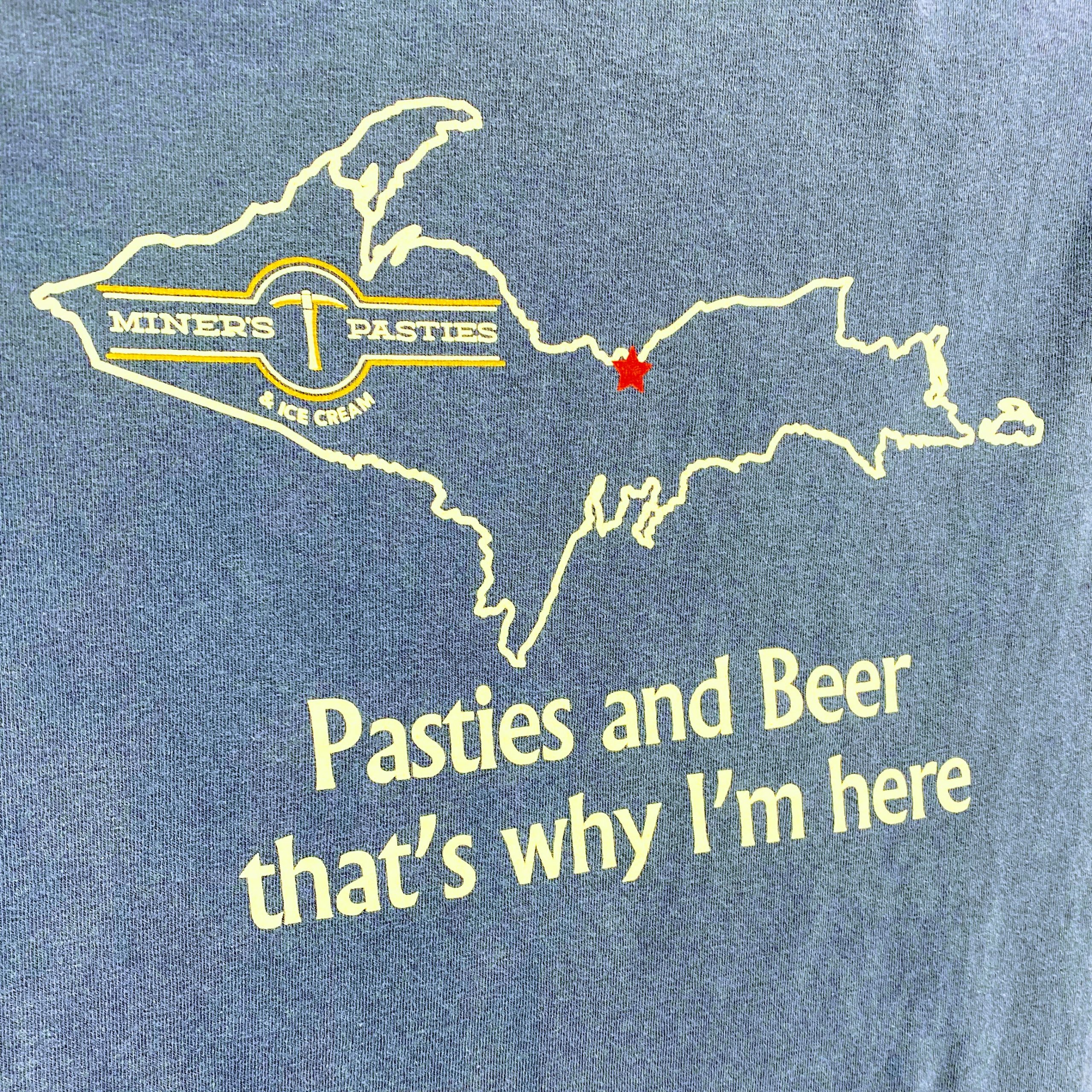
    • On our trip to the UP — Michigan’s Upper Peninsula — along with the biking, hiking, and kayaking, we were also on a bit of a pasty tasting tour. The UP is pretty well known — in the Midwest at least — for their pasties, brought over by Cornish miners working the copper mines. We had traditional pasties filled with steak, potatoes, onions, and rutabagas, and breakfast pasties. We worked our ways through the finer points of pasty critique — picking out the pasties made from lard-based doughs, and fillings that held together so you could eat the pasty with your hand but weren’t just complete mush.
    • It’s funny how these comparison dishes can crop up on a vacation. On a trip to Phuket, Thailand, Andrew ordered pad thai everywhere we ate. On a trip to Hungary, Irene searched every menu for halászlé – a spicy fish soup – after having a great bowl of it at lunch with her cousin in some little town on the shores of Lake Balaton. And again Irene, in Spain now, searched every city we visited for salmorejo, not quite soup, more of a tomato and bread and olive oil and garlic purée. These sorta horizontal tasting, some would be planned — like our pasty tour — and some would just come up, like Irene’s halászlé hunt. But it’d be fun, getting a feel for what the base of the dish is, what everyone agrees on, and what people put their own spin on, because usually for these core dishes — dishes that everyone around has eaten all their lives — everyone has an opinion about them. And that’s part of what makes the broad/horizontal tasting fun.
    • And also, these dishes don’t seem to be “industrialized.” While I’ve had mass produced pasties in the UK, grabbing something out from the West Cornish Pasty hut in Waterloo Station while running for a train, the pasties in the UP were much more — not “artisanal” because I don’t think anyone making pasties in the UP would use that word, but “family made”. At Miners Pasties in Munising, which came out top in our pasty ranks, the woman helping us at the counter said the lard pastry recipe came from the owner’s grandmother and only 3 people know it — the granddaughters and their niece. And only those three make the pastry each day.  We sat back and enjoyed those pasties because we knew we wouldn’t be eating them again unless and until we found our way back to this bench again some day.

    Closing

    • Closing music — Pictures of You by Evangeline
    • OK, that’s it, that’s the end of TravelCommons podcast #168
    • I hope you all enjoyed this podcast and I hope you decide to stay subscribed.
    • Find TravelCommons on Stitcher, SoundCloud, TuneIniTunes, Spotify, and Amazon Music. The links, along with the RSS feeds, are on the right-hand side of the TravelCommons website, under the heading Subscribe.
    • Right below that, in the Social Media section, are links to the TravelCommons Facebook page, and Twitter and Instagram feeds.
    • If you’re already subscribed, how ‘bout leaving us a review on one of the sites.
    • If you have a story, thought, comment, gripe – the voice of the traveler — send ‘em along, text or audio file, to comments@travelcommons.com or to @mpeacock on Twitter, or post them on the TravelCommons’ Facebook pageInstagram account,  or website at travelcommons.com. Thanks to everyone who has taken the time to send in e-mails, Tweets and post comments on the website
    • Follow me on Twitter
    • “Like” the TravelCommons Facebook page
    • Direct link to the show

  • Podcast #166 — What Is The Meaning of Travel?

    Podcast #166 — What Is The Meaning of Travel?

    Reindeer are ruining my cabin porn

    Trying to plan an August trip amidst dueling state quarantine lists and rapid lockdown changes while writing off my September plans for Barcelona. What’s worse – hotels cutting back on housekeeping or breakfasts? And talking with Emily Thomas about her new book The Meaning of Travel: Philosophers Abroad. All this and more, or listen to it right here by clicking on the arrow below or by following this direct link to download the podcast file .

    Here is the transcript of TravelCommons podcast #166:

    • Intro music — Warmth by Makkina
    • Coming to you from the TravelCommons studio in Chicago, Illinois after managing to front-run the city’s quarantine order on Wisconsin. Went up to Milwaukee to meet up with some friends and do a bit of biking a couple of weekends before the Chicago Health Department added Wisconsin to their list of 22 states where you’re required to self-quarantine for 14 days after returning from a trip. Mind you, they’re not setting up roadblock checkpoints like New York City is — at least not as of the time of this recording. Reasonable people can differ on this — New York’s governor claimed similar efforts back in March by Rhode Island and Florida aimed at New Yorkers were “unconstitutional” but seems OK with it when it’s pointed the other way — but it does make travel planning for law abiding citizens a bit more of a challenge. And making me wonder about our downsizing move into Chicago last year — was missing the yard, the extra rooms, and the basement gym in the suburbs during the lockdown earlier in the year; now after Chicago’s quarantine rules, am missing freedom of travel.
    • All this adds a couple orders of magnitude of complexity to our efforts to plan a week out of the city in a couple of weeks. Not only do we need to check Chicago’s quarantine list, but also the quarantine plans of any potential destinations. While New York isn’t on Chicago’s quarantine list, Illinois is on New York’s. Mapping it all out, we take the “clean destination” intersection of that quarantine Venn diagram and then look at what restrictions are in those places; if nothing’s open, it’s not worth traveling there. I’ve eaten more meals in my hotel rooms over the past 3 months than I have in the last couple of years. 
    • But things are changing so fast, that even after you figure out what’s open now, we then start following local papers on Twitter to get any early warnings on new restrictions. Which also means paying a lot more attention to hotel cancellation policies than I ever did. And then overloading our itinerary with outdoor activities like hiking and biking so last-minute closures or restrictions don’t leave us with nothing to do. Which means spending more time trolling the AccuWeather and Weather Channel web sites because an outside-heavy itinerary is more vulnerable to big storm fronts and hurricanes. And to think I used to bitch about having to navigate TripAdvisor ratings.
    • Bridge Music — funkyGarden by Jeris (c) copyright 2020 Licensed under a Creative Commons Noncommercial Sampling Plus license. http://dig.ccmixter.org/files/VJ_Memes/61356 Ft: airtone, SackJo22, Analog By Nature

    Following Up

    • First, a couple of shout-outs to folks who are helping me spread the word about the podcast
    • Thanks to GHLGB, an apparently long-time TravelCommons listener, who gave us a 5-star iTunes review the day after the last month’s episode dropped, writing:
      • “Mark does a great job of relating the world of the road warrior with a bit of branching out to those of us who are miles and points nutty. Always a calm and reasonable voice one that’s been in my ears for four years”
      • Thanks for that. I appreciate the words, and the effort of wading through the iTunes interface to leave them
    • Also, in last month’s episode, I mentioned Kev Monteith, a TravelCommons listener and Amtrak travel blogger, but didn’t thank him for calling us out in his 2020 Favorite Podcast list on his Travels With Kev website. So, I’m fixing that right now. Thanks, Kev! Check out the show notes for links to his site.
    • Back in episode #164, we talked about how hotels are pulling back on housekeeping during stays — the Hampton Inn in Spring Hill, TN said they’d be 3 days between room visits while the Residence Inn up the road in Franklin said 7 days, which seems a bit excessive; more like a COVID-washing a cost-cutting move. Replacing the breakfast buffet with a “grab-&-go” breakfast bag makes all the sense in the world, but here again, hotels are grabbing the opportunity to trim costs. Most of what I’ve seen is a brown lunch bag with a bottle of water, a NutriGrain breakfast bar, and an apple — a banana if I’m lucky. But the Residence Inn in Wauwatosa, WI, just outside of Milwaukee, was having none of that a couple of weeks back. You had 4 options for the main breakfast course in your bag — a turkey and waffle sandwich, a peanut and strawberry sandwich, an egg and cheese quiche, or one of 13 kinds of cereal boxes, accompanied by your choice of chocolate milk, or orange or apple juice. I’m not passing judgement on the food choices, but I was awfully impressed by their ambition — yeah, we can’t lay out a breakfast buffet spread, but we’re gonna try our damndest to give you a decent alternative. I just had to give the turkey & waffle sandwich a go. I had visions of a Fyre Festival-like trainwreck of a sandwich — a deli slice of turkey breast between two Eggo waffles. But it was a little more reasonable — a small wrapped sandwich of turkey sausage between two small waffles, meant to be heated in the microwave. I grabbed it on the way out for a bike ride, so missed the microwave step, which, I think, was critical. But like I said, I give that RI team huge props for the effort.
    • But outside the Wauwatosa gang, if this stripped down hotel service stays the norm for the next 12-18 months, it’s probably going to drive some big changes in the year-end traveler gift guides — shifting from Away luggage and Aesop travel kits, last year’s big recommendations, to sets of wine tumblers, collapsible bowls, and camping mess kits. And, of course, all sorts of upscale sporks.
    • Back in episode #161, at the end of March, still in a bit of shock from the COVID lockdown and trying to figure out how long it was going to last, I said “I’m nothing if not an optimist. In the midst of this week’s unraveling, I found a deal on a direct American Air flight from ORD to Barcelona — 8½ hr 787 flight — so I booked it — 2 weeks in Barcelona at the end of September.”  But here we are five months later and as we all know, things haven’t “re-raveled”. At the beginning of July, American announced that direct 787 ORD-BCN flight won’t restart until next summer. I checked our reservation on the AA iPhone app after I read this. It still showed us on that direct flight — until I clicked through, which then, I guess, forced the app to pull the latest information from Dallas, and now showed us flight BA through Heathrow. Not that it really matters. The EU isn’t letting Americans in any time in the near future, and, last time I checked, Barcelona is in a voluntary lockdown because of a new spike in COVID cases. News articles are showing shuttered-up stalls at the La Boqueria market; like I said earlier, if nothing’s open, why go? It was a gamble, and really, not even a big one. There’s no change fee, so it’s a push. We won’t lose any money — unless American goes belly-up, but that’d never happen — would it?!
    • Last year, in episode #150, (these show notes are gonna be chock full of backlinks), I talked about switching my carryon bag — from a Timbuk2 backpack to a Timbuk2 messenger bag. I gave two reasons for the switch: I wanted to carry something a little smaller that would stand up under a plane seat; and I wanted a non-black interior, I kept losing things in my backpack — my tablet, my Bose headphone case. But also because the backpack was breaking down a bit – the seam on one of the side pockets had blown out and one of the strap clips had broken. I was going to pitch it during our last downsizing binge before moving into the city and a friend said “You know, Timbuk2 bags have lifetime warranties.” Huh. So I hung onto it because I still like the bag. And about 14 months later, I finally got around to sending it back to them in San Francisco. I wasn’t sure if they’d re-opened their factory, so I was ready for it to take awhile for them to process the bag and repair it. Tracking the package, I could see they received it on a Friday. I got a note from them the following Monday saying they’d inspected it and yes, it was covered by the warranty, and had the bag back in my hands that Saturday. I have to tell you that I am pretty damned impressed. I won’t be switching back from my messenger bag, but I have found that the backpack can carry 4 four-packs of 16-oz cans, perfect when I’m biking a circuit of Chicago microbreweries using curbside no-contact pick-up to grab whatever’s their newest thing. Timbuk2 is definitely “TravelCommons Approved.”
    • And if you have any travel stories, questions, comments, tips, rants – the voice of the traveler, send ’em along — text or audio comment to comments@travelcommons.com — you can send a Twitter message to mpeacock, post your thoughts on the TravelCommons’ Facebook page or our Instagram account at travelcommons — or you can post comments on the web site at TravelCommons.com.
    • Bridge Music — Xena’s Kiss / Medea’s Kiss by mwic (c) copyright 2018 Licensed under a Creative Commons Attribution (3.0) license. http://dig.ccmixter.org/files/mwic/58883

    The Meaning of Travel

    • This seems to be the existential question for a lot of travelers — why do we travel? — now that can’t, or at least can’t as easily and, well thoughtlessly is too strong a word, but when we could travel without having to plan as much. It’s been a whipsaw — from overtourism to 36% unemployment in the travel and hospitality sector in the the US — so a bit soul-searching/navel-gazing is to be expected, if not encouraged. So when I saw the new book, The Meaning of Travel: Philosophers Abroad by Dr. Emily Thomas, associate professor in philosophy at Durham University in the UK, immediately bought it and read it — and then thought that I needed to have her on the podcast. Lucky for me, she’s a very nice person and agreed to spend a bit of time talking about “the meaning of travel”. It was a fun conversation; I hope you enjoy it.
      • Mark: I’ve got to admit that, as an engineer and an IT guy, my philosophy knowledge pretty much starts and ends with buying a T shirt that said “I Drink Therefore I Am.” It was a fundraiser for the Philosophy club for my undergrad. Emily, the first chapter “Why Do Philosophers Care About Travel” got me because you get straight into a topic we’ve discussed often on the TravelCommons podcast about how travelers build travel bubbles around themselves. They isolate themselves from the places that they traveled to. Oftentimes they do it in the name of efficiency, maybe to keep themselves safe from experiencing what you call the “otherness of travel.” What do philosophers say about that difference between everyday journeys and traveling?
      • Emily: So, I think the difference between these kinds of everyday journeys, like popping to the grocery store, visiting your grandmother and what we think of as travel lies in how much unfamiliarity or otherness we experience along the way. And it seems to me that when I popped to the grocery store, everything is super familiar. I know how things work; I know the roads; I know the products I’m going to buy. If I were to go grocery shopping in an unfamiliar country, that experience is going to be really different. I don’t know how the roads work anymore; I don’t necessarily recognize the writing on the signs of the products; I may not understand the languages that I’m overhearing. And so, an everyday experience becomes much more unfamiliar. And then seems to be much more about travel in the deeper sense. And several philosophers, including folks like René Descartes and Michel de Montagne, have talked about how the benefits of travel lie in experiencing otherness, that this broadens your mind, that it forces you to think past the familiar everyday world of your experience and think about how things might be otherwise, how they could be in other places and they think that’s a really good thing.Frequent travelers often build travel bubbles around themselves that isolates them from the places they travel to; doing it in the name of efficiency, but also perhaps to keep themselves safe from experiencing what philosophers call “the otherness” of travel
      • Mark: I was thinking about this — is there a spectrum of otherness? I’ve got the complete travel bubble at one end; in the middle, curated sidebar experiences — you find a local restaurant, or hunting down a microbrewery or a taproom in a not-great section of town that you would not normally go; and then at the other end, full immersion – I live here, I’ve got a flat.
      • Emily: I definitely think there’s a spectrum. And you can imagine, in your bubble, it might not be the full-blown experience of taking all the same clothes with you and you using all familiar airports. But even if you have your laptop and your mobile phone with you, part of the way that you’ll be connecting with the world is through these really familiar mediums. Maybe you’re going there, and you’re still using Trip Advisor to look for recommendations like you would back home or you’re still using Google maps to navigate your way around the streets. And again, I think that’s going to provide you with this kind of buffer between you and the unfamiliar.
      • Mark: Later on in the book, you riff on Henry David Thoreau and Walden and Cabin Porn and Solitude. When the lock down started, I just decided I was going to dig into some early American literature that I had been threatened with in high school and college but never really got into. And so I kind of flipped a coin between Thoreau and Whitman’s Leaves of Grass and, heads so it was Thoreau. I will admit I did this in the beginning of April, and I still have not finished Walden yet, and here we are in August. So it has been a bit of a slog, but I’m still working it. But before I get into that, I gotta ask – “cabin porn.” That’s a new one on me – the term, not so much the porn. But the term cabin porn, what is that?
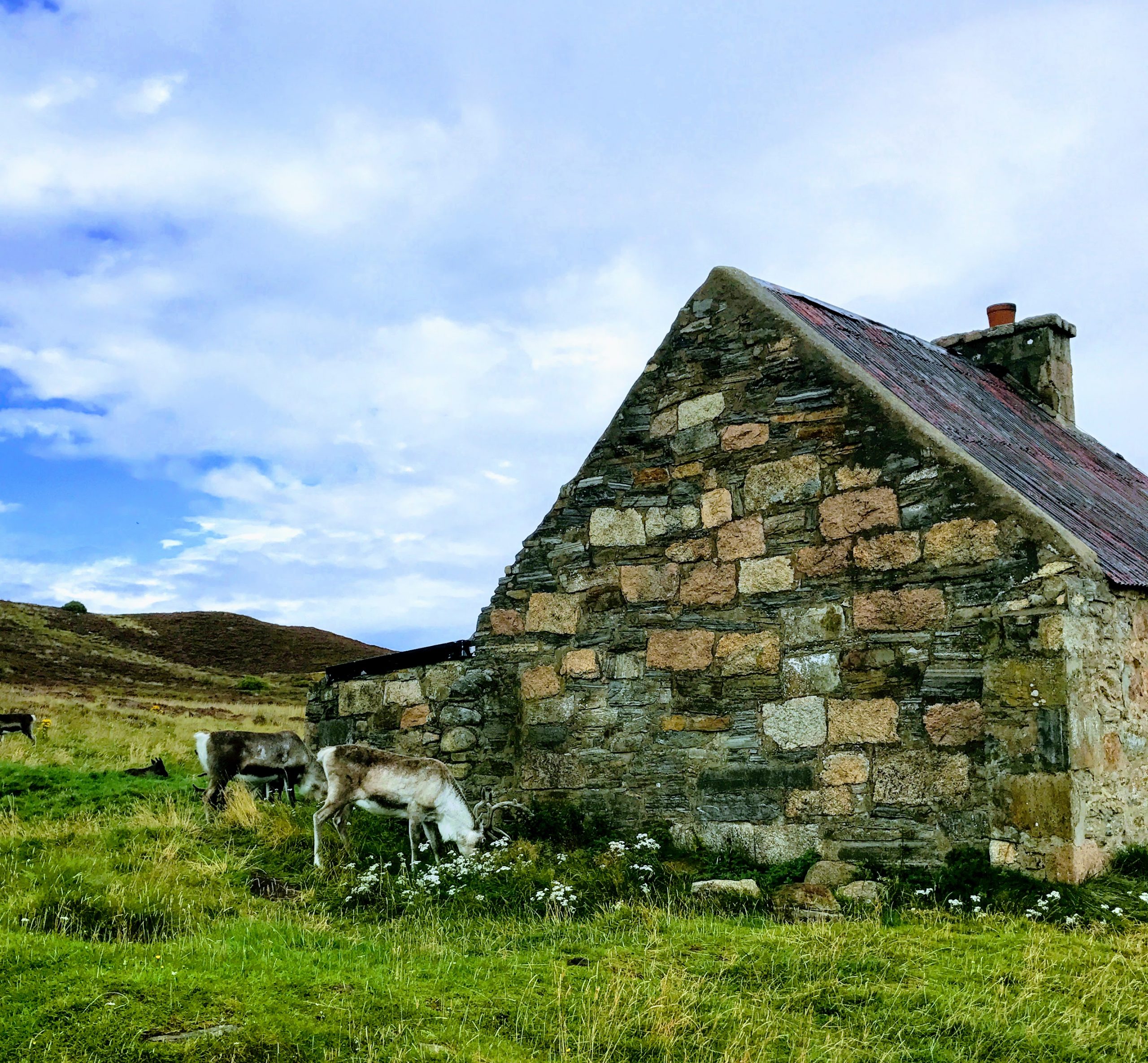
      • Emily: And so despite what you might think (laughter), Cabin Porn refers to photography of beautiful, isolated cabins. So, picture wood-built cabins nestled in the woods with smoke curling from the chimney. Or maybe they are stone cottages perched on the edge of a cliff, looking out over a crevasse. And there’s this whole industry dedicated to people taking photographs of these gorgeous cabins. The idea is that they’re kind of aspirational. If you stick these into Google images, you will find some of the most astounding dwellings; places that you can rent and live for a little. Walden seemingly kicked this whole thing off. So, Thoreau describes building a cabin in the woods by Walden Pond and while the book can be a little bit of a slog in places, there are beautiful bits of the book. When he’s describing living in nature in this really kind of rustic way, lots of people credit their cabin aspirations to Walden.
      • Mark: What is the strain about solitude and travel and in the balance with “otherness”?
      • Emily: Solitude is often held up is one of the things we can get through travel that’s hard to get home. Although it seems like you can go out into a crowded cafe or a bar and be alone there, it seems like it’s much easier to do that by venturing out into wilderness, that you’re not going to meet other human beings and you have objects in front of you – trees, plants, creatures – that you can connect with. So the idea is that you’re not being solitary in the sense of just introspection, but you’re also connecting with some part of the world around you. It might in turn cause you to reflect on that world, and then your own part in that wider network. And that’s very much what Thoreau is all about. He thinks that being alone in wilderness allows you to better understand wilderness and your own part in the wider universe.
      • Mark: I often find when I’m traveling, it is kinda easy to hold yourself at a distance, especially if, where you are, you don’t speak that language. It’s almost like white noise.
      • Emily: Yes, when you spend large chunks of time without hearing words that you understand is a strange experience. I think it allows you to focus on other things. I think then you end up paying more attention, maybe to like the sights and the smells, the things that you can understand. I quite enjoy it, actually, the experience of being somewhere and not understanding anything that’s going on.
      • Mark: (laughter) The only challenge, though, is because you’re so used to people saying things and you don’t understand it that you just don’t listen. And then when you actually come back to the UK or the US and people are talking to you and you’re just so used to tuning them out, just like “Oh, wait, you said something to me?” There was another piece in the book that you talked about global homogenization. And I’ve felt this, I would say over the past 10-15 years. I started traveling a lot in the mid-80’s, back in the Dark Ages. In that chapter you talk about that it’s an old complaint. You talk about Rousseau bitching about it, and John Stuart Mills…. Are we just repeating the same thing?
      • Emily: So, people like Mills and Rousseau are writing a couple of hundred years ago, and they are bitching about how Paris and Rome “seemed to me to be the same city” and reading this now, it just seems so implausible! I am sure that a large part of this feeling has to do with context. I would imagine that these men are moving in intellectual circles and then they’re going to be around people who speak the same kind of languages, and value the same kind of things that you would like to hope that if they had broken free of those circles that they might have found things that were more unfamiliar. I do suspect that the world has been becoming more the same now than it was before, and simply because of the rise of global companies – that was just not around before. And the idea that you can go into a city and find the same shops and restaurants that you do back home is really strange. I mean, that would not have been there back in the 17th and 18th centuries. That said, I do think what we were talking about before – using technology to find your way around – I think that’s going to give you the impression that things are all the same because you’re looking at them through the same medium. That is an illusion. The real world is not all the same. New York is very different than Paris. Something in the US that I personally am really fond of is investigating small towns that are not listed in guidebooks, in search of what Bill Bryson once described as Anywhere, USA. I really enjoy that. Seeing how these small towns do differ from each other, but also what they have in common. For me, there’s a reall attraction in that, especially in the US.
      • Mark: Are there any that are top of the list for you?
      • Emily: Yes, Silverton, Colorado. I enjoyed that enormously. As a British tourist, so much of it is totally unfamiliar, even though I got the impression that, to the people who lived there and are from Colorado, this is all just par for the course. It’s regular looking houses, it’s regular looking shops that, as is a non-American trying the local bars, seeing the local kind of pancake breakfast, all of this was completely new and really stunningly beautiful.
      • Mark: Just to wrap up, if you look forward and you think about philosophy and travel, what are some of the new things that philosophers are thinking about on travel?
      • Emily: I think the big thing right now it is the ethics of climate change and how best to travel responsibly. I think that issue is going to dwarf everything else in the philosophy of travel for several decades to come. Whether or not we are partaking in carbon off-setting schemes is enough, whether or not we should be looking to educate ourselves more about the places that we travel, possibly even traveling less but aiming for higher quality experiences. I think that stuff is really going to dominate. However, there is other stuff going on too. Looking at the issues posed by space travel and space tourism, which I don’t think is that far away, actually. I mean in the immediate decades, it’s going to be the province of the super wealthy, but I think past that it will become more and more accessible and that’s also going to pose some ethical issues like the cost of fuel to get people up out of the atmosphere is gonna be enormous. But also, that will prompt us to think about our place in the world. I obviously have not been up into space, but were I to go, I imagine it would cause me to reflect on how little the planet Earth is in the grand scheme of things. And I wonder whether that will lead us to reconsider our place in the world and how we’re treating the planet that we live on. I think space travel is going to be really rife with opportunities for philosophical reflection.

    Closing

    • Closing music — Pictures of You by Evangeline
    • OK, that’s it, that’s the end of TravelCommons podcast #166
    • I hope you all enjoyed this podcast and I hope you decide to stay subscribed.
    • Find TravelCommons on Stitcher, SoundCloud, TuneIniTunes, and Spotify The links, along with the RSS feeds, are on the right-hand side of the TravelCommons website, under the heading Subscribe.
    • Right below that, in the Social Media section, are links to the TravelCommons Facebook page, and Twitter and Instagram feeds.
    • If you’re already subscribed, how ‘bout leaving us a review on one of the sites.
    • If you have a story, thought, comment, gripe – the voice of the traveler — send ‘em along, text or audio file, to comments@travelcommons.com or to @mpeacock on Twitter, or post them on the TravelCommons’ Facebook pageInstagram account,  or website at travelcommons.com. Thanks to everyone who has taken the time to send in e-mails, Tweets and post comments on the website
    • Follow me on Twitter
    • “Like” the TravelCommons Facebook page
    • Direct link to the show
  • Podcast #165 — First Post Lockdown Flight; When Do We Travel For Business Again?

    Podcast #165 — First Post Lockdown Flight; When Do We Travel For Business Again?

    The hop taste isn’t coming through

    My first post-lockdown flight was a 90-minute Southwest non-stop from Chicago to Nashville. It wasn’t bad, but not as casually easy as my last pre-coronavirus flight in February. We talk about that experience as well as Hertz’s new cleaning program, my latest pair of Bose noise-cancelling headphones, and then wonder when business travel will return. All this and more at the direct link to the podcast file or listening to it right here by clicking on the arrow below.

    Here is the transcript of TravelCommons podcast #165:

    • Intro music — Warmth by Makkina
    • Coming to you from the TravelCommons studio in Chicago, Illinois after a couple of runs back down to Nashville for family stuff — one in the air and the other on the ground. And with COVID cases spiking in vacation spots like California and south Florida, it seems like that’s the market segment — folks traveling to see friends and family — that the airline and hotel companies are banking on. And that’s most of what I saw when flying back from Nashville a few Thursdays ago — lots of families with kids, groups of people meeting up on the other side of security for maybe some 4 day-weekend trips? The tip-off for me on the business vs. leisure traveler mix was the TSA lines — solid lines for regular TSA, while I pretty much walked straight through PreCheck. Another tip-off used to be mid-day lines at the bars, but with most of the airport restaurants closed up, that’s not a valid indicator right now.
    • Traveling right now requires a bit of nimbleness. On my first post-lockdown trip in May, the workout room at the Spring Hill Hampton Inn was open and I used it every day. Back down in June, there was a piece of paper taped to the door — “Closed by order of the Health Department”. The front desk agent told me it was a couple of days old — which explained all the banging in the room above me; somebody must’ve been doing their HIIT workout in their room. I didn’t know if I should be annoyed or impressed at how long they went at it. So for this last trip, I called the hotel the night before I left, before I packed my gym clothes vs. a yoga mat. They told me that they’d just reopened the workout room the day before, so the yoga mat went back in the closet. 
    • It’s kinda the same very fluid situation right now with bars and restaurants. A few days before we got to Nashville, the mayor closed down any establishment with less than 50% of their sales in food, so pretty much all the bars and taprooms. Makes sense, not arguing it; just forced us to quickly pivot some of our plans. It also forced us to go a bit “old school”, back to making actual phone calls, asking “are you open; dine-in or just take-away?” since places seem to be having trouble updating their websites and their Facebook/Yelp/Google/OpenTable listings fast enough to keep up with the changes.
    • It proved out our decision to book the Residence Inn rather than the mainline Marriott a few blocks away. The full-size fridge held a lot more beer, and that kitchenette came in handy when we found out that Prince’s Hot Chicken was only doing take-away — I can’t imagine trying to eat an extra-hot half-chicken perched on a king-size bed.
    • Bridge Music — Hula Hoop Party by Stefan Kartenberg (c) copyright 2016 Licensed under a Creative Commons Attribution Noncommercial (3.0) license.  Ft: Martijn de Boer, Blue Wave Theory

    Following Up

    • Lots has been written about how the COVID pandemic has massively accelerated changes toward contactless transactions. Microsoft’s CEO famously said back in April “We’ve seen two years’ worth of digital transformation in two months”.  Back in episode #136, I said I felt like the last generation of cash payers, that my younger colleagues rarely carried cash; they paid for everything with a card. Looking into my wallet, I had the same $200 worth of 20’s in June that I’d taken out of an ATM in March. Nobody wants to handle cash; they don’t even want to handle my card (Most extreme experience – A bartender at Asgard Brewing’s taproom in Columbia, TN sprayed my Visa card with diluted chlorine bleach before swiping it to pay my bill. Made my wallet smell like a swimming pool). As much as possible, places want us to pre-order and pre-pay, so we just pick up our purchases in a socially distant way and then head home. It’s also switched up some opinions on using facial recognition for flight check ins. Pre-coronavirus, the push was from governments as a better way to do security screenings and to improve immigration compliance, and this was getting big pushback on privacy concerns. Now, it’s pivoted. The push is from travel companies using facial recognition as a way of providing the touchless check-in experience that most travelers now want. 
    • But facial recognition is stymied by face masks which we wear when we’re checking in at airports and hotel lobbies. As is Face ID when trying to unlock my iPhone to get to my boarding pass or digital room key. Until I can downgrade to an iPhone SE with that old-school Touch ID that unlocks using my thumb print, I think I’m going to have to shorten the PIN code on my iPhone 11 Pro. I lengthened it for better security but am banging it in more and more often. And I’ve noticed the iPhone is really slow about recognizing my number presses — or it misses some when I go too fast (like when I’m trying to pull up a boarding pass in line) and errors out. 
    • Walking down the Hertz Five Star aisle at Nashville Airport, I saw their version of paper rings that hotels used to put around toilet seats to “certify” they’d been cleaned. In Hertz’s case, they put a “Hertz Gold Standard Clean” sticker across the driver-side center pillar (the B pillar for all my gearhead listeners) so that you break it when you open the driver door to get it. Nice gesture, though it kept me from doing my usual walk down the aisle, opening the door of a bunch of cars to check their mileage. Seemed rude to break all those stickers, though I did notice more than a few broken ones when choosing my car. Way back in the old days of TravelCommons, we used to talk about the TSA doing “security theater” in the screening lines. This feels a bit like “sanitation theater”. 
    • I finally broke down and bought a new set of Bose noise cancelling headphones — the new 700’s. This is my third set of Bose cans. Bought my first pair in 2009. I was flying a lot of short flights at the time, and in those days before regional jets, I was on a lot of prop planes. And they’re noisy — not just on take-off, but the entire flight. After a while, I started to notice fatigue when getting off those planes. Talking to a few folks, they said the noise heightens stress. A friend told me how much he liked his Bose cans, and so I burnt some Amex Membership Rewards points on Amazon for a pair of Quiet Comfort 2’s. It was a revelation; flick the switch and, whoosh, quiet. I took them on every flight, until 3 years later, I left them in a seatback pocket when rushing off a plane to make a tight connection. I immediately lit up some more Membership Rewards points for a new pair – QC-15’s. Four years later, I replaced a worn out set of ear cushions. And though the non-replaceable headband cushion is looking pretty ratty, the now 8-year-old headphones still work great. What got me to replace them was the wire. I’d be sitting in my usual aisle seat, plugged into my iPhone (using one of those dongles that Apple no longer gives you with a new phone). At some point in the flight, the folks in the middle and window seats would want to get up and use the toilet and inevitably, I’d snag the wire on the arm of the seat, pull the headphones off my head, and/or launch my phone a row forward.  I could’ve gotten a pair of the QC-35’s — same form factor without the wire — but decided to go all next-generation with the 700’s, which has meant some adjustment pains. Like there are buttons in places where they never were before. So when I grab the ear cups to slip the headphones off, I manage to hit a button that changes the noise reduction level or summons Siri. Also new is using the touch surface on the right ear cup to control things. You tap or swipe the right ear cup to accept or drop a call, pause a song, raise or lower the volume, or skip 30 seconds to fast-forward past a podcast ad. I’m learning to be a bit more precise in my motions; I’ve already dropped a couple of calls when I was just trying to turn down the call volume.  One thing I really like — more for working-at-home than in-flight usage — is that the 700’s can pair with two Bluetooth devices at the same time. So, for me, I have them paired with my MacBook Air and my iPhone and they switch seamlessly between the two. Nice when I’ve got Zoom calls on my Mac and then a phone call on my iPhone. And, call me shallow, but they look a bit cooler than my old QC-15’s. I’ve had the 700’s for about a month now and really like them. I guess you could say they’re “TravelCommons Approved.
    • And if you have any travel stories, questions, comments, tips, rants – the voice of the traveler, send ’em along — text or audio comment to comments@travelcommons.com — you can send a Twitter message to mpeacock, post your thoughts on the TravelCommons’ Facebook page or our Instagram account at travelcommons — or you can post comments on the web site at TravelCommons.com.
    • Bridge Music — i knew by bridges (c) copyright 2008 Licensed under a Creative Commons Attribution Noncommercial (3.0) license. Ft: shannonsongs

    First Post-Lockdown Flight

    • Way back at the beginning of the lockdown, the first Saturday of April, I was on a Zoom beer drinking call with Rob Cheshire, a long-time TravelCommons listener and now a podcaster — he interviews UK craft brewers on his This Week in Craft Beer. It was a Saturday afternoon call, for Rob and the other guys in London; just past noon for me in Chicago, but hey…. And somewhere around our second or third beer, Rob asked me “When will you be comfortable getting on a plane again?” I really didn’t have a good answer. It was early days; I wasn’t sure.
    • Fast forward to the back half of June. I needed to get down to Nashville again and didn’t have the time to burn 8 hrs for the drive down and another 8 on the way back. I had some travel funds sitting in my Southwest account from a couple of April trip cancellations, and Southwest flies 6 non-stop 737s between Chicago and Nashville while American and United only do smaller regional jets, and Southwest isn’t packing them full — booking those bigger planes at ⅔’s capacity — while American and United say they’ll let you know if your flight books solid. All told, a pretty easy decision to fly Southwest. One of the benefits of living in Chicago, a rare 3-hub town.
    • The day before my flight, when getting my boarding pass on the Southwest app (my usual process; I was contactless before it was a thing), I had to click through a certification that I wasn’t running a temperature and that I hadn’t been exposed to or tested positive for COVID-19. OK, click. Then I get a screen telling me that face masks are required to board. Makes sense, click. And now I get my boarding pass.
    • Monday morning, Irene drops me off at a pretty sedate departures curb at Midway. I mask up and walk in. It’s not empty, but it’s definitely not the normal Monday morning bustle. It feels more like a Wednesday early afternoon. There’s a bit of a line at regular security, but no line at PreCheck. The TSA agent asks me to drop my mask for a moment to check my ID and then waves me through. I noticed that TSA still has their October 2020 Real ID deadline warning signs on the podium. Hmm… I remember reading at the end of March that the TSA has pushed the deadline a year to October 2021. Guess they haven’t had a chance to issue updated signs. You’d think they’d just take the old ones down.
    • Most of the restaurants and stores were closed; a pretty common situation. Kev Monteith, a TravelCommons listener and Amtrak travel blogger, replied to one of my Twitter posts saying “I flew Southwest a few weeks ago. Layovers are rough because most places in the airports are closed. I was at STL and only found beer at Burger King and Dunkin Doughnuts.” I would’ve been happy for just a coffee. Down in the main Southwest concourse, some gates were closed off with curtains which I assume was to keep people from sitting there so they don’t have to clean it.
    • Looking around the terminal, it felt like mask usage was about 80%. Just about everyone was wearing them when walking around. I’d see some people not wearing them while sitting at the gate, though those folks were distancing themselves from everyone else. I’d see kids ripping their masks off as soon as they got off the jetway. I did notice, though, a sizable minority of mask wearers were just covering their mouths, leaving their noses uncovered — pilots, cleaning crew, passengers, wheelchair people. Now I’m no epidemiologist, but that seems to defeat the purpose.
    • When the agent called boarding, she said “There’s 40 of you on a plane with 175 seats. So everyone gets their own row, and please, don’t everyone sit up front. We need a bit of weight distribution.” It was a quick boarding; we pushed back and took off early. These truly are unprecedented times.
    • Nashville was more crowded on Thursday morning when I headed back home. Mostly families as I said at the top of the show. The end of the concourse where the  Southwest gates are was as crowded as usual. There were signs around saying that 3 seats between people equals 6 ft, but there were too many people waiting to make it practical; at least everyone is masked up. I walked back up the terminal to find a bit more space and there, tucked away behind some construction sheeting, I found an empty gate. I’m all alone, mega social distanced, so I take off my mask, log into the WiFi and do some work until the Southwest app on my phone bings, telling me that boarding has begun. 
    • There were a lot more than 40 people on this flight. I found an empty row and slid all the way over to the window seat since it’s only a 90-minute flight. About 3 minutes later, a guy sat down in the aisle seat. Nobody in the middle seat. Everyone wearing masks and nobody’s head right next to mine, I was good to go. Maybe helped just a bit by the fact that, in those 3 minutes, I pointed all three air jets toward the empty middle seat and turned them on full blast, creating an air curtain between me and the aisle seat — just in case.
    • Bridge Music — Misunderstood by 3lb3r3th (c) copyright 2013 Licensed under a Creative Commons Attribution Noncommercial (3.0) license.  Ft: Alchemistry

    When Does Business Travel Come Back?

    • My son Andrew and his girlfriend took the 6am flight to LGA earlier this week. I asked him “How full was the flight?” “Maybe 20 people; mostly families,” he said. Didn’t surprise me that a Thursday 6am LGA flight was only at 11% capacity. That’s normally a business travel run; people getting up at 0 dark 30 in Chicago to make 10am meetings in Manhattan. But there’s not many business travelers now.  While business travelers only make up about 10% of passengers on major airlines, they provide between 55 and 75% of the profits. You might could think they’re subsidizing the budget fares those families are using.
    • Over the past month, I’ve been talking with Sales VPs at companies that deliver complex IT services. If anybody would be feeling the bite of not traveling, I thought it would be these guys. I’ve done a number of these deals, and they always involved locking all the right decision makers in a conference room to hash out all the contract details and ride herd over the transition. But I was completely wrong. They all said that work hasn’t slowed down during the lockdown. They’ve been able to do all that conference room work over Zoom. Indeed, they said being virtual has made it easier for them. Pre-lockdown, one of their biggest challenges was calendar wrangling — being able to get all their execs and the client execs into that conference room at the same time. Now, they just click some buttons and everyone shows up in Zoom gallery mode — no travel planning, no scrambling after cancelled or delayed flights. They all said they love the ease of virtual meetings and, at the end of the day, closing the lid on their laptops and having dinner with the family every night.
    • Kinda supports the narrative that business travel will never rebound; back to the Microsoft CEO’s quote: in 2 months, we’ve advanced 2 years in virtual work culture. But when I probed a bit, I found that Zoom hasn’t completely replaced an airplane ticket. While these guys have been able to virtually close deals they had in their sales funnel, virtual meetings don’t seem to be replacing these deals; getting new prospects into the top of the sales funnel. So while things are looking good now, they’re beginning to worry about 4-6 months from now.
    • This was the exact opposite of what I’d expected. I thought the give and take of negotiations, the sidebar conversations, the emotional content, wouldn’t translate into video calls. But it looks like I was wrong; that once a deal has some momentum and a structure to guide everyone, the in-person hammering out turns out to be a nice-to-have. And the reason new opportunities aren’t coming in is that they need more exploratory, abstract, wide-ranging conversations that lack that guiding structure and selling a team as much as a product — at least for complex services — and that’s tough to do over a pane of glass.
    • And so they all said that they’d probably start traveling again — reluctantly — by the end of this month. But I do think this, call it a 4-month exercise in figuring out virtual work methods and cultures will move the set point, everybody’s default decision toward virtual meetings. And so maybe a bit less focused on high-profit road warriors and more dependent on those cost-conscious families. Does this mean repointing the 6am LGA flights to Cancun? They’re going to have to seriously reengineer those drink carts.

    Closing

    • Closing music — Pictures of You by Evangeline
    • OK, that’s it, that’s the end of TravelCommons podcast #165
    • I hope you all enjoyed this podcast and I hope you decide to stay subscribed.
    • Find TravelCommons on Stitcher, SoundCloud, TuneIniTunes, and Spotify The links, along with the RSS feeds, are on the right-hand side of the TravelCommons website, under the heading Subscribe.
    • Right below that, in the Social Media section, are links to the TravelCommons Facebook page, and Twitter and Instagram feeds.
    • If you’re already subscribed, how ‘bout leaving us a review on one of the sites.
    • If you have a story, thought, comment, gripe – the voice of the traveler — send ‘em along, text or audio file, to comments@travelcommons.com or to @mpeacock on Twitter, or post them on the TravelCommons’ Facebook pageInstagram account,  or website at travelcommons.com. Thanks to everyone who has taken the time to send in e-mails, Tweets and post comments on the website
    • Follow me on Twitter
    • “Like” the TravelCommons Facebook page
    • Direct link to the show
  • Podcast #164 — First-Post Lockdown Trips; Travel Credit Cards

    Podcast #164 — First-Post Lockdown Trips; Travel Credit Cards

    Can I leave my house now?

    I broke Chicago’s containment for my first post-lockdown trip, a fast drive down I-65. We talk about hotels swapping hospitality for sanitation, Hertz’s bankruptcy, and tips for travel credit card usage from Brett Holzhauer, the travel card expert at ValuePenguin.com. All this and more at the direct link to the podcast file or listening to it right here by clicking on the arrow below.

    Here is the transcript of TravelCommons podcast #164:

    • Intro music — Warmth by Makkina
    • Coming to you from the TravelCommons studio in Chicago, Illinois, as the lockdown here is starting to lift. What’s open and what’s not is still a bit spotty, though I’ve managed to hit a couple of microbreweries with outdoor patios. The opening in Chicago is not dissimilar to what I experienced down in Tennessee last month. I was down in Spring Hill, south of Nashville, two weeks after the non-urban lockdown lifted — for every place other than the cities of Nashville, Memphis, Knoxville, and Chattanooga. It seemed that everyone was still trying to figure out what to do — the bar/pizza joint next to my hotel was fully open, but the local bar-be-que joints and the Starbucks were still only doing take-away. Which makes sense; it’s not like there’s a standard playbook on how to re-open an economy. And throughout my consulting career, I’ve learned it’s always easier to shut things down than to start them up.
    • The drive south on I-65 from Chicago is one that, I’m not gonna say I can do with my eyes closed, but I’ve been doing it for almost 40 years, starting when I was in business school at the University of Chicago and my family was living in Louisville, KY. I mean, there’s a clump of trees in the median between West Lafayette and Crown Point that’s a milestone for me; I know I’m an hour from home. Which just goes to show you how boring the drive through northern Indiana is when trees in the median are a notable feature.
    • The drive between Chicago and Nashville, while not the most exciting, especially through Indiana, it does usually require a bit of timing to thread through Chicago, Indianapolis, Louisville, and Nashville to avoid rush hour in each. On this trip, not so much. I left Chicago after breakfast and was driving 80 mph most of the way, maybe dropping down to 70 through the cities. And I was still getting passed by guys going aggressively faster. And the only time I saw police or state troopers was in front of big road construction sites, cars running with all their lights flashing in front of big barriers, more as a warning to speeders than an attempt to get them. It was, hands down, the easiest drive down I-65 I’ve ever done.
    • That wide-open drive may be one of the few things I’ll actually appreciate about this lockdown. Well, that and the $2/gallon gas along the way…
    • Bridge Music — Brilliant Day by Hans Atom (c) copyright 2014 Licensed under a Creative Commons Attribution Noncommercial license. http://dig.ccmixter.org/files/hansatom/47919 Ft: Lisa DeBenedictis

    Following Up

    • First up, thanks to the TravelCommons listener who goes by the handle Abe Froman, Ferris Bueller’s sausage king of Chicago, for dropping a 5-star review on our iTunes page. Abe writes:
      • “I have been a fan of this podcast for many years. If you are a road warrior or a mileage runner, you will love the tips to make your travel easier.”
      • Abe, thanks a lot for this.  I’m glad you’ve enjoyed the podcast
    • Last year in episodes 153 and 155, we talked about American Airlines’ retirement of their MD-80’s, the “Mad Dog 80”, the plane on which I earned my first Advantage status — Gold, and there wasn’t anything higher back then. Last week, Delta finally retired their last Mad Dogs — MD-88’s and -90’s. They were supposed to run through the end of the year, but with late ‘80’s technology and fuel efficiency, they were among the first planes in the fleet to be grounded when the lockdown hit. Delta said that “at their peak, the planes accounted for 50% of Delta’s arrivals and departures from” their Atlanta hub.  Which will be a relief to longtime TravelCommons listener Darren Mak, who tweeted at me back at the beginning of March, a picture out the window seat of a Delta MD-88 just in front of the engine cowl, thanking me for mentioning, in episode 155, that whenever I would end up in that same seat, I would wonder — if that engine blows up, will the shrapnel blow out or blow into the cabin. Well Darren, no more worries. We both survived the Mad Dog’s back seat.
    • We’ve talked in the past couple of episodes about the first post-lockdown trips would be by car — more schedule flexibility; no worries of a stranger in the middle seat exhaling 18 inches away from you.  CNBC ran a story last week analyzing the change in the number of requests for directions on Apple Maps in 2020. Using January 13th as the baseline for their comparison, requests for driving and walking directions dropped by 50% in the first month of the lockdowns, but had recovered by May 29th — the last day of the data series. Transit direction requests had dropped by 75% and were still more than 50% down by the end of May. Now, using January 13th as the baseline probably exaggerates the recovery — you’d think the number of walking and driving direction requests on a normal Memorial Day weekend would be hugely higher than for the second Monday of January when it was in or below the 30’s for about ⅔’s of the country — but I don’t want to kill a green shoot with too much skepticism.
    • American talked about their own green shoots last week, saying they would be operating 55% of last year’s schedule in July, up from 20% in April and May. Driven mostly by demand from states opening up — Texas, Florida, and Arizona — rather than cities like New York, Chicago, and San Francisco that are still under stricter lockdown orders. If I keep pulling on this trend line, I’m thinking by September all those voluntary capacity limits and empty middle seat promises will have faded away.
    • The absence of update emails from airline and hotel CEOs this week I think is another green shoot. If things are starting to look up, no need to send me an email extending a bonus award offer or cancellation fee waivers. This has cut into a new hobby of mine, though — comparing the use of “in these uncertain times,” “in these challenging times,” and “in these unprecedented times” in these emails. I have a stroke count going. Right now, “unprecedented” is the runaway leader, with “challenging” second, and “uncertain” third.
    • I’ve been a Hertz customer on and off over my 35-year travel career — mostly on. I started my business traveling when I was at IBM, and in the mid-80’s, they had negotiated a smoking rate with Hertz. In episode 144, I talked about getting to know the woman working in the little Hertz hut at SJC back then, when SJC was still an outdoor airport; and before Hertz Gold, that’s all I needed to get an upgrade. And more recently, I’ve, on balance, had good experiences with Hertz. So I was bummed for a moment when I saw they filed for bankruptcy last month. It wasn’t surprising, though. Hertz was still carrying a big debt load courtesy of a 2005 PE leveraged buyout, and we’ve talked in past episodes about how Uber and Lyft have been eating away at its core airport rental market. So, when travel stopped in March and used car auction prices cratered in April, Hertz tipped over. By now though, we’re kinda used to big travel companies cleaning their debt problems in bankruptcy — United and American Airlines the most recent examples. So I’m not too worried about losing the rest of my Gold points. In the short term, though, I will be paying more attention to the mileage on the Hertz cars in the Five Star aisle. That’s where I usually see signs of financial distress — a lot less 500-mile cars and a lot more 25,000-mile cars. And while 25,000 miles on a car doesn’t seem like a lot, remember that rental car miles are kinda like dog years — you gotta multiply them by, like, 7 to get to regular car miles.
    • And if you have any travel stories, questions, comments, tips, rants – the voice of the traveler, send ’em along — text or audio comment to comments@travelcommons.com — you can send a Twitter message to mpeacock, post your thoughts on the TravelCommons’ Facebook page or our Instagram account at travelcommons — or you can post comments on the web site at TravelCommons.com.
    • Bridge Music —  Natchoongi (New Hope Remix) by Suenjo (c) copyright 2007 Licensed under a Creative Commons Attribution Noncommercial (3.0)

    First Post-Lockdown Trips

    • As we talked about a few minutes ago, travel is starting to pick up as the lockdowns ease and people want to see something other than the 4 walls that have surrounded them since mid-March. 
    • TravelCommons listener Mark Skinner dropped me a line towards the end of May about his first lockdown trip. You may remember Mark from episode 157 back in November when he wrote in to tell us about his day trip from Washington, DC to Hong Kong — flying out Monday afternoon, returning Tuesday morning — to take a NASA cosmic ray detector on an over-the-pole flight.  This time, Mark writes –
      • So I had my first trip this past week, since the “before times”. On the way back, I was listening to your recent podcast. Yes, my first trip was via automobile, down to the outer banks of North Carolina. Dare County had recently opened up (the day before!) to allow visitors into the county. 
      • Stayed at the Hilton Garden Inn. No servicing of the room, and after a few days at this hotel on the beach, things were looking a little dingy. Tropical Storm Arthur squashed any hopes of long walks on the beach. Departed a day early because the storm wasn’t letting up. I thought this was a good use of Hilton points… Take-out only that week, and hotel not helping out by lending any china, glass or utensils. Ending up getting a couple of sets at a dollar store… I contrast this to my last trip in the before time, to Maui, just as things were buttoning up. The Grand Wailea was happy to provide all sorts of stuff to enjoy one’s take-out on the lanai! That trip got cut short as well, due to flights evaporating. 
      • A highlight of the trip was stopping for lunch in Virginia Beach, which had recently opened out-door seating at restaurants, and enjoyed lunch at a seafood restaurant at an outside table, by the ocean, and greatly enjoyed ordering food and having it brought to the table! The previous “normal” meal had been first evening on Maui, before they went take-out only. 
      • Next trip that is getting kicked around is Hilton Head in June…. that would involve flying. Crossing fingers about a trip to Austria in August…
    • Mark, thanks for sending that along. Your experience on the Outer Banks was similar to mine down in Spring Hill, TN. I went back and forth about staying in a hotel vs. an Airbnb. Airbnb — not as many people passing through the property and some time buffer (24 hours, 72 hours) between guests in the same rooms, but a major hotel chain should have the corporate resources to build out and maybe test a more thorough cleaning program for its properties; maybe with access to stronger, more industrial cleaners. Procrastination ended up making my decision — while I was going back and forth, the Airbnb property in Spring Hill I was looking at got booked for the front of that week, so I ended up in the Spring Hill Hampton Inn — another Hilton brand.
    • That Monday morning, right before I left Chicago, I checked in on the Hilton app. It even let me pick out my room. This may be old news to Hilton Diamond listeners, but I haven’t stayed in a Hilton for at least a year, and so haven’t been tracking their app improvements. When I arrived at 5:30pm, the front doors were locked, but opening up the app showed me a digital key that opened the front door and my room door. I didn’t have to physically check in at the front desk which only struck me odd later that night. Whenever I’ve checked in on a hotel’s app before, I’ve still had to go to the front desk so they could see my ID, which was why I’ve never paid much attention to app check-ins. But at this Hampton Inn with full check-in and digital keys, it worked the way I’d always thought it should.
    • My in-room experience was the same as Mark’s — nobody servicing the room, though a guy did stop by the room every now and again asking if I needed extra towels; no morning coffee or breakfast buffet, and eating mostly take-out in the room with some cans of local craft beer bought from the liquor store a couple of doors down. I was pretty rigorous about dumping the food trash right after eating. Waking up to the smell of 8-hour-old bar-be-que rib and cole slaw remnants is never a good start to the day. Hotels are saying it’s all about cleaning and sanitation, but I can’t say that I saw any out-of-the-ordinary efforts while I was there. Maybe what I was experiencing was the cost reductions to fund that behind-the-scenes deep cleaning.
    • While Mark’s highlight was his lunch in Virginia Beach, mine was being able to walk into a little family-owned craft beer joint in a strip mall on Spring Hill’s Main St, order a beer, and then sit down and drink it at the bar. I go into this place every time I’m there to visit my mother. Seeing them open was a nice little bit of normality — especially since Chicago didn’t start opening up until last week.
    • Don’t know my next trip yet, but I’m keeping my eye on Spain, hoping there’s no second wave before our trip to Barcelona at the end of September.
    • Bridge Music — Fistful of Dub (Feat. Snowflake and DJ Vadim) by spinningmerkaba (c) copyright 2016 Licensed under a Creative Commons Attribution Noncommercial (3.0) license.  Ft: snowflake and DJ Vadim

    Travel Credit Cards

    • As we start traveling again, we’ll start pulling out those travel cards — Hilton or Delta Amex, United or Southwest or Marriott Visas, American MasterCards — and so I invited Brett Holzhauer, the travel card expert at ValuePenguin.com, a site that goes deep into these cards, to give us some of his advice as we “un-lockdown” ourselves. First up, he reads out the results of a recent survey on travel planning, and then talks about travel cards
      • Mark: Brett, thanks for joining us on the TravelCommons podcast.
      • Brett: Thank you so much for having me. I’m excited
      • Mark: Brett, I wanted to talk to you about a recent survey that ValuePenguin.com has done on travel planning. And we’ve had sort of an arc through the past couple of episodes of the TravelCommons podcast around travel planning. As we think about post-lock-down/pre-vaccine where people are still concerned about coronavirus and Covid, but they gotta move on with their lives. So, in the survey that ValuePenguin did, where are people going?
      • Brett: One of the biggest notes was the amount of people going to Florida, and it’s a couple of reasons: 1) good weather; 2) it’s affordable; 3) there’s a lot of the older generation that lives in Florida, so maybe people are itching to see their parents or grandparents or just older relatives. So, it’s a mixture of all of those things leading to people wanting to travel to the beaches and get outside.
      • Mark: I think that kind of ties into some things we’re seeing, which is more of a focus on outdoors with the theory that coronavirus transmission is less efficient outdoors than indoors. As a travel card expert, as people begin to travel again, what are some of the strategies as far as being able to maximize the value of the travel credit cards? Because really most frequent travelers already have got them in their wallets, at least one if not multiple award cards, but they’ll tend to focus on maximizing award points.
      • Brett: So one of the biggest things that’s gonna eventually happen is huge bonuses. These companies like Chase and American Express. They’re gonna really incentivize people to get back on the road. So if you’re brand new into the Points and Miles game, this is a very good opportunity to start understanding how this whole thing works. So that way, when these big bonuses start coming out, you can find some really great bonuses to start your travels once again, maybe late 2020 or early 2021. So that’s one thing, Number two, obviously, the uptick in in travel insurance. People can get travel insurance through credit cards.
      • Mark: Typically, what are the travel insurance capabilities?
      • Brett: A lot of credit cards beyond the big sign-up bonuses have travel insurance, and a lot of consumers either don’t know that they have it, they forget, or they just don’t really pay too much attention to it. I’m going to use a personal example. My wife and I both have the American Express Platinum Card. It’s a $550 annual fee, and your first thought is — that’s a lot of money to invest in a credit card. Is that really worth it? And beyond all of the perks and the sign-up bonuses, the travel insurance through that specific credit card is comprehensive. You get trip cancelation, trip interruption. Also, you get rental car insurance, and so it’s it’s important to know the difference between primary and secondary. If you do have a credit card that has primary car insurance, that will go first so your personal car insurance will not be affected.
      • Mark: I’ve talked in a previous TravelCommons episode about my own personal experience with using the Chase Sapphire Visa that ended up covering an accident and St Andrews, Scotland. When I got back home, I filed with Chase. Took me a little bit, but I got full coverage on it.
      • Brett: There’s also baggage insurance. Those are kind of the big ones. There’s also emergency medical assistant. It’s important to know that consumers have these protections. I just feel that a lot of times we have these cards in our wallets. We’re overlooking the value proposition of what these cards can really do.
      • Mark: Let me pivot to your set up as a digital nomad. What are what are you up to?
      • Brett: My wife and I, we met in 2015. I knew on the first date that I was gonna marry her by some way, somehow and sure enough ended up happening.
      • Mark: Did she have that same sense, or was there some selling involved there?
      • Brett: No, we definitely sold each other. And we walked away from that first date knowing that what she sold me on was traveling. I had a traveler’s itch. She had the traveling bug. So really sold me on the idea of doing this full time travel. In July of 2019, we officially sold everything. We drove back to her parents house in Los Angeles. Then in August of 2019, we took a one way flight from LAX to Fiji. We bounced between 10 countries in 3.5 months. We returned home in December for the holidays from Japan back to Los Angeles. And we had the plan of leaving again in February, and everything unfortunately started to melt. So now we’re stuck in Los Angeles just itching to get back on the road. But yeah, we love taking advantage of rewards. If it wasn’t for credit card points of miles, we wouldn’t be able to afford these types of travels.
      • Mark: So, when do you think you and your wife will head out next?
      • Brett: Yeah, so our plan was to go to Europe. Obviously, that’s been immensely hit by Covid-19. So for us, luckily, so I’m 26 years old, she’s 24. We’re both very healthy, we’re of the mindset that life is a little bit risky, and you have to take those risks to get those rewards. So, we approach travel with that mentality that it is a risk. Everything in life is a risk — walking across the street, driving your car So, there’s always a risk to it. I think if I had to guess, probably August. But again, God forbid there’s a second wind of coronavirus. We might be here for extended period of time, But, you know, we are very blessed and very privilege that we have parents that will take us in. And we have a free place to stay, which is nice to save up more money for travel and pay down on my student loan.
      • Mark: Brett Holzhauer, travel awards expert from ValuePenguin.com Thanks very much for taking the time to join us on the TravelCommons Podcast.
      • Brett: Thank you so much

    Closing

    • Closing music — Pictures of You by Evangeline
    • OK, that’s it, that’s the end of TravelCommons podcast #164
    • I hope you all enjoyed this podcast and I hope you decide to stay subscribed.
    • Find TravelCommons on Stitcher, SoundCloud, TuneIniTunes, and Spotify The links, along with the RSS feeds, are on the right-hand side of the TravelCommons website, under the heading Subscribe.
    • Right below that, in the Social Media section, are links to the TravelCommons Facebook page, and Twitter and Instagram feeds.
    • If you’re already subscribed, how ‘bout leaving us a review on one of the sites.
    • If you have a story, thought, comment, gripe – the voice of the traveler — send ‘em along, text or audio file, to comments@travelcommons.com or to @mpeacock on Twitter, or post them on the TravelCommons’ Facebook pageInstagram account,  or website at travelcommons.com. Thanks to everyone who has taken the time to send in e-mails, Tweets and post comments on the website
    • Follow me on Twitter
    • “Like” the TravelCommons Facebook page
    • Direct link to the show
  • Podcast #163 — New World of Travel Insurance; Getting Medical Help on the Road

    Podcast #163 — New World of Travel Insurance; Getting Medical Help on the Road

    I think I put off finding a doc too long

    Though I’m still locked down on the shores of Lake Michigan, data shows that people are starting to do short car trips. What will people need to feel comfortable to do more extensive travel — spacing in aircraft, we talk with Erik Josowitz of insuranceQuotes.com about trends in travel insurance, and a story about finding medical attention while traveling through Southeast Asia. All this and more at the direct link to the podcast file or listening to it right here by clicking on the arrow below.

    Here is the transcript of TravelCommons podcast #163:

    • Intro music — Warmth by Makkina
    • Coming to you from the TravelCommons studio in Chicago, Illinois, probably 10 lbs heavier, half of which is beer (my doing) and the other half baked goods courtesy of Irene. While the coronavirus restrictions are beginning to ease in some parts of the US and Europe, everything is still locked down here on the shores of Lake Michigan. So my travels since the last episode have mostly been between the kitchen and the couch, and occasionally out in search of carbohydrate comfort foods — to grocery stores in an endless and fruitless search for King Arthur Bread Flour, and then running a circuit of Chicago microbreweries using curbside no-contact pick-up to collect 4-packs of whatever is new that week. A couple of breweries are even doing curbside sales of ⅙ barrel kegs — tempting, but seems a bit of overkill for a 3-person flat, though Amazon claims they can get a kegerator to me next week. Must be on Amazon’s essential items list. 
    • But with the lockdown easing in non-urban places like the exurbs of Nashville, I’m starting to prep for my first post-Corona trip that I talked about in the last episode, a drive down to Spring Hill, TN to see my mother. Got the oil and tires changed on the BMW to avoid any unplanned stops. Figure I’ll pack a lunch which’ll let me do the drive with just one gas stop. I also tuned up my Trek Madone road bike — cleaned and lubed the gears, re-wrapped the handlebars — to take that down with me. Haven’t been able to ride much after Chicago shut down the lake shore path, and so riding solo on small country roads would seem to be a pretty good match for “social distancing” criteria.
    • All this spare time has allowed me to be a bit more “planful” as one client used to say, one of those ugly adjective constructions meant to turn an activity “we need to do more planning” into a quality “we need to be more planful”. But anyhow, whether the lockdown allows me to be more planful about the podcast or to do a bit more planning, it has. Which, for this episode, means you’ll hear less of me, and more from informed people. First up is Erik Josowitz, an analyst at insuranceQuotes.com. Erik and I did an old-school remote interview — using Skype instead of Zoom — talking about what travel insurance looks like in the post-Corona world. And then Allan Marko returns with his wife Chris, following up our conversation in the January travel planning episode with a story from their Southeast Asia sabbatical last year; how they tracked down a doctor in Thailand when his wife became ill; a topic that could weigh on us more when we venture out into the post-lockdown/ pre-corona vaccine world that we’ll be in for the next 18-24 months.
    • But right now, for my Tennessee trip, I think I’m less concerned about finding a doctor, and a bit more concerned about reconnoitering open drive-thru Taco Bells along I-65.
    • Bridge Music — Sunset Boulevard by Doxent Zsigmond (c) copyright 2015 Licensed under a Creative Commons Attribution Noncommercial (3.0) license. Ft: Siobhan Dakay, unreal_dm

    Following Up

    • Videoconferencing is having its moment during the pandemic. Maybe it’s because people are looking for more of a connection in their lockdown isolations, or because we know that everyone is sitting at home in front of a video-equipped laptop and has no excuse not to video, nothing like “Can only call in because I’ll be running through airport security then.” I haven’t done a straight conference call in forever. Doing interviews for this episode, I hit the videoconference trifecta  – Skype with Erik, FaceTime with Allan and Chris, 
    • and then Zoom to be on the other side of the microphone on Steve Frick’s Back & Gone Again podcast.  This is the 15th year of TravelCommons; I started in May 2005, and here Steve and I talk about that first episode.
    •  We had a lot of fun, telling travel stories and talking about our current life-off-the-road. Give it a listen. There’s a link in the show notes, on the TravelCommons Facebook page, and in the Twitter feed.
    • Cate Rose left a comment on the Facebook page on the April episode.
      • “I don’t travel nearly as much as you do Mark but I enjoy your podcasts. These are unprecedented times. We arrived home from a month long rail trip from Italy, up to Sweden at the end of January just as this whole thing was blowing up. And now people, including us, are locked down all over the world. Unbelievable. And here you are with plenty of time to write, but no place to go! We are on Week 4 of social isolation in Western Australia and the novelty is wearing off a little 😉 but it seems to be working so all for the greater good. Thanks for keeping up with the storytelling and letting a crack of life into home isolation! Stay safe.
      • Cate – thanks for that note. Sounds like you just got out of Italy in time. If I remember correctly, they started locking down Italy in mid-February. Glad you made it back home safely. And it sounds like Australia and New Zealand have done the best in crushing the Covid curve.
    • In that same episode, when we talked about post-corona trip planning, I said I thought the first post-lockdown trip most people would take would be a car ride — more flexibility; easier social distancing. Turns out I was right — at least according to the company Arrivalist, a “visitation intelligence company” that has started publishing a Daily Travel Index measuring consumer road trips of 50 miles or more using data drawn from GPS signals. Road trips on Friday, May 1 were almost back to the pre-pandemic levels of February, with the number of trips in the 100-250 mile range higher than February’s number for the first time since the lockdowns started. You can go to Arrivalist’s website and play with the data yourself or read an analysis by Phocuswright, a travel research firm. Links are in the show notes and my Twitter feed.
    • I got yet another email survey, this time from United asking me what would make me comfortable to fly again, and to rank some of their plans. For me, it was pretty easy. I’m not excited about standing in a packed gate area, hearing the gate agent say “This is a completely full flight”, and then spend 2-3 hours shoulder-to-shoulder with a complete stranger, in effect letting that person into my family’s corona exposure space.
    • A couple of weeks later (not implying causation, only correlation), all the major US airlines announced that passengers and crew will have to wear masks, they’re moving to strict back-to-front boarding schemes to reduce the number of passengers passing one another, and that they’re blocking/not booking the middle seats, reducing capacity from what had been running over 80% at the beginning of the year down to the 60’s. It was then interesting to watch what happened after Frontier’s CEO did a round of TV interviews at the beginning of this week, saying that they too would block the middle seat — if a passenger bought a More Room seat for at least $39. Today, after getting a blizzard of red challenge flags from Washington, Frontier reversed course. Just kidding – “It was never our intent” they said, “to profit… from safety”. “ We simply wanted to provide our customers with an option for more space.” Yup. Frontier continuing to position their brand as the Ryanair of the US.
    • And if you have any travel stories, questions, comments, tips, rants – the voice of the traveler, send ’em along — text or audio comment to comments@travelcommons.com — you can send a Twitter message to mpeacock, post your thoughts on the TravelCommons’ Facebook page or our Instagram account at travelcommons — or you can post comments on the web site at TravelCommons.com.
    • Bridge Music — Memories (infiniti loop) by Vidian (c) copyright 2015 Licensed under a Creative Commons Attribution Noncommercial (3.0) license. Ft: TheDice

    New World of Travel Insurance

    • Interview with Erik Josowitz, an analyst at insuranceQuotes.com
      • Mark: Eric, thanks for joining us on the TravelCommons Podcast. Could you just give us a little background on yourself?
      • Eric: My name is Eric Josowitz. I’m an insurance analyst at InsuranceQuotes. We publish in-depth studies, data and analysis related to auto, home, health, life, and small business insurance. And my role is to study the insurance industry and provide tips and advice and insights that are relevant to consumers and small business owners.
      • Mark: The reason I asked you to join us today is, in the past couple of episodes, we’ve been talking about travel planning. If we continue this thread, what do travelers need to think about from an insurance standpoint in the upcoming post-lock down but pre-Coronavirus vaccine world, which depending on who you read, we’re gonna be in for the next 18 to 24 months.
      • Eric: Travel insurance was kind of a nice to-have pre-pandemic, except in cases of very, very large and elaborate trips where the investment and potential loss was substantial. And I think coming out of this, travel insurance is much more important. There are really two things that travel insurance gets you. One is protection for cancelations that might occur before you actually take the trip, which with the level of uncertainty, that’s pretty important. And the second thing, travel insurance provides benefits if things happen while you’re on the trip, ranging from interruptions and delays to medical issues that may pop up while you’re actually traveling.
      • Mark: When people are looking and thinking about travel insurance going forward, what are some of the key things that they need to look for and think about given in the past it was kind of a nice-to-have. It was a check box that showed up on the bottom of a website that three quarters of us ignored. And now we’re gonna pay a lot more attention to that.
      • Eric: I think that’s a great question. And I’m glad you mentioned checking the box or not checking the box before. I think as this crisis started to build and spread from the rest of the world into the US, I talked to a lot of people that had travel insurance but didn’t actually know what it covered because they had just checked the box. And so, I think one thing that that needs to happen moving forward is travelers need to actually look at the specific coverage and specific exclusions associated with travel insurance policy before they purchase it. And so those exclusions in many cases turned out to include communicable diseases; turned out to include cases where, for example, the US State Department has issued travel warnings or travel bans. Many people were also surprised to learn that if they decided to cancel a trip because they were afraid of traveling to an area that had higher risk, that their travel insurance didn’t actually cover cancelation in cases of fear. And so, one thing I would encourage everyone to look into is what’s called a cancel-for-any-reason rider or endorsement on their travel insurance policy. And what that in most cases will buy you is the ability to cancel for any reason, no questions asked. You know when you’re traveling, what you wanna look at on the travel insurance policy is to make sure that any medical issues or interruptions or delays that could occur while you’re traveling are covered, even though there’s been a declaration that this is a pandemic by the World Health Organization, there have been these warnings by the US State Dept. Make sure that those things are not specifically excluded in terms of the coverage that you can receive
      • Mark: As people need to read the coverage more closely now, any tips on how they should click through or where they ought to look for guidance on those terms?
      • Eric: I’ve had people say to me that they’re not able to easily find the specific terms and conditions when they’re using the click-thru form on, you know, a booking website. And so if they feel that they can’t easily access those terms and conditions, I would encourage them to actually search separately for travel insurance policies. And there are major carriers that offer travel insurance coverage on a regular basis who have packages of policies available for different types of travel, and they do have good frequently asked questions pages on their websites. They do have clearly outlined terms and conditions
      • Mark: Searching using the control-F function on your browser for things like communicable diseases. Try saying that three times fast and cancelation for any reason, as you mentioned before is probably some good search terms. Are you seeing any trends in pricing and coverage and riders? Has the travel insurance market reacted to Covid-19 coronavirus yet or is that still a work in progress?
      • Eric: Well, many companies have stopped offering travel insurance temporarily. And so, one of the indications that it’s perhaps safe to travel again is going to be the ability to actually purchase travel insurance coverage at that time. Now there are certain companies that are continuing to offer policies and many of those policies don’t have exclusions in the case of communicable disease, but they are pretty explicit about what they do and don’t cover right now. So that yes, the insurance companies are reacting to this crisis in near-real time.
      • Mark: Eric, thank you very much for joining us on the TravelCommons podcast. Great insights, good information, good suggestions. Again, thanks for joining us.
      • Eric: My pleasure, Mark. Have a great week.
    • Bridge Music —Dawn at the Top of the World ft. copperhead & Robert Seikawitch by Ivan Chew (c) copyright 2016 Licensed under a Creative Commons Attribution Noncommercial (3.0) license.

    Getting Medical Help on the Road

    • Back in January, long-time TravelCommons listener Allan Marko talked about the planning he did for the 9-week SE Asia sabbatical he and his wife Chris took last year. Fast forward 4 months, and health care on the road will now become much more important when traveling in the post-lockdown/pre-vaccine world. So let’s continue our conversation with Allan, joined now by his wife Chris, to talk about how they thought about getting health care when they were half a world away from home.  It started with the research before they left home…
    • Interview with Allan Marko and Chris Chufo

    Closing

    • Closing music — Pictures of You by Evangeline
    • OK, that’s it, that’s the end of TravelCommons podcast #163
    • I hope you all enjoyed this podcast and I hope you decide to stay subscribed.
    • Find TravelCommons on Stitcher, SoundCloud, TuneIniTunes, and Spotify The links, along with the RSS feeds, are on the right-hand side of the TravelCommons website, under the heading Subscribe.
    • Right below that, in the Social Media section, are links to the TravelCommons Facebook page, and Twitter and Instagram feeds.
    • If you’re already subscribed, how ‘bout leaving us a review on one of the sites.
    • If you have a story, thought, comment, gripe – the voice of the traveler — send ‘em along, text or audio file, to comments@travelcommons.com or to @mpeacock on Twitter, or post them on the TravelCommons’ Facebook pageInstagram account,  or website at travelcommons.com. Thanks to everyone who has taken the time to send in e-mails, Tweets and post comments on the website
    • Follow me on Twitter
    • “Like” the TravelCommons Facebook page
    • Direct link to the show
  • Podcast #162 — Post-Corona Trip Planning; Keeping a Travel Journal

    Podcast #162 — Post-Corona Trip Planning; Keeping a Travel Journal

    Early attempts at travel journaling

    Kinda tough to do a podcast that’s more about the journey than the destination if I’m not “journeying,” but I give it a go. We talk about cyberattacks on frequent flyer accounts now that we don’t have a reason to check them, planning for my first post-pandemic trips, and how re-reading my travel journals is pinch-hitting right now. All this and more at the direct link to the podcast file or listening to it right here by clicking on the arrow below.

    Here is the transcript of TravelCommons podcast #162:

    • Intro music — Warmth by Makkina
    • Coming to you, as you might expect, from the TravelCommons studio in Chicago, Illinois, going into what is either the 3rd or 4th week of Lockdown, depending on how one scores the executive orders. I usually kick off each episode talking about my travel since the last episode — which is going to be a very short conversation since I recorded the last episode at the end of Lockdown Week 1. Does make it kinda tough to do a podcast that’s more about the journey if I’m not “journeying”. Indeed, longtime TravelCommons listener Steve Frick pinged me on Twitter – “How are you holding up being off the road?” I told him I was taking some long walks to relieve the itching on the soles of my feet, but I’m not sure it’s working. 
    • I thought I could keep myself occupied by working out more; drop the winter weight a little earlier than usual; be in better biking shape for when the Midwest weather breaks. But I had to call an audible on that when the city closed all the gyms, and then the running and biking path along Lake Michigan. Now I’m trying out a lot of new in-room/no-weight workouts. There’s a lot of them out there, even the Wall Street Journal published “Five Home Workouts to Do During the Coronavirus Outbreak”. I’ve never been a big HIIT guy, high-intensity interval training, so things like squat jumps, burpees, and mountain climbers haven’t been in my repertoire. But I’m kinda liking it and thinking that, when I’m back traveling, this could be a great in-room workout for those days when the hotel gym is jammed, especially those Marriott Courtyard gyms, when all four of the ellipticals and treadmills are taken, and there’s a queue for the handful of dumbells. Of course, I might have to warm up with some furniture jenga — stacking the chairs and magazine table out of the way, maybe with one of the end tables — but most US hotel rooms should have enough open space, except maybe in Manhattan.
    • However, my other new workout — stair intervals, sprinting up the stairs in our 20-floor apartment building — might not translate as well to hotels, especially those 4-story Courtyards.
    • Bridge Music — Ianiscus by Javolenus (c) copyright 2013 Licensed under a Creative Commons Attribution (3.0) license. Ft: Wired_Ant

    Following Up

    • The waves of Covid-19 e-mails from travel companies have been interesting.  The first wave was at the beginning of March. I tweeted out a screenshot of what I received from United, but all the travel companies seem to be working off similar scripts — “We care about you; let me tell you about the great job that HEPA air filters do; we’re cleaning the planes a bit more every night; we’ll get back to you later on your elite status.” Then the second wave as travel started to crater a couple of weeks later — “We really care about you, so if you book a flight/room/car with us and give us money this month, we won’t charge you to change your dates if things are still mucked up… but we’ll keep your money; oh, and we cleaning the planes/rooms/cars real hard now”. This wave did get my attention. I mentioned in the last episode how the combination of change fee waiver and a smokin’ deal on American’s direct ORD-BCN flight got me to open up my wallet for an end-of-September trip. Friends of ours are saying we’re crazy, but I’m an optimist. And now, starting last week, I’m starting to get the third wave of e-mails wherein the dam finally broke — “Honest, we care a whole lot about you, so we’ve extended that change fee waiver for the next couple of months — so long as you give us money now — and, since we’re all sorta throwing in the towel on 2020, we’re giving you elites a push on your status — whatever you have now, you keep through next year — and extending your club memberships by 6 months; oh, and we’re still spraying disinfectant everywhere.” For me, hotel brands were the first — Hilton and Hyatt, and Marriott notable in its absence. Then, this week,  some of the airlines finally dropped — Delta, United, and Alaska, with American and Southwest notable in their absence. And then, in mid-week, Marriott finally gave it. It’ll be interesting to see how long American and Southwest feel they can hold out. The longer the travel shutdown, the more the pressure will build. Internationally, the trend for airlines seems to be a bit more of a hedge — not extending status, but reducing qualification levels by 25-30%. BA, KLM, Emirates all seem to be trying this. It’ll be interesting to see how long they can hold out.
    • As if this wasn’t enough, Marriott announced at the end of March yet another security breachthe second one in 16 months. This one was in a PMS, a property management system, used at some of the properties managed by Marriott. They estimate that 5.2 million guests are affected. We’ve said many times before, it’s gotten to the point with all these hacks that you gotta assume that you’ve been compromised. But the coronavirus lockdown adds a bit of a twist. A security firm, PerimeterX, says that, in the past month, they’ve seen account takeover attacks surge to as high as 80% of all login attempts on travel sites. Kinda makes sense — if we’re not traveling, we’re not hitting airline or hotel sites to book trips, or to check our account balances or figure out where we are on a status match. As we drop off, the remaining traffic — from the bad guys — becomes a higher percentage. And there is some money to be had there. I’ve said in past episodes that I tend to use 2¢/mile as the breakeven point between buying a flight or using miles, though that number might have drifted down to 1.5¢ with recent award chart changes. Crack and drain an account with 100,000 miles — not a high balance for a frequent traveler who’s getting elite bonuses and uses the airline’s credit card — and that’s $1,500. Would be nice if these companies used two-factor authentication, but I haven’t seen that with any of my accounts. So I make sure each account has a strong and unique password, and run the circuit — logging into each of them, or at least the ones with big balances — every month.  
    • And if you have any travel stories, questions, comments, tips, rants – the voice of the traveler, send ’em along — text or audio comment to comments@travelcommons.com — you can send a Twitter message to mpeacock, post your thoughts on the TravelCommons’ Facebook page or our Instagram account at travelcommons — or you can post comments on the web site at TravelCommons.com.
    • Bridge Music — In Peace (Somewhere Else Mix) by cdk (c) copyright 2015 Licensed under a Creative Commons Attribution (3.0) license. Ft: Snowflake

    Post-Corona Trip Planning

    • I took a survey from Conde Nast Traveler magazine, asking about my post-coronavirus travel plans. Good timing because, as I mentioned earlier, I’ve been thinking about just that topic, because this will be the longest stretch I’ve stayed home in I don’t know how long. And you can imagine that topic is hot across the travel industry — with airlines, hotels, trip planning apps — hence, probably the reason for the Conde Nast survey. But before you can plan, you have to know when the lockdown will be released and how. Nobody in Chicago or anywhere else in the US seems to want to talk about that quite yet, but some European countries are — Austria, Denmark, the Czech Republic, even Italy — and as you’d guess, it’s looking like it’ll be more of a gradual release than a big bang; and happen first in places less impacted by Covid-19 — rural before urban, then smaller cities; New York probably the last in line. 
    • If that plays out, then I’m thinking that leisure travel will be the first to come back. A lot of business travel is between cities, and when those lockdowns finally release, companies will first be figuring out who they want to bring back to their offices. And they’ll be looking to cut expenses going into the expected recession. So the weekend warriors may be on the move before the road warriors.
    • Pulling on that thread a bit more, I think it means that, for many folks, their first post-lockdown trip is going to be a car ride. With a car, you have more control than a plane or a train — more flexibility, no waiting for airlines to un-furlough their crews and spin up their route systems, and no worries about who you’re sitting next to. Maybe a drive requires a bit more planning — probably want to make sure the lockdown is lifted in all the places you have to drive through. But when I add low gas prices to this flexibility, driving is probably the way I’ll go.
    • OK, but to where? Probably not too far initially — not more than, say, a 6-8 hour drive, a day — so no “let’s re-trace Route 66” out to LA or beeline for the Florida beaches. Also, given some of the blowback around some of those pre-lockdown Spring Break antics, I gotta think that party places like Florida beaches and Nashville’s Lower Broadway are gonna be some of the last spots released from lockdown, and even when they are, they’ll be different places. Not every bar and restaurant will survive this lockdown. With still maybe a month to go, I’m already seeing places in Chicago give up and shut down for good.
    • But that doesn’t really impact my planning. The first trip I want to do after the lockdown wasn’t some bachelor party long weekend blow out. I think I want to go see some family first, not least because there’s still uncertainty about if and when future waves of Covid-19 might prompt future lockdowns. So I’m thinking, right now, that first drive will be down to Spring Hill, TN to see my mother. It’s an 8-hr drive, so about as far as I can get in a day. I’ll throw my bike on the back of the car; take some solo rides on the roads that thread through horse country, hoping to hit an open barbeque joint, and a taproom or two. 
    • Then some business travel comes back. People can only get so much done through Zoom and Microsoft Teams. Though we’ve pushed it off for 6-8 weeks, at some point people need to get together — physically — to close deals, do projects, work with employees. The ramp up will depend on how deep of a recession we find ourselves in. Maybe it’ll start up by cashing in some of those vouchers from cancelled March and April trips that airlines have been loath to refund.
    • Which, hopefully, works Irene, Claire and I up some trans-Atlantic trips in the late fall — Barcelona in late September and perhaps London over Thanksgiving. They’ll probably still be sedate — still some social distancing; not sure if we’ll be able to catch La Liga or Premier League matches. That’s OK, though. I’d be happy to walk again through the Gothic District, check out Cat Bar Cat, my craft beer hangout the last time I was in Barcelona, and to shop and eat through Mercado de La Boqueria. And then to walk through London streets for the Christmas lights. 
    • But if I’m going to do any of this, I’ll probably need to get a hair cut first.
    • Bridge Music —Blue Like Venus by spinningmerkaba (c) copyright 2012 Licensed under a Creative Commons Attribution (3.0) license. Ft: Admiral Bob

    Keeping a Travel Journal

    • One of the questions on the Conde Nast Traveler survey was “How are you getting your travel fix during the lockdown?” My initial response was curt “I’m not”. But I paused for a minute and then backspaced over that and typed “I’m paging through my old travel journals”.
    • Travel journaling is kinda at the core of the TravelCommons podcast or at least its creation myth. I had been writing a weekly business column for an alternative newspaper in Philadelphia. An editorial change dropped my column right about the same time my career change to consulting put me on the road just about every week. I picked up a small Moleskine notebook in SFO while waiting out yet another Northwest Airlines flight delay, found an empty bar stool, ordered an Anchor Steam, and killed time writing down some of the goofier travel stories that had happened to me or that other guys had told me. When I had just about filled it up, I thought about starting a travel blog. But right about then, the first wave of podcasting hit the mainstream. I’d been in radio during high school in Memphis, so thought I’d give it a go. And here we are, coming on 15 years later.
    • If I go back even further — before Moleskines became a thing — I might say I started travel journaling by way of postcards. If I was in a new or interesting place — think Tuscany or Lake Tahoe, not Dover, OH or Southfield, MI — I’d write postcards to my folks, my girlfriend-later-wife, the kids, usually while sitting at the bar having an end-of-the-day beer or wine. Irene saved some of those postcards. Flipping through them and my travel journals, I didn’t find diaries of my travel days — I did this, went there, ate at these dishes at that restaurant — but rather little vignettes of things that caught my eye, things like “the favorite pastime in Bologna appears to be trying on sunglasses at the corner stand and then checking out ‘the look’ in the side mirrors of parked cars” or “I was told by law, a Swiss office worker has to be within 50 ft of a window. Explains why all the buildings I see in Basel are thin or doughnuts” or “Roadside billboards in Detroit are different from anywhere else I’ve been. Rather than pitching hotels or consumer products, the billboards on I-94 in from the airport are all selling auto parts, punctuated by that massive Uniroyal tire”
    • I’ve pretty much stuck to an end-of-the-day routine; maybe that beer or glass of wine helps me reflect back on the day and ID the things that stood out; the things that taught me something, and then write it down. I don’t have a goal, trying to write X number of pages; I just let each day dictate. Sometimes it’s a bit prosaic, and sometimes it feeds TravelCommons. The journal pages from our Thanksgiving getaway to Santa Fe a couple of years ago turned into a 2,000-word blog post; and what poured out of my pen in frustration in France a year ago was at the core of the Travel Interruptus episode, what I called “A Greek tragedy where the travel gods toy with our anti-hero for fun and entertainment”.
    • But more than anything, right now when the lockdown is aggravating my wanderlust, reading the pages that I wrote some 2 or 10 or 20 years ago, reminds me of those places, those times, those experiences, and gives me the travel fix that I need right now in this lockdown.

    Closing

    • Closing music — Pictures of You by Evangeline
    • OK, that’s it, that’s the end of TravelCommons podcast #162
    • I hope you all enjoyed this podcast and I hope you decide to stay subscribed.
    • Find TravelCommons on Stitcher, SoundCloud, TuneIniTunes, and Spotify The links, along with the RSS feeds, are on the right-hand side of the TravelCommons website, under the heading Subscribe.
    • Right below that, in the Social Media section, are links to the TravelCommons Facebook page, and Twitter and Instagram feeds.
    • If you’re already subscribed, how ‘bout leaving us a review on one of the sites.
    • If you have a story, thought, comment, gripe – the voice of the traveler — send ‘em along, text or audio file, to comments@travelcommons.com or to @mpeacock on Twitter, or post them on the TravelCommons’ Facebook pageInstagram account,  or website at travelcommons.com. Thanks to everyone who has taken the time to send in e-mails, Tweets and post comments on the website
    • Follow me on Twitter
    • “Like” the TravelCommons Facebook page
    • Direct link to the show