Tag: COVID test

  • Podcast #184 — Figuring Out Stealth Travel Inflation

    Podcast #184 — Figuring Out Stealth Travel Inflation

    Gonna need to spend a lot more time here

    In the travel world, what goes up — rules, fees, prices — often stays up. It’s the ratchet effect and it’s a theme running through this episode. Inflation is on everyone’s mind, and so we dig into travel inflation, comparing today’s prices with pre-pandemic levels. We also talk about US passport renewals ahead of the summer vacation season, and some good Cuban food in Louisville and a questionable food trend in London. All this and more – click here to download the podcast file, go up to the Subscribe section in the top menu bar to subscribe on your favorite site, or listen right here by clicking on the arrow on the player.

    Here is the transcript of TravelCommons podcast #184:

    Since The Last Episode

    • Intro music — Warmth by Makkina
    • Coming to you from the TravelCommons studio in Chicago, Illinois. Sorry about getting this episode out late. I pushed it out a couple of weeks for a trip down to Louisville for a wedding; so I didn’t have to say “No travel since the last episode” again — tough to do a podcast that’s “more about the journey than the destination” if you’re not journey-ing. And also to give my voice some time to recover from something I picked up down there. I can write a great episode, but if all I can do is croak it out and no one can stand to listen, it feels a bit like a podcast version of “If a tree falls in the forest and no one hears it, did it make a sound?” And, I have to be honest — my heart just couldn’t get into trying to be snarky and witty as the Russians launched their invasion of Ukraine. But here we are, a week or so into it and, with a heavy heart, need to move forward. 
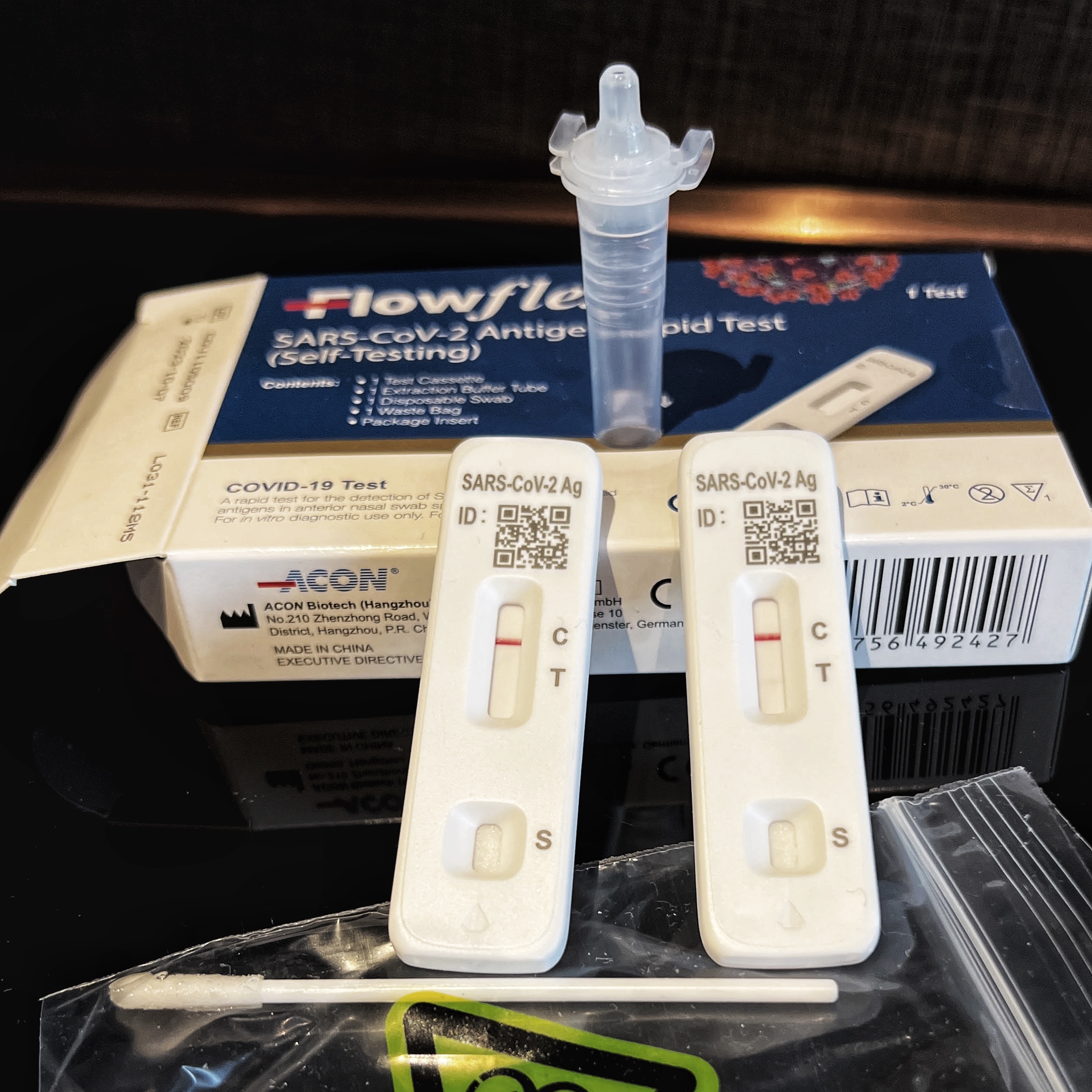
    • So back to travel. I used to get a serious cold at least once a year when traveling non-stop; to the point that, every time I bought something at CVS, at least 4 ft of the usual 6 ft of coupons printed out with the receipt were for cough and cold medications. But after the March 2020 lockdowns, nothing; a nice side benefit of masks and social distancing. But now, maybe in a sign that things are creeping back to normal, I’ve got that old feeling again — a runny nose, a cough,… So back to CVS for the usual boxes of 12-hour Sudafed and maximum strength Mucinex. And there, at the check-out counter, is a stack of Abbott Binax COVID tests. I throw one of those into the basket because there’s a bit of symptom overlap between omicron and a cold. But 15 minutes after violating each of my nostrils in the CVS parking lot, no second line appeared on the test strip. No omicron; I’m just back to my usual cold. The next week I had a couple of in-person meetings and, since I had one more test in the Binax box, decided to ping those nostrils again, just to be safe. Bam! So that’s what a positive test looks like. The sample pink line showed up immediately, even before the second, higher control line did. The instructions may say to wait for 15 minutes, but I knew within 2. Not that much changed — other than canceling the in-person meeting. I just kept popping the Sudafed and the Mucinex.
    • We were lucky with the timing of our drive back home on I-65, threading the weather needle between two snow storms that shut down parts of the interstate north of Indiana. Even with reasonable weather, Waze and Google Maps pointed us toward the exit a couple of times to vector around accident slow downs. It’s kinda funny to see which cars and trucks are using Waze, because we’re all getting off at the same exit, and all making the same turns onto seemingly random county roads running through flat snow-covered farm land, pretty featureless save for a couple of farm houses and stands of gigantic wind mills.  But, there were no multi-hour back-ups that would’ve forced us to break out the bourbon bottles to stay warm which, this winter, marks this down as a successful drive home.
    • Bridge Music —   I Will Writhe by SackJo22 (c) copyright 2010 Licensed under a Creative Commons Attribution Noncommercial (3.0) license. http://dig.ccmixter.org/files/SackJo22/26739 Ft: Soundprank

    Following Up

    • In the last episode, we talked about COVID test anxiety; not being able to start a vacation or come back home from one due to a positive test. With the omicron wave having crested, some countries — the UK, France, Ireland, but not Italy — are dropping inbound test requirements for travelers who are fully vaccinated, with the caveat that “fully vaccinated” for these countries includes a booster. I was pleasantly surprised by this. Usually, travel requirements ratchet up; new ones stick and old ones never expire. If you don’t have TSA PreCheck, you’ve been walking through security in your stocking feet for over 15 years now. Maybe because there’s a real cost that travelers can see — ranging over $100/person sometimes — as opposed to 5 minutes of inconvenience.
    • But as with dropping the initial travel bans, the US is the laggard. Drop in-bound test requirements? The US hasn’t even relaxed the 1-day testing window put in place at the beginning of December to try and keep omicron out of the US. We all knew within 2 weeks that didn’t work, but here we are 3 months later and there’s no movement back to the pre-omicron 72-hour testing window. It’s that ratchet again. In the last episode, I mentioned that, at the end of December, I’d written up a detailed blog post on how to order and use the Abbott BinaxNOW testing kit to easily hit the US’s 1-day testing window. Allan Marko, occasional TravelCommons contributor, clicked through to the eMed site to order a 6-pack so he could take a couple tests with him on his February getaway to the Yucatan as backup, in case the resort ran out of tests — those damn supply chain issues. As it turned out, the resort had ample tests — at $100 a pop, which is… a number. Allan used his Abbott tests — at $25 each — instead. Leaves a little extra cash for a good-bye margarita or two… or three.
    • And speaking of margaritas, you can get one again on Southwest Airlines. They  finally blinked, restarting their in-flight alcohol service, giving up their linkage with the in-flight mask mandate. No surprise, really. No one sees an end in site for in-flight masking. Indeed, European airline execs from Ryanair and TAP, the Portuguese airline, have said they expect masks to be one of the last things dropped and could be around for years. It’s that ratcheting thing again. Glad I kept hold of my old drink coupons. Southwest extended the life of 2020 and 2021 coupons ‘til the end of this year. 
    • In the last episode, I talked about sending my passport into the void that is the US Passport Agency for renewal. My passport didn’t expire until April, but since a lot of countries won’t let you if your passport has less than 6 months left on it, and with all the State Department’s warnings about extended processing times, I figured I should renew it sooner rather than later. The Passport Agency is quoting 8-11 weeks processing time and, here’s a little twist, they’ll only accept your application via US Postal Service. Now I don’t know about you, but the Chicago branches of the Postal Service haven’t exactly been covering themselves in glory over the past couple of months. So, I sent in my application Priority Mail and paid the Passport Agency extra so they’d send it back the same way. Priority Mail did the job getting my application there in a couple of days, and then I was able to track the progress on the Passport Agency’s website. The only glitch was the email update function, where they send you an email each time your application status changes, doesn’t seem to work. But anyhow, the Passport Agency processed my renewal and put my passport in a Priority Mail envelope right at 7 weeks. So good on them coming in under their time quote. But then the Postal Service couldn’t quite get it done. From the tracking history, my passport appears to have hung out a few days in a Chicago transit facility before finally making it into my mailbox. And it’s a bit different from, say, my wife’s passport that she renewed a few years ago. The page with the picture and all the personal information is no longer a kinda sealed paper page. Now, it’s a heavier, thicker piece of plastic, and some data like the passport number and the expiration date are raised. It seems a quantum step up in non-tampering/forgery-proof technology. Now I’m keeping my eye out for my old passport which they send back to me separately because it has my still-valid India visa in it. I don’t have any plans to visit India right now, which is a good thing since the Passport Agency is sending it back via regular post, which means it should get some time, maybe, this spring.
    Yorkshire Pudding Wrap
    • And as I promised in the last episode, I finally finished updating my Best Restaurants, Bars, and Taprooms of 2021 post, adding sections for Chicago and London. One of the things that didn’t make the London section was Yorkshire pudding wraps and burritos. I saw these on menus all over the place, where they’d basically take a whole Sunday roast dinner — roast beef, vegetables, mashed potatoes, gravy — and wrap it in a flatbread made out of the same ingredients as a Yorkshire pudding — eggs, flour, and milk. Honestly, it was like shame-watching a car crash. I knew I shouldn’t, but I ordered one anyways, and immediately hated myself for it. So any place with this on the menu; immediate disqualification from my list.
    • Also, I unfortunately had to delete a great little corner dumpling place in New York’s Chinatown that’s “reconcepted” itself since last May. Which was the reason I started that running list last year — the pandemic closings were happening faster than the guidebooks and blogs could keep up with. Indeed, I went back through the TravelCommons archives and was striking through at least half of my earlier recommendations. So anyhow, I gave the 2021 post a new date of Dec 31 so it would be easy to find; it’s showing up right now on the TravelCommons homepage and at the top of the Blog page. I’m also doing a better job of keeping a running list of my 2022 recommendations. In Louisville, we ate at a great Cuban restaurant, La Bodeguita De Mima, next door to the AC Hotel in the NuLu district. Apparently, there’s a huge Cuban immigrant community in Louisville, which I can tell you was not the case when my parents lived there in the early ‘80’s. And La Bodeguita De Mimi is just the latest of many Cuban places to open. Highly recommended, especially the Lechon Asado, the roast pork. I’ll post the first cut of my 2022 list in April, after our trips to Brooklyn next week and Santa Fe at the beginning of April
    • And if you have any travel stories, questions, comments, tips, rants – the voice of the traveler, send ’em along to comments@travelcommons.com — you can send a Twitter message to mpeacock, post your thoughts on the TravelCommons’ Facebook page or the Instagram account at travelcommons — or you can post comments on the web site at TravelCommons.com.
    • Bridge Music — August (Reggae Rework) by el-B (c) copyright 2008 Licensed under a Creative Commons Attribution Noncommercial (3.0) license. http://dig.ccmixter.org/files/elB/16075 Ft: Calendargirl

    Stealth Travel Inflation

    • For those of us of (and past) a certain age, the last 6 months of inflation news is flashing us back to the ‘70’s and early ‘80’s, and there’s certainly no sense of wistful nostalgia coming from it. Maybe not abject terror, but it’s not a comfortable feeling. The US Travel Association unpicks the US Department of Labor’s consumer price index (CPI) report and publishes its own monthly travel price index (TPI). I started looking through their latest TPI which is for January 2022 and, among other things, it compares this current travel price index to January 2021 and to pre-pandemic January 2019, before any travel restrictions were in place. Tough to remember, but back then, everybody was traveling. And while all the current inflation headlines prepped me for the current travel price index being 14.5% over last year’s, I was surprised when I saw that current prices are 11.6% higher than January 2019. I guess I anchored a bit too much on those rock-bottom airfares and hotel rates and gas prices in the Spring and Summer of 2020 when no one was traveling. But digging through the detailed line items, it turns out I’m not entirely wrong — the Airline Fares component of the TPI is still 15% below 2019’s and hotels are only up 6.5% three years on. I couldn’t figure out which line has car rental prices, but it’s no secret that those blew up — when you could actually find a car. The biggest jumps over 2019 that show up are Food & Beverage, up 13%, and Motor Fuel, no surprise there, up 44%. 
    • But here’s where we get into the stealth components. Let’s start with hotels. There are cuts in service, getting less for the same price, what’s now being called shrinkflation, that I don’t think is reflected in that 6.5% inflation number. The most common of these are pandemic service cuts that have never gone away. In 2020, when we were still figuring out how COVID spread, how long the surfaces could stay infectious (remember people leaving their groceries outside for 3 days?), it made sense to stop daily room housekeeping. The first post-lockdown trip I made, I stayed in a Hampton Inn and never saw anyone. The Hilton app let me remotely check-in and gave me a digital key, no one serviced the room during my stay, and no free breakfast. And I was fine with that; it made perfect sense given how much we didn’t know in May 2020. 
    • But now, almost 2 years and 3 vaccination shots later, the AC Hotel in Louisville has a sign taped to the desk in our room saying housekeeping was limited to every 3rd day because of COVID. No, it’s not because of COVID anymore; it’s to improve margins. Comparing this to our stays in similarly-priced hotels in Italy and the UK last fall where service was pretty much back to pre-pandemic standards (the main exception was you couldn’t serve yourself from the breakfast buffet; you pointed at something and a server put it on your plate), it’s that ratchet again; the US chains are working hard to keep those early pandemic service standards. Though with Hilton, there seems to be some play in that ratchet. Rather than a hard “we’re only servicing your room every 3 days”, it’s a softer “our housekeeping is now on request.” So, I guess I could request it every day. For me, it’s not about fresh towels; it’s about getting those little garbage cans emptied. They don’t hold too many empty 16-oz craft beer cans.
    • On first look, you’d think that restaurants are doing a bit of their own shrinkflation by continuing their contactless service tactics — using QR codes for menus and having people order and pay through apps like Toast instead of waiters. Now maybe it’s me, but I don’t see it as reducing service. Instead, I see it as improving productivity through automation. But the stealth inflation that I’ve noticed is the COVID add-on fees that started showing up in post-lockdown 2020 — 2-3% for extra cleaning or personal protective equipment — are sticking around. I’m not arguing that they are not real expenses, but so are, say, janitorial service and property taxes but they’re not showing up as additional fees. Roll it into the price of your burger like you do with every other business cost.  
    • It’s kinda like they’re trying to run the same play the airlines did back in 2008 with baggage fees. American Airlines was the first of the big carriers to do it, charging $15 a bag, saying they needed it to cover the high cost of jet fuel when oil hit $145 a barrel that summer. But 3-4 months later, when oil prices were half that, the baggage fee stayed and even increased; American doubled it. Again, it’s that ratchet; the excuse goes away, but the fee doesn’t. Which means it’s really just a price increase; it’s just more inflation.

    Closing

    • Closing music — Pictures of You by Evangeline
    • OK, that’s it, that’s the end of TravelCommons podcast #184
    • I hope you all enjoyed the show and I hope you decide to stay subscribed.
    • You can find us and listen to us on all the main podcast sites — Apple Podcasts, Spotify, Stitcher, SoundCloud, Google Podcasts, and Amazon Music. Or you can also ask Alexa, Siri, or Google to play TravelCommons on your smart speakers. And across the bottom of each page on the web site, you’ll find links to the TravelCommons’ social  — Facebook, Twitter, Instagram, and the YouTube channel.
    • If you’re already subscribed, how ‘bout leaving us a review on one of the sites? Or better yet, tell someone about TravelCommons. That word-of-mouth thing; it’s really the only way to grow.
    • If you have a story, thought, comment, gripe – the voice of the traveler — send ‘em along, text or audio file, to comments@travelcommons.com or to @mpeacock on Twitter, or post them on the TravelCommons’ Facebook pageInstagram account,  or website at travelcommons.com. Thanks to everyone who has taken the time to send in e-mails, Tweets and post comments on the website
    • Follow me on Twitter
    • “Like” the TravelCommons Facebook page
    • Direct link to the show
  • Podcast #183 — COVID Test Anxiety; Michelin Food Adventures

    Podcast #183 — COVID Test Anxiety; Michelin Food Adventures

    Post-dinner pic complete with gang sign

    No travel since the last episode, but lots of travel planning. Are we making our way back to pre-COVID travel planning patterns? Omicron has lots of people worried about testing positive and getting stuck abroad. Michael Giusti of InsuranceQuotes.com talks about how travel insurance can help. A blogger’s brutal review of a Michelin-starred restaurant where we ate in October gets me thinking about food as an adventure. All this and more – click here to download the podcast file, go up to the Subscribe section in the top menu bar to subscribe on your favorite site, or listen right here by clicking on the arrow on the player.

    Here is the transcript of TravelCommons podcast #183:

    Since The Last Episode

    • Intro music — Warmth by Makkina
    • Coming to you from the TravelCommons studio in Chicago, Illinois. Hope everyone had a great New Year’s. No travel since the last episode, which has turned out to be a good thing given the, what?, two weeks straight of over 1,000 cancelled flights a day. I’ve always tried to avoid traveling during the Christmas holidays; crowded planes, lots of not-very-experienced travelers, and the inevitable winter storm or two has never resulted in smooth travel experiences. Add to that airlines struggling to staff back up to passenger loads and then omicron comes ripping through their ranks…. The two folks I knew flying last week both got home a day late which, given all this, could’ve been a lot worse. Like being trapped in that 27-hour mess on I-95 in Northern Virginia. Definitely a reminder never to let yourself get below a quarter tank.
    • So while I haven’t been traveling, I have been travel planning, which is not unusual. January has traditionally been the big travel planning month; pack up the Christmas decorations, figure out where you want to go this year and then put in your time off requests. And because January is just the worst month of the year, at least in the upper Northern Hemisphere when it’s the coldest month of the year and the sun sets early; so you need something, anything to look forward to.
    • But COVID changed all that, of course, especially the planning timeline. We’ve talked in prior episodes how last-minute travel restrictions have made that planning timeline, what the travel industry calls the booking window, a lot shorter. Last year, in the January 2021 episode, I talked about having to make a last-minute pivot away from a San Diego trip I’d booked just the month before because California was still in their post-holiday lock down and not letting out-of-state visitors make hotel reservations. 
    • I thought this year I’d revert back to the old patterns and do a bit more longer-term travel planning. Looking at Kayak’s flight search trends, where they now compare current flight search volumes to pre-pandemic levels, so comparing 2021 to 2019, seem to be an optimistic outlier because their search volumes have cratered vs. 2 year ago. Eyeballing their trend chart, I’d say it’s down something like 50%. Though switching over and looking at Google’s Hotel Insights page, I might not be too far out of the fat part of the curve; their hotel search trends seem to be recovering. Which sorta maps into our plans. In February, we’re driving down to Louisville rather than flying, giving the airlines a couple of months to unscramble their operations, and then getting on planes — to New York in March, Santa Fe, NM in April, maybe DC in May. But for that February drive down I-65, across the frozen tundra of central Indiana, we’re definitely packing a couple of blankets — and snacks — and keeping the gas tank topped off just in case. News reports of that I-95 jam up talked about a Good Samaritan family going car to car, passing out oranges they were bringing back from Florida. Coming back from Louisville, I’m guessing any Good Samaritan would be going car to car with a couple bottles of bourbon and a sleeve of plastic shot glasses — which is not a bad thing. Would definitely warm you up for at least a little bit.
    • Bridge Music —  DLDN Instrumental by St Paul

    Following Up

    • Last April, the Department of Homeland Security kicked the Real ID can down the road — again — so now we have until May 2023 before we’ll need Real ID-compliant identification to get through a TSA checkpoint. We don’t have to get a Real ID driver’s license; a passport or a Global Entry card would work also. But, last month, since I had to visit the 5th Circle of Hell also known as the Dept of Motor Vehicles, to renew my expiring driver’s license, I figured I might as well get the Real ID version. And why not? In Illinois, the Real and non-Real ID driver’s licenses cost the same, you go through the same lines…. The only difference was it took maybe an extra 3 minutes for them to scan in my social security card and the documents I used to prove my address. Which, if I’d kept in mind the Distributive Property of Cybersecurity, “Any data entered into a system will eventually be hacked and distributed on the dark web” — I would’ve used something a bit more innocuous than my bank statement.  But, I now have a driver’s license with a requisite gold star in the upper right corner just in case DHS is really serious this time about the Real ID deadline.
    • In the last episode, I talked about finishing up my Global Entry renewal. And so with that done, last week I sent my passport into the void that is the US Passport Agency for renewal. I don’t have any international travel planned right now, but I’m very uncomfortable to be without my passport. I don’t know why, but I am. And the discomfort is only amplified by the 8-11 week processing time the State Department is now quoting. It also reminded me that it’s been 10 years since my most embarrassing cock-up – letting my backpack with my son’s and my passports get stolen from the overhead rack of the train to Brussels airport. I told the whole story in episode #98, about what a stupid, what I called “the rookie-est of rookie mistakes” it was, and how it could’ve been worse, but for the very pleasant and helpful Brussels airport police and US Embassy staff, and that my son and I then got in a couple extra days of Belgian beer drinking.  Lesson learned, though; I’ve kept my passport on my person when traveling ever since.
    • It’s funny, sometimes, how travel can prepare you for things back home. Back in episode #180, talking about our travels through Italy, I walked through what were back then the most stringent vaccine passport requirements around; you need to show an EU Green Pass on your phone or, for us, our CDC vaccination cards to get into restaurants, bars, airports, train stations,…. And so when Chicago started doing the same thing on January 1st, we were ready. In some ways Chicago is easier than Italy — showing a picture of my CDC card is quicker than waiting for someone to scan a QR code; but here, and New York City and Washington, DC, we’ve added the extra step — having to show a picture ID that matches to the vax card. We didn’t have to do that in Italy. You know, if I hadn’t had to send my passport in, maybe I’d just do what I did in Italy, carry my CDC card in my passport; I could pull ‘em both out in one hopefully suave and graceful move and be done with it.
    • Back in the November episode, I said that I’d already gotten status roll-overs from Marriott, Hilton, and IHG, extending my current level in their frequent sleeper programs for the third time — now they expire in February or March 2023. I figured that was the end of it, so when I received a note from Southwest in mid-December with the subject line “Surprise: A-List status extended,” it was pretty accurate. I was very surprised! I hadn’t expected any airlines to extend status; they all seemed to be lowering the qualification clip levels instead. So, thanks Southwest! I’ll be using this status on my flights to LGA and ABQ — also because I still have some 2020 pandemic cancellation credits that are about to hit their disappearing 2-year birthday. Any chance you can extend that expiration data too?
    • Just to spin the propeller on top of the travel tech beanie hat for a sec…. Over the past couple of trips, I’ve noticed my briefcase/messenger bag has finally passed a tipping point — I now have more electronic devices needing a newer USB-C cord than an original USB-A cord. (I told you this would be a propeller spin). The USB-C cord invasion started with the iPhone 11 Pro; another cord to carry, but it occasionally came in handy, like when Hertz gave me a birthday upgrade a few years back to a Mercedes A220; it only had the smaller USB-C plugs. But the invasion picked up speed with each upgrade — first it was my new Bose headphones, then when I upgraded my battery pack, my power bank; then again when I got my MacBook Air, and again squared when I got a pair of cheap Anker earbuds last Prime Day. Which led me, finally, to replacing my dual USB-A power adapter for one with two USB-C plugs and one USB-A for my old Samsung tablet that just won’t die. But I still have to carry an old iPhone USB-A cord for those times when all that’s left on the Hertz lot is a 3-year old Chevy Malibu.
    • And if you have any travel stories, questions, comments, tips, rants – the voice of the traveler, send ’em along to comments@travelcommons.com — you can send a Twitter message to mpeacock, post your thoughts on the TravelCommons’ Facebook page or the Instagram account at travelcommons — or you can post comments on the web site at TravelCommons.com.
    • Bridge Music — Goodbye Sooner or Later by oldDog

    COVID Test Anxiety

    • A friend of mine said he wanted to get together this month. “Sure,” I said, “but if we can’t, we’ll be together for a weekend in February in Louisville at a wedding.” “Uh, no,” he said, “I’m not going.” “Why not?” “I’m going to isolate, kinda like a soft quarantine in February, don’t go outside except to walk the dog so I don’t screw up my trip to Egypt. It’s non-refundable, so I’ll be out a lot of money if I test positive for COVID before leaving and can’t go.”
    • And last month, in early December, right when everyone was tightening travel restrictions in what turned out to be a futile effort to keep omicron out of their country, another friend cancelled a long-planned trip to Scotland. “I just don’t want to get trapped, away from home,” he said.
    • COVID test anxiety. I understand it, especially around test-on-arrival rules. The week before our flight to London in November, I got a text from my doctor group — time to get your COVID booster. I clicked through to the appointment website, started looking at slots, but then stopped. I have to take a COVID test by our second day in London. What if that spike of antibodies from the booster lingers long enough to turn that test positive? I clicked onto the next page of the website and booked my booster for December, after we got back home.
    • As I mentioned in the last episode, we tested negative on our test in London and went about our vacation. But as we got close to our return date, that anxiety crept back in. This was before the US tightened the testing window, so we took our Abbott tests 2 days before departure, both to give us some wiggle room, some time to retest if one came up positive, but also to calm those worries. I remember on that trip talking to an American guy in the elevator of our hotel in London. He had an Abbott rapid test sticking out of his briefcase. “Getting ready to head home?” I asked. “No,” he said, “I just test myself every 2 days.” I kinda laughed at that, thinking it was a bit over-rotation. But thinking back on it now, maybe he had it right — test yourself every couple of days to relieve that uncertainty rather than waiting for the night before departure.
    • But even that might not be enough. I tweeted out an article from the UK Times newspaper written by a guy who visited Thailand last month. The article starts “On December 19, after a week of near-hourly negative lateral flow and PCR tests, I flew to Thailand.” The next sentence (you know where this is going): “On December 20 I stepped off the plane, took another PCR, and headed to my hotel. The next morning I received a text informing me I had tested positive.” And then he tells the story of his 10 days of solo isolation in a Thai hospital. He did everything right and it still went wrong.
    • One big anxiety driver is the cost for those extra days quarantined in a hotel somewhere. This should be the kind of risk that trip insurance could help you manage. So I rang up Michael Giusti, senior writer at InsuranceQuotes.com — he was with us on episode #173 last March, talking about travel insurance one year after the pandemic lockdowns — to ask him about this.
      • Michael: So from a travel insurance policy perspective that scenario you just said is actually almost the better scenario because that’s what travel insurance is built for. So you come up with a positive test — that kicks in the policy language. Now they can hit their contingency plans, whether that’s paying you per day for the extended stay or finding alternative ways home. What scares me is the no man’s land where you can’t find a test. A lot of these policies have language that excludes government mandates and so if you just can’t find a test and now can’t get in not because you’re sick, because being sick would trigger the policy, but because the government mandate has got you in limbo, that’s the scary part and that’s really gonna come down to a policy-by-policy view to see how they’re gonna handle it.
      • Mark: Is this standard travel insurance coverage or is there something special you need to look for?
      • Michael: When you’re buying your policy, you do need to pay attention, but there are the three buckets you want to make sure are included. One is the cancellation that’s going to protect you if you get sick before the trip. One is health and that’s going to pay for care while you’re abroad or outside of your normal healthcare network. But the other is interruption and that’s the piece that I was just talking about. The interruption policy is going to be standard in their baseline, we’ll call it the silver plan — not the platinum, not the bronze — that standard baseline plan should have all three of those buckets. But know what you’re buying because I was reading through some policies over the weekend and there were definitely some that were peeling one or more buckets out to save some costs. That’s great if you want to take that risk but do it with open eyes, knowing what you’re doing. Insurance is there to protect you from unknown risks, unknowable risks. All of these policies, when you start reading the language, they’re quick to point out “COVID-19 became a global pandemic in January of 2020.” They want you to know this is a known risk and then that sets the table — with this being known, how are you going to protect yourself? Some of them are built into the standard policies but some require that COVID rider, some different policy language which most of them are offering. But you can’t just assume it’s gonna be wrapped into standard coverage. You need to be asking the COVID question.
    • Thanks to Michael Giusti for joining us. Interesting point he makes about test access being a grey area for coverage. As I mentioned earlier, Irene and I brought our own Abbott tests with us to Italy and the UK, but more for convenience than concern about availability. I wrote up a detailed “how to” on ordering and using the Abbott BinaxNOW testing kit. It’s on the TravelCommons website in case you want to sidestep Michael’s addition to  COVID test anxiety.
    • Bridge Music —  Test Drive by Zapac

    Michelin Dining Adventures

    • Last month, I picked up on the buzz around a blogger’s brutal review of a 1-star Michelin restaurant in Italy. It initially caught my eye because Irene and I like to hit a Michelin star or two when we’re traveling. Indeed, a 1-star place called Behind as in “ it’s an open kitchen so there’s nothing to hide behind” got us figuring out how to get from central London to Hackney, a neighborhood we would’ve had no reason to explore otherwise. It was a great lunch; a great experience talking to the chef, and it’s going on my final Best of 2021 list — which is on my to-do list to update right after I finish this podcast. Having said that, we’ve also had some meals that weren’t great, like our 25th anniversary dinner at a 3-star place in Florence, or a 2-star in Spain that we loved — until the next morning when we both came down with food poisoning. But on balance, we’ve had more really good meals than bad, and they’ve often taken us out of the travel bubble to parts of cities we wouldn’t normally go — kinda like my microbrewery taprooms, only a lot more expensive.
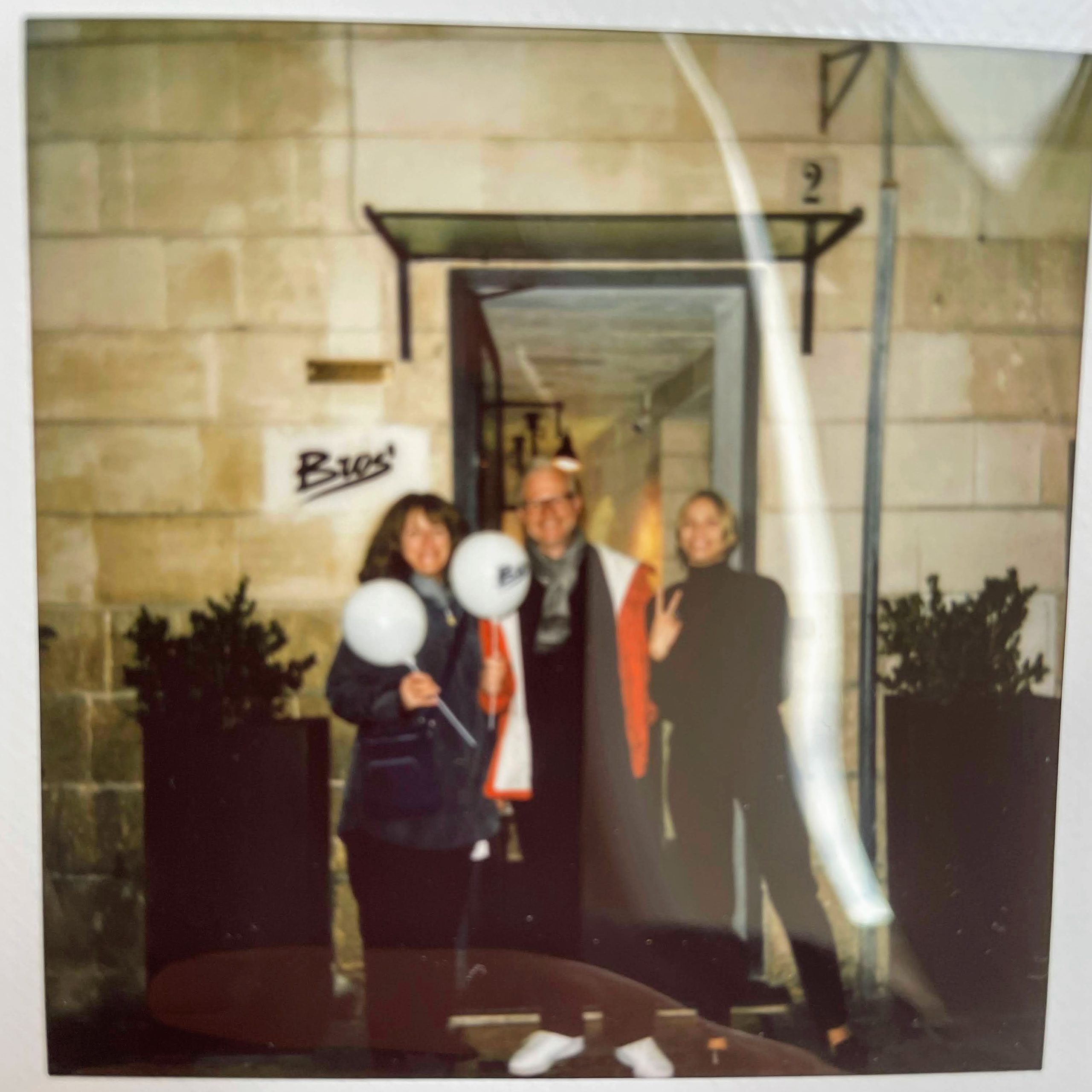
    • So when I saw the title “We Eat at The Worst Michelin Starred Restaurant, Ever,” it got my attention. First, what restaurant is it, so we can avoid it, and second, what made it the worst ever because that’s a big claim. But then I see the full title, with the restaurant, Bros in Lecce, Italy. We won’t be able to skip it because we ate there in mid-October, the night after our Puglia bike tour ended. 
    • I read through the reviews and looked closely at the pictures. A couple of courses look familiar, but others — like the now-famous (infamous?) grey foam oozing out of a plaster replica of the chef’s mouth was (thankfully) not on our menu. I have to say that I was on the fence about eating at Bros when Irene brought it up when we were planning our Puglia trip. The reviews I could find were very mixed, and it wasn’t a cheap ticket. We decided to go, but with the understanding that it could be a high-variance meal, with some courses that might not work out. I think the oyster with rancid fat was that dish for Irene. I didn’t love it, but it didn’t trigger a gag reflex like it did for Irene. Certainly not what you hope for, and it was only that dish, the rest was fine. But like I said, we went into Bros eye wide open, expecting an edgy experimental food experience — and definitely not a standard 3-course fine dining Italian meal. We walked out thinking “Well, that was interesting” — not bad, but not the worst 1-star meal I’ve had; probably in the bottom quartile, though. As you might guess, Bros won’t make it on that Best of 2021 list update.
    • So why didn’t this blogger, a James Beard-award winning writer, come in with similar expectations? Who knows, though we do know that outrage porn drives clicks which, for her, also drove some high-profile TV interviews which probably helped move a few copies of her book. And, since no publicity is bad publicity, I’m guessing it was a net positive for the restaurant too.
    • But why pay what was about a lot of money for a meal that I think might be a complete train wreck? I walked past a lot of places in Lecce that I know would put a good meal down in front of us for a lot less. It becomes a bit less about food and a bit more about the experience; less about stomach and more about the brain. It reminded me of something Josh Glenn said in the last episode when I was talking with him about the language of adventure
      • Josh: I mean an adventure is, and that word comes from the Latin meaning to arrive unexpectedly. That’s actually really an important philosophical piece for me as I was going through this, the idea that you can have a trip is not an adventure if nothing unexpected happens and if you don’t take enough risks to allow things unexpected to happen…. The word chance comes from the Latin cadentia meaning falling. So just when we think about how we use the words of “let the chips fall where they may” or “something befalls you”, this idea of having our feet off the ground, falling through space, we can’t grasp anything, what do you do with that? If you’re someone who likes, in some kind of existential way, that feeling of falling, then you’re an adventurer. You’re going to get more out of your travel experiences than someone who wants everything to be exactly the same way every time and never have any hiccups.
    • I always say to Irene “If every meal we have is a great one, then we’re not trying enough weird places.” After food poisoning has befallen you a couple times, how bad can a little rancid fat be?

    Closing

    • Closing music — Pictures of You by Evangeline
    • OK, that’s it, that’s the end of TravelCommons podcast #183
    • I hope you all enjoyed the show and I hope you decide to stay subscribed.
    • You can find us and listen to us on all the main podcast sites — Apple Podcasts, Spotify, Stitcher, SoundCloud, Google Podcasts, and Amazon Music. Or you can also ask Alexa, Siri, or Google to play TravelCommons on your smart speakers. And across the bottom of each page on the web site, you’ll find links to the TravelCommons’ social  — Facebook, Twitter, Instagram, and the YouTube channel.
    • If you’re already subscribed, how ‘bout leaving us a review on one of the sites? Or better yet, tell someone about TravelCommons. That word-of-mouth thing; it’s really the only way to grow.
    • If you have a story, thought, comment, gripe – the voice of the traveler — send ‘em along, text or audio file, to comments@travelcommons.com or to @mpeacock on Twitter, or post them on the TravelCommons’ Facebook pageInstagram account,  or website at travelcommons.com. Thanks to everyone who has taken the time to send in e-mails, Tweets and post comments on the website
    • Follow me on Twitter
    • “Like” the TravelCommons Facebook page
    • Direct link to the show
  • Podcast #182 — More COVID Changes; Words That Mean Adventure

    Podcast #182 — More COVID Changes; Words That Mean Adventure

    COVID rapid test results
    Cleared to Adventure

    Back in front of the microphone after a two-week trip to the UK, getting back home just before the new Omicron travel restrictions hit. We talk about getting to London, surfing the waves of changing travel requirements, a new way to renew Global Entry, moan a bit more about the inexorable advance of the cashless society, and finish up talking with Josh Glenn about his new book The Adventurer’s Glossary. All this and more – click here to download the podcast file, go up to the Subscribe section in the top menu bar to subscribe on your favorite site, or listen right here by clicking on the arrow on the player.

    Here is the transcript of TravelCommons podcast #182:

    Since The Last Episode

    • Intro music — Warmth by Makkina
    • Coming to you from the TravelCommons studio in Chicago, Illinois a couple of weeks since getting back from two weeks in the UK — a week in London and a week of hiking in Southern Wales. Had really great weather for the back half of November — brisk temperatures, but more sun than we expected; certainly a bit windy when walking the cliffs above the Atlantic, but nothing that we couldn’t layer up for; and only one day of real rain. It was a lot better than the weather forecasts had led us to expect.
    • The trip over and back was pretty uneventful. I’d hit American on a mileage sale back in March for direct flights between ORD and LHR. We flew coach on a Triple 7 that was pretty empty on the way over. People were popping up the armrests in the 4-seat center section and laying down to sleep. One guy even built a little tent out of blankets to cover his head. I’m not sure if he was trying to block the cabin lights or maybe he was concerned people walking down the aisles would breathe on him while he slept (though mask discipline was very solid) or maybe he wanted to drop his mask while he slept and didn’t want to get called out by the flight attendants. Whatever his deal was, it looked a little weird.
    • I ate dinner on that flight even though I’d eaten a cubano sandwich at Tortas Frontera, my favorite ORD restaurant, right before boarding. I took the meal not because I was hungry but because it gave me an excuse to drop my mask for a little bit on that 8-hr flight. Rather than the “replace your mask between bites and sips” rules that I heard on domestic flights this year, on my international flights over the past couple of months, most everyone takes off their mask for the duration of the meal. I don’t know if this difference comes from emptier planes, longer flights, or that international fliers are less likely to try to get around mask rules (and, purely my own experience, I haven’t seen any passenger pushback on masks on any of my international flights, whereas I was seeing/hearing a lot of it on domestic flights earlier this year), but I appreciate the flexibility/pragmatism (?) on these long flights.
    • While the plane wasn’t full, I was worried about passport control when we got to Heathrow. There’s always a bit of suspense anyways as you make the long walk from the plane to passport control. Did a whole bunch of Triple 7’s disgorge at the same time, let alone some massive A-380’s? Did the immigration force botch their workforce scheduling up? Will we flow smoothly into the immigration hall or will our march suddenly stop short?  Worse, will we smack into one of those Heathrow e-gate failures that has caused 2-4 hour queues over the past couple of months? 
    • We kept moving, but then came to a sudden stop as we made the final turn toward the hall. Looking around the line, I could see the room wasn’t jammed — good sign. It looked like they’d paused us for a minute while they rejiggered their cowpen zig-zag line. After a minute or two, we started moving again, and at a pretty good clip with almost everyone getting pointed to the automated e-gates. I walked up, put my passport on the reader, a camera box popped up, mechanically adjusted to my height, and then after what I assume was some facial recognition analysis, opened the gate and let me go to baggage claim. No “how long are you going to be in the country” quiz, which I didn’t miss, but also no stamp in my passport. How am I going to remember this trip for my next Global Entry renewal. Guess I’ll have to drink a beer or two while I’m here so it shows up on my Untappd history.
    • Bridge Music — dazed by Jeris (c) copyright 2012 Licensed under a Creative Commons Attribution Noncommercial (3.0) license. http://dig.ccmixter.org/files/VJ_Memes/39456 Ft: airtone

    Following Up

    • Speaking of Global Entry, back in episode #180 at the end of October, I was still waiting for my renewal approval and compare my month-and-a-half and counting wait with listener Jerry Sarfati’s 2-day wait. Then, the day before we left for the UK, I got an email with the subject line “TTP (Trusted Traveler Program) Application Status Change” telling me to check the website for more information. Logging in, I saw that I’d been given conditional approval, so about 2 months from submitting my renewal application. I still had to do an interview, but if I was reading everything correctly, I had 12 months to get that done. I looked to see if ORD had an appointment available the day we were flying back from London, but no dice. The earliest appointment was mid-December. OK, I’ll think about it later. No rush; I have 12 months. But the next day, I got another email from dhs.gov telling me about a new program, Enrollment-On-Arrival, where I could knock out my interview while in the customs/immigration area coming back from an international trip, no appointment necessary. Perfect!
    • So that Monday afternoon after a quick pass-through the Global Entry kiosk, I went looking for Booth 58 which is where, according to the Enrollment-On-Arrival website, was where the ORD interviews would be. But it looked like getting to Booth 58 would mean standing in a long and growing line of non-US passengers. Ah, forget it. Again, I have 12 months to get this done. But the luggage carousel for our flight hadn’t even started turning yet, so I went up to one of the customs officers and asked her. She immediately pointed me to a guy in a booth completely separate from the rest of the immigration traffic, and in the complete opposite direction of Booth 58. There was one guy in front of me getting his interview, but by the time I stepped up to the officer, there was a family of 4 and two other people behind me. The interview took about 5 minutes. I walked out and our luggage carousel still wasn’t moving. By the end of the day, the TTP website showed my Global Entry was good for another 5 years. Full credit to DHS for coming up with ways to make Global Entry easier. I just wish they’d keep their website locator up-to-date.
    • In the last episode, we talked about how last year’s flurry of vaccination passport app announcements has pretty much turned out to be, in the words of Macbeth, “a tale, Told by an idiot, full of sound and fury, Signifying nothing” But American Airlines’ partnership with Verifly did actually have a little something to it. I downloaded the app and, after wrestling through what is not the most intuitive interface, was able to see a list of the UK travel requirements and then validate that I met them, by uploading pictures of Irene’s and my vaccination cards and our passenger locator form QR codes. That’s nice, but what was better was when we checked in for our flight, all we had to do was show the agent the green “All good” screens for Irene and me and we were done. None of the fishing out the right forms and holding them up to the lucite screen. Two swipes on the phone and we were done. Nothing earth-shattering, but it does relieve the friction out of one part of the journey
    • A recurring topic on the TravelCommons podcast is the move to a cashless society. And certainly the pandemic accelerated this with the push toward contactless transactions; nobody wanted to handle your possibly-infectious cash. On our first day in London, on our walk to pick up our COVID tests, I stopped at the first ATM I saw to pull out £100, just to have some cash in my wallet. I’m a bit old-school in that way. And I’m glad I did it because once we left London and were staying in small towns in South Wales, it was really tough to find an ATM. Now, this shouldn’t be that big a deal with everyone taking cards and contactless, be it a card or on the phone with Google or Apple Pay, doing away (mostly) with the need for a PIN or to sign anything. But in Wales, the parking lots at the base of our hikes, the pay-&-display machines, weren’t taking my cards, either contactless or physical. And by the time we were in our last town, Hay-on-Wye, I’d run out of coins and needed to find an ATM. Google Maps was no help; it kept pointing me to phantom machines in little grocery stores. Irene had better luck in the tourist information center. The woman there gave us directions to what she said was the one remaining ATM in town — which surprised me because Hay-on-Wye has a good bit of tourist traffic with their book festivals. But anyhow, we found it and it worked; it had cash. Of course, then we had to find something like a coffee shop that would take cash so we could break a bill and get coins for the machine, which knocked out any of the usual chains. Walking down the street, I found a place that looked indy enough — the sign said “coffee shop” but it looked more like a thrift store. Sure enough, the guy was happy to take cash, though he had to pull out his wallet to make change. 
    • We’ve talked about Hertz’s downward service spiral, which I forecasted in episode #164 after their bankruptcy filing. But since I haven’t held back in slamming them for empty lots in Phoenix and San Diego, and for incorrect fuel charges, I need to give kudos to the Hertz location in Cardiff in Wales for what had to be, hands down, the easiest and therefore best Hertz transaction I’ve had in Europe. Leaving London for the Welsh hiking part of our trip, we decided to skip the fun and excitement of driving in London and instead took a train to Cardiff and then drove to the coast from there. The Hertz place was about a 10-min cab ride from the train station in a bit of an auto dealer row. I walked in, showed the woman my Illinois drivers license, she asked me if I’d be OK driving an automatic (how fast can I say “Yes!”), gave me a key, and pointed me to a grey Skoda in the back lot. Done; no hard upsell on enhanced insurance or refueling options, just “Here’s the key; have a good trip”. And then returning the car, I pulled in after gassing it up; the guy took a quick walk around it; had me sign his screen, and we were done. And nothing wonky when I looked at the emailed receipt. It’s sorta damning with faint praise that I’m so impressed when a transaction goes smoothly. It should always be this easy, but it rarely is.
    • And if you have any travel stories, questions, comments, tips, rants – the voice of the traveler, send ’em along to comments@travelcommons.com — you can send a Twitter message to @mpeacock, post your thoughts on the TravelCommons’ Facebook page or the Instagram account at travelcommons — or you can post comments on the web site at TravelCommons.com.
    • Bridge Music — A Thousand And None by Speck (c) copyright 2018 Licensed under a Creative Commons Attribution (3.0) license. http://dig.ccmixter.org/files/speck/57256 Ft: Mr_Yesterday

    Yet More COVID Changes

    • I mentioned in the last episode that I was a little concerned about the logistics of getting COVID testing done by our second day in London. But it turned out fine. With a bit of Googling, I found Randox, a big UK test firm, offering “click & collect” rapid antigen tests for $25 a piece. It gave us a good reason, a destination for a post-arrival walk. It’s always good to spend a lot of time in the sunlight on that first day in Europe; I find it’s key to resetting my body clock. We did them in our hotel room the next morning. Yet more suspense — waiting those 15 minutes, hoping that second pink line wouldn’t materialize, and then taking a picture of it in Randox’s app to get the “all clear” email back.
    • Of course, this was all pre-Omicron. That bombshell dropped the weekend before we flew home which had me back doing the rounds on Google, trying to figure out what travel requirements were changing. The UK quickly added pre-departure tests and shifted their Day 2 testing back to the more sensitive — but 3 times more expensive — PCR tests. But we were already in the UK. What mattered to us getting back to Chicago. The communications out of the US were less clear; mostly rumors; nothing official. The rumors were: tightening the window on pre-departure tests — from 72 hours to 24 hours before departure, which could’ve been a problem for us; we’d already done the Abbott rapid antigen tests we’d brought from home Saturday afternoon before Monday morning departure. And adding a post-arrival test, similar to the UK’s. But the worst rumor was requiring a 7-day quarantine even with a negative test. Lucky for us, none of these US rumors came true — at least by the Monday morning of our flight. 
    • It wasn’t until later in the week the new rules were announced and it seems that folks had come to their senses a bit. The only rumor that came true was tightening the testing window down to 1 day. Well, that and extending the airplane mask requirement to March 2022, but as I said back in September in episode #179, I don’t think that was a surprise to anyone. Going to a 1-day window just reinforces the case for bringing a rapid antigen test with you. The only caveat is that the test has to be done in concert with a telehealth call to validate it’s actually you doing the test and the results are really negative. Coming home from Italy and the UK, Irene and I used Abbott BinaxNow tests with telehealth sessions from eMed. Depending on how many you buy (2, 3 or 6-pack), the cost per test ranges from $25 to $35, which is pretty competitive with the prices I saw for airport same-day testing services and it’s a helluva lot more convenient. Though as I recommended in this year’s travelers gift guide, some sort of smartphone tripod comes in handy when the eMed guy wants to watch you swirl the cotton swab in your nose and then insert it into the test kit. Not sure how you’d do all that one-handed.
    • I hate the term “the new normal”, but perhaps, at least for the near term, we have to think about changes in COVID restrictions the same way we think about storms, terrorism, and strikes — work to avoid them, but be flexible, agile enough to deal with it if you get caught. Now no analogy is perfect. Back in episode #150, I told the story of how a bomb threat on the train line into Paris caused us to our flight home. It’s a lot easier to accept a couple of bonus days in Paris than an unplanned quarantine week in an airport Holiday Inn.
    • Bridge Music — Foolish Game by copperhead (c) 2014 Licensed under a Creative Commons Attribution (3.0) license. http://ccmixter.org/files/copperhead/46390 Ft: Snowflake,Sackjo22

    Words We Use for Adventure

    • We know that words impact the ways we think, feel, experience things — including travel. Josh Glenn, a Boston-based author and semiotician (semiotics, the study of signs, symbols, and language, and how they create meaning) has just published a book The Adventurer’s Glossary, with some 500 words associated with adventure. And since going on an adventure often involves travel, I wanted to talk to Josh about his book and how the words that we use to describe adventure could affect how we think about travel.
      • Mark: Josh, how do you read The Adventurer’s Glossary?  It’s an alphabetical list of words, terms, and their not-quite-Oxford-Dictionary definitions. They’re really more stories than definitions. Should I start at the top (0-Dark-Hundred is the first entry) and work my way through? Or just randomly riff through the pages, open it, put my finger down and read something?
      • Josh: It’s sort of a capricious decision to alphabetize all these terms because that just completely put them out of order. So all of the travel terms are not together, and all of the military terms are not together, and the stuff I got from hip hop or gaming culture or adventure literature, none of them are grouped together. It could just be something you pick up and randomly browse through. It’s absolutely okay. However, as much as possible, I did try to edit it in such a way that if you were reading it from beginning to end it would kind of make sense in that direction as well. So if there’s a little bit of beginning to end stuff in it, but really it’s read randomly.
      • Mark: How did you choose which words to include? It’s a pretty wide-ranging list. You’ve got bottle, hair, stoic, as well as the stuff that I would normally associate with adventure like bug-out bag, roam, and voyageur.
      • Josh: This is the third glossary that I’ve done. I did one back in 2008 called The Idler’s Glossary which was all about basically how much I hate having a regular job and enjoy doing things that look like you’re doing nothing from the outside but actually, it might be very rich and deep what you’re doing. And then I did another book called The Wage Slave’s Glossary, which was about how much I hate my job. And I was working at the Boston Globe at the time. Actually, a job I kind of liked, but I just don’t like having bosses and it was all about the horrible jargon of the workplace. Basically, these are topics I’ve been interested in for many, many years and I just started gathering words as I also read a lot of adventure novels and watch a lot of adventure movies. So sort of gathering words that occurred to me over time. But then I also do really nerdy things like literally sit down and read through a slang dictionary or pick up a thesaurus and go look up the definitions and the etymology of every synonym for a certain word. So the list balloons; I think there’s something like 500 words in this book.
      • Mark: So Josh, we think about adventure. Adventure often involves travel. Do you think that the language or the words that we use to describe adventure impact our expectations of how we travel?
      • Josh: The language of our culture helps shape and guide the way we are able to perceive and think about anything including adventure and travel. We can’t think outside of this kind of structure of language that we have. I mean an adventure is, and that word comes from the Latin meaning to arrive unexpectedly. That’s actually really an important philosophical piece for me as I was going through this, the idea that you can have a trip is not an adventure if nothing unexpected happens and if you don’t take enough risks to allow things unexpected to happen. So when I think back to the amazing road trips I took when I was in college with my friends around the country, it’s all kind of a blur. I don’t really remember a lot of specific details except when something went wrong — when we broke down in the middle of the highway on a mountain in Colorado and we had to go to a small town and have people that help us get parts and explore that town and meet the locals and almost get beat up etcetera, etcetera. That’s an adventure. Something unexpected happened and it’s very, very memorable. Those are the memories that you cherish later.
      • Mark: I think that’s probably where travel stories come from are more of the things that you didn’t expect, more of the hiccups. God only knows on this podcast, most of the stories that I’ll tell have come from things that went sideways, not things that went well.
      • Josh: It’s so interesting to think more about how that’s really baked right into our language. So for example, the word chance comes from the Latin cadentia meaning falling. So just when we think about how we use the words of “let the chips fall where they may” or “something befalls you”, this idea of having our feet off the ground, falling through space, we can’t grasp anything, what do you do with that? If you’re someone who likes, in some kind of existential way, that feeling of falling, then you’re an adventurer. You’re going to get more out of your travel experiences than someone who wants everything to be exactly the same way every time and never have any hiccups.
      • Mark: In a prior episode, we talked with Emily Thomas, philosophy professor at Durham University in the UK, and she wrote a book The Meaning of Travel. And one of the things that we got talking about was this idea of travel giving you a sense of otherness, so taking you out of your comfort zone and putting you in the middle of something different ,and what you experience out of that, both from where you are as well as within yourself. And I think about that a little bit, as you think about, you’re putting yourself into a potential adventure. You don’t know where you’re going, you’re just putting yourself into a situation and figuring it out.
      • Josh: I like how you’re saying “put yourself into… “ Of course, another aspect of adventure is getting yourself out of the ordinary.
      • Mark: Yes, getting you out of that small town without getting your ass kicked.
      • Josh: Yeah, getting out of your routine, getting out of your small town, getting out of the kind of the spell that the quotidian everyday life casts on us, this kind of enchantment or bewitchment where you just want, you just expect everything to be the same all the time. Travel is one of the great ways, you know historically, traveling to other cultures and seeing the world, seeing how people live in other places. These are great ways to kind of break that spell of enchantment that every day puts on us.
      • Mark: Josh, the act of travel has come under pressure of late. Pre-pandemic that was starting to see a thread of travels perhaps of frivolous luxury that was killing the planet through carbon emissions and global warming, maybe overcrowding of specific places like Machu Picchu or Angkor Wat. And now in the time of Covid, there seems another riff which is — travel is a selfish act because it hastens the spread of coronavirus around the world. How do we square this? How do we square these concepts of travel being negative with the need for adventure, that need for escape and the ability therefore to find ourselves?
      • Josh: You can’t entirely square, I do think that there is some truth to those criticisms. We shouldn’t be spreading disease and we shouldn’t be destroying the planet by unnecessary travel. But then the question is “what’s necessary and how often do we do it?” Maybe if you’re somebody who travels 100 times a year, maybe that’s too much. But maybe if you travel once a year, that’s not enough. But I do think that for me anyway, during Covid, I didn’t travel really at all outside of Boston, New Hampshire and Vermont, but I traveled widely through reading adventure novels, watching movies and Google Streets where you can walk around inside the Sistine Chapel remotely. Of course these are not as good — just the same as Zoom calls are not the same as being in the same room with someone. It’s not as soul nourishing, you don’t get as much out of it. You’re not really experiencing the whole context that you get when you travel, but you can have sort of armchair adventures to some extent that helps square that circle. But yeah, there’s no right answer to that.
      • Mark: Yeah, absolutely. Josh, as you think about The Adventure’s Glossary, how should people think about it, take it, enjoy it?
      • Josh: I hope that word nerds will enjoy it just on its own merits. However, there is kind of a secret philosophy woven through this alphabetized list of words, which is this idea that adventure is something that we should seek. We should try to break out of the ordinary and see things in a new way and expand our horizons, whether it’s through actual literal travel or other ways, and that there are certain qualities that we need to cultivate in ourselves to be good adventurers. Whether that’s a sense of humor, whether that’s wit, whether that’s courage, grit and so forth. These are all the kinds of things that I’ve tried to express through this book, which from the outside might just look like a fun, slightly frivolous word nerd book.
      • Mark: Josh Glenn, thanks very much for joining us on the TravelCommons podcast. We’ll put a link to The Adventurer’s Glossary so people can find it.
      • Josh: Thank you for having me and happy travels to all your listeners.

    Closing

    • Closing music — Pictures of You by Evangeline
    • OK, that’s it, that’s the end of TravelCommons podcast #182
    • I hope you all enjoyed the show and I hope you decide to stay subscribed.
    • You can find us and listen to us on all the main podcast sites — Apple Podcasts, Spotify, Stitcher, SoundCloud, Google Podcasts, and Amazon Music. Or you can also ask Alexa, Siri, or Google to play TravelCommons on your smart speakers. And across the bottom of each page on the web site, you’ll find links to the TravelCommons’ social  — Facebook, Twitter, Instagram, and the YouTube channel.
    • If you’re already subscribed, how ‘bout leaving us a review on one of the sites? Or better yet, tell someone about TravelCommons. That word-of-mouth thing; it’s really the only way to grow.
    • If you have a story, thought, comment, gripe – the voice of the traveler — send ‘em along, text or audio file, to comments@travelcommons.com or to @mpeacock on Twitter, or post them on the TravelCommons’ Facebook pageInstagram account,  or website at travelcommons.com. Thanks to everyone who has taken the time to send in e-mails, Tweets and post comments on the website
    • Follow me on Twitter
    • “Like” the TravelCommons Facebook page
    • Direct link to the show

  • Podcast #181 — Travel Potpourri; 2021 Traveler’s Gift Guide

    Podcast #181 — Travel Potpourri; 2021 Traveler’s Gift Guide

    Jumble of Travel Signs
    Post-Pandemic Travel Guidance

    No travel since the last episode, so just talking through a random potpourri of travel stuff. There’s more travel planning; this time for a couple of weeks split between London and Wales which means sorting through a new set of COVID travel requirements. We look at some stats — Uber’s latest financials and how deeply last year’s lockdown hit Nashville airport vendors. I marvel at how much European mobile data rates have fallen, strip down my English to have a deeper chat with an Italian bartender, and wrap it all up with highlights from this year’s traveler’s gift guide. All this and more – click here to download the podcast file, go up to the Subscribe section in the top menu bar to subscribe on your favorite site, or listen right here by clicking on the arrow on the player.

    Here is the transcript of TravelCommons podcast #181:

    Since The Last Episode

    • Intro music — Warmth by Makkina
    • Coming to you from the TravelCommons studio in Chicago, Illinois, only 2 weeks after the last episode. Decided to kinda short-cycle this episode, see if I can get in an actual November episode rather than wait for December like I said at the end of the last episode. And to think that I used to do these weekly when I started out in 2005. Oh, the enthusiasm of youth — and notebooks full of unused travel stories. I was going through some of those old episodes while doing a bit of website maintenance. The TSA gave me a lot of fodder for content back in the day. It was only 3½ years old when TravelCommons started, so I got to comment on (bitch about) all their growing pains — the start of the shoe carnival, the liquid ban, all the different tries at screening technology (who could forget those “puffer” machines?) and, of course, their stellar customer service. But once I started going through PreCheck in 2012, there wasn’t much more to comment/bitch about — which I know is a good thing overall, but it did leave me with a big content hole, kinda like in those TV series where the villain becomes one of the good guys in season 3 — what do you do next?
    • And 16 years on, as I slouch towards semi-retirement, my travel experiences are changing. I’m thinking less about clever new ways to navigate ORD’s Monday morning road warrior rush hour or about totaling up delays on a 4- or 5-city cross-country itinerary, and thinking more about planning for longer leisure(?)/experiential(?) travel. Though I guess that’s not a complete change.  
    • Going through those old episodes reminded me that, even back at the start, I was talking about leisure travel — to the point that episodes #8 and #9 were done while on vacation! I can only imagine what my family was thinking when they heard me nattering away in the bathroom of the Geneva, Switz Novatel and the Budapest Marriott.
    • But back to the present… Obviously, no travel since the last episode, just travel planning for our trip to the UK next week — a week in London and then heading out to southern Wales for a week of walking, hiking, pretty much just being cold and wet because I didn’t get enough of that while biking in Puglia. 
    • A big chunk of my time has been spent trying to figure out exactly what COVID paperwork we need to get into the UK. Since we’re vaccinated and coming from a non-red list country, we don’t need to show a negative COVID test before getting on the plane, but instead we have to get a test done in the UK and have to pre-pay for it so we can also fill out a passenger locator form 48 hours before departure. The UK government’s website is actually pretty good, with links to approved test providers. But most of them want to ship the test to a UK address, which is good if you’re returning home to the UK; less good if you’re staying in a hotel or Airbnb. So now I’m trying to figure out — do I risk a long line at a Heathrow test center when we land or do I find a place somewhere in London the next day? Kinda makes me long for the days when all I had to worry about was finding a bank before 3pm on Friday to cash an American Express Travelers Check so I had cash for the weekend…. Nah, who am I kidding? That was so much more of a pain than this. Worst case, I figure out how to eat a full-cooked English breakfast standing up while in line.
    • Bridge Music — Countryside Summer Joyride by Kara Square (c) copyright 2017 Licensed under a Creative Commons Attribution Noncommercial (3.0) license. http://dig.ccmixter.org/files/mindmapthat/56281 Ft: Javolenus

    Following Up

    • This time last year, in the November 2020 episode, we talked about all the end-of-the-year “don’t leave me” offers from the airlines and hotels, 20-50% cuts in whatever metric they used to award status —  stays, nights, miles, stays, segments, spend. And at the end of that bit, I said “Maybe they’ll be doing it again this time next year if that ‘Well, it’s probably more like the end of 2021 or maybe into the beginning of 2022 before things start feeling normal; forecast turns out to be true.” A year later, and after the Delta variant knocked down everyone’s Q3 revenues, I haven’t received any airline status sales yet, but I’ve already received status extensions from Marriott, Hilton, and, weirdly enough, IHG — weird ‘cause I don’t have any status with them… that I know of, maybe I need to check. They’re all extending status for another year, to February or March 2023. So everyone’s kept their 2019 status for 3 years now — 2020, 2021, and now 2022. And why not? Since a lot of the cost is concierge lounges that have been closed and free breakfasts that are now boxes with a yogurt and an orange, it’s probably the cheapest way to buy continued customer loyalty.
    • We’ve talked a lot in this podcast about Uber and Lyft. Back in episode #154 in August 2019, I asked “Will We Still Love Uber and Lyft When The Prices Go Up?” after both CEOs talked about getting to “rational pricing” — “rational” being CEO-speak for “higher”. And then this year, talking about their post-pandemic driver shortages, customer service issues, and rising prices — a pretty common topic. The Times of London asks “Is Uber Dead?” and the Chicago Tribune says in an editorial “We were wrong to abandon Chicago’s taxicabs for ride-shares and the city now needs to find a fix” which is a bit of a laugh because 4-5 years ago, everyone here complained that you couldn’t get a cab other than downtown or the airports, and definitely never in the poorer neighborhoods of the South and West sides.  If you read the highlights of Uber’s Q3 financial results released last week, they’re not quite dead. They trumpet that Q3 was their “first Adjusted EBITDA profitable quarter as a public company” Adjusted EBITDA – a fun accounting construct meaning “earnings before taxes, depreciation, and all the other bad stuff” and that the number of active drivers is up more than 65% since January. But what was interesting to me — their delivery business, like Uber Eats, now generates more revenue than their traditional ride business. And maybe competing for drivers? Does make some sense. As the Times’ writer put it, “Food doesn’t complain about the route and parcels tend not to throw up on the back seat.”
    • Back in episode #170 last December, we talked about how the CEO of Qantas had stirred up a good bit of controversy saying “We will ask people to have a vaccination before they can get on the aircraft” and the resulting land grab in vaccine passport apps. United and Lufthansa were testing out the CommonPass app, Delta and Alitalia (may they rest in peace) the AOKPass from the International Chamber of Commerce, and British Airways and Iberia the Travel Pass from an airline industry group. I said back then that it was a little messy, but it made sense since I didn’t think the handwritten card the CDC was handing out was going to pass muster at a boarding gate. Now, less than a year later, the Qantas CEO’s quote is pretty much standard operating procedure for international travel.  But vaccine passport apps? It’s a bit more mixed. Last month I flew Air France, United, Lufthansa, and ITA, the successor to Alitalia, and was never prompted to download any apps. Instead, I pulled out my trusty CDC card many times to prove my vaccination status, and for my flight home, opened Gmail on my iPhone a couple of times to show the PDF of my negative COVID test.  Pretty low tech, but honestly, at least in Italy, it worked faster than the EU’s Green Pass QR codes. We’d show our CDC cards and after a second or two be waved through while the Europeans were still trying to right-size the QR code on their phone screens so the scanner would register it. Upgrading to iOS 15.1 on my iPhone let me add a digital vaccination card to my Apple Wallet, but I don’t know where I’ll actually use it.
    • And if you have any travel stories, questions, comments, tips, rants – the voice of the traveler, send ’em along to comments@travelcommons.com — you can send a Twitter message to @mpeacock, post your thoughts on the TravelCommons’ Facebook page or the Instagram account at travelcommons — or you can post comments on the web site at TravelCommons.com.
    • Bridge Music — Jester of the Golden Apocalypse by Super_Sigil (c) copyright 2011 Licensed under a Creative Commons Attribution Noncommercial (3.0) license. http://dig.ccmixter.org/files/Super_Sigil/34750

    Travel Potpourri for $600

    • Regular listeners know that, every now and again, usually when I’m scraping for content, I gather up the odds-‘n’-ends from my travel notebooks that I can’t get “grow up” into a stand-alone topic and just string ‘em together into a Jeopardy-like topic “Travel Potpourri”. 
    • I recently read some stats about how the March 2020 lockdown impacted Nashville’s airport — daily passenger count went from 50,000 to 500, and only 8 airport concessions out of a pre-COVID count of 52 survived. And now, 20 months later, passenger counts are pretty much back to pre-pandemic levels, but the concession count isn’t. They’re only back to 34 — 18 food places and 16 shops, newsstands and other things. It takes more time to start things up than to shut them down — especially when you have to get all your workers and supplies through TSA security every day. I’ll keep this in mind the next time I want to complain about a 10-deep line for a cup of coffee.
    • Traveling to Europe again means re-bookmarking the Prepaid Data SIM Card Wiki so I can research mobile data plans again. For 4 years, I didn’t have to worry about it. The EU had outlawed roaming charges and so I’d just use the UK SIM I bought the first time we took our daughter over to Scotland for college. That worked well until Brexit day last year. So on our first day in Bari, I searched out the nearest TIM store — stands for Telecom Italia Mobile, I think. I wanted one of Italy’s big networks because our cycling tour would be taking us into the countryside, and so was OK paying a bit more for better coverage.  The last time I bought a mobile SIM in Italy was 5 years in Pisa and it was a huge hassle. But in Bari, we walked into the store, and the clerk was great. She kinda figured we were looking for SIMs, knew about the international plan I’d found on their website, and got the whole thing done in maybe 15 minutes. The price — €25 ($30) for 70 GB of data, which, for all practical purposes translates to unlimited data — meant the break-even point vs. paying AT&T $10/day for international roaming was 3 days. Since we were in Italy for 16 days, it was a well-spent 15 minutes. I was amazed at how far mobile data prices have fallen. The last time I was in Europe, the fall of 2019, I put £10 on my EE SIM (about $12 back then) and got 3 GB. I just topped up that SIM again for our UK trip and got 15 GB for £15 — 500% increase in data for 50% more money. That should hold us for 2 weeks. 
    • In many past episodes, I’ve talked about how my search for local craft beer has taken me to places outside the typical travel bubble. And, for me, this is even more important since I’m doing less (no?) business travel. Because the nature of business travel — traveling to work with clients who live there — makes it easier to connect with that place, even if it’s just through hallway conversations like “What’d you do over the weekend”, but most times, it’s them saying “Oh, you gotta go to my favorite place while you’re here.” Our Puglia bike tour ended in Lecce in lousy weather. The rain had started the night before and continued dumping the next morning. We skipped the last ride. You could say we were lightweights, but we didn’t want to have to figure out how to pack soaking wet biking clothes. I wanted to walk around Lecce a bit before our dinner reservation, but Irene was cold from the wind and rain. So she headed back to the hotel while I searched out a beer bar I’d found on Untappd.
    • The place was pretty empty when I walked in; 7pm, it was early by Italian standards. The draft handles were all from a local Lecce brewery, so I asked the bartender, a young guy, his favorite, and he pointed to the IPA tap — of course, but it was a pretty solid session IPA. He offered me a table, but I asked him if I could just stand and drink at the counter. We started to chat a bit (“Why have you come… to Lecce?”) His English wasn’t great (though orders-of magnitude better than my Italian, which is sorta damning with faint praise) so I started stripping down my English — no slang, no contractions, clean articulation, simple declarative sentences. But in maybe a verbal corollary to the Mark Twain-ism “I would have written a shorter letter if I had the time…”, I find it takes a lot of thinking, a lot of mental work to do this, to strip my English down to something easily understandable. And the bartender appreciated it. “English people talk so fast,” he said. “I have a hard time understanding everything they say.” And by making my English more understandable, he gained confidence in his, and pushed it into more interesting topics like the split between Northern and Southern Italy (“They hate us!”) and even within Puglia (“We hate Bari and Bari hates us!”).  And why he wants to work on his English (“It’s so much more useful than Italian. A German person, a Swedish person comes into the bar; we all talk English)”. He was happy to get to practice his English. I was happy to oblige, and get a little peek at non-tourist Puglia without knowing any Italian.
    • Bridge Music — South Texas Cowboy Blues by texasradiofish (c) copyright 2015 Licensed under a Creative Commons Attribution Noncommercial (3.0) license. http://dig.ccmixter.org/files/texasradiofish/52030 Ft: unreal_dm, ElRon XChile

     2021 Traveler’s Gift Guide

    • Last week, I posted this year’s traveler’s gift guide. You can find it on the front page of the TravelCommons’ website; I’ll also put a link in the episode description so you can click to it straight from your podcast app. If last year’s gift guide was about helping people travel handle last-minute lockdowns with suggestions like bring-your-own dining sets and upscale in-room coffee brewing kits, this year’s guide is stacked with the gift ideas to help cope with all the predicted airline meltdowns when holiday passenger traffic smacks straight into crew and ground staff shortages. 
    • I’m not going to run through the whole list — you can hit the website for that — but I’ll hit a couple of highlights. Top of this year’s list is battery packs. We talked in the last episode that we just can’t easily travel anymore without a working mobile phone. It holds our boarding passes and our proof of COVID vaccination, gives us gate change and flight delay notifications, and routes us around traffic jams. A dead phone while flights are being cancelled is more than just a bit of an inconvenience; having that second or third charge immediately available is critical when trying to swerve a long delay. There are a lot of choices; just pick one. I carry Zendure and Anker power banks; they’ve served me well. (And thanks to Jim McDonough for QA’ing the power bank links in the original blog post!)
    • Number 2 and a perennial favorite – Noise Canceling Headphone or Ear Buds. Whether you’re sitting in a noisy airport waiting out a delay or are up in the air, it’s great being able to cut out all the background noise and find your Zen place with the flick of a switch. I’ve been carrying Bose headphones for at least 15 years and am now on my 3rd pair, the Bose 700’s. They’re not compact yet they continue to earn their space in my travel bag. I find over-the-ear cans more comfortable, but if you can handle in-the-ear buds for extended periods, Bose does ear buds, or for Apple ecosystem diehards, my kids recommend the AirPod Pros.
    • Another suggestion for Apple ecosystem inhabitants is Apple’s AirTag. They have a lot more range than straight Bluetooth trackers like Tile because AirTags can ping off of any nearby Apple device, not just yours, to report its location. Putting an AirTag in your checked luggage can you see if your bag is joining you on the new flight the airline just rebooked you on, or you can hang one from your backpack to track it if it somehow wanders off down the concourse while your eyes are trying to find your delayed flight on the airport’s departure board.
    • Back in the July episode, episode #177, I said my USB-C to HDMI cable was the most important piece of travel kit on my trip through the Northeast because, it let me mirror my MacBook Air on the hotel and beach house TVs so I could sit back with a beer and comfortably watch YouTube highlights of the Euro 2020 soccer tournament and the Tour de France on 40-60” flat screens instead of hunching over a 13” laptop screen.
    • And at number 9, a smartphone tripod. My Square Jellyfish phone tripod is light and doesn’t take up much space, but came in very handy while doing my COVID test video session in Italy the morning before my flight home. The eMed test proctor wanted to watch me swirl the cotton swab in my nose and then insert it into the test kit. I’m not sure how I would’ve done that while holding my phone. I use it a lot more than I thought I would for video calls and to watch quick videos on my phone.
    • So there you go, something to fit all sizes and budgets in time for Black Friday and Cyber Monday, or if you’re just killing time waiting for your Thanksgiving flight to leave.

    Closing

    • Closing music — Pictures of You by Evangeline
    • OK, that’s it, that’s the end of TravelCommons podcast #181
    • I hope you all enjoyed the show and I hope you decide to stay subscribed.
    • You can find us and listen to us on all the main podcast sites — Apple Podcasts, Spotify, Stitcher, SoundCloud, Google Podcasts, and Amazon Music. Or you can also ask Alexa, Siri, or Google to play TravelCommons on your smart speakers. And across the bottom of each page on the web site, you’ll find links to the TravelCommons’ social  — Facebook, Twitter, Instagram, and the YouTube channel.
    • If you’re already subscribed, how ‘bout leaving us a review on one of the sites? Or better yet, tell someone about TravelCommons. That word-of-mouth thing; it’s really the only way to grow.
    • If you have a story, thought, comment, gripe – the voice of the traveler — send ‘em along, text or audio file, to comments@travelcommons.com or to @mpeacock on Twitter, or post them on the TravelCommons’ Facebook pageInstagram account,  or website at travelcommons.com. Thanks to everyone who has taken the time to send in e-mails, Tweets and post comments on the website
    • Follow me on Twitter
    • “Like” the TravelCommons Facebook page
    • Direct link to the show
  • Podcast #177 — B-Sides and Rarities… Interview Outtakes

    Podcast #177 — B-Sides and Rarities… Interview Outtakes

    Microphone and a Beer Can
    Now I’m Ready For the Interview

    After a 2-week, 2,500-mile and $120 in tolls driving expedition through the Northeast, I didn’t have much time left to write a new episode. So, I mined the audio files of recent TravelCommons interviews for some good stories that got left on the cutting room floor. We also talk about planning for a bike trip in Italy, a couple of things that might make the 2021 traveler gift guide, and we mourn the demise of American Airlines’ in-flight magazine. All this and more – click here to download the podcast file, go up to the Subscribe section in the top menu bar to subscribe on your favorite site, or listen right here by clicking on the arrow on the player.

    Here is the transcript of TravelCommons podcast #177:

    Since The Last Episode

    • Intro music — Warmth by Makkina
    • Coming to you from the TravelCommons studio in Chicago, trying to get this July episode in under the wire, a bit delayed due to a 2-week, 2,500-mile and $120 in tolls driving expedition through the Northeast that started with a 12-hr drive from Chicago to Manhattan on the Friday of the 4th of July weekend with as much of our daughter and as much of her worldly belongings as would fit in a BMW X3, helping her move into a 5th-floor walkup in Midtown. I was very pleasantly surprised to hit only two backups on what was forecasted to be the first really big post-lockdown travel day; a detour around an accident in the Poconos on I-80 and then, at the end of our drive, the completely predictable back-up at the mouth of the Lincoln Tunnel. A completely and happily uneventful drive. I then spent the rest of the week finding a different spot every morning for my standard Manhattan breakfast — egg & cheese on a toasted everything bagel and making sure they don’t slip some milk into my black coffee order — before spending the day in front of my laptop on a not-very-big desk in our not-very-big hotel room while Irene helped Claire get her flat all set up. 
    • The next Friday, we left Manhattan for a week’s vacation in Maine with an intermediate stop in New Haven, CT’s Little Italy neighborhood for the classic white clam pizza at Frank Pepe’s. It was a bit of a wait — a 20-minute queue on the sidewalk and then another 45 minutes after ordering — but it was worth it. I’ve had many tries at white clam pizza before, but this one was, by far, the best — a generous helping of clams, garlic, and oregano on a cracker-crisp crust . We walked past other pizza places on Wooster St, but only had time to hit one, and so it had to be the ur-pizza joint, the classic, Frank Pepe’s. And luckily for us, it didn’t disappoint; the line along the sidewalk is well-earned.  You know, the Michelin Guide says a one-star restaurant is ‘High quality cooking, worth a stop!’, a two-star is ‘Excellent cooking, worth a detour!’, and describes a three-star as ‘Exceptional cuisine, worth a special journey!’ I’m not saying that Frank Pepe’s is a two-star place, but I will say that it was damn good pizza that was definitely worth our detour.
    • We then headed up to Scarborough, ME, just south of Portland, for a beach vacation with friends.  The traffic on the drive north was a steady stream of RV’s and pick-up tracks and cars with “roof bags” tied down on top and bikes lashed to the back that continued to thicken from I-91 to I-84 to I-90 to I-495 until it finally ground to a halt trying to merge onto I-95, which was itself filled with the same thick sludge of vehicles trying to make it north for the weekend. And then the weather wasn’t great — rainy, foggy, misty (now I know where Steven King got all his inspiration) so our time devolved into an week-long seafood fest — a bivalve-palooza of local mussels, oysters, and clams; intensive longitudinal lobster roll research; and, ignoring the current UK debate about crustacean sentience, multiple boiled lobster dinners — and taproom tour, hitting the big names like Allagash, Maine Beer Company, and Oxbow as well as some (many) other little guys. And then, finally, on the last day, sunshine.
    • After a week of this, the rain started up again as we turned around and headed back home, getting on I-90 in Albany and not getting off until we hit Chicago. It too was an uneventful drive, but not in a great way. By the end of that day, we’d developed a deep, deep hatred of those miserable strips of boring asphalt and the hellhole rest stops that make up the Ohio and Indiana Tollways. I hope Claire loves her new life, ‘cause I really don’t want to have to drive that way again.
    • Bridge Music — One for Me by SackJo22 (c) copyright 2009 Licensed under a Creative Commons Attribution Noncommercial (3.0) license. http://dig.ccmixter.org/files/SackJo22/21492 Ft: Haskel

    Following Up

    • I have to say that the most important piece of travel kit on this trip was my USB-C to HDMI cable that let me mirror my MacBook Air display on the hotel and beach house TVs so that I could sit back with a beer and comfortably watch YouTube highlights of the Euro 2020 soccer tournament and the Tour de France on 40-60” flat screens instead of hunching over my 13” MacBook Air. I had a version of this in my 2019 traveler gift guide, but it got bumped off the 2020 version to make room for bring-your-own dining sets. But with restaurants and bars open and so not having to eat every meal in my hotel room, I think I’ll reverse that change and put this cable back on the 2021 guide.
    • I don’t know if masks will stay on the 2021 guide — that depends on transportation agency rules — but I bought another batch of the evolvetogther masks that I called out in the 2020 guide because, even after in-flight mask mandates get dropped, I might still wear a mask on a crowded flight during the cold and flu season because, for the first time in forever, I didn’t get my usual killer cold last year. Without a mandate, I probably wouldn’t wear a mask in the airport and probably not in a fairly open plane, but I think so when it’s a full flight, when there’s someone next to me in the center seat. I think about it — they’re exhaling maybe 14-16 inches away from where I’m inhaling. No airplane HEPA filter is going to be able to get in between that exchange. I say that now, but I’ll have to re-visit it after in-flight mandates go away and I’m boarding an 8-hour flight to London; that’ll be the real stress test.
    • In episode #175 back in May, I talked about making some Q4 bets on international travel — a Backroads bike tour in southern Italy in October and the UK in November. Back in the spring, vaccine roll-outs were choppy, especially in the EU, but I thought that everything would sort itself out over the summer making booking travel in the fall not such a risk. Now this was pre-delta variant, but while in Maine, we got an e-mail from Backroads with the subject line “Your Trip Is A Go!” followed shortly thereafter by an alert from Chase of a very large charge dropped on our Sapphire Visa card. Now we need to start tracking travel requirements. Back in May, the best bet for US travelers was to take a “COVID-free” flight on Delta or American to avoid the 2-week quarantine. Then, a month later in June, Italy significantly eased those requirements. Now, you fill out a pretty extensive on-line passenger locator form with all your trip information and your COVID vaccination card and you’re good to go… into Italy. Getting home, the US is still requiring a negative COVID test no matter what your vaccination status is. But, back in May, the CDC said Abbott’s at-home test can be used. It’s not quite as easy as a home pregnancy test — the Abbott test requires you to download an app and enough bandwidth for a video chat with a doctor to visually confirm your identity and the test results — but it beats having to hunt down at a testing place in a new city.
    • In the last episode, I did a bit of “fun with numbers,” pulling daily air passenger numbers from the TSA’s website to look at Memorial Day weekend numbers and then a couple of weeks after that when, on June 11, passenger counts broke 2 million for the first time since the March 2020 lockdowns. Extending that analysis — from mid-June to now, the last week in July, checkpoint volume growth has plateaued — the TSA volume numbers averaging just over 2 million/day since the last episode. That’s more than 3 times the 623,000 daily average for the same time last year, but still 21% below 2019’s number. But to a lot of fliers, it doesn’t feel that way. It’s back to full planes, long lines, and tight schedules that can’t recover from inevitable summer thunderstorm delays. Airlines are minimizing schedule slack, trying to claw back some of their 2020 losses, but also because of labor shortages — from crews to ground-support staff, the people who drive the fuel trucks and cater the planes. Some of that is common to other industries — people slow to reenter the workforce or took jobs elsewhere when furloughed — but there’s also something unique to the airlines, staff in the wrong places because travel patterns have shifted. We’ve talked about this before, but with leisure travel snapping back much faster than business travel, the usual big travel destinations — LGA, ORD, DFW — are giving way to mid-sized airports. The fifth-busiest airport in the world is now in Charlotte, N.C., according to flight data. Charlotte had more flights in June than LAX. Made it tough to be able to spend any time in one of their famous white rocking chairs.
    • Last month, American Airlines pulled the plug on American Way, their in-flight magazine. Not surprising. Delta, Southwest, and Alaska all pulled theirs out of their seatback pockets in March 2020 and, most famously, 5 year before COVID in 2015, Skymall disappeared into a Chapter 11 puff of smoke. I, for one, will miss American Way. I’ve always read in-flight magazines and liked that American Way came out twice a month, so it didn’t get as stale as the other ones. Way back in episode #15, waay back in 2005, I called them “reading safety stock” because if I was stuck on the runway waiting out a weather ground stop or sitting in  Detroit’s “penalty box” for a couple hours waiting for a landing slot, I’d quickly chew through my own stack of reading material, because, back then, all electronics had to be turned off on the ground and below 10,000 ft to keep a “sterile cabin” for takeoff and landings, and most flight attendants were pretty particular about enforcing it. But all is not lost. United Airlines restarted the physical Hemispheres magazine in June after going all-digital in March 2020.
    • And if you have any travel stories, questions, comments, tips, rants – the voice of the traveler, send ’em along to comments@travelcommons.com — you can send a Twitter message to mpeacock, post your thoughts on the TravelCommons’ Facebook page or the Instagram account at travelcommons — or you can post comments on the web site at TravelCommons.com.
    • Bridge Music —   Fall to pieces – Silence by mika (c) copyright 2010 Licensed under a Creative Commons Attribution Noncommercial (3.0) license. http://dig.ccmixter.org/files/mika/24945 Ft: Colab

    B-Sides and Rarities – Interview Outtakes

    • After the travel world was shut down in March 2020, I began wondering if TravelCommons would join the furlough ranks for lack of content. It’s tough to do a podcast that’s “more about the journey than the destination” if you’re not journeying. Grounded, locked down, I needed a different way to generate content, so I’ve been doing more interviews. Interviews aren’t less work; it’s just different. Instead of spending time writing, I spend it editing. The typical interview session is 20-30 minutes over Zoom (of course) which I edit down to a 6-8 minute segment which you hopefully find tight, focused and insightful.
    • But doing some quick math, that leaves two-thirds of the interview on the cutting floor. Not all of that is insightful — there’s, say, pronunciation guidance… that I still manage to screw up. But there’s still good stuff that, for whatever reason, doesn’t make it into the edited segment. So for this episode, I’ve pulled out the full interview files and pulled out some stories, some conversational threads that I left behind the first go-around. They’re pretty much unedited, save for snipping out a cough or two —  so you’re hearing the actual conversation.
    • The first “b-side” is from my conversation in episode #166 with Dr. Emily Thomas, associate professor in philosophy at Durham University in the UK about her book The Meaning of Travel: Philosophers Abroad. I reached out to Emily after reading a review of her book in the Wall Street Journal. It was one of my favorite interviews; one that I couldn’t cut down to just 6-8 minutes. But even with the extended play, this thread about different travel styles — going deep vs. checking off a place’s “greatest hits” — didn’t make it.
    • Next up are a couple of stories from episode #175 where I talked to Paul Melhus, CEO of ToursByLocals, about the local tour market. Paul first told me about the vagaries of selling shore excursion tours to cruise ship passengers and a story about the business challenges he faced in the first days of the COVID lockdown
    • The episode before that, #174 if I’m doing my math correctly, was another extended play segment — 12 minutes — about taproom tourism, but that was cut down from an hour-and-a-half Zoom beer drinking session with Rob Cheshire host of the UK’s This Week In Craft Beer podcast. Here’s one of the many taproom stories that didn’t make the podcast. You can catch the full uncut session on the website or the TravelCommons YouTube channel
    • Now it’s not that I didn’t do interviews before the pandemic. Back in January 2020 in episode #159, I had Allan Marko on talking about trip planning, how he and his wife planned their 9-week sabbatical around Southeast Asia. I thought this was perfect timing — January is always a big travel planning time. Two months later, most of those plans got blown to bits. But, back in those happier times, here’s a story about the dangers of losing a bag while on a different city-each-day trip
    • Editing last month’s interview with Dr Janet Bednarek, Professor of History at University of Dayton about the history of airports, I had to leave out this thread about who owns US airports.
    • And finally, something that’s not really a B-side. Back in episode #163, I used a piece of Steve Frick’s Travel Stories podcast where we talked about the first TravelCommons episode. Here’s another piece of our conversation where we talk about where our travel paths overlapped.

    Closing

    • Closing music — Pictures of You by Evangeline
    • OK, that’s it, that’s the end of TravelCommons podcast #177
    • I hope you all enjoyed the show and I hope you decide to stay subscribed.
    • You can find us and listen to us on all the main podcast sites — Apple Podcasts, Spotify, Stitcher, SoundCloud, Google Podcasts, and Amazon Music. Or you can also ask Alexa, Siri, or Google to play TravelCommons on your smart speakers. And across the bottom of each page on the web site, you’ll find links to the TravelCommons’ social  — Facebook, Twitter, Instagram, and the YouTube channel.
    • If you’re already subscribed, how ‘bout leaving us a review on one of the sites? Or better yet, tell someone about TravelCommons. That word-of-mouth thing; it’s really the only way to grow.
    • If you have a story, thought, comment, gripe – the voice of the traveler — send ‘em along, text or audio file, to comments@travelcommons.com or to @mpeacock on Twitter, or post them on the TravelCommons’ Facebook pageInstagram account,  or website at travelcommons.com. Thanks to everyone who has taken the time to send in e-mails, Tweets and post comments on the website
    • Follow me on Twitter
    • “Like” the TravelCommons Facebook page
    • Direct link to the show