Tag: Craft Beer

  • Podcast #196 — Cheers to Beer Tourism and Travel!

    Podcast #196 — Cheers to Beer Tourism and Travel!

    robot in a microbrewery taproom drinking a beer
    What Prompt Will Get Me a Pilsner?

    In this beer-focused episode, John Holl, editor of All About Beer, gives us his take on beer tourism and tips on how to beer travels. I talk about my experience planning my Asheville, NC taproom visits with ChatGPT. We also dive deep into the new JD Power Airport Satisfaction Survey and do a quick update about the EU’s delayed ETIAS system. All this and more – click here to download the podcast file, go up to the Subscribe section in the top menu bar to subscribe on your favorite site, or listen right here by clicking on the arrow on the player.

    Here is the transcript of TravelCommons podcast #196:

    Since The Last Episode

    • Intro music — Warmth by Makkina
    • Coming to you from the TravelCommons studios in Nashville, TN after trips to Portland, ME and Asheville, NC. We flew up to Portland International Jetport; I love that — jetport — it’s like a throwback to the ‘50’s and ‘60’s when jet airplanes weren’t assumed. Going down that clickhole, apparently Orlando International was originally called Orlando Jetport. Feels like they shouldn’t have changed; would’ve had a very EPCOT-y vibe. But anyhow, I think Portland Jetport missed a trick by not playing Steve Miller’s Jet Airliner on a continuous loop in baggage claim. But they do have a big stuffed moose there, which is probably more on-brand.
    • More… interesting were the 7-foot signs we passed walking up to the TSA lines for our flight back. I posted a picture on Twitter. The one to the left said “Are you packing? Guns of any kind are not permitted in carry-on bags”. The one on the right, “Have you checked your firearms?” The small one in between reminded people to dump their oversized liquids. I mean, Really!? We’re now 22 years on from the Sept 11th attacks and people still can’t figure this out; that you can’t take a gun on a plane — nor a sword, nor a knife. Long-time listeners will know that I am in no way an apologist for the TSA, but when I see pictures they post of some of the stuff people try to bring on — a hatchet at O’Hare, throwing knives at Milwaukee — I’m not sure how patient I’d be if I had to deal with that level of obliviousness day-in and day-out.
    • On the upside, though, I did see that the TSA would allow me to carry-on a live lobster if I wanted to take a bit of Maine back home with me. According to the TSA website “A live lobster is allowed through security and must be transported in a clear, plastic, spill proof container. A TSA officer will visually inspect your lobster at the checkpoint.” I wonder if that visual inspection includes checking that the rubber bands around the lobster claws are intact. I’d think a traveler wielding “un-holstered” lobster claws might not be armed, but certainly could be dangerous.
    • Bridge Music — Hula Hoop Party by Stefan Kartenberg (c) copyright 2016 Licensed under a Creative Commons Attribution Noncommercial (3.0) license.  Ft: Martijn de Boer, Blue Wave Theory

    Following Up

    • I would’ve loved to play 15 seconds of Jet Airliner just now for the bridge music if I wasn’t about 99% positive I’d get slapped with some copyright fine.
    • Thelma Smith stopped by the TravelCommons Facebook page to leave a comment about last episode’s discussion of renting a Hertz EV for my Portland trip, which I backed away from as I looked at charging options in the city and up in Bar Harbor. Thelma wrote
      •  Wanted to chime in on EVs. We have a Tesla Model 3. When planning out a trip of any length we use PlugShare. It helps in finding all sorts of chargers and not just Tesla fast chargers. Might help in seeing what’s out there.
      • Thelma, thanks for that. First I’ve heard of it; looks like a nice crowdsourced status map for chargers. If Hertz had referenced it, it might’ve tipped me to an EV. While it didn’t show many more Bar Harbor options, it showed a lot more chargers in Portland. Hertz continues to send me EV offers, so with this, maybe I give it a go on my next trip.
    • JD Power released their 2023 North American Airport Satisfaction Survey last week. We talked in the last episode that, according to TSA counts, we’ve gotten back to pre-COVID passenger volumes. And so it kinda makes sense then to compare JD Power’s 2023 numbers to their pre-COVID 2019 scores. And, conveniently enough, in episode #156, we talked to the survey’s author, Michael Taylor, after the release of the 2019 survey. Back then, Michael predicted:
      • Michael: Everybody’s phasing in and out of construction. They’ve got all these various plans that are revolving on the inside and the outside of the airport. And so we’re going to see this churn in the rankings quite a bit in the next few years as these projects phase in and out.
    • Well, yes and no. The top of the Mega category was pretty stable — Detroit, Minneapolis/St Paul, and Las Vegas kept their top 3 positions. But there was a bit of churn under that. San Francisco jumped 7 spots from 13th to 6th, in large part, no doubt to their huge renovations while Orlando dropped 5 spots, from 4th to 9th, and Phoenix dropped 6, from 7th to 13th; neither of which surprised me given my most recent experiences at each.
    • The benefits of finally finishing big renovations really showed up in the next category, the Large Airports. LaGuardia and New Orleans, airports that I’ve spent way too much time in, finished multi-billion dollar renovations between the 2019 and 2023 survey and the results showed. LaGuardia jumped 13 places from 27th, the last spot on the 2019 survey to 14th, which given all the inherent problems with LaGuardia’s location and the mess that is the tri-state air traffic control, I’m not sure they could’ve gotten much better. New Orleans, though, went from not much better 23rd spot in 2019 to 8th, a 15-place move. Portland, Oregon, 2019’s top Large airport plummeted 11 spots to 12th, while San Diego and Oakland each dropped 10 spots, to 23rd and 24th respectively.
    • More interesting than this, to me, was the increase in the average scores in what has been a difficult year for air travel — on a thousand-point scale, the Mega average increased 16 points, from 756 to 772, while the Large average grew 24 points, from 765 to 789. So if an airport didn’t improve its score, like Orlando or Oakland, its ranking tumbled.
    • In the last episode, I talked about the rolling delays for implementation of ETIAS, the EU’s impending version of the US’s ESTA, a pre-travel authorization system. What originally was supposed to go-live in 2021 got pushed to May 2023, which given COVID made sense, when then slipped 6 months to November 2023. Well, OK, maybe a little more testing is for the best. But then, to a more nebulous “sometime in 2024.” That’s never a good sign. And now, a month later, they’re saying May 2025. It feels like this is becoming the EU’s Real ID. Really! Because the new US Real ID deadline is also May 2025 — until they change it again.
    • And if you have any travel stories, questions, comments, tips, rants – the voice of the traveler, send ’em along to comments@travelcommons.com — you can send a Twitter (X?) message to mpeacock, post your thoughts on the TravelCommons’ Facebook page like Thelma did, or on the Instagram account at travelcommons — or you can skip all that social media stuff and post your comments on the web site at TravelCommons.com.
    • Bridge Music — Fistful of Dub (Feat. Snowflake and DJ Vadim) by spinningmerkaba (c) copyright 2016 Licensed under a Creative Commons Attribution Noncommercial (3.0) license.  Ft: snowflake and DJ Vadim

    Beer Tourism and Travel

    • Scrolling through the Episodes section of the TravelCommons website, I saw that it’s been over a year since I’ve done any beer content, and immediately began working on rectifying it. I asked John Holl, long-time beer journalist, editor of All About Beer, host of the Drink Beer, Think Beer podcast, to give us his thoughts about Beer Tourism…
      • Mark: John, thanks for coming on the podcast. We want to talk about beer tourism and travel. I’m an old guy and for the longest time the idea of beer tourism seemed to start and end with renting lederhosen and heading to Munich for Oktoberfest. And then, in the early/mid-00’s, we got specialty beer releases that morphed into festivals like 3 Floyds’ Dark Lord Day. I was living in Chicago at the time and that went from a couple hundred people queuing for a bottle release to, in 2019, 13,000-15,000 people traveling around the country to see it.
      • John: Gave people a lot of excuses to cross that Indiana border.
      • Mark: I’ve been to Munster Indiana and there’s not a lot of other reason to go there other than 3 Floyds. And then they shut the brew pub down during COVID and now there’s absolutely no reason to go there. And now, every town/region/state seems to have some sort of a beer trail. Last month, in August, I was in Portland Maine and it was the Maine Beer Trail. And then I was in Asheville, North Carolina at Asheville Ale Trail as well as their brewing district. It seems to be an area that’s really grown. What are your thoughts on that? How significant is beer tourism for local economies now?
      • John: I think it depends on the location. Where there’s a concentration of breweries, it makes sense to have a beer trail. It makes sense for a guild or an organization to get together to try to convince not only the tourists but the locals to come out as well. There’s 10,000 breweries thereabouts, maybe a little less, in the US these days and a lot of them are concentrated together. There’s strength in numbers and hopefully they’re all doing something that is diverse enough that can get folks to go from one place to the next, to the next without getting Hazy IPA fatigue. And I think Portland Maine is a great example of the breweries that are there. You have some of the old stalwarts, Geary’s and Allagash. And some of the older, newer ones like Bissel Brothers. And then, there’s some really cool ones like Belleflower that are there. So you get breweries of different sizes, of different scopes and I think it’s important for the bottom line of these places so long as they’re delivering good quality beer. But what’s cool for me is being a tourist in a new city. I get to go to different areas. I get to go see a place that is not just the picturesque downtown, it’s not just what’s on the postcards for sale at the local travel kiosk. So you get to go into neighborhoods where people live and work. And for me, that’s always a better sense of getting to know a city, of getting to know people, of getting to know a place because neighborhoods can change, especially some place like Chicago, from block to block. You’re walking into neighborhoods that have different vibes, that have different histories to them, and that feel different. And so when I’m traveling for beer, it’s fun for me to not only go and set up at a tap room and spend some time there, but also to walk the neighborhoods as well. And I think that location informs a lot of what beer makers do. I’ll keep going back to Dovetail; I’ve spent more time there than I’ll actually admit, and it’s right up against the Brown Line and they use that to their advantage. They talk about their coolship; they talk about how their windows open up to the brown line and that the beer is inoculated with whatever the transit line brings them. And I think that’s a fun thing. You’re not necessarily tasting a sense of place, but you get the idea that it might be there.
      • Mark: God only knows I’ve written the Brown Line enough times. So maybe I’ve helped Dovetail inoculate some of their coolship beers.
      • John: And go to the Pacific Northwest at this time of year, in mid-September/late October when in Yakima and in parts of Oregon, they are harvesting the hops right now. You can bounce from brewery to brewery and the air is aromatic with fresh hops. The brewers are making fresh and wet hot beers. People are coming in from around the country, from around the world. There’s an excitement and an energy that exists because of the agricultural product that is going into these beers and because of the harvest window as well. So, it doesn’t always have to be a festival; it can be for a harvest season. And I think that that’s another cool way that folks who aren’t even in the beer industry can experience a different aspect of their pints.
      • Mark: What’s the best way to find out what’s going on in a location? How do you think about where you’re gonna go?
      • John: I like not having firm plans when I’m traveling because the other thing about beer tourism — we’re talking about beer trails — is you start at one place and you say, “OK, we got five places on our list today.” So we say you’re just having a pint at each. It’s still five pints at the end of the day and even for a serious drinker like me, that’s a lot. But if you’re having a good time, I think it’s great to not have structure because if you say, “OK, we’re at stop number two and, and we have three more stops in front of us,” but we’re really liking this, and they have this other beer that I want to try, and we’re comfortable, and we’re in good seats, and the food truck is awesome and all that — just stay there, live in that moment. I feel I’ve seen too many people get caught up in this sort of ticking culture where we have to hit all of these spots for whatever sort of weird list and you miss out on the fun experiences. Beer is about camaraderie. It’s about being in the place. It’s about experiencing flavor. And if you’re rushing through it, it’s not that much fun. I think beer in the way that it’s grown over the last couple of decades — it’s not doing super-well volume-wise or sales-wise comparatively; it’s like 12-13% of the overall marketplace — but I think it has helped people appreciate flavors better. And to be a little bit more curious and to be a little bit more experimental.
      • Mark: I think there’s also a learning component too that I think you brought up, which is, you’re going to push yourself outside your normal boundaries, outside of what I’ve called a travel bubble…
      • John: That’s the cool thing about travel, right? You talk to folks all the time about when they go to a new place and they want to have the local drink or they want to have the local food because they want to immerse themselves in that culture. You can do that with beer no matter where you go. So much of what brewers are doing these days too. When you travel, if you only drink American Light Lager, or you only drink Irish Stout. So you only drink something, you know, particular. If you’re traveling, you might try the göse, you might try a lambic, you might try a barley wine or something like that because you’re feeling a little bit more loose and unencumbered from the constraints of your daily life. And that, for me, is sort of the fun thing about beer. Usually it’ll taste better from that place because you’re surrounded by the people who made it, and the people who also were excited to be there. It’s like folks who go on vacation to a tropical island and they’re drinking mai tais, and it’s the best mai tai they’ve ever had. They learn how to make the mai tai, and they come home and they do it on their back patio and they think “This doesn’t taste as good.” And it’s because you’ve lost that sense of place. And so for me, I’m always just trying to experience not just what’s in my glass, but what’s around me as well.
      • Mark: John, I appreciate you coming on and talking to us about beer tourism and beer travel. It’s something we’ve talked a lot about on this podcast only just because I really like beer. It’s been great talking to you. Thanks very much, John Hall, editor of All About Beer. Both your podcast and your website — check it out. Thank you very much.
      • John: Mark, thank you.
    • And, as always, check out the show notes on the TravelCommons podcast for links to read and listen to John.
    • Bridge Music — Misunderstood by 3lb3r3th (c) copyright 2013 Licensed under a Creative Commons Attribution Noncommercial (3.0) license.  Ft: Alchemistry

    How To Plan a Beer Trip and Beer Tourism?

    • If John Holl has you thinking about beer tourism, the next logical question — how do you plan it? Here’s John’s approach…
      • John: I plan out travel, especially for specific events like hop harvest or Oktoberfest, which I’m going to for the first time this year. I plan that out at least a year in advance because I want to make sure that when I can get hotels and transportation, and to budget out all of that. Social media is terrible in a lot of ways, but it can also be helpful in certain ways, getting you excited about traveling to new places. When I hear about annual beer festivals in Belgium or see folks who are out at hop harvest, picking hops, it gets me in a certain sort of way, if I’m sitting at my desk at home. saying “Gosh, I wish I was there.”  So then I put stuff on the calendar and start to say, “OK, well, think about this” and then go from there. When I’m traveling to a city for work, I’m usually going to visit specific breweries or specific people. But nine times out of 10, I will also call friends of mine and say, “Where are you drinking these days?” or “What’s exciting you these days?” There’s always going to be the one place that the serious beer nerd should go to,  but then you peel that onion back just a little bit and all of a sudden, it’s “Well, you know, I actually had a really fun experience at such and such place” or “I had this one beer” or “They’re doing some cool stuff” and I start to say, “All right… Well, I trust them, so what do I have to lose?” It’s either gonna be a great pint or it’s not…
    • So there you go, advanced planning for the big stuff and have beer nerd friends in every city who can point you to the out-of-the-way nuggets. The latter is probably a bit easier for John, a well-known beer journalist, than for the rest of us.
    • Back in episode #174, I talked about this with Rob Cheshire, a long time TravelCommons listener and, for the last 3+ years, a UK craft beer podcaster with his This Week in Craft Beer podcast
      • Mark: How do you plan your taproom visits?
      • Rob: It’s all driven through Google for me. I might have some idea based on previous reading about some big-name places that I want to visit in a particular city. But beyond that, I’m just going to Google. First of all, I’ll plot a Google map for the city. I’ll end up with 50-60, maybe even 100 pins on the map. Pretty quickly, I’ll go to Untappd and look at the average brewery rating. And this really makes brewers cross how much I rely on Untappd for this type of thing because I had this conversation a load of times on the podcast with them. But I do rely on brewery ratings on Untappd, and I find it very reliable. Quite frankly, if a brewery has an average rating of anything close to 4, then, obviously it’s a massive generalization to say whatever they brew, but most of their beers are gonna be great. If the brewery rating is anywhere close to 3.5, it’s going to be very mediocre at best. And somewhere in between is where most people land. So 3.6, eh…;  3.8, it’s a good brewery; 3.9 is a terrific brewery; 4 is a great brewery. And so I’m looking for those 3.8 and 3.9 average brewery ratings. But what I’m looking for, really, is that district where I can walk from one to another and really make an afternoon of it.
    • Me? I kinda mash the two up. Like Rob, I’m a pretty solid Untappd user. Rob often says it’s his “beer diary” and that’s pretty much what it is for me too. When people ask me for recommendations for a city — Budapest was the most recent ask — I can quickly pop open the app and give people a list. And when I’m in a new city trying to find a good place for a beer, I’ll open it up and look at the Nearby Activity tab to see where (and what) folks are drinking. And back to episode #194’s discussion of flâneuring, or “roaming entropy” as I like to call it, some of my best “wanders” had, as their eventual end-point, a bar or taproom that I found that way.
    • But, as John says, if you let your friends know you’re deep into beer, they’ll be looking out for you. Visiting Savannah, GA back in May, our friends couldn’t wait to take me downtown to Two Tides Brewing, a microbrewery in a 100-year-old house with great beers but no door onto the balcony because of a “door tax” way back when, where houses were taxed on the number of doors they had. So we ducked down and walked through a big window with our glasses… multiple times. Great beer and a history lesson; not sure I would’ve found that without a little help. Coming up in a couple of weeks, we’re heading back to New York City and our daughter already has an ambitious list for us.
    • Rob Cheshire and I have traded beer touring tips for our home towns. Rob took me to his favorite places in the railway arches of London’s Bermondsey Beer Mile. But when Rob hit Chicago three weeks after we’d moved to Nashville, I couldn’t reciprocate the personal tour, and so instead emailed him the couple of taproom circuits I would’ve taken him on if he’d showed up a month sooner. And actually, for all of you — my friends and listeners — since I can’t email it to you, I’ll put my Chicago taproom circuits in this episode’s show notes on travelcommons.com. Or check out my list of  “Yeah, I’d like to go back there” taprooms in the episode #187 show notes. Maybe these can help you with your beer tourism planning. 
    • The two tent poles for our Asheville trip were hiking and beer tourism. But we were the Asheville pioneers among our friend group, so I didn’t have anyone to build taproom circuits for me. So I started down Rob’s path, firing up Google Maps and Untappd, but then… wait a minute. Let’s see what AI can do. So I fired up ChatGPT and typed in “Develop a taproom circuit of microbrewery taprooms in Asheville, NC starting at the Aloft Hotel in Asheville and optimized to minimize walking distance and maximize Untappd ratings. Present it in a table with the brewery name in the first column, the distance from the previous taproom in the second column, the Untappd rating in the third column, and the type of beers served in the fourth column.” The response started with a caveat that it can’t access real-time data and so the Untappd ratings and distances are based on its last update in 2022. After that throat-clearing, ChatGPT spit out a table with 8 taprooms. Eyeballing the list, the names didn’t seem too out of whack, so then I checked the Untappd ratings. None of them were right, and indeed, so far out of whack (all on the high side) that eight months of additional check-in couldn’t have moved the ratings that much. Chalk that up to GPT hallucination, or being a people pleaser and not wanting to say “I don’t know”. Then I plotted the circuit on a map, and it wasn’t — a circuit, that is. It was a bit more of a random walk, doubling back a couple of times. And, rather than working us back to the Aloft, it ended at the farthest away brewery. So with no friend recommendations and not much help from ChatGPT, I fell back to my old ways —  flâneuring. I figured with the beer density in Asheville, a random walk was more likely than not to land me in front of a beer tap. Which pretty much proved to be the case. We did what long-time listener Aaron Woodin called it in the last episode a “walk and gawk”, or maybe  a “walk and gulp.”

    My Chicago Taproom Circuits

    • Here are the two Chicago taproom circuits I built for Rob Cheshire in the summer of 2022
    • Logan Square/Palmer Circuit — a kinda triangular circuit through 3-4 taprooms in Chicago’s “Hipster Ground Zero” neighborhood with some good food options along the way.
      • Take the Blue Line toward O’Hare to the California St stop. Walk east on Adams to Monroe and then north a half-block. It’s a $2.50 fare; like the Tube, you can tap on with a contactless credit card. It’s way cheaper than an Uber and lets you bypass a load of traffic. Follow Google Maps walking directions; you’re basically walking south on California (or one of the less-crowded neighborhood streets running parallel) down to Armitage and then west to…
      • Solemn Oath Still Life — This is kinda cheating. This is the Chicago outpost of one of my favorite suburban breweries. They have a good range of styles. They recently started up a second label, Hidden Hand, that goes deep into hazies. When you’re done, walk out the door, turn right on Armitage (going back east), cross the street at some point, and end up at
      • Middle Brow Beer — The vibe here is a bit of a crunchy granola with Democratic Socialist/Labour Momentum sprinkles (or hundreds-and-thousands if you will), but they do some interesting wild beers fermented from yeast cultured from their garden. Good for one, maybe two beers.
      • Food -if you’re getting peckish, there are some good options on Armitage on the way to the next stop.
        • Middle Brow – While you’re there, their bread and pizzas are great.
        • 90 Miles Cuban Cafe – Very good Cuban food
        • Redhot Ranch – Chicago street food; I get either a polish or a burger Chicago style
        • When you’re done, continue walking east to Western, turn right (south), pass Margie’s Candies and find the entrance to
      • Life On Marz – Another cheat, the north side outpost of the south side Marz Brewing. It’s a small place, but they do a nice selection of styles. When you’re done, head left out the door and then over to the diagonal street, Milwaukee, not the north-south street (Western). The intersection is a bit tricky. Head northwest up Milwaukee to…
      • Pilot Project Brewing – This is a brewing incubator, so there’s usually some interesting stuff on offer. The last time I was in, they were serving Indian-inspired beers from Azadi Brewing. Brewer’s Kitchen also does good stuff. Not everything works, but I’ve had a surprisingly good hit rate. Take a left out the door, cross the street (watch out for the bicyclists; this is the most Amsterdam-ish street in Chicago) and head up a block to…
      • Navigator Taproom – This is a pour-your-own, priced-by-the-ounce beer bar with a good selection of Chicago (they seem to have a lot from Pipeworks) and Midwest beers. Check out their beer menu on Untappd to see if there’s anything that interests you. Continue up Milwaukee to the last stop
      • Revolution Brewing Brewpub – This is the original Rev Brew joint; it opened before the brewery taproom a couple of miles north. If you’re IPA’d out and the temperatures aren’t in the 90’s, go for their Deep Woods offerings — the variations on their Deth’s Tar imperial stout (Josh Deth owns Rev Brew) or their Straight Jacket barleywine. If it’s too hot (or you’re too baked for those double-digit abv’s), their Hero IPA series is good; lots of variants based on different hop combos.
      • And that’s it. If you want to head straight back, you’re a couple of blocks from the California Blue Line L stop. Get on the Forest Park Blue Line to Monroe stop in the Loop. If you’re still walking straight, you can keep walking up Milwaukee through the neighborhood. It’s an interesting neighborhood. The Blue Line runs parallel to Milwaukee. The next stop is the Logan Square stop, about a 15-20 minute walk. Or you can always just call an Uber.
    • Maplewood-Based Circuit — this is less concentrated/less obvious, so I’ll put in a few branches so you can choose your own adventure
      • Maplewood — Part of its charm (a little corner tavern at the end of a neighborhood street) makes it inconvenient to get there via public transportation. So to start here, it’s probably best to Uber up.
      • Option – A bit of a walking circuit from Maplewood
        • Ravinia Brewing — Very optional. Not a bad place; I’ve had a couple of good beers sitting out on their patio after a bike ride. I wouldn’t go out of my way to go there, but it’s two blocks from Maplewood
        • Metropolitan Brewing — This is ~10 min walk north from Maplewood through a little neighborhood. It’s one of the original Chicago microbreweries, though a lager specialist which I know is not exactly on point for you. However, their patio looks down on the north branch of the Chicago River. So, if it’s a nice day, this is worth a stop for the view — and maybe a crisp palate cleanser.
        • The Beer Temple — One of our favorite beer bars. It’s what in Chicago is termed a “slashie” — a bar and a liquor store. They always have a good beer selection and they’re a verified venue on Untappd, so you can check out the menu to see if it’s worth the 7-min walk from Metropolitan.
        • Food
          • Kuma’s Corner is about a 5-min walk west on Belmont from Beer Temple. Kuma’s is a great burger place with a solid beer menu (an Untappd verified venue) and a heavy metal soundtrack.
          • Honey Butter Fried Chicken – Convenient if you’re walking up to the Rev Brew Taproom
        • Revolution Brewing Taproom — If you didn’t hit their brewpub on the Logan Square circuit, the brewery taproom is a 12-15-min walk from Beer Temple or Kuma’s.
      • Option – Uber up to the Ravenswood neighborhood’s Malt Row
        • Begyle Brewing — First brewery on Malt Row. Nice IPAs and a good barrel-aged imperial stout
        • Dovetail Brewing — The guys on the Steal This Beer podcast obsess over this brewery. Cool space; German lager-and-spontaneous ferm-focused. Walk down (south) Ravenswood Ave to the Irving Park Brown Line. Take it to two stops to the Paulina exit, walk south on Paulina St one block to…
        • Bitter Pops — Another great slashie and also an Untappd verified venue if you want to check out the tap list. Also a good place to buy a cold 4-pack to take back to your hotel room. Or cross Lincoln Ave and walk down a half block to…
        • The Green Lady — Old-time Chicago bar vibe with a great tap list.
        • Get back on the Brown Line and head down to the Loop, to the Quincy Stop which is ~1 block from the JW Marriott
      • Option – Uber up to Half Acre Beer
        • Half Acre Beer – Another original Chicago microbrewery. Augie Carton on Steal This Beer is a big fan of their Daisy Cutter pale ale, but I like their range of IPAs.
        • Spiteful Brewing – Next door to Half Acre. Good place; wouldn’t make a special trip for it, but is worth the block walk if you’re at Half Acre.
        • Probably best just to Uber back down to the JW from here.

    Closing

    • Closing music — Pictures of You by Evangeline
    • OK, that’s it, that’s the end of TravelCommons podcast #196
    • I hope you enjoyed it and I hope you decide to stay subscribed.
    • As always, you can find us and listen to the current episodes on all the main podcast sites — Apple Podcasts, Spotify, SoundCloud, Google Podcasts, and Amazon Music. No longer Stitcher, though. SiriusXM pulled the plug on it, though I think you can find TravelCommons on the other Sirius platforms — Pandora and maybe the Sirius app. But I know that you can also ask Alexa, Siri, or Google to play TravelCommons on your smart speakers. 
    • You can click on the link in this episode’s description in your podcast app to get to the show notes page at TravelCommons.com for a transcript of the episode and links to places I’ve mentioned, and to John and Rob’s websites. If you’re not yet subscribed, there’s a drop down Subscribe menu at the top of TravelCommon’s home page. And along the side of the page, you’ll find links to all the TravelCommons’ socials.
    • If you have a story, thought, comment, gripe – the voice of the traveler — send ‘em along, text or audio file, to comments@travelcommons.com or to mpeacock on Twitter, write them on the TravelCommons page on Facebook or Instagram, or post them on our website at travelcommons.com.  And thanks to everyone who has taken the time to send in emails, Tweets and post comments on the website. I really appreciate it.
    • And until we talk again, safe travels; raise a cold (or cask-temperature) one; and thanks for stopping by the TravelCommons.
    • Follow me on Twitter
    • “Like” the TravelCommons Facebook page
    • Direct link to the show
  • Podcast #187 — Moving to a Non-Hub Airport; What Makes A Great Taproom?

    Podcast #187 — Moving to a Non-Hub Airport; What Makes A Great Taproom?

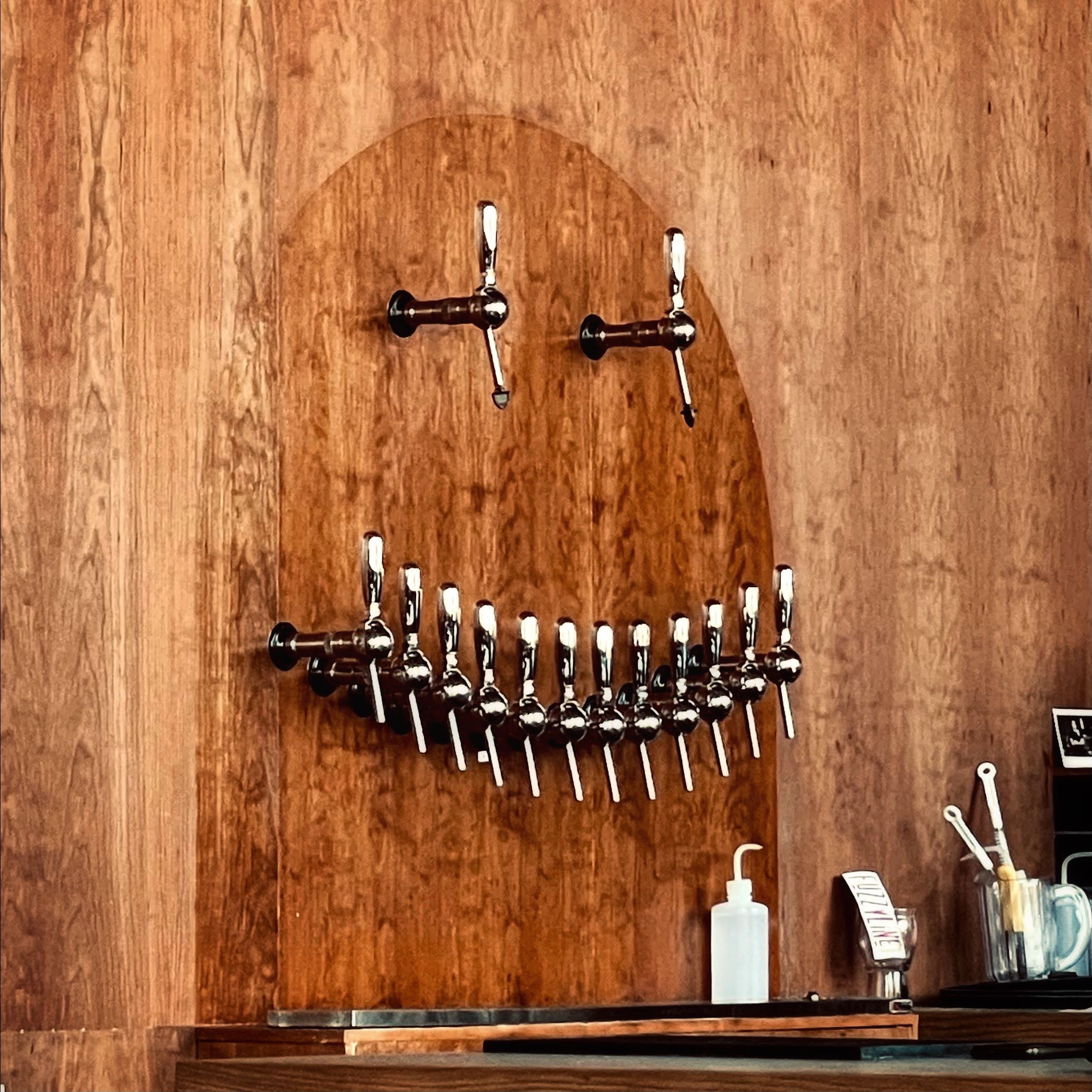
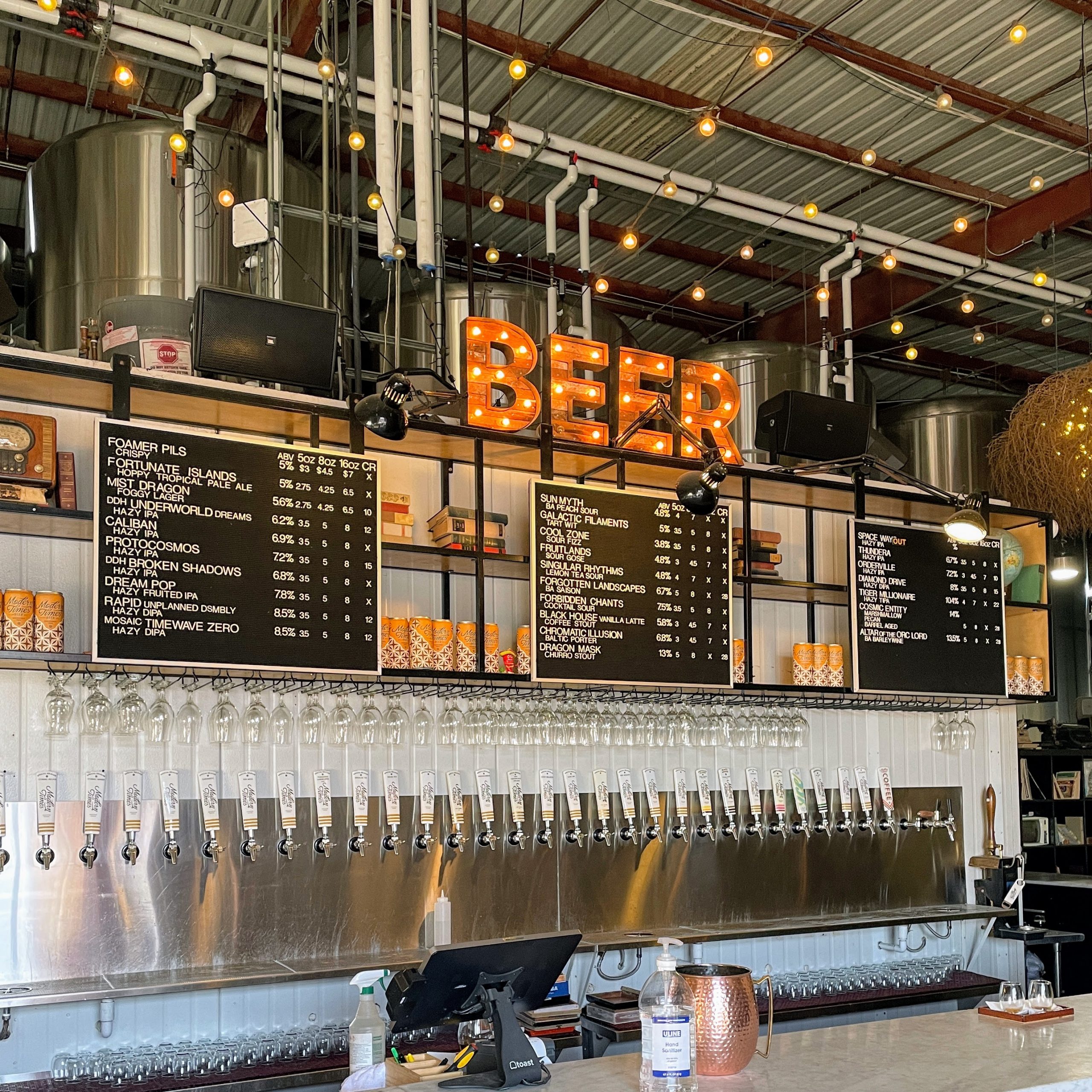
    Taproom Draft Beer Taps Arranged as a Smiley Face
    I’m Happy To See You Too!

    The last episode recording in Chicago before we relocate the TravelCommons studios, and our lives, down to Nashville. We close out our threads on in-flight mask mandates and hotel housekeeping, and critique an academic paper about the moral hazard of frequent flier elite status. I talk through the changes I’ll have to make when flying out of a non-hub airport. And then, as I’m making a list of the Chicago breweries I want to re-visit before leaving, I think through the characteristics that makes a taproom great. All this and more – click here to download the podcast file, go up to the Subscribe section in the top menu bar to subscribe on your favorite site, or listen right here by clicking on the arrow on the player.

    Here is the transcript of TravelCommons podcast #187:

    Since The Last Episode

    • Intro music — Warmth by Makkina
    • Coming to you, for the last time, from the TravelCommons studio in Chicago, Illinois because we’re packing everything up and moving the 500 miles down I-65 to Nashville at the end of June. After 25 years here, we decided we needed a change of scenery. So with all the packing and everything, I don’t see a June episode in the offing. 
    • Way back when I was doing heavy international travel — Chicago on Monday, Toronto on Tuesday, New York to London on Wednesday, Zurich on Thursday, getting back to Chicago at Friday midnight — what then seemed like necessary travel, but now, looking back on it, seems like stupid travel — people would ask me my favorite city. I thought about it a lot, but would always end up with the same answer — Chicago. And not just because it was my home; I was offering up that answer when we lived in Philadelphia. No, my explanation to the raised eyebrows that answer often generated was that Chicago was the right size — big enough to support a wide range of interesting stuff (sports, culture, restaurants, microbreweries), but not so big that you couldn’t get your arms around it, and with enough Midwest pragmatism, from people moving in from Indiana and Iowa and Minnesota and Wisconsin, to keep everything grounded, to keep it from getting too wacky. And to their “But what about the weather?” question I’d say “yes, it can be -10° in Chicago in January, but it can be +110° in Phoenix in August; most every place has 3 months of lousy weather (save for maybe San Diego) sometime during the year; different people choose the 3 months they can endure.” 
    • But over the past few years, I realized my answer about Chicago didn’t hold up any more — not about the weather, the winters still suck; it’s that the pragmatism seems to be gone, with violent crime — robberies, shootings, carjackings — and definitely not-pragmatic local government decisions filling the void. It has started to feel like a replay of the 1970’s, which were not a great time in Chicago.  Now, I don’t think it’s permanent. It’s a pendulum. Just like the city came back from a bad stretch in the ‘70’s to be a great place in the mid/late ‘80’s. It’ll happen again; I just don’t want to hang around for the low point. And according to the half-dozen movers we talked to, we’re not the only ones.
    • Bridge Music — Dive Deep (Loveshadow remix) by spinningmerkaba (c) copyright 2015 Licensed under a Creative Commons Attribution Noncommercial (3.0) license. http://dig.ccmixter.org/files/jlbrock44/50488 Ft: Loveshadow

    Following Up

    • A quick public service announcement — the COVID Real ID extension expires in less than a year. According to the TSA, “Beginning May 3, 2023, every air traveler 18 years of age and older will need a REAL ID-compliant driver’s license or identification card… at airport security checkpoints for domestic air travel.”  Back in episode #183 in January, I talked about getting a Real ID version of my Illinois driver’s license when I had to renew it. No additional cost and maybe 3 additional minutes of time. But if you can’t pick up a Real ID driver’s license before next May, you’ll have to remember to take along your passport or your Global Entry card.
    • In the last episode, we walked through the abrupt end of the US CDC’s transportation mask mandate — on planes, buses, trains,….  That news cycle lasted right at about a week, the last entry being the CDC asking the Dept of Justice to appeal the federal judge’s ruling that struck down the mandate that they had extended for 2 weeks to May 3rd. On May 3rd, the CDC posted a press release reiterating their recommendation that everyone aged 2 and older wear masks on planes and trains, and in airports and stations — but nothing about the status of that appeal. I’m guessing that they decided to accept the facts on the ground and quietly forget about any appeal — which is probably the only real option they have.
    • And then this week, adding to those facts on the ground, the European CDC has dropped their transportation mask mandate recommendations. The difference, though, is the European CDC’s recommendations are just that, recommendations. The enforceable rules are made by each country, and Spain and Italy, many of the countries hardest hit by the initial wave of COVID, have extended their mask mandates to mid-June.
    • OK, I wasn’t going to say anything more about hotel housekeeping because even I’m bored with it, but then I ran across an article in the Wall Street Journal about how hotel housekeeping unions are pushing for a return to daily room service. Certainly a big part of the push is to drive more work, more hours for the union members. But also because rooms are dirtier and take longer to clean when they have gone a few days without service, especially with the current guest mix that’s still heavier with leisure travelers, who tend to have more people in the room than the road-warrior business traveler. As you’d guess, hotel owners disagree, but for changing reasons. Their arc of rationale has gone from the pre-pandemic “be green, save water, and we’ll give you an extra 500 points to skip housekeeping” to pandemic “we’re keeping everyone safe by staying out of your room” to the current “it’s your choice, and ‘labor shortage’”.  OK, that’s it. I’m really not going to talk about room cleaning anymore.
    • But I will talk about TSA checkpoint passenger volumes again. Back in September 2021, the last time I scraped the numbers off the TSA website, average daily passenger volumes were bouncing around 1.7 million, down 20% from the July summer peak of over 2 million and down 24% from pre-pandemic September 2019 numbers. Six months later, looking at the last month-and-a-half — April to mid-May — the average daily volume is 2.1 million and growing, and now just 10-12% off the April/May 2019 numbers. So if those TSA checkpoints and airplanes are feeling a bit more crowded, it’s because they are. Tough to remember back to my first post-lockdown flight in June 2020, when daily passenger volumes were 5-600,000 and the Southwest boarding agent said “There’s 40 of you on a plane with 175 seats. So everyone gets their own row.” I, in no way, want to go back to those times, but having a bit more plane space was nice.
    • I get a lot of emails from public relations firms. I read the subject lines of all of them because every once in a rare while, there’s something that catches my eye, like the pitch that led to last episode’s interview about Daytona Beach airport trying to survive in the shadow of the behemoth that is Orlando Int’l. So when I read the subject line “Study Finds that Frequent-Flyer Programs Increase Cost of Business Travel” in my inbox a few weeks back, I just had to click through. The study, just published in the journal Marketing Science which I admit I don’t read as often as I should because I get tied up pouring through the CDC’s Morbidity and Mortality Weekly Report, is titled Reaching for Gold: Frequent-Flyer Status Incentives and Moral Hazard, written by professors from University of Michigan and Duke business schools. According to the press release, after “(analyzing) the transactional database of a leading U.S.-based airline’s frequent-flyer program (that) included the histories and point accumulations of 3.5 million frequent-flyer program members during the 2010 and 2011 point-earning cycles” their main insights were — “‘Points Members’ are More Likely to Choose Higher Fares When Not Paying for It” and “the closer frequent-flyer program members get to ‘elite status’ the more likely they are to choose an airline even when it may be more expensive than a competitor’s flight”. Hmm, that feels a bit “Dawn breaking over Marblehead”. How can you be researching frequent flier programs and act like you’ve never heard of (let alone done) a mileage run. Maybe the press release overly summarized the research and just isn’t communicating its subtlety. So I hit Google to find the actual paper. 29 pages of text and equations, and 15 pages of bibliography and data tables later — nope, the press release was pretty much it. If the moral hazard of business travelers using their employer’s money to pay for more expensive flights to make status is eliminated, the paper estimates that companies would save at least 7% of their travel costs. Looking at 2019 data, the average cost of a walk-up US domestic ticket — one booked less than a week in advance, so the typical road warrior ticket — is about $500. 7% is $35. I dunno, maybe some full-contact procurement guy will get excited about that $35 savings, but I don’t know any executive in his or her right mind is thinking to themselves “Oh yes, pissing off the people who are jamming themselves in to coach seats and spending nights away from their family for $35 a trip” is a great idea.  Except at GM. I remember when frequent flier programs first came out, GM didn’t let their travelers keep the points from business trips, which led to all sorts of weird booking behavior. Until that policy died a quiet death a few years later. Kinda like this research — I’m sure these professors are nice, smart people; but they gotta get out of their offices a bit more.
    • Bridge Music – Drops of H2O ( The Filtered Water Treatment ) by J.Lang (c) copyright 2012 Licensed under a Creative Commons Attribution (3.0) license. http://dig.ccmixter.org/files/djlang59/37792 Ft: Airtone

    Moving to a Non-Hub Airport

    • One thing that kinda snuck up on me about our move to Nashville — it’ll be the first time in almost 40 years that I haven’t lived in an airport hub city: Chicago with American and United at ORD; San Francisco with their United hub; Dallas when I signed up for American’s Advantage program my first day of work; Philadelphia with US Air, though I avoided them as much as I could; Detroit with Northwest; and then back to Chicago, now a 3-hub town after Southwest took over MDW after the big expansion.  
    • Nashville was a hub in the late ‘80’s/early ‘90’s — well, a mini-hub, actually — when American was playing around with their network. They built mini-hubs in Nashville, Raleigh/Durham, and San Jose. The experiment lasted maybe 10 years but never really made any money. I think the only thing of American left in those airports are Admirals Clubs; in Nashville, they’re down to 9% of the passenger volume.  Today, Nashville’s direct flight distribution looks like any non-hub airport — the top 4 destinations are Big 3 hubs — ATL, DEN, DFW, ORD — with the fifth being MCO, thanks to all that Mouseketeer traffic.
    • The #1 travel tip on my and any other experienced traveler’s list is “fly non-stop” — much easier from a hub airport, of course, and then your frequent flier strategy just falls out from there. If you live in Atlanta, you’re doubling down on Delta’s SkyMiles; realistically, there’s not another option. Non-hub? It could be just as straight-forward — if your flight patterns take you primarily to one of those hub cities — Chicago, Atlanta, San Francisco — then your choice too is made for you. But if you’re in sales or consulting — or maybe slouching toward retirement — and your flight patterns are a bit more scattershot, then you have to think — what’s my objective? — flying non-stop for the shortest flight times and lowest probability of disruption; making elite status because the perks make my travel easier; or is it building up points to help fund my vacations?
    • Thinking about my consulting colleagues who flew out of non-hub airports every week, they were all about status. One guy I worked with lived in Ft Myers, Florida and was all in on Delta. Even when flying every week to projects in, say, Dallas or Chicago, he’d always skip the direct American flights and connect through Atlanta, killing the time from all those missed connections with drinks in Delta’s Sky Club — which was free with his Diamond Medallion status.
    • My calculus is a little easier. One of the side benefits of flying a lot for over 35 years is that I stacked up enough mileage for lifetime mid-tier elite status on American and United. Not enough status to get into their clubs for free, but along with the usual early boarding and free bags, it’s gotten me free club entry to OneWorld and Star Alliance partners’ lounges — which is very valuable when trying to navigate the rabbit warrens that are FRA and LHR after north Atlantic turbulence has screwed up your in-flight sleep plans.  If I didn’t already have these metal levels or I was in striking distance of a new level — say close to the 2 million I’d need to jump from United Premier Gold to lifetime Platinum — then I’d probably suck it up like my colleagues do, and get, say, the top tier United credit card with free club access for a place to sit out ORD, DEN, and IAH weather delays.
    • Those lifetime statuses let me step off the elite hamster wheel, so I’m now looking at non-stop flights and earning miles. Out of Nashville, Southwest has the most non-stop flights, so I’ll probably be flying them a fair bit. But while Southwest’s Companion Pass perk — their “buy a ticket, get one free” top tier status is phenomenal, I can’t BOGO Southwest to Europe, so I need to be banking miles on one of the Big 3 so I can book on their OneWorld, Star Alliance, or SkyTeam partners — which is where travel credit cards come back into the picture. Back in episode #167 in September 2020, we talked about people replacing their mileage cards with cash-back cards since no one was flying. But that trend is reverting to the mean and credit card companies have big slugs of mileage to dole out after buying them cheap in 2020 when the airlines needed real cash real fast. So my non-hub strategy — fly direct when I can, leverage those hard-earned lifetime statuses when I can, and charge everything I can on a mileage-earning card — including any drinks I may need to see me through those missed connections.
    • Bridge Music —  Bored on Your Backside by Trifonic (c) copyright 2005 Licensed under a Creative Commons Attribution Non-Commercial Sampling Plus 1.0 license. http://ccmixter.org/files/trifonic/445

    What Makes a Great Taproom?

    • With a month left in Chicago, Irene and I have built a list of “Places to Hit Before Move” that’s some mix of greatest hits and places we’ve always wanted to go but have, for some reason or another, never gotten ‘round to. And then I have a separate list of Chicago taprooms I want to hit one more time — Goose Island, Revolution Brewing, Off Color, Solemn Oath, Marz, Dovetail, and Metropolitan Brewing. Which then got me thinking — why these and not other; what makes a good taproom for me?
    • First thing to do is to open up Untappd, the beer social networking app that’s been my beer diary for over 11 years now.  I’ve checked beer in at over 1,900 locations and the #1 location category is — a brewery taproom. I scrolled through the list on the app and jotted down the ones I thought “Yeah, I’d like to go back there.”  
    • Probably the smallest group is about unique brewery experiences; where I actually did the brewery tour and it was something more than just row after row of steel tanks. Cantillon in Brussels is everyone’s favorite; they send you off on your own guided with nothing but a paper brochure and tell you not to break anything. And then, after you’ve navigated coolships and barrel rooms, they pour you their amazing lambic beers. Or the original Lagunitas Brewery in Petaluma, CA where the tour guide tossed us just-filled IPA bottles he’d grabbed before they got to the packaging machine. 
    • But except for these few exceptions, my favorite places have a wide beer selection (something more than 5 taps of IPAs) and/or a cool space and/or the chance to chat with the brewer. Labietis’ original place in Riga, Latvia hit the first two square on the head: a diverse beer menu — a juniper beer inspired by Latvian folk songs, a wheat beer with meadowsweet, a lager with Latvian hops — that’s located in the back courtyard of what looked like, in the fall of 2019, a block of now slightly derelict early 20th Century manor houses. A little closer to home on my Chicago list, Metropolitan Brewing does nothing but German-style lagers which are a perfect fit for their taproom patio that looks out on the north branch of the Chicago River.
    • Going to a brewery’s taproom is kinda like seeing a band in concert — I’m going to get a fuller picture of that band than I will just hearing their hit songs on the radio or a Spotify playlist. Hitting a good taproom can be similar — getting past the high-volume core beers to see what the brewer can really do. When we were in Santa Fe last month, I went out of my way to hit Rowley Farmhouse Ales because I really liked their range during our last visit in 2018. So of course I ordered the Teosinte, a funky, earthy, grassy sour made from Oaxacan green dent corn grown a couple hundred miles east, near the Texas-New Mexico border. It was an incredibly interesting beer. I wouldn’t buy a six-pack of it, but I was more than happy to have a glass of it.
    • But probably the best time I have at taprooms is when I get to talk to the brewer. During one of my trips last year to Nashville, I found myself an hour south in Columbia, TN, which bills itself “Muletown.” I missed the 2021 “Mule Day” festival; it was canceled due to COVID. Instead, I wound my way through a light industrial neighborhood hard against some freight train tracks billed as Columbia’s Art District to find Bad Idea Brewing. There were two other folks sitting at the bar; the brewer was behind it, serving. And we just got talking — about the beer, about his brewery, about Columbia, about brewing in Columbia, about what kind of beer sells in Columbia. And through all that, taster glasses kept landing in front of me — “try this,” “what do you think of that?” he’d ask. What was going to be a quick side trip for a beer turned into a nice afternoon of conversation… and beer.
    • I guess there’s one more thing that can make for a great taproom, or maybe more of a great taproom experience and that is — it took me to a part of a city that I wouldn’t have otherwise gone. I talked a bit about this in episode #174 when I talked with Rob Cheshire of the UK podcast This Week in Craft Beer about planning taproom visits. Navigating the maze of a Beijing hutong to find Great Leap Brewing, or exiting a Paris Metro stop in a North African neighborhood on my way to Deck & Donohue, or riding an e-scooter through a questionable neighborhood in northeast DC to Right Proper Brewing. These three were fine places with solid beers, but they’re more memorable for the trip to find them than for the places themselves.
    • But you can’t always tell this from Google search. So if you go to the show notes on travelcommons.com you’ll find my list of  “Yeah, I’d like to go back there” taprooms.

    My Yeah, I’d like to go back there Taproom List

    • Chicago
      • Goose Island Taproom, 1800 W Fulton St — Yes, it’s now owned by AB InBev, but it was the original Chicago microbrewery in the late ’80’s and they created the whole barrel-aged stout category with Bourbon County Stout
      • Revolution Brewing Brewery & Taproom, 3340 N Kedzie Ave— Great beers; wide range of styles; bring your own food
      • Maplewood Brewery & Distillery, 2717 N Maplewood Ave (South of Diversey) — Small, neighborhood bar tucked up against the Kennedy Expressway
      • Metropolitan Brewing, 3057 N Rockwell St — Been brewing German-style lagers since 2009; great patio seating that looks out over the north branch of the Chicago River
      • Dovetail Brewery, 1800 W Belle Plaine Ave — German lagers and spontaneously fermented beers; the best taproom on the Ravenswood neighborhood’s “Malt Row”
      • Off Color Brewing, 1460 N Kingsbury St — Great range of beer styles, all of which are well-done
      • Solemn Oath Brewery, 1661 Quincy Ave #179, Naperville, IL — In a faaar west neighborhood of Chicago, one of the OG suburban breweries. Great beers and a great outdoor space, especially in the winter.
      • A couple of South Side taprooms featured on the Chicago MDW Layover Taproom Tour video
    • Elsewhere in the US
      • Oxbow Blending & Bottling, 49 Washington Ave, Portland, ME — Great selection of farmhouse ales with an outpost of Duckfat serving up fries on the patio
      • Allagash Brewing Company, 50 Industrial Way, Portland, ME — One of the OG Maine breweries; huge range of beers beyond Allagash White; nice outdoor space; two more taprooms across the street makes it a nice afternoon destination
      • Other Half Brewing Domino Park, 34 River St, Brooklyn, NY — Great hazy IPAs; great views of Manhattan across the East River
      • Right Proper Brewing Brookland Production House + Tasting Room, 920 Girard St NE, Washington, DC — A nice little taproom in a DC neighborhood that is way off the typical tourist track
      • The Fermentorium Brewery and Tasting Room, 7481 WI-60 Trunk, Cedarburg, WI — Well done range of beers just outside of a scenic small Wisconsin town
      • Drífa Brewing Company, 501 S Lake St, Marquette, MI — Great beer stop on the bike path along the shore of Lake Superior
      • Bearded Iris Brewing, 101 Van Buren St, Nashville, TN — Original Germantown taproom with great hazy IPAs, pool tables and a nice patio
      • Various Artists Brewing, 1011 Elm Hill Pike, Nashville, TN — Wide variety of beer styles; big patio; guest chefs working a big grill
      • Fait la Force Brewing, 1414 3rd Ave S, Nashville, TN — An unassuming place tucked away in the Chestnut Hill neighborhood; comfortable space; great range of beer styles; had a great conversation with the brewer behind the bar
      • Bad Idea Brewing Company, 307 W 11th St, Columbia, TN — Comfortable taproom with well-executed beers in Columbia’s Art District; another place I had a nice conversation with the brewer
      • Rowley Farmhouse Ales, 1405 Maclovia St, Santa Fe, NM — Nice range of IPAs, saisons, and sours, and a solid green chile cheeseburger
      • Lagunitas Brewing Company, 1280 N McDowell Blvd, Petaluma, CA — Yes, they’ve been bought out by Heineken, but the original brewery still has a bit of that old Cali anarchic feel
      • Pueblo Vida Brewing Company, 115 E Broadway Blvd, Tucson, AZ — A little joint in downtown Tucson that executes great beers with a focus on local ingredients
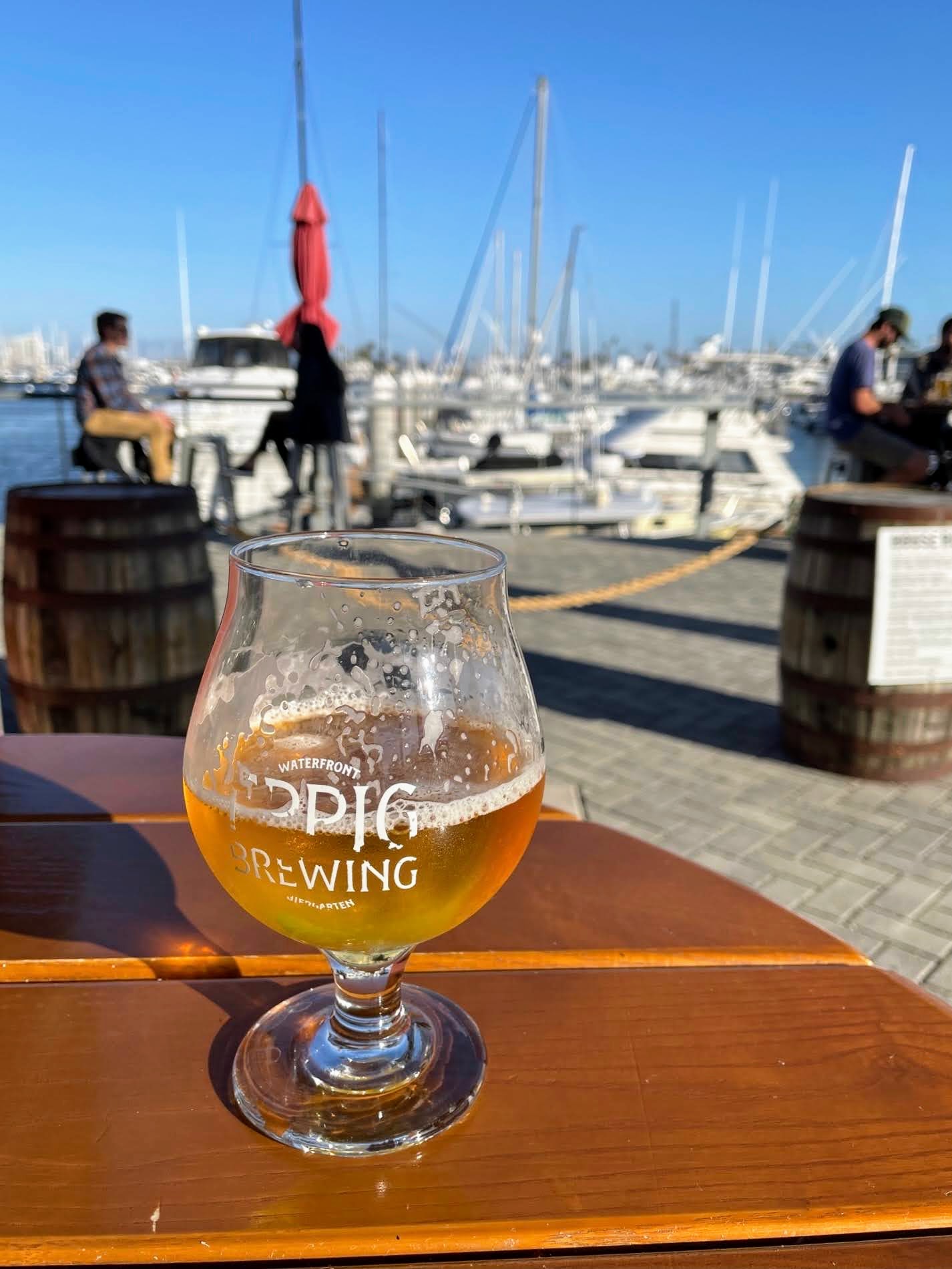
      • Eppig Brewing Waterfront Biergarten, 2817 Dickens St, San Diego, CA — It’s all about drinking good beers outside in the sunshine along the marina
    • Outside the US
      • London Beer Factory – Barrel Project, 80 Druid St, London SE1 2HQ — Great beers; very cool space in railway arch along London’s Bermondsey Beer Mile
      • Brasserie Cantillon, Rue Gheude 56, 1070 Anderlecht, Belgium — Ground zero for spontaneously fermented lambic and gueuze beers; just follow the train of beer geeks to the door
      • Mikkeller Baghaven, Refshalevej 169B, 1432 København — Lots of spontaneously fermented sour beer on a converted industrial island
      • Fábrica Maravillas, C. de Valverde, 29, 28004 Madrid — Nice taproom tucked into Madrid’s Malasaña neighborhood serving good pale ales and IPAs
      • Deck & Donohue, 1 Av. des Marronniers, 94380 Bonneuil-sur-Marne, France — Took me outside the usual Paris tourist circuit to a North African shopping street
      • Labietis Brewpub, 2, Aristida Briāna iela 9a, Rīga, LV-1001, Latvia — Out-of-the-way taproom; interesting selection of beer styles, not just the usual IPAs, but herb beers, fruit beers, and meads; helpful bartenders do a good job of describing what’s on tap

    Closing

    • Closing music — Pictures of You by Evangeline
    • OK, that’s it, that’s the end of TravelCommons podcast #187
    • I hope you all enjoyed the show and I hope you decide to stay subscribed.
    • As I said at the top of the show, there’s probably not going to be a June show, between packing up the Chicago studio and then unpacking it in Nashville. Good news, though — the sound quality in Nashville might get a step-function improvement. Just about every apt building Irene and I looked at had a music studio as one of the amenities. The sound proofing, the sound deadening, and maybe a better microphone should make things sound a bit better. Quite a ways from those first episodes, recording with the iRiver MP3 player’s built-in mic while standing in a shower stall. Oh my!
    • You can find us and listen to us on all the main podcast sites — Apple Podcasts, Spotify, Stitcher, SoundCloud, Google Podcasts, and Amazon Music. Or you can also ask Alexa, Siri, or Google to play TravelCommons on your smart speakers. You’ll have to go to the TravelCommons’ website if you want to torture your ears listening to those first bathroom-studio episodes; what one listener labelled a “pottycast”
    • And across the bottom of each page on the web site, you’ll find links to the TravelCommons’ social  — Facebook, Twitter, Instagram, and the YouTube channel.
    • If you’re already subscribed, how ‘bout leaving us a review on one of the sites? Or better yet, tell someone about TravelCommons. That word-of-mouth thing; it’s really the only way to grow.
    • If you have a story, thought, comment, gripe – the voice of the traveler — send ‘em along, text or audio file, to comments@travelcommons.com or to @mpeacock on Twitter, or post them on the TravelCommons’ Facebook pageInstagram account,  or website at travelcommons.com. Thanks to everyone who has taken the time to send in e-mails, Tweets and post comments on the website
    • Follow me on Twitter
    • “Like” the TravelCommons Facebook page
    • Direct link to the show
  • My Best Restaurants, Bars and Taprooms of 2021

    My Best Restaurants, Bars and Taprooms of 2021

    It’ll take travel guide books a while to catch up with all the restaurants and bars closures caused by the COVID lockdowns. To help fill that gap, here are the best places I’ve ate and drank at during my 2021 travels. I’ll update this after each trip, so keep it bookmarked.

    • Chicago
      • NoodleBird at Fat Rice, 2957 W Diversey Ave (at N Sacramento), Logan Square — The lower price-point, post-pandemic reincarnation of Fat Rice, a perennial recommendation of mine. Like Fat Rice, NoodleBird’s starting point is the Chinese-Portuguese fusion cuisine of Macau and then extends to other Asian regions
      • Galit, 2429 N Lincoln Ave (just north of Fullerton), Lincoln Park — Great Israeli/Middle Eastern restaurant with a nice 4-course menu that let’s your table try a lot of dishes
      • High Five Ramen, 112 N Green St, West Loop — Small, hip basement ramen joint. Expect a wait, but have a beer and a Texas BBQ appetizer upstairs at Green Street Smoked Meats while you wait
      • MingHin Cuisine, 2168 S Archer Ave, Chinatown — It’s our favorite dim sum place. And they take reservations!
      • Birrieria Zaragoza, 4852 S Pulaski Rd, Archer Heights (near Midway Airport) — Small, family-owned place with a small menu focused on birria (stewed goat) from Jalisco. Warm service and phenomenal food. 
      • Bitter Pops, 3357 N Lincoln Ave (at Roscoe), Roscoe Village — a renovated slashie (bar + packaged goods) that has a great selection of Chicago craft beer
      • Revolution Brewing – Brewery & Taproom, 3340 N Kedzie Ave, Avondale — Great beers; wide range of styles; bring your own food
      • Maplewood Brewery & Distillery, 2717 N Maplewood Ave (South of Diversey), east of Logan Square — Small, neighborhood bar tucked up against the Kennedy Expressway
      • For more taproom ideas, check out this pre-pandemic TravelCommons taproom tour. Three of the four taprooms featured are still open — Marz, Whiner, and Lo-Rez. Only Lagunitas Brewing is still closed
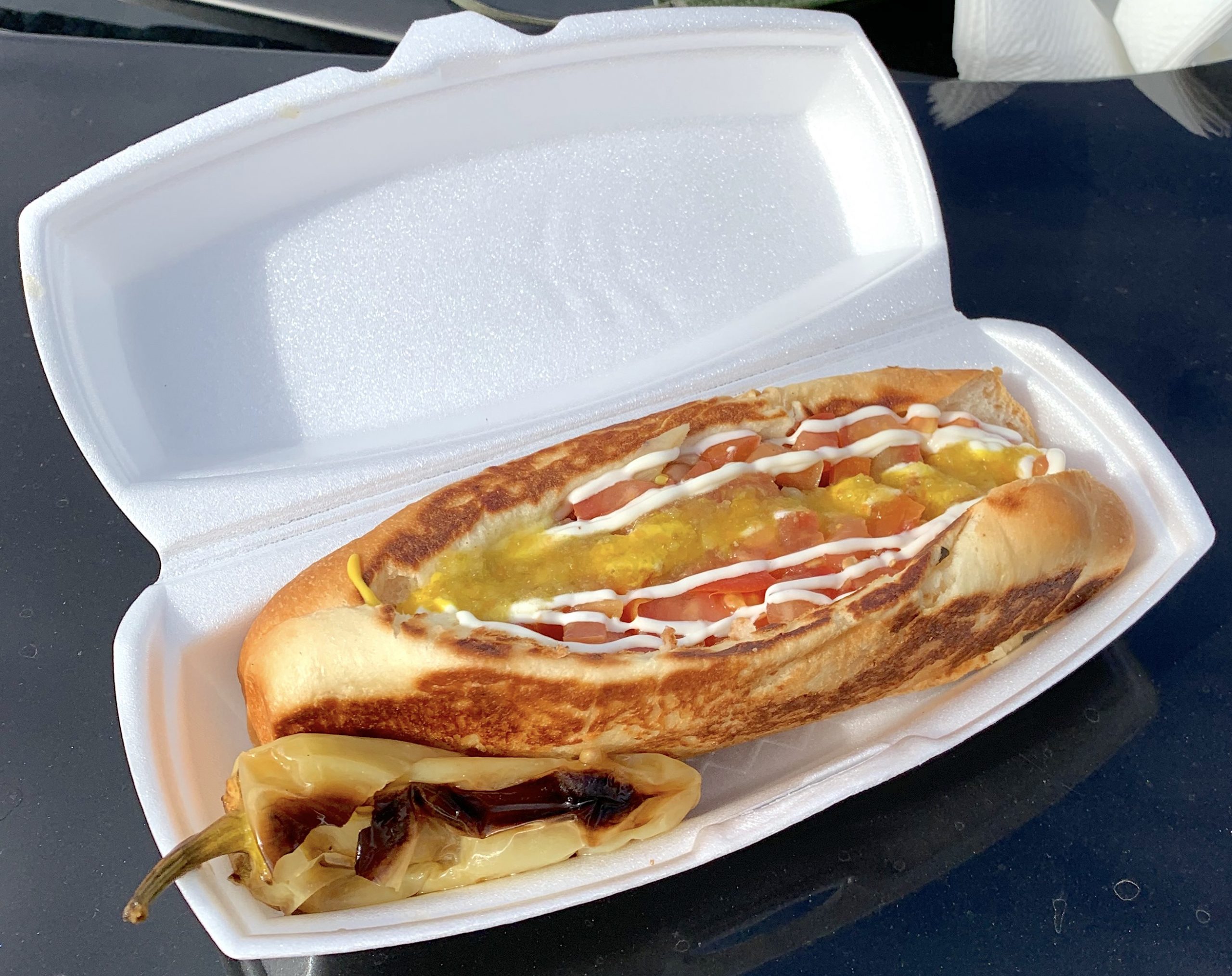
    Sonoran Hot Dog
    • Phoenix
      • Pizzeria Bianco, 623 E Adams St — Thin crust pizza a short drive from the airport
      • Pane Bianco, 4404 N Central Ave — Great sandwich place by the same group further north
    Eppiq Brewing
    • New York City
      • Hummus Kitchen, 444 3rd Ave (at 31st St), Murray Hill — Well-executed Middle-Eastern food
      • Her Name is Han, 17 E 31st St (at Madison Ave), Koreatown — Home-style Korean food
      • Craft + Carry – Murray Hill, 440 3rd St (at 30th St) — Excellent selection of NY craft beers on draft and in cans to-go
      • Ted’s Corner Tavern, 523 3rd Ave (at 35th St), Murray Hill — Comfortable neighborhood bar with a great beer selection
      • The Pony Bar, 1444 1st Ave (at E 75th St), Upper East Side — Casual bar with a great beer selection. Been going there for 10 years
    • London
      • Behind Restaurant, 20 Sidworth St E8 3SD, Hackney — Focused on seafood and modern British flavors. The whole restaurant is a kitchen table experience, watching chefs prepare the dishes and then serve them to you. One of the best Michelin 1-star restaurants I’ve visited.
      • The Ginger Pig, Corner of Stoney St and Park St, Borough Market — Bought the best sausage rolls I’ve ever had from their walk-up display. Want to go back and try their meat pies.
      • NOPI, 21-22 Warwick St W1B 5NE, Soho — Fun Mediterranean/Middle Eastern fusion restaurant from star chef Yotam Ottolenghi. Sat at the bar and had a great late lunch.
      • Al Masar, 214, 216 Borough High St SE1 1JX — Strategically located near the Borough tube stop. Solid Lebanese wraps; exactly what I needed after a long taproom crawl down the Bermondsey Beer Mile.
      • Bermondsey Beer Mile, a mile of craft brewery taprooms that have set up shop in adjacent railway arches under a huge brick bridge carrying commuter trains in and out of London Bridge train station. Rob Cheshire, long-time TravelCommons listener and UK craft beer podcaster laid out a taproom crawl that started at The Kernel, the first brewery in on the Mile, and continued through The Barrel Project, Cloudwater, and Brew By Numbers.
      • Old Fountain, 3 Baldwin St (at City Rd) EC1V 9NU, Shoreditch — Tucked into a little side street, it’s a comfortable pub with a great UK craft beer selection.
  • Podcast #181 — Travel Potpourri; 2021 Traveler’s Gift Guide

    Podcast #181 — Travel Potpourri; 2021 Traveler’s Gift Guide

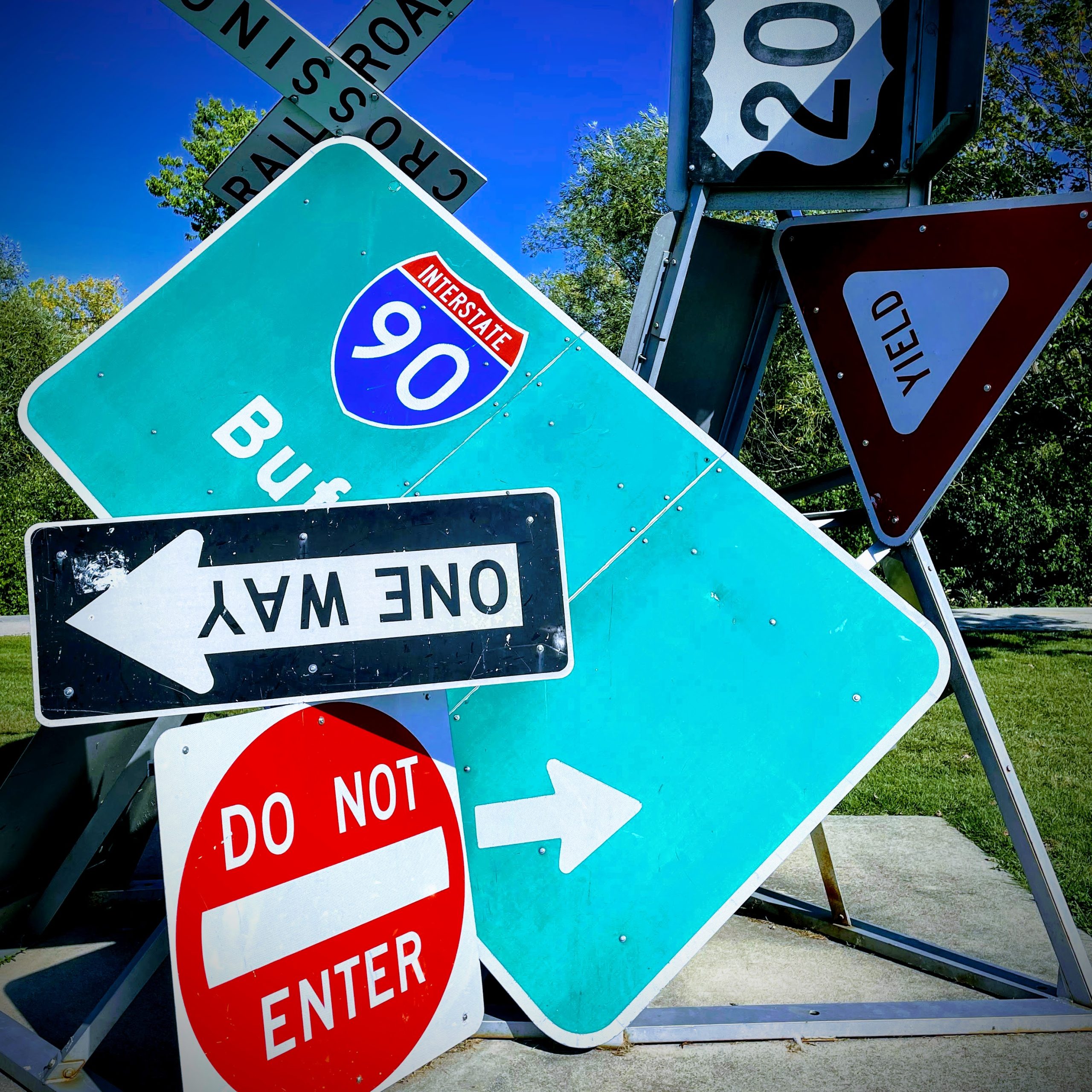
    Jumble of Travel Signs
    Post-Pandemic Travel Guidance

    No travel since the last episode, so just talking through a random potpourri of travel stuff. There’s more travel planning; this time for a couple of weeks split between London and Wales which means sorting through a new set of COVID travel requirements. We look at some stats — Uber’s latest financials and how deeply last year’s lockdown hit Nashville airport vendors. I marvel at how much European mobile data rates have fallen, strip down my English to have a deeper chat with an Italian bartender, and wrap it all up with highlights from this year’s traveler’s gift guide. All this and more – click here to download the podcast file, go up to the Subscribe section in the top menu bar to subscribe on your favorite site, or listen right here by clicking on the arrow on the player.

    Here is the transcript of TravelCommons podcast #181:

    Since The Last Episode

    • Intro music — Warmth by Makkina
    • Coming to you from the TravelCommons studio in Chicago, Illinois, only 2 weeks after the last episode. Decided to kinda short-cycle this episode, see if I can get in an actual November episode rather than wait for December like I said at the end of the last episode. And to think that I used to do these weekly when I started out in 2005. Oh, the enthusiasm of youth — and notebooks full of unused travel stories. I was going through some of those old episodes while doing a bit of website maintenance. The TSA gave me a lot of fodder for content back in the day. It was only 3½ years old when TravelCommons started, so I got to comment on (bitch about) all their growing pains — the start of the shoe carnival, the liquid ban, all the different tries at screening technology (who could forget those “puffer” machines?) and, of course, their stellar customer service. But once I started going through PreCheck in 2012, there wasn’t much more to comment/bitch about — which I know is a good thing overall, but it did leave me with a big content hole, kinda like in those TV series where the villain becomes one of the good guys in season 3 — what do you do next?
    • And 16 years on, as I slouch towards semi-retirement, my travel experiences are changing. I’m thinking less about clever new ways to navigate ORD’s Monday morning road warrior rush hour or about totaling up delays on a 4- or 5-city cross-country itinerary, and thinking more about planning for longer leisure(?)/experiential(?) travel. Though I guess that’s not a complete change.  
    • Going through those old episodes reminded me that, even back at the start, I was talking about leisure travel — to the point that episodes #8 and #9 were done while on vacation! I can only imagine what my family was thinking when they heard me nattering away in the bathroom of the Geneva, Switz Novatel and the Budapest Marriott.
    • But back to the present… Obviously, no travel since the last episode, just travel planning for our trip to the UK next week — a week in London and then heading out to southern Wales for a week of walking, hiking, pretty much just being cold and wet because I didn’t get enough of that while biking in Puglia. 
    • A big chunk of my time has been spent trying to figure out exactly what COVID paperwork we need to get into the UK. Since we’re vaccinated and coming from a non-red list country, we don’t need to show a negative COVID test before getting on the plane, but instead we have to get a test done in the UK and have to pre-pay for it so we can also fill out a passenger locator form 48 hours before departure. The UK government’s website is actually pretty good, with links to approved test providers. But most of them want to ship the test to a UK address, which is good if you’re returning home to the UK; less good if you’re staying in a hotel or Airbnb. So now I’m trying to figure out — do I risk a long line at a Heathrow test center when we land or do I find a place somewhere in London the next day? Kinda makes me long for the days when all I had to worry about was finding a bank before 3pm on Friday to cash an American Express Travelers Check so I had cash for the weekend…. Nah, who am I kidding? That was so much more of a pain than this. Worst case, I figure out how to eat a full-cooked English breakfast standing up while in line.
    • Bridge Music — Countryside Summer Joyride by Kara Square (c) copyright 2017 Licensed under a Creative Commons Attribution Noncommercial (3.0) license. http://dig.ccmixter.org/files/mindmapthat/56281 Ft: Javolenus

    Following Up

    • This time last year, in the November 2020 episode, we talked about all the end-of-the-year “don’t leave me” offers from the airlines and hotels, 20-50% cuts in whatever metric they used to award status —  stays, nights, miles, stays, segments, spend. And at the end of that bit, I said “Maybe they’ll be doing it again this time next year if that ‘Well, it’s probably more like the end of 2021 or maybe into the beginning of 2022 before things start feeling normal; forecast turns out to be true.” A year later, and after the Delta variant knocked down everyone’s Q3 revenues, I haven’t received any airline status sales yet, but I’ve already received status extensions from Marriott, Hilton, and, weirdly enough, IHG — weird ‘cause I don’t have any status with them… that I know of, maybe I need to check. They’re all extending status for another year, to February or March 2023. So everyone’s kept their 2019 status for 3 years now — 2020, 2021, and now 2022. And why not? Since a lot of the cost is concierge lounges that have been closed and free breakfasts that are now boxes with a yogurt and an orange, it’s probably the cheapest way to buy continued customer loyalty.
    • We’ve talked a lot in this podcast about Uber and Lyft. Back in episode #154 in August 2019, I asked “Will We Still Love Uber and Lyft When The Prices Go Up?” after both CEOs talked about getting to “rational pricing” — “rational” being CEO-speak for “higher”. And then this year, talking about their post-pandemic driver shortages, customer service issues, and rising prices — a pretty common topic. The Times of London asks “Is Uber Dead?” and the Chicago Tribune says in an editorial “We were wrong to abandon Chicago’s taxicabs for ride-shares and the city now needs to find a fix” which is a bit of a laugh because 4-5 years ago, everyone here complained that you couldn’t get a cab other than downtown or the airports, and definitely never in the poorer neighborhoods of the South and West sides.  If you read the highlights of Uber’s Q3 financial results released last week, they’re not quite dead. They trumpet that Q3 was their “first Adjusted EBITDA profitable quarter as a public company” Adjusted EBITDA – a fun accounting construct meaning “earnings before taxes, depreciation, and all the other bad stuff” and that the number of active drivers is up more than 65% since January. But what was interesting to me — their delivery business, like Uber Eats, now generates more revenue than their traditional ride business. And maybe competing for drivers? Does make some sense. As the Times’ writer put it, “Food doesn’t complain about the route and parcels tend not to throw up on the back seat.”
    • Back in episode #170 last December, we talked about how the CEO of Qantas had stirred up a good bit of controversy saying “We will ask people to have a vaccination before they can get on the aircraft” and the resulting land grab in vaccine passport apps. United and Lufthansa were testing out the CommonPass app, Delta and Alitalia (may they rest in peace) the AOKPass from the International Chamber of Commerce, and British Airways and Iberia the Travel Pass from an airline industry group. I said back then that it was a little messy, but it made sense since I didn’t think the handwritten card the CDC was handing out was going to pass muster at a boarding gate. Now, less than a year later, the Qantas CEO’s quote is pretty much standard operating procedure for international travel.  But vaccine passport apps? It’s a bit more mixed. Last month I flew Air France, United, Lufthansa, and ITA, the successor to Alitalia, and was never prompted to download any apps. Instead, I pulled out my trusty CDC card many times to prove my vaccination status, and for my flight home, opened Gmail on my iPhone a couple of times to show the PDF of my negative COVID test.  Pretty low tech, but honestly, at least in Italy, it worked faster than the EU’s Green Pass QR codes. We’d show our CDC cards and after a second or two be waved through while the Europeans were still trying to right-size the QR code on their phone screens so the scanner would register it. Upgrading to iOS 15.1 on my iPhone let me add a digital vaccination card to my Apple Wallet, but I don’t know where I’ll actually use it.
    • And if you have any travel stories, questions, comments, tips, rants – the voice of the traveler, send ’em along to comments@travelcommons.com — you can send a Twitter message to @mpeacock, post your thoughts on the TravelCommons’ Facebook page or the Instagram account at travelcommons — or you can post comments on the web site at TravelCommons.com.
    • Bridge Music — Jester of the Golden Apocalypse by Super_Sigil (c) copyright 2011 Licensed under a Creative Commons Attribution Noncommercial (3.0) license. http://dig.ccmixter.org/files/Super_Sigil/34750

    Travel Potpourri for $600

    • Regular listeners know that, every now and again, usually when I’m scraping for content, I gather up the odds-‘n’-ends from my travel notebooks that I can’t get “grow up” into a stand-alone topic and just string ‘em together into a Jeopardy-like topic “Travel Potpourri”. 
    • I recently read some stats about how the March 2020 lockdown impacted Nashville’s airport — daily passenger count went from 50,000 to 500, and only 8 airport concessions out of a pre-COVID count of 52 survived. And now, 20 months later, passenger counts are pretty much back to pre-pandemic levels, but the concession count isn’t. They’re only back to 34 — 18 food places and 16 shops, newsstands and other things. It takes more time to start things up than to shut them down — especially when you have to get all your workers and supplies through TSA security every day. I’ll keep this in mind the next time I want to complain about a 10-deep line for a cup of coffee.
    • Traveling to Europe again means re-bookmarking the Prepaid Data SIM Card Wiki so I can research mobile data plans again. For 4 years, I didn’t have to worry about it. The EU had outlawed roaming charges and so I’d just use the UK SIM I bought the first time we took our daughter over to Scotland for college. That worked well until Brexit day last year. So on our first day in Bari, I searched out the nearest TIM store — stands for Telecom Italia Mobile, I think. I wanted one of Italy’s big networks because our cycling tour would be taking us into the countryside, and so was OK paying a bit more for better coverage.  The last time I bought a mobile SIM in Italy was 5 years in Pisa and it was a huge hassle. But in Bari, we walked into the store, and the clerk was great. She kinda figured we were looking for SIMs, knew about the international plan I’d found on their website, and got the whole thing done in maybe 15 minutes. The price — €25 ($30) for 70 GB of data, which, for all practical purposes translates to unlimited data — meant the break-even point vs. paying AT&T $10/day for international roaming was 3 days. Since we were in Italy for 16 days, it was a well-spent 15 minutes. I was amazed at how far mobile data prices have fallen. The last time I was in Europe, the fall of 2019, I put £10 on my EE SIM (about $12 back then) and got 3 GB. I just topped up that SIM again for our UK trip and got 15 GB for £15 — 500% increase in data for 50% more money. That should hold us for 2 weeks. 
    • In many past episodes, I’ve talked about how my search for local craft beer has taken me to places outside the typical travel bubble. And, for me, this is even more important since I’m doing less (no?) business travel. Because the nature of business travel — traveling to work with clients who live there — makes it easier to connect with that place, even if it’s just through hallway conversations like “What’d you do over the weekend”, but most times, it’s them saying “Oh, you gotta go to my favorite place while you’re here.” Our Puglia bike tour ended in Lecce in lousy weather. The rain had started the night before and continued dumping the next morning. We skipped the last ride. You could say we were lightweights, but we didn’t want to have to figure out how to pack soaking wet biking clothes. I wanted to walk around Lecce a bit before our dinner reservation, but Irene was cold from the wind and rain. So she headed back to the hotel while I searched out a beer bar I’d found on Untappd.
    • The place was pretty empty when I walked in; 7pm, it was early by Italian standards. The draft handles were all from a local Lecce brewery, so I asked the bartender, a young guy, his favorite, and he pointed to the IPA tap — of course, but it was a pretty solid session IPA. He offered me a table, but I asked him if I could just stand and drink at the counter. We started to chat a bit (“Why have you come… to Lecce?”) His English wasn’t great (though orders-of magnitude better than my Italian, which is sorta damning with faint praise) so I started stripping down my English — no slang, no contractions, clean articulation, simple declarative sentences. But in maybe a verbal corollary to the Mark Twain-ism “I would have written a shorter letter if I had the time…”, I find it takes a lot of thinking, a lot of mental work to do this, to strip my English down to something easily understandable. And the bartender appreciated it. “English people talk so fast,” he said. “I have a hard time understanding everything they say.” And by making my English more understandable, he gained confidence in his, and pushed it into more interesting topics like the split between Northern and Southern Italy (“They hate us!”) and even within Puglia (“We hate Bari and Bari hates us!”).  And why he wants to work on his English (“It’s so much more useful than Italian. A German person, a Swedish person comes into the bar; we all talk English)”. He was happy to get to practice his English. I was happy to oblige, and get a little peek at non-tourist Puglia without knowing any Italian.
    • Bridge Music — South Texas Cowboy Blues by texasradiofish (c) copyright 2015 Licensed under a Creative Commons Attribution Noncommercial (3.0) license. http://dig.ccmixter.org/files/texasradiofish/52030 Ft: unreal_dm, ElRon XChile

     2021 Traveler’s Gift Guide

    • Last week, I posted this year’s traveler’s gift guide. You can find it on the front page of the TravelCommons’ website; I’ll also put a link in the episode description so you can click to it straight from your podcast app. If last year’s gift guide was about helping people travel handle last-minute lockdowns with suggestions like bring-your-own dining sets and upscale in-room coffee brewing kits, this year’s guide is stacked with the gift ideas to help cope with all the predicted airline meltdowns when holiday passenger traffic smacks straight into crew and ground staff shortages. 
    • I’m not going to run through the whole list — you can hit the website for that — but I’ll hit a couple of highlights. Top of this year’s list is battery packs. We talked in the last episode that we just can’t easily travel anymore without a working mobile phone. It holds our boarding passes and our proof of COVID vaccination, gives us gate change and flight delay notifications, and routes us around traffic jams. A dead phone while flights are being cancelled is more than just a bit of an inconvenience; having that second or third charge immediately available is critical when trying to swerve a long delay. There are a lot of choices; just pick one. I carry Zendure and Anker power banks; they’ve served me well. (And thanks to Jim McDonough for QA’ing the power bank links in the original blog post!)
    • Number 2 and a perennial favorite – Noise Canceling Headphone or Ear Buds. Whether you’re sitting in a noisy airport waiting out a delay or are up in the air, it’s great being able to cut out all the background noise and find your Zen place with the flick of a switch. I’ve been carrying Bose headphones for at least 15 years and am now on my 3rd pair, the Bose 700’s. They’re not compact yet they continue to earn their space in my travel bag. I find over-the-ear cans more comfortable, but if you can handle in-the-ear buds for extended periods, Bose does ear buds, or for Apple ecosystem diehards, my kids recommend the AirPod Pros.
    • Another suggestion for Apple ecosystem inhabitants is Apple’s AirTag. They have a lot more range than straight Bluetooth trackers like Tile because AirTags can ping off of any nearby Apple device, not just yours, to report its location. Putting an AirTag in your checked luggage can you see if your bag is joining you on the new flight the airline just rebooked you on, or you can hang one from your backpack to track it if it somehow wanders off down the concourse while your eyes are trying to find your delayed flight on the airport’s departure board.
    • Back in the July episode, episode #177, I said my USB-C to HDMI cable was the most important piece of travel kit on my trip through the Northeast because, it let me mirror my MacBook Air on the hotel and beach house TVs so I could sit back with a beer and comfortably watch YouTube highlights of the Euro 2020 soccer tournament and the Tour de France on 40-60” flat screens instead of hunching over a 13” laptop screen.
    • And at number 9, a smartphone tripod. My Square Jellyfish phone tripod is light and doesn’t take up much space, but came in very handy while doing my COVID test video session in Italy the morning before my flight home. The eMed test proctor wanted to watch me swirl the cotton swab in my nose and then insert it into the test kit. I’m not sure how I would’ve done that while holding my phone. I use it a lot more than I thought I would for video calls and to watch quick videos on my phone.
    • So there you go, something to fit all sizes and budgets in time for Black Friday and Cyber Monday, or if you’re just killing time waiting for your Thanksgiving flight to leave.

    Closing

    • Closing music — Pictures of You by Evangeline
    • OK, that’s it, that’s the end of TravelCommons podcast #181
    • I hope you all enjoyed the show and I hope you decide to stay subscribed.
    • You can find us and listen to us on all the main podcast sites — Apple Podcasts, Spotify, Stitcher, SoundCloud, Google Podcasts, and Amazon Music. Or you can also ask Alexa, Siri, or Google to play TravelCommons on your smart speakers. And across the bottom of each page on the web site, you’ll find links to the TravelCommons’ social  — Facebook, Twitter, Instagram, and the YouTube channel.
    • If you’re already subscribed, how ‘bout leaving us a review on one of the sites? Or better yet, tell someone about TravelCommons. That word-of-mouth thing; it’s really the only way to grow.
    • If you have a story, thought, comment, gripe – the voice of the traveler — send ‘em along, text or audio file, to comments@travelcommons.com or to @mpeacock on Twitter, or post them on the TravelCommons’ Facebook pageInstagram account,  or website at travelcommons.com. Thanks to everyone who has taken the time to send in e-mails, Tweets and post comments on the website
    • Follow me on Twitter
    • “Like” the TravelCommons Facebook page
    • Direct link to the show
  • Podcast #174 — How the Pros Plan Their Taproom Tourism

    Podcast #174 — How the Pros Plan Their Taproom Tourism

    Bar at Modern Times' Taproom
    I wonder what they serve here

    Looking at the Beer section of this new website design, I saw I needed more content. So I got hold of Rob Cheshire of the This Week in Craft Beer podcast to talk about our approaches to taproom tourism and to trade taproom travel stories. I also talk about mask hassles on a couple of recent flights, Hertz’s continuing downward service spiral, and Uber and Lyft driver shortages. All this and more – click here to download the podcast file, go up to the Subscribe section in the top menu bar to subscribe on your favorite site, or listen right here by clicking on the arrow below.

    Here is the transcript of TravelCommons podcast #174:

    This Week

    • Intro music — Warmth by Makkina
    • Coming to you again from the TravelCommons studio in Chicago, Illinois as things here start to open up from winter and COVID shutdowns. Increasing temperatures and vaccination rates have people out and about. Irene and I got a jump start on the better weather by flying out to San Diego on St Patrick’s Day to hang out at an Airbnb in Ocean Beach a block off the ocean and a couple of blocks south of Newport Avenue, the main drag that surprised me with its kinda hippy/surfer vibe. Which I liked. It reminded me of Huntington Beach in the mid-80’s when my folks moved there, before they tarted it all up. I give Ocean Beach credit for resisting the face lift, even if I meant I had to avoid the homeless guy changing his pants on the sidewalk when walking back with the morning coffee and doughnuts.
    • It was a low-key trip. Nothing scheduled, no real itinerary; mostly walking the coast during the day — beaches or rocks — and then at night, chipping away at the list of some 150 microbrewery taprooms in the San Diego area; a lost cause for sure, but one I willingly threw myself at. Indeed, the only time we looked closely at the time was Sunday afternoon to make sure I could get to all my “gotta go” taprooms before they closed since we were flying back Monday after lunch.
    • The bookends to the trip, the flights out and back on United, were a bit more stressful. The flights were just about completely full. And for some reason, United kept shoving me out of my aisle seat to the adjacent middle seat. But because I checked our seats after receiving United’s “We’re full; you can move to another flight for free” e-mail before each flight, there was enough time to rejigger our seats to adjacent aisles, which gave each of us a bit of room to lean away from a full middle seat. The bigger and, honestly, more surprising hassles were mask compliance. On the flight out of ORD, the guy in the row behind me had a loud, extended grumble session with his seatmate after the flight attendant told him to pull his mask up over his nose. I thought he was winding himself up for a protest, but he eventually calmed down. The flight back was worse for Irene. A young couple with an infant landed in the middle and window seats next to her. Both continually pulled their masks down below their chins; at some point, the husband fell asleep and started snoring with his down. And this is after the flight attendants made a number of very clear and pointed announcements on mask rules.
    • This all really surprised me. All my prior flights — to Nashville, Philly, Phoenix — there wasn’t any of this. Now I’m no mask scold, but like I said in the last episode, everyone agrees to wear one before they can check-in. So if you have a personal objection or don’t think you can handle it for 4 hours, don’t get on the plane. And if you do, treat yourself to a new mask before the flight; one with new elastic so it says up over your nose.
    • Bridge music — Dreaming by Astral (c) copyright 2013 Licensed under a Creative Commons Attribution Noncommercial (3.0) license.

    Following Up

    • Long-time TravelCommons listener Nick Gassman sent in a note about last episode’s travel insurance update and COVID-related coverage. Nick writes:
      • “In the UK, a recent survey found that whilst insurers would give you emergency medical cover if you caught COVID when you were away, none would cover you if the government advised against travel because of COVID and you therefore could not travel. Some would give you cancellation cover if you are diagnosed with COVID before travel, and others would further give cancellation cover if you had to self-isolate even without a positive test.
      • As ever with insurance, the thing is to make sure you understand the small print and to compare policies.
    • Nick, thanks for that. I think the advice to “read the small print” is valid in life in general, and in travel insurance in particular. I think the pandemic and known event carve-outs lurking in the small print caught a lot of travel insurance holders back when the initial lockdowns hit. I wonder, a year on after all that, how many more people are clicking through the “Buy Travel Insurance” box at the bottom of their Expedia booking page to the full rider and doing a Control-F in their browser to search for the word “COVID”.
    • In the last couple of episodes, I’ve been talking about my efforts to decipher the activity rules for British Airways’ frequent flier program to stave off a year-end extinction event for my non-insignificant stash of Avios points. Since I’m not planning to fly BA anytime soon, I booked our Ocean Beach Airbnb through a link on BA’s site and, to my surprise, I saw 1,800 Avios points automagically hit my account a week later. I can’t seem to find the expiration date to see if it updated, but I’m pretty sure this reset the 36-month clock. And it was a nice find, the Airbnb-Avios link. It let me double-dip on Avios and Chase Ultimate points. Not sure when I’ll get to spend them, but it was a nice little get.
    • In the last episode, I talked about having to work through a lot of cars in the Hertz PHX lot to find one with less than 24,000 miles. In SAN, I had to work to find a car — period. We walked to the Five Star aisle and it was empty. I tried to flag down a Hertz employee, but he just waved me off. After 5 minutes or so, a car showed up. I didn’t bother to look at the mileage; we just got in and drove off. I was late for a lunch date with a fish taco. Returning the car, I did my normal drill – top off the tank, get a receipt, and then when dropping it off, place the receipt under the keys on the dashboard so the check-in guy will see it. It usually works — except this time. The receipt hits my e-mail as we’re trundling the perimeter of the airfield in the rental bus. I open it up and see a fuel charge! Really? The last time this happened was about 4 years ago in ATL. I hit Twitter and the Hertz team fixed it in a half-hour. This time, the Twitter team got back to me pretty quick asking for the rental agreement details, but then… nothing. I pinged them the next day, nothing. And the next day, nothing. So I challenged it with Amex and got the fueling charge and associated taxes credited back in a couple of days and then moved on. Until earlier this week, two weeks later, Hertz popped up on my Twitter DMs asking for more information. It’s amazing how fast their service has cratered during this bankruptcy, which makes me wonder how long it’ll take them to recover. I gotta get some good discount codes for Avis.
    • There was a spate of articles this week about Uber and Lyft driver shortages. We experienced it first hand trying to get a morning ride out to ORD for our San Diego flight. I swallowed hard and agreed to a good-sized surge, waited for a while, and still had the Uber driver cancel on us at the last minute. It shouldn’t be surprising, though. Drivers left the platforms when demand cratered at the start of the pandemic, when Uber said (and this was last May when everything was shutdown) that their volume was down by 80% vs. the prior May (May 2019). And in Chicago, the run of Uber drivers getting carjacked at the beginning of this year probably didn’t help either. But with stimulus checks in the bank and vaccine rates rising, demand has snapped back, a lot faster than driver supply. The headline of the Financial Times article reads “Uber and Lyft ‘throwing money’ at US drivers to ease shortage” and says that Uber is spending $250 million on a one-time “stimulus” package of driver incentives. But even with that, it takes time to on-board even returning drivers — re-doing vehicle inspections, background checks. In episode #160, my last pre-pandemic episode back in February 2020, I talked about the shrinking difference between Uber and Lyft, and how I found myself beginning to shift back to regular cabs. These recent experiences are only accelerating that. I’m thinking I may need to reload taxi dispatch numbers back into my iPhone.
    • And if you have any travel stories, questions, comments, tips, rants – the voice of the traveler, send ’em along to comments@travelcommons.com — you can send a Twitter message to mpeacock, post your thoughts on the TravelCommons’ Facebook page or the Instagram account at travelcommons — or you can post comments on our fab new web site at TravelCommons.com.
    • Bridge Music — Emily and the Djembe by mghicks (c) copyright 2008 Licensed under a Creative Commons Noncommercial Sampling Plus license. Ft: Emily via Briareus

    Taproom Tourism

    • Putting together the new website, I was thinking about what to put on the top menu. “Subscribe” and “Episodes” were given, but I also put “Food” and “Beer” because, well, I write and talk about them a lot. But then, when I clicked through the new “Beer” menu, it felt a bit sparse. I needed to add some content. And so in the craft beer tradition of collaboration beers, I pinged Rob Cheshire, a long time TravelCommons listener and now craft beer podcaster with his This Week in Craft Beer podcast, to talk about why we go out of our way to find brewery taprooms, and how he organizes his travels to hit the most taprooms he can on each visit.
      • Mark: So what are you drinking?
      • Rob: I’ve got a Bio Machine Brew Co I had on the podcast about six weeks ago.
      • Mark: I’m doing a Springbock from Half Acre, about 6.8%. It’s not a shy beer
      • Rob: Good Lunchtime beer. Yeah.
      • Mark: Taproom Tourism. Why do we go and search out brewery tap rooms as opposed to the cool beer bar?
      • Rob: You want to be drinking at the source I think is the first point. So it’s just in terms of freshness and, quite frankly, value for money, but also variety. And just everything’s better without the middleman. If I can sit and chat to the brewer while I’m drinking their beer, then so much the better. At least even the guy behind the bar is going to know a lot more about products and the nature of the business than our average barman. And, you know, as good as they might be, it’s always better dealing direct, I think.
      • Mark: As I was thinking about it, I had that same set of thoughts. First of all, there’s more selection and especially if you want to go past the usual suspects. So if you want to go past the usual IPAs, maybe random stouts and stuff like that, and the light wheat that they’ll put on to keep the non-beer drinkers happy. If you want to get past that and you want to see where that brewer is stretching their muscles a little bit, then you’re right. You gotta go to the taproom because nobody else is going to take it. And to your point also, from a cost standpoint, you’re going to be able to do flights or at least small pours, which means you’re going to be more willing to try the wacky beer.
      • Rob: Yes, definitely. I want to taste every single beer in the taproom if I can. Another aspect, I just like the atmosphere in taprooms. Some of them are super slick and fabulously well fitted out. And others are literally some barrels to sit on or empty pallets. Complete extremes of decor, but they’re always sort of charming in their own way. And there’s something about being in a brewery that pleases me, even if I’m not drinking.
      • Mark: My undergraduate degree is in chemical engineering and I never practiced as a chemical engineer. But having said that, I really like to go and look at breweries. There was one time we were in Portland. The brewery was in the basement. I’m kind of looking at going “How in the hell did they get these tanks down here?” Because there was no obvious way that you could get a massive steel tank down into this basement. And then we ended up sitting wedged in a table between three fermentation tanks. It wasn’t like we were looking at the brewery; we were in the brewery.
      • Rob: You were actually in an integral part of it. I had a very similar experience, actually, one of the new local breweries that’s opened up here in Reading that I’ve become quite friendly with called Crafty Cats, and they are brewing in an impractical barn, terribly difficult to sanitize everything. It’s a broken concrete floor. We went round this brewery, and we started actually with the finished beer and he said, Well, taste this and taste this and this and which we’re getting right back to the last one we tasted. It was the first time I’ve ever tasted what I can only describe as the overwhelming smell of brewer’s yeast you get in a brewery. That was what this liquid tasted like, and I’ve never tasted anything quite like it before. It was a really interesting experience.
      • Mark: How do you plan your taproom visits?
      • Rob: It’s all driven through Google for me. I might have some idea based on previous reading about some big-name places that I want to visit in a particular city. But beyond that, I’m just going to Google. First of all, I’ll plot a Google map for the city. I’ll end up with 50-60, maybe even 100 pins on the map. Pretty quickly, I’ll go to Untappd and look at the average brewery rating. And this really makes brewers cross how much I rely on Untappd for this type of thing because I had this conversation a load of times on the podcast with them. But I do rely on brewery ratings on Untappd, and I find it very reliable, quite frankly. If a brewery has an average rating of anything close to 4, then, obviously it’s a massive generalization to say whatever they brew, but most of their beers are gonna be great. If the brewery rating is anywhere close to 3.5, it’s going to be very mediocre at best. And somewhere in between is where most people land. So 3.6, eh…;  3.8, it’s a good brewery; 3.9 is a terrific brewery; 4 is a great brewery. And so I’m looking for those 3.8 and 3.9 average brewery ratings. But what I’m looking for, really, is that district where I can walk from one to another and really make an afternoon of it.
      • Mark: But that’s kind of the DIY spin. And I know, Rob, that you’re doing with This Week In Craft Brewing, you guys are launching tours, the Good Lord willing and COVID don’t rise…
      • Rob: Yeah. I’ve been lucky enough to travel pretty frequently to East Coast of the US for business trips, particularly the past 10 years. And so I’ve always been comfortable with traveling in the US, And in the last few years, I’ve been basing my travel around taproom visits quite frankly. And so I’ve been doing business trips where I have some business meetings, but really, what I’m doing is trying to plan my schedule so I’m in the right place at the right time each evening to visit the tap room that I want to visit. And so, I’ve become quite familiar with the tap rooms most of the way down the East Coast. Since then, I’ve got my This Week In Craft Beer business (if you want to call it a business) off the ground. It’s a fun side project. We publish a weekly newsletter and we do a weekly podcast doing a different interview with the UK Craft Brewery each week. And so, in conversation with the brewers, I started to float the idea with them, either before or afterwards, when we’re wrapping up and finishing off the beer and whatever. I would say, “Well, I’m thinking about putting together tours to the US. Does that sound like something you’d be interested in?” And so, on the back of a few of those conversations, I started to figure out that what we could do is actually promote it with the brewer and basically sell it to the brewer’s customers and have the brewer come on the tour. So we’ll put together a schedule where we’re going to visit, hopefully, some amazing tap rooms. From what I know about how brewers react to being visited by other brewers, usually they get the red carpet out. Brewers are very hospitable. It’s almost like a private members club. You know, one brewer visits another brewer, and they may be supremely welcome. So I’m hoping that we can leverage that, and I think we can put together a pretty killer 5-day, 4-night tour where we visit 2 tap rooms a day and have a fantastic curated experience at each one.
      • You may be seeding a whole other series of collabs, of cross-Atlantic collabs.
      • Rob: That would be nice. Yeah, I hope so.
      • Mark: Here’s the last thing I wanted to think about – best, worst, most unusual taproom experience. It got me thinking about the number of times that going to tap rooms, search them out, and then going out to them has taken me to parts of town that I would not normally go. I mean, it gets you out of it, busts you out of what I’ve called in the travel bubble or the tourist route.
      • Rob: I’ve been to a few places where I probably shouldn’t have been in search of tap rooms. You know, that’s the thing. Isn’t as well as you know. I think I remember once in Baltimore where I, you know, I ended up probably in a slightly down-on-its-luck neighborhood. Let’s call it that for one of the better turn of phrase. And that’s when you start to think “Well, maybe, you know, is there a taproom down here? And maybe I shouldn’t perhaps be wandering this district.” I don’t know, but I do. What I do know when I’m in the US is I can always break out my British accent and that, you know, it doesn’t matter how sort of threatening the bad guys look as soon as they hear I’m from the UK, they immediately become unofficial tour guides. And, you know, they want to point me in the right direction and give me advice and make sure I’m enjoying my visit to the city. And it is an extraordinary experience and this, you know, it’s overwhelming that level of hospitality that we always get from Americans. And that’s it’s not an exaggeration to say that I don’t think I could find myself in any part of any city where that didn’t work, and it hasn’t happened yet anyway. So probably once too many. I’ll push that luck too far. It’s worked so far anyway.
      • Mark: And again, you talk about doing business trips? I was in mid Jersey, and I found this place Demented Brewing, and I found it on Untappd. And so we head out there, we find it. It’s across the street from a glass repair shop and sort of kitty corner from a motorcycle repair shop. But no food, no food trucks or anything and said “Okay, well, we’re gonna need to lay a base here.” And so, across the street was this little place with an El Salvadorian flag hanging out the front of it. And it’s some little family restaurant/bodega thing, and we roll in there. They look at us like, “Who in the hell are you guys?” We go. We like the menu posted up on the wall. It’s like pupusa is I don’t know. We’re like, give us all of them, right? Just like give us one of all; we’re gonna do a flight of pupusas and then we went back across the street, but at that time in New Jersey, they had to give you a tour.
      • Rob: You have to do a tour. Yeah, yeah, yeah.
      • Mark: Okay, so you hit that too. You had to do a tour before you could do the sample.
      • Rob: I’ve been to more places in Jersey than probably anywhere else, actually.
      • Mark: It’s the only place I’ve had that happen has been in Jersey. Okay, “Well, you got to do a tour, then you can have beer at the tap room.” I was like, “Okay, fine. Cool.” It was a very abbreviated tour.
      • Rob: Yeah. I actually watched that policy evolve in 2018 from at the start of the year, where they were quite strict about saying yet we’ve got to give you a bit of a tour, you know. And after a while, it got to the stage where they just had laminates printed where they have shown you the map of the brewery. If you’d like us to come and show you any particular feature on this, please let us know. But just otherwise, you can just sit at the bar and look at it while you have your beer and say that obviously sort of figured out that that was sufficient to satisfy the local regulations.
      • Rob: Probably my best taproom experience in Asia was in Hanoi, Vietnam, and there’s a bar there called the Standing Bar, which I think is by far the most celebrated craft beer bar in probably the whole of Vietnam. Actually, a great selection of beer. When we were there, they had a comedy night and they’d flown in English- speaking comedy acts from a number of different Asian capitals. And it was fantastic. There’s a big local beer scene in Vietnam. It’s called Bia Hoi. It’s basically lager, 3.5-3.8% alcohol I think, but served almost ice cold in ice glasses. So it’s drunk extremely cold, and it’s very hot and humid there, of course, and these Bia Hoi bars are — to say they’re on every street is understating it. About every third shop front is a Bia Hoi bar, and they’re mostly… they’re not bars in the way that you would recognize that term. They’re oftentimes just a little sort of plastic furniture, almost in, but the front room on the ground floor, you know, So you walk in there and you sit down and they’re always really tiny because we’re obviously taller than the Vietnamese. So you know, you sort of get your knees under your chin. It felt like going back to kindergarten, where you’re going to the parents’ evening at school and you’re sitting on the tiny chairs that are designed for five- and six-year-olds. It was exactly like that, these bia hoy bars. It was a good experience drinking bia hoi.  Crap beer, of course, but you know, it was just, you know, it’s cold and very refreshing. You can drink lots of it because it’s very weak. But the point is, bia hoi is like 20 cents a pint. Something like; that is super super cheap. And the beer in the Standing Bar was, quite frankly, Western European craft beer prices and then some. You know, you were paying probably $10 plus for a pint, maybe more than that. So this was a good beer, you know, They had some good Vietnamese beers. They had imported beers from around Asia. So it was a good choice of craft beer, as I would recognize that. But 20-30 times the price of the local beers, you know. And it was bringing it back to the comedy night. Several of the comedians were absolutely ripping into the crowd, saying, “You know what? Are you guys doing it? How on earth can you justify paying the price of the beer in this bullshit bar when you could be next door drinking pints of bia hoi with the locals for 20 cents a pint? You know, it’s ridiculous. You should be ashamed of yourselves” and you are absolutely right. It was a good experience.
    • Thanks again to Rob Cheshire for that collab. I hope you could tell that it was a lot of fun. Indeed, the full session ran around an hour and a half and a bit more beer. If you want to hear more of our taproom stories, head over to Rob’s This Week in Craft Beer podcast feed, he posted a longer version as a bonus Easter episode, or check out the TravelCommons website, Facebook page or YouTube channel for the full video.

    Closing

    • Closing music — Pictures of You by Evangeline
    • OK, that’s it, that’s the end of TravelCommons podcast #174
    • I hope you all enjoyed the show and I hope you decide to stay subscribed.
    • The new website makes it a lot easier to subscribe. There’s a drop down menu at the top of each page, a set of subscribe links at the bottom, and a big red “Subscribe” button in the middle of the home page. You can use all those buttons, links and menus or you can just search for us on Apple Podcasts, Spotify, Stitcher, SoundCloud, Google Podcasts, and Amazon Music. Or you can also ask Alexa, Siri, or Google to play TravelCommons on your smart speakers. And across the bottom of each page on the web site, you’ll find links to the TravelCommons’ social  — Facebook, Twitter, Instagram, and the YouTube channel.
    • If you’re already subscribed, how ‘bout leaving us a review on one of the sites.
    • Thanks to Nick Gassman, not only for the e-mails, but for calling out TravelCommons in the Recommended Podcast section of his blog site.
    • If you have a story, thought, comment, gripe – the voice of the traveler — send ‘em along, text or audio file, to comments@travelcommons.com or to @mpeacock on Twitter, or post them on the TravelCommons’ Facebook pageInstagram account,  or website at travelcommons.com. Thanks to everyone who has taken the time to send in e-mails, Tweets and post comments on the website
    • Follow me on Twitter
    • “Like” the TravelCommons Facebook page
    • Direct link to the show
  • Podcast #174 Uncut — Taproom Tourism

    Podcast #174 Uncut — Taproom Tourism

    Started trying to edit down my 90-minute Zoom call with Rob Cheshire, long-time TravelCommons listener and host of the This Week In Craft Beer podcast, and decided to post the whole chat as an “Uncut” episode. Think of it as an AMSR video for beer nerds. For those without loads of spare time, the *much* edited version will be out in a week or two in the next podcast episode

  • Podcast #173 — What’s New in Travel Insurance; Keeping Ahead of Expiring Miles

    Podcast #173 — What’s New in Travel Insurance; Keeping Ahead of Expiring Miles

    People Camping Out on Airport Cots
    Wait Here ’til Your COVID Test is Negative

    As travel bookings beginning to rise with vaccination rates, we talk with Michael Giusti of InsuranceQuotes.com to find out what’s changed over the last year. I make the rounds through all my frequent traveler programs to reset impending expiration dates. We also talk about yet another travel data breach, a favorite beer bar is a COVID casualty, and bankrupt Hertz is starting to let its cars get old. All this and more – click here to download the podcast file, go up to the Subscribe section in the top menu bar to subscribe on your favorite site, or listen right here by clicking on the arrow below.

    Here is the transcript of TravelCommons podcast #173:

    This Week

    • Intro music — Warmth by Makkina
    • Coming to you again from the TravelCommons studio in Chicago, Illinois on what has been a nice week. Temps got into the 60’s at the beginning of the week, so I broke out the bike for a ride along the lake — sunny in most parts, but a bit chillier in the shady parts, riding narrow paths cut through 5-ft ice and snow mounds, the remnants of what were really impressive pile-ups of shore ice during the February deep freeze.
    • No travel since the last episode, but heading out next week to hang out on the beach in San Diego, reloading from our January pivot away from California because of their lockdown. A couple of months on, COVID cases are down, the state’s order banning hotel and Airbnb hosts from renting to out-of-state’er is gone, outdoor dining has re-opened and, most importantly, the craft brewery taprooms are open again. I pointed my little Python Untappd script at San Diego and can see a lot of Brewery check-ins. In between those taproom visits, I think we’ll manage to squeeze in some biking and kayaking. 
    • And like many folks, we’re building our travel calendar for the rest of the year. Nashville, New York City, Northern Michigan, and Maine written in pen through the first half of the year. We’re penciling in the UK for November, booking it now to lock in no-fee cancelations in case of another winter spike, or what might be more likely, lingering resistance to dropping international quarantine requirements. But I’m optimistic (hopeful?) that the US and UK will get enough people vaccinated by then.
    • I was on a Zoom call a couple of nights ago with a bunch of college friends. “Do you think we can all get together in person in September for Homecoming?” someone asked. “Absolutely,” I said, “we just need to lean into it.” And it feels like that’s what more people are doing — leaning into visits to physically get together with family and friends they haven’t seen for a year now. It’s always dangerous drawing a straight trend line, but it feels like travel might come back quicker than expected. 
    • Bridge Music — Madrugada(rmx) by savoyard (c) copyright 2007 Licensed under a Creative Commons Attribution Noncommercial (3.0) license. http://dig.ccmixter.org/files/savoyard/10743 Ft: Curve

    Following Up

    • I finally pushed out the refreshed website last week. First change since 2006. Figured website aesthetics have changed a bit over the last 15 years and so changed things up a bit. Thanks to everyone who responded to my request on Facebook and Twitter to hit the new site for a bit of crowd-sourced end-user testing. A bit like the meme you’ll see posted in a lot of IT shops; a picture of Dos Equis “most interesting man in the world” with the line — “I don’t always test my code, but when I do, I test it in Production.” There’s still some tweaks I need to make, but it seems pretty solid. Check it out if you get a chance — travelcommons.com — and drop me a line at comments@travelcommons.com with your thoughts.
    • Following up on last episode’s rant about the guy living unnoticed in ORD for 3 months, I tweeted out an article about people living years in airports. Written by a history prof from University of Dayton who researches the history of airports (hey, everyone’s gotta have their niche), the article talks about other airport residents, an Iranian refugee who lived in CDG for 18 years, and most recently, an Estonian guy who was transiting through Manila Int’l Airport last March as the shutdowns hit was stuck there for 100 days until the Estonian embassy could get him on a repatriation flight. That one is brutal. I spent 3 hours in that airport a few years back and even, with everything open, it felt 2½ hours too long. Check out the article — there’s a link in the show notes and at the top of the Twitter and Facebook feeds. It’s a good read.
    • Jim McDonough hit the Facebook page, responding to last episode’s margarita instruction story with one of his own.
      • I know how you feel about teaching the bartender how to make a margarita. We ended a week-long trip to Switzerland by staying our last night at a hotel by the Zurich airport. At dinner, we each asked for a Scotch and water. They brought out this big tray, with a bowl of ice cubes, a pitcher of water, a bottle of Scotch, and two glasses. A crowd of hotel employees gathered to watch. Evidently, they don’t do Scotch and water in Zurich. When I filled the glasses with ice, they gasped. I explained that we live in a hot climate. I went ahead and added Scotch and topped off with a little water, and they winced when I took a sip. A cultural exchange, I guess.
    • Jim, I love you, man, but I gotta tell you — I’d probably be wincing with the hotel staff. My usual Scotch order is — Scotch and glass. But you paid for it (and in Zurich, it’s not going to be a small amount), so even if they couldn’t quite figure out what you wanted, they at least gave you all the tools you needed.
    • One of my absolute favorite beer bars, Bailey’s Taproom in Portland, Oregon, has shut off their taps permanently. I started a project in downtown Portland in January 2013. Found Bailey’s the second night I was there and just settled in; my last beer there was my last night in Portland. The owner said “After reopening to limited seating (after the initial shutdown), it was clear that people were not interested in coming downtown. When the PPP money ran out, I decided to close the doors”  Another reminder that we should try to be purposeful about where we spend our discretionary dollars, thinking about what businesses we would miss if they closed up and then go out of our way to buy something from them. In my case, it helps rationalize a rather full beer shelf in our pantry.
    • After Hertz declared bankruptcy at the end of last May, I predicted in episode #164 that I’d be paying more attention to the mileage on the cars in the Five Star aisle because that’s the first place I see signs of financial distress — a lot less 500-mile cars and a lot more 24,000-mile cars. And while 24,000 miles on a car doesn’t seem like a lot, remember that rental car miles are kinda like dog years — you gotta multiply them by, like, 7 to get to regular car miles. And true to form, when picking up our Hertz car in PHX at the end of January, every car I looked at had over 24,000 miles, a few with a lot more. Will be interesting to see what’s on offer at SAN in a few weeks. 
    • If you have any status on a Star Alliance or One World carrier, you probably got an email from your carrier about a data breach at SITA. I got them from United and American saying my name, account number, and status was potentially exposed and that I should change my password, which I did. And then thought about how this is yet another data leak from some unknown player in what is an incredibly fragmented travel tech tool chain. We talked about this back in November in episode #169 when an obscure Spanish company used by hotels to update information on on-line booking sites leaked 24 GB of names, emails, credit card data and reservation records. And in this case, if you’re not in the airline industry, you probably don’t know about SITA. It’s a industry consortium started back in 1949 by 11 European airlines to share infrastructure costs and has expanded to provide all sorts of travel technology including the exchange of passenger data between airlines — in this case, the exchange of frequent flyer status so that, say, Lufthansa recognizes your elite status with United on your flight with them. It’s one thing when the breach is from a company that you did business with — the Marriott hacks in 2018 and 2020, the 2018 breaches at British Airways and Cathay Pacific. But it’s a whole other thing when you find out some unknown third party coughed up your data. But actually, when you get a look at the spaghetti that is travel technology, and see all the places your data is getting sent to — often small companies that can’t afford state-of-the-art cybersecurity, it’s kinda surprising — in a sad way — that not more of this happens.
    • Type “plane mask” into the Google search box and one of the first 5 suggestions is “plane mask fight”. Click through and you get what seems to be an endless stream of news reports and cellphone videos of passengers fighting about having to wear a mask during a flight. What is getting a lot less coverage, though I’m hearing snatches of it here and there, are people getting chewed out by their row mates when taking their masks off to eat or drink something, getting something like “Hey, can you not drink during the flight? I’d rather not die for your convenience.”  And I’m afraid this is going to get worse as more people start traveling again and aircraft load factors get back into the 80% range. But honestly, both sides are being idiots. You know the rules before you buy your ticket and you’re reminded of them by emails before you travel, and again by gate agents before you board the plane. If you can’t handle the rules — all of them, not just the ones you agree with — then don’t walk down the jetway. Drive; charter a jet. But don’t try to bend the rules to your own personal belief system and hassle the rest of us who are just trying to get from Point A to Point B on-time and with the minimum amount of heartache.
    • And if you have any travel stories, questions, comments, tips, rants – the voice of the traveler, send ’em along to comments@travelcommons.com — you can send a Twitter message to mpeacock, post your thoughts on the TravelCommons’ Facebook page or the Instagram account at travelcommons — or you can post comments on our fab new web site at TravelCommons.com.
    • Bridge music — Tools of the Trade by Doxent Zsigmond (c) copyright 2017 Licensed under a Creative Commons Attribution Noncommercial  (3.0) license. http://dig.ccmixter.org/files/doxent/56512 Ft: Abstract Audio, Mr Yesterday, Martijn de Boer, Speck

    What’s New in Travel Insurance

    • A little over a year ago, the first coronavirus lockdowns started, and the execution of them was, to be charitable, mostly a mess. Borders were quickly shut; planes grounded. People were stranded in foreign countries with no way home; we just talked about the Estonian guy stuck in Manila airport for 100 days. And all of a sudden, people started paying attention to travel insurance. What was once a check box at the bottom of a booking webpage that most of us clicked “no” on so we could finish our reservation quickly became very important. Last May in episode #163, as people were beginning to think about their first post-lockdown trips, we talked about the state of travel insurance. Now, with travel bookings beginning to rise as vaccination rates rise, I wanted to check back in and see what’s changed with travel insurance. So I asked Michael Giusti, senior writer at InsuranceQuotes.com, to come onto the podcast and give us an update: 
      • Mark: Michael, last May, Eric Josowitz of InsuranceQuotes.com was on the podcast. We were talking about travel insurance after the initial lockdown. Back then, in the midst of all that travel disruption, many travelers were finding:  a) they didn’t actually know what their insurance covered; they’d just checked the box at the end of their booking process, paid some additional amount moved on; and  b) the insurance that they had bought had exclusions for communicable diseases, WHO-declared pandemics, cancellations in cases of fear. And then, after that, insurers stopped offering travel insurance. So, Michael, that was May. This is now the end of February. What’s the current situation regarding travel insurance?
      • Michael: Not many people were thinking about pandemics back when this started. But the few people who were thinking about it were insurers. They saw the SARS epidemic and they started writing in pandemic exclusions from that point on. And then there’s a second little provision in these insurance policies called the Known Events Provisions. So once the pandemic declared, even if there wasn’t a specific exclusion, they can turn around and say, “Well, we’re not going to cover because it’s now a known event.” It would be like there’s a hurricane that’s bearing down on your city and you buy a plane ticket while the hurricane is there, and then you get mad because you can’t fly. It’s a known event, and so they’re not going to cover that. So that’s where we came from. And then, you’re right, they stopped and they said, “Well, we have no idea what’s going on, so let’s regroup.”  And now they’ve regrouped, and it’s really interesting because in a lot of the insurance industry, they’ve stopped covering pandemics. But in travel insurance, they specifically started including Covid 19, saying “We will cover it under these conditions.”
      • Mark: Michael, travel requirements have been changing quickly; the restrictions have been going in and out. I mean, most recently, the need to provide a negative COVID test just to be able to get on a plane.  If you look at what Canada did, they basically gave travelers one-week notice of the rule change at the end of 2020. But if you’ve bought a travel insurance policy when you booked travel six weeks prior, what’s the best way to cover these late breaking requirements that pop up a week or two before our trip?
      • Michael: Two main things… One is the policy language. You do need to say what’s specifically included, what’s specifically excluded? Because whether they’re going to cover not having a negative test very much depends on the policy language. The other thing that it’s going to come down to is whether it’s out of your control. If it’s something that you’ve neglected to do, it’s never going to be covered. The policies I’ve reviewed, I haven’t seen any that specifically kick in if you haven’t got a negative test. So if you’re worried about that, you really do need to ask the agent or really read that fine print. I do know that if you’re delayed at security while you’re being tested, that’s not covered. So you do have to get there in time to make sure if they do rapid tests on the spot, that you’re going to have time to get through security.
      • Mark: Okay, let me unpack that just a little bit, Michael. So I booked my flight, and I’ve booked it a month ago. And now I go to take my test 72 hours before departure, and I come up positive. If I’ve bought the right policy, would that typically cover delay or cover cancellation?
      • Michael: Delay is always the first preference. So if we can just push this trip back a week or whatever, that’s going to be everyone’s favorite outcome. But there are cancellation provisions where, say, you can’t move it because the wedding is not going to be moved, in which case the cancellation provisions might kick in.
      • Mark: So now let’s flip that. I’ve taken my test, it’s been negative, I get on the plane, I fly down to Costa Rica. And now a week on, I’ve taken my test to get back into the US and now that test comes out positive. So now, potentially, I can’t get back into the US. How does insurance help me there?
      • Michael: There’s a couple places where this insurance is going to really beneficial in that situation. First and foremost, the medical provisions in most of these comprehensive policies are going to actually help you pay for your healthcare. Many of them are going to be secondary coverage, meaning they’re going to want your primary health care to kick in first and then they’ll jump in and cover anything that’s not covered. Some of them are primary, especially with the overseas trips. So, that’s a really nice benefits that are built into a lot of these policies. The other place that will help is, if you’re delayed because you can’t travel because of a restriction like that, and that’s outside of your control, a lot of them will cover a hotel while you’re waiting and meals while you’re waiting, and they’ll get you back home safely. So that’s actually a really positive outcome that can happen with these policies.
      • Mark: Michael, how do I make sure that I’ve actually got one of those policies? If we go back to the April/May timeframe, people were finding that they didn’t actually know what they had. How do I make sure I’ve actually bought that coverage?
      • Michael: Well, best case scenario would be if you found a human and you asked them in plain English.
      • Mark: Yeah, good luck with that, right?
      • Michael: I know, calling 1 800 numbers anymore – that’s not in the cards. What I would do if I was doing that, I’d click through the terms of service and see who’s offering that policy. If it doesn’t really go into much detail, or if it’s really garbly legalese, I’d go through to the provider’s website. Most of them have FAQ pages that specifically address COVID. So that’s gonna be probably your best resource.
      • Mark: Michael, people are starting to think about big trips as vaccination rates start to step up. You know, the back half of the year, if I’m thinking about booking, say, a week’s biking tour in Tuscany or Provence in September/October, what kind of travel insurance should I be looking for? Should I pony up for a cancel- for-any-reason rider? Or are there some cheaper alternatives for more limited scenarios like, “Hey, the EU still isn’t letting Americans in” but won’t cover the more generic “Oh, I’m afraid to travel” kind of reason.
      • Michael: The question of “if you’re afraid to travel” is never going to be covered unless you do have that cancel-for-any-reason policy. But travel insurance is meant to cover things that are out of your control. So you know, if it’s not laid out your policy, it’s not gonna be covered. So that’s kind of the most expensive option. You know, you’re going to pay the most for a cancel-for-any-reason policy. That middle ground is the standard policy where you say “I’m taking a little bit of the risk on myself. I’m going to bravely travel wherever I’m allowed.” The least expensive option is really kind of a DIY. And a lot of the destinations that I’m seeing, they’re waiving cancellation and change fees. And so you can kind of make your DIY travel insurance by only booking places that would let you change for no fee. That’s kind of the cheapest “I’m feeling brave” policy. “I’m feeling skittish” policy Is that cancel-for-any-reason.
      • Mark: Super. Michael Giusti, senior writer at InsuranceQuotes.com, thank you very much for joining us. This was a great update.
      • Michael: Thank you so much.
    • Bridge music — Crazy Love-The Alex & Lang mix by J.Lang (c) copyright 2007 Licensed under a Creative Commons Attribution Noncommercial (3.0) license. http://dig.ccmixter.org/files/djlang59/10579 Ft: FHC and Alex & Bradsucks

    Keeping Ahead of Expiring Miles

    • Like most road warriors of a certain tenure, I have cards in my desk of some 30-odd frequent traveler programs — those that I know of — and am probably a member of another dozen or so that I’ve forgotten about. Of those, I have meaningful balances — enough for at least one free flight or a free hotel night — at the Big 4 US carriers, a couple of European carriers, and two of the big hotel chains. Most of the rest are random programs like IcelandAir or AirBaltic or Omni Hotels that I used for a specific trip or project but had some spiff, like seat selection or free WiFi, that was reason enough to put in the effort to sign up.
    • When I was traveling every week or so, keeping those main programs active wasn’t a big effort. And if I hadn’t flown, say, BA for a while, I’d code maybe a short American commuter flight, something where my status was a bit meaningless, to my BA account to reset the expiration clock.
    • But now, hitting the first anniversary of the first travel lockdown and with business travel still mostly on hold, some of those expiration cliffs are starting to become visible
    • Last episode, I talked about getting emails from BA and Iberia warning me of pending Avios expirations, and so I transferred my Iberia points to my BA account. But I can’t tell from the BA website if that was enough activity to change the BA expiration. So I spelunked some more thru the website and found where they call out Airbnb bookings as “recognized activity” that’ll reset the 36-month clock. So, I booked our San Diego Airbnb through a link on BA’s site, just had to enter my BA account number before moving to the booking screen. It’ll be interesting to see if the activity flows seamlessly into my BA account or if I’ll have to chase it down through a manual credit claim. I’m betting on the latter, but am hoping to be pleasantly surprised.
    • But that got me cycling through my other accounts. I wasn’t worried about my US carrier accounts. The trend there has been to do away with expiration dates, first Southwest, then Delta, most recently United. American, not surprisingly, is the knuckle dragger, clinging to their stingy 18-month policy, but I flew them last fall to PHL, so I’m fine there.
    • But Flying Blue, the KLM/Air France program? I last flew KLM the fall of 2018, so that had to be coming up. I hit the website; those miles were also expiring at the end of this year. And, they, like BA and Iberia, have managed to make resetting that data way overly complex.  First, there’s “overall extending activities” which are flights or purchases on their co-branded credit card; they extend all Flying Blue miles by 2 years. “Partial extending activities” extend miles earned through, say, hotel or car rental partners. Please note, says the website, “‘Partial extending activities’ do not extend the validity of Miles earned from ‘Overall extending activities’”. OK, then. Looking at it this way, I only had 500 miles from that 2018 flight, but 38,000 miles from when I had to quickly stash points from a corporate Amex account before leaving a company. So, a “partial” activity should suffice. I set myself a reminder for Dec 1st to push the minimum 1,000 points from my personal Amex.
    • And the expiration periods are kinda all over the place. BA is 36 months; KLM, Marriott, and Hyatt are 2 years; American is 18 months; Hilton is 15 months (weird number); and IHG is the stingiest at 12. 
    • Seems like there should be a technology solution to this, right? There are a few. If you use TripIt to consolidate your trip itineraries, the $49/year upgrade to the Pro version gives you program tracking. I had used it one year when they upgraded me for free; probably by mistake. AwardWallet is another popular tool, but there too, you need to upgrade to the paid version (a little cheaper at $30/year) to track expirations.
    • But beyond the cost, for these programs to work, you have to give them access to your accounts — your account numbers and passwords. And cycling back to what I was saying at the top of the show, with the travel industry’s kinda poor track record on data protection, and just after having to reset passwords to United, American, Lufthansa, BA, and Iberia because of SITA’s leak, do I really want to put all my frequent traveler logins into one spot? I think a simple spreadsheet on the hard drive of the PC in my office can do the job just fine.

    Closing

    • Closing music — Pictures of You by Evangeline
    • OK, that’s it, that’s the end of TravelCommons podcast #173
    • I hope you all enjoyed this podcast and I hope you decide to stay subscribed.
    • Nothing new on the tech front this month, but I should have the website freshened up by the next episode. I’ve had the current look since the beginning of 2006 courtesy of TravelCommons listener Hilary Baumann and her Fascination Design firm. The change is absolutely not a knock against Hilary’s work. It’s just that, after 15 years, I wanted to freshen things up a bit. So look for that by the end of February or beginning of March.
    • Find TravelCommons on Stitcher, SoundCloud, TuneIniTunes, Spotify, and Amazon Music, as well as asking Alexa, Siri, and Google to play TravelCommons on your smart speakers. The links, along with the RSS feeds, are on the right-hand side of the TravelCommons website, under the heading Subscribe.
    • Right below that, in the Social Media section, are links to the TravelCommons Facebook page, and Twitter and Instagram feeds.
    • If you’re already subscribed, how ‘bout leaving us a review on one of the sites.
    • If you have a story, thought, comment, gripe – the voice of the traveler — send ‘em along, text or audio file, to comments@travelcommons.com or to @mpeacock on Twitter, or post them on the TravelCommons’ Facebook pageInstagram account,  or website at travelcommons.com. Thanks to everyone who has taken the time to send in e-mails, Tweets and post comments on the website
    • Follow me on Twitter
    • “Like” the TravelCommons Facebook page
    • Direct link to the show
  • Podcast #157 — Notes from the Baltics: Riga, Latvia and Tallinn, Estonia

    Podcast #157 — Notes from the Baltics: Riga, Latvia and Tallinn, Estonia

    Selfies with Friends in Tallinn

    Wrapping up my time in Charlottesville, VA with some “bleisure” travel, as well as some pure leisure travel with a quick trip in the Baltics. And a listener talks about the reason for his out-and-back day trip from Washington, DC to Hong Kong. All this and more at the direct link to the podcast file or listening to it right here by clicking on the arrow below.

    Here is the transcript of TravelCommons podcast #157:

    • Intro music — Warmth by Makkina
    • Coming to you today from the TravelCommons studio in Chicago just off the shores of Lake Michigan toward the end of what has been a record-breaking cold November. The first half of the month here was the coldest in 148 years with an average temperature of 31 degrees, which compares to an average high for November of 50 degrees, and a low of 39. But what’s been worse has been the early snow — 3½ inches of snow on Halloween (another record) and again on Veterans Day. And by some incredible strokes of luck (as opposed to any foresight on my part), I dodged both snows — by flying home from Charlottesville, VA the day before Halloween, and scheduling a week off the road the week of November 11. It’s always better to be lucky than good.
    • Last week was my last week in Charlottesville, finishing up an 18-week project that started in July. A year ago, when I wrapped up a long run in Charlottesville and didn’t know if/when I’d be back, I took an afternoon to hit Monticello, Thomas Jefferson’s home that was only a 10-15 minute drive from the client. It was one of those things I wanted to do, but kept putting off — I’ll get to it — and here I was, the last day, and so squoze it in between meetings and calls.
    • With that in mind, I did just a touch more planning this year, and on my second-to-last trip, the week between the Halloween and Veterans Day snow storms, I flew in a day early on Monday, but to IAD rather than CHO, instead renting a car, and driving the length of the 105-mile Skyline Drive down to Charlottesville along the tops of the Blue Ridge Mountains through Shenandoah National Park. I was probably a week late for peak leaf peeping, but it was still pretty, especially when looking west over the Shenandoah Valley.  I don’t think I would’ve made a special trip to drive Skyline Drive, but since I was in the neighborhood, why not? And it turned out to be just a great drive — clear blue skies, still some good leaf color, and on a Monday, not a lot of people on that 2-lane road. 
    • And then last Thursday, flying out of CHO for the last time until I don’t know when, I had to order one last beer at the Tailwind, the airport bar. For an airport with only 5 gates, the Tailwind always has a great rotation of local craft beers. And there’s a mini-Cheers effect — maybe not everyone knows my name, but Lyn the bartender recognizes me from my 4-year off-and-on presence in her bar. When I showed back up in July after a 9-month absence, she recognized me right away. So I had to get one last beer from her. I looked at the blackboard and ordered the stout from Blue Mountain Brewery, which was not far from when I ended my trip down Skyline Drive. I was getting over a bit of a cold; the IPA would’ve been a bit rough on the back of my throat. That Dark Hollow Stout went down smoother, but what I didn’t quite pick up on is that it’s a 10% alcohol beer. Bit of an eye opener at 11:30am. Made for a good nap on the flight home.
    • Bridge Music — Dive Deep (Loveshadow remix) by spinningmerkaba (c) copyright 2015 Licensed under a Creative Commons Attribution Noncommercial (3.0) license. http://dig.ccmixter.org/files/jlbrock44/50488 Ft: Loveshadow

    Following Up

    • Mark Skinner sent a note to comments@travelcommons.com a few days ago
      • Hi Mark, Long time listener. So your tag line “It’s more about the journey than the destination” hit home to me with what has to be my oddest business trip yet. Tomorrow, I’m flying Washington to Hong Kong, via EWR, arriving Monday afternoon, and then returning on Tuesday morning! I’m basically there for dinner…
      • No meetings in Hong Kong, it’s all about taking a cosmic ray detector for NASA on an over-the-pole flight; which the UA flights 179/180 do quite well, EWR-HKG-EWR. They want to understand the amount of radiation from space inside the aircraft cabin. I’ll be in the air longer than on the ground. I’m planning to stay on and to sleep at “normal” east coast times, which means while I’ll have a hotel room by HKG, I’ll be awake then (night in HK, but daytime hours for me).  Happily my upgrades to Polaris Business both ways have been confirmed! Otherwise the 16 hr flight would seem even longer…
    • Oh, my! There’s a nice end-of-year mileage run! I told Mark that his itinerary reminds me of one I did 12 years ago when I flew to London for a lunch meeting to wrap up a project. I flew ORD-LHR, showered in the arrivals lounge, took a car out to Reading, gave the final readout over lunch, hopped back in the car to LHR, and caught the afternoon flight to DEN. I always say that ORD-LHR-DEN run was the epitome of “stupid” travel, but Mark has a good reason for his out-&-back.  Given the amount of time I’ve spent at 35,000 ft over the past 35 years, I’m not sure I want to know the results of Mark’s measurements.
    • United Airlines sent out a link promoting a jet lag app, Timeshifter. Though Mark won’t need one because he’s staying on Eastern Time during his quick jaunt to Hong Kong, I decided to give it a try for my trip to Latvia, Estonia, and Finland. Going east, from the US to Europe, has always been easier for me. My usual routine – I skip the seat-back entertainment for 4-6 hrs of shut-eye (I wouldn’t call it true sleep) on the flight over, eat breakfast when I arrive even if I’m not hungry, get outside as much as possible, take a 30-minute nap after check-in, push through until 11:30pm that first night, and then set an alarm for, say, 7am the next morning. That usually resets my body clock and I’m pretty much good-to-go for the rest of the trip. Timeshifter added two things to my routine: starting to shift to destination time a few days before leaving, moving bedtime and wake-up time an hour earlier each day – going to bed at 10 instead of 11 and getting up at 5 instead of 6 the next morning. The second thing was taking melatonin before going to bed, which I tried by I’m not sure that it really does anything for me. It’s also a well-designed app that notifies you about things like when to seek out direct sunlight and when to start and stop with caffeinated drinks. I used the free first plan. Not sure I’ll pay the $9.99 for another plan, though.
    • And speaking of caffeinated drinks, last week, staying at the Omni Hotel in Charlottesville, they gave me two door hangers — one for each night — that I could exchange for a drink delivered to my door in the morning, or a beer at the bar in the evening. The first night, since I’d already had a margarita at dinner, I skipped the bar for something in the morning. Looking at the door hanger, my choices were coffee, tea, and Red Bull. Wow. Guess they’re catering to all kinds of morning afters. It wasn’t a big margarita, so I went for the cup of tea.
    • Following up on last episode’s carry-on discussion, about buying a new bag to meet Finnair and AirBaltic’s size and weight limits, My new TravelPro Maxlite bag worked like a charm. I packed a week of clothes and didn’t tagged by any gate agents. It even fit in the overheads of the ATR prop jobs that hopscotched us around between Riga, Tallinn, and Helsinki. On one of our passes through Helsinki, I saw an AirBaltic luggage sizer and scale by an empty customer service desk, so I decided to check the bag out. It was a bit of a force fit into the sizer and it weighed in at 8½ kilos, just a bit over the limit. Glad I didn’t catch a gate agent’s eye.
    • And since we’ve been talking about carry-on luggage over the past couple of episodes, so I pulled together all those threads into a new “how to choose a new carry-on” blog post. It went up at the beginning of the month, updating the one from last February, just in time for the Christmas shopping season. If you or a frequent traveling loved one needs a new carry-on, check it out, complete with Amazon Affiliate links if you want to toss a buck TravelCommons’ way.
    • And speaking of prop jobs, I definitely misfired on my Finnair seat choices between Helsinki and Riga. I was more focused on choosing seats for the long flights between Chicago and Helsinki, and didn’t pay much attention to the 45-minute flight to and from Riga. So just picked one off the seat map where there would be with no one next to me – 5C both ways – which, as it turned out, was empty for a reason, because it was right next to the propeller. I had forgotten how loud those propellers get on take-off. I popped on my Bose Noise Cancelling headphones (which, I noticed, are starting to show a good bit of wear; so I might be doing a bit of Black Friday/Cyber Monday shopping) on taxi, but when the pilot revved up the propellers, the noise cancellation started to cut in and out. The headphones were having to generate huge “anti-waves” to cancel the prop noise and the battery was too low to support the load. Luckily, I always carry extra triple-AAA batteries in the case. But while I was swapping the battery, the noise, the oscillation pressure was killer. I couldn’t get those headphones back over my ears fast enough. If you go to the TravelCommons’ Instagram page, you can see a bit of video out the window of my HEL-RIX flight complete with a slow-motion propeller.
    • And if you have any travel stories, questions, comments, tips, rants – the voice of the traveler, send ’em along — text or audio comment to comments@travelcommons.com — you can send a Twitter message to mpeacock, post your thoughts on the TravelCommons’ Facebook page or our Instagram account at travelcommons — or you can post comments on the web site at TravelCommons.com.
    • Bridge Music – Drops of H2O ( The Filtered Water Treatment ) by J.Lang (c) copyright 2012 Licensed under a Creative Commons Attribution (3.0) license. http://dig.ccmixter.org/files/djlang59/37792 Ft: Airtone

    Notes from the Baltics: Riga, Latvia and Tallinn, Estonia

    • At the end of October, right after pushing out the last episode, my son Andrew and I flew east for a week hopscotching through the Baltics — Riga, Latvia; Tallinn, Estonia; and Helsinki, Finland. Why the Baltics? I’m not really sure. I’m sure we had a good rationale when we first thought of the trip a few years ago, but now, it wasn’t much more than “here are a few kinda outta-the-way countries that might be cool to wander around.”  
    • Andrew booked our flights — Finnair from ORD to Riga with a connection in Helsinki. The Finnair service was fine, a pretty standard Airbus A330 but with lots of polka-dot Marimekko patterns on everything. I’d forgotten they were a Finnish company. I skipped using my UK passport one last time for a quick pass down the EU passport lane, deciding not to strand Andrew in the “everyone else” passport path, which led to an unexpected grilling from the Finnish border control cop about the details of my itinerary. Then he spent a good bit of time paging back and forth through my passport stamps. Can’t think of what he found interesting — the Chinese visa, the two Indian visas, maybe the Moroccan stamps from that day trip to Tangiers 3 years ago? Eventually, he decided to put his Helsinki stamp right next to August’s Krakow stamp and then open the gate so I could walk through. 
    • I’m not quite sure what I expected from Riga, but it turned out to be a nice, mid-sized city. Maybe it shouldn’t have, but I was surprised at how well-preserved the city center is, especially the buildings with the over-the-top Art Nouveau edifices with huge faces over the doorways and carved figures holding up window sills. It took some money, though. Down by the river, I saw two buildings side-by-side, the one on the right recently refinished and repainted; the one on the left was still waiting its turn, but time is running out. The Art Nouveau look was there, but muted under the grime and soot and flaking plaster; with some relief decorations on the window balcony worn away.
    • I was surprised, though, at how empty Riga’s old town was in the middle of a Tuesday. The streets were empty. Where was everyone? Maybe across the river where it looks like they’ve built new modern office towers. I was glad I didn’t book our hotel down here.
    • The Central Market down river from the Old Town was much more lively, and also where Riga stopped looking so Scandi and started looking a bit more post-Soviet. The busses and streetcars orbiting the market looked left over from the early ‘90’s. But I liked it. Most of the people here seemed to be doing their own grocery shopping — unlike food markets in places like Paris and Barcelona that seem to have more people taking pictures of fish than buying them. But the place is so big that I don’t see that it could survive just on food porn tourism. They repurposed a set of World War I zeppelin hangars — one for fishmongers, one of butchers, one for greengrocers, and then part of one with some restaurants where Andrew and I made lunch from a round loaf of Uzbeki bread and some tortellini-looking dumplings filled with lamb and venison. It was pretty good.
    • Then it was time to go search out some beer taprooms which had us walking sorta northeast, on a straight line away from the river, away from Old Town, across the canal and parks and past the embassies that sorta ring Old Town, and back into a less renovated landscape of storefronts and converted factories, some places run down, others with the hipster-signaling strands of naked edison bulbs over wood tables. Wandering into a courtyard off a busy street, we found  Labietis that had wide and interesting mix of beers — herb beers and fruit beers, as well as the usual batch of IPAs. The names were interesting, also. Migla, which they translated as “Fog” had hemp and peppermint in a light pale ale. Not sure it was my top pick, but I gotta give them props for trying something different.
    • It was a 45-minute prop job flight from Riga to Tallinn on AirBaltic. I did have a bit of a travel snob realization, though — when everyone is getting on the same bus for a plane, boarding status is kinda meaningless. Anyhow, AirBaltic was fine service — no hassles with carryon luggage, no annoying on-board upsells, though with only 45 minutes, there’s not too much damage they could do. Heading for the cab rank at Tallinn, I saw the same warning signs they had at Riga airport – there’s no regulated taxi fees so be careful which taxi you get into. At Riga, we used one of the airport-approved cabs with a meter. At Tallinn, we used Bolt, a ride-sharing app that looks a lot like Lyft. I used earlier in Krakow and had good luck with it, and it worked fine in Tallinn too – €4 from the airport to Old Town seemed a pretty good deal.
    • I can see why Tallinn is popular for long weekends. The Old Town is just that — winding cobblestone streets, lots of churches and restored old buildings, and lots of shops in those old buildings. It’s up on a hill, so lots of scenic overlook Instagram moments. You could easily spend a couple of days wandering the streets, popping in and out of churches and museums… and shops and bars.
    • But after a half-day, I was ready to breach the Old Town’s walls to see what else there was to Tallinn. The first stop was a market by the train station – Balti Jaama Turg. Nowhere near the size of Riga’s Central Market, we strolled around until, after the 4th or 5th fruit stand and butcher stall, our minds wandered to lunch. We bought a couple different kinds of Uzbeki breads from one stand and a couple of beers from another. The breads were stuffed with some sliced meat cooked in a warming, floral spice, maybe cinnamon. It was very good, though I never got the story of why all the Uzbeki food up here.
    • We walked out and around the train station, and through a collection of restaurants in small square buildings, old cargo containers and a couple of railcars. As much as I liked the Uzbeki breads, I wish I’d seen these places first. On the other side was something called Telliskivi Creative City. It looked like an old office or administrative building had been converted to a kinda “makers” mall, where people were doing small-scale clothing or leather work in the back of their space and selling it out of the front. We took a quick pass through it though didn’t see anything we wanted to haul back to the US.
    • We walked kinda north-northeast, through the Kalamaja neighborhood toward the harbor. Kalamaja was the exact opposite of the Old Town – wood buildings vs. stone; straight paved streets vs. windy cobblestones; groups of flats vs. castles and government buildings. A few blocks off the harbor we hit the Põhjala Brewery & Tap Room. It was in what looked like a very recently renovated stone building; workers were in the midst of renovating the building next to it. Where Labietis felt very native — funky space tucked away behind some kinda decaying buildings — Põhjala could’ve been any new taproom in the US — big U-shaped bar, open kitchen, BBQ on the menu. The beer was very good; the BBQ maybe less successful, but having lived in Memphis and Dallas, I’m a bit of a BBQ snob. The smoked trout dish, though — that was great. 
    • We walked back towards town on a path that ran along the harbor. There were lots of new apartment buildings across the road — 3-4 stories with floor-to-ceiling windows and enclosed balconies facing the harbor. There wasn’t a lot there… yet. But you could see it coming.
    • We stopped at the Uba Ja Humal beer store before heading back through the Old Town walls. We walked through the front store to the taproom in the back, complete with a DJ who was set up between the back coolers. Locals would pull a can out of a cooler, pay for it at the bar, get a glass, and sit down at a table with their friends. Tallinn had that kind of easy-going vibe.
    • Both cities have done a good job renovating and preserving their Old Towns, and now seem to be expanding past that, repurposing older, maybe Soviet-era buildings to something a bit hipper, edgier (?), less traditional. I came away liking Tallinn a bit more than Riga, but maybe it’s because they’re a little bit further down that hipper, less traditional path.

    Closing

    • Closing music — Pictures of You by Evangeline
    • OK, that’s it, that’s the end of TravelCommons podcast #157
    • I hope you all enjoyed this podcast and I hope you decide to stay subscribed.
    • Find TravelCommons on Stitcher, SoundCloud, TuneIniTunes, and Spotify The links, along with the RSS feeds, are on the right-hand side of the TravelCommons website, under the heading Subscribe.
    • Right below that, in the Social Media section, are links to the TravelCommons Facebook page, and Twitter and Instagram feeds.
    • If you’re already subscribed, how ‘bout leaving us a review on one of the sites.
    • And if you check out the TravelCommons Instagram page, you can click thru to highlights from Riga and Tallinn.
    • If you have a story, thought, comment, gripe – the voice of the traveler — send ‘em along, text or audio file, to comments@travelcommons.com or to @mpeacock on Twitter, or post them on the TravelCommons’ Facebook pageInstagram account,  or website at travelcommons.com. Thanks to everyone who has taken the time to send in e-mails, Tweets and post comments on the website
    • Follow me on Twitter
    • “Like” the TravelCommons Facebook page
    • Direct link to the show