Tag: LAX

  • Podcast #110 — Regional Jets Ruining My Life; Visa Hassles

    Podcast #110 — Regional Jets Ruining My Life; Visa Hassles

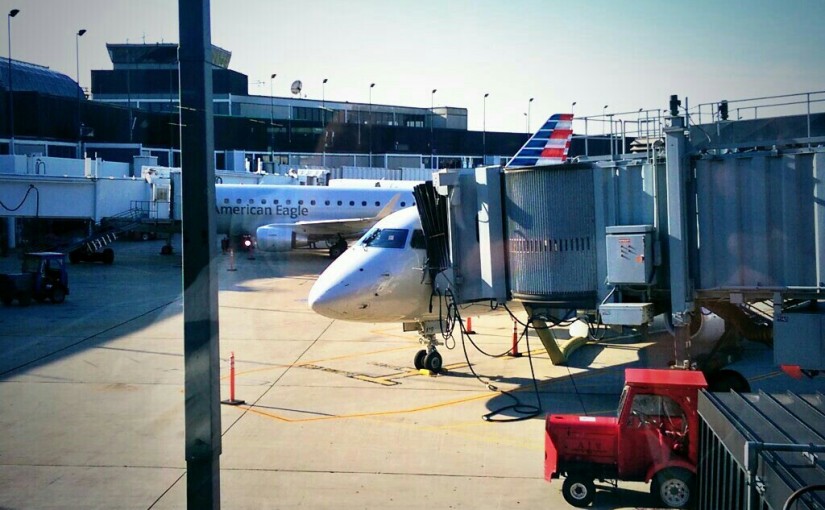
    Plane is here; no mechanics in sight. Do I feel lucky?
    Plane is here; no mechanics in sight. Do I feel lucky?

    Even though the weather hasn’t been bad this summer, I’ve endured a rash of flight cancellations. Digging deeper, it’s been regional jets operated by small airline “partners” that’s causing me grief. Service to mid-sized cities has moved to regional jets, making travel to these cities more problematic. Traveling to China or India can catch US travelers by surprise with their visa requirements. We also talk about how fast airlines respond to Twitter messages, airport “wall huggers”, carry-on luggage throwback, and I haven’t flipped through a Skymall magazine in months. All this and more  at the direct link to the podcast file or listening to it right here by clicking on the arrow below.


    Here are the transcript of TravelCommons podcast #110:

    • Intro music — Warmth by Makkina
    • Coming to you from the Sheraton Hotel on Canal St in New Orleans. I have a room looking over the French Quarter. It’s a big convention hotel — not my usual choice. But the price is good, it has a great gym and I’m about 5 stays away from making Starwood Platinum, so what the heck.
    • I’m back to my usual commute — Chicago to New Orleans — after taking a quick jaunt out to LA last week. It is that time of year on the Gulf Coast when the weather gets a bit monotonous — high of 91 degrees with a chance of afternoon thunderstorms. Repeat until Labor Day. But the thunderstorms are tending to be earlier than last year when they seemed to roll in about 4:30 — right about the time when the inbound plane for my flight back to Chicago would be scheduled to arrive. While my flights home still aren’t arriving on time, I haven’t hit the big 2-4 hour downpour delays I would get last year. Not killing as much time in the airport bars, but I always appreciate New Orleans airport letting me to take me beer to the gate.
    • Bridge Music — Gargantua by Admiral Bob (c) copyright 2014 Licensed under a Creative Commons Attribution Noncommercial (3.0) license. http://dig.ccmixter.org/files/admiralbob77/46361 Ft: My Free Mickey, Martijn de Boer

    Following Up

    • Flying through LAX last week reminded me of what a dump that airport is — or I guess I should say key parts of it. Flying out of there last Thursday morning, it took me a half-hour in the Hertz bus to get to the United terminal — P7 — because of access road traffic which is driven by this odd concept of a bunch of little terminals arranged in a U around short term parking garages. No problem is you’re flying Southwest in P1; really lousy if you’re going out American in P5 or United in P6 or P7. Annoying, but it gets really dumpy when you get inside. There’s not enough room in each of the little terminals to properly handle post-9/11 security, so small security stations are dotted over the terminals with lines snaking down the corridors. Given that LAX is a major gateway to international traffic from Asia, it’s fair to compare LAX to Singapore and Beijing — much newer airports, yes, but the LAX experience ends up looking like the 4th circle of Hell comparatively. Can’t be a great thing for the US tourism industry.
    • In the last episode, I updated my thoughts on using Twitter as a concierge service, or at least another way into airlines’ customer service groups. A couple of weeks back, the Wall Street Journal had a good article about airlines’ use of Twitter. They had an interesting graphic showing the differences in response times between airlines. American Airlines was the top, responding to 80% of customer queries within 15 minutes and 99% within an hour. KLM, which has made a big push into social media, was much lower, responding to 12% within 15 minutes, 64% within an hour, taking a full day to get up to 99%. Of course, as we talked about last time, it’s one thing to quickly press the button on a canned responses like United’s ubiquitous “No one dislikes delays more than us”, it’s a whole other thing to do something meaningful. Check out the detailed show notes on the TravelCommons web site for a link to the article.
    • Also in the last episode, I mentioned my big technology switch — from my iPhone 5 to an HTC One. The main reason for the switch was battery life. I got tired of being psychotic about battery life — stalking airport gate areas for an outlet so I could top off my battery before getting on the plane. Last month, Samsung Mobile captured that hassle perfectly in a video about “wall huggers”. It’s on YouTube — I put the link in the show notes. Check it out. It’s painfully close to my reality with the iPhone. But not with the HTC One. The battery life is great, even with the larger screen.
    • One thing that has bitten me recently with that change is the Android version of American Airlines’ app. I always use the phone apps for boarding passes — one less piece of paper to keep track of, one less line to stand in if I couldn’t print it at home. I’ve never had a problem until a couple of months ago. I was boarding a flight to New Orleans, put my phone on the reader, heard the beep, the gate agent waved me through, and I sat in my seat. A bit later during the boarding process, I looked at my screen again and saw that the app had refreshed and no longer showed a seat number on the boarding pass. Hmmm, that doesn’t seem good. And I was right. Somehow, my boarding must not have registered and so, 10 minutes before the flight, they flushed me as a no-show and gave my seat to a stand-by passenger. Unfortunately for her, I was in my seat, but because I didn’t have a paper boarding pass, I couldn’t prove that it was my seat. Lucky for me, the gate agent remembered me — it was a small regional jet –and said “Oh, this happens a lot”. I kept the seat, but the flight was delayed about 15 minutes while they figured it all out. I never had that happen with American’s iPhone app, but then again, it hasn’t happened since on the Android app. Maybe they fixed in in out of the updates they pushed out, but I usually grab a paper boarding pass on American when I have the time.
    • And I don’t know about you all, but I haven’t looked at Skymall or any of the other seat back pocket air magazines since the FAA allowed use of tablets & smartphones during takeoffs and landings. I always have a book or two on my tablet — right now I’m pounding through “The War that Ended Peace”, Margaret MacMillian’s history of the lead up to World War I. I also download the daily edition of the Chicago Tribune — they have an HTML5 web app that shows you each page of the physical paper; you then tap an article to read it. The app is pretty good, sometimes a bit fiddly, but it lets you download the content for offline reading — perfect for a flight. The Wall Street Journal’s Android app used to let you do the same thing and so I’d read that too, but earlier this year they “upgraded” the app and took away the ability to download a day’s paper. Still trying to think how they qualified that as an upgrade.
    • I saw a guy come onto a flight last week with a hanging suit bag. Wow! That was a throwback. Even the flight attendant looked at him kinda funny when he asked to hang it in the front closet. Which was a very typical thing — in the ‘90’s. You’d angle for early boarding so you had a chance for hanging space in the front closet. You see guys pushing all the bags to one end so he could fit his in — not even really needing to hang it; just staying put from the pressure of the other bags. The whole business casual trend expanded the fight — moving it out of the front galley to the entire plane aisle with rolling bags. I can’t remember the last time I used a hanging bag. I have my cleaners fold my shirts so they’re easy to pack, and then I use them (with their cardboard inserts) to cushion the folds of my slacks so they don’t wrinkle. Even on those rare occasions when I wear a suit, I fold it and put it in my rolling bag. It’s certainly a lot easier on the shoulder and back. And just a lot less awkward. I could never figure out a really good way to carry gym shoes in my hanging bag.
    • And if you have any travel experiences — technology or otherwise, or just general observations, thoughts, questions, a story, a comment, a travel tip – the voice of the traveler, send it along. The e-mail address is comments@travelcommons.com — you can use your smartphone to record and send in an audio comment; send a Twitter message to @mpeacock, or you can post your thoughts on the TravelCommons’ Facebook page — or you can always go old-school and post your thoughts on the web site at TravelCommons.com.
    • Bridge Music — A Foolish Game by Zep Hurme (c) copyright 2014 Licensed under a Creative Commons Attribution (3.0) license. http://ccmixter.org/files/zep_hurme/46448

     Regional Jets Are Ruining My Life

    • One Wednesday afternoon in June, I had a particularly difficult time getting from Memphis to New Orleans. First, I felt my phone vibrate with multiple text messages while I was refueling my rental car at a particularly dicey gas station just north of the airport. I had a pretty good idea what was up — United and TripIt were simultaneously notifying me that my flight was cancelled. I got on the phone to Amex. They were able to jam me onto a full US Air flight to Charlotte with a connection back to New Orleans. Bit of a zig zag, but OK. I returned the rental car. Just as I pulled my boarding pass out of the kiosk, I saw them update my flight — 2 hr maintenance delay. Which would mean I’d miss the connection. I go up to the desk. Two agents — one from USAir, one from American (I’m seeing the New American form right in front of me) — bang on their terminal for a couple of minutes. “OK, we’ll put you in first class to DFW where you’ll connect to New Orleans” Great — better routing with an upgrade to boot! I get to the gate. A colleague calls me. As we’re talking, I see them post a 2 hr delay — weather in Texas — which means I’d have 15 min for my connection if everything worked perfectly. Which it wasn’t going to because a delay with a round number — like 2 hrs — means they have no idea when the plane will actually leave
    • That’s it! I give! Three airlines fail me in the span of 60 minutes. I can take a hint. I wasn’t meant to fly to New Orleans today. However, I did need to get there. So I fired up Google Maps. 5½ hour drive. Fine. I have nothing else going on tonight. I load the Hertz app, book a car, and walk back out of the terminal.
    • I drive to the river front to get a decent dinner — the food quality in Memphis airport, like the flight selection, have cratered since Delta shut down its hub operations there. While eating at the bar, I get the text from American — the DFW flight cancelled. Now there’s a surprise.
    • The drive to New Orleans to simple, straightforward — and dull. I-55 south through Mississippi, into Louisiana until it dead ends into I-10. Take a left. You’re in New Orleans. At least that was the plan. South of Jackson, traffic comes to a complete halt. People are getting out of their cars — never a good sign. I get out, look around an 18-wheeler and see a 10-ft column of fire. This is not a good sign. I-55 here is 2 lanes each way with a narrow shoulder. They’re not squeezing us past that. Eventually, after making an 8-point turn, I join a line of cars heading the back north along the shoulder — one tire on the pavement, one tire in the wet red clay. After 10 minutes, I get to a gravel crossover that I don’t think will bottom out my rental Ford. I hit the frontage road, bypass the burning car, get back on a now empty I-55 and eventually pull into my hotel at 2am. Another glorious day of travel that I’m sure will inspire envy in all my Facebook friends.
    • Now Memphis seems to be an extreme example — a woman on my project is commuting weekly from New York and she’s yet to have an on-time, no-drama journey. Indeed, she’s spent a Thursday night in every Midwest hub city. But as airlines close hub operations in mid-size cities like Memphis and Cleveland, replacing mainline service with regional jets from smaller operators you’ve never heard — ExpressJet or Endeavour Air — getting to and from these cities just sucks.
    • At first, I thought it was a United problem. After all, they’d canceled my flight down to New Orleans day before, and then the next week, they delayed my flight to Columbus, OH 2 hours because the flight before it was late getting off the gate, and then once our plane got to the gate, it needed to have a wheel bearing fixed before it could travel on. I mean, at some point, why does United bother posting actual departure and arrival times? Why not just post an AM or a PM and shoot for that? It’s not too far from what they’re doing now.
    • But as I looked at the flights that were really screwing up my life, they weren’t the main United or American or Delta flights, they were the regional jets. My United flights to and from LAX last week were fine. But if I’d been flying a regional jet, I would’ve had a problem on the return leg. The original plane had a mechanical issue — remember, this is United — but they were able to get a replacement, so we left LAX on time and even got into ORD early. If it had been United Express by, say, GoJet, I would’ve been scrambling after yet another cancelled flight because they don’t have spare jets.
    • I’m 5,000 miles away from hitting a million miles on United (I have over 2.5 million on American), but sitting at the bar that night in Memphis having dinner before my ill-fated drive, I tweeted out of pure frustration — “Really @united? Two cancelled flights in two days? I’ll never hit 1M miles when you cancel every flight I’m on…” To which, of course, they pressed the button on reply #76 — “No one dislikes flight cancellations more than we do. Do you need help with rebooking? Thanks.” My response the next morning — “Unless you too had to drive 5+ hrs and get to your destination at 2am, you can’t hate flight cancellations more than me…” No response… except from Dan, a longtime TravelCommons listener who chimed in — “Sounds like an upcoming podcast topic”. Indeed it is, Dan. Some good had to come of it…
    • Bridge Music — Melt Away by Kara Square (c) copyright 2014 Licensed under a Creative Commons Attribution Noncommercial (3.0) license. http://ccmixter.org/files/mindmapthat/46605

    Visas Hassles

    • Over the past couple of episodes I’ve been talking about my Asian travels — to India and China — which has forced me to become knowledgeable about something that doesn’t often affect US travelers — visas.
    • When US travelers decide to cross their border, if they have a passport, they’re typically good to go. When I checked Wikipedia yesterday, US passport holders can visit 174 countries without having to buy a visa in advance, tied at the top of the “travel freedom” ranking with Germany, Sweden, United Kingdom, and Finland.
    • But this seemed to be the year for visas for me. My son doing a semester abroad in China, then us visiting him in the Spring, and then me going to India on business a couple of months ago. I just slipped out of another trip to China — business this time, but I figured I’d risk it since my tourist visa is valid until next Spring.
    • If you live in a major city — New York, DC, LA, Chicago — it’s not too bad because most of the big visa-requiring countries have consulates there. Otherwise, you’re mailing your passport away, or paying extra for a courier service. And paying to fly to the consulate for an interview if you don’t have a plain vanilla visa application — like anyone of Pakistani descent applying for an Indian visa.
    • But even walking to the consulates, like I can do in Chicago, is not always so straightforward. Research is important. Hitting the consulate web site, know their hours and what paperwork they require. Our visit for my son’s Chinese student visa was amazingly smooth. We had all the paperwork, had it organized, knew the consulate closed for lunch, so we showed up early. Boom, boom, boom — we were in and out in 30 minutes. Four days later, we went back, paid, and picked up his passport with his visa.
    • Getting visas for our visit to Beijing in March was less smooth. There was a little hiccup in the application. Their website said we needed proof of a return flight and hotel reservations. I had all that, all organized. But what wasn’t clear on the website was that I needed a copy for each visa. I’d printed out one copy of the hotel reservation for the one room that the three of us were staying in. I needed three copies — one for each application. I’m not the first one who’d made that mistake. The woman pointed to the copying machine. Luckily, I had a pocket full of change.
    • Picking them up was also a bit more of a hassle. First, because it was Spring Break season, there were a number of teachers picking up batches of passports for school trips. I think the guy two positions in front of me had 50 passports. A minor inconvenience — until their credit card machine broke. The web site was adamant — no personal checks, no cash accepted; just credit cards or cashier’s checks. And how many people know where to get a cashiers check anymore. So everything came to a screeching halt. “We’ll take cash if you have it,” one of the women said. But I didn’t bring any because it’s $140 a head — $420 for all of us. I look at my watch — it’s just about closing time. I ask the guard, “Will you let me back in if I make a run down to the ATM for some cash?” “Make it quick,” he said. I sprint down, around the corner, tap out the cash machine, and sprint back up. The guard lets me back in even though he’d locked the doors for the day. Everyone’s sorta milling around, not knowing what to do. The guy who had been in front of me was there to pick up 10 visas. No way he was coming up with $1,400 in cash quickly. I politely make my way to the window. “Cash?” I ask, giving her the fresh stack of ATM 20’s. She counts them twice, gives me my passports and I’m on my way.
    • But this was nothing compared to the cluster that was the Indian visa process. Which was a real surprise to me because four years ago, when I went for my last Indian visa, it was the pinnacle of efficiency — I dropped everything off at 8am and at 5pm received a text that my passport was ready for pickup. Impressive. Phenomenal. I used to rave about it. Not so much any more.
    • But based on last time, I thought this would be simple. I put all the documents together and, because I was traveling, had my wife take it downtown for me. “No worries,” I said, “Drop it off, do some shopping, grab lunch, and it should be done”. 10am my wife calls me — “They need your flight reservations”. “I haven’t made them yet,” I told her, “They specifically say on their website not to book flights until you get the visa.” “Hold on,” she said and talked to the clerk. “Yeah, I guess things have changed. She’ll hold onto your application until you e-mail her your flight info. Oh, and she’s going to charge you another $30 for an expedite fee.” “Wait,” I said, “according to the website, I’m OK on their deadlines — I shouldn’t need them to expedite.” “Hold on,” she said again. “Yeah, I guess those deadlines have changed too.” Unfortunately, I was only able to get a 1 year visa. If this visa expires before my next trip, I think I’ll send one of my staff in my place. I think I need to introduce some other Americans to the fine art of applying for visas.

    Closing

    • Closing music — iTunes link to Pictures of You by Evangeline
    • OK, that’s it, that’s the end of TravelCommons podcast #110
    • I hope you all enjoyed this podcast and I hope you decide to stay subscribed.
    • Bridge music from cc:Mixter
    • If you have a story, thought, comment, gripe – the voice of the traveler — send ‘em along, text or audio file, to comments@travelcommons.com or to @mpeacock on Twitter, or post them on our website at travelcommons.com. Thanks to everyone who has taken the time to send in e-mails, Tweets and post comments on the website
    • Follow me on Twitter
    • “Like” the TravelCommons fan page on Facebook
    • Direct link to the show
  • Podcast #79 – Skipping Rental Cars, WiFi or 3G?

    Coming to you today from the TravelCommons studios outside of Chicago, Illinois at the end of one of those travel weeks where I lost control of my schedule – DC to Dallas to Houston to LA. In this episode, we talk about the problems with LAX security, my choices for white noise when I’m trying to sleep on an airplane, and the reasons why I’m skipping rental cars. I also talk with Boingo WiFi about the choices frequent travelers are making in going wireless. Here’s a direct link to the podcast file.


    Here are the transcript from TravelCommons podcast #79:

    • Intro music — Warmth by Makkina
    • Coming to you today from the TravelCommons studios outside of Chicago, Illinois, at the end of one of those travel weeks where I lost control of my schedule – the 6am flight to DC on Monday, the 6:30am flight to Houston on Tuesday by way of Dallas, the 6:30pm flight to LA, and then, refusing to take the red-eye, returning home Friday afternoon. Makes next week’s 4 days in Washington seem like a cake walk.
    • Seems like I’m getting more of those.Two weeks ago, my travel week was Monday in Stamford, CT; Tuesday in Providence, RI; Wednesday in Philadelphia; Thursday back in Chicago, and then Friday in San Diego, returning at 6:30am Saturday courtesy of the red eye. I used to be able to sleep on red eyes, but not so much anymore. And with a flight time between LAX and ORD of less than 4 hrs, there’s not a lot of time for sleep – even after scoring a first class upgrade. I was pretty worthless on Saturday – I went straight to bed after getting home and then took a nap later in the afternoon. The red-eye is false economy – I’m not saving time; just snowplowing the problem into the next day. Hence, my lack of enthusiasm for another red-eye this week.
    • I will say this, though. With winter coming in Chicago, I’m starting to look around for strategically located clients – Miami, Phoenix, LA. There are times when travel does have its rewards.
    • Bridge Music — You Are The Reason by C. Layne

    Following Up

    • Robert Fenerty dropped us a line giving his point-of-view on many of the things covered in the last TravelCommons episode:
      • Mark, aboard a flight to Prague, and with 5 weeks of international travel ahead of me, I’m also peering ahead to Thanksgiving. On the other hand, I’ll soon have United 1k status and am looking forward to seeing Versailles, Madrid, and the Dominican Republic. As for keeping touch with my family, I really enjoy giving people a “Skype tour” of my hotel room. I find that the wet running clothes or the ironing board next to the TV provide an easy segue to the events of the day. I’m lucky enough to have a client that pays for resort hotels, so there’s usually something interesting to see and talk about. That could be a dinner plate-sized showerhead or a view of a golf course.
      • As for losing things and making mistakes, my weakness is at the moments of transition. As I leave the car to enter the shuttle, my mind is racing ahead to claim check, the coupon, the passport, and the luggage in the trunk. But not the headlights, which I’ve left on. Perhaps the answer is to pause, consider the requirements of the moment, and not the future. Incidentally, the parking attendant who jumped my car told me about a Prius that idled on and off in their parking lot for a week before running out of gas.
    • Bob, thanks for the note. Reading your itinerary — Versailles, Madrid, and the Dominican Republic – I get a bit jealous. But then I recall times when I had trip itineraries of Paris, London, Dublin, Zurich and other folks would say “Oh, that’s so glamorous”, but the reality was that I was spending my days in Paris, London, Dublin, and Zurich in conference rooms that looked very much like conference rooms in Cleveland, Nashville, Indianapolis, and Atlanta – except with different brands of bottled water and no air-conditioning. Of course, I’m hoping Robert is doing a much better job of work-life balance than I did.
    • Leo Vegoda “@-signed” me on a Tweet from Seoul’s Inchon airport. Leo wrote – “Check in & security at ICN a breeze. Noodles and beancurd delicious. LAX are you listening?”
    • I was thinking about this when I walked into LAX Friday morning for my flight back to Chicago. The lines in Terminal 7 were a zoo at all the screening stations. It looked like a number of Japanese and Mexican tourists weren’t completely clear on the TSA’s 3-1-1 liquid carry-on limits. I saw 1 TSA screener fill an entire gray bin with liquids – toothpaste, shampoo, water bottle, sour cream (?) – from one family. Another woman kept unlocking and relocking her pink rolling bag to pull things out – first, her PC, then a bottle of water, then a jar of honey (?). It was not pretty.
    • Of course, a big part of this is LAX with all its little terminals hanging off the access road, and none of them with enough real estate to house a proper screening set up.
    • Walking into this, I took a deep breath – I wasn’t tight on time, but shuffling through security lines wasn’t the way I wanted to start the day. Sometimes when the main floor of Terminal 7 is bad, I’ll go up to the screening station on the bridge over from the parking garage. I went to ask Airserv women – the contractors at the start of the line checking boarding passes – if that line was any shorter and she spotted the Global Services mark on my United boarding pass and said “But you’re Global Services so you don’t have to worry about that.” She took my boarding pass and driver’s license, walked me past all the lines, dropped the line tape, gave my boarding pass to the TSA guy and escorted me right to an X-ray machine. It was the ultimate – and very timely – line cut. No noodles and beancurd like Leo had (a bit too early for that), but it did give me time to grab a cappuccino before getting on my flight home. And reinforced, once again, the value of being “super elite”
    • I’ve talked in past podcasts about using white noise applications to drown out the cabin noise that my Bose noise-canceling headphones don’t cover. I use a couple of applications on my iPhone – White Noise and Naturespace. White Noise was the first one I used – I liked their Amazon rain forest.
    • But then I flipped over to Naturespace because I thought the stereo quality, “aural spacing” of the sound in the headphones was a good bit better. But now I’m back to White Noise after the latest upgrade because I really like one of the new sounds – the Tibetan Singing Bowl.
    • Maybe it’s just me, but this is the perfect white noise for me. Others I’ve played it for thought it sounded like a huge swarm of mosquitoes, but it’s come in very handy on the string of 6am Monday morning flights I recently had.
    • And just a quick note, for those of you who check out the show notes, I’ve switched over from summary bullet points to more of a transcript. It’s a lot more words, but actually a good bit easier for me. Since the show is usually just me talking – as opposed to many other shows that are interviews or conversations among multiple hosts – I script out a good bit of my show. That may be disappointing to those who thought I was naturally this glib, but it saves me a lot of post-production time – editing out ums, ahs, and narrative dead-ends. Since I have the script, I figured that copy-pasting it is easier than trying to summarize it – sort of the show notes version of Mark Twain’s “I’d have written a shorter letter if I had the time”. So anyhow, starting with TravelCommons #78, you can wade through the gory details of each show by clicking through the “Read the rest of this entry” to the show notes page.
    • If you have a question, a story, a comment – the voice of the traveler, send it along. The e-mail address is comments@travelcommons.com, you can send me a Twitter message at @mpeacock, or you can post them on the web site at travelcommons.com.
    • Bridge Music — Fire In The Day’s Field by the Seldon Plan

    Skipping the Rental Car

    • Two weeks ago, I had to get from downtown Washington DC to a Northern Virginia suburb for a client dinner. I looked at the Metro map, rang up some car services, but finally gritted my teeth and rented a car. That’s pretty much my attitude toward car rentals these days — the choice of last resort. It wasn’t always this way. But with cost and fee increases, shrinking fleets, and more inconvenient locations, I work hard to skip the rental car counter.
    • The biggest issue is cost. Rental car prices have soared — increasing an average of 60-70% over last year. But prices are just part of the story. Additional fees and taxes can add another 50% to the number that finally hits your credit card. The concession recovery fee that airports and train stations charge is usually one of the bigger charges. Avis hit me with 11.11% concession recovery fees on recent trips through Seattle-Tacoma and LAX airports, and a 10% fee for renting at Philadelphia’s 30th Street train station. Picking up the car in town doesn’t always dodge this fee. Hertz leveled a 13% concession recovery fee on a rental from the San Francisco Marriott hotel. On top of that, the rental companies add on a customer facility charge, a vehicle licensing fee, and an energy recovery fee. And then the state and local governments’ turn. My Sea-Tac rental receipt shows a 9.5% sales tax plus a 9.7% rental tax. California adds 3.5% tourism assessment fee. My Philadelphia rental had 4% passenger car rental tax (split between the state and the city) plus a $2/day state surcharge. Just across these four examples, fees and taxes added 27-51% to the final cost of my rental.
    • Another problem is being able to get a car. The easiest way for rental car companies to make more money is to increase each car’s utilization — the number of days it’s rented. Makes sense, but when demand for cars increases just a bit, the pickings start to get slim. Last month, I flew from LAX to Washington-Dulles and planned to rent a car because it would be a bit cheaper than the round-trip cost of a cab to/from DC. I landed at Dulles around midnight. Wheeling my bag across the empty Avis Preferred parking spaces, I saw a huge Ford F150 4×4 King Cab pick-up truck. ”They can’t be serious,” I thought. Oh yes, they were — that was their idea of the intermediate size car I had requested. This wasn’t going to fit in a parking garage in downtown DC. I walked back to the rental bus and asked the driver to take me to the taxi line.
    • Of course, the drive back to the airport taxi line wasn’t a short one because airport authorities have been aggressively relocating rental car companies to “improved” consolidated facilities that are a 15-20 minute drive from the airport. Frequent travelers work hard to reduce the time spent getting from one point to another — maintaining airline status so they can use the short security line, carrying on their bags so they don’t have to wait by the luggage carousel. Renting a car used to be a quick transaction — walk off the plane, across to the parking lot, and into your rental car. It’s still that way at smaller airports like Nashville and Little Rock, but at airports like Cleveland, Baltimore-Washington, and Phoenix, you need to pack a lunch.
    • I used to enjoy renting cars. Now, I avoid it. Hikes in prices and fees have made taxis and private car services more competitive, and moves to push rental lots way off property have made the alternatives a lot more convenient. Last year, at the tipping point where the cost of rental car was the same or maybe even a bit more than the cost of a taxi, I’d take the rental car. I enjoyed the flexibility of having a car, and even looked forward to finding a fun car in the Avis lot or under the Hertz Gold canopy. Now, I’ll pay extra to avoid them. While I work every year to make sure I keep my Marriott Platinum status, I fell out of Hertz’s President’s Circle without a care.
    • Bridge Music — White Oak by Fernwood

    The Best Way to Drop Wires

    • Working in airplanes, airports, hotels, Starbucks, and the back seats of taxis, frequent travelers are always trying to figure out the best way to work wirelessly.
    • This week, Boingo introduced an app on the BlackBerry platform for its WiFi service. At first, I didn’t think much of it, but then I got thinking – why would I want WiFi if I have 3G? I see more and more 3G modems hanging off of laptops. Is WiFi fading out?
    • I spoke with Christian Gunning of Boingo and asked him just this question as I was sitting in Houston-Hobby airport waiting for my flight to LA
    • “It’s not an either/or,” he said, “the two technologies are complimentary.” In high-traffic/high-“loiter” areas like airports, 3G cells get maxed out by people entertaining themselves with streaming multimedia. While one cell can handle 600 voice calls, data quickly consumes those slots, pushing the capacity down to 50-80 calls. Moving that streaming data over to a Boingo WiFi hot spot gives much better throughput.
    • Makes sense, but what about the cost? I can get a 3G mobile plan from AT&T or Verizon for $60/month. I can get close to that in a couple of days with WiFi – paying $10 for a day pass in the airport, another $10 at Starbucks, and then another $10 in the hotel at night.
    • Christian pointed out that Boingo’s monthly WiFi plan costs $10 for unlimited bandwidth – as compared to the 5GB caps typical for 3G modems –covers 58 airports, Starbucks, McDonald’s, and many hotels. Their smartphone plan – for iPhones and Blackberries – is 2 bucks cheaper. And as they continue to sign reciprocal agreements with other network companies, their coverage expands.
    • He makes a compelling case for the continued relevance of WiFi – it’s built into every recent laptop, its higher bandwidth is better for multimedia, and the performance isn’t as variable as 3G.
    • My cut at it is – unfortunately, a frequent traveler needs both. WiFi is great when you’re sitting in an airport or in a Starbucks; it’s no good when you’re inside the airplane waiting to take off or in long cab ride – because you’ve sworn off rental cars – or in a hotel with lousy broadband, because it’s not just 3G cells that can get flooded with streaming videos of , uh, artistic content.

    Closing

    • Closing music — iTunes link to iconPictures of You by Evangeline
    • OK, that’s it, that’s the end of TravelCommons podcast #79
    • I hope you all enjoyed this podcast and I hope you decide to stay subscribed.
    • The bridge music is from Magnatune, the we are not evil label. You Are the Reason by C Layne, Fire in the Day’s Field by the Seldon Plan, and White Oak by Fernwood. You can find these and more at magnatunes.com.
    • If you have a story, thought, comment, gripe – the voice of the traveler — send ‘em along, text or MP3 file, to comments@travelcommons.com or to @mpeacock on Twitter, or post them on our website at travelcommons.com. Thanks to everyone who has taken the time to send in e-mails, Tweets and post comments on the website
    • Follow me on Twitter
    • Direct link to the show