Tag: Ride Sharing

  • Podcast #176 — Why Business Travel Is Coming Back; Learning Airport History

    Podcast #176 — Why Business Travel Is Coming Back; Learning Airport History

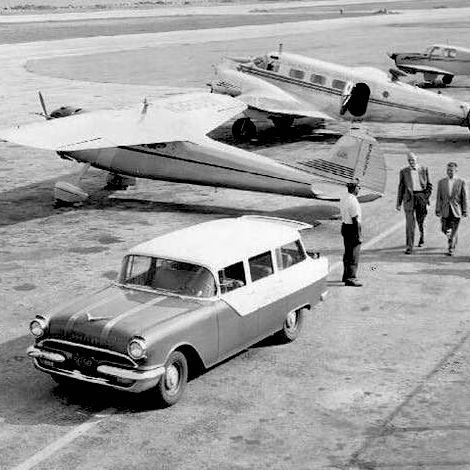
    Old cars and planes on a runway
    Where’d the Racetrack Go?

    Business travelers are getting itchy. They know Zoom calls can’t replace a face-to-face meeting, but they can’t meet with people who aren’t in their offices yet. We also talk about how surprisingly great the LaGuardia Terminal B renovation is, and then talk about airport history with Professor Janet Bednarek, professor of history at University of Dayton. All this and more – click here to download the podcast file, go up to the Subscribe section in the top menu bar to subscribe on your favorite site, or listen right here by clicking on the arrow on the player.

    Here is the transcript of TravelCommons podcast #176:

    This Week

    • Intro music — Warmth by Makkina
    • Coming to you again from the TravelCommons studio as Chicago and the state of Illinois completely reopen for business — no more capacity limits, no more socially distanced sitting — just in time for the summer music festival season. No capacity limits, but you have to show proof of vaccination or a negative COVID test to stand shoulder-to-shoulder with 100,000 other music fans. Irene and I did that one year, check — don’t need to do it again. I think I aged out of that demographic — back in the ‘90’s. 
    • Since the last episode, I first flew down to Miami on business, and then over to New York City for a long weekend. Miami is always an interesting business destination; it’s got its own unique vibe. It starts at the airport; officially bilingual — Spanish and English, in that order — but it seems half the time when they make PA announcements, they just skip the English version. The client’s office was in the Wynwood Art District. It was my first time in this neighborhood; it had a kinda typical newly gentrified vibe — lots of first generation food places: an upscale doughnut shop, a poké lunch joint, a couple of microbrewery taprooms (always key for me). What wasn’t typical was the amount of wall art; not graffiti as much as very cool murals and street art, giving the neighborhood a bright, colorful vibe while probably painting over some otherwise dire looking buildings.
    • I stayed a few miles south in the Marriott on Biscayne Bay where some combination of my status and patience with a front desk trainee trying to solo on the property management system for the first time earned me a top floor bayside room looking out over the Port of Miami cruise terminal with 4 big cruise ships tied up, waiting for the CDC to drop their cruise ban.
    • One morning, when it felt the humidity had dipped below 80%, I decided to skip Uber and ride a Lyft scooter up to the Art District. I’ve talked, in past episodes, how much I like riding scooters. I’ve ridden scooters in Chicago, Phoenix, DC — everywhere I could find them. But last year, I didn’t ride them even though they were all around Chicago. There’s a fun, frivolous vibe about riding a scooter, but 2020 was anything but fun or frivolous and so I didn’t feel like riding them. But on this morning, with just a touch of humidity in the air and not much traffic on the streets, having a little fun riding a scooter to the office felt, once more, like the right thing to do.
    • Bridge Music — You are (funky mix) by Zapac.

    Following Up

    • Talking in the last episode about needing to rebuild atrophied travel muscles after the long lockdown layoff generated a few comments. Chris Christensen of the Amateur Traveler Podcast dropped me a note saying:
      • I can relate. We just got back from our first post vaccine trip to the Galapagos. First time on a plane since 2019.
    • First trip back and you go to the Galapagos! No warm-ups? Hope you didn’t sprain any of those travel muscles.
    • Jim McDonough’s first trip back wasn’t simple either. He wrote on the TravelCommons Facebook page
      • Last month, we made our first trip since January, 2020 to Kodiak, Alaska of all places, attending the decommissioning of a ship I helped the Coast Guard put into commission in 1971. San Diego to Alaska is a long way. Alaska Airlines is really nice. But I noticed my travel skills had atrophied.  Approaching TSA, I realized that the red mesh bag I usually have for holding metal objects wasn’t in my bag. Then I sat for a while at a gate in Anchorage until remembering that Admiral’s Club members can use Alaska’s lounge. I’m ready to go again, but probably not to Kodiak!
    • Kudos to both of you guys for jumping straight into the deep-end. But you gotta be careful — weak travel muscles can make you vulnerable. A few days ago, I re-tweeted a thread about a phishing attack — a very well-formatted “make sure your TSA Precheck doesn’t expire — click here” e-mail with a link that, as you can imagine, didn’t take you to tsa.gov; though Aaron Woodin did tweet back the question “If you click on the link, does it confiscate your water?” It’s a well-timed phish, especially as more business travelers are gearing up to get back on the road. 
    • And in the last episode, I talked about Irene and Claire losing track of their Global Entry expiration dates — Claire’s expired and Irene hit the “renew” button on the last day. Now you may think — Global Entry? Big deal, who’s traveling internationally right now anyhow? But remember, for $100 for 5 years, Global Entry gives you the express lane thru immigration plus TSA PreCheck, vs. $85 for PreCheck alone. Hence I always tell people to spend the extra $15 for Global Entry. So anyhow, Irene and Claire fill out the on-line renewal form, pay the $100 (which Irene immediately got back because she used my Amex Platinum card), and then nothing. Silence. Crickets. Which is odd, because when I renewed my Global Entry, I had to go to ORD for an interview and an updated photo. But for them, nothing. Our flight to New York, to LaGuardia is coming up. The night before we leave, Irene gets an e-mail — no link, mind you, just a message — “Congrats! Your Global Entry has been renewed.” Yay! Except that when she checked into Southwest, there’s no little blue PreCheck checkmark on her boarding pass. Claire got her Congrats! e-mail the next day, but again, no check on the boarding pass. Ugh. The prior week when I was in Miami, the non-PreCheck lines tailed back the length of the terminal. But, as it turned out, it wasn’t a huge hassle. We left a little earlier for MDW and no horror lines. Three days later when they checked in for our flight home, they both got the blue check on their boarding passes. So spinning my IT propeller, it would seem that the airlines aren’t pinging that PreCheck database more than once every couple of days.
    • This trip was the first time since January 2019 I’d flown into LGA in almost 28 months; that’s 2⅓ years. That shocked me; I had to go back and check my calendars and my math again, because it seemed like I was always in New York. But it’s right. Second shock — flying into the new rebuilt Terminal B, bright, airy, spacious, clean; everything the old Terminal B I flew into 2+ years ago was not. It was the low-ceilinged rat maze that, 7 years ago, then-Vice President Joe Biden said was like a third-world country — which I actually think was less of an insult to LGA and more of an insult to many developing country airports. Walking down that old concourse to catch an American or United flight, it was not unusual to have to dodge a big plastic garbage can placed right in the middle, that had a hose coming down from the bottom of a make-shift funnel made out of plastic tarp, hanging from some ceiling tiles, collecting rainwater from roof leak. No one would ever look at that and think “What the hell?” because you’d see it like once a month. But now, it’s phenomenal; they’ve done a great job. I used to say that SFO’s new Terminal 2 was my favorite terminal — where American and, back then, Virgin America flew out of. But now, it’s LGA’s Terminal B. There’s still construction going on, and getting a cab to the city is still a hassle, and a necessary one because there’s still no subway link, but once you’re inside, it’s great! Give yourself a little extra time to see the water fountain light show. And having a little downtime in Terminal B is no longer the purgatory it used to be, because there are now places that you actually sit down and eat and grab a beer; no more standing around having to juggle your bag and an Auntie Anne’s pretzel. I rarely have anything good to say about the Port Authority, but they’ve done a good job here.
    • And the TSA, another government organization I don’t often have good things to say about, does a nice job publishing the daily volumes of air passengers passing through security checkpoints. Just scanning it you can see the growth kicking up in the February/March timeframe. Though if you’ve flown anytime over the past couple of months, you don’t need to look at the numbers; you’ve felt it in fuller planes and longer checkpoint lines. The Friday of Memorial Day weekend, the end of May, checkpoint volume was up 599% over the same Friday last year, and then this past Friday, June 11, checkpoint volume broke 2 million for the first time since the March lockdowns. The numbers are still 25-30% below 2019’s, but the gap is closing. 
    • And then the keynote from Apple’s WorldWide Developers Conference gave me something else good to say about the TSA; working with Apple to let you use a digital version of your driver’s license at security checkpoints. I’ve already noticed that, at a few airports, you no longer have to show your boarding pass — they just pop your driver’s license into a scanning machine and you’re on your way. No fumbling to pull up your boarding pass and scanning it. But now, no fumbling for my wallet if I can pull up my license on my phone. Actually, better than my drivers license would be my Global Entry card because it’s Real ID while my Illinois license is not. Could save me an extra trip to the DMV if and when the TSA decides to get serious about Real ID again — which I hope is never. 
    • Continuing on our now 3-episode arc on Uber and Lyft service, the long wait times, the huge price surges. Heading out for my flight down to Miami, the 17-mile trip Monday morning Uber ride to ORD, at $74 with a 2x surge, cost almost as much as the 1,100-mile flight on American down to MIA at $100 one way. There is no rational way to explain this, so I’ll leave it here as a meditation exercise for microeconomic pricing theorists and move on. Except, ‘cause I guess I can’t just can’t leave it here, to note that I had no problem with Uber or Lyft service in Miami. And except for that one joyful morning riding a scooter, the South Florida heat and humidity had me lighting up the Uber app multiple times a day. So I’m guessing those Uber carjackings in Chicago a few months back are having some residual impact on their driver recruitment efforts.
    • Bridge Music — Two Guitars by Admiral Bob (c) copyright 2012 Licensed under a Creative Commons Attribution (3.0) license. http://dig.ccmixter.org/files/admiralbob77/35879 Ft: Haskel

    Why Business Travel Will Come Back

    • Last Friday, the first day of Chicago’s full reopening and the same day the TSA’s checkpoint volume broke the 2 million passenger mark for the first time post-lockdown, a business colleague and I met for some happy hour beers and oysters in a bar in Wrigleyville. We were sitting at a second floor table against an open window, looking over at Wrigley Field as fans poured out of the Clark-&-Addison main gate and into nearby bars to celebrate the Cubs’ victory over the St Louis Cardinals in what was the first full-capacity game since September 2019. Mike’s in consulting too; he’d been talking about how he was itching to get back out on the road to see his clients, on how he’s working to convince the firm’s management to lift, or at least bend their travel ban so he can see the clients again — at least the ones who also want to start meeting people face-to-face again. Zoom and Teams calls are OK, they can suffice for some things, but there are so many things you miss when you’re not there in person. 
    • In an outta-left-field sorta way, the masses of Cubs fans blocking traffic on Addison St helped prove Mike’s point. Official attendance was 35,112, not quite a sell-out, but having butts in 84% of the seats for a 1:20p Friday game isn’t bad. But similar to the “why travel to a meeting when you can video conference?” question, why go to a baseball game in person when you can watch it on TV where it’s covered by not just one crappy laptop camera, but 5-8 HD cameras with clean lenses and run by professionals? I know, it’s a stupid strawman question that we all know the answer to — it’s not just the game, it’s the whole experience. And it’s not an either/or — many times watching the game on TV is fine, and more convenient; but sometimes, you gotta get off the couch and go see the game live, in person, with a bunch of friends.
    • A couple of recent interactions(?) over the last couple of weeks drove this home. I’ve had multiple video calls with a programmer over the past month, probably 3-4 hour worth, going through some system re-architecting. After all that, I thought I had it pretty much down. Now the guy has started coming back to the office — he said working from home for 14 months was being under house arrest — so I pulled him into a conference room and started sketching stuff on a whiteboard. We stood there shoulder-to-shoulder and passed the blue marker back and forth, and in 20 minutes realized that there were 3 key facts about the existing systems that never came across in those hours of video calls and that completely changed the new architecture. But they did in that in-person 20 minutes. And afterwards, the guy said to me “Hey, that was fun. Let’s do some more of that” — a reaction I’ve never heard about a video conference… ever. And at the same time, I had the exact opposite experience — trying to explain a concept on a week’s worth of video calls that I know we could’ve handled in an hour if we could’ve been in the same room together, but we can’t because he’s overseas and can’t get through the US travel lockdown. So we trudged through the calls… and the frustration.
    • Which was pretty much the point that Mike was trying to make over honking buses and shouts of “Go Cubs Go”. “Yeah, I can have a meeting on Zoom, but I can’t have the pre-meeting ‘how are things going’ chats as we’re walking into the room, or the post-meeting ‘Can I ask you what you really meant in there’ sidebar, or pick up the non-verbal glances people will shoot at each other. The meeting’s important, but so’s the choreography that surrounds the meeting — maybe even more so — and that’s what I can’t get now. That and I’ve worked with a lot of these clients for 10, 15 years, so they’re friends too. And I miss that too.”
    • Airlines are saying that business travel is still down 70% from pre-lockdown levels, but that almost all of their top corporate accounts are telling them they plan to re-start travel later this year — but first they gotta figure out how to get people out of their sweats and back into the office.
    • Bridge Music — Garden Of The Forking by J.Lang (c) copyright 2009 Licensed under a Creative Commons Attribution Noncommercial (3.0) license. http://dig.ccmixter.org/files/djlang59/22228 Ft: Neurowaxx

    Learning the History of Airports

    • Back at the beginning of the year, back in episodes #172 and #173, I talked about a guy who lived on the secure side of ORD from October ‘til January because he was too afraid to fly. In researching this — what turned out to be not unique — situation, I came across an article written by Professor Janet Bednarek, Professor of History at University of Dayton. Her area of focus is on the history of airports in the US, which I thought would be a perfect topic for the TravelCommons podcast. So I sent her a Zoom invite, as one does these days, and had a great conversation about the history of airports.
      • Mark: Janet, the history of airports. How did you get into that? As a professor of history, you think — what am I going to focus on, the American Revolution, the Civil War, airports? Yes, airports! Perfect!
      • Janet: I originally trained as an urban historian focusing on city planning. But my first paid job was as a historian with the United States Air Force. And so I had to pick up aviation history, especially military aviation history. Then in 1992, my husband and I were moving to the Dayton area; my husband was an air force officer. This job came up at the University of Dayton if somebody could teach urban and aviation history. I began to think — where do those two things intersect? They intersect at the airport. And it was clear to me that not a lot of people had written about airports. And so I thought — wide open field, here we go. When they first talked about building airport, the planners talked a lot about how do we integrate them within the city. They were literally talking about the downtowns. And so if you go back to the 1920s, for example, You will see these fantastical schemes for building airports on top of bridges, on top of a ring of skyscrapers. Even in the 1930s, Norman Bel Geddes came up with an idea of an airport that was floating out in New York Harbor on an island.
      • Mark: Boris Johnson was trying to do that for London when he was the mayor there
      • Janet: On one case, you want to be as close in as possible, but there is the noise, there’s the danger. The other side of it is when airports actually started being built in the 1920’s and 1930’s, they’re being built largely by local interests and they’re interested in the cost, and the further you go out from the center, the lower the land costs are, but they would often try to find it on transportation lines that were already there. The Dayton Airport, for example, is not far from an intersection between what was the National Road Route 40 and the Dixie Highway. But the airport is not far from there and businessmen from Dayton knew to get there because there was a trap shooting club that operated literally right at the edge of the airport until a couple of decades ago. So they knew how to get there and where it was.
      • Mark: That’s interesting. I’ve got a gun range on a flight path of stuff coming in. Okay.
      • Janet: Yes. The Atlanta airport and several other places were where racetracks had been. You could drive there because, obviously, we had to drive there to race your cars around. So it was areas where there was already some accessibility but the land was cheap. Atlanta and I think Minneapolis-St Paul airports — there were race tracks there originally.
      • Mark: So if we pivot, what do we think about looking forward out in the future?
      • Janet: In the United States, building new airports is still extraordinarily difficult and finding the places for them would be very very difficult because, well, let’s think about Denver. They went out and they bought 50 square miles out in the middle of nowhere. Noise complaints went up after DIA opened up.
      • Mark: So you’ve got to wonder, I remember taking some of the first flights into DIA and you went over nothing other than a herd of buffalo. So were the buffalo complaining?
      • Janet: Yes, but it was people who had moved out to that area expecting peace and quiet and now airplanes were coming in there. There’s literally nowhere you could build an airport where there aren’t going to be some complaints about it.
      • Mark: Yes, in that way probably explains the multibillion dollar upgrade to LaGuardia and what they’re going to start at O’Hare, and what they did down in Atlanta with the runway extension.
      • Janet: Yes. Right, expanding and improving the airports that we have I think is what’s going to happen into the future. I mean, if you think about it in the United States, we built very few airports since the 1950s. Most commercial airports that exist in the United States were in place in one way or the other either as a private field or military field by World War II
      • Mark: That makes sense
      • Janet: Completely greenfield airports are relatively rare after World War II
      • Mark: I thought that LaGuardia in that new terminal had gotten security right. When you looked at the whole setup, that was really nice.
      • Janet: After 9 /11, airports had to wedge security in there. A lot of what airports have done since then has been trying to redesign themselves so that the security becomes a more convenient and seamless experience because right after 9/11, it was all improvised and it was wherever you could put it. And no one knew how long those security protocols we’re going to last. So who wants to spend millions of dollars redesigning? But now that it’s fairly clear that these security protocols are going to be forever now, within the last five or 10 years, I would say airports have begun to spend the real money to redesign so that the security fits.
      • Mark: It becomes integral as opposed to a bolt-on. And I think people are saying to themselves, look, it’s been 20 years, it’s about time security stops being an afterthought. Let’s face it, It’s an integral part of the experience.
      • Janet: Yes, Let’s start applying some lessons learned here.
      • Mark: Yes, because there are a lot of them. Thanks to Dr Janet Bednarek, Professor of History at the University of Dayton. Janet, thanks very much for taking the time to talk with us on the TravelCommons podcast.
      • Janet: My pleasure. Thank you for inviting me.

    Closing

    • Closing music — Pictures of You by Evangeline
    • OK, that’s it, that’s the end of TravelCommons podcast #176
    • I hope you all enjoyed the show and I hope you decide to stay subscribed.
    • You can find us and listen to us on all the main podcast sites — Apple Podcasts, Spotify, Stitcher, SoundCloud, Google Podcasts, and Amazon Music. Or you can also ask Alexa, Siri, or Google to play TravelCommons on your smart speakers. And across the bottom of each page on the web site, you’ll find links to the TravelCommons’ social  — Facebook, Twitter, Instagram, and the YouTube channel.
    • If you’re already subscribed, how ‘bout leaving us a review on one of the sites? Or better yet, tell someone about TravelCommons. That word-of-mouth thing; it’s really the only way to grow.
    • If you have a story, thought, comment, gripe – the voice of the traveler — send ‘em along, text or audio file, to comments@travelcommons.com or to @mpeacock on Twitter, or post them on the TravelCommons’ Facebook pageInstagram account,  or website at travelcommons.com. Thanks to everyone who has taken the time to send in e-mails, Tweets and post comments on the website
    • Follow me on Twitter
    • “Like” the TravelCommons Facebook page
    • Direct link to the show
  • Podcast #175 — How to Find Local Tour Guides; Rebuild Travel Muscles

    Podcast #175 — How to Find Local Tour Guides; Rebuild Travel Muscles

    Groups of people on a frozen lake
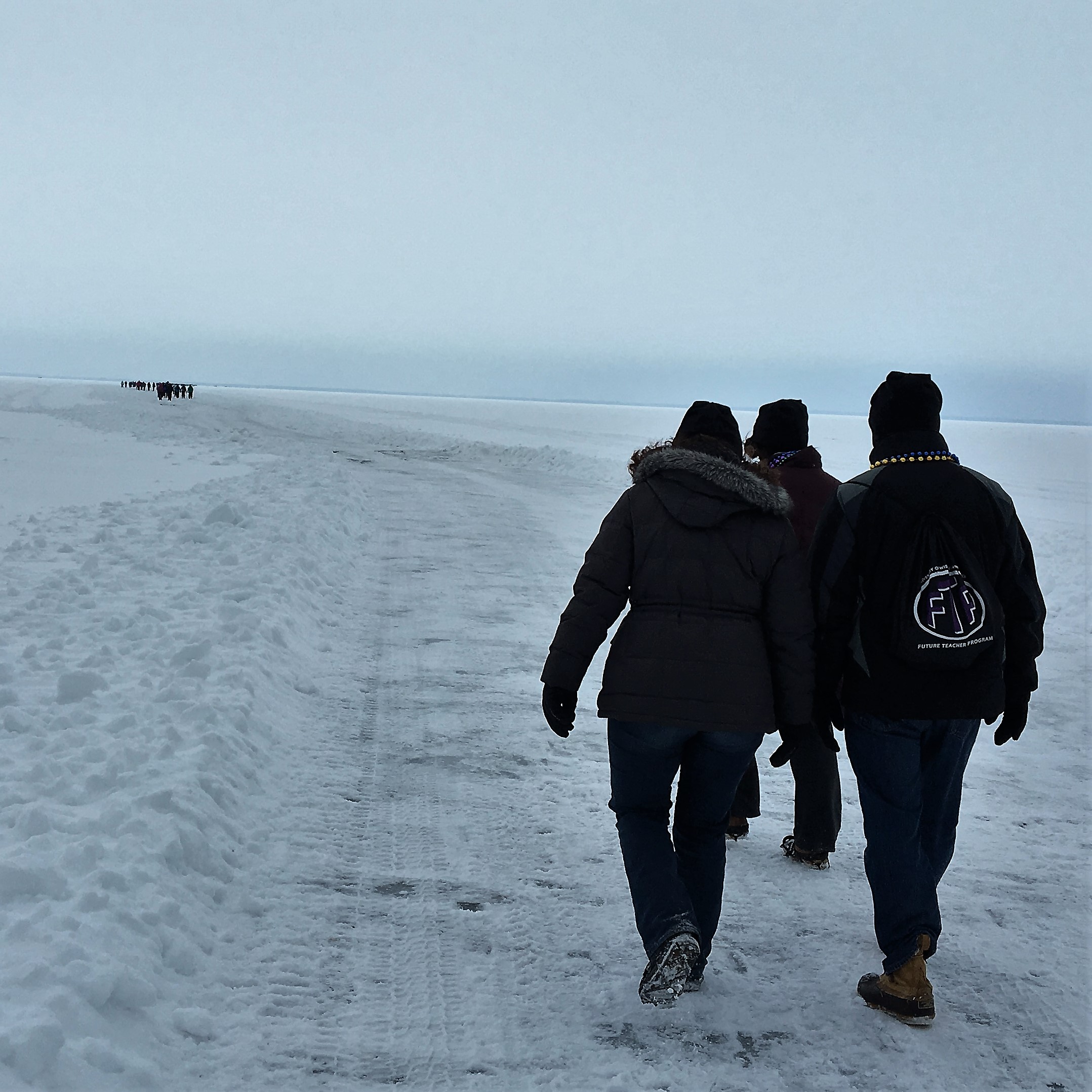
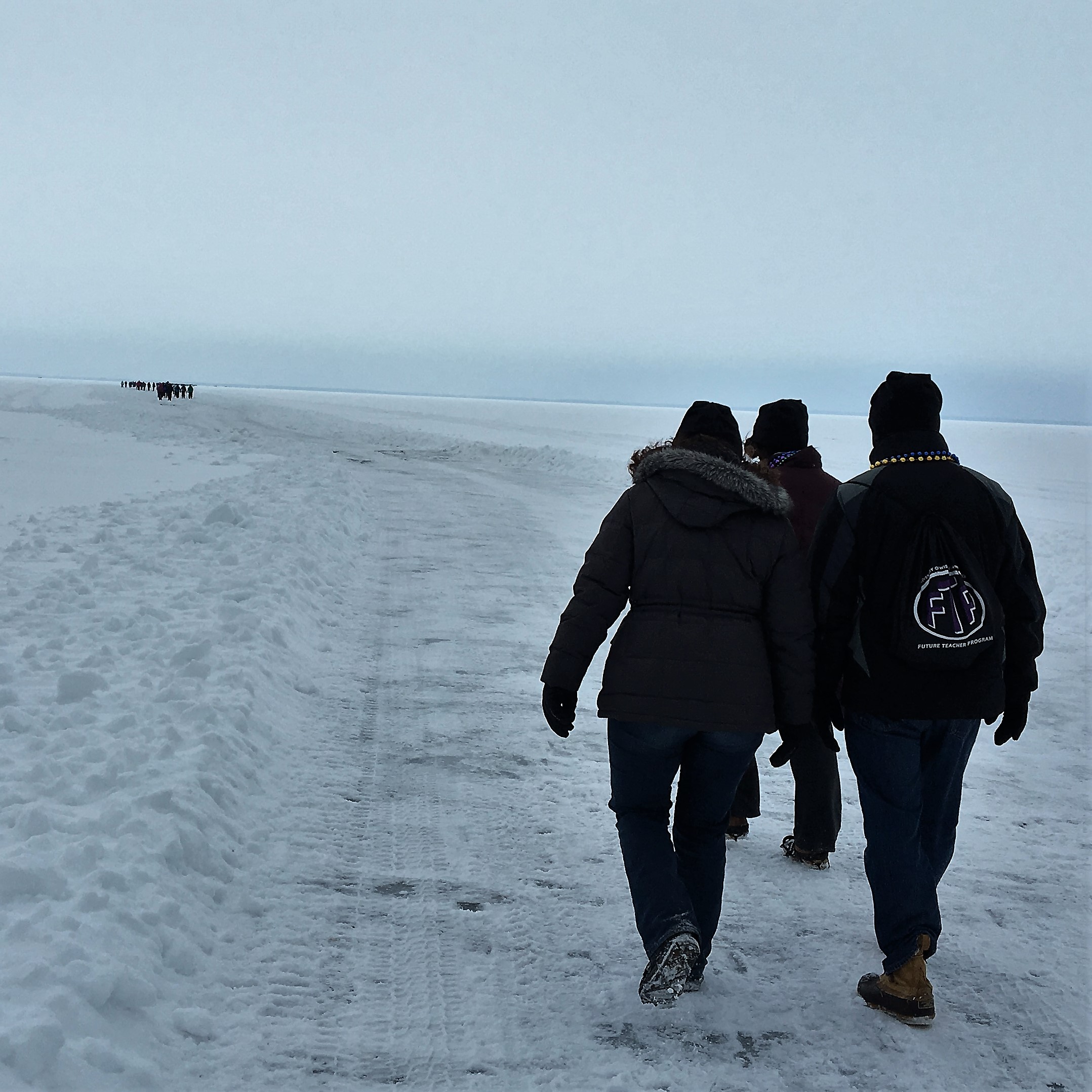
    I think that’s our tour group up there

    I can feel travel beginning to come back. TSA checkpoint volumes are hitting post-pandemic highs, business travelers are starting to come out from behind their Zoom sessions, and vaccination rates are prompting more people to make travel plans. So on this episode, we first talk to Paul Melhus, CEO of ToursByLocals about the state of the local tour market and then about how frequent travelers are starting to stretch their atrophied travel muscles. All this and more – click here to download the podcast file, go up to the Subscribe section in the top menu bar to subscribe on your favorite site, or listen right here by clicking on the arrow on the player.

    Here is the transcript of TravelCommons podcast #175:

    This Week

    • Intro music — Warmth by Makkina
    • Coming to you again from the TravelCommons studio in Chicago, Illinois. Just one bit of travel since the last episode, a drive down to Nashville, Tennessee.  Right at about a year ago, this drive was my first post-lockdown trip. I talked about it at the start of episode #164 — no one was on the road save for a few trucks and a few folks like me. It was a drag race down I-65, 80-85 mph the whole way, maybe dropping down to 70 going through Indianapolis and Louisville. You couldn’t be sure what restaurants had their drive-thrus open, so car snacks were key. But now, it’s back to the normal drive — lots of trucks and having to jockey for position with them on the 2-lane stretches, slow-downs through construction zones, and having to think again about timing the drive so I thread through Chicago, Indianapolis, Louisville, and Nashville without hitting rush hours.
    • A year ago, the restaurants that were open were only doing take-out, so I ate in my hotel room every night, which led to me putting “bring-your-own dining sets” on my 2020 travelers gift guide 6 months later.
    • One thing that hasn’t changed is hotels not cleaning rooms during the stay.  On this trip, I was in a Courtyard for 4 days and no one but me walked into that room. At what level of COVID cases or vaccination rates do they also have to get back to normal service because walking back into the smell of damp wet towels every day, or having to find a hall garbage can to throw out the takeaway Korean is getting a little old. I do give that Courtyard points, though, for bringing back the free lobby coffee.
    • I’m heading down to Miami next week for my first post-pandemic business trip. At the start of the year, everyone was talking about how business travel won’t be back until the end of 2022 or into 2023, and even then, it won’t come all the way back because Zoom and Teams will have replaced the need for 20-30% of business trips. But, I dunno, the TSA is regularly reporting new highs in post-pandemic checkpoint traffic — 1.63 million passengers the first Sunday of May and 1.64 million the first Thursday of May, averaging 8 times the traffic from the same weekday last year. And I don’t think it’s all leisure travel. I’m starting to see some 2019 behaviors coming back — execs flying out to a plant to do a one-hour town hall in person; people coming together, physically, in an office conference room to get around some white boards and solve a problem. Is it Zoom fatigue or reversion to the mean — at least for the vaccinated? I dunno, but I’m kinda looking forward to getting back in the saddle — well, except for next week’s horse being a 7am Monday rush hour flight out of ORD.
    • Bridge Music — A Foolish Game by Zep Hurme (c) copyright 2014 Licensed under a Creative Commons Attribution (3.0) license. http://ccmixter.org/files/zep_hurme/46448.

    Following Up

    • In the last episode, I talked about the spike of publicity around the deterioration of Uber and Lyft’s service — spiraling wait times that leads to big price surges that leads to driver cancellations as they work to maximize their pay. It’s not getting any better. I retweeted an Uber driver’s screenshots showing no cars at ORD and MDW on a Sunday night — prime time with people coming home from weekend trips, and it’s not a one-off event, especially at MDW. It’s also starting to make people rethink travel plans. A colleague on my Miami trip moved from a Hyatt to a Marriott closer to our meeting place, saying she couldn’t trust Uber to show up in time. And even for me, I’ll get up earlier than I need to so I can catch public transit to ORD in case Uber or Lyft fail and I can’t find a cab. It doesn’t feel like that $250 million “driver stimulus” Uber was touting last month has made much of an impact.
    • Empty Hertz lots has also been a multi-episode arc that doesn’t look like it’ll go away soon. Rental car companies dumped cars during a historically high used car market to generate cash that saved them at the start of the pandemic. Hertz dropped almost 200,000 vehicles in the back half of 2020. While Avis’s fleet shrunk about 31%. But now that travel has snapped back faster than expected, they can’t get more cars; the new car inventories are at historic lows because of chip shortages. 
    • And the combination of these two is a helluva pincer movement on a lot of returning travelers because they’d ditched rental cars for the convenience of Uber. Now they have neither. I plan on doing a good bit of walking in Miami.
    • DMV managers across the country must’ve breathed a sigh of relief when they saw Homeland Security announcing yet another delay in Real ID enforcement for air travel, this time to May 2023. I remember in 2019, more than a year before the original October 2020 enforcement date, the warning signs went up at the TSA desks in airports and immediately there were predictions of mass chaos.  I was one of them. Back in episode #155 in September 2019, I said “Note to self – don’t book any travel in October 2020.” But then, 6 months later in March 2020, as COVID shut down DMV offices along with the rest of the economy, DHS made the obvious call to kick the deadline down the road a year to October 2021. I remember my first post-lockdown flight in June, the TSA desks at MDW still had the old 2020 signs up. A few months back, some friends had to renew their driver’s licenses and so figured they’d get the Real ID version. After some 8 hrs of queuing at a just-reopened Illinois DMV, they had gold-starred IDs and were good to go for October travel. Last month, a little alarm bell went off in my head — “You know, that deadline is 6 months away; you need to start thinking about this.” But just as I started to, the news hit my Twitter feed — delayed not just a year, but to May 2023, 18 years after it was signed into law. At what point is Real ID past it’s “Best Used By” date — if not already?
    • Many of us lost track of these peripheral travel bits during lockdown. We were driving our daughter Claire to ORD for a flight to Philadelphia last month. She pulled up her boarding pass on American’s mobile app — “Hey, I don’t have PreCheck!” Huh, well maybe there’s something wonky with the app, I told her. Hit a kiosk if you have time and pull another boarding pass. Turns out, because of construction traffic, she didn’t have time but the regular TSA line was short, so it wasn’t a problem. But the same thing happened on her flight home — on Southwest this time. OK, not a res system glitch. She logged into the TSA website. Her Global Entry, which includes PreCheck, had expired a few months back. Which prompted Irene to log in; she was expiring that day so she immediately hit the Renew button — and then spent the next 30 minutes reconstructing our travel history for the last 5 years. Thank God for cell phone photo archives. I figured I should check mine too. Logging in was a little bit of a hassle — I had to create a new account at login.gov, some federated government login that replaced TSA’s login. Once in, I saw my expiration date isn’t until the end of the year, so I’ll start thinking about it in June or July. 
    • United Airlines CEO said searches for flights to Europe jumped 19 % after the head of the European Union said vaccinated US travelers would be allowed into the EU this summer. And shortly after that, United put on new summer flights to Iceland, Croatia, and Greece – certainly not business travel destinations.
    • I had already placed my bet on the UK opening by Thanksgiving. Actually, I was repeating the same bet I placed about this time last year when cash and frequent flier prices went cratered. I booked ORD-LHR flights on American for 30,000 points each. When I had to cancel in September, the agent said “Wow! That was a great deal!. Yeah, I knew it. The price of this year’s bet was 50% higher. But with the US and UK vaccination rates, it’s feeling like a safer bet.
    • The riskier bet was plunking down a deposit on a bike trip in Italy in mid-October. There was a lot of “It’s non-refundable so buy our trip insurance” language in bold italic font. So I went back and re-listened to episodes #163 and #173 where we talked about travel insurance and then dug deep into the insurance rider for the tour provider’s insurance and the travel insurance I’d get for free if I charge it on my Amex or Chase Sapphire cards. One hour and a couple of three-column tables later, I first threw out the Amex insurance; it was sorely lacking. Then comparing the tour company with Chase, neither of them offered cancellation coverage if a, what is it, a fifth wave of COVID (I’ve lost count) causes Italy to close its borders again. Running through the rest of the comparison, the tour company offered a bit more, but not enough (at least to me) to justify the additional $760 cost for Irene and me. So I charged the deposit on the Sapphire card and am hoping for the best.
    • And if you have any travel stories, questions, comments, tips, rants – the voice of the traveler, send ’em along to comments@travelcommons.com — you can send a Twitter message to mpeacock, post your thoughts on the TravelCommons’ Facebook page or the Instagram account at travelcommons — or you can post comments on the web site at TravelCommons.com.
    • Bridge Music — Hear Me by DJ Blue  (c) copyright 2007 Licensed under Creative Commons Attribution Noncommercial Share-Alike license http://ccmixter.org/media/files/DJBLUE/11541.

    How to Find Local Tour Guides

    • This is a topic where I need to, up front, state my priors — I don’t do well with structure when I travel. Well, let me refine that a little — I don’t do well with other people applying structure on me when I travel. I don’t cruise, I’ve always hated forced “team-building” outings during company sales meetings, and I cringe whenever I run across tour guides walking backwards, reciting factoids to trailing lines of people tethered to them through wireless headphones. To be honest, I look down on them — I can do better, more authentically with my own research. 
    • But that’s really more pride, and maybe a bit of cheapness, talking than real facts. I’ve had great experiences with small tours. Way back in episode #105 — 8 years ago! It always amazes me how long I’ve done this; and amazes even more how long many of you have been listening — I talked about a couple of private tours that completely readjusted my attitude — a tour through Saigon with an ex-South Vietnamese army officer, a food market tour in Madrid, a wine tour in Priorat.  They were phenomenal, but they were all second-degree connections — friends recommending other friends or acquaintances. So unless you have a lot of friends with connections to places you want to visit, that word-of-mouth model doesn’t scale.
    • Which leads me to this episode’s guest, Paul Melhus, CEO & Founder of ToursByLocals, a private tours marketplace. I talked with Paul about the local tour market, how he fared during the COVID travel meltdown, and what things look like from his vantage point as we’re coming out on the other side.
      • Mark: Paul, help us understand your marketplace, how you help travelers search and book for local tours. This is a space that had a lot of startup activity, say five years ago. Everybody was a peer-to-peer tour marketers and the Uber of local tours. And now though, it seems that we’ve got a mix of large companies, Airbnb Experiences, Viator, and then smaller folks, offering a broad range of tours like yourself and Get Your Guide, and then some specialized niches in things like food, Eat With. And then last episode, we talked with Rob Cheshire about what he’s doing in This Week In Craft Beer. So, help us understand the market space.
      • Paul: ToursByLocals is a platform, and our goal is to connect independent tour guides with independent travelers who want to have that kind of unique experience. I’ve often wondered why it is that we seem to have been successful. We started in 2008; somehow we’ve managed to thrive, and we always started right from the get-go to make sure that the guides that we’re on our site were competent, qualified, able to do what they said they would do. So we feel like our network of, we’re at 4,750 guides right now, is a curated list.
      • Mark: So that curation, it’s not so much the Uber for local tours, maybe the Angie’s List for local tours.
      • Paul: Yeah, I guess, Yeah, that’s a good idea because I think a lot of other companies, they just went out and tried to get a lot of guides and they didn’t really worry too much about making sure that every one of them is going to be quality, responsive — that’s a big thing — and then it’s the consistency of everybody knows how it works. In some cases, especially if the tour is more high value, like we have some safaris in Africa, for example where the customer will pay $23,000 and the guide, in order to deliver that tour,  they can’t fund all of that on their own account, so we advance them funds. But you know if things were to go south, well, we’re here. And we have done that in the past, refund the traveler because who knows, maybe there was some weather-related event that caused the thing to get canceled and then, so we’re out the $5-6,000, but the customer is made whole.
      • Mark: So there’s really two things that you’re offering above and beyond just the search and book. You’re offering curation and you’re offering escrow. So you’re taking some of that uncertainty in both of those areas, uncertainty about the qualification and then uncertainty about performance, you guys are taking that on. Paul, you talked about Covid. How has this curated network of tour guides held up through Covid?
      • Paul: Right now, our maximum number of tour guides listed on the site was just over 5,000 and that was February 2020. Now we’re at 4,750. So, not huge and we have a status of tour guide called on hold — for the time being, I don’t want to be on the site, but I want to be able to come back once it’s safe. For an example. We had a guide in Denmark, had an elderly mother and she just didn’t want to be out there with people because she had to look after her parent. So we have a project right now to contact all of these people and see about getting them back on the site. But the other thing that offset the loss was, rather than laying all of our staff off, we repurposed them and tried to infill a lot of the smaller destinations, the Nashville’s, Flagstaff Arizona. And of course, Yellowstone National Park where our sales are up 1,300% over 2019 levels, which was a good year.
      • Mark: That was the trend last fall, and I think going into the spring was everybody wanted to do outdoor stuff. Right?
      • Paul: Oh, it really is. Now that people have got their vaccines, they want to travel and the easiest place to travel is domestically. So, we’re seeing a real boost in US travel.
      • Mark: What do you see around trends?  Do you see an uptick, and where is it?
      • Paul: A metric that we track very closely is the conversion rate of our tour guides. So, if we send them an inquiry from a traveler, what percentage of those inquiries turned into a booking? We’ve noticed that the conversion rate is about half of what it was in 2019. Because normally a  good guide converts about 40% of the inquiries and now it’s fallen down to about 20%. There’s a lot of dreamers out there. That’s what we’re thinking.
      • Mark: There’s a lot of people shopping, but they’re not buying yet.
      • Paul: Not quite yet. Now basically there’s the people that are booking are kind of falling into two buckets. Normally we would have kind of a nice smooth curve of not too many short notice bookings and then it would be a bulge and then tail off farther out. But what we’re finding is that people are booking within a 2-week window, so short notice, or their booking into 2022. We recently extended our booking calendar out 26 months and that’s driven some surprisingly long-term bookings. It’s that middle that’s missing and I think that’s where they want to go. But until such time as you can actually get on a plane and happily go to London without having a 14-day quarantine when you show up, people are just not going to do it.
      • Mark: Super. Paul Melhus, CEO of ToursByLocals. Thank you very much for taking the time to talk to us here at the TravelCommons.
    • Bridge Music — Gargantua by Admiral Bob (c) copyright 2014 Licensed under a Creative Commons Attribution Noncommercial (3.0) license. http://dig.ccmixter.org/files/admiralbob77/46361 Ft: My Free Mickey, Martijn de Boer

    Rebuilding Travel Muscle

    • Frequent travelers, road warriors, mostly sitting at home for the past 15 months, certainly not heading to the airport every week or two, our travel muscles have  atrophied. That rhythm, that cadence, that confidence that separated us from all those regular travelers — well, all that and premiere status lines and lounge access which also physically separated us. I noticed this loss of travel muscle tone a bit on my trips to Tucson and San Diego over the last couple of months. I had to think a lot harder about those trips — what to pack, when to leave — things that were second nature to me, say, 18 months ago when I was traveling every week to Charlottesville, VA or Phoenix. Even on personal travel — to Poland, Hungary, Estonia, Finland — I had everything down; on the road, I had my groove.
    • Pretty much all of my travelling friends breathed a sigh of relief during the first 6-8 months of lockdown — first, happy to be home and safe; then settling in, enjoying the extended family time, picking up some new hobby (even frequent travelers weren’t immune from the sourdough craze). But toward the end of the year, I could hear a bit of ansty-ness, and now, vaccines in arms, I’m seeing people getting back out on the road, beginning to rebuild those travel muscles.
    • It’s been a pretty quick snapback. Remember, back in December, people like Bill Gates were saying to large virtual conferences that 50% of business travel would disappear and video conferencing was the new normal. I think the big ramp up in vaccination rates flipped this script. Again, back in December, the euphoria of vaccine approvals was quickly overwritten by the depressing logistics of manufacturing ramp-ups and cold-chain distribution. But now, five months later, people are again sitting across desks and conference tables from each other; initially masked, but then quickly running through their vaccination statuses and comfort levels so they feel safe dropping their masks and getting on with business. This “new normal” feels like it’s trending pretty quickly back to the old normal. 
    • At least for one-on-one meetings. Larger meetings and public spaces can’t do those same negotiations. But that’s enough for a start. Those same friends of mine who were loving their cocoons and sour dough recipes last year are looking to break out now. Like me, they tend to have pretty short attention spans and travel gives them the change, the external stimulus they need — new places with new people to see and new things to do.  
    • The seating chart for my flight down to Miami shows a full flight and is asking for volunteers to take a later flight. And this for a 7am Monday morning flight — first flight out, the standard business traveler choice. A lot of folks are getting back into that rhythm.

    Closing

    • Closing music — Pictures of You by Evangeline
    • OK, that’s it, that’s the end of TravelCommons podcast #175
    • I hope you all enjoyed the show and I hope you decide to stay subscribed.
    • The new website makes it a lot easier to subscribe. There’s a drop down menu at the top of each page, a set of subscribe links at the bottom, and a big red “Subscribe” button in the middle of the home page. You can use all those buttons, links and menus or you can just search for us on Apple Podcasts, Spotify, Stitcher, SoundCloud, Google Podcasts, and Amazon Music. Or you can also ask Alexa, Siri, or Google to play TravelCommons on your smart speakers. And across the bottom of each page on the web site, you’ll find links to the TravelCommons’ social  — Facebook, Twitter, Instagram, and the YouTube channel.
    • If you’re already subscribed, how ‘bout leaving us a review on one of the sites? Or better yet, tell someone about TravelCommons. That word-of-mouth thing; with everybody and their mother starting up a podcast, it’s really the only way to grow.
    • I’m not doing Patreon or trying to figure out Apple’s new podcast paid subscription. So if you’d like this podcast and would like to support it, please recommend it to one or two of your friends; maybe folks who traveled a lot — before COVID — or wished they could travel a lot. I’d appreciate it.
    • If you have a story, thought, comment, gripe – the voice of the traveler — send ‘em along, text or audio file, to comments@travelcommons.com or to @mpeacock on Twitter, or post them on the TravelCommons’ Facebook pageInstagram account,  or website at travelcommons.com. Thanks to everyone who has taken the time to send in e-mails, Tweets and post comments on the website
    • Follow me on Twitter
    • “Like” the TravelCommons Facebook page
    • Direct link to the show
  • Podcast #174 — How the Pros Plan Their Taproom Tourism

    Podcast #174 — How the Pros Plan Their Taproom Tourism

    Bar at Modern Times' Taproom
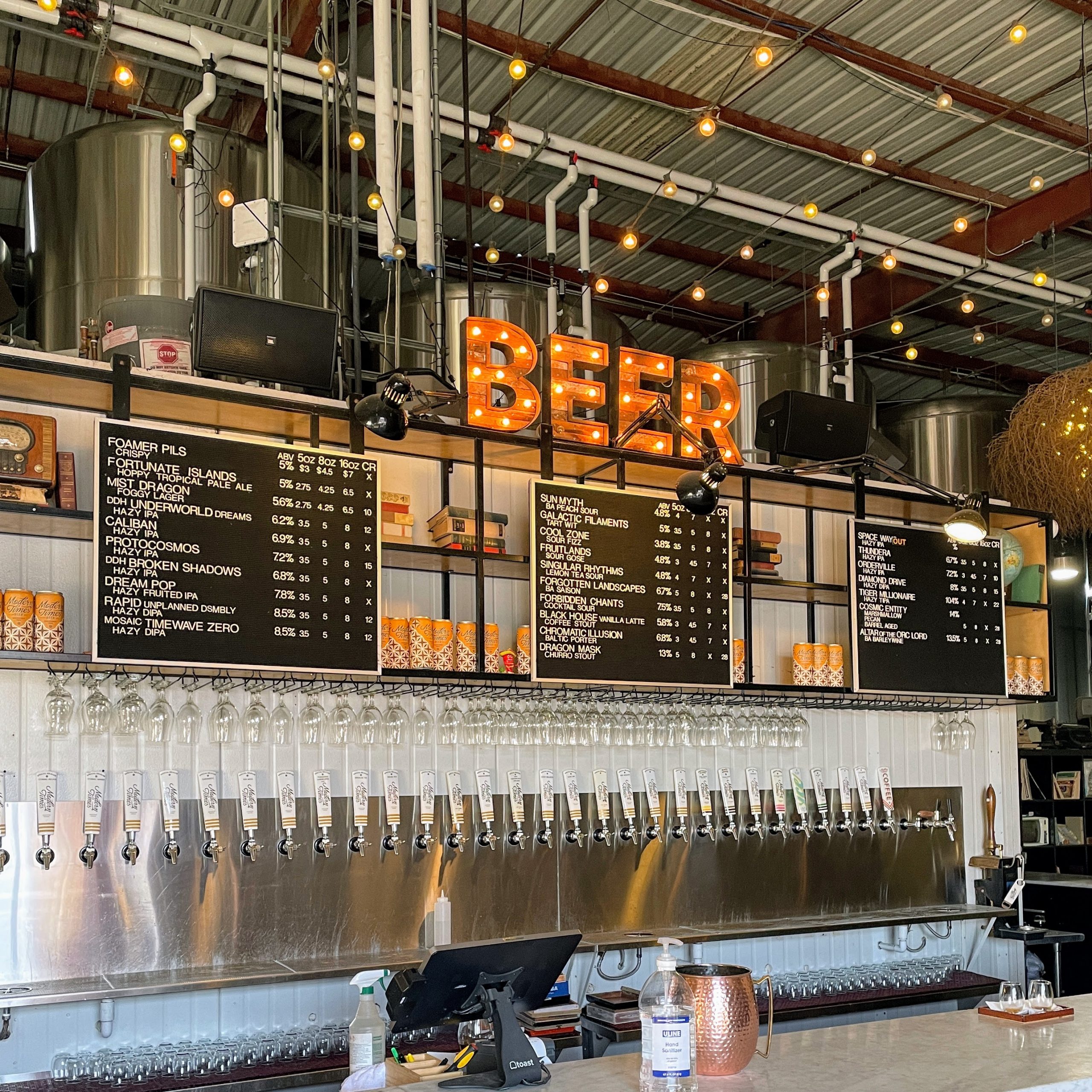
    I wonder what they serve here

    Looking at the Beer section of this new website design, I saw I needed more content. So I got hold of Rob Cheshire of the This Week in Craft Beer podcast to talk about our approaches to taproom tourism and to trade taproom travel stories. I also talk about mask hassles on a couple of recent flights, Hertz’s continuing downward service spiral, and Uber and Lyft driver shortages. All this and more – click here to download the podcast file, go up to the Subscribe section in the top menu bar to subscribe on your favorite site, or listen right here by clicking on the arrow below.

    Here is the transcript of TravelCommons podcast #174:

    This Week

    • Intro music — Warmth by Makkina
    • Coming to you again from the TravelCommons studio in Chicago, Illinois as things here start to open up from winter and COVID shutdowns. Increasing temperatures and vaccination rates have people out and about. Irene and I got a jump start on the better weather by flying out to San Diego on St Patrick’s Day to hang out at an Airbnb in Ocean Beach a block off the ocean and a couple of blocks south of Newport Avenue, the main drag that surprised me with its kinda hippy/surfer vibe. Which I liked. It reminded me of Huntington Beach in the mid-80’s when my folks moved there, before they tarted it all up. I give Ocean Beach credit for resisting the face lift, even if I meant I had to avoid the homeless guy changing his pants on the sidewalk when walking back with the morning coffee and doughnuts.
    • It was a low-key trip. Nothing scheduled, no real itinerary; mostly walking the coast during the day — beaches or rocks — and then at night, chipping away at the list of some 150 microbrewery taprooms in the San Diego area; a lost cause for sure, but one I willingly threw myself at. Indeed, the only time we looked closely at the time was Sunday afternoon to make sure I could get to all my “gotta go” taprooms before they closed since we were flying back Monday after lunch.
    • The bookends to the trip, the flights out and back on United, were a bit more stressful. The flights were just about completely full. And for some reason, United kept shoving me out of my aisle seat to the adjacent middle seat. But because I checked our seats after receiving United’s “We’re full; you can move to another flight for free” e-mail before each flight, there was enough time to rejigger our seats to adjacent aisles, which gave each of us a bit of room to lean away from a full middle seat. The bigger and, honestly, more surprising hassles were mask compliance. On the flight out of ORD, the guy in the row behind me had a loud, extended grumble session with his seatmate after the flight attendant told him to pull his mask up over his nose. I thought he was winding himself up for a protest, but he eventually calmed down. The flight back was worse for Irene. A young couple with an infant landed in the middle and window seats next to her. Both continually pulled their masks down below their chins; at some point, the husband fell asleep and started snoring with his down. And this is after the flight attendants made a number of very clear and pointed announcements on mask rules.
    • This all really surprised me. All my prior flights — to Nashville, Philly, Phoenix — there wasn’t any of this. Now I’m no mask scold, but like I said in the last episode, everyone agrees to wear one before they can check-in. So if you have a personal objection or don’t think you can handle it for 4 hours, don’t get on the plane. And if you do, treat yourself to a new mask before the flight; one with new elastic so it says up over your nose.
    • Bridge music — Dreaming by Astral (c) copyright 2013 Licensed under a Creative Commons Attribution Noncommercial (3.0) license.

    Following Up

    • Long-time TravelCommons listener Nick Gassman sent in a note about last episode’s travel insurance update and COVID-related coverage. Nick writes:
      • “In the UK, a recent survey found that whilst insurers would give you emergency medical cover if you caught COVID when you were away, none would cover you if the government advised against travel because of COVID and you therefore could not travel. Some would give you cancellation cover if you are diagnosed with COVID before travel, and others would further give cancellation cover if you had to self-isolate even without a positive test.
      • As ever with insurance, the thing is to make sure you understand the small print and to compare policies.
    • Nick, thanks for that. I think the advice to “read the small print” is valid in life in general, and in travel insurance in particular. I think the pandemic and known event carve-outs lurking in the small print caught a lot of travel insurance holders back when the initial lockdowns hit. I wonder, a year on after all that, how many more people are clicking through the “Buy Travel Insurance” box at the bottom of their Expedia booking page to the full rider and doing a Control-F in their browser to search for the word “COVID”.
    • In the last couple of episodes, I’ve been talking about my efforts to decipher the activity rules for British Airways’ frequent flier program to stave off a year-end extinction event for my non-insignificant stash of Avios points. Since I’m not planning to fly BA anytime soon, I booked our Ocean Beach Airbnb through a link on BA’s site and, to my surprise, I saw 1,800 Avios points automagically hit my account a week later. I can’t seem to find the expiration date to see if it updated, but I’m pretty sure this reset the 36-month clock. And it was a nice find, the Airbnb-Avios link. It let me double-dip on Avios and Chase Ultimate points. Not sure when I’ll get to spend them, but it was a nice little get.
    • In the last episode, I talked about having to work through a lot of cars in the Hertz PHX lot to find one with less than 24,000 miles. In SAN, I had to work to find a car — period. We walked to the Five Star aisle and it was empty. I tried to flag down a Hertz employee, but he just waved me off. After 5 minutes or so, a car showed up. I didn’t bother to look at the mileage; we just got in and drove off. I was late for a lunch date with a fish taco. Returning the car, I did my normal drill – top off the tank, get a receipt, and then when dropping it off, place the receipt under the keys on the dashboard so the check-in guy will see it. It usually works — except this time. The receipt hits my e-mail as we’re trundling the perimeter of the airfield in the rental bus. I open it up and see a fuel charge! Really? The last time this happened was about 4 years ago in ATL. I hit Twitter and the Hertz team fixed it in a half-hour. This time, the Twitter team got back to me pretty quick asking for the rental agreement details, but then… nothing. I pinged them the next day, nothing. And the next day, nothing. So I challenged it with Amex and got the fueling charge and associated taxes credited back in a couple of days and then moved on. Until earlier this week, two weeks later, Hertz popped up on my Twitter DMs asking for more information. It’s amazing how fast their service has cratered during this bankruptcy, which makes me wonder how long it’ll take them to recover. I gotta get some good discount codes for Avis.
    • There was a spate of articles this week about Uber and Lyft driver shortages. We experienced it first hand trying to get a morning ride out to ORD for our San Diego flight. I swallowed hard and agreed to a good-sized surge, waited for a while, and still had the Uber driver cancel on us at the last minute. It shouldn’t be surprising, though. Drivers left the platforms when demand cratered at the start of the pandemic, when Uber said (and this was last May when everything was shutdown) that their volume was down by 80% vs. the prior May (May 2019). And in Chicago, the run of Uber drivers getting carjacked at the beginning of this year probably didn’t help either. But with stimulus checks in the bank and vaccine rates rising, demand has snapped back, a lot faster than driver supply. The headline of the Financial Times article reads “Uber and Lyft ‘throwing money’ at US drivers to ease shortage” and says that Uber is spending $250 million on a one-time “stimulus” package of driver incentives. But even with that, it takes time to on-board even returning drivers — re-doing vehicle inspections, background checks. In episode #160, my last pre-pandemic episode back in February 2020, I talked about the shrinking difference between Uber and Lyft, and how I found myself beginning to shift back to regular cabs. These recent experiences are only accelerating that. I’m thinking I may need to reload taxi dispatch numbers back into my iPhone.
    • And if you have any travel stories, questions, comments, tips, rants – the voice of the traveler, send ’em along to comments@travelcommons.com — you can send a Twitter message to mpeacock, post your thoughts on the TravelCommons’ Facebook page or the Instagram account at travelcommons — or you can post comments on our fab new web site at TravelCommons.com.
    • Bridge Music — Emily and the Djembe by mghicks (c) copyright 2008 Licensed under a Creative Commons Noncommercial Sampling Plus license. Ft: Emily via Briareus

    Taproom Tourism

    • Putting together the new website, I was thinking about what to put on the top menu. “Subscribe” and “Episodes” were given, but I also put “Food” and “Beer” because, well, I write and talk about them a lot. But then, when I clicked through the new “Beer” menu, it felt a bit sparse. I needed to add some content. And so in the craft beer tradition of collaboration beers, I pinged Rob Cheshire, a long time TravelCommons listener and now craft beer podcaster with his This Week in Craft Beer podcast, to talk about why we go out of our way to find brewery taprooms, and how he organizes his travels to hit the most taprooms he can on each visit.
      • Mark: So what are you drinking?
      • Rob: I’ve got a Bio Machine Brew Co I had on the podcast about six weeks ago.
      • Mark: I’m doing a Springbock from Half Acre, about 6.8%. It’s not a shy beer
      • Rob: Good Lunchtime beer. Yeah.
      • Mark: Taproom Tourism. Why do we go and search out brewery tap rooms as opposed to the cool beer bar?
      • Rob: You want to be drinking at the source I think is the first point. So it’s just in terms of freshness and, quite frankly, value for money, but also variety. And just everything’s better without the middleman. If I can sit and chat to the brewer while I’m drinking their beer, then so much the better. At least even the guy behind the bar is going to know a lot more about products and the nature of the business than our average barman. And, you know, as good as they might be, it’s always better dealing direct, I think.
      • Mark: As I was thinking about it, I had that same set of thoughts. First of all, there’s more selection and especially if you want to go past the usual suspects. So if you want to go past the usual IPAs, maybe random stouts and stuff like that, and the light wheat that they’ll put on to keep the non-beer drinkers happy. If you want to get past that and you want to see where that brewer is stretching their muscles a little bit, then you’re right. You gotta go to the taproom because nobody else is going to take it. And to your point also, from a cost standpoint, you’re going to be able to do flights or at least small pours, which means you’re going to be more willing to try the wacky beer.
      • Rob: Yes, definitely. I want to taste every single beer in the taproom if I can. Another aspect, I just like the atmosphere in taprooms. Some of them are super slick and fabulously well fitted out. And others are literally some barrels to sit on or empty pallets. Complete extremes of decor, but they’re always sort of charming in their own way. And there’s something about being in a brewery that pleases me, even if I’m not drinking.
      • Mark: My undergraduate degree is in chemical engineering and I never practiced as a chemical engineer. But having said that, I really like to go and look at breweries. There was one time we were in Portland. The brewery was in the basement. I’m kind of looking at going “How in the hell did they get these tanks down here?” Because there was no obvious way that you could get a massive steel tank down into this basement. And then we ended up sitting wedged in a table between three fermentation tanks. It wasn’t like we were looking at the brewery; we were in the brewery.
      • Rob: You were actually in an integral part of it. I had a very similar experience, actually, one of the new local breweries that’s opened up here in Reading that I’ve become quite friendly with called Crafty Cats, and they are brewing in an impractical barn, terribly difficult to sanitize everything. It’s a broken concrete floor. We went round this brewery, and we started actually with the finished beer and he said, Well, taste this and taste this and this and which we’re getting right back to the last one we tasted. It was the first time I’ve ever tasted what I can only describe as the overwhelming smell of brewer’s yeast you get in a brewery. That was what this liquid tasted like, and I’ve never tasted anything quite like it before. It was a really interesting experience.
      • Mark: How do you plan your taproom visits?
      • Rob: It’s all driven through Google for me. I might have some idea based on previous reading about some big-name places that I want to visit in a particular city. But beyond that, I’m just going to Google. First of all, I’ll plot a Google map for the city. I’ll end up with 50-60, maybe even 100 pins on the map. Pretty quickly, I’ll go to Untappd and look at the average brewery rating. And this really makes brewers cross how much I rely on Untappd for this type of thing because I had this conversation a load of times on the podcast with them. But I do rely on brewery ratings on Untappd, and I find it very reliable, quite frankly. If a brewery has an average rating of anything close to 4, then, obviously it’s a massive generalization to say whatever they brew, but most of their beers are gonna be great. If the brewery rating is anywhere close to 3.5, it’s going to be very mediocre at best. And somewhere in between is where most people land. So 3.6, eh…;  3.8, it’s a good brewery; 3.9 is a terrific brewery; 4 is a great brewery. And so I’m looking for those 3.8 and 3.9 average brewery ratings. But what I’m looking for, really, is that district where I can walk from one to another and really make an afternoon of it.
      • Mark: But that’s kind of the DIY spin. And I know, Rob, that you’re doing with This Week In Craft Brewing, you guys are launching tours, the Good Lord willing and COVID don’t rise…
      • Rob: Yeah. I’ve been lucky enough to travel pretty frequently to East Coast of the US for business trips, particularly the past 10 years. And so I’ve always been comfortable with traveling in the US, And in the last few years, I’ve been basing my travel around taproom visits quite frankly. And so I’ve been doing business trips where I have some business meetings, but really, what I’m doing is trying to plan my schedule so I’m in the right place at the right time each evening to visit the tap room that I want to visit. And so, I’ve become quite familiar with the tap rooms most of the way down the East Coast. Since then, I’ve got my This Week In Craft Beer business (if you want to call it a business) off the ground. It’s a fun side project. We publish a weekly newsletter and we do a weekly podcast doing a different interview with the UK Craft Brewery each week. And so, in conversation with the brewers, I started to float the idea with them, either before or afterwards, when we’re wrapping up and finishing off the beer and whatever. I would say, “Well, I’m thinking about putting together tours to the US. Does that sound like something you’d be interested in?” And so, on the back of a few of those conversations, I started to figure out that what we could do is actually promote it with the brewer and basically sell it to the brewer’s customers and have the brewer come on the tour. So we’ll put together a schedule where we’re going to visit, hopefully, some amazing tap rooms. From what I know about how brewers react to being visited by other brewers, usually they get the red carpet out. Brewers are very hospitable. It’s almost like a private members club. You know, one brewer visits another brewer, and they may be supremely welcome. So I’m hoping that we can leverage that, and I think we can put together a pretty killer 5-day, 4-night tour where we visit 2 tap rooms a day and have a fantastic curated experience at each one.
      • You may be seeding a whole other series of collabs, of cross-Atlantic collabs.
      • Rob: That would be nice. Yeah, I hope so.
      • Mark: Here’s the last thing I wanted to think about – best, worst, most unusual taproom experience. It got me thinking about the number of times that going to tap rooms, search them out, and then going out to them has taken me to parts of town that I would not normally go. I mean, it gets you out of it, busts you out of what I’ve called in the travel bubble or the tourist route.
      • Rob: I’ve been to a few places where I probably shouldn’t have been in search of tap rooms. You know, that’s the thing. Isn’t as well as you know. I think I remember once in Baltimore where I, you know, I ended up probably in a slightly down-on-its-luck neighborhood. Let’s call it that for one of the better turn of phrase. And that’s when you start to think “Well, maybe, you know, is there a taproom down here? And maybe I shouldn’t perhaps be wandering this district.” I don’t know, but I do. What I do know when I’m in the US is I can always break out my British accent and that, you know, it doesn’t matter how sort of threatening the bad guys look as soon as they hear I’m from the UK, they immediately become unofficial tour guides. And, you know, they want to point me in the right direction and give me advice and make sure I’m enjoying my visit to the city. And it is an extraordinary experience and this, you know, it’s overwhelming that level of hospitality that we always get from Americans. And that’s it’s not an exaggeration to say that I don’t think I could find myself in any part of any city where that didn’t work, and it hasn’t happened yet anyway. So probably once too many. I’ll push that luck too far. It’s worked so far anyway.
      • Mark: And again, you talk about doing business trips? I was in mid Jersey, and I found this place Demented Brewing, and I found it on Untappd. And so we head out there, we find it. It’s across the street from a glass repair shop and sort of kitty corner from a motorcycle repair shop. But no food, no food trucks or anything and said “Okay, well, we’re gonna need to lay a base here.” And so, across the street was this little place with an El Salvadorian flag hanging out the front of it. And it’s some little family restaurant/bodega thing, and we roll in there. They look at us like, “Who in the hell are you guys?” We go. We like the menu posted up on the wall. It’s like pupusa is I don’t know. We’re like, give us all of them, right? Just like give us one of all; we’re gonna do a flight of pupusas and then we went back across the street, but at that time in New Jersey, they had to give you a tour.
      • Rob: You have to do a tour. Yeah, yeah, yeah.
      • Mark: Okay, so you hit that too. You had to do a tour before you could do the sample.
      • Rob: I’ve been to more places in Jersey than probably anywhere else, actually.
      • Mark: It’s the only place I’ve had that happen has been in Jersey. Okay, “Well, you got to do a tour, then you can have beer at the tap room.” I was like, “Okay, fine. Cool.” It was a very abbreviated tour.
      • Rob: Yeah. I actually watched that policy evolve in 2018 from at the start of the year, where they were quite strict about saying yet we’ve got to give you a bit of a tour, you know. And after a while, it got to the stage where they just had laminates printed where they have shown you the map of the brewery. If you’d like us to come and show you any particular feature on this, please let us know. But just otherwise, you can just sit at the bar and look at it while you have your beer and say that obviously sort of figured out that that was sufficient to satisfy the local regulations.
      • Rob: Probably my best taproom experience in Asia was in Hanoi, Vietnam, and there’s a bar there called the Standing Bar, which I think is by far the most celebrated craft beer bar in probably the whole of Vietnam. Actually, a great selection of beer. When we were there, they had a comedy night and they’d flown in English- speaking comedy acts from a number of different Asian capitals. And it was fantastic. There’s a big local beer scene in Vietnam. It’s called Bia Hoi. It’s basically lager, 3.5-3.8% alcohol I think, but served almost ice cold in ice glasses. So it’s drunk extremely cold, and it’s very hot and humid there, of course, and these Bia Hoi bars are — to say they’re on every street is understating it. About every third shop front is a Bia Hoi bar, and they’re mostly… they’re not bars in the way that you would recognize that term. They’re oftentimes just a little sort of plastic furniture, almost in, but the front room on the ground floor, you know, So you walk in there and you sit down and they’re always really tiny because we’re obviously taller than the Vietnamese. So you know, you sort of get your knees under your chin. It felt like going back to kindergarten, where you’re going to the parents’ evening at school and you’re sitting on the tiny chairs that are designed for five- and six-year-olds. It was exactly like that, these bia hoy bars. It was a good experience drinking bia hoi.  Crap beer, of course, but you know, it was just, you know, it’s cold and very refreshing. You can drink lots of it because it’s very weak. But the point is, bia hoi is like 20 cents a pint. Something like; that is super super cheap. And the beer in the Standing Bar was, quite frankly, Western European craft beer prices and then some. You know, you were paying probably $10 plus for a pint, maybe more than that. So this was a good beer, you know, They had some good Vietnamese beers. They had imported beers from around Asia. So it was a good choice of craft beer, as I would recognize that. But 20-30 times the price of the local beers, you know. And it was bringing it back to the comedy night. Several of the comedians were absolutely ripping into the crowd, saying, “You know what? Are you guys doing it? How on earth can you justify paying the price of the beer in this bullshit bar when you could be next door drinking pints of bia hoi with the locals for 20 cents a pint? You know, it’s ridiculous. You should be ashamed of yourselves” and you are absolutely right. It was a good experience.
    • Thanks again to Rob Cheshire for that collab. I hope you could tell that it was a lot of fun. Indeed, the full session ran around an hour and a half and a bit more beer. If you want to hear more of our taproom stories, head over to Rob’s This Week in Craft Beer podcast feed, he posted a longer version as a bonus Easter episode, or check out the TravelCommons website, Facebook page or YouTube channel for the full video.

    Closing

    • Closing music — Pictures of You by Evangeline
    • OK, that’s it, that’s the end of TravelCommons podcast #174
    • I hope you all enjoyed the show and I hope you decide to stay subscribed.
    • The new website makes it a lot easier to subscribe. There’s a drop down menu at the top of each page, a set of subscribe links at the bottom, and a big red “Subscribe” button in the middle of the home page. You can use all those buttons, links and menus or you can just search for us on Apple Podcasts, Spotify, Stitcher, SoundCloud, Google Podcasts, and Amazon Music. Or you can also ask Alexa, Siri, or Google to play TravelCommons on your smart speakers. And across the bottom of each page on the web site, you’ll find links to the TravelCommons’ social  — Facebook, Twitter, Instagram, and the YouTube channel.
    • If you’re already subscribed, how ‘bout leaving us a review on one of the sites.
    • Thanks to Nick Gassman, not only for the e-mails, but for calling out TravelCommons in the Recommended Podcast section of his blog site.
    • If you have a story, thought, comment, gripe – the voice of the traveler — send ‘em along, text or audio file, to comments@travelcommons.com or to @mpeacock on Twitter, or post them on the TravelCommons’ Facebook pageInstagram account,  or website at travelcommons.com. Thanks to everyone who has taken the time to send in e-mails, Tweets and post comments on the website
    • Follow me on Twitter
    • “Like” the TravelCommons Facebook page
    • Direct link to the show
  • Podcast #160 — Disappearing Seatback Screens; Shrinking Difference Between Ride-Share and Taxis

    Podcast #160 — Disappearing Seatback Screens; Shrinking Difference Between Ride-Share and Taxis

    Is this the IMAX seatback screen?

    Trying to watch the Super Bowl while flying from Durango, CO to Chicago via Denver got me thinking about the fading away of seatback entertainment. We also talk about the continuing evolution of ride sharing. Uber and Lyft are looking more and more like the taxi companies they fought to replace. All this and more at the direct link to the podcast file or listening to it right here by clicking on the arrow below.

    Here is the transcript of TravelCommons podcast #160:

    • Intro music — Warmth by Makkina
    • Coming to you today from the TravelCommons studio in Chicago, Illinois. I finished my Phoenix travels at the end of January and made the last trip a “bleisure” trip — business in Phoenix Monday thru Thursday afternoon, and then leisure Thursday evening thru Sunday with a ski weekend in Durango, CO, the first time I’ve been on the slopes in 7 years. I first thought about heading up to Salt Lake for the weekend, but when I saw that the Sundance Film Festival was the same weekend, I thought “Nope” and started Googling for other ideas. The ski slopes around Flagstaff were too small and I didn’t want to fight the traffic on I-70 to hit the areas near Denver. Durango, in the San Juan mountains in the southwest corner of the state — near Four Corners — looked like a good spot. It’s a quick and fairly inexpensive hour hop from Phoenix; it’s an actual town, not just a ski resort, so there’d be other things to do when the lifts closed; the lift tickets at Purgatory and Wolf Creek were reasonable — 40-50% of the price at, say, Vail or Park City; I was able to book a whole tiny house on AirBnB for the price of a generic Fairfield Inn room; and, I’d never been there before. And, as I found out from my AirBnB host, it was the weekend of Durango’s Snowdown Festival — the 42nd annual, with a parade down Main Street and everything. The snow was just OK, but the skiing was great — beautiful weather, damn few lift lines, nice people — a weird but fun combination of families — mostly from Texas, Oklahoma, and New Mexico — and the Colorado hippy-dippy ski bum crew. It was a nice ending to my 2 months of Phoenix trips.
    • The only downside was… I had to check a bag. Even though I rented all my equipment — skis, boots, poles — I still needed that extra bag for all the other paraphernalia — helmet, ski pants, gloves, parka, …. I love skiing but it requires a lot of stuff. Not that it cost me anything — even flying Basic Economy on American from Phoenix to Durango, I got free bags with my Platinum status. Though American’s website wasn’t very clear about that when they tried to upsell me off of Basic Economy — imagine that. And while I got free bags, I couldn’t select my seat in advance. But given it was a small regional jet with no middle seats, I figured I’d risk it.  I will say, though, that I was pretty happy with the teal green luggage tags I bought before the trip. Made it very easy to spot my bags amidst the sea of black suitcases on the luggage belt. Probably the best $5 I’ve spent on Amazon
    • One detail I missed when planning my ski weekend is that my Sunday night flights from Durango to Denver to Chicago would be right in the middle of the Super Bowl. Though I’m not sure I’d have changed anything if I’d remembered it. I didn’t really have a dog in that hunt — I’m not a big San Francisco or Kansas City fan and so was kinda like everyone else who wasn’t in the Bay Area, I was rooting more for Andy Reid than KC. I did end up catching most of the game, but it was a little choppy. I watched the kick-off and 1st quarter in the bar at Durango Airport. Durango Airport isn’t big — just 4 gates if I remember correctly — and the bar kinda sticks out into the gate seating area. I sat at the bar, had a beer, and watched the game on the TV hanging on the wall near Gate 2 — or maybe 3. But then United called boarding, so I caught bits of the second quarter on the Fox TV iPhone app while waiting to take off for Denver. And then tracked the start of the 3rd quarter after touchdown and a really long taxi in DEN. I caught the rest of the 3rd quarter on multiple screens — bars, CNN gate TVs — while walking down the B Concourse to make my ORD connection. I got lucky, though, and was able to catch all of Kansas City’s phenomenal come-back uninterrupted in a Mexican restaurant with about a dozen other fixated passengers and restaurant workers. After KC’s final interception, I walked down and caught the final plays on the CNN TV at the gate. Every other night, I consciously avoid those CNN TVs — the volumes always up on people yelling at each other. But this night, I was happy for that volume — the one night when they weren’t to CNN.
    • Bridge Music — Like Music (cdk Mix) by Analog By Nature (c) copyright 2015 Licensed under a Creative Commons Attribution Share-Alike (3.0) license. http://dig.ccmixter.org/files/cdk/48915 Ft: Phasenwandler

    Following Up

    • The week after that last Phoenix trip, I wrote a post on the TravelCommons website listing my favorite food and beer hangouts in downtown Phoenix. When I started traveling to Phoenix in the mid-’90’s, there wasn’t much to downtown Phoenix other than a big Hyatt Regency hotel. Everything was in Scottsdale and Tempe. I’d usually stay in Tempe because, with Arizona State University there, there were restaurants and bars I could walk to. Fast forward to today, downtown Phoenix has a lot more going on. Stadiums for the Phoenix Suns and the Arizona Diamondbacks, and a new downtown campus for ASU’s law school bring in enough people to support a solid selection of restaurants, coffee shops, and bars. The blog post doesn’t cover everything — just the places I found myself going back to again and again during my 2-month stay.
    • Most of my flights from the mid-90’s on went into PHX Sky Harbor’s Terminal 2 — on United and on American, until they moved to the much better Terminal 4 after merging with US Air which had merged with America West, the original hub airline for PHX. Terminal 2 was PHX’s slum terminal. Built in 1962 and originally planned to shut down in 2000, they finally shut it down on Feb 4, 2020, the week after I finished my latest Phoenix gig. The last two airlines using it — United and Alaska Air — have moved to Terminal 3 with the rest of the non-hub carriers. PHX’s two major carriers — American and Southwest — split Terminal 4. Some of the newspaper articles said business travelers liked it because it was compact, easy to navigate. I’m not one of them. I thought it was a cramped low-ceilinged place, with small restrooms and lousy food and beer options when I had to wait out delays back to ORD.  I think you can tell that I won’t miss it. The plans are to demo the terminal this year and replace it with European-style bus gates — using buses to take passengers out to remotely parked aircraft instead of boarding through jetways. I’m gonna bet those bus gates won’t be popular in August when PHX’s tarmac temperatures hit 120 degrees. 
    • Waiting for my American Eagle PHX-Durango flight, I was half-paying attention to the PA announcements, but then noticed that the gate agent wasn’t doing the boarding announcements. Instead they were using recorded announcements. That wasn’t what caught my attention, though. I’ve heard recorded gate announcements hundreds of times. But usually, they’re recordings of humans reading the announcements. Here at gate B19, it was one of those robotic text-to-speech synthesized voices — something like <insert Boarding Groups 1, 2, and 3>. I mean, why? How much savings do you get by using text-to-speech over some gate agent standing in a closet and recording it, say, on their iPhone? Maybe more that I think now that American has, what, 7, 10, 123 boarding groups? I asked this question “Why the robot” out loud — to Twitter. American came back “We heard back and the PHX gate staff actually does record the voices used in the announcements. They are real humans.” Kudos for American’s Twitter staff for following up, but unless they have an android with a bad vox box working for them, I think the gang at gate B19 is using text2speech.org.
    • I posted an article on the TravelCommons Facebook page about a guy who wore a plastic tent on a plane to avoid the coronavirus. Now, as it turns out, it was really more of a publicity stunt for the guy’s company. He makes personal tents to protect people from bad weather when sitting on the sidelines of their kids’ soccer games. Might cut down on the colds I catch when flying, but from the picture, it looks like it would be quite a pain when the person in the window seat wants to get out to use the toilet.
    • On January 6th, the first Monday of the new year, I posted a picture on Twitter of the “cannabis amnesty box” that was on the other side of security at ORD’s Terminal 1. Pot became legal in Illinois the first of the year, and the Chicago Dept of Aviation put out these boxes “so travelers have the opportunity to ensure compliance with federal law, as well as the local laws at their destination” according to the police department. If you look at the picture I posted, the box looks like something the maintenance guys knocked together in the wood shop during their break. So no surprise that 3 weeks later, someone broke into a similar box at Midway airport and helped themselves to some surrendered weed. Actually, I think the only real surprise is that it took as long as 3 weeks for this to happen.
    • And if you have any travel stories, questions, comments, tips, rants – the voice of the traveler, send ’em along — text or audio comment to comments@travelcommons.com — you can send a Twitter message to mpeacock, post your thoughts on the TravelCommons’ Facebook page or our Instagram account at travelcommons — or you can post comments on the web site at TravelCommons.com.
    • Bridge Music — Somewhere by spinmeister (c) copyright 2016 Licensed under a Creative Commons Attribution Noncommercial (3.0) license. http://dig.ccmixter.org/files/spinmeister/53428 Ft: DJ Vadim

    Seatback Screens Fading Away

    • On my flight from Durango to Denver, half the guys on the plane were staring down at their phones during boarding and taxi, watching the second quarter until the plane rotated up off the runway. For folks flying United planes with DirectTV seatback screens — the repainted Continental 737s — no problems; just swipe your credit card and keep watching. But that’s a shrinking group. Seat back entertainment screens have been on the death watch list for 5 years now, but it seems to be on its way out — at least on a lot of the domestic routes. 
    • And I can’t really say that I miss them. The DirectTV controls on those United planes are in the armrest, so I’m always changing the channel or the volume or the screen brightness. On American 737s, screens bulging out of the seat backs into an already tight space thanks to American’s war against seat pitch; I have to recline my seat just to be able to get that screen in focus. And the power supplies for all these seat back units are under the seat, crowding out space for my backpack or my feet. 
    • I’m happy with the BYOS — bring your own screen — approach. I watched the season finale of The Mandalorian Star Wars TV show on my 8-inch Samsung tablet. It wasn’t as good as watching it on the 65-inch LG 4K TV at home, but it was bigger than any domestic in-flight screen. On one of my Southwest flights home from PHX, I saw a guy hang his big iPhone Max from the tray on the seatback in front of him — kind of a DIY seatback entertainment unit. 
    • On long international flights, though, I can see the case for seatback screens. My wife and kids have perfected synchronized movie viewing. They’re sitting three abreast; they queue up the same movie and then count down — 3, 2, 1, Press Play! The airplane version of watching a movie together in the living room. I’m not sure it would be the same if they were all looking down at their iPhones. This tends to work better on newer planes, like the 787, that have bigger screens. I remember Andrew trying to watch the movie Dunkirk – a big WW II action movie that was great on IMAX — on a maybe 7-inch screen on a United 767. I don’t think he got the full experience of that movie.
    • Back in December, United tweeted out the top 10 most watched in-flight movies in 2019 — Bohemian Rhapsody, A Star is Born, and Crazy Rich Asians were 1, 2, and 3. Makes sense. In 9th place, though, was John Wick 3, the 3rd installment of the Keanu Reeves fists of fury action flick. Loved that movie, but I can’t see even the new 16-inch screens in United’s business class being big enough to handle that flick.
    • Bridge Music — Hear Us Now (poptastic mix) by Scott Altham (c) copyright 2009 Licensed under a Creative Commons Attribution Noncommercial (3.0) license. http://dig.ccmixter.org/files/scottaltham/20747

    Any Difference Left Between Ride-Share and Taxis?

    • I got an e-mail survey the other day asking for my thoughts, impressions about Uber and Lyft. One of the questions was how long I’d used each of them — less than 1 year; 1-2 years, 2-3 years, more than 3 years. Which got me kinda wondering, so I pulled out my iPhone and fired up each app. My first Uber ride was in December 2013, from midtown Manhattan to LGA at 4pm. I signed up because it’s such a pain to find a regular cab to take you to LGA at rush hour, and I’d forgotten to book a ride with the black car service I would normally use. Interesting that I didn’t use Uber again for another 6 months, in June 2014, when again, I’d didn’t have a black car book for a ride from PHL to a client out in the suburbs along the Blue Route. I signed up with Lyft in December 2015 when I was in Las Vegas for a project. I’d be using Uber more frequently in 2015, but back then, only Lyft had permission to drop-off at LAS. We had used Uber a couple of times, but they’d have to drop us off at the rental car center so we could take the bus to the terminal. I did that exactly one time and then pivoted to Lyft. So, according to this e-mail survey — which, at the end, revealed itself to be sponsored by Uber — I’m a grizzled ride-sharing veteran — as I’m sure are many of you.
    • And ride-sharing was what it was — an app-driven version of the old ride-sharing bulletin boards — “I’m driving from Chicago to Rockford; looking for someone to split the gas and tolls” — except locally. I remember, at the start, that caused a bit of an etiquette challenge — do I sit in the front or the back? And you were careful because it was their car — and usually a nice one. Certainly much nicer and way less beat-up than the typical cab.  And there were usually good stories from the drivers — all but a couple were doing it part-time, to make some additional cash. Way back in episode #125, in November 2016, early on in my Uber/Lyft days, I told some of those stories.
    • A year later, a driver in Charlottesville, VA told me he was driving full-time and wanted to expand, so he’d bought 3 used Toyota Corollas (even back then the preferred ride-share car) and was renting them out to “Hispanics”, his words, who were driving Uber and Lyft a couple hours north in the Washington, DC area. Interesting idea. A bit like the standard taxi cab model — leasing licensed cabs to drivers for a shift — but without the need to drop money on a taxi license, or a medallion in places like New York and Chicago. Interesting enough that there are now 6-7 companies, including Hertz, offering daily and weekly rentals if you don’t want to share rides in your personal car.
    • Back in December, landing in Chicago Midway on a Southwest flight from PHX, I did my usual drill, opened up Uber and Lyft as I got off the plane and checked prices and wait times for a ride home. The prices were about the same, but the wait time… 10 min for Uber, 2 for Lyft. Lyft it is! I hit the Request Ride button, but instead of searching for a driver, I immediately get a 4-digit PIN. I head downstairs and get into a queue that looks a lot like the cab line a few doors over, except this one is run by women in pink Lyft safety vests. But they’re doing the same thing the cab rank workers do — wave down cars and then point passengers to them. I wait, I dunno, maybe 5 minutes to get into a car, show the guy the PIN on my Lyft app, he enters it into his, and off we go. A bit less hectic than the typical airport rideshare scrum, but again, how is this different than a taxi — except that I don’t have to ask the driver if his credit card machine works.
    • Indeed, on most of my trips over the past year, arriving in PHX or CHO, there typically wouldn’t be a line for a cab, so I’d skip the 5-10 minute wait for Uber or Lyft. Or, returning from Durango with my extra bag of ski paraphernalia, I skipped the schlep up to to the ride-share pick-up zone; I just walked out the door to a waiting cab. And the price difference is shrinking —  as we talked about in episode #154, Uber and Lyft have been nudging their rates up to stem their losses. 
    • This is not to say there aren’t important differences; places where Uber and Lyft bring real value. I was working in New Orleans before Uber set up shop. It was impossible to get a cab anywhere other than between the airport and the French Quarter. Trying to get to and from a restaurant in, say, Mid-City or Uptown was painful — until Uber showed up.
    • It kinda feels like, after all the hype, the battles with regulators, the IPOs, that Uber and Lyft used billions of venture capital dollars to break the medallion monopolies and build some phenomenal taxi dispatch systems. As a traveler, it’s been great for me. For the investors though? Well, I’m glad I skipped those IPOs

    Closing

    • Closing music — Pictures of You by Evangeline
    • OK, that’s it, that’s the end of TravelCommons podcast #160
    • I hope you all enjoyed this podcast and I hope you decide to stay subscribed.
    • Find TravelCommons on Stitcher, SoundCloud, TuneIniTunes, and Spotify The links, along with the RSS feeds, are on the right-hand side of the TravelCommons website, under the heading Subscribe.
    • Right below that, in the Social Media section, are links to the TravelCommons Facebook page, and Twitter and Instagram feeds.
    • If you’re already subscribed, how ‘bout leaving us a review on one of the sites.
    • If you have a story, thought, comment, gripe – the voice of the traveler — send ‘em along, text or audio file, to comments@travelcommons.com or to @mpeacock on Twitter, or post them on the TravelCommons’ Facebook pageInstagram account,  or website at travelcommons.com. Thanks to everyone who has taken the time to send in e-mails, Tweets and post comments on the website
    • Follow me on Twitter
    • “Like” the TravelCommons Facebook page
    • Direct link to the show
  • Podcast #154 — Will We Still Love Uber When The Prices Go Up?

    Podcast #154 — Will We Still Love Uber When The Prices Go Up?

    The moment of truth

    Breaking out the mobile rig to record this episode in the Residence Inn in downtown Charlottesville, VA. Summer storms let me test Freebird’s re-booking service, I wrestle with AT&T so I can use my iPhone’s dual SIM capability on my trip to Krakow and Budapest, booking more relaxed flight itineraries lets me call an audible when Uber and Lyft prices surge into the stratosphere, which gets me thinking — will we still love those rideshare companies when they’re no longer cheaper than taxis?  All this and more at the direct link to the podcast file or listening to it right here by clicking on the arrow below.

    Here is the transcript of TravelCommons podcast #154:

    • Intro music — Warmth by Makkina
    • Coming to you today from the Residence Inn just off the Main St pedestrian mall in downtown Charlottesville, VA, leaving behind last episode’s multi-mic, big mixer board, sound-baffled podcast studio to go old-school, back to the TravelCommons roots with the mobile rig in a hotel room. I was thinking about going way back and recording it in the bathroom, but there’s a noisy exhaust fan that I can’t figure out how to turn off. There may be a bit of traffic noise in the background, and maybe even some thunder if the black clouds out my window live up to their potential. This episode will be one of the shorter ones. I’m trying to get it in before Irene and I head out to Krakow and Budapest Thursday night.
    • This is my fourth week back in Charlottesville in Chicago, IL. Not much has changed since my last commute back at the end of last year. American Eagle and United Express have a couple of direct regional jets a day from Chicago, and when weather knocks those flights out, Richmond is an hour-and-a-bit drive to the east, or Washington-Dulles is 2 hours north as a last resort. It’s still a 5-gate airport; the bar in the middle still has a surprisingly decent local craft beer selection. The bartender still recognizes me, though she still asks for my ID each time I sit at the bar. So not much has changed at CHO. 
    • However, my approach to flying there has a bit. I’ve talked about this in prior episodes; I’ve always planned my travel to maximize my time at home, with my family. Given a choice between flying out the night before or taking a 7am flight out the day of, I’d take the latter. The trade-off, though, is travel plans that don’t deal well with travel delays — a 2-hour flight delay the night before is annoying but won’t make me miss a meeting; that same delay the morning of my meeting may mean I won’t need to take that flight. And I’ve had all that happen with my flights to Charlottesville. So this time, with the kids graduated and moved out, and now that we’ve downsized from a house to a city apartment, my wife thinking I’m underfoot a bit too much, the need to maximize my time at home has… eased a bit. So I’m booking more… resilient itineraries — flying out the night before, staying over an extra day so I can fly out after lunch, before the summer humidity spools up the afternoon thunderstorms…. Which was paid off last week when thunderstorms in Chicago had my evening flight to CHO posting a 3 hour delay by noon. I had more than enough time to swing my endpoint from CHO to RIC (all done pretty seamlessly thru the United app, which I found pretty impressive). My travel plans may not be as optimized as before… or maybe they are, but for different things, like cutting down on stress and my need to bitch tweet.
    • Bridge Music — One for Me by SackJo22 (c) copyright 2009 Licensed under a Creative Commons Attribution Noncommercial (3.0) license. http://dig.ccmixter.org/files/SackJo22/21492 Ft: Haskel

    Following Up

    • We’ve had a thread over a couple of episodes about Freebird, a flight rebooking service. Back in episode 151, TravelCommons listener Mika Pyyhkala sent in a note about his great experience with them, how they picked up a Southwest flight cancellation and rebooked him on Delta while he was still in the air on his first Southwest leg. Saved him a huge disruption; well worth, he said, the $19/leg fee. I mentioned in the last episode that Amex Travel has been offering free coverage for flights I book on their site with my Platinum card. So Freebird has been covering these last few trips to Charlottesville. I get a text the night before and the morning of my flights assuring me that Freebird is monitoring them. And when last week’s outbound 6pm flight started posting delays at noon, I got texts letting me know they were monitoring the delay, but it hadn’t yet tripped their 4-hour trigger.  But knowing that there weren’t going to be many alternative flights to RIC or IAD later in the evening, I didn’t feel comfortable waiting for United to push over 4 hours — and then cancel — and so moved myself to their 6pm Richmond flight — which was on-time — getting me into my hotel around 10pm after an hour Uber ride. And then, indulging in a bit of travel schadenfreude, I kept tracking the ORD-CHO flight on FlightAware. It finally took off at 11pm Central – 5 hrs late — arriving CHO at 2am Eastern. So it did eventually cross Freebird’s 4-hour threshold, but I’m not sure if it was in time to catch an alternative flight. So, I’m glad I switched it myself. I dunno, maybe tight connections rather than thinly traveled direct routes is the better use case for Freebird
    • Also back in episode 151, I talked about trying out the alpha version of augmented reality directions in Google Maps, where you hold up your phone and the display uses the camera to show the streetscape in front of you with the  directions — street names, arrows — overlaid on the real-time image. I thought it was kinda cool; Irene and the kids were less than impressed. But you can judge for yourself because Google announced last week that they’ve widened the feature to a public beta. Give it a try and let me know what you think
    • Fast forward one whole episode — from 151 in May to 152 in June — which really was a big jump because, right after recording episode 151, we moved from the big house in the suburbs to a 60% smaller high-rise apartment on the lakefront — but in episode 152, I talked about having to recalibrate how I’d get to the airport. I had my guy who’d pick me up for a 30-minute ride to ORD or MDW… But no more. Over the past couple of weeks, I’ve started to get a feel for it — 45-50 minutes to ORD, but figure an hour for weird traffic. And in the morning, figure a 10-minute wait for an Uber or Lyft, and a tab with tip around $40-$45. So this Monday at 5am, I fire up Lyft and Uber while drinking my morning cup of tea to see what’s going on — $110 on Uber and $60 on Lyft. What the hell is going on? Well, maybe all the drivers are sleeping in, so I shower, get dressed, gather all my worldly belongings, and check again — $120 on Uber; $57 on Lyft. I hit the Lyft button and wait — and wait and wait. Then someone accepts the ride, and cancels. Guess he didn’t want to go to ORD. So I fire up Transit, my favorite mass transit app. It’s developed in Montreal and does mass transit routing in a huge number of cities in the US and Canada. And in Chicago, it also covers Divvy bike share and constructs Lyft-to-mass transit routing. I fired it up thinking that, if I couldn’t get a Lyft to ORD, then maybe I could get one to the nearest Blue Line L stop and take the subway the rest of the way. But even it couldn’t find a Lyft. But, it showed that, across the street from our flat, a bus will pick me up and, 18 stops later, drop me at the L stop. I got nothing else going — actually, I did but it would involve waking Irene up at  now 5:40am for a ride to ORD, truly a last resort. I wheel my luggage across the street. Four minutes later, the bus shows up. There’s me and another guy — no problem putting my luggage on the seat next to me. And we make pretty good time — not a lot of people waiting at bus stops at 6am, and the traffic is pretty clear too. All told, we stop maybe 6 times and have 8 people on the bus at its most crowded. I had to wait another 5 minutes for the L and, at 6:40, it was more crowded; almost everyone had an ORD badge around their neck — pilots, flight attendants, ground staff — except for a few passenger-looking folk like me. All told, it took me about an hour — maybe 10 minutes longer than Uber and Lyft were quoting. But at $2.50 vs. $60 or $120, it seemed like I made out on the deal.
    • Also in episode 152, I talked about “earning and burning” frequent traveler points rather than saving them because airlines and hotels keep playing with redemption levels and rules that reduce the value of the points. Jim McDonough tweeted me with a contra view –
      • Regarding frequent flyer miles and how they don’t appreciate over time – I still like to keep some around in case we need to travel for family emergency situations. The walk-up fare does not compete with the $25 charge to book a frequent flyer mile ticket last minute.
    • Jim, that’s a good point, but I wonder if that strategy still works as more airlines move from fixed awards schedules to dynamic point pricing — Southwest, Delta, and soon United — where point price for a flight climes as remaining ticket prices do. Does it still make sense to pay with points?
    • As I said earlier, Irene and I are heading out Thursday night for a weekend in Krakow, Poland and then heading down to Budapest for a mix of touring and visits with Irene’s family. So, I thought this was as good a time as any to try out my iPhone’s dual SIM capability. Up to now, my usual procedure is to transfer my US AT&T SIM to an old HTC One phone and then put my UK EE SIM in my iPhone Xs (usually sometime in flight in that panic drill between them clearing the breakfast tray and packing everything up for final descent) if I’m going to an EU country or when I pick one up after we land. I do this because local data is hugely cheaper than an AT&T international plan – the EE pay-as-you-go plan I got is £10, or $12 with this week’s Brexit exchange rate discount, for 3 GB of data, 100 minutes of voice, and unlimited texts. But I still want my US number to ring thru in case someone back home needs to reach me and doesn’t know I’m out of the country. I don’t carry both phones with me, though. I have the iPhone with me during the day, using the local SIM to run Google Maps and the like. The HTC stays in the hotel room and I check it for messages when we get back at night.
    • But with its dual SIM capabilities, I should be able to do this with just my iPhone. However, the iPhone has only one physical SIM slot; the second is an internal eSIM, like the ones Apple uses in their cellular Apple Watch. So to make this work, I had to get AT&T to transfer my US number from its physical SIM to the eSIM in the phone. My first stop was the local AT&T store. I explained to the store guy what I wanted to do. He looked at me for a moment and said, “Uh, I’m new; I don’t know how to do that. But I can give you an eSIM card if you want.” OK, that’s a start. He riffled around his desk drawer. “I don’t have one here. I’ll have to go in the back. But I’m the only one here today, so you’ll have to go outside so I can lock up while I’m in the back.” Interesting. I walked down the street to grab a bite rather than idle outside the door. I came back. He handed me the card, “Here you go, but I don’t know if this will work…” I went home and hit the AT&T web site. I spelunked around the site until I found the chat link and fired it up. The person on the other end knew what needed to be done. I gave her a few numbers off the card, then pointed the camera at the card’s QR code and it added to plan to my iPhone. Now, the chat agent said that they’ll have to do a bit of provisioning at the back end. She’d text me when it was done. Irene and I went out to dinner; no text and no activation. So the next morning, I hit chat again and this time stuck with the guy until the provisioning was complete. Then I pulled out the AT&T SIM and put in the EE SIM, and immediately got a text from EE telling me their US roaming charges. I also got a whole new set of selections under the Cellular section under Settings. Which line did I want to use for voice, for data, for iMessage and FaceTime. I spent some time on Apple’s FAQ pages trying to figure out which scenario works for me. My guess is that it’ll take me a bit of trial and error — and self-inflected AT&T international charges — to really figure this out.
    • And if you have any travel stories, questions, comments, tips, rants – the voice of the traveler, send ’em along — text or audio comment to comments@travelcommons.com — you can send a Twitter message to mpeacock, post your thoughts on the TravelCommons’ Facebook page or our Instagram account at travelcommons — or you can post comments on the web site at TravelCommons.com.
    • Bridge Music —   Fall to pieces – Silence by mika (c) copyright 2010 Licensed under a Creative Commons Attribution Noncommercial (3.0) license. http://dig.ccmixter.org/files/mika/24945 Ft: Colab

    Will We Still Love Uber When The Prices Go Up?

    • Lyft’s chief financial officer Brian Roberts said, during last week’s earnings call, that pricing was becoming “more rational.” “Rational pricing” is CFO-speak for “more predictably higher.” Uber CEO Dara Khosrowshahi, during his earnings call, said, “We and Lyft are big-time competitors here and have been for some period of time, but for now we’re seeing, generally, category positions that are stable. We are focused on improving profitability in this market.”  Which is CEO-speak for “we’re no longer going to slash prices to buy market share.”
    • We all knew this time would come — at least the rational ones. Uber lost $5.2 billion in the second quarter while the smaller Lyft lost a mere $644 million last quarter. Investors are going to let you torch large piles of cash for only so long. Hence the topic question — will we stay with Uber and Lyft even when they’re not a bargain anymore?
    • I’ve been talking about this with frequent travelers I know, or sit next to at bars, or bump into waiting for an Uber at O’Hare. One school of thought is that the Uber/Lyft experience is better than your typical cab, so even at the same price, you’d still order an Uber. You can order it on your phone rather than running into the street, trying to flag down a passing cab. Indeed, I’ve always said that, for me, Uber’s prime use case is getting a ride from midtown Manhattan to LGA at the end of the day a somewhat sane experience. Before Uber, I’d be practically dancing into 5th Ave, hiding my luggage behind a trash can because if a cabbie saw you wanted to go to LGA, they’d accelerate by you. I tried the cab company’s iPhone app last time I was in New York. It failed miserably.
    • Adding Uber and Lyft drivers to the transit mix means you can get a car ride from somewhere outside the usual downtown and tourist spots. I remember pre-Uber New Orleans, getting a cab anywhere other than between the airport and the French Quarter was near impossible. One night for dinner, we decided to go to a Mid-City restaurant, Toups Meatery. Phenomenal place. The owner, Isaac Toups, later made it to the finals of the Top Chef cooking show. He didn’t win, but was voted “fan favorite”. And his food was our favorite too. The only problem — getting a cab back to the Sheraton on Canal St from his Mid-City location. The hostess called 3 cab companies and we waited 20 minutes for a 15-minute ride. And that driver told us, “Yup, all most cab drivers want to do is make the easy money, driving between the airport and the hotels”
    • There’s also fare predictability — you see the price to get from, say, downtown Chicago to O’Hare before committing to the ride. No more meter anxiety, watching the number run up in traffic. And the accompanying “Will I have enough cash to pay” or “Will this guy’s credit card machine work?” anxiety. With Uber and Lyft drivers following GPS apps, there’s no more “am I being taken the long way around to run up the meter” anxiety, or depending on your cab driver’s knowledge to take the fast way, or having them punt it to you with the “bridge or tunnel” question I often get from LGA cabs. The technology helps avoid a lot of the bad experiences we’ve had with taxi cab rides.
    • I used to say that Uber and Lyft cars are nicer, but their bar has slipped as they’re scrambling for drivers in a full-employment economy. An Uber I took last week was missing the door armrest; a Lyft that Irene took had the front right quarter-panel held on with duct tape. These are exceptions, though a bit more common that a couple of years ago. But they’re still a damn sight better than the beat-to-hell Baltimore cabs that would sit at the cab ranks in the Inner Harbor. I only did that once, because the cab rank was right outside the client’s building and I was late leaving for the airport. The back seat was full of old newspapers and other crap, and there was no air conditioning — on a July afternoon. After that, I’d stand there, looking at the cabs, while waiting 5 minutes for an Uber to show up.
    • The place I most often take a cab rather than waiting for an Uber is the airport. And here, it’s not really about price, it’s convenience. The cab ranks are usually right at the terminal exit, while the rideshare pickup spot can be an Easter Egg hunt (Vegas), a 15-minute walk to the back 40 (Atlanta) or a confusing scrum of screaming traffic cops (Chicago Midway). Vegas and LGA especially — catching a cab is so much easier than a rideshare. Here at CHO also — it’s a flat rate into town that’s about the same as Uber and Lyft and the cabs are in decent shape, so if one’s there, there’s no reason to wait.
    • And I could be wrong, but it feels like the pricing discussion is mostly a US thing. In Paris last Spring, none of the Ubers were “rideshares”; they were all black car livery companies with professional drivers. Near as I could tell, Uber was just another dispatch system for them. In Lisbon a few years back, I couldn’t tell if they were true rideshares, but the pricing was the same as taxis, and there were more taxis so less wait. We took the path of least resistance and hailed cabs.
    • The rough consensus of my completely unrepresentative polling was – ride sharing got traction because it was cheaper, but now the technology gives such a better experience that I’d even pay a premium over a taxi — but I wouldn’t want to tell Lyft or Uber that. But what they said on those earnings calls, I think they already know that.

    Closing

    • Closing music — Pictures of You by Evangeline
    • OK, that’s it, that’s the end of TravelCommons podcast #154
    • I hope you all enjoyed this podcast and I hope you decide to stay subscribed.
    • Find TravelCommons on Stitcher, SoundCloud, TuneIniTunes, and Spotify
    • If you have a story, thought, comment, gripe – the voice of the traveler — send ‘em along, text or audio file, to comments@travelcommons.com or to @mpeacock on Twitter, or post them on the TravelCommons’ Facebook pageInstagram account,  or website at travelcommons.com. Thanks to everyone who has taken the time to send in e-mails, Tweets and post comments on the website
    • Follow me on Twitter
    • “Like” the TravelCommons Facebook page
    • Direct link to the show

  • Podcast #127 — Critiquing My Top 10 Travel Tips; Reviewing VPNs

    Podcast #127 — Critiquing My Top 10 Travel Tips; Reviewing VPNs

    Last generation digital security

    In this episode, I talk again about digital security on the road, especially the use of a VPN. I review three VPN products, including NordVPN which is giving away a year’s subscription to a TravelCommons listener. I dig into the process of generating the Top 10 Holiday Travel Tips listicle I do every couple of year, and follow up on stories from Uber and Lyft drivers. All this and more at the direct link to the podcast file or listening to it right here by clicking on the arrow below.

    Here is the transcript of TravelCommons podcast #127:

    • Intro music — Warmth by Makkina
    • Coming to you from the TravelCommons studios outside of Chicago, IL, in the midst of my third straight week at home. It is yet another sign of the impending apocalypse. All just can’t be right with the world – the office manager is nervous that I’m in the office for days in a row, my friends are shocked that I’m available during the week for a beer, my wife is tired of cooking dinner for me, and the cat is visibly pissed (in his own kitty way) that I’m taking up space on the couch. But, I am getting current on my doctor and dentist appointments, and I was able to get a haircut in a timely manner. Though these may seem little things, they can be a pain to get done when you’re traveling every week, and weekend appointments are a scarce commodity. Convenient, if not a bit boring.
    • It also means I’ve missed 1 Delta and 2 United system outages and the associated ground-stops and cancellations, as well as getting stranded in last weekend’s East Coast winter storm. Those of you who follow me on Twitter have got to be happy about the lull in bitch tweeting.
    • And I’ve also been around to provide real-time advice and counsel to my wife as she’s been planning our family spring break trip — this year we’re skipping the Iberian Peninsula and going to Paris. I’m not sure how much she really appreciates my immediate reactions, but…. The house is awash with guidebooks — except, of course, for Rick Steves. I pulled out the 2016 review copy of DK’s Top 10 Paris, the credenza looks like my wife cleared out the local library, and we have print outs of a bunch of web pages. I dunno,I guess I’m a visual and tactile person. When I’m trying to wrap my head around a bunch of disparate data sources, I still have to go physical — print it out and spread it out. Or maybe this is just a fancy way to say I’m old.
    • Bridge Music — Ianiscus by Javolenus (c) copyright 2013 Licensed under a Creative Commons Attribution (3.0) license. Ft: Wired_Ant

    Following Up

    • Just a heads up, I’ll be announcing a new giveaway later on in this episode. And since I can’t figure out how to create MP3 chapter marks in Adobe Audition, you’ll have listen all the way through.
    • Rummaging through the mailbag…
      • Dan Gradwohl dropped me a line agreeing with my complaint in the last episode about the small print size on most hotel shampoo and conditioner bottles. And, like me, he like Hyatt Place’s solution — print a big “1” on the shampoo, a big “2” on the conditioner, and a big “3” on the shower gel. No need then to wear your reading glasses in the shower then. Dan also said that he “really liked” the music in the last episode. I can’t take credit for that. I outsourced the music search to my daughter Claire who was home for Winter Break. Since she received what may be the first positive comment about the music in 12 years, I asked her to to help me with this episode too.
      • Long-time listener Robert Fenerty hit the TravelCommons website to comment on my pay-as-you-go SIM travails — “Not many people are courageous enough to admit what a time sink it can be to find, purchase and setup a local SIM card. Sometimes it’s easy, the many Heathrow SIM vending machines being a great example. And Austria is a breeze. But outside of western countries, I’ve had to hand over my passport, stand in long lines, and try to explain “no, I need the one with data” to clerks whose language I don’t speak. Once I found out after leaving the store that my SIM was not properly initialized. Please go back to square one. The Verizon Travelpass is a great alternative for those 2-3 day trips. It’s often less expensive than the local SIM and it’s about as painless to enable/disable as you can imagine. Please keep up the good work, the beer tips, and the warm sentiments from the road. Your podcast has become an old friend that I have over for dinner every once in awhile.”
    • Robert, thanks for that post. What a nice way of putting it — the podcast becoming an old friend. I haven’t heard it put that way before, but it’s a huge compliment.
    • Looking at SIMs for our Paris trip next month, the new upstart network provider sells their SIMs through vending machines, so I think I’ll skip the Orange phone store and give the new guys a try. I’m not a Verizon phone customer, but many of my Verizon-using friend swear by Travelpass as being dead-simple. AT&T finally matched that offer last month with their International Day Pass — $10/day and it looks about as simple. An AT&T-using friend who’ll be on an Asian cruise next month plans to use it. And that seems to be a perfect use case — he’ll be in a different country every day.
    • One of things we’ll be working on before the Paris trip is not to forget anything critical when we leave for the airport. Many years ago, we get out of the cab at ORD’s International Terminal for a family trip to London. I’m pulling the bags out of the trunk …and there’s one missing. I send my family through to check-in and boarding while I hop back into the cab to run back home. I open the front door, and there’s the forgotten bag in the middle of the hallway. We only live a 25-min drive from ORD and luckily there was no traffic, and I had status on Virgin Atlantic at the time. I made it to the gate just before boarding was called. That memory seared in our brains, we never make that mistake again… until Sept when we were heading over to Scotland. We’re in the cab and my wife asks me “Do you have my passport?” Nope, thought you had it. At least we figured this out before we hit the airport. The driver makes an illegal U-turn across the tollway media and we sprint back home to find the passport sitting on my desk. It was only a 15-min backtrack this time, so we still got to ORD in time to get a sandwich at Tortas Frontera. But it was a wake-up call — never be complacent about stupidity.
    • We were in San Francisco a few weekends back. Always an interesting time, especially with 80,000 people marching through the center of town on Saturday. We stayed at the Westin St Francis on Union Square — decided to go old-school for the weekend. It rained most of the weekend, which emptied out the cab rank outside the St Francis, which meant we did more ride-shares and less walking. I have both Uber and Lyft on my phone, so I’d pop them both open and compare wait times and pricing. Even with the rain, the wait times rarely topped 3 min — which is almost instantaneous in the traffic around Union Square. I was amazed at the number of animated cars swarming the area. Continuing my research from a couple of episodes ago, I’d talk with each driver about how their gig was going. I was surprised at the overwhelming preference for Lyft over Uber. Lyft pays more than Uber, they said. Many said they only take Uber rides when they think they can hit Uber’s incentive bonuses. If not, they tend to Lyft. And they said the Lyft riders tended to be nicer, more considerate. Since I was using both apps, I didn’t quite know what to make of that. Our Sunday morning driver told us he drives solely for Lyft; he quit after Uber trialed driverless cars in San Francisco. He said it was just another proof point that Uber doesn’t care about its drivers. We ended up taking mostly Lyft that weekend.
    • This echoed what I’d heard from an Uber and Lyft driver in Charlottesville, VA last month. This guy was a super driver — he’d done 85,000 miles last year. He also preferred Lyft because they paid more, but said that he gets more rides from Uber. He lives in Charlottesville, but heads over to Richmond to drive when UVa is on break. He was planning to head up to DC for inauguration weekend, figuring the surge pricing would make it worth his while. I’ve never talked to anyone who is working the system as hard as this guy.
    • Back home, telling our son Andrew about all this, he came down firmly on Uber’s side, because Uber can’t cancel a ride. He’s had too many Chicago Lyft drivers cancel on him. He deleted the Lyft app off his phone and is exclusively Uber.
    • Last month, I was back flying one of my usual routes from the ‘90’s — ORD-DTW — complete with the original aircraft — an AA MD-80. That 2-3 cabin configuration and the what-now-seem-like half-height overhead bins. At least it was an original American MD-80, not one of TWA ones they held onto after that merger. The AA ones are actually not a bad plane if you’re toward the front, away from the engines in the back. They seem to have more rows of extra leg room Main Cabin Extra seats than the newer A319s and 320s. At some point during the flight, my row mate looks down at my phone and asks “How are you charging your phone? There aren’t any plugs here”. She was kinda right — no regular two-prong AC plugs. But I knew from years of flying these planes (I first started flying American in 1985 — when these MD-80s were in their prime), that down between the seats, I’d find an old cigarette lighter outlet. And I still carry a lighter power adapter for that 10% of the time Hertz sticks me with a beater rental that doesn’t have a USB plug — or for times like this when I’m flying AA’s beater plane.
    • And if you have any thoughts, questions, a story, a comment, a travel tip – the voice of the traveler, send it along. The e-mail address is comments@travelcommons.com — you can use your smartphone to record and send in an audio comment; send a Twitter message to mpeacock, or you can post your thoughts on the TravelCommons’ Facebook page — or you can always go old-school and post your thoughts on the web site at TravelCommons.com.
    • Bridge Music — In Peace (Somewhere Else Mix) by cdk (c) copyright 2015 Licensed under a Creative Commons Attribution (3.0) license. Ft: Snowflake

    Critiquing my Top 10 Travel Tips

    • Every couple of years, I bow to the search engine gods at Google and create a listicle — an awful mashup word of list and article. They’re kinda click-baity. You see them on places like Mashable — “Top 10 Ways to Hack Your Morning Routine” or “The 10 most cringeworthy advertising fails of 2015” (I didn’t make these up). But they exist because people search for them. So in December when my last listicle has rolled off the front page of TravelCommons, I create another one titled just like the last one — “Top 10 Holiday Travel Tips”. And how do they score? When I searched just now for “Top 10 Holiday Travel Tips”, a Google+ posting for my 2013 edition made the first page of results — albeit the last entry — and last December’s, the most recent, made the top of the second page. Not too bad…
    • When I write each new edition, I do try to think about what are today’s top 10 rather than just blindly copy-pasting the last post, although there is a good chunk of repetition — “Fly Non-Stop” and “Skip the Tight Connection” are as valid today as they were 12 years ago when I started this podcast.
      Though they might also seem a bit obvious to even a slightly seasoned traveler. So I also have tried to weave in a few, if not Pro Tips, then at least a next level of insight. In 2013, I suggested buying status for the lead adult in the travel party. The rationale went like this — for $20, you can take your whole family through the status security line and early boarding because I’ve never seen a security screener or gate agent split up a family.
    • I’ve also consistently recommended that people use Twitter as an alternate way into customer service, “at addressing” an airline or hotel as a way to jump what might be a long queue in front of a gate agent or front-desk clerk. I don’t think a lot of folks realize the sophistication and focus that many companies put on monitoring social media. My tweet about that American MD-80 generated a quick reply from American — “We’re currently working on updating our fleet, Mark…” And while not exactly travel-related, AT&T has now followed up with me twice over Twitter about a cellular service problem I was having last week. I gave this advice to a friend who called me from ORD on Christmas Day. Korean Air wouldn’t let him and his family board their flight to Hanoi because they didn’t have Vietnamese visas — a new requirement that had just hit a couple of days earlier. They couldn’t find anyone to help them. Between the “at” Tweeting and sheer persistence, they finally found a way to get on the plane.
    • I used to have “bring a portable battery pack” — like a lipstick charger — or a small power strip on my list because of the dearth of electrical outlets in airports. One listener recommended stalking cleaning crews to find hidden outlets. But now — finally — with long overdue gate area refreshes, airlines are adding accessible outlets — either in new work areas or power “pylons” sponsored by Samsung or Verizon. So while I still carry a battery pack and often find it useful, it’s fallen out of the Top 10.
    • Back in 2014, I did break it up a bit. Instead of a classic “Top 10” listicle, I offered Airport Etiquette tips — things like “when traveling with your family, don’t stroll 4 abreast down the concourse” and “the airport Starbucks isn’t like your neighborhood one; keep your coffee order to 3 adjectives or less”. That article is nowhere to be found on the Google search page.
    • What is the top travel pro tip that you’re handing out to your friends? Sending one in will be part of the giveaway I’ll announce in the next topic.
    • Bridge Music —Blue Like Venus by spinningmerkaba (c) copyright 2012 Licensed under a Creative Commons Attribution (3.0) license. Ft: Admiral Bob

    Reviewing VPNs

    • Back in episode #119, I talked about digital security on the road, and the topic has turned into a persistent thread across episodes, which makes sense given the Chinese water torture-type steady drip, drip, drip of cyber breach announcements. Frequent travelers could be considered a high risk group because, being away from their homes and offices, heavily rely on public networks — airports, hotels, Starbucks — to work (and play) in today’s digitized — what, economy, society, street corner?
    • VPNs — virtual private networks — have two main use cases for the frequent traveler — privacy on public networks and location shifting. VPNs accomplish these by altering the routing of the network traffic in and out of your PC, tablet or smartphone. What you’re putting out onto the Internet is encrypted so eavesdroppers — like the guy wearing the hoodie in the dark corner of the Starbucks (to truck in stereotypes) running a packet sniffer — can’t read what you’re browsing or e-mailing. And then the VPN routes your encrypted traffic to that it looks like you’re using the Internet from a different location — what’s called the VPN “endpoint”
    • So how much privacy do you really need, and is it worth the additional hassle of using a VPN? Like everything, it depends. Being a consultant, you’ll forgive me for giving into my reflex of distilling it down to a 2×2 matrix — on what you’re doing, and how paranoid you are. In the low paranoid/high privacy need box I put things like on-line banking and filling out your Global Entry app. Lots of personal information there that you don’t want Mr Hoodie to hoover up and post on some dark web hacking site. In the low privacy need/high paranoid box, I’d put reading Mashable listicles or browsing porn site — embarrassing if someone posted that info on your Facebook page, but they couldn’t drain your bank account.
    • The location shifting use case — I’m in Beijing but the Internet thinks I’m in Chicago — only really comes into play for international travelers. Like when I’m in Madrid but wanting to stream the NCAA basketball tournament, or when my daughter in Scotland wants to watch “Friends” reruns (don’t ask me why) which is only on US Netflix. I also use VPNs whenever I’m in Beijing to hit Facebook and Twitter which are blocked by the “Great Firewall of China”.
    • I looked at two highly rated software VPNs — Private Internet Access (PIA) and NordVPN — and a Kickstarter hardware-based VPN, AlwaysHome, that I reviewed last fall in episode #124.
    • PIA and NordVPN are quick to set up — go to their website, buy a subscription (promotions change all the time, but when I’m writing this, PIA has discounted their annual subscription to $40 while NordVPN’s is at $79), download, install and run their software (VPN client), pick a VPN endpoint (which country do you want the Internet to think you’re coming from), and off you go. And the next time you access the Internet, you need to remember to start the client and pick an endpoint, unless you set the client to start automatically each time you log in.
    • AlwaysHome, the hardware VPN, takes a bit more planning. You need to buy a pair of USB dongles and a service subscription (right now $180 for the dongles and a year’s service), plug one into your home router, and then take the second with you in your laptop bag.
    • I tested the software VPNs on three platforms — a Windows 10 PC hardwired into a network, a Samsung tablet running Android 6.0.1 (Marshmallow) on WiFi, and an iPhone 7 running iOS 10.2 on WiFi and AT&T LTE mobile data.
    • I first looked at performance — how much speed was I giving up for the additional encryption and routing that gives me privacy? The Windows PC had the lowest penalty — both VPNs cut upload and download speeds by about 6%. They also the same on the iPhone on WiFi, though the download penalty increased to 11%. Don’t know if this is an iOS limitation or something else. On the Samsung Android tablet on WiFi, NordVPNs download was on par with Windows PC — about 6% on downloads — while PIA was 25% slower on downloads. This one has to be marked down to PIA’s Android client.
    • The really interesting result was on the iPhone on AT&T’s LTE service. The download penalty on LTE was around 83% for both NordVPN and PIA. Must have something to do with AT&T’s LTE service. And while interesting, it probably has the least practical value. Other than triple-paranoid people, I’m not sure why someone would tack a VPN onto their cellular connection.
    • Accessing US Netflix from abroad is kinda the acid test for location shifting. Netflix, prompted by their content suppliers, has been the most aggressive service in blocking VPN endpoints; blocking people from outside the US streaming content that Netflix has only licenses in the US. I asked my daughter Claire, who’s at University of St Andrews in the UK, to test each VPN with her Netflix “Friends” test. PIA failed; Netflix served up its “blocked” screen. NordVPN let her log into US Netflix, though she said the connection was slow; probably the result of the lousy BT service coming into her flat over a chip shop. AlwaysHome did the best — no Netflix blocking because it looks like she’s logging in from our house, and the best connection over the BT service because the AlwaysHome hardware lets it do accelerate network traffic in a way that the software VPNs can’t.
    • I also asked Claire for her thoughts on the NordVPN and PIA software clients. She liked the NordVPN client better — more graphic, easier to understand. The PIA client is a bit more stripped down. But she also liked that, with the AlwaysHome VPN, she didn’t have to install any software — just connect to its WiFi.
    • Sorting it all out, it you want an easy VPN solution that allows you to use Netflix when you’re overseas, go with NordVPN. If you want the cheapest solution that’s a bit more stripped down and you’re not running Android, then go with PIA. If you want the best Netflix experience from, say, a vacation rental that doesn’t require you to navigate WiFi login pages and you can plan a couple of weeks ahead, try AlwaysHome.
    • NordVPN provided me a free month of their VPN service for testing purposes. I purchased a PIA subscription with my own money. Homing Systems sent me a AlwaysHome Duo free of charge for me to review. I was not paid for this review. The opinions expressed in this episode are my own. 
    • Now, for the giveaway. NordVPN has given me a year’s subscription to give away to one lucky TravelCommons listener. Go to the TravelCommons website and check out the top post to enter the raffle. It’ll be open for 10 days from the posting of this episode — which, if I have my calendar math right, is March 2. Come by the website and enter for a shot to be more cyber-secure for a year. And thanks to the folks at NordVPN for this giveaway.

    Closing

    • Closing music — iTunes link to Pictures of You by Evangeline
    • OK, that’s it, that’s the end of TravelCommons podcast #127
    • I hope you all enjoyed this podcast and I hope you decide to stay subscribed.
    • If you have a story, thought, comment, gripe – the voice of the traveler — send ‘em along, text or audio file, to comments@travelcommons.com or to @mpeacock on Twitter, or post them on our website at travelcommons.com. Thanks to everyone who has taken the time to send in e-mails, Tweets and post comments on the website
    • Bridge music from ccMixter.org
    • Find TravelCommons on Stitcher, SoundCloud, and iTunes
    • Follow me on Twitter
    • “Like” the TravelCommons fan page on Facebook
    • Direct link to the show