Tag: suitcase

  • Podcast #197 — Renting a Tesla; 2023 Traveler Gift Guide

    Podcast #197 — Renting a Tesla; 2023 Traveler Gift Guide

    road warrior renting a Tesla from a Hertz rental car lot.
    Swipe left or right to start this thing?

    It’s the sustainability episode of the TravelCommons podcast, talking about my experience renting a Tesla from Hertz and my road-tested list of Christmas gift suggestions for the frequent traveler(s) in your life. I also talk about some new TSA biometrics equipment I faced (literally) in Nashville and yet another update on the EU’s ETIAS system and the US’s Real ID. All this and more – click here to download the podcast file, go up to the Subscribe section in the top menu bar to subscribe on your favorite site, or listen right here by clicking on the arrow on the player.

    Here is the transcript of TravelCommons podcast #197:

    Since The Last Episode

    • Intro music — Warmth by Makkina
    • Coming to you from the TravelCommons studios in Nashville, TN after a pretty solid three weeks of travel — a business trip to the Boston suburbs, then down to New York to meet up with Irene and Claire for a long weekend of knocking around Brooklyn and Queens, and then, after a day of reloading suitcases and picking up the cat, driving up to Chicago for friends and family. When we got back home last Friday, I was ready to just stay put for a little bit. Which is about all it will be because we head out to the UK in less than two weeks.
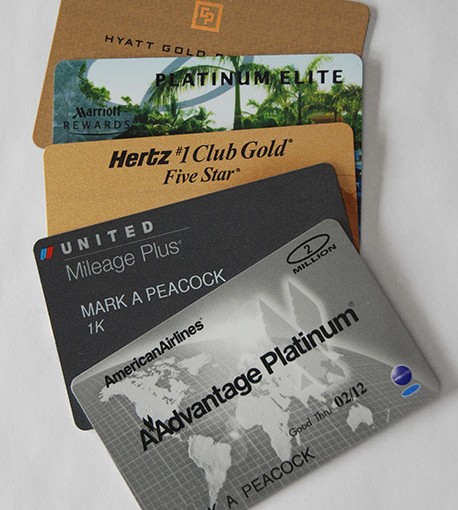
    • The Boston trip came up all of a sudden and I think is only my second post-pandemic business trip — my first was down to Miami in May 2021.  Maybe I’ve timed out of my road warrior status, because everything felt a bit off. Flying BNA-BOS, my choices were JetBlue or Delta. I don’t have status on either, so I choose JetBlue because it’s the earlier flight out. No status means I also have to pay $80-100 to reserve a seat after paying $450 for a one-way ticket. I could’ve expensed it through, but the annoyance vein in my temple started to pulsate. How dare you, JetBlue! And in return for my righteous anger, I get assigned, at the gate, a middle seat in the last boarding group. I resign myself to having to gate check my carry-on. But then when boarding is called, the pre-boarding announcement is for JetBlue and American elites. Ugh! Such an amateur mistake — not keeping track of alliances and partnerships.  If I’d put my Aadvantage Platinum number into my reservation instead of my plain TrueBlue number, I probably could’ve saved myself all that righteous anger and vein throbbing. Luckily though, I always carry my physical elite cards with me, so I show my Aadvantage Platinum card to the agent, get waved on, and find an empty bin right above my seat.  I was a little concerned about fitting my big carry-on in an A220 — it was my first time on this plane — but no problem. The overhead bins on this plane are huge.
    • After my window seat neighbor got settled, I put on my Bose noise-canceling headphones, dialed up the white noise app on my iPhone, and, middle seat be damned, nodded off sitting up straight. One thing I haven’t lost while working virtually — being able to fall asleep even before my 7am flight rotates off the runway.
    • Bridge Music — funkyGarden by Jeris (c) copyright 2020 Licensed under a Creative Commons Noncommercial Sampling Plus license. http://dig.ccmixter.org/files/VJ_Memes/61356 Ft: airtone, SackJo22, Analog By Nature

    Following Up

    • It wouldn’t be a proper Following Up section without yet another update on the US’s Real ID or the EU’s ETIAS rolling delays. Let’s do ETIAS, the EU’s pre-travel authorization system that gobs of click-bait websites have mislabeled a “European Visa.” The EU has tweaked their go-live date again — from last month’s May 2025 to a less definite/more nebulous “mid-2025” — which could be May or June or July. But I’m not sure why anyone in their right mind would want to flip the switch on this in the summer, during Europe’s peak tourist season. I’m taking the over on this; I don’t see it going live any earlier than October 2025. 
    • The US, on the other hand, seems to be sticking to their May 2025 date — for now. Remember, the initial deadline for needing a Real ID to board a commercial flight was January 2018 — which then got kicked to October 2020. But then COVID hit and in April 2020, soon after just about every government building was emptied out and locked up, the bright sparks at Dept of Homeland Security decided that driving crowds of people toward closed DMVs to replace their old driver’s licenses wouldn’t be great and pushed the deadline a year to October 2021. Which, we’ll all remember, wasn’t that much better — at least with regards to DMV accessibility. I remember lining up outside, in December 2021, in Chicago at a DMV to renew my driver’s license. And so another push, 19 months to May 2023. And then last December, they pushed it another 2 years to May 2025 because — who knows. So the US has got nothing to say to the EU. But on my flights a couple of weeks ago, I started seeing new signage “RealID coming in May 2025”; even the Delta app, when I checked in for my BOS-LGA flight, had a banner about it. Huh? I mean, why wind everyone up about a deadline that’s 18 months away and, if the kabuki theater of the last 5 years is any guide, will get pushed again. 
    • Now where DHS is moving much faster is rolling out biometrics to airport and customs checkpoints. Over the years here on TravelCommons, I have talked about my experiences with biometrics usage — starting with my first fingerprint scan back in the late ‘90’s so I could skip the US customs line at Toronto-Pearson Airport, then in 2008 letting the first iteration of CLEAR scan my eyeballs in exchange for a shortcut to the front of the TSA line, then in 2011 a background check and another fingerprint scan for Global Entry so I could skip all the US customs lines — so yes, I’ll do damn close to anything to skip an airport line. But over the past couple of years, it feels like DHS has been turning it up a notch. October 2021, our first international flight in a couple of years, on AirFrance, the gate agent took our picture when boarding and didn’t need to see our boarding pass. Last April, returning from the Netherlands, the Global Entry kiosk no longer needed to scan my fingerprints; a quick side glance at the camera was enough to recognize me and let me through. And now, a couple of weeks ago, at the BNA PreCheck line, a big sign “Identity Verification Technology. Biometrics technology is available at this checkpoint. Your participation is optional.” This is new; it wasn’t there 2 months ago when we flew out to Maine. I give my driver’s license to the TSA guy standing next to something like a camera on a stick; it looks a bit like the electronic customs gates at LHR. He puts my ID in the machine, tells me to look at the camera, then looks at the screen and waves me through. A couple of things here — I’m not sure how this is different from the TSA guy looking at my face and comparing it to the picture on my license; and I didn’t see any way that my participation was optional. And I certainly didn’t get to skip any lines for the biometric giveaway. I’ve been trying since April to get someone from TSA or DHS on the podcast to talk about this biometrics push and have gotten nothing but repeated “I’ll get back to you soon” from the TSA press secretary. Now maybe this new equipment gets us to the automated checkpoints I’ve been through in some smaller European airports — which could shorten the security lines — but I had to dig pretty deep into a bunch of jargon-y PDF documents on the TSA website to get even a hint of any benefits to the regular traveler. I dunno, maybe all the benefits are waiting on Real ID. Once everyone has that little gold star on their license, it’s clear sailing.
    • And if you have any travel stories, questions, comments, tips, rants – the voice of the traveler, send ’em along to comments@travelcommons.com — you can send a Twitter (X?) message to mpeacock, post your thoughts on the TravelCommons’ Facebook page, or on the Instagram account at travelcommons — or you can skip all that social media stuff and post your comments on the web site at TravelCommons.com.
    • Bridge Music — Xena’s Kiss / Medea’s Kiss by mwic (c) copyright 2018 Licensed under a Creative Commons Attribution (3.0) license. http://dig.ccmixter.org/files/mwic/58883

    Renting a Tesla

    • After 2, 3? episodes of nattering on about electric vehicles, I decided to take up Hertz on their incessant email offers and rented a Tesla for my Boston business trip — giving EVs a try, but on someone else’s dime. The client site was only 18 miles from BOS and Google Maps told me there was a Tesla Supercharger nearby, so range risk wouldn’t be an issue. A couple of days before my flight, Hertz sent me an email which was pretty much a crash course on operating a Tesla, pictures, text, links to YouTube videos. I was both impressed and slightly overwhelmed, but I grabbed a beer out of the fridge — a 16 oz, this was going to take a bit — and ground through all the email links — which, I think, saved me time trying to figure things out in the Hertz lot. 
    • Over the past couple of years, we’ve talked about barren Hertz lots; renters queueing up for cars to appear. So when the Hertz employee pointed me to an EV aisle full up with 10-12 Tesla Model 3’s and a couple of Polestars it took me a moment to process all my options. My usual strategy, when I have a choice, is to run through the cars on the aisle and pick the one with the lowest mileage. But I wasn’t quite sure if that worked with a Tesla, and if it did, I didn’t recall from my crash course where to find the odometer. So, I chose a black Model 3 that had the least beat-up wheel rims — trying to minimize any damage arguments at return time.
    • After I got in, powered it up, and got acclimated to the massive tablet screen in the center console, I saw that the battery level was at 69%. One of the crash course’s tutorials said it’d be at 100% and I’d be charged if I returned it under 80%. I snapped a picture of the battery display and told the guy at the exit gate. He shrugged and told me to bring it back at the same level. He didn’t seem very concerned.
    • Coming out of the lot, the Tesla drove fine. After a couple of days, the battery had dropped into the mid-40s, so I decided to try out the Tesla Supercharger network. Tesla’s nav app directed me to a nearby shopping center. The chargers were in the farthest back corner of the Target parking lot. I backed in — looking at the other Teslas, it seemed the thing to do — plugged in the charger, and was a little shocked to see that it would take an hour to get me charged up to 100%. Now Irene would have no problem with this — an excuse to spend an hour shopping in Target? Bring it on. Me, not so much. Luckily, there was a Chipotle across the street, so I locked the car and walked over to grab lunch. When I got back, the car still had another 5 minutes before it got to 100%. I’m glad I didn’t wait ‘til it got down to 20%.
    • Though maybe I should’ve waited, because by my last day, I’d driven off a chunk of that 100% charge and, heading back to BOS, I wasn’t completely confident that I’d arrive with the battery at the 69% level I’d picked it up at. And I guess that’s a place where an EV rental requires a bit more logistical planning. A regular gas car — there’s loads of places I could hit to quickly splash in a couple of last-minute gallons to keep the fuel gauge on Full. An EV? The Tesla nav app vectored me way off my usual I-90/I-93 tunnel routes to BOS, taking me way east, past some marshes just off the bay, to the back corner of another Target parking lot where I backed in amid a half-dozen other Teslas, their drivers all sitting there, working their phones, waiting for their cars to charge. I waited 10 minutes, splashed in enough electricity to get the battery gauge to 75%, and lit out. But I probably didn’t need to worry. Turning the car in, I told the Hertz guy I was under 80% charge because I got the car at 69%. No problem, he said. He didn’t seem very concerned. Honestly, I’ve never seen Hertz guys so nonchalant about their cars; especially after Hertz said in their last earnings call that EV repair costs are about double what they pay for gas-powered cars.
    • On the shuttle bus to the terminal, I opened the email receipt and saw that the $15 charge from my first Supercharger visit had made it onto my invoice. A couple of things crossed my mind — definitely less than what I would’ve spent filling up a gas car, and I was impressed by the quick turnaround time because the toll charge I incurred two days before that, when leaving Logan through one of the tunnels, still hasn’t shown up and so is going to raise some eyebrows in A/P when I eventually try to expense it through. So all told, pretty good experience; kudos to Hertz. And now they’re trying to get me to rent a Polestar at LHR in a couple of weeks for our drive through the Devon countryside. Ehh, I don’t think I’ll push my luck.
    • Bridge Music — i knew by bridges (c) copyright 2008 Licensed under a Creative Commons Attribution Noncommercial (3.0) license. Ft: shannonsongs

    2023 Traveler’s Gift Guide

    • Every couple of years around this time I update my gift guide to give folks suggestions for the frequent traveler in their lives. Or, if you are the frequent traveler, a list of hints you might want to drop on family members looking for ideas. The first time I did a gift guide, I published Thanksgiving week so people would have it for the Black Friday sales. But now with the Christmas shopping season having blown past that traditional Thanksgiving Friday start and with radio stations barely able to wait for the kids to finish counting their Halloween candy haul before flipping the switch on their All-Christmas-Music format, I’ve dragged the publishing date up to the front of November. The 2020 gift guide was probably the most unique. All the restaurant lockdowns and indoor dining limits had us eating in our hotel rooms which put bring-your-own dining sets and in-room coffee brewing kits onto the gift list. The disappearance of airport and in-flight mask mandates means that #1 gift on that year’s list — comfortable masks — has also dropped off.
    • What hasn’t dropped off and is regularly at the top of my list is Battery Packs.  We’ve talked a lot about how we can’t easily travel anymore without a working mobile phone. It holds our boarding passes, gives us gate change and flight delay notifications, unlocks our car (if we’ve rented a Tesla), routes us around traffic jams, and connects us to our Airbnb hosts. So having that second or third charge immediately available is critical to making it through a long travel day. I carry a Zendure SuperMini power bank in my bag because its USB-C port quickly tops up my iPhone while the USB-A port takes care of my Samsung tablet. I’ve updated Irene’s lipstick charger to an Anker with a flip-out Lighting connector so she doesn’t have to fish around in her purse for a cable. But there are a lot of choices; just pick one.. or two. 
    • Noise Canceling Headphones are also a perennial on my gift lists. I’ve been carrying Bose headphones for at least 15 years. Back then, the QC-3’s were de rigueur for any self-respecting road warrior. The “ah ha” moment for me was on a United Express Dash 8 turboprop flying to Sioux City, IA with an intermediate stop in Waterloo, IA. I was in a window seat on the wing and the droning of the prop just encased me; I couldn’t think of anything else — until I flicked the switch on my Bose. I’m now on my 3rd pair, the Bose 700’s. They’re not compact but they continue to earn their space in my travel bag. I picked up a pair of Apple AirPod Pros on a good Prime Day sale last month and so was able to compare the Bose and AirPod noise canceling on my Boston and New York flights. The AirPods are good, but not as good as the Bose. And the battery doesn’t last as long, which makes sense given the size differential. For me, the AirPod Pros are good for a 2-2.5-hr flight, but for, say, my upcoming UK trip, I’ll be packing the Bose.
    • Apple AirTags earned a place on the list last October when I could see, sitting on the plane, that our bags weren’t going to make the connection in Newark on our way home from Rome. This didn’t get our bag to us, but it did save us the 30 minutes of suspense waiting for them to come out on the carousel, and let us instead go straight to the baggage service agent, be the first in line to file our report, and then head home after a very long travel day. They were definitely worth the purchase price just for that.
    • For someone making the transition from virtual work to physical world road warrior, how ‘bout a Black 20-inch Carry-On Bag. Black not only makes you look thinner, it makes your bag look thinner to gate agents hunting for bag-sizer bait. My daughter had a baby blue roller bag for the longest time. She loved that color, and it was easy to spot on the luggage carousel, which was a good thing because it ended up there a lot because gate agents were always pulling her out of line to gate check that bag. So get a nondescript black bag with a set of clever, neon-colored luggage tags as a stocking stuffer. If you’re flying a budget airline that’s a stickler on size, get a hard-shell bag. It’ll keep its dimensions better when overstuffed, and the polycarbonate shell will slide past the metal bars of the sizer easier than the ballistic nylon of a soft-sided bag. You could range up in size to a 22-incher, but a 20-incher should safely fit in the overhead of just about every plane. I’m a big fan of the TravelPro line; for me they strike the right balance between price and quality. But there are lots — maybe way too many — options out there for you to choose from.
    • Here’s a new list entrant — a Travel Power Strip. Potentially one of the least sexy things I could put on a gift list, but I’ve always tried to populate these with the things I actually use — and find myself needing the most when I’m on the road. And you think after, I dunno, 20 years of travelers needing to charge a bunch of electronics — PCs, mobile phones, tablets — hotels, B&B’s, resorts would put outlets that work on the top of flat surfaces like nightstands, end tables, desks, …. But I’d say that on half of my trips this year, I had to move furniture or get down on my hands and knees to find a single outlet. So you can get one of those cube-shaped travel adapters that show up on most travel gift guides, and still have to crawl under furniture every time you need to plug something new in. And that’s why I recommend a compact power strip — you move the nightstand once to reach down and plug it in, and then set the other end — the end with the outlets, the end you’ll regularly need easy access to — on top of the nightstand. Any power strip you buy nowadays will have some mix of USB and regular AC outlets. Anker has a seemingly infinite range of them. But if Anker is a little boring for you, way back in episode #159 in January 2020, long-time listener Arnoud Heijnis gave high marks to a circular power strip called the Power Bagel. Three years on, MOGICS, the manufacturer, now sells an updated version called the Super Bagel. Of course! With a lot of positive reviews confirming Arnoud’s view that the circle, the bagel shape, let you use every outlet, even when using those big wall wart power supplies
    • So there you go, 5 gift ideas to fit all budgets, and with more than enough time to beat any early on-line shipping deadline. Check out the show notes for links, and happy shopping!
    • Note: None of these suggestions are paid endorsements. This post contains links to Amazon where I can earn a small commission from qualifying purchases.

    Closing

    • Closing music — Pictures of You by Evangeline
    • OK, that’s it, that’s the end of TravelCommons podcast #197
    • I hope you enjoyed it and I hope you decide to stay subscribed.
    • As always, you can find us and listen to the current episodes on all the main podcast sites — Apple Podcasts, Spotify, SoundCloud, Google Podcasts, and Amazon Music. And you can always Alexa, Siri, or Google to play TravelCommons on your smart speakers. 
    • You can click on the link in this episode’s description in your podcast app to get to the show notes page at TravelCommons.com for a transcript of the episode and links to items on the gift guide. If you’re not yet subscribed, there’s a drop down Subscribe menu at the top of TravelCommon’s home page. And along the side of the page, you’ll find links to all the TravelCommons’ socials.
    • If you have a story, thought, comment, gripe – the voice of the traveler — send ‘em along, text or audio file, to comments@travelcommons.com or to mpeacock on Twitter, write them on the TravelCommons page on Facebook or Instagram, or post them on our website at travelcommons.com.  And thanks to everyone who has taken the time to send in emails, Tweets and post comments on the website. I really appreciate it.
    • And until we talk again, safe travels; and thanks for stopping by the TravelCommons.
    • Follow me on Twitter
    • “Like” the TravelCommons Facebook page
    • Direct link to the show
  • Podcast #159 — Planning the Trip of a Lifetime in Southeast Asia

    Podcast #159 — Planning the Trip of a Lifetime in Southeast Asia

    Just put my dragon’s den on Airbnb

    January is a big travel planning month; people thinking about about the places they want to visit, spending days on the Internet researching itineraries, and putting in their week’s vacation requests. But what about a 9-week sabbatical you’ve worked 7 years for? In this episode, we talk about that kind of extreme travel planning. All this and more at the direct link to the podcast file or listening to it right here by clicking on the arrow below.

    Here is the transcript of TravelCommons podcast #159:

    • Intro music — Warmth by Makkina
    • Coming to you today from the TravelCommons studio in Chicago, Illinois having finished 3 weeks of traveling down to Phoenix with one more to go. It’s been a mild winter — for Chicago — especially when compared to last winter, which means it’s been in the 20’s and 30’s as opposed to -23 as it was one morning last January. But even with a mild winter, I still appreciate the 70 degree days in Phoenix.
    • It’s a 4-hr flight between Chicago and Phoenix. I normally enjoy that amount of “unplugged” time to just read, listen to music, listen to podcasts. But a couple of weeks ago, I tweaked my back during a workout — not a big thing, I’ve done it many times before. But this time, the pain didn’t go away, it’s hung around on my left side, moving from back to hip to thigh, making it very uncomfortable to sit for long periods of time — like 4 hrs. Which has made me notice how long US carriers keep the “Fasten Seatbelt” sign on — like, forever. By the time that seatbelt sign finally goes off, my back is screaming — and the person next to me in the middle seat is pretty annoyed at my constant shifting. Back in episode #152, I talked about Southwest flights between Chicago and Nashville keeping the seatbelt sign on the entire hour-and-20-minutes. It hasn’t been that bad, but it’s easily been 45 minutes. And it isn’t just Southwest; United is doing the same thing. Quite a difference from, say, when Andrew and I flew Air Baltic back in October. 10,000 ft and “bing” that seat belt sign would go off, and we’d still be climbing. It doesn’t need to turn off that fast, but there’s gotta be a happy medium there somewhere.
    • With the mild winter and a little bit of luck, my flights to and from Phoenix have been pretty dependable — except for this week. On Monday, I started getting delay notices for my United 7:40pm flight right after lunch. United was doing their typical rolling delay exercise — it’s a 30 minutes; no, really an hour; no, we’re leaving at 9pm; just kidding, it’s really 9:40. I was OK with the 30 and 60-minute delays, but then when I get two more delays in a 40-minute span — now, something’s up. I call United. I get the Premier desk, which the guy tells me is in Chicago. I tell him the story — rolling delays have now gotten to 2 hrs; I don’t trust that this flight is going off, and I need to get to PHX tonight. The guy says, “Yup, I got it. Makes sense.” He tries to find me routings through LAX and SFO, but the connections don’t work. So he cancels and refunds my ticket — no hassle, no questions, no change fee. I love this guy. I pivot to Southwest and American, which both have 8:40 flights. I look at American’s seat map — nothing but middle seats. That’s just not going to work with my back, so it’s over to Southwest. I’m A-List, so I know with their open seating I’ll get an aisle seat. (Exhale) Haven’t done that dance in a while, so was a bit out of shape. But with one more trip to PHX left, I’m not looking to get back into that shape.
    • Bridge Music — Revolve mix by cinematrik (c) copyright 2005 Licensed under a Creative Commons Noncommercial Sampling Plus license. http://dig.ccmixter.org/files/hisboyelroy/430

    Following Up

    • Before writing a podcast, I go through all the interaction channels — website comments, Facebook comments, Instagram comments, Twitter replies, e-mails, … and inevitably I miss something. Which I have done since October when Arnoud Heijnis and I traded Twitter direct messages about travel converters. In episode #155, I’d talked about having to rummage around for European plug adaptors before my Krakow and Budapest trip, and how I’m always leaving them behind. Arnoud wrote –
      • Hi Mark, just caught up on your last two episodes. I also did the travel converter dance until someone recommended the Power Bagel. It’s so small and comes in handy not only as a travel adapter but also in hotel rooms with not enough power plugs, conference tables with one outlet etc. Iit never leaves my bag so thought I’d share.
    • A very belated thanks, Arnoud! Clicking through the link that Arnoud sent, the Power Bagel is a compact circular power strip of universal plugs and a couple of USB ports. They say that the circular design keeps large power adapters, like a Macbook power supply, from blocking outlets like they do on straight power strips. And then in the center hole, they store a universal plug adapter so you can plug the Power Bagel in most international outlets. Cool design and Arnoud vouches for it. Clicking around the web site, the company MOGICS seems to be a 3-person design company based in Singapore. They got started a few years back on Kickstarter and are in the middle of a new campaign for an upgraded version of the Power Bagel, called, of course, the Super Bagel that upgrades the plug adapter and adds a on-trend USB-C port. Kickstarter says the campaign ends on Feb 25th. I’ll include a link in the show notes for anyone interested.
    • Kickstarter seems to be the place for these things. I sent Arnoud a link to a travel adapter campaign that I joined. The Passport Go is a more traditional travel adapter — a big cube that will plug into most international outlets and has 3 USB-A and 1 USB-C plugs and one universal plug receptacle. I used it on my Baltics trip. For personal travel, most of my power needs seem to now be driven by USB cords rather than plugs — my iPhone did a rapid charge off the USB-C port, my tablet and headphones off the USB-A ports and since I don’t have enough hair to justify a blow dryer or curling iron, I never used the plug receptacle. Indeed, if I’d brought my Macbook Air, I could’ve powered that up off the USB-C port rather than bringing its power adapter. I’ll include a link to their Kickstarter page.
    • Back in episode #156, I talked about how I really liked electric scooters, using them to run around in Chicago and Charlottesville and DC, and down here in Phoenix. Whereas Chicago wrapped up their e-scooter pilot in October — which made sense; I don’t think those scooters would do well in the snow — Phoenix seemed the perfect place with perfect weather — no snow, not a lot of rain. And they seemed to have nailed one of the main problems with e-scooters — people leaving them lying everywhere, especially in the middle of sidewalks. In downtown Phoenix, you have to park them in designated areas, typically near sidewalk corners, inside a painted box. So it surprised me when I started coming down here in December that I saw only 2 scooter companies — Lime (which is partnered with Uber) and Spin (which is owned by the car company Ford). But then, a couple of weeks ago, Lime announced that they were pulling out — that they couldn’t make money in Phoenix — and a day or so later, all their scooters were gone. I don’t know what the right balance between scooter availability and public right-of-way is, but I hope Chicago and Phoenix and other cities can figure it out. This whole micro-mobility space — bike shares, e-scooters — is an important part of the urban transit mix. And, when the weather’s nice, they’re fun too!
    • In that same episode, I talked about buying a smaller bag, a TravelPro Maxlite 5 international carry-on size, to meet the smaller carry-on size and weight requirements of AirBaltic, which Andrew and I would be using to hop between Riga, Tallinn, and Helsinki on our Baltics beer and sauna tour. I said back then that I didn’t want to spend a lot of money on it because I’d only be using it for this Baltics trip and maybe some short couple-of-day trips, that my big Victorinox 22-incher would remain my primary bag. But as it turns out, I’ve been using the smaller TravelPro for these 4-day/3-night trips to Phoenix. Now, with temperatures in 70’s, I’m not having to bring heavy, thick clothes with me, but still, I’ve been pleasantly surprised by what I can pack into that smaller TravelPro. But, I think I’ll be back to the Victorinox for next week’s trip — I’m vectoring through Durango, CO for a ski weekend on the way home. Little colder, little more clothing; I think I’ll need all the space I can get.
    • And if you have any travel stories, questions, comments, tips, rants – the voice of the traveler, send ’em along — text or audio comment to comments@travelcommons.com — you can send a Twitter message to mpeacock, post your thoughts on the TravelCommons’ Facebook page or our Instagram account at travelcommons — or you can post comments on the web site at TravelCommons.com.
    • Bridge Music — Velvet Green of Mystery (Instrumental) by Doxent Zsigmond (c) copyright 2014 Licensed under a Creative Commons Attribution Noncommercial (3.0) license. http://dig.ccmixter.org/files/doxent/48114 Ft: Kthugha, Jeris, Martijn de Boer

    Planning the Trip of a Lifetime

    • We’ve talked on past episodes about trip planning — using guidebooks, social media, Google algorithms, shooting the gaps between bipolar TripAdvisor reviews, casting runes, consulting tarot cards,… And all that for a week’s vacation, maybe two. What about a 9-week vacation, a paid sabbatical that you’ve worked and waited 7 years for? Well, that’s the extreme travel planning that long-time TravelCommons listener and even longer time friend Allan Marko and his wife Chris Chufo faced last year. And with January being a big travel planning month, I asked Allan to talk to us about how he and Chris planned for a trip of a lifetime.
      • Mark: Allan. Thanks for joining us. It’s interesting that we’re having this conversation and this is the January episode because a lot of folks in January start to think start to make plans.
      • Allan: Yeah, it was a year ago. We left two days after Christmas, so we were gone from December 27th to February 27th, 2019. I’m getting daily reminders from Facebook.
      • Mark: So give us a little bit of background on the trip. It was a sabbatical. How long was it? What were some of your thoughts on it?
      • Allan: Well, her company allows, after seven years of employment, you could take a chunk of time off. In the case of her company, you’re allowed to take a number of weeks off. And if you take it at a certain time of year, the Christmas holidays, you could get an extra week and you can clamp on two weeks of vacation. So that would give us a total of nine weeks, which was a very attractive option to take that much time off in one chunk, never having done anything longer than a three-week vacation.
      • Mark: Nine weeks; trip of a lifetime. There’re two sides of that one is Wow, that’s pretty exciting: The other side of that is – Wow, what am I going to do? And how do I start to wrap my head around it?
      • Allan: It’s like it’s exciting to think about it first. Then it’s kind of daunting to think about. It’s kind of like — it’s this huge thing to plan. It’s a mountain to climb. It’s just almost overwhelming. When you start thinking about all the details that you’re gonna have to figure out.
      • Mark: So, unpack that. How did you start to climb that mountain?
      • Allan: We decided that we really wanted to do one big chunk of time like you said. Trip of a lifetime is a really good way to put it, because that’s how we were thinking about it. We’re also thinking about let’s go someplace we haven’t been before. We wanted to do something that would be more difficult to do when we’re older, when we’re retired, and we like warm weather vacations. So, knowing we had to take it during the holiday time, to get the advantage of those extra weeks. We decided that it’s kind of naturally pointing towards Southeast Asia for us.
      • Mark: So at least that sort of narrowed it down to a quarter of the globe. Right?
      • Allan: Yeah, it’s also like, where could we go for that much time? Right? And so you’ve got a lace a few destinations together, and through our planning, it kind of even made more sense to go through adjacent countries in Southeast Asia.
      • Mark: So now we’ve got it. We’ve gone from a complete blank slate to at least an area. So after you’ve got it narrowed down to an area to Southeast Asia, what was your what was your next thought process? So how did you then begin to piece the details together?
      • Allan: We definitely had a hit list of countries who wanted to visit. We knew we wanted to go to Vietnam. We knew we wanted to spend some time on the beaches in Thailand and speaking with some good friends of ours who have traveled extensively and lived for many years at a time in that part of the world. We had a few meetings with them where we did some brainstorming. Also, in part of my research, I found itinerary. I mean, there’s a ton of information available online. I kept coming back to reference to banana pancake route that a lot of Backpackers took. And it’s kind of this classic route through Vietnam and Cambodia, Laos and Thailand.
      • Mark: So how did like banana pancake route, is that just Is that just the shape of the route? Or it was there. Is there a pancake house somewhere that like?
      • Allan: I think I looked that up originally, and I can’t remember why it has that name, but it’s quite interesting. I basically took that and modified it to our further discussions with our friends and between Chris and I. Some things we weren’t really interested in. We didn’t have enough time to do the complete routing. There were certain things I didn’t want to do, like spending several days getting from Siem Reap in Cambodia into northern Thailand. I didn’t want to take bus travel. It was pretty primitive routing. So, there are certain things we opted to fly rather take a bus. Things like that like; a normal backpacker would take it. We’re gonna be adult backpackers. Wanted a little bit higher level of comfort.
      • Mark: There is a difference between your twenties and your fifties from a travel standpoint.
      • Allan: Although we wanted to travel with everything on our backs. We actually carried 40-liter backpacks on our back and 20-liter backpacks carried on the front.
      • Mark: How did that work for you guys?
      • Allan: It was great. It was hard to get used to at first, but it’s very efficient when you’re traveling. Part of that is you can carry everything on when we were taking flight. It just gives you a lot of freedom. And you’re kind of in control of your own destiny. So, you don’t have to deal with lost luggage kind of thing, which is a major concern when you’re that far away from home, losing everything.
      • Mark: I think if you’re doing point-to-point travel, that also could be a challenge. Because even if you lose something, somebody finds it, getting it caught up to you can be a challenge.
      • Allan: Right. As we were packing, when we were leaving the US, I started thinking about the luggage tags. We had luggage tags on our bags, of course, but we also had them inside the bags, and I start thinking — it’s not gonna help to have my home address on that, and my home phone number, because if it gets lost somewhere in Southeast Asia, they’re not gonna be able to get a hold of me. So, I printed out our first set of tags with our hotel address and the phone number of the hotel on their email address. and my email address. So, as we progressed along the way, we had kind of this ritual at breakfast the morning we were leaving. We would redo our luggage tags with the information of the destination we were going to that day, so if it got lost somehow in transit, it knew where to find out, right? They knew where to find us. Think about the old steamer trunks that were on ocean liners. They always had the destination, not the home address.
      • Mark: That’s interesting. That’s a good insight. Two questions… Were there some things you packed that, in hindsight, you didn’t need? And then the flip side of that, were there a couple of things that you said, “Wow, I really wish I had packed that.”
      • Allan: When you’re only bringing that much stuff, which isn’t that much for eight weeks, you’ve got to think through a few things. You’ve got to justify everything that you put in that pack we knew in advance. We’re gonna be going to a cold weather location in Hanoi that time of year. It could be in the 40’s-low 50’s and we ended up bringing some light down jackets and base layers that we typically used for skiing, things like that. Never having been to Hanoi before, once we got there, you can literally buy any of that stuff on the streets for $5. It would have been something where you just buy it there and leave it there. But we have spent considerably more money on that, or we brought some of our ski base layers with us that took up valuable space when we didn’t need to do that.
      • Mark: Flip side of that. Was there something that you didn’t have that you said, “Damn, I wish I had that” and that you couldn’t buy anywhere.
      • Allan: Right. We can’t buy your way out of the jam. We have never said that. I don’t remember saying that during the trip, that we ever wished we had something that we didn’t have. I got to tell you, there was a lot of thought put into the packing. Multiple use, whether it be pants or shirts, you’ve got to make sure almost everything is compatible with everything else. So you kind of keep it to a limited color range. A lot of black, you know, that kind of thing.
      • Mark: I’m a big fan of black.
      • Allan: You know, it works.
      • Mark: Goes with everything and it doesn’t show stains.
      • Allan: And a lot of wool clothing. The 72-hour wool T shirts. We were going to be in very, very hot, humid climates for most of the trip. And we brought a lot of things that we could wash in our hotel. But also, when you get to Southeast Asia, hotel laundry is very inexpensive. So there were a couple of times where we would just send out our entire backpack. It was literally like US$5 to get it all cleaned.
      • Mark: I had that same experience when we went thio. We went to Vietnam. We went in July. It was just, like, hugely hot. We did exactly the same thing. It was like, you know, let’s ship all this stuff out. We took it across the street. It was probably about US$3-5. Everything came back amazingly clean, but amazingly stiff. Like they had just beat the hell out of it.
      • Allan: Yes, we’d be in Thailand on island after we just sent our laundry and you’re driving down the street. And there’s some garage where you see three industrial washers and all these clothes hanging on a line. It’s like, I wonder if that’s our stuff.
      • Mark: You didn’t recognize your underwear or anything hanging. I guess that’s a good thing.
      • Allan: You’re going away for eight weeks. You certainly can’t bring that many pairs of underwear. You know you’re gonna be doing laundry in the hotel room sink, and you’ve got a plan accordingly.
      • Mark: When you are planning this, you know where you’re gonna want to go. You said, “OK, I’ve got a set of things and places I want to see. I’ve got some sort of structure, some sort of sequence that other folks have done, so it sort of makes sense.” So the next step, then, is how much travel did you book ahead of time versus how much was just sort of ad hoc; that you sorta let flow.
      • Allan: We thought about this a lot before we left. And deliberately, we decided we wanted to have our travel booked for our outbound and inbound flights. For the beginning and the end of the trip, I wanted to use miles for business class seats. But in between, we decided we just wanted to keep some flexibility to the trip and book as we went. And that, as being people that are really focused on details, it was an interesting challenge for us to let go like that. But it was in the end, it was very liberating to do it that way.
      • Mark: Did that ever catch you any anywhere along the way?
      • Allan: We talked that through before we left, and we decided that might be the price we pay to keep flexibility. You know, there were plenty of places to stay. There was one accommodation in Thailand where we actually booked the last room that was available. But it did work to our advantage a few times, not having booked in advance because as, an example, when we were on a cruise in Halong Bay in Vietnam, our next destination was gonna be the Central Coast. And some folks that we were traveling with on the same cruise, we were chatting them up, and they told us that they had just come from that area and there were just torrential rainstorms. And we looked at the weather. It was gonna be the same way for a week or so we decided to just avoid that part of the country. And we just flew directly to Ho Chin Minh City instead. So there were a couple of things like that, where our initial thoughts on itinerary, we decided to reroute.
      • Mark: That makes sense.
      • Allan: And so then we had our routing loosely established. We would spend a night every few days doing our advanced booking. So I always try to stay two steps ahead, about a week in advance. Sometimes your first choice accommodation would open up. We were just very loose that way. We’re covering a lot of ground, and one of the major things realized as we were going is, even though we had 8 weeks, it was still a limited time to see what we wanted to see. So I determined that we didn’t want to spend more than half a day transiting, if at all possible, between destinations. So, like I was saying earlier, instead of taking a 2-day bus ride where we would be in the middle of nowhere, we would just fly that and gain some time given the fact that in Southeast Asia, flights are very inexpensive and there are lots of flights going everywhere.
      • Mark: Was there a certain airline that you tended to use there? Was there one or did you just tend to use the national carriers?
      • Allan: I would do reviews of the national carriers and their safety records and things like that. The beginning of the trip, I was trying to use Vietnam Airlines. They have a fairly decent record, and they covered the first couple of countries we were in. When we got into Thailand, Thai was easy enough to use and they are Star Alliance. I’ve got a lot of United miles, so I’d stay on that wherever possible. And also the type of plane they were flying. I didn’t want to take a lot of regional jets if we could avoid doing that.
      • Mark: That probably makes it easier from a carry-on standpoint.
      • Allan: Yeah, exactly
      • Mark: Any visa issues that you had hopping between countries or did you line those all up before you left?
      • Allan: I did a lot of research on visas, and we had to get our visa before we left for Vietnam. We did that here in San Francisco. They give you a lot of options. I also decided to do a 2-entry/exit visa for Vietnam. You know, you never know what’s gonna happen when you’re in these countries that far away from home. And I wanted to have a way out if we had to exit into another country for whatever reason, political unrest or who knows what — typhoon storms, whatever. So I had the availability to go back into Vietnam, which I thought would be fairly easy to get back to the US from should we have to do something like that. It cost a little more, but I thought that was a good insurance policy to have. Most of the visas that we needed we could just obtain upon arrival. Again, I did a lot of research to make sure that was the case.
      • Mark: How much time do you think you invested in planning?
      • Allan: We knew we had a deadline as far as we knew what year we had to take the trip. And I knew in advance that I wanted to book our airline reservations for the business class seats approximately a year ahead of time. We were researching this trip for about 18 months. There’s a lot of research that goes into figuring out how long you spend in each place. And I found that had to be managed as we were going along. I thought about what we wanted to see. We’d talk about how long we wanted to spend in certain places. And there weren’t a lot of times where we said, “I wish we had an extra day here” because we had done that kind of legwork in advance, and we did the homework. But that comes with the time in the planning.
      • Mark: Well, Allan Marko, thank you very much. Thanks for sharing those stories with us on the TravelCommons podcast. Appreciate it.
      • Allan: It was fun. Thanks for having me. It was great to take the opportunity, doing research for this podcast to go through my old notes. And again, it was a year ago, and it’s just bringing back a lot of great memories.

    Closing

    • Closing music — Pictures of You by Evangeline
    • OK, that’s it, that’s the end of TravelCommons podcast #159
    • I hope you all enjoyed this podcast and I hope you decide to stay subscribed.
    • Link to TravelCommons Vietnam video
    • Find TravelCommons on Stitcher, SoundCloud, TuneIniTunes, and Spotify The links, along with the RSS feeds, are on the right-hand side of the TravelCommons website, under the heading Subscribe.
    • Right below that, in the Social Media section, are links to the TravelCommons Facebook page, and Twitter and Instagram feeds.
    • If you’re already subscribed, how ‘bout leaving us a review on one of the sites.
    • If you have a story, thought, comment, gripe – the voice of the traveler — send ‘em along, text or audio file, to comments@travelcommons.com or to @mpeacock on Twitter, or post them on the TravelCommons’ Facebook pageInstagram account,  or website at travelcommons.com. Thanks to everyone who has taken the time to send in e-mails, Tweets and post comments on the website
    • Follow me on Twitter
    • “Like” the TravelCommons Facebook page
    • Direct link to the show
  • 10 Best Gift Ideas for a New Traveler

    10 Best Gift Ideas for a New Traveler

    Coming into the heart of the Christmas shopping season, when people are getting desperate for gift ideas, I thought I’d offer up 10 suggestions for gifts that a new frequent traveler will actually use. While many gift lists are pushing Away luggage, Huzi infinity pillows, and Aesop travel kits (these companies must’ve splashed a lot of samples around the blog-o-sphere), I built my list based on my own travel kit; the things I use every travel day in the 40-50 trips I take each year.

    1. Black 20-inch carry-on suitcase Black not only makes you look thinner, it makes your bag look thinner to gate agents hunting for bag-sizer bait. Black also doesn’t show stains. A 20-incher should get your traveler on-board for 90% of airlines without a hassle. I go for the 2-wheeler with the biggest wheels I can find to make it an easier, smoother pull. But that’s my personal preference; a lot of travelers (including my wife) swear by their 4-wheel spinners. I bought the TravelPro Maxlite 5 a few months ago and highly recommend it.
    2. TSA Global Entry or Pre-Check Gift your new traveler with 5 years of time and hassle reduction. $100 for both; $85 for just Pre-Check. If you have a high-end card like an Amex Platinum, you might be able to put your card on their application and get the $100 fee back in a statement credit.
    3. Noise Canceling Headphones I mentioned in the last podcast episode how my trusty Bose QC-15s saved me from the propeller drone on my flights around the Baltics. The drone of jet or propeller engines disappear with the flick of a switch. But it’s the drop in stress level and blood pressure that accompanies that flick of the switch — you don’t realize how much that drone affects you. Everything in my briefcase has to earn its space. I’ve been carrying Bose headphones for, I dunno, 10, 15 years. They’re nowhere near compact, but I’ve never thought of leaving them behind. The models you want to look for — either the Bose QC-35 II or the Sony WH-1000XM3. Your generous gift will be lovingly appreciated by your new traveler.
    4. VPN Subscription Frequent travelers spend much of their time on public WiFi networks — airports, hotels, bars, coffee shops, …. Help them surf safe with a VPN subscription. I’ve used NordVPN and PIA. They both protect laptops, and iOS and Android phones and tablets. VPN providers always have some promotion going on. A one-year subscription is usually in the $35-85 range.
    5. Portable Power Bank Whatever the size or form factor — slimline, lipstick, high-capacity brick — having that second or third charge readily available is critical to get last-minute gate change notifications and when you’re using electronic boarding passes. It saves you from stalking cleaning crews to find a live power outlet on your layover, or negotiating with your seat mate for possession of outlet between you. It’s cheap peace of mind. The Anker PowerCore+ Mini is light enough (under 3 oz) to carry any time. I’ve also started carrying a Zendure Power Bank Supermini for faster iPhone 11 charging.
    6. Badger Hair Shaving Brush I switched from an electric razor to blade to make it easier to pass through London-Heathrow during one of their security crack-downs and never went back. To do it right, though, you need to have a badger hair shaving brush. I use a not-too-expensive Edwin Jagger brush that makes my morning shave into a bit of a meditation. If you want to go all in, get your traveler the Alluvian Shave Soap 5-Piece Travel Size Sampler. They smell great and are the perfect travel size.
    7. Merino Wool Scarf  A man’s scarf is an incredibly undervalued piece of intermediate winter wear. In an airplane cabin or hotel room where a coat is too much (especially in a middle seat), but there’s a draft that chills you, a scarf around the neck is just enough without being too much. You may have to teach your new traveler how to wear it, but you can have fun with colors. I’m a big fan of merino wool scarves — they’re warm, soft, and dry out if you spill water on them.
    8. Compression Socks Yes, I know that compression socks won’t generate the most ooh’s and aah’s when their wrapping is torn off. But not having to stuff swollen feet back into shoes after an international or transcontinental flight has made me appreciate them. I wear SB SOX Compression Socks, but any moderate compression sock should be fine.
    9. Short HDMI Cable and Dongle It’s a rare hotel room I walk into that doesn’t have a big flat-screen TV mounted to the wall. Many of these will let you log into your Netflix or HBO Go account so you can watch your content on the big screen. But why go through all that (and trust their data and network security set-up) when you can just plug your laptop into one of their spare HDMI ports? I use a basic 3-foot HDMI cable. Most of the common business laptops from Dell and Lenovo have HDMI ports but, because I have a MacBook Air, I also carry an Apple USB-C-to-HDMI adapter.
    10. Travel Notebook And finally, a stocking stuffer idea — a travel notebook, something to jot down thoughts, ideas, observations, to do lists while waiting for the flight to board, the train to come, or the room to be made up. Nothing extravagant — no leather embossed cover — but it should be small enough to fit in a pocket, but substantial, something that can survive being knocked around in the bottom of a briefcase, and with paper quality that will hold onto those thoughts for a while. I used to use a Moleskine pocket notebook but have switched over a similar-sized Clairefontaine A6 notebook. The soft cover fits better in a jeans back pocket, and the paper is more fountain-pen friendly. Or go a bit more whimsical and get a pack of Field Notes.

    Note: None of these suggestions are paid endorsements. This post contains links to Amazon where I can earn a small commission from qualifying purchases.

  • How To Choose The Best Carry-On Luggage

    How To Choose The Best Carry-On Luggage

    Rejected and Retired Suitcases

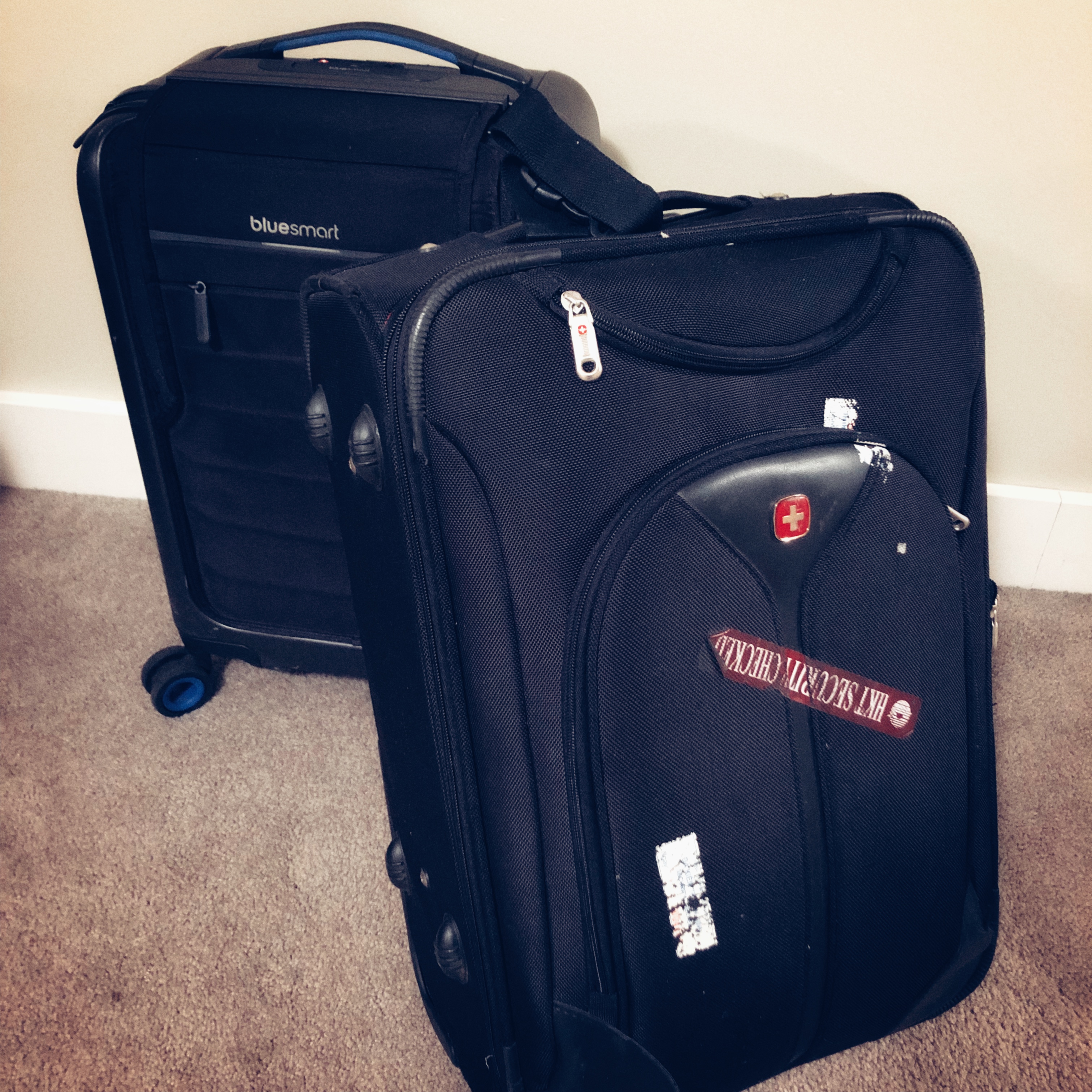
    I spend a lot of time with my luggage. I average 40-50 trips and 100,000 miles a year. I hate shopping for luggage, though. I’d putting off buying a new bag for a long time, as in years, until I was left with no working luggage when the handle died on my vintage Swiss Army black roller. Before that, the airlines forcibly grounded my Bluesmart smart bag for an unremovable lithium battery, and I had to retire my grey Samsonite bag after the wheels got wonky — the rubber wore off and the wheels splayed out after 2½ years of trundling it across New Orleans sidewalks.

    With my next trip looming, I was finally forced to shop for a new suitcase. But what to buy? I started with a survey of fellow travelers. Actually, it was more like stalking; I eyeballed every piece of luggage that passed by me for two weeks. Then I wandered through the basement luggage departments of a couple of Macy’s, opening bags and waving off clerks. After all that, I gave into my OCD and built this prioritized carry-on luggage shopping evaluation criteria:

    1. It has to fit into my carrier’s carry-on sizer. Now that may seem a bit of a “duh”, but there is some ambiguity; the approved height of a carry-on bag varies by airline between 19 and 22-inches. If I want to play it safe, I’d go for a 20-inch bag, but then I also want to maximize my carry-on space. Most US carriers accept a 22-inch bag and that’s mostly what I fly. So for my main bag, I go for maximum packing volume and choose a 22-inch bag.
    2. And my carrier’s weight limit (if they have one). Many European carriers have a size and a weight limit. Back in episode #121, I talked about the baggage strip tease I had to do at the Wow Air desk in Reykjavik to make their 7 kg/15 lbs carry-on weight limit. My 22-inch bag is 7 lbs, taking up almost half of the weight allowance. So last month, after booking some flights in and out of Riga, Latvia on AirBaltic, I bought a much lighter 20-inch bag
    3. It needs to be black. As I said in my Ruthless Packing Tips post, black not only makes you look thinner, it makes your bag look thinner to gate agents scanning for bag-sizer bait. Black also doesn’t show stains. My grey Samsonite bag, after 3-4 months of my travel schedule, started to look a lot less non-black. Smudges from grease on overhead bin hinges, muck from taxi trunks, muddy water from New Orleans gutters, spilled coffee…. It’s why I can’t have nice luggage.
    4. Two wheels, not four. This is more of a personal preference. My Bluesmart was a 4-wheel spinner and my wife swears by hers, but because the 4 wheels have to extend from the bottom of the bag, spinners sacrifice packing space for agility. Also, I find 4-wheelers have a tendency to wander off — rolling away down ramps or on uneven floors. I go for the 2-wheeler, and with the biggest wheels I can find to make it an easier, smoother pull. I was surprised how much this limited my selection. Spinners definitely rule.
    5. The inside of the suitcase has to be plain and empty. No clever collection of zipped compartments, or built-in suit hangers, or ratcheting clothes dividers; just a wide open box that I’m free to structure how I want for each trip. I was surprised how this also limited my selection. Indeed, in the end, I couldn’t find just a plain box, and settled for a bag where I could detach the suit hanger and clothes divider and stash them in the back of a closet somewhere, never to be seen again.
    6. Buy on-line. A recent study of 32,672 luggage price showed that you can save an average of $110/39% buying on-line. Walmart and Target’s on-line stores had the highest discounts. And while Amazon was in 10th place for average discount (in the 40% range), it was tops with the greatest variety — over 12,000 luggage items.

    So what did I buy? For my main bag, I bought a black Victorinox Werks Traveler 5.0 22-inch 2-wheeler. Victorinox is what used to be Swiss Army; I figured if my last bag survived 10 years of hard mileage, that said something for durability. However, Victorinox has moved to a new model year, to Werks 6.0, which doesn’t appear to have a 22-inch or a 2-wheel option. If you’re OK with spinners, the Werks 5.0 22-inch spinner is still available on Amazon. My 2-wheeler is a solid bag; highly recommended.

    For my European budget travel, and for 2-day trips where I don’t need all the space of the Victorinox, I landed on the the TravelPro Maxlite 5. It fit the AirBaltic dimensions, it’s one of the lighter bags I saw at 5.4 lbs, and my daughter has had a good run with her TravelPro bag. Mine has worked well on two trips — hopscotching through the Baltics and then a quick trip down to Charlottesville, VA. Another solid bag that’s highly recommended.

    Note: None of these suggestions are paid endorsements. This post contains links to Amazon where I can earn a small commission from qualifying purchases.

  • Podcast #148 — Travel Potpourri for $200, Alex

    Podcast #148 — Travel Potpourri for $200, Alex

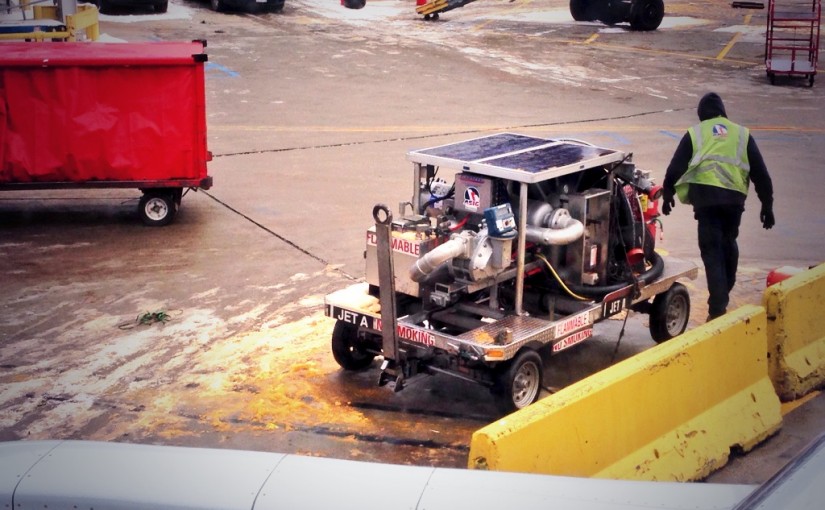
    Tough travel day when the deicing fluid freezes

    Flying home into the teeth of the polar vortex that gave Chicago its coldest day since January 1985 took a bit of flight changing strategy and some incredibly dedicated United ramp workers. I get on-trend by “Kondo-ing” my old suitcases, worry about visiting Sweden as it rapidly goes cashless, and gather up some odds-‘n’-ends from travel notebook into a Jeopardy-like topic “Travel Potpourri”. All this and more at the direct link to the podcast file or listening to it right here by clicking on the arrow below.

    Here is the transcript of TravelCommons podcast #148:

    • Intro music — Warmth by Makkina
    • Coming to you today from the TravelCommons studios outside of Chicago, IL, just trying to survive Nature’s mood swings — 16 straight days of snow, the much publicized polar vortex cold last week followed by a four-day 73 degree temp rise — from -22 on early Thursday morning (actual temperature; none of this wind chill guesstimating) to +51 degrees Monday afternoon, and then a 40-some degree drop back to the single digits by Friday. It’s climate change, alright. Just not all in the same direction. Last Wednesday was the second coldest day in Chicago history at -23 degrees. I was also here for the coldest day — January 20, 1985 — when it hit -27 degrees. I was just starting my last quarter at University of Chicago. It left an impression. After that, I didn’t interview with any Chicago companies. I took a job in Dallas and moved down in July — to temperatures averaging in the 90’s. Brilliant
    • I missed the wind-up to last week’s freeze fest. I flew out to New York on the Monday morning at the tail end of that 16-day snow fest. I had booked a Southwest flight from Chicago Midway to LaGuardia because Southwest now flies into the new renovated concourse in the otherwise Third World-ish Terminal B and, being that kind of travel geek, I wanted to check it out. Southwest had other plans though. Sunday late morning, about 18 hours before departure, Southwest emailed me that they were cancelling the flight. I was surprised at their proactivity, but it was a good thing, I guess, ‘cause it gave me time to move to United — no new terminal experience, but a lot better flight frequency.
    • Which turned out to be key on Wednesday, trying to fly home on that -23 degree day. Tuesday afternoon, I moved my flight home up from 3pm to 12 noon. I figured all the flights would be delayed and the later my flight, the worse the delay and the higher probability of cancellation. Looking at United’s flights, the 11am and 1pm flights were regional jets; the noon flight was a mainline Airbus. ORD was going to have to cut capacity on Weds — the ground crews could only be outside for short stretches, especially the guys on the deicing trucks. I figured they’d cancel the smaller regional jets first, which meant they’d move the folks from the 11am and 1pm flights onto the noon flight, meaning that flight might be delayed, but United wouldn’t want to cancel it.
    • And the next day, that’s pretty much how it played out. When I got to LaGuardia, those 11 and 1 flights were already cancelled. The noon flight still showed on-time, but checking the United and FlightAware apps, I could see that the Airbus was still in Chicago. That noon departure time was meaningless until that plane was in the air. I set up in the Amex Centurion Lounge, doing calls and emails, refreshing those apps every 10 minutes. The Airbus’ 8am departure time came and went, as did 9am, and 10am. It finally left around 10:40am Chicago time. I had lunch and a beer in the lounge — the food in those Centurion lounges is good… and free — and headed down for the gate. Walking down the concourse, I passed a Uniqlo vending machine selling “ultra light” down jackets for $70. (Amazing what they sell in airport vending machines) I thought for a moment about buying one to layer up when walking up the jet bridge in O’Hare. Given the extreme conditions, it was the most understandable 2½-hr delay I’ve ever had on United. I was incredibly grateful for the United ramp workers who were outside that day. I was happy to just get home that afternoon. Leaving the LGA Amex lounge for my gate, I ran into a Chicago colleague. He had 4 flights canceled on him already and, as I found out the next morning, didn’t get home until Thursday — after going through Richmond. Good thing for him the Amex Lounge drinks are free too
    • Bridge Music — Emily and the Djembe by mghicks (c) copyright 2008 Licensed under a Creative Commons Noncommercial Sampling Plus license. Ft: Emily via Briareus

    Following Up

    • As promised, I expanded the Santa Fe topic in December’s episode to a full 1,800-word post on the website — which might help explain why this episode slipped from the end of January to the beginning of February. The Reader’s Digest condensed version (my obligatory Baby Boomer cultural reference) goes something like this — Friday: hike, drink beer, eat a green chile cheeseburger; Saturday: hike, drink beer, eat a green chile cheeseburger, then drink margaritas and eat local New Mexican dishes; Sunday: wake up a little later, walk rather than hike, eat tamales from a cart. I liked Steve Frick’s comment “When Road Warriors relax” on his retweet. I did try to write this a bit more like a travel article than a blog post — more of a story than a sequential list of the places we went. But I did make sure to include links to all the good places we hit. If you haven’t already, give it a read and let me know your thoughts.
    • When I was going through ORD in January, during the partial government shutdown, I thanked the TSA screeners for showing up even though they weren’t getting paid. If I’m reading the GSA salary band schedule correctly, the typical TSA screener makes between 29 and 44 grand a year. They could’ve called in sick to drive an Uber to make up for the missed paychecks, but they didn’t — as opposed to Atlanta where I stood in some long PreCheck lines because of sick outs. Not that I blame the Atlanta TSA folks, but it made me appreciate the ORD TSA people even more.
    • Right at about a year ago, I broke down and bought a new Victorinox suitcase. I had beat a grey Samsonite into submission after 2½ years of trundling across New Orleans sidewalks. My well-traveled Swiss Army roller became unusable when its retractable handle stuck in the extended position. And then my Bluesmart smart bag was banned from by airlines because its battery wouldn’t eject. A couple of weeks ago, my wife called me upstairs. “We’ve got to declutter this attic. You need to Kondo-ize your suitcases,” she said. Wha…? She pointed over to where I’d stashed the Samsonite, the Swiss Army roller, and the Bluesmart. “You should only keep the suitcases that spark joy,” she said. Again, wha…? How does a broken suitcase spark joy? “Exactly!” she said. I pulled the old luggage tags off and threw them in the garbage can before she forced me to binge watch that Netflix series.
    • Over a year ago, way back in episode #136 in December 2017, I talked about feeling like I’m the last generation of cash payers. My younger colleagues — and my children — not only do they pay for everything with a card, many of them don’t even carry cash. It’s happening even faster in Sweden, where 95% of purchases by Millenials is electronic; to the point that half the country’s retailers think they’ll stop taking cash in 5-6 years. So I got a chuckle when long-time TravelCommons listener Allan Marko sent along this notice that he picked up while touring Laos last month –
      • “Please note that only new crisp notes are accepted in Laos. US$100 notes receiving a better exchange rate; US$ notes of the series number before 1996 as well as US$100 notes with the series number CB, dirty and/or damaged notes, or notes with any writing on it are not accepted in Laos. Please bring some small changes with you for your convenience.”
      • Cash is king in Laos — but only if it’s neat, tidy, and young
    • Heading to LGA last Weds morning, traffic was bad in Manhattan and so the wait times for Uber and Lyft were a bit silly. So instead, I let the hotel doorman guide me over to a black car. I saw the driver tip him $10, but I didn’t care — it was a nice clean car — a Lexus hybrid — and the driver knew the back ways to LGA, so we didn’t get jammed up on the highway. Everything was good — until we parked outside of Terminal B. I had asked the doorman before getting in — “Does he take a credit card?” “Oh yeah,” he said. And to give the driver credit, he tried to take my Amex, but for some reason his iPhone couldn’t get data at Terminal B Departures, which meant he couldn’t connect to Square, which meant he couldn’t take my card. After trying for 5 minutes, he went palms up. Lucky for him, I am a cash carrier and I had just enough to pay the fare. His tip? He’ll have to take that up with his mobile carrier.
    • We were working on our Spring Break vacation a few weeks back — we’re going to Brittany France at the end of March because, well, who needs sun and sand when you enjoy rain blowing in off the Atlantic? — and the flights from Chicago to Paris were looking just ugly. So we started opening up the search filters a bit, looking at some extended layovers and overnight stays. If done right, it can be fun. Back in episode #130 (I seem to be digging deep into the archives on this episode), I talked about how my son Andrew and I skipped a reasonable 90-minute connection in Vienna airport for full-day 8-hr one; dropped our bags in held luggage and then hopped a cab to the city center for a beer-and-schnitzel crawl. On the way over to Paris, SAS showed an 8-hr layover in Stockholm. Hmmm… we hadn’t been there since 2006 when we went to Sweden to pick up my Saab convertible. But I remember Arlanda airport being a long haul from Stockholm. Would it take too long getting to and from Stockholm? Thankfully, no. It’s a 20-minute train ride, and the Arlanda Express runs every 15 minutes. So, we’re gearing up for this time for a beer-and-herring crawl thanks to a Stockholm Craft Beer Bar custom Google Map from TravelCommons listener and Untappd friend Rob Cheshire. Though this whole cashless Sweden thing has me a bit worried. I read that more than 4,000 Swedes have implanted microchips in their hands to let them pay for things with just a wave. I’m hoping that I don’t have to have surgery to order a beer.
    • On the way back, again, the direct flights, or even the 1-stops from Paris to the US were priced high, both in dollars and in points, and not having anything critical on the books for the Monday of our return, we looked at some overnight stays. We decided to skip London; our time in Brittany will span Brexit Day and so we thought, why risk it? The other overnight options that popped up were Frankfurt and… Vienna. I was in Frankfurt last summer, and while I’d done that Vienna layover 2 years ago, Irene hasn’t been in Vienna since 1992, and then, only in the train station making a connection to Budapest. So we bookend our Brittany vacation with a micro-vacations in Sweden and Austria, and save a little money in air fare — which, to be honest, we’ll probably spend and then some in food and beer.
    • Which would be better than taking up United on their offer to buy up from Premiere Gold to Premiere Platinum for $2,000. Not to say there aren’t some benefits from that jump — jump one level up on the upgrade list, a little better bonus miles multiplier, though I don’t ever use my current 2-free-bag allotment, so bumping up to 3 doesn’t do me much. And now that Gold has been moved up to Boarding Group 1, it doesn’t give me a better shot at overhead space. I’ve said it before in previous episodes, I don’t think the incremental benefit from higher status is worth flying weird itineraries or inconvenient times. And it’s certainly not worth 2 grand.
    • And if you have any travel questions, a story, a comment, a travel tip – the voice of the traveler, send it along. The e-mail address is comments@travelcommons.com — you can send in an audio comment; a Twitter message to mpeacock, post your thoughts on the TravelCommons’ Facebook page or our new Instagram account at travelcommons — or you can always go old-school and post your thoughts on the web site at TravelCommons.com.
    • Bridge music — Dreaming by Astral (c) copyright 2013 Licensed under a Creative Commons Attribution Noncommercial (3.0) license.

    Travel Potpourri for $200, Alex

    • Doing a little start-of-the-year cleaning of my travel notebook. I always carry a 3½ x 5½ in notebook with me to jot down notes and thoughts. My current notebook is a stiff rather than a hard back so I don’t break it when I put it in the back pocket of my jeans, and has fountain-pen friendly Clairefontaine paper because, as I said in the last episode, it’s not like a lack for things to be fiddly about. This notebook has a couple of pages of letters and numbers written with different pens and inks, a few pages of Madrid beer bars with the ones we hit X’d, a half-dozen pages of really bad algebra when I was trying to help my daughter with a math test, and then the rest is bullet pointed blurbs, thoughts, observations that are the seed corn for the podcast.
    • Sometimes, though, there’s just not enough in one of those thoughts to grow it into an episode topic, not enough to get it beyond the 10-20 words that are already there. So, for lack of coming up with anything better, here’s a bit of a ramble through those stunted seed corns. Yeah, I’m selling this pretty well. I can hear you all reaching for the Skip button already.
    • Like, last fall when I was posing for my umpteenth identity badge at a new client, I thought I was given the camera a slight smile — like a passport photo smile, not showing teeth but a pleasant look. The security guard turned the camera around — it was deadpan neutral. If I hadn’t tried to smile, I would’ve been frowning. I reminded me to consciously make an effort to smile with folks like gate agents and TSA screeners because, as I get older, I must get more of a grumpy resting face. Which may explain some of the reaction I get from flight attendants.
    • One thought that almost made it out of the notebook — Hotels need to stop feeling the need to innovate in the bathroom. I remember writing this in the midst of a 4-day/3-hotel run where the taps and shower control in every hotel were different. I’m OK with innovating some parts of the room — like dropping in some cool new coffee maker, or an interesting radio or TV, or even a weird chair — but that’s gotta stop at the bathroom door. When I cross that threshold, I’m usually not completely awake, I’m often not wearing my glasses so can’t see real well if, indeed, I’ve actually turned on the light. And when I step in the shower, I’m definitely not wearing glasses, so small print instructions don’t go down well. I thought hotel showers had pretty much standardized on the single knob that turned on at Cold and got Hotter as you turned it clockwise, all the time delivering the same volume of water. But sometimes you move that knob back and forth to no effect, and you eventually figure out that you have to pull it to turn it on.  The worst, though, are the controls that go in the wrong direction — maybe counterclockwise, or push instead of pull. After I finally figure it out, I can understand what they were trying to do, and it might then make sense, but if it takes me more than 30 seconds to get my morning shower going, someone has failed — and I don’t think it’s me.
    • A year or so ago, when I was stuck for a half hour on a broken light rail train between the Atlanta terminals and the rental car center, I started wondering why the push for these trains; what’s the business case? ORD has shut down its train, the ATS, Airport Transit System, to modernize it and extend it to a new rental car center. The price? $800 million. PHX is spending $700 million to extend their SkyTrain to their rental car center. Tampa’s SkyConnect train that went in service last year cost over $400 million. And don’t get me started on Newark’s AirTrain. I mean, I get the need to cut down on diesel emissions from the rental buses, but it seems these airports could buy a whole lot of electric buses for less than that what their spending on a couple of miles of light rail. And when those trains break down, there’s no option but to wait — no other train can pull up beside yours and take everyone onward. You’re stuck until they figure it out.
    • Well, we’ve cleaned out the Travel Potpourri category, Alex. Let’s move on to Extreme Weather Delays for $200.

    Closing

    • Closing music — Pictures of You by Evangeline
    • OK, that’s it, that’s the end of TravelCommons podcast #148
    • I hope you all enjoyed this podcast and I hope you decide to stay subscribed.
    • Find TravelCommons on Stitcher, SoundCloud, TuneIniTunes, and now on Spotify
    • If you have a story, thought, comment, gripe – the voice of the traveler — send ‘em along, text or audio file, to comments@travelcommons.com or to @mpeacock on Twitter, or post them on the TravelCommons’ Facebook pageInstagram account,  or website at travelcommons.com. Thanks to everyone who has taken the time to send in e-mails, Tweets and post comments on the website
    • Bridge music from dig.ccmixter.org
    • Follow me on Twitter
    • “Like” the TravelCommons Facebook page
    • Direct link to the show
  • Podcast #146 — Rental Demolition Derby; Traveler Gift Guide

    Podcast #146 — Rental Demolition Derby; Traveler Gift Guide

    But I filled up the tank

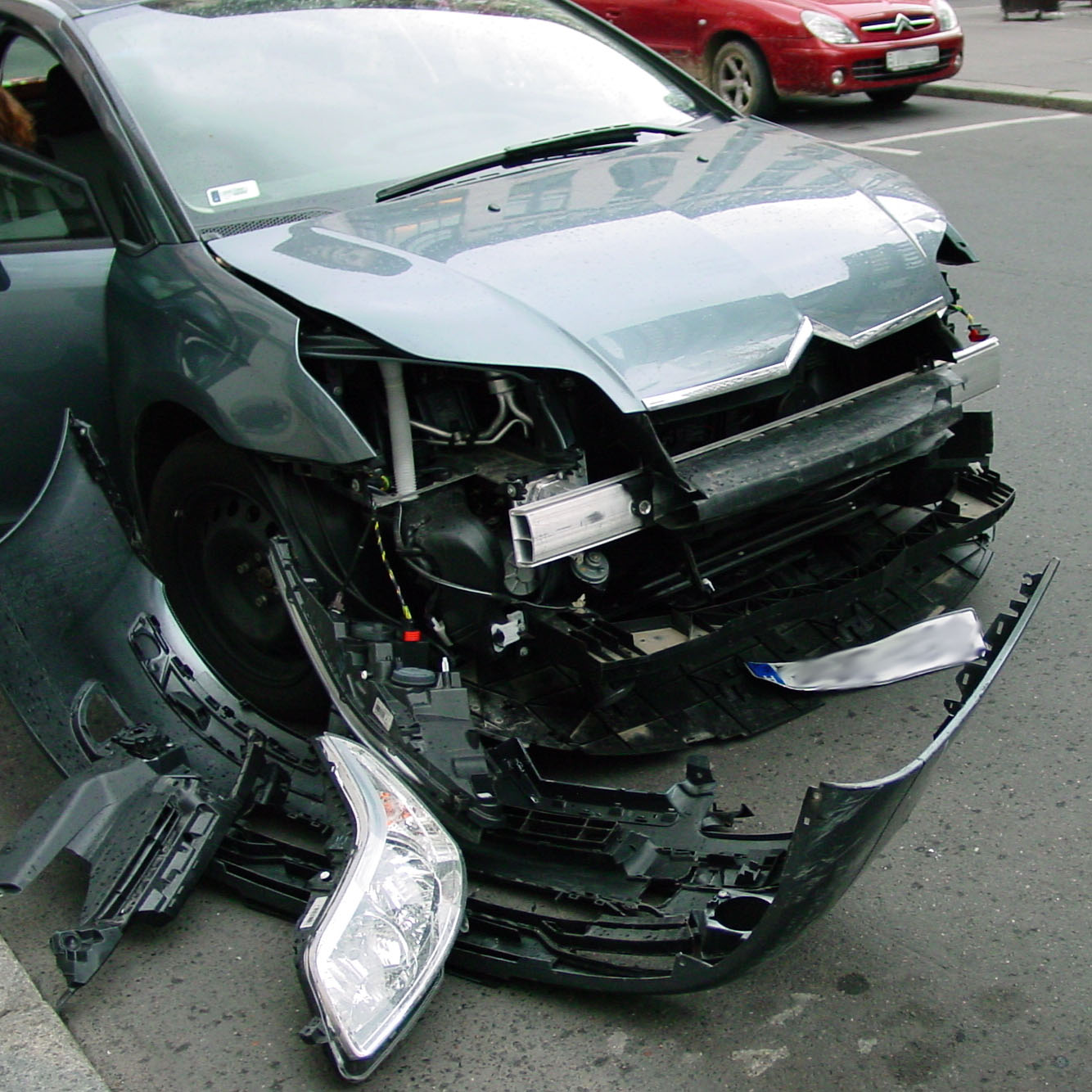
    Getting this posted just in time to give you something to listen to while jammed up in Thanksgiving traffic, be it on the road or in the airports. We talk about working the angles to maximize credit card benefits, which leads me to one more story from my fall trip to Europe — a rental car scrape that my Chase Visa card just paid off. We also talk about the Wall Street Journal’s new ranking of US airports and compare it to Skytrax’s international rankings. And we wrap up with my Christmas gift suggestions for the frequent traveler on your list.  All this and more at the direct link to the podcast file or listening to it right here by clicking on the arrow below.

    Here is the transcript of TravelCommons podcast #146:

    • Intro music — Warmth by Makkina
    • Coming to you today from the TravelCommons studios outside of Chicago, IL, trying to give you something to keep you entertained? Or at least occupied as you thread through the Thanksgiving travel traffic — be it airports, trains, or roadways — the forecasts are for a 5% increase over last year.
    • I’ve been trying to get this episode done for the past 2 weeks, but I just haven’t been able to make it happen. Since we last spoke, I’ve been in the midst of a weekly commute between Chicago and Dallas. It’s the standard consultant commute — leaving ORD Monday at 7am, leaving DFW Thursday at 5pm — the consulting rush hour. The lounges are packed, the Starbucks line tails way back; no matter what status, you’re in a middle seat if you don’t book 3 weeks ahead of time, and for a mere Advantage Platinum person, there’s no chance of an upgrade. I do click through American’s website to request an upgrade every week — more for the entertainment value than any expectation of getting a seat. This week, I was #35 on the upgrade list.
    • The traffic between these 2 American hubs is pretty amazing. The first week of this commute, taking the 6:30p flight back to Chicago, it was a fully-packed 787 Dreamliner. So I’m thinking — hey, I gotta have a good shot at an upgrade on this flight, with all the first and business class seats. Nope, though I did get up to the teens on the upgrade list — #15 to be exact. I counted myself lucky to get out of a center seat at the last minute.
    • I’m not a huge fan of DFW Airport. It’s a massive, spread-out place with a $4 toll charge to just to drive out of the place. The semi-circular terminals are also spread out affairs, with 3 security checkpoints arrayed around each perimeter, only one of which has PreCheck and really not well-marked. I tweeted that out in frustration a few weeks back after trundling around from checkpoint to checkpoint. The DFW Airport Twitter account quickly came back with a link to their website that has the location and hours of each checkpoint, with the PreCheck one bolded. Very useful. I have bookmarked on my iPhone now.
    • The next day, back in Chicago, I was downtown, getting a afternoon espresso jolt at Intelligentsia Coffee, not a completely full-on hipster joint — there no turntable playing vintage vinyl — but they are a bit fussy about their coffee. You place your order, they ask your name, and then you mill around a bit waiting for them to “craft” your coffee. I’m scrolling through e-mail, the barista is calling out names in the background. He calls out “Marco”. Completely on reflex, my inner child responds “Polo” and not quietly or under my breath. The guy sitting across from me looks up from his MacBook and starts laughing. The guy getting his coffee, Marco, apparently, turns around and gives me a slightly nasty look. Or maybe just puzzled. Or more likely a bit of both.
    • Bridge Music — Superstring by Indidginus

    Following Up

    • Allan Marko, a long-time listener, posted a travel story on the TravelCommons Facebook page –
      • I flew from SFO to MUC with a colleague last month on UAL Business Class (my first trip on a 787 – nice plane, and decent service from the UA team) We had an early morning arrival, and an hour to kill before our transportation arrived. My colleague’s 1K status couldn’t get us into the Lufthansa Arrivals Lounge for showers. I pulled up the Priority Pass app on my iPhone (membership came with my Chase Sapphire Reserve Card) and saw there was an Atlantic Lounge over in Terminal 1 that had shower facilities. We took the bus over to Terminal 1 which serves many European, Middle East, and other second-tier airlines. Pulling out my physical Priority Pass card (as opposed to the one in the app) I got both of us into the lounge and their two shower rooms. The lounge only offered the basics and needed of refresh, but we were happy to find it that morning (including the free beer!).
    • Allan, thanks for that, and good on you for figuring that all out. There are so many nooks and crannies in the card benefits world. There’s real value there, but you have to think about it and dig in a bit. The last time I used my Priority Pass (which I got with my Amex Platinum card) was last summer when I was connecting through DUB on my way to London. That lounge was similar to Allan’s MUC experience — pretty basic, a bit threadbare, but a reasonable place for a cup of tea and breakfast. My son Andrew used his Priority Pass card (also from his Chase card) to get a $28 credit at a restaurant in BOS which paid for a pre-flight meal and a couple of beers. “For the two of us, I think we were due $56 credit, but we wanted to be able to board the plane, so we cut ourselves off.” A colleague of mine told me that, in LGA, after Amex’s Centurion Lounge closed, his UA Gold status got him into the Air Canada lounge to wait out the rest of a long flight delay. “I only thought they let in Star Alliance Gold passengers for international flights, but let me in for my LGA-ORD flight.” And then there’s things like the 10 Gogo in-flight WiFi passes that I get every year with my Platinum card that I never burn through, or the $200 in annual statement credit that I think I get on UA and am always surprised when I see the charge for the in-flight tapas box reversed. And I’m reminded that I gotta pay more attention to this stuff because I hate leaving money on the table.
    • I will say that there are 2 good things about doing trunk line, hub-to-hub commute vs., say, my last regular commute, between ORD and Charlottesville, VA: great flight frequency — between AA and UA, there’s a flight at most every hour and that’s not even looking at SWA’s schedule out of Love Field; and, no RJs, no regional jets. I had forgotten how nice it is to be able to stand up straight in the aisle, let alone in the toilet. I take happiness in the small things.
    • I was talking to a colleague about this — flying AA, and UA, and SWA based on the most convenient times and price, and then maybe equipment (avoiding those RJs when I can). He said “I’m always amazed at how promiscuous you are in your airline choices.” It was an interesting word choice; one that kinda speaks to how invested people can get in their travel choices. Though it can also be a bit of Stockholm Syndrome for folks who have to fly out of fortress hubs, like this colleague who is in a very conflicted relationship with United out of Newark. “I think you’re more right than me,” he said. He’s 1K on United, their top tier. I’m mid-tier on United and American. Comparing notes, he hasn’t gotten any more upgrades than me, and though I board after 1Ks (or Exec Platinums on AA), I haven’t yet had a problem finding overhead space, even on packed flights to DFW. I’ve said it before — I don’t think there’s all that much difference between mid- and top-tier loyalty ranks; certainly not enough to take less convenient flights to earn the extra miles needed to stay top-tier.
    • A study of US airport growth hit the TravelCommons inbox on Halloween, saying that the two airports with the biggest drop in traffic are Memphis and Cincinnati. We talked about this back in the August episode when I was flying in and out of Cincinnati for 4 weeks straight. Nice airport, but I said back then it felt a bit overbuilt, and how both it and Memphis felt empty after after being “de-hubbed” by Delta. I wasn’t wrong. This new survey ground through 10 years of FAA traffic data and came to the same conclusion. Memphis lost the most traffic, down 62%. Cincinnati was second, losing 51% of its traffic.
    • So you can guess that neither made the Wall Street Journal’s ranking of the 20 largest US airports. Denver, Orlando and Phoenix at the top 3 finishers while the three NYC airports — LaGuardia, JFK, and Newark — brought up the rear, numbers 18, 19, and 20. Surprises? I dunno — maybe that LaGuardia wasn’t in last place given all the construction disruptions, that LAX was higher at #9 than Minneapolis-St Paul at #11, and that O’Hare is one spot higher than San Francisco, 15 vs. 16. That’s probably as much to do with their methodology as anything – how they weighed all the different score components, things like on-time arrivals, average TSA wait, cost of on-prem parking, average ticket cost. It’s interesting, though, to compare this ranking with Skytrax’s ranking of global airports. Denver, the top US airport on both lists; at #28 on Skytrax’s list. Cincinnati is the second US airport on the Skytrax list at #34, which makes sense when you look at the methodologies. Skytrax is focused on the in-airport experience — terminal seating, cleanliness, queue times, friendliness of staff. With these criteria, I don’t doubt that Cincinnati should rank high — it’s probably helped by now being a bit overbuilt — lots of space and fewer people to clean up after. The Journal’s is a bit more wide-ranging, looking both inside and outside the terminal, including things like average fares, rental-car taxes and fees, number of nonstop destinations and dominance of the largest airline to its rankings. I’ll put links to both in the show notes for those interesting in a deeper dive.
    • And if you have any travel questions, a story, a comment, a travel tip – the voice of the traveler, send it along. The e-mail address is comments@travelcommons.com — you can send in an audio comment; a Twitter message to mpeacock, post your thoughts on the TravelCommons’ Facebook page or our new Instagram account at travelcommons — or you can always go old-school and post your thoughts on the web site at TravelCommons.com.
    • Bridge Music — Suerte Mijo by Arthur Yoria

    Rental Demolition Derby

    • I’ve rented a lot of cars in my business travel and have never crashed one. I drive them off the lot, use them for 3-4 days, fill them back up with gas, return them to the lot, and walk away. So when I picked up a car from Hertz at Edinburgh airport back in September, I skipped all the insurance coverages, took the keys to a brand new Toyota hybrid cross-over, and drove off the lot. This was my fourth September in a row renting from the Hertz and had never had an incident — even when driving a manual on the left side of the road while shifting with my left hand — well, other than a Fiat that dropped its transmission, but that wasn’t my fault. So, no need to waste the collision damage waiver charges.
    • You can see where this is going. The next day, I was driving a narrow road in St Andrews, heading south out of town to go knock around the fishing villages on the north bank of the Firth of Forth. Roads in Scotland can get narrow. Driving the one-lane roads in the Highlands are an acquired talent, but this road is in a residential neighborhood, and I’ve driven it many times. So I couldn’t believe it when I heard a big thump as I drove past a van. Damn, I thought, had I drifted over to the left and popped the van’s rear view mirror? I pulled over and hopped out of the car. No, it was worse. There was a huge crease along the left side of the car; just missed the front wheel, so still driveable but very ugly. I walked down to the van. It belonged to a nearby community center. In a hurry to pick up kids from school, the driver had pulled out into me as I drove past. I pulled out an accident report form that Hertz had helpfully put in the glove compartment. We filled it out, skipped calling the police since no one was hurt.
    • So, again, not my fault, but I’m still, a few days later, I’m turning in a car with a full tank and some extra body work. I point out the damage to the Hertz guy. He pulls up a different tab on his Samsung tablet — click, click, click — damage, front left wing; damage, front left door; damage, rear left door — took a couple of pictures, and because I’d skipped the CDW, out burped the bill — £780 or about $1,000. They ran it through on my Chase Sapphire Visa card.
    • Which I gave to Hertz because, as I was poking through the nooks and crannies of the Chase website before I left home, I confirmed that card would cover UK rental car damage for rentals charged to it. The next week, back home, I found where to file a claim. They didn’t make it easy, but Google eventually uncovered it. I created a claim, uploaded a scan of the accident report, the Hertz receipt, and a couple of iPhone pictures of the damage. And then waited. The website said they’d take 2 weeks to review and get back to me. Three weeks later, I called. A guy said they’d sent me an email asking for two more documents from Hertz. Hmmm, never saw that, but who knows what gets caught up in the Spam filtering. They wanted a copy of the original Hertz agreement, which I had left in the car, and Hertz’s repair cost breakdown. OK, that was reasonable. I called Hertz and a very helpful woman put in a request and said get it in a week. Within a couple of days, Hertz sent me what I needed. I uploaded them to my claim and waited another 2 weeks. On Day 2 Weeks + 1, I called. A woman looked at my file, said it was still being reviewed by management, but said she’s put me on hold and ring them for status. Two minutes later, she picked up and they’d approved my claim. 48 hours later, the $1,000 showed up in my bank account. It took me a bit over 2 months, but Chase paid my claim with a minimum amount of hassle.
    • Now, while I’ve had a good rental car record in Scotland, my record in Hungary is not quite clean. Indeed, every time I’ve driven there, it’s been something. The last time I drove, we were a couple of blocks away from the rental return next to the Marriott on the Danube. Pulling into an intersection after stopping at a Stop sign, a motorcycle messenger plowed into the front of my car, flew across the hood, and landed in the street on the other side of the intersection. Luckily, he was in a full helmet and leathers and unhurt. The rental car, not so lucky. The entire front end was ripped off. The rental car guy showed up as the police were finishing their report. I pulled out suitcases out of the trunk and gave him the key. He looked at the front of his car in disbelief. We wheeled our bags down the sidewalk to the Marriott because this time, I had bought the collision damage waiver.
    • Bridge Music — Inception by Artemis

    Traveler Gift Guide

    • As we come into the Christmas shopping season, I thought it would be useful to pull together some suggestions for the frequent traveler in your life. Or, if you are the frequent traveler, a list of hints you might want to drop on family members looking for ideas.
    • Top of the list is a good battery charger. Whatever the size or form factor — slimline, lipstick, high-capacity brick — having that second or third charge readily available is critical to get notified of gate changes and when you’re using electronic boarding passes. It saves you from stalking cleaning crews to find a live power outlet on your layover, or negotiating with your seatmate for possession of outlet between you. I’m always looking to shed weight, so I retired the heavy no-name pack I picked up in the depths of Beijing’s Pearl Street Market for an Anker lipstick sized charger. I bought three and gave one to my wife and daughter. It’s cheap peace of mind.
    • On my shopping list, trying to catch up to what’s already a cold winter, is one of those puffy coats — but one of the thin ones, like the Patagonia Nano Puff, one that will smoosh down to nothing in the front pocket of my suitcase, or will fit in the crevices of a jammed full overhead bin. Right next that on the list, a man’s scarf is an incredibly undervalued piece of intermediate winter wear. In an airplane cabin or hotel room where a coat is too much (especially in a middle seat), but there’s a draft that chills you, a scarf around the neck is just enough without being too much. You may have to teach him how to wear it, but you can have fun with colors.
    • For someone just embarking on the road warrior life, how ‘bout a black 20-inch hardsided carry-on. Black not only makes you look thinner, it makes your bag look thinner to gate agents hunting for bag-sizer bait. Black also doesn’t show stains. A 20-incher should get on-board for 90% of airlines, and the hard sides are the easiest to get in and out of a bag sizer if the not-yet-statused traveler gets waylaid by an over-zealous gate agent.
    • If you’re going big for someone — or for those December babies, combining Christmas and birthday gifts — noise canceling headphones are a statement gift. The good ones — the Bose or Sonys that make the drone of the jet engines disappear with the flick of a switch — are a $300 number. But the drop in stress level and blood pressure that accompanies that flick of the switch — you don’t realize how much that drone affects you until you turn on your Bose — makes it worth the number. Everything in my briefcase has to earn its space. I’ve been carrying Bose headphones for, I dunno, 10, 15 years. They’re nowhere near compact, but I’ve never thought of leaving them behind.
    • Another idea for the music — or podcast lover, is a small portable Bluetooth speaker. I’ve started packing mine again for trips of a week or longer. For a couple of days, I’m fine with wearing headphones or using the phone speaker. But longer than that or if I’m with the family in, say, an Airbnb, I want something a bit more social. I’m still using my 6-year old Jambox speaker, the one that kinda created this category. The maker, Jawbone, went under last year, but the speaker still works. There are newer, better ones out there now, at all sorts of price points. The ones that can act as speaker phones are a nice to-have if they fit your budget.
    • And finally, a stocking stuffer idea — a travel notebook, something to jot down thoughts, ideas, observations, to do lists while waiting for the flight to board, the train to come, or the room to be made up. Nothing extravagant — no leather embossed cover — but it should be small enough to fit in a pocket, but substantial, something that can survive being knocked around in the bottom of a briefcase, and with paper quality that will hold onto those thoughts for a while. I used to use a Moleskine 3½x5½” notebook but have switched over a similar-sized A6 Clairefontaine. The soft cover fits better in a jeans back pocket, and the paper is more fountain-pen friendly. It’s $10 for a Moleskine, $7 for two Clairefontaines. Or go a bit more whimsical and get a 3-pack of Field Notes for $13. It’ll fit your budget and the stocking.
    • So there you go, something to fit all sizes and budgets in time for Black Friday and Cyber Monday, or if you’re just killing time waiting for your Thanksgiving flight to leave.

    Closing

    • Closing music — Pictures of You by Evangeline
    • OK, that’s it, that’s the end of TravelCommons podcast #146
    • I hope you all enjoyed this podcast and I hope you decide to stay subscribed.
    • Find TravelCommons on Stitcher, SoundCloud, TuneIniTunes, and now on Spotify
    • If you have a story, thought, comment, gripe – the voice of the traveler — send ‘em along, text or audio file, to comments@travelcommons.com or to @mpeacock on Twitter, or post them on the TravelCommons’ Facebook pageInstagram account,  or website at travelcommons.com. Thanks to everyone who has taken the time to send in e-mails, Tweets and post comments on the website
    • Bridge music from Magnatune
    • Follow me on Twitter
    • “Like” the TravelCommons Facebook page
    • Direct link to the show
  • Tips for Buying A Suitcase

    Tips for Buying A Suitcase

    Rejected and Retired Suitcases

    I’ve been putting off shopping for a new bag for a long time, as in years. Up until a few months ago, I was using a vintage Swiss Army black roller that still sported the Vietnamese and Hong Kong customs stickers it picked up in 2008. A few years ago, I’d retired it in favor of a grey Samsonite bag, but had to force the old vet back into service when the Samsonite’s rollers got wonky — the rubber wore off and the wheels splayed out after 2½ years of trundling across New Orleans sidewalks.

    But then, right before Thanksgiving, the old Swiss guy resigned, rendering itself unusable when its retractable handle stuck in the extended position. I was still able to avoid luggage shopping, though. I  pulled out the Bluesmart smart bag I’d bought from their Indiegogo fundraising campaign. I recharged the battery, updated its iPhone app, and put it back into service — only to read the next week that it was about to be banned by airlines because its lithium battery isn’t removable.

    With nothing left in the attic, I was finally forced to shop for a new suitcase. But what to buy? I started with a survey of fellow travelers. Actually, it was more like stalking; I eyeballed every piece of luggage that passed by me for two weeks. Then I wandered through the basement luggage departments of a couple of Macy’s, opening bags and waving off clerks. After all that, I gave into my OCD and built this prioritized list of suitcase shopping evaluation criteria:

    1. The bag has to be a carry-on. Now that may seem a bit of a “duh”, but there is some ambiguity; the approved height of a carry-on bag varies by airline between 19 and 22-inches. If I want to play it safe, I’d go for a 20-inch bag, but then I also want to maximize my carry-on space. Most US carriers accept a 22-inch bag and that’s mostly what I fly, and even when I’m on European carriers I usually have enough alliance status to glide past the baggage sizer. So I tilt the balance in favor of maximum packing volume and go for a 22-inch bag.
    2. It needs to be black. As I said in my Ruthless Packing Tips post, black not only makes you look thinner, it makes your bag look thinner to gate agents scanning for bag-sizer bait. Black also doesn’t show stains. My grey Samsonite bag, after 3-4 months of my travel schedule, started to look a lot less non-black. Smudges from grease on overhead bin hinges, muck from taxi trunks, muddy water from New Orleans gutters, spilled coffee…. It’s why I can’t have nice luggage.
    3. Two wheels, not four. This is more of a personal preference. My Bluesmart is a 4-wheel spinner and my wife swears by hers, but because the 4 wheels have to extend from the bottom of the bag, spinners sacrifice packing space for agility. Also, I find 4-wheelers have a tendency to wander off — rolling away down ramps or on uneven floors. I go for the 2-wheeler, and with the biggest wheels I can find to make it an easier, smoother pull. I was surprised how much this limited my selection. Spinners definitely rule.
    4. The inside of the suitcase has to be plain and empty. No clever collection of zipped compartments, or built-in suit hangers, or ratcheting clothes dividers; just a wide open box that I’m free to structure how I want for each trip. I was surprised how this also limited my selection. Indeed, in the end, I couldn’t find just a plain box, and settled for a bag where I could detach the suit hanger and clothes divider and stash that stuff up in Luggage Retirement Home next to the Bluesmart.
    5. Buy on-line. A recent study of 32,672 luggage price showed that you can save an average of $110/39% buying on-line. Walmart and Target’s on-line stores had the highest discounts. And while Amazon was in 10th place for average discount (in the 40% range), it was tops with the greatest variety — over 12,000 luggage items.
  • Podcast #88 — New Travel Goodies; Losing Elite Status

    Podcast #88 — New Travel Goodies; Losing Elite Status

    Full House, Platinum over 1K
    Full House, Platinum over 1K

    I’m getting ready for a stint of international travel — a couple trips to the UK, a vacation to Venice, and then bouncing around southern India. I visited the 2011 Travel Goods show in Chicago for a preview of the new travel goodies I’d be seeing in the shops this spring.  Wading through a front room stacked with luggage, I hit the gadget room with the interesting stuff and interviewed some of the company owners. I also talk about the growing number of wireless WiFi hotspots I’m seeing in hotels, and about the different ways Marriott and United Airlines dropped my frequent flier/frequent sleeper status after my traveling patterns changed.  Also, a listener tells us about a good Air France experience re-routing around an East Coast snow storm, and an audio comment about being sick on the road. Listen through to the end of the podcast for how to enter the latest TravelCommons contest. Here’s a direct link to the podcast file or you can listen to it right here by clicking on the arrow below.


    Here are the transcript from TravelCommons podcast #88:

    • Intro music — Warmth by Makkina
    • Coming to you yet again from the TravelCommons studios. I just can’t seem to get my act together enough to have everything written in time to record from a hotel room, though if there’s going to be an April episode, I’ll need to.  The beginning of April finds me in Venice, wrapping up the Spring Break I discussed in an earlier episode.  I then get a week at home with some family coming in, then down to Florida for a week, then to the UK, and then, the last week of April in India, bouncing across the usual suspects – Bangalore, Pune, and Chennai – with a weekend in the Kerala backwaters.
    • Not that March has been quiet.  I’m just back from a trip to New York earlier this week and then head down to Phoenix next week. I’m hoping to catch a Spring Training ball game while I’m down there.  I’ve been working off and on in Phoenix since the mid-‘90’s and have never been to a Spring Training game.  Every year I say I’m going to carve out time, and every year something comes up.  This year, though.  This will be the year.  Again working on that New Year’s travel resolution about taking more quick breaks.  The fact that I’m still thinking about a New Year’s resolution has to be breaking some sort of rule.
    • Stay with me ‘til the end of this episode – either the preferred way by listening or the ADD way by scrubbing – for a quick TravelCommons contest.
    • Bridge Music — Keep Your Motor Running by Dave Hole

    Following Up

    • OK, let’s see what bits and bobs I have been keeping track of on Evernote, and Twitter, and Facebook…
    • For everyone who watched all the way to the end of the Vietnam video back in September – and for those of you who haven’t, it’s still available on the web site, on the iTunes feed, and on the TravelCommons Facebook page – there’s a picture, a head shot of me, with a boa – the large snake, not the feathered thing — draped around my neck.  You can plainly see the receding graying hair. So it caught me up short when a United gate agent looked at my boarding pass, and then at me, and said “You look too young to have a Mileage Plus number this low.”  It worked – I gave her one of those customer service “attaboys’ they always send to their status fliers.  It reminded me of my last trip to India when the immigration agent looked at me a couple of times and said that I looked much younger than my passport photo.  Either I’ve unknowingly picked up the ability to cloud men’s minds or that picture of Dorian Grey I picked up at a garage sale actually works.
    • We’ve talked in past episodes about how for frequent travelers, the cost of wireless data plans can quickly pay for themselves in avoided hotel WiFi charges – 3-4 nights in a month — if you tend to stay in hotels that still charge for wireless or don’t have precious metal status at chains like Hilton or Marriott.  Anyhow, I’ve seen over the past few months a growing number of wireless hotspots when I pop open my laptop in my hotel room.  I see in the network browser at least 2-3 Verizon hotspots, a Sprint, and every once in a while, a Virgin hotspot.  I guess I shouldn’t be too surprised – most Android phones have 3G hotspot capabilities built in.  I guess it’s the power I’m more surprised about.  If I’m seeing 5 or 6 of these, they’re broadcasting farther than just the adjacent room.  And while most have security enabled, there’s always 1 or 2 running naked.  And this will only increase after AT&T iPhones get hotspot capability with iOS 4.3.  With only 11 channels in the US implementation of WiFi, there’s gonna be some congestion in the air soon.
    • Some good comments also came into the web site, the e-mail box and Twitter since the last episode…
    • Andre – who describes himself as a “long-time listener from Germany” – left this comment on the Winter Travel Tips post
      • Wanted to share a positive experience with an airline call center when I was travelling to the US in January. I flew Air France on the international legs – Stuttgart to Paris-DeGaulle to JFK and back, and used United miles for the domestic portion to Florida – JFK to Washington-Dulles to Miami.
      • As my departure approached, so did a massive snowstorm. Just as I finished packing my luggage the night before departure, Air France e-mailed me that my flight out of Kennedy was canceled.  Indeed, AF kept all 4 of their JFK flights in Paris to keep their schedule from getting screwed up. I called the AF call center. I said that I’m currently in Miami and asked if there was flight to Paris out of here or DC. After waiting on hold for a while the agent transferred me to a special Delta help desk, warning me that I might have to pay extra to fly out of MIA. Next agent told me the same, but she had to talk to AF in Paris anyways.
      • After another wait, she came back, totally astonished that AF, not only accepted the re-routing, but also did that free of charge. I guess they were just happy to have one less passenger standing around in New York.
      • So, there are still moments where you think that you are a valued customer and they care about you.
    • Andre, thanks for that story.  This was a tough winter in the US.  I have a friend from Detroit who was in Boston one week and supposed to be in New York the next.  One of those storms blew through, cancelled his flight, and his next available flight home was the following Monday, when he was supposed to be flying back to New York.  He just hung around Boston for the weekend, bought some new underwear, and then caught Amtrak down to New York Monday morning – much less stressful.
    • Peter Zurich sent in a note about the running thread on the TSA’s full body scanners, specifically about my observation in the last episode about the partial roll out of the scanners.  What good was it to scan 100% of the passengers in ORD’s Terminal 1 last Monday morning – pushing security lines down the concourse, and yet have no scanners at all in alternative airports like Ft Myers, FL.  In this same vein, Peter writes
      • I am all onboard for security, but what we have now is security theatre that is just another meaningless escalation from x-ray to liquid ban to shoes off.  We joked about what a good thing it was that Richard Reid, the shoe bomber, didn’t have it in his underwear, and of course, that’s the next thing that happens, and we get the naked scanners.  On and on it goes…
    • Yes, Peter, and so it does.  One thing the housing market meltdown has done is make people less mobile – they can’t easily get out of their houses to move to another city for a new job.  The number of people flying every week to their jobs is growing.  Making this work requires smooth predictable travel – something the TSA seems to have no interest in facilitating.
    • And finally, yet another audio comment – I love these – this time from Lori Humm, another long-time TravelCommons listener, about a time when she was sick while on the road
    • Lori Humm audio clip
    • Lori, thanks for that story.  Makes me feel a bit of a whiner — Type A flu definitely tops my cold I whined about in the last episode.
    • If you have a question, a story, a comment, a travel tip – the voice of the traveler, send it along.  The e-mail address is comments@travelcommons.com — use the Voice Memo app on your iPhone or something like Virtual Recorder on your Android phone to record and send in an audio comment like Lori or Gary in last month’s episode; send a Twitter message to mpeacock, or you can post your thoughts on the TravelCommons’ Facebook page — or you can always go old-school and post your thoughts on the web site at TravelCommons.com.
    • Bridge Music — Baja Taxi by Brian Buckit

    New Travel Goodies

    • Chris Truelove, another long time TravelCommons listener from the UK, dropped me a line a couple of weeks back, saying that he would be in Chicago for the 2011 Travel Goods show to launch the latest version of his luggage locator tag business. I had mentioned his globalbagtag.com business some episodes ago, and now he’s launching a new line – back2you.com.
    • Always looking for some podcast content – as well as the opportunity to meet a listener – I headed down on Sunday afternoon.
    • McCormick Center in Chicago is one of the world’s largest exhibition spaces, so finding the show took a little bit.  Walking in, it was luggage as far as I could see.  There were lots of colors on display.  Everybody – well, except for Tumi – was looking to make a break from black.  I couldn’t discern a clear alternative, though – was red the new black or was beige.  I did see a surprising number of hardshell rolling bags and in all sorts of wild prints.  Perhaps those are more targeted at the recreational market – can’t say I saw a lot of cheetah-print hardshell bags being put in the overhead on my morning flight to New York last week.
    • In spite of all the colors, my eyes began to glaze over – you can only look at so many suitcases before sleep – or boredom – begins to wash over you.  Then I walked into the back room and things got much more interesting.  Rather than 2-story luggage displays, in here were smaller booths filled with all sorts of travel gadgets.  Even the bags back here had interesting twists. Powerbag showed backpacks and briefcases with built-in batteries, complete with built-in iPhone and USB cords to keep your phones and iPods topped off while walking down the concourse.  And a company called Runnur (http://gorunnur.com/) was selling a fanny pack reengineered into something like a bandolier, slinging everything across one shoulder instead of resting on your back-side.
    • It was here that I found Chris and so, using the Voice Memo app on my iPhone, I asked him to tell me about Back2You (http://back2you.com/)
    • Back2You interview

      Back2You Bag Tag
    • Thanks Chris.  Those tags could come in handy on my upcoming trips to Italy, the UK, and India where I won’t be in any single place more than a couple of days.
    • Walking around the back room, I found some other interesting products
    • TuGo interview
    • I’ll post a picture in the show notes.  I tried TuGo (http://goodtugo.com/)  out last Monday morning in ORD.  It got it on my bag in less than a minute, put my coffee in there, then put my backpack on top of my bag and it worked like a charm.  Not sure if the problem it’s solving is worth the space it takes up in my bag, but it definitely works.
    • One of the themes in the back room seemed to be comfort – as the seat pitch – the distance between rows – shrink and planes get more crowded, people are looking to buy a little something to make the journey more bearable.
    • Kuhi Comfort interview

      TuGo Cupholder
    • I tried the Kuhi Comfort (http://www.kuhicomfort.com/).  It was more comfortable than the typical neck pillow. I’m not sure about the pouch for aromatherapy. I like a little lavender oil as much as the next person, but in coach, where you’re less than a foot from the other passenger’s head – one person’s relaxing aromatherapy is the next person’s eye watering stench…
    • The other theme I picked up was hygiene.  There were a handful of booths selling bed bug powders and plastic barriers.  The booth across from Chris Truelove’s –Shelves to Go (http://www.shelvestogo.net) was selling a packable shelving system – lifts straight out of your bag and hangs on the closet rod – avoiding, as the brochure says, “the risk of possible exposure to dirt and insect infestation” from putting your close in the hotel dresser  — I’ll put a picture in the show notes.
    • And then there was this new twist on the lowly wipe
    • Paper Shower (http://papershower.com/) interview
    • So there you go, no end of stuff to make your travel life a bit easier, and your bag a bit heavier.

      Shelves to Go
    • I’ll put URLs and any pictures I have of these products in the show notes.
    • Bridge Music — Emily C by Fiasco

    Losing Status

    • Back in episode 82, I talked about how my job switch – moving from consulting to being the CIO of a technology company – was changing the way I travel, and how the new destinations were shaking up my frequent traveler program status.
    • It all sorted out in mid-January.  Because of our office locations, I switched from Marriott – where I’d been top-tier Platinum status for at least 7 years – to Hilton for no other reason than sheer convenience.  I hit top tier Hilton – Diamond; gem stones rather than precious metals for Hilton – in December.  And, oddly enough, still haven’t received a new card or welcome packet.  Every other program – you hit a major tier and there are all sorts of thank you letters and program brochures showing up on your doorstep.  Hilton – nothing.
    • As interesting, though was Marriott’s reaction.  I don’t think I stayed enough nights to qualify for any status, but they “soft landed” me.  They dropped me one level down – to Gold, which still gets you free WiFi and free breakfast in the concierge lounge – and an offer to let me buy back my Platinum status for 40,000 points.  Nice approach.  If I thought I’d be staying at more Marriotts this year, I’d have considered the buy back, but I appreciated the soft landing and have stayed at a couple of Marriott since them.
    • United Airlines – not as nice.  No soft landing here.  I dropped two tiers – from 1K to Premiere, which is the status level I’d qualified for by the end of the year.  As I mentioned in episode 84, when I saw in October that I would miss American’s Exec Platinum by about 10,000 miles, I flipped over to United to preserve a minimum level of status.  Which is exactly what I received.  Like Marriott, though, I received an offer to buy back my 1K status, but the price was a bit steeper — $999 plus flying 35,000 qualifying miles in the first quarter 0f 2011.  Neither of those made any sense.
    • I’ll probably go back to my old ways – splitting my mileage between United and American and keeping mid-tier status – Premiere Exec — on United because, with monthly flights to Dallas and Fort Myers, FL where United has little to none non-stop service, there’s no way I’ll make 1K.
    • Friends who left consulting used to joke that first January was one of their most conflicted times – down because they lost status and were now traveling with the peons; but happy with what it represented – that they were spending a lot more time with their families.

    Closing

    • Closing music — iTunes link to Pictures of You by Evangeline
    • OK, that’s it, that’s the end of TravelCommons podcast #88
    • I hope you all enjoyed this podcast and I hope you decide to stay subscribed.
    • Bridge music from Music Alley
    • And now for the contest.  In the past, I’ve run some quick contests to drive iTunes reviews.  This time, I – like every podcaster – am looking to drive Facebook “likes” – there’s got to be a better noun than that – “followers” on Twitter may be a bit creepy, but at least it’s not pathetic.  But, that’s the lingo, so I’ll have to go with it.  Go to the TravelCommons Facebook page – there’s link in the shownotes and a badge above the fold on the first page of the web site – “like” it, and leave a comment.  The best comment, funniest or most insightful as judged by me, wins 2 drink coupons on United Airlines.  I look forward to some good stuff
    • If you have a story, thought, comment, gripe – the voice of the traveler — send ‘em along, text or MP3 file, to comments@travelcommons.com or to @mpeacock on Twitter, or post them on our website at travelcommons.com. Thanks to everyone who has taken the time to send in e-mails, Tweets and post comments on the website