Tag: TSA

  • Podcast #179 — High-Tech Airport Lines; Business Travel Still Missing

    Podcast #179 — High-Tech Airport Lines; Business Travel Still Missing

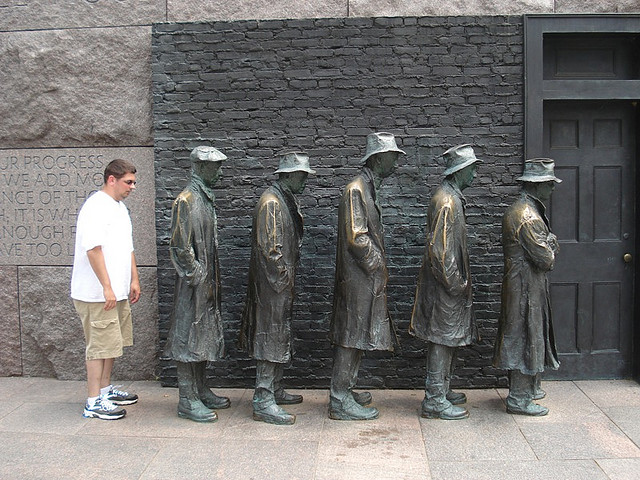
    Standing in Line! © Lance Smith/Flickr

    Not much travel, but a lot of travel planning for our first post-lockdown international trip to Italy. Trying to thread our way through changing COVID rules and Alitalia’s bankruptcy throes. I’m getting inundated with discount offers for Clear’s fast-pass service. I’ve resisted them so far, because I remember back to when the first incarnation of Clear wanted to sell its members’ biometric data. We then talk to Xovis Technology‘s Cody Shulman about how airports are better managing all sorts of lines in airports. Finally, air passenger traffic is dropping again because business travelers are still missing-in-action (MIA). All this and more – click here to download the podcast file, go up to the Subscribe section in the top menu bar to subscribe on your favorite site, or listen right here by clicking on the arrow on the player.

    Here is the transcript of TravelCommons podcast #179:

    Since The Last Episode

    • Intro music — Warmth by Makkina
    • Coming to you from the TravelCommons studio in Chicago, Illinois; no travel since the last episode, just a lot of travel planning. I’ve talked over the past couple of episodes about pushing forward with our first post-lockdown international trip; a bike tour through the bootheel of Italy. We booked the trip in the spring and then last month — I talked about in the last episode — we booked our hotels pre- and post- the ride and the flight over. But not the flight back, because — what else do we want to do while we’re here? I just wrapped up an interim CIO gig last week, so there’s no huge rush to get back — and it’s been 5 years since our last time in Italy, so… As we were thinking about this, a friend, a former colleague pinged me “ Hey there – Just saw your tweet about your upcoming international trip. Sitting here waiting for our pierogies (he now lives in Southern Poland). Where’re you going?” Turns out he and his wife will be in Syracuse, Sicily in October. So there was our answer — after our bike tour ends in Lecce, we catch a flight to Catania and hang out on the beach for the next week. And I can’t remember the last time I said this, but “Thanks, Twitter” for that.
    • So, next step, fire up Google Flights and look for one-way flights from whatever airport is near Lecce to Catania. Which turns out to be Brindisi Airport in Salento — 24 miles, an €8/30-min train ride from Lecce, so pretty convenient, except that the best flight to Catania is an Air Dolomiti-Lufthansa connection with a 13-hour layover in Munich. Yeah, no. So next I look at Bari, where we’re flying into. 90 miles away; less convenient, but doable. The flight options are not much better — a 6am Ryanair flight (which I kinda think of as Spirit Airlines without the charm), a 5pm flight with Volotea (whom I’ve never heard of, but Google and Wikipedia say they’re a budget airline based in Barcelona), and those same insane Air Dolomiti connections through Munich. This makes no sense. What gives? A little more Googling tells the rest of the story. Alitalia has been winding through bankruptcy since 2017 and now 4 years later, after 75 years as Italy’s national carrier, it’s finally closing down– the day before I’m trying to book our flight to Sicily. Timing; it’s a beautiful thing.
    • A little more Googling says there’s a new Italian carrier coming, ITA, but it’s still working through negotiating for Alitalia’s landing slots and equipment and labor contracts, so it’s not taking bookings yet. OK, then. Getting out of Lecce is starting to pick up a little “escape room” vibe. It’s a 7-hr drive, a 14-hr train; so if we’re going, we’re flying. I book the most basic seats on the Volotea flight — €17 for two seats — just to have something and let the whole Alitalia/ITA thing play out a bit more; I can always add the luggage fees and reserved seats later if need be. I book it on Weds, Sept 1; 5pm flight out of Bari, gives us time to have breakfast, pack, and train up to the airport with enough time to deal with the craziness of budget airlines, which is key. My last budget airline experience was flying Wow Air from Reykjavik to London. I arrived 2 hrs before check in to see what appeared to be a stationary check in line of a couple of hundred people. Three days later, on Saturday, I wake up to an email from Volotea saying “We regret to inform you that given the current context of uncertainty about the evolution of the COVID-19 pandemic, we have been forced to reschedule your flight.” to 12:30 — 4½ hrs earlier. I look at the train schedule — there goes the leisurely breakfast and a bit of the budget airline safety margin, but it’s doable. The next Saturday, the 11th, I wake up to yet another Volotea e-mail (you’d think these guys would knock off early on Friday). Same wind-up — “given the current context of uncertainty about the evolution of the COVID-19 pandemic” — but worse punch — “we have been forced to cancel your flight”. Ugh, guess that door out of the Lecce escape room was a dead end. I fire up Google Flights again and now see Alitalia flights out of Brindisi. Seems their replacement, ITA, has figured out how to take bookings. But following the link from Google Flights takes me to the Alitalia website with a banner still saying they’re shutting down. Another escape room fake exit? I flip over to Amex Travel; I can book the flights there. No direct flight, so I take the afternoon flight with a 2-hr connection in Rome. I put it on the Platinum card; figure I’ll need all the status I can get if I have to file for a refund. And then this week, I read about Alitalia telling passengers to bring just a single piece of hand luggage because of strikes and growing labor protests. My friend sends me a text “You still tracking for Sicily?” “Kinda” I replied.
    • Bridge Music — Give You Up by Yongen (c) copyright 2007 Licensed under a Creative Commons by-nc-sa v1.0 license

    Following Up

    • Jim McDonough stopped by the TravelCommons Facebook page to leave a comment on the post pointing to my list of the best bars and restaurants I’ve visited in 2021. I said that I think it’ll take guidebooks a while to catch up with all the closures caused by the COVID lockdowns. Jim agreed, saying
      • “I heard Rick Steves talking about the topic. All of his guidebooks are out of date. It will take him all of 2022 to get them repaired – assuming Delta, etc don’t clobber 2022”
    • As predicted in the last episode, Southwest Airlines extended their in-flight alcohol bans to January 18, 2022, staying aligned with the new expiration of the federal in-flight mask mandate. American also extended their economy-class ban, but continue to serve alcohol in their first and business class cabins. That alignment offers them a good explanation for the ban right now, but it’s going to make it tougher to reinstate in-flight drink service because I don’t see the feds ending the in-flight mask mandate anytime in the near future. Although, I dunno, maybe as the US’s only Prohibition airline, Southwest is looking to reposition their “Wanna Get Away?” slogan as “Wanna Get Away from Drunk Mask Fights on Spirit and United?”
    • Back in the Spring, I talked about Irene and Claire missing their Global Entry/PreCheck expiration notices and then in June, about a fake email “make sure your PreCheck doesn’t expire” phishing campaign that scammed a bunch of benched frequent fliers. So last week when I got an email starting “Your Trusted Traveler membership will be expiring soon”, I was a little wary. I was expecting it; after Irene and Claire missed their renewals, I logged in and saw that mine expired in December. But still, I examined the entire email — message headers, mail server authentications. It looked legit, but even then, I typed the web address ttp.dhs.gov into the browser rather than clicking through the link in the email. It was legit, so I buckled in, selected Global Entry (which I always recommend since for only $15 more, you get both PreCheck and the fast path through US passport control), and cranked through the application. It wasn’t bad; the only part that required any real thinking was the 5-year look back on international travel. I had my passport in front of me, but if you’ve country-hopped within the EU’s Schengen Zone, you only get stamped going in and out of the zone, but not when crossing borders within the zone. In kind of a sad commentary on my traveling style, one of the things that helped me fill in those blanks was a spreadsheet of my downloaded Untappd check-ins. I opened it up in Excel, filtered out check-ins before 2016 and venues in the US and Mexico (turns out I haven’t been to Canada in the last 5 years), and then wrote down the countries that were left. Very easy, and an incentive to always have at least one beer in each country I visit — like I needed any more encouragement.

      After I paid the $100 fee and was dropped back to the front page, I saw two interesting notes. The first –“Please remember to revisit our website for your application status updates. Notification of when you may schedule an interview appointment (if one is needed) will only be posted here.” So I guess don’t trust any emails about interviews. The second was more interesting – “Due to a significant increase in application volume, we are extending the grace period from 18 months to 24 months for any submitted renewal application. This means you will continue to receive full benefits for 24 months while U.S. Customs and Border Protection is finalizing your renewal application.” Which was interesting because the email I got from them said “6 months to 1 year”. Whichever it is, my guess is that I’m not getting that interview scheduled anytime soon. 
    • I’ve gotten a bunch of discount offers recently for a CLEAR membership — $100 off with United, full statement credit from Amex. I’m not sure why the sudden push, but I’m holding out. I enrolled in CLEAR’s first iteration, back in April 2008, 13 years ago — I talked about it in episode #64 (but not before I slandered the Dutch by saying their language sounded a bit like a competitive throat-clearing exercise). A couple months later, I wrote a blog post about my experiences — it was OK, but I couldn’t see much value over, what was to me, free premium status lines. And today, I’m still not sold on its value over PreCheck. But what really keeps me from picking up one of those free membership offers is that the first iteration of CLEAR abruptly closed down the next year and had to be sued to stop it from selling its customers’ biometric data — fingerprints and iris scans — before it went bankrupt. The current iteration of CLEAR says “We never sell or rent personal information about you”, but I dunno. They reserve the right to update their privacy policy periodically. What keeps them from updating that “We’ll never sell” sentence when money gets a little tight.
    • Bridge Music — Flight by Ga’inja (c) copyright 1999 Licensed under a Creative Commons by-nc-sa v1.0 license

    High-Tech Airport Line Avoidance

    • Frequent travelers are an obsessive lot — they/we obsess over things like packing efficiency (utilizing every cubic inch of our carry-ons) and gaming frequent flier programs. But top of the list is avoiding airport lines. For years after 9/11, line avoidance was more an art (or luck) than a science — through trial and error you’d get a sense of which lines would be shorter during Monday morning rush hour in ORD, or maybe some good-hearted airport worker would shout “There’s no line at Checkpoint D” and then jump out of the way of the stampede of roller-boards.  And then, we jumped at the chance to give iris scans to CLEAR or allow the TSA to do background checks in exchange for a shorter line, brushing off any questions about the trade-off of privacy for convenience.
    • But what about the airports — what are they doing to help us out? To dig into this side, I talked to Cody Shulman, managing director, Americas at Xovis Technology about how they help airports track and report on the airport lines we’re trying to avoid.
      • Mark: Cody, a number of big US hubs have installed Xovis’ technology, DFW, Minneapolis- St Paul, San Francisco, Atlanta. How does your technology help travelers in these busy airports?
      • Cody: Let’s take DFW for example. Let’s first take back-end efficiency. We’re kind of behind the scenes. That’s where DFW terminal operations and their customer experience teams are working together to use the system. They’ll make key staffing changes where passenger traffic is the busiest and do it in the moment. And at the same time, they’ve taken the approach to give access to the local TSA leadership. So, there is no longer a disagreement when there is an issue. Problem solved rather than just finger pointing — it was bad, there was a line, there was a queue over here; no, there wasn’t — because we’ve visualized it all for them, it’s facts. And then on the public side, the passenger facing side, you have all the same information at your fingertips that the airport has. So, before arrival you can use the DFW airport app to see all 15 checkpoints and their current wait times by queue down to the two-minute interval.
      • Mark: Cody. I’ve noticed that, in more and more airports you go to, the airport websites aren’t great, they’re not optimized for mobile, which you think would be a key use case, and sometimes they’re not well publicized. But if you drill in and you find them, you actually can find those sorts of wait time stats and those are critical. So, at DFW, is that your technology driving those stats?
      • Cody: Yes, exactly. And I think you’re also spot on in saying that they’re underpublicized and underutilized. DFW, before they instituted and implemented that into their app, had pretty low utilization. In the world of FlightAware and Flight Tracker, people have these agnostic airport apps that can do everything with tracking of your departure and what not. But then when DFW added this, it’s really useful for DFW because you can use any single checkpoint among those 15 and reach your gate and, on top of it, when the situation, even if it’s somehow dramatically changed when you got there, the signage right in front of you at the airport still shows for every terminal where there are three checkpoints, the wait time at the adjacent terminals and the walk time. So you can self calculate and figure it out yourself
      • Mark: Yes, absolutely. I’ve seen that more and more lately and it seems to be like a good add on.
      • Cody: There’s a trust element even to it as well. So, when this first started to launch with the airport, they were doing it with very vague statements: under 15 minutes, over 15 minutes. Then they went to between five and 10 minutes/10 and 15 minutes, and gradually they trusted the accuracy of the system down to two minutes. Any more than that they decided would just be kind of wonky for the customer. I remember when they first put up those signs. I can still remember the woman: she came up to me in front of the television screen and said, “Excuse me, do you work at the airport?” I kind of shrug my shoulder and go with you can probably answer your question rather you know, why not? So, she goes “That thing up there, is it right. Do you trust it?” And in my head, I’m going “Oh, you’ve asked the wrong guy.” Like I could, I could go on for minutes and minutes here.
      • Mark: Yeah. How do I say no to that? But Cody, what makes it accurate? What makes you confident that you’ve got something down to a two-minute interval?
      • Cody: The system works with two key components. We have software, which is dashboards that are our live visualizations and historical ones for users. And we have hardware. We have sensors. Those sensors are designed for airports. They’re made by Xovis ourselves, and they’re optimized around queuing, and queuing in a complex environment like security, or especially check in which is super unstructured. We’re measuring a very specific thing, and that’s people and it’s their height. You end up under a sensor. It’s not a camera. And we’re taking a measurement of your head height and your shoulder height. And with the difference between those two we’re sure that it’s you as in a human; not mark, not anything else that’s personally identifying but that’s it’s you. That’s step one. That’s a person. There are lots of people around in a queue. We want to make sure that we capture people exhibiting what we call queue-like behavior. So that’s moving in a sequence close enough to other people understanding that some people travel in groups and then there are some independent, and we balance that out algorithmically, so that we know that it’s a person and they’re in the queue.
      • Mark: How do you guys manage traveler privacy?
      • Cody: It’s a super relevant and honestly, for me, a pretty easy question; we’re not detecting faces. Nor are we detecting heat or mobile devices or anything else sort of personally invasive or inconsistently available across every person. It’s just those heights. And again that height differential. So, when we transmit data off our devices, our sensors were not transferring images. It’s just coordinates. It’s X and Y; there’s nothing personally identifiable.
      • Mark: Cody, looking out what’s in the development around adding more convenience to help future travelers. If we look out 2-5 years, what’s next on the horizon for travelers?
      • Cody: To me, the most noteworthy thing for the passenger side is a connected and a predictive experience. Take Seattle. Our services are present on all the checkpoints in Seattle and we’ve taken it a step further and integrated with Delta in their FlyDelta app. There’s a feed to the user in the app to know what wait time to expect when you’re a departing passenger from Seattle. Let’s take that one step further and for that particular elite or frequent flyer in their office. It’s a weekday afternoon. They have to catch an evening flight. What if all the things talk to each other and said, “Hey, this is the time you should probably leave.” Okay, you’ve set up auto enable your Lyft to come at this time. It’s going to drop you at the security checkpoint that, in this moment, we know is the best one because you can reach your gate from any of the five. Then you’re through security. You have time for that extra beer which, not only do you want to have, but the airport wants you to have, because that’s where the real money is. You’ve your beer; you’re happy; you’re relaxed. They’re getting revenue. Happy, relaxed people spend more and then you’re “Wait! I have to grab…” I had a beer, but I grab a water before my flight. So, you walk over to Hudson news and there’s a line. Again, you don’t know that there’s another Hudson news, which there probably is, 3 doors over. Maybe that doesn’t have a line which is better for your wait time, or in COVID times, maybe a more comfortable experience. It’s not as crowded. Or restroom. You get off a plane, you want to know how crowded it is when it was last cleaned. And then flip it to the operational side: stop cleaning in a circle. Clean when that wide body plane came in with 400 people who all went to the first restroom and that thing’s trashed now.
      • Mark: I’ve seen that, I’ve experienced that before.
      • Cody: Just having a smart airport experience and even in public US airports, which are strapped for cash. There’s a changing tide and I expect to see that coming forward and making a customer better experience for everybody.
      • Mark: Fantastic. Cody Shulman, managing Director Americas, Xovis Technology. Cody, thanks for taking the time with us
      • Cody: Mark, thank you. It’s been a pleasure.
    • Bridge Music —The Void by Saurab Bhargava (c) copyright 2006 Saurab Bhargava

    Business Travel Still MIA

    • Listening to airline and hotel CEOs let the air out of their revenue forecasts for the rest of the year, I went back to the TSA’s web page that gives the daily numbers of passengers going through airport security checkpoints. Back in the June episode, the first time I had fun with those numbers, checkpoint volume had passed 2 million for the first time since the lockdowns and the numbers were going up. Looking at a 7-day moving average to smooth things out a bit, it grew through June until it hit 2 million the first week of July. But after a month, in the first week of August, it turned, dropping back below 2 million and now, running in the 1.7 million range, about 20% down from its peak. Over the same period in 2019, the peak number was 2.6 million and it never dropped below 2 million.
    • It kinda makes sense. This summer’s peak was driven by leisure travel — people, families getting out of the house and going to see places and other people. But as that travel faded, as it always does, when kids go back to school, this time there isn’t enough business travel to replace it.
    • As I mentioned at the top of the episode, I just finished up a 6-month interim CIO gig. It’s had the least amount of business travel of any job I’ve had — by a long shot. Regular listeners to TravelCommons will recall that there have been times when I’ve traveled every week for 3-4 months straight, and a year or two when there was maybe 6 weeks in those years that I didn’t travel. So this last gig, where I had only one business trip, down to Miami in May, was a huge change in my standard operating procedure. 
    • I’ve talked in past episodes about this, skeptical of predictions like Bill Gates’ that 50% of business travel will go away. I was going through the TravelCommons archives, cleaning up show notes and the like, and found an episode from December 2008 where I was answering listener questions about why I travel for in-person meetings instead of video conference; when tech analysts were saying it was “on the brink of widespread adoption.” I’m nothing if not consistent.
    • Of course, it’s difficult to do in-person meetings when people are still working from home; it would be a bit awkward doing a sales call around someone’s kitchen table, having to project the PowerPoint deck on their white tile backsplash. I gotta think you’d lose a bullet point or two in the grout lines.
    • But by fits and starts, slowed by the Delta variant, people are heading back into their offices and international travel barriers are dropping. At this CIO gig, one colleague, the global head of operations, lived in the UK and so couldn’t get into the US to meet with his staff at some newly acquired plants. He was doing daily video calls, but after a couple of months, he’d made all the progress he could and needed to physically meet with these people. So when Canada dropped their travel ban, he flew from London to Toronto, holed up in a hotel room, worked through Canada’s 14-day quarantine, and then drove across the US border at Buffalo and caught a domestic flight to Chicago. It’s just one data point, but I’m grabbing on and holding tight, hoping to tell Bill Gates “Told you so!”

    Closing

    • Closing music — Pictures of You by Evangeline
    • OK, that’s it, that’s the end of TravelCommons podcast #179
    • I hope you all enjoyed the show and I hope you decide to stay subscribed.
    • You can find us and listen to us on all the main podcast sites — Apple Podcasts, Spotify, Stitcher, SoundCloud, Google Podcasts, and Amazon Music. Or you can also ask Alexa, Siri, or Google to play TravelCommons on your smart speakers. And across the bottom of each page on the web site, you’ll find links to the TravelCommons’ social  — Facebook, Twitter, Instagram, and the YouTube channel.
    • If you’re already subscribed, how ‘bout leaving us a review on one of the sites? Or better yet, tell someone about TravelCommons. That word-of-mouth thing; it’s really the only way to grow.
    • If you have a story, thought, comment, gripe – the voice of the traveler — send ‘em along, text or audio file, to comments@travelcommons.com or to @mpeacock on Twitter, or post them on the TravelCommons’ Facebook pageInstagram account,  or website at travelcommons.com. Thanks to everyone who has taken the time to send in e-mails, Tweets and post comments on the website
    • Follow me on Twitter
    • “Like” the TravelCommons Facebook page
    • Direct link to the show
  • Podcast #178 — What Remains from Pandemic Times; Best Restaurant and Bars

    Podcast #178 — What Remains from Pandemic Times; Best Restaurant and Bars

    I Feel Safer Already

    Last month’s travel got me wondering what travel changes are going to stick after the COVID pandemic begins to recede. With all the restaurant and bar closures caused by COVID lockdowns, I’m updating my recommendations list based on recent travels. And I’m way overthinking our first post-lockdown international trip. All this and more – click here to download the podcast file, go up to the Subscribe section in the top menu bar to subscribe on your favorite site, or listen right here by clicking on the arrow on the player.

    Here is the transcript of TravelCommons podcast #178:

    Since The Last Episode

    • Intro music — Warmth by Makkina
    • Coming to you from the TravelCommons studio in Chicago, Illinois after a much lighter travel schedule than before the last episode. The day after posting the July episode, Irene and I got back in the car (because those 12-hour drives to and from the East Coast just weren’t enough for me), but this time heading north, as I mentioned at the end of the last episode, to Traverse City, MI to do Paddle for Pints with some friends; it’s a taproom crawl, but in kayaks instead of on streets. It’s a lot of fun. There’s something about physical exertion while drinking that seems to justify the next beer. 
    • Now, anyone who’s driven any distance through the Midwest knows there’s only two seasons here — winter and construction season — and we didn’t get too far outside of Chicago on I-90 before a merge down to single lane traffic ground traffic to a crawl and I started refreshing Waze and Google Maps looking for alternatives. I’ve said in past episodes that, even though Google owns both, my experience is they can recommend different routes, especially in high-traffic, fast-changing situations. To me, Waze feels a little “twitchier”; it’ll twist you down a half-dozen random side streets to save 30 seconds while Google Maps guesses you’re willing to suck it up for a couple more minutes in exchange for a simpler route. And that’s exactly what happened to us in northwest Indiana which leaves me trying to figure out which route to take. I tweeted out later (actually while on a snack break in a taproom in Grand Rapids) “ I really hate it when Google Maps and Waze fight” to which the Waze social media crew replied “We like to think of it more as a disagreement”. Nicely done. And then Jim McDonough, a long-time TravelCommons listener, added “Apple Maps breaks the tie?”  Good idea, but I was having enough fun swiping between two maps; adding a third would’ve put me in the ditch for sure. I mostly used Waze, but skipped the recommended routing through side streets in Gary, Indiana. The risk-reward trade-off on that just didn’t feel worth it.
    • I was supposed to head out to the Bay Area last week on business, going to a plant on the east side of the Bay for a big team meeting. But it got re-vectored at the last minute from California back to Chicago because that Bay Area country had reinstated indoor mask mandates. Nobody questioned the move. With everyone on the team fully vaccinated months ago, we’d all happily gotten used to meeting with each other like it’s 2019 again and really didn’t want to go back to 8 hours of masks, muffled voices, and trying to read non-verbal cues from the nose up. As it was, we just made it under the wire — our meeting was Wednesday and Thursday, and then on Friday, Chicago’s indoor mask mandate went into effect. It’s sorta peak Chicago that the city collected the revenue off of 385,000 mostly maskless Lollapalooza attendees before dropping the boom on those of us who actually live in the city.
    • Bridge Music — Astral Travel by Astral (c) copyright 2013 Licensed under a Creative Commons Attribution (3.0) license. http://dig.ccmixter.org/files/Astral/44282

    Following Up

    • One of the reasons it takes me so long to do an episode is I lack the discipline to bail out when I get caught in a click spiral. This time it was about the United Airlines flight that was evacuated because a teenager decided to troll fellow passengers by AirDropping them a picture of an Airsoft gun. For the non-iPhone users out there, AirDrop lets iPhones and Macs easily share stuff — pictures, videos, web links — wirelessly with others nearby. It’s been around for about 10 years and pretty quickly people figured out they could drop random/interesting pictures onto nearby strangers who had set their phones wide-open. I’ve seen this happen and it can be pretty funny, watching someone suddenly start looking around in a bar or a train, wondering who’d AirDropped them a picture. But what’s funny or, at worst, annoying in a bar is easily interpreted as a safety threat 10 years on from 9/11. They pulled everyone off for rescreening, searched the plane, and then left three hours later, leaving the teen behind in SFO. Understandable, I thought, if maybe a slight overreaction — until I got to maybe the 5th page of Google search results where I clicked through to not-yet- another rehash of the United incident, but something different — a story about an AirDropped message on a Delta flight. It said “A plane-jacking will happen soon, 2 hours and 37 minutes it will start in the front on aisle 6.” That flight too was evacuated, but this time they didn’t find the sender. Maybe airlines’ safety demos need to show iPhone users how to set their AirDrop to “Receiving Off”.
    • Irene and I continue to push on with plans for our first post-lockdown international trip, to Italy for a bike tour through Puglia. The whole Delta variant thing adds to the uncertainty. I talked in episode #175 about sorting through trip insurance and figuring out what credit card to use for the tour. Now booking hotels before and after the tour, we’re choosing to pay 10-15 euros more a night for cancellable rates, kind of a DIY trip insurance. Booking our flights into Bari, where the tour starts, I’ve also felt the need to be a bit more thoughtful. Airline schedules seem to be a bit more variable than usual. Last week, American sent me a note to let me know our November LHR-ORD flight has moved up 5:15pm to 10:35am. I understand that; air traffic is not following predictable patterns and they’re trying to keep up. For that direct flight home from London, it’s not a problem. But when we’re having to make a connection to a city with not-frequent service, it’s a different matter. The first thing I did was X out anything with more than 1 stop; it’ll be hard enough keeping 2 flights aligned let alone 3. Then I focused on the big European hubs — Heathrow, Frankfurt, DeGaulle — skipping connections at smaller places like Munich, Zurich. Finally, I look for connection times around 3 hours; what I thought would be a “Goldilocks” connection — not too short that any hiccup on the inbound flight would cause a problem, but not too long that we’d be having to sit in the airport all day wearing a mask or would have to track COVID protocols in yet another country because of an overnight connection. All that being said, we’re booked on Air France with a 2 hr, 50 minute connection in DeGaulle. But I don’t have any SkyTeam status, which causes me a bit of a worry — maybe we get caught in a long non-status security line. So I did some DIY trip insurance on the flight, burning an extra bit of my pile of American Express Membership miles for a ride in business class (cancellable, of course) to make up for my non-status status. You could say I’ve gone way down a rabbit hole overthinking this one and I wouldn’t really argue with you. But then again, it’s the first international trip in 2 years that I’ve been able to plan. So it’s kinda like an only child, getting way too much their parent’s attention. 
    • I was digging through my travel card wallet for my Global Entry card to find my Known Traveler number to put on the Air France reservation and came across a handful of Southwest drink coupons that are about to hit their expiration date. Southwest says expiring drink coupons are good through the end of this year. But Southwest suspended alcohol sales a few months back, and rightly so after a passenger assaulted a flight attendant, saying the booze won’t return until the federal mask mandate ends. But the TSA just extended that until January, past the coupons’ extended expiration date. And really, I don’t see the TSA letting up on in-flight masks anytime soon, so is Southwest going to be the first dry airline?
    • I mentor start-up founders at a tech incubator in Chicago. A few months ago, one of my sessions was with a bionic implant start-up. Implant the chip and the back of your hand becomes a contactless card; get into your office or pay at Starbucks with the tap of your hand. Another reminder, if a bit, say, unsettling (icky?), of the move to a cashless society. I talked about it back in episode #136 in 2017, about being maybe the last generation of cash payers, that my younger traveling colleagues rarely carried cash; they paid for everything with a card. And then, the pandemic massively accelerated it. Everything went contactless; nobody wanted to handle your cash. Last year, in episode #165, I noticed I had the same $200 of 20’s in my wallet in June that I’d taken out of an ATM right before the March lockdown. Last month in New York, the coffee joint across from our hotel was card-only and the same for the ice cream shop around the corner from our place in Chicago. Restaurants that use the Toast point-of-sale system print out a QR code at the bottom of your receipt, letting you pay and walk away. The country of Sweden thinks they’ll be completely cashless in 2 years. But I’m seeing a little reversion to the mean post-lockdown. I stopped off at a bar during a Saturday bike ride for a rehydration break. I asked the bartender if she took cash. “Yup,” she said, “Never stopped. It spends just like everything else.” It felt good to put a 20 on the bar, order beers, and see her take cash from the pile just like in 2019. It’s also that inflation is making it tougher for small places to eat the 2.5-3% card fees. The little Mexican place across the street from work where I’ll grab carne asada tacos for lunch now tacks on that fee for card users. They’re happy when I pull out cash, though last week I got 80 cents back in nickels. I guess the cashless thing has now caused a shortage of quarters. 
    • And if you have any travel stories, questions, comments, tips, rants – the voice of the traveler, send ’em along to comments@travelcommons.com — you can send a Twitter message to mpeacock, post your thoughts on the TravelCommons’ Facebook page or the Instagram account at travelcommons — or you can post comments on the web site at TravelCommons.com.
    • Bridge Music — Emma by Doxent Zsigmond (c) copyright 2015 Licensed under a Creative Commons Attribution Noncommercial (3.0) license. http://dig.ccmixter.org/files/doxent/50905 Ft: Martijn de Boer

    What Will Remain from These Pandemic Times?

    • In past episodes, I’ve been pretty skeptical about forecasts of permanent changes to the travel industry, or society in general, from  the pandemic. I have enough grey hair to remember commentators using the same “everything has changed” and “this is the new normal” language 13 years ago after the 2008 Great Recession, yet somehow we ended up back to maybe within 90% of  2007, the pre-recession starting point. Reversion to the mean is a strong force.
    • Unless it’s countered by a stronger force — like saving money — which is why I think the odds-on favorites for pandemic changes made permanent are what we’ve seen at hotels and restaurants. Checking into the Hilton in Midtown Manhattan last month, the front desk guy told us that they weren’t doing daily housekeeping; we could either schedule housekeeping now or call them when we wanted it. Pre-pandemic, Starwood and then Marriott would offer you points for skipping housekeeping — Go Green they called it. They pitched it as eco-friendly, but it really was all about saving labor costs. But the Hilton didn’t offer me any points. The week before, Hilton announced their new policy of on-request housekeeping across all of their brands; the first major chain to cement what had been an ad hoc pandemic response into a new chain-wide policy. The press release talked about “guest comfort”, but behind the PR flacks, it’s all about cost savings. I expect to see Marriott and others follow soon. I do have to give props to the housekeeping staff at that Hilton, though. When, after 3 days, I did call for a room cleaning, they were there in 5 minutes. 
    • A bigger loss for me is the breakfast buffet. My usual pre-pandemic routine was to work out and then take a quick pass through the concierge lounge for breakfast. Hotels must’ve found their ad hoc grab-n-go breakfast sacks cheaper because that too feels like it’s going to be the new normal. Way back in episode #113, in January 2015, I scoffed at a bartender in MSP who reached over to punch my food order into the iPad mounted in front of me. Now, we aim our own smartphones at QR codes and order our own meals — without any help — again, saving labor costs. 
    • Airlines started reverting to the mean at the end of last year when they dropped capacity restrictions and put butts in the middle seats again — just as traffic began to recover. If you haven’t been on a flight this year, you’d think nothing happened — well, except everyone wearing masks and the missing Bloody Mary eye openers on the morning Southwest flights to Vegas. Some folks are predicting the death of cancellation fees, but I don’t buy it. In 2019, United made $625 million in change and cancellation fees; ten of the largest U.S. carriers made $2.84 billion. That’s too big of a hole to leave unfilled. And they’re already creeping back in. Most Basic Economy seats are back to non-changeable/non-refundable. Maybe not this year, but if traffic holds up, I’d expect to see some airlines quietly not extend their fee waiver deadlines.
    • Private company behaviors are pretty straight-forward to forecast — just follow the money. It’s the government regs that are uncertain — how long do the mask mandates and COVID testing international entry rules stay around? Government rules only seem to ratchet up — it’s been 15 years since the TSA had us take our shoes off and dump our water bottles at security checkpoints and other than letting people bring on larger bottles of hand sanitizer, no one thinks the TSA is going to change those rules anytime soon. There’s no incentive.
    • Bridge Music — Melt Away by Kara Square (c) copyright 2014 Licensed under a Creative Commons Attribution Noncommercial (3.0) license. http://ccmixter.org/files/mindmapthat/46605

    The Best Places I’ve Ate and Drank At In 2021… So Far

    • I talk a lot about food and beer in this podcast — as proven by the direct links to those categories in the top menu on the TravelCommons website. Back in episode #168 last fall, I said that, for me, food is one of the last hold-outs to global e-commerce and social media. 10-20 year ago, it was fun to go shopping and bring something unique back home. But now, there’s not much that you can’t find easier (and often cheaper) on Amazon or Taobao or Rakuten. And don’t even get me started on Instagram — if people aren’t in a 100-person queue to get their own personal shot of the Delicate Arch in Moab, UT then they’re queuing for made-for-Instagram-selfie murals like the WhatLiftsYou wings in Nashville’s Gulch neighborhood.  But food — you can post all the pictures you want of it, but you can’t post that sense memory of eating a dozen fresh oysters on a breakwater in Brittany, having a bowl of pho for breakfast in Saigon, or a 1am fresh-off-the-grill char polish that’s been dragged through the garden at a Chicago hot dog stand. 
    • And so, over the years, I’ve talked about restaurants, bars, taprooms that I’ve enjoyed and posted links to them on the website in show notes or in blog posts. But reading articles about the number of places that’ve closed since March 2020 — some say 10% of all restaurants in the US, almost 20% in Chicago — I figure it’ll take travel guide books and blogs a while to catch up with all the changes. It kinda hit me when a college friend pinged our group text for Nashville recommendations. I’ve been going there a couple of times a year for the past 5 years, but when I started going through my list of places, it struck me how many of them had closed. I had to re-curate my recommendations. I figured a good start on that would be to post a list of the best places I’ve ate and drank at during my 2021 travels on the TravelCommons website.
    • Now, fair warning, this is a very idiosyncratic list; it’s the best places I ate and drank at in, say, New York City in May and July. The New York list is pretty Midtown/Murray Hill-centric because that’s where we were staying and that’s where Claire was looking for flats. I walked into Ted’s Corner Tavern because it’s around the corner from Claire’s new place; it made the list because it’s what I think a great neighborhood bar should be — good-sized bar with friendly bartenders who aren’t too busy to chat with you, the right volume level (lively, but not so loud that you have to shout across the table), and, of course, 30 taps and a well-curated beer list.
    • I’ve tried to make my list a well-curated one.  I don’t mention restaurants or taprooms that I thought were fine — the 3 or 3½-star places. It’s a list of places that stuck out in my mind for one reason or another, and would make me go out of my way to recommend them to, say, a college friend. This played out in a funny way on my Portland, Maine recommendations. I recommend Bob’s Clam Hut in Kittery for fried clams and Island Creek Oyster’s place in the East End/Munjoy Hill neighborhood for local oysters, but have no specific recommendation for a lobster roll place. It’s not for lack of trying; we had a lobster roll whenever we saw it on a menu, which wasn’t a cheap exercise since they were about $25 a pop. They were all good — we didn’t have a bad lobster roll anywhere. But after all that, there’s no one place I could point to and say “Go there for a lobster roll.”  I just say “Order one if you see it. It’ll probably be good no matter where you are”. 
    • Another oddity of the list — no Chicago places. Irene and I talked about this a bit. Between favorite places closing and cooking at home a lot more during the lockdowns and the strict mask mandate (which in Chicago was worded kinda like the airplane mandate — wear your mask at all times unless you were actively eating or drinking), we haven’t been anywhere that’s really stuck out. Well, except maybe for the Nancy’s Pizza a couple of blocks from the TravelCommons studios. They do a great pepperoni, spinach, and fresh tomato pan pizza. That’ll definitely make the list.
    • Because the list is a work-in-progress; I posted the first edition on the website last week with sections on Tucson, San Diego, Nashville, New York, and Portland. You’ll find a link in the episode description in your podcast app — if it supports HTML descriptions. I’ll be adding places through the rest of the year. There will be at least a couple of Chicago places (in addition to Nancy’s) on the list. I’m sure we’ll find some places in Puglia to add; and I’m positive I’ll find some UK taprooms that’ll make the cut since Rob Cheshire of This Week in Craft Beer has offered me a personal tour of his favorites.
    • When I’ve added a new section or think there’s enough new stuff to justify people taking a fresh look, I’ll put a new date on it so it goes back to the top of the Food and the Beer sections of the website, and I’ll post it on Facebook and Twitter. And if you end up hitting one of these places, shoot me a note and let me know if I got it right.

    Closing

    • Closing music — Pictures of You by Evangeline
    • OK, that’s it, that’s the end of TravelCommons podcast #178
    • I hope you all enjoyed the show and I hope you decide to stay subscribed.
    • You can find us and listen to us on all the main podcast sites — Apple Podcasts, Spotify, Stitcher, SoundCloud, Google Podcasts, and Amazon Music. Or you can also ask Alexa, Siri, or Google to play TravelCommons on your smart speakers. And across the bottom of each page on the web site, you’ll find links to the TravelCommons’ social  — Facebook, Twitter, Instagram, and the YouTube channel.
    • If you’re already subscribed, how ‘bout leaving us a review on one of the sites? Or better yet, tell someone about TravelCommons. That word-of-mouth thing; it’s really the only way to grow.
    • If you have a story, thought, comment, gripe – the voice of the traveler — send ‘em along, text or audio file, to comments@travelcommons.com or to @mpeacock on Twitter, or post them on the TravelCommons’ Facebook pageInstagram account,  or website at travelcommons.com. Thanks to everyone who has taken the time to send in e-mails, Tweets and post comments on the website
    • Follow me on Twitter
    • “Like” the TravelCommons Facebook page
    • Direct link to the show

  • Podcast #177 — B-Sides and Rarities… Interview Outtakes

    Podcast #177 — B-Sides and Rarities… Interview Outtakes

    Microphone and a Beer Can
    Now I’m Ready For the Interview

    After a 2-week, 2,500-mile and $120 in tolls driving expedition through the Northeast, I didn’t have much time left to write a new episode. So, I mined the audio files of recent TravelCommons interviews for some good stories that got left on the cutting room floor. We also talk about planning for a bike trip in Italy, a couple of things that might make the 2021 traveler gift guide, and we mourn the demise of American Airlines’ in-flight magazine. All this and more – click here to download the podcast file, go up to the Subscribe section in the top menu bar to subscribe on your favorite site, or listen right here by clicking on the arrow on the player.

    Here is the transcript of TravelCommons podcast #177:

    Since The Last Episode

    • Intro music — Warmth by Makkina
    • Coming to you from the TravelCommons studio in Chicago, trying to get this July episode in under the wire, a bit delayed due to a 2-week, 2,500-mile and $120 in tolls driving expedition through the Northeast that started with a 12-hr drive from Chicago to Manhattan on the Friday of the 4th of July weekend with as much of our daughter and as much of her worldly belongings as would fit in a BMW X3, helping her move into a 5th-floor walkup in Midtown. I was very pleasantly surprised to hit only two backups on what was forecasted to be the first really big post-lockdown travel day; a detour around an accident in the Poconos on I-80 and then, at the end of our drive, the completely predictable back-up at the mouth of the Lincoln Tunnel. A completely and happily uneventful drive. I then spent the rest of the week finding a different spot every morning for my standard Manhattan breakfast — egg & cheese on a toasted everything bagel and making sure they don’t slip some milk into my black coffee order — before spending the day in front of my laptop on a not-very-big desk in our not-very-big hotel room while Irene helped Claire get her flat all set up. 
    • The next Friday, we left Manhattan for a week’s vacation in Maine with an intermediate stop in New Haven, CT’s Little Italy neighborhood for the classic white clam pizza at Frank Pepe’s. It was a bit of a wait — a 20-minute queue on the sidewalk and then another 45 minutes after ordering — but it was worth it. I’ve had many tries at white clam pizza before, but this one was, by far, the best — a generous helping of clams, garlic, and oregano on a cracker-crisp crust . We walked past other pizza places on Wooster St, but only had time to hit one, and so it had to be the ur-pizza joint, the classic, Frank Pepe’s. And luckily for us, it didn’t disappoint; the line along the sidewalk is well-earned.  You know, the Michelin Guide says a one-star restaurant is ‘High quality cooking, worth a stop!’, a two-star is ‘Excellent cooking, worth a detour!’, and describes a three-star as ‘Exceptional cuisine, worth a special journey!’ I’m not saying that Frank Pepe’s is a two-star place, but I will say that it was damn good pizza that was definitely worth our detour.
    • We then headed up to Scarborough, ME, just south of Portland, for a beach vacation with friends.  The traffic on the drive north was a steady stream of RV’s and pick-up tracks and cars with “roof bags” tied down on top and bikes lashed to the back that continued to thicken from I-91 to I-84 to I-90 to I-495 until it finally ground to a halt trying to merge onto I-95, which was itself filled with the same thick sludge of vehicles trying to make it north for the weekend. And then the weather wasn’t great — rainy, foggy, misty (now I know where Steven King got all his inspiration) so our time devolved into an week-long seafood fest — a bivalve-palooza of local mussels, oysters, and clams; intensive longitudinal lobster roll research; and, ignoring the current UK debate about crustacean sentience, multiple boiled lobster dinners — and taproom tour, hitting the big names like Allagash, Maine Beer Company, and Oxbow as well as some (many) other little guys. And then, finally, on the last day, sunshine.
    • After a week of this, the rain started up again as we turned around and headed back home, getting on I-90 in Albany and not getting off until we hit Chicago. It too was an uneventful drive, but not in a great way. By the end of that day, we’d developed a deep, deep hatred of those miserable strips of boring asphalt and the hellhole rest stops that make up the Ohio and Indiana Tollways. I hope Claire loves her new life, ‘cause I really don’t want to have to drive that way again.
    • Bridge Music — One for Me by SackJo22 (c) copyright 2009 Licensed under a Creative Commons Attribution Noncommercial (3.0) license. http://dig.ccmixter.org/files/SackJo22/21492 Ft: Haskel

    Following Up

    • I have to say that the most important piece of travel kit on this trip was my USB-C to HDMI cable that let me mirror my MacBook Air display on the hotel and beach house TVs so that I could sit back with a beer and comfortably watch YouTube highlights of the Euro 2020 soccer tournament and the Tour de France on 40-60” flat screens instead of hunching over my 13” MacBook Air. I had a version of this in my 2019 traveler gift guide, but it got bumped off the 2020 version to make room for bring-your-own dining sets. But with restaurants and bars open and so not having to eat every meal in my hotel room, I think I’ll reverse that change and put this cable back on the 2021 guide.
    • I don’t know if masks will stay on the 2021 guide — that depends on transportation agency rules — but I bought another batch of the evolvetogther masks that I called out in the 2020 guide because, even after in-flight mask mandates get dropped, I might still wear a mask on a crowded flight during the cold and flu season because, for the first time in forever, I didn’t get my usual killer cold last year. Without a mandate, I probably wouldn’t wear a mask in the airport and probably not in a fairly open plane, but I think so when it’s a full flight, when there’s someone next to me in the center seat. I think about it — they’re exhaling maybe 14-16 inches away from where I’m inhaling. No airplane HEPA filter is going to be able to get in between that exchange. I say that now, but I’ll have to re-visit it after in-flight mandates go away and I’m boarding an 8-hour flight to London; that’ll be the real stress test.
    • In episode #175 back in May, I talked about making some Q4 bets on international travel — a Backroads bike tour in southern Italy in October and the UK in November. Back in the spring, vaccine roll-outs were choppy, especially in the EU, but I thought that everything would sort itself out over the summer making booking travel in the fall not such a risk. Now this was pre-delta variant, but while in Maine, we got an e-mail from Backroads with the subject line “Your Trip Is A Go!” followed shortly thereafter by an alert from Chase of a very large charge dropped on our Sapphire Visa card. Now we need to start tracking travel requirements. Back in May, the best bet for US travelers was to take a “COVID-free” flight on Delta or American to avoid the 2-week quarantine. Then, a month later in June, Italy significantly eased those requirements. Now, you fill out a pretty extensive on-line passenger locator form with all your trip information and your COVID vaccination card and you’re good to go… into Italy. Getting home, the US is still requiring a negative COVID test no matter what your vaccination status is. But, back in May, the CDC said Abbott’s at-home test can be used. It’s not quite as easy as a home pregnancy test — the Abbott test requires you to download an app and enough bandwidth for a video chat with a doctor to visually confirm your identity and the test results — but it beats having to hunt down at a testing place in a new city.
    • In the last episode, I did a bit of “fun with numbers,” pulling daily air passenger numbers from the TSA’s website to look at Memorial Day weekend numbers and then a couple of weeks after that when, on June 11, passenger counts broke 2 million for the first time since the March 2020 lockdowns. Extending that analysis — from mid-June to now, the last week in July, checkpoint volume growth has plateaued — the TSA volume numbers averaging just over 2 million/day since the last episode. That’s more than 3 times the 623,000 daily average for the same time last year, but still 21% below 2019’s number. But to a lot of fliers, it doesn’t feel that way. It’s back to full planes, long lines, and tight schedules that can’t recover from inevitable summer thunderstorm delays. Airlines are minimizing schedule slack, trying to claw back some of their 2020 losses, but also because of labor shortages — from crews to ground-support staff, the people who drive the fuel trucks and cater the planes. Some of that is common to other industries — people slow to reenter the workforce or took jobs elsewhere when furloughed — but there’s also something unique to the airlines, staff in the wrong places because travel patterns have shifted. We’ve talked about this before, but with leisure travel snapping back much faster than business travel, the usual big travel destinations — LGA, ORD, DFW — are giving way to mid-sized airports. The fifth-busiest airport in the world is now in Charlotte, N.C., according to flight data. Charlotte had more flights in June than LAX. Made it tough to be able to spend any time in one of their famous white rocking chairs.
    • Last month, American Airlines pulled the plug on American Way, their in-flight magazine. Not surprising. Delta, Southwest, and Alaska all pulled theirs out of their seatback pockets in March 2020 and, most famously, 5 year before COVID in 2015, Skymall disappeared into a Chapter 11 puff of smoke. I, for one, will miss American Way. I’ve always read in-flight magazines and liked that American Way came out twice a month, so it didn’t get as stale as the other ones. Way back in episode #15, waay back in 2005, I called them “reading safety stock” because if I was stuck on the runway waiting out a weather ground stop or sitting in  Detroit’s “penalty box” for a couple hours waiting for a landing slot, I’d quickly chew through my own stack of reading material, because, back then, all electronics had to be turned off on the ground and below 10,000 ft to keep a “sterile cabin” for takeoff and landings, and most flight attendants were pretty particular about enforcing it. But all is not lost. United Airlines restarted the physical Hemispheres magazine in June after going all-digital in March 2020.
    • And if you have any travel stories, questions, comments, tips, rants – the voice of the traveler, send ’em along to comments@travelcommons.com — you can send a Twitter message to mpeacock, post your thoughts on the TravelCommons’ Facebook page or the Instagram account at travelcommons — or you can post comments on the web site at TravelCommons.com.
    • Bridge Music —   Fall to pieces – Silence by mika (c) copyright 2010 Licensed under a Creative Commons Attribution Noncommercial (3.0) license. http://dig.ccmixter.org/files/mika/24945 Ft: Colab

    B-Sides and Rarities – Interview Outtakes

    • After the travel world was shut down in March 2020, I began wondering if TravelCommons would join the furlough ranks for lack of content. It’s tough to do a podcast that’s “more about the journey than the destination” if you’re not journeying. Grounded, locked down, I needed a different way to generate content, so I’ve been doing more interviews. Interviews aren’t less work; it’s just different. Instead of spending time writing, I spend it editing. The typical interview session is 20-30 minutes over Zoom (of course) which I edit down to a 6-8 minute segment which you hopefully find tight, focused and insightful.
    • But doing some quick math, that leaves two-thirds of the interview on the cutting floor. Not all of that is insightful — there’s, say, pronunciation guidance… that I still manage to screw up. But there’s still good stuff that, for whatever reason, doesn’t make it into the edited segment. So for this episode, I’ve pulled out the full interview files and pulled out some stories, some conversational threads that I left behind the first go-around. They’re pretty much unedited, save for snipping out a cough or two —  so you’re hearing the actual conversation.
    • The first “b-side” is from my conversation in episode #166 with Dr. Emily Thomas, associate professor in philosophy at Durham University in the UK about her book The Meaning of Travel: Philosophers Abroad. I reached out to Emily after reading a review of her book in the Wall Street Journal. It was one of my favorite interviews; one that I couldn’t cut down to just 6-8 minutes. But even with the extended play, this thread about different travel styles — going deep vs. checking off a place’s “greatest hits” — didn’t make it.
    • Next up are a couple of stories from episode #175 where I talked to Paul Melhus, CEO of ToursByLocals, about the local tour market. Paul first told me about the vagaries of selling shore excursion tours to cruise ship passengers and a story about the business challenges he faced in the first days of the COVID lockdown
    • The episode before that, #174 if I’m doing my math correctly, was another extended play segment — 12 minutes — about taproom tourism, but that was cut down from an hour-and-a-half Zoom beer drinking session with Rob Cheshire host of the UK’s This Week In Craft Beer podcast. Here’s one of the many taproom stories that didn’t make the podcast. You can catch the full uncut session on the website or the TravelCommons YouTube channel
    • Now it’s not that I didn’t do interviews before the pandemic. Back in January 2020 in episode #159, I had Allan Marko on talking about trip planning, how he and his wife planned their 9-week sabbatical around Southeast Asia. I thought this was perfect timing — January is always a big travel planning time. Two months later, most of those plans got blown to bits. But, back in those happier times, here’s a story about the dangers of losing a bag while on a different city-each-day trip
    • Editing last month’s interview with Dr Janet Bednarek, Professor of History at University of Dayton about the history of airports, I had to leave out this thread about who owns US airports.
    • And finally, something that’s not really a B-side. Back in episode #163, I used a piece of Steve Frick’s Travel Stories podcast where we talked about the first TravelCommons episode. Here’s another piece of our conversation where we talk about where our travel paths overlapped.

    Closing

    • Closing music — Pictures of You by Evangeline
    • OK, that’s it, that’s the end of TravelCommons podcast #177
    • I hope you all enjoyed the show and I hope you decide to stay subscribed.
    • You can find us and listen to us on all the main podcast sites — Apple Podcasts, Spotify, Stitcher, SoundCloud, Google Podcasts, and Amazon Music. Or you can also ask Alexa, Siri, or Google to play TravelCommons on your smart speakers. And across the bottom of each page on the web site, you’ll find links to the TravelCommons’ social  — Facebook, Twitter, Instagram, and the YouTube channel.
    • If you’re already subscribed, how ‘bout leaving us a review on one of the sites? Or better yet, tell someone about TravelCommons. That word-of-mouth thing; it’s really the only way to grow.
    • If you have a story, thought, comment, gripe – the voice of the traveler — send ‘em along, text or audio file, to comments@travelcommons.com or to @mpeacock on Twitter, or post them on the TravelCommons’ Facebook pageInstagram account,  or website at travelcommons.com. Thanks to everyone who has taken the time to send in e-mails, Tweets and post comments on the website
    • Follow me on Twitter
    • “Like” the TravelCommons Facebook page
    • Direct link to the show

  • Podcast #176 — Why Business Travel Is Coming Back; Learning Airport History

    Podcast #176 — Why Business Travel Is Coming Back; Learning Airport History

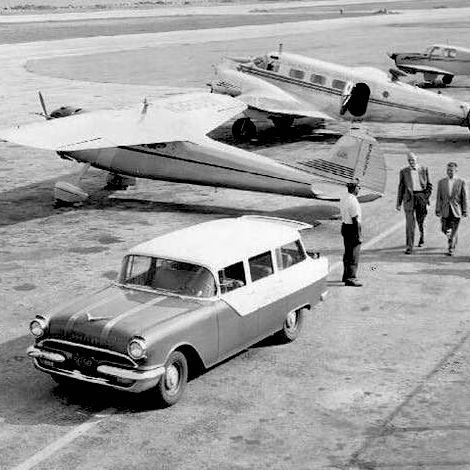
    Old cars and planes on a runway
    Where’d the Racetrack Go?

    Business travelers are getting itchy. They know Zoom calls can’t replace a face-to-face meeting, but they can’t meet with people who aren’t in their offices yet. We also talk about how surprisingly great the LaGuardia Terminal B renovation is, and then talk about airport history with Professor Janet Bednarek, professor of history at University of Dayton. All this and more – click here to download the podcast file, go up to the Subscribe section in the top menu bar to subscribe on your favorite site, or listen right here by clicking on the arrow on the player.

    Here is the transcript of TravelCommons podcast #176:

    This Week

    • Intro music — Warmth by Makkina
    • Coming to you again from the TravelCommons studio as Chicago and the state of Illinois completely reopen for business — no more capacity limits, no more socially distanced sitting — just in time for the summer music festival season. No capacity limits, but you have to show proof of vaccination or a negative COVID test to stand shoulder-to-shoulder with 100,000 other music fans. Irene and I did that one year, check — don’t need to do it again. I think I aged out of that demographic — back in the ‘90’s. 
    • Since the last episode, I first flew down to Miami on business, and then over to New York City for a long weekend. Miami is always an interesting business destination; it’s got its own unique vibe. It starts at the airport; officially bilingual — Spanish and English, in that order — but it seems half the time when they make PA announcements, they just skip the English version. The client’s office was in the Wynwood Art District. It was my first time in this neighborhood; it had a kinda typical newly gentrified vibe — lots of first generation food places: an upscale doughnut shop, a poké lunch joint, a couple of microbrewery taprooms (always key for me). What wasn’t typical was the amount of wall art; not graffiti as much as very cool murals and street art, giving the neighborhood a bright, colorful vibe while probably painting over some otherwise dire looking buildings.
    • I stayed a few miles south in the Marriott on Biscayne Bay where some combination of my status and patience with a front desk trainee trying to solo on the property management system for the first time earned me a top floor bayside room looking out over the Port of Miami cruise terminal with 4 big cruise ships tied up, waiting for the CDC to drop their cruise ban.
    • One morning, when it felt the humidity had dipped below 80%, I decided to skip Uber and ride a Lyft scooter up to the Art District. I’ve talked, in past episodes, how much I like riding scooters. I’ve ridden scooters in Chicago, Phoenix, DC — everywhere I could find them. But last year, I didn’t ride them even though they were all around Chicago. There’s a fun, frivolous vibe about riding a scooter, but 2020 was anything but fun or frivolous and so I didn’t feel like riding them. But on this morning, with just a touch of humidity in the air and not much traffic on the streets, having a little fun riding a scooter to the office felt, once more, like the right thing to do.
    • Bridge Music — You are (funky mix) by Zapac.

    Following Up

    • Talking in the last episode about needing to rebuild atrophied travel muscles after the long lockdown layoff generated a few comments. Chris Christensen of the Amateur Traveler Podcast dropped me a note saying:
      • I can relate. We just got back from our first post vaccine trip to the Galapagos. First time on a plane since 2019.
    • First trip back and you go to the Galapagos! No warm-ups? Hope you didn’t sprain any of those travel muscles.
    • Jim McDonough’s first trip back wasn’t simple either. He wrote on the TravelCommons Facebook page
      • Last month, we made our first trip since January, 2020 to Kodiak, Alaska of all places, attending the decommissioning of a ship I helped the Coast Guard put into commission in 1971. San Diego to Alaska is a long way. Alaska Airlines is really nice. But I noticed my travel skills had atrophied.  Approaching TSA, I realized that the red mesh bag I usually have for holding metal objects wasn’t in my bag. Then I sat for a while at a gate in Anchorage until remembering that Admiral’s Club members can use Alaska’s lounge. I’m ready to go again, but probably not to Kodiak!
    • Kudos to both of you guys for jumping straight into the deep-end. But you gotta be careful — weak travel muscles can make you vulnerable. A few days ago, I re-tweeted a thread about a phishing attack — a very well-formatted “make sure your TSA Precheck doesn’t expire — click here” e-mail with a link that, as you can imagine, didn’t take you to tsa.gov; though Aaron Woodin did tweet back the question “If you click on the link, does it confiscate your water?” It’s a well-timed phish, especially as more business travelers are gearing up to get back on the road. 
    • And in the last episode, I talked about Irene and Claire losing track of their Global Entry expiration dates — Claire’s expired and Irene hit the “renew” button on the last day. Now you may think — Global Entry? Big deal, who’s traveling internationally right now anyhow? But remember, for $100 for 5 years, Global Entry gives you the express lane thru immigration plus TSA PreCheck, vs. $85 for PreCheck alone. Hence I always tell people to spend the extra $15 for Global Entry. So anyhow, Irene and Claire fill out the on-line renewal form, pay the $100 (which Irene immediately got back because she used my Amex Platinum card), and then nothing. Silence. Crickets. Which is odd, because when I renewed my Global Entry, I had to go to ORD for an interview and an updated photo. But for them, nothing. Our flight to New York, to LaGuardia is coming up. The night before we leave, Irene gets an e-mail — no link, mind you, just a message — “Congrats! Your Global Entry has been renewed.” Yay! Except that when she checked into Southwest, there’s no little blue PreCheck checkmark on her boarding pass. Claire got her Congrats! e-mail the next day, but again, no check on the boarding pass. Ugh. The prior week when I was in Miami, the non-PreCheck lines tailed back the length of the terminal. But, as it turned out, it wasn’t a huge hassle. We left a little earlier for MDW and no horror lines. Three days later when they checked in for our flight home, they both got the blue check on their boarding passes. So spinning my IT propeller, it would seem that the airlines aren’t pinging that PreCheck database more than once every couple of days.
    • This trip was the first time since January 2019 I’d flown into LGA in almost 28 months; that’s 2⅓ years. That shocked me; I had to go back and check my calendars and my math again, because it seemed like I was always in New York. But it’s right. Second shock — flying into the new rebuilt Terminal B, bright, airy, spacious, clean; everything the old Terminal B I flew into 2+ years ago was not. It was the low-ceilinged rat maze that, 7 years ago, then-Vice President Joe Biden said was like a third-world country — which I actually think was less of an insult to LGA and more of an insult to many developing country airports. Walking down that old concourse to catch an American or United flight, it was not unusual to have to dodge a big plastic garbage can placed right in the middle, that had a hose coming down from the bottom of a make-shift funnel made out of plastic tarp, hanging from some ceiling tiles, collecting rainwater from roof leak. No one would ever look at that and think “What the hell?” because you’d see it like once a month. But now, it’s phenomenal; they’ve done a great job. I used to say that SFO’s new Terminal 2 was my favorite terminal — where American and, back then, Virgin America flew out of. But now, it’s LGA’s Terminal B. There’s still construction going on, and getting a cab to the city is still a hassle, and a necessary one because there’s still no subway link, but once you’re inside, it’s great! Give yourself a little extra time to see the water fountain light show. And having a little downtime in Terminal B is no longer the purgatory it used to be, because there are now places that you actually sit down and eat and grab a beer; no more standing around having to juggle your bag and an Auntie Anne’s pretzel. I rarely have anything good to say about the Port Authority, but they’ve done a good job here.
    • And the TSA, another government organization I don’t often have good things to say about, does a nice job publishing the daily volumes of air passengers passing through security checkpoints. Just scanning it you can see the growth kicking up in the February/March timeframe. Though if you’ve flown anytime over the past couple of months, you don’t need to look at the numbers; you’ve felt it in fuller planes and longer checkpoint lines. The Friday of Memorial Day weekend, the end of May, checkpoint volume was up 599% over the same Friday last year, and then this past Friday, June 11, checkpoint volume broke 2 million for the first time since the March lockdowns. The numbers are still 25-30% below 2019’s, but the gap is closing. 
    • And then the keynote from Apple’s WorldWide Developers Conference gave me something else good to say about the TSA; working with Apple to let you use a digital version of your driver’s license at security checkpoints. I’ve already noticed that, at a few airports, you no longer have to show your boarding pass — they just pop your driver’s license into a scanning machine and you’re on your way. No fumbling to pull up your boarding pass and scanning it. But now, no fumbling for my wallet if I can pull up my license on my phone. Actually, better than my drivers license would be my Global Entry card because it’s Real ID while my Illinois license is not. Could save me an extra trip to the DMV if and when the TSA decides to get serious about Real ID again — which I hope is never. 
    • Continuing on our now 3-episode arc on Uber and Lyft service, the long wait times, the huge price surges. Heading out for my flight down to Miami, the 17-mile trip Monday morning Uber ride to ORD, at $74 with a 2x surge, cost almost as much as the 1,100-mile flight on American down to MIA at $100 one way. There is no rational way to explain this, so I’ll leave it here as a meditation exercise for microeconomic pricing theorists and move on. Except, ‘cause I guess I can’t just can’t leave it here, to note that I had no problem with Uber or Lyft service in Miami. And except for that one joyful morning riding a scooter, the South Florida heat and humidity had me lighting up the Uber app multiple times a day. So I’m guessing those Uber carjackings in Chicago a few months back are having some residual impact on their driver recruitment efforts.
    • Bridge Music — Two Guitars by Admiral Bob (c) copyright 2012 Licensed under a Creative Commons Attribution (3.0) license. http://dig.ccmixter.org/files/admiralbob77/35879 Ft: Haskel

    Why Business Travel Will Come Back

    • Last Friday, the first day of Chicago’s full reopening and the same day the TSA’s checkpoint volume broke the 2 million passenger mark for the first time post-lockdown, a business colleague and I met for some happy hour beers and oysters in a bar in Wrigleyville. We were sitting at a second floor table against an open window, looking over at Wrigley Field as fans poured out of the Clark-&-Addison main gate and into nearby bars to celebrate the Cubs’ victory over the St Louis Cardinals in what was the first full-capacity game since September 2019. Mike’s in consulting too; he’d been talking about how he was itching to get back out on the road to see his clients, on how he’s working to convince the firm’s management to lift, or at least bend their travel ban so he can see the clients again — at least the ones who also want to start meeting people face-to-face again. Zoom and Teams calls are OK, they can suffice for some things, but there are so many things you miss when you’re not there in person. 
    • In an outta-left-field sorta way, the masses of Cubs fans blocking traffic on Addison St helped prove Mike’s point. Official attendance was 35,112, not quite a sell-out, but having butts in 84% of the seats for a 1:20p Friday game isn’t bad. But similar to the “why travel to a meeting when you can video conference?” question, why go to a baseball game in person when you can watch it on TV where it’s covered by not just one crappy laptop camera, but 5-8 HD cameras with clean lenses and run by professionals? I know, it’s a stupid strawman question that we all know the answer to — it’s not just the game, it’s the whole experience. And it’s not an either/or — many times watching the game on TV is fine, and more convenient; but sometimes, you gotta get off the couch and go see the game live, in person, with a bunch of friends.
    • A couple of recent interactions(?) over the last couple of weeks drove this home. I’ve had multiple video calls with a programmer over the past month, probably 3-4 hour worth, going through some system re-architecting. After all that, I thought I had it pretty much down. Now the guy has started coming back to the office — he said working from home for 14 months was being under house arrest — so I pulled him into a conference room and started sketching stuff on a whiteboard. We stood there shoulder-to-shoulder and passed the blue marker back and forth, and in 20 minutes realized that there were 3 key facts about the existing systems that never came across in those hours of video calls and that completely changed the new architecture. But they did in that in-person 20 minutes. And afterwards, the guy said to me “Hey, that was fun. Let’s do some more of that” — a reaction I’ve never heard about a video conference… ever. And at the same time, I had the exact opposite experience — trying to explain a concept on a week’s worth of video calls that I know we could’ve handled in an hour if we could’ve been in the same room together, but we can’t because he’s overseas and can’t get through the US travel lockdown. So we trudged through the calls… and the frustration.
    • Which was pretty much the point that Mike was trying to make over honking buses and shouts of “Go Cubs Go”. “Yeah, I can have a meeting on Zoom, but I can’t have the pre-meeting ‘how are things going’ chats as we’re walking into the room, or the post-meeting ‘Can I ask you what you really meant in there’ sidebar, or pick up the non-verbal glances people will shoot at each other. The meeting’s important, but so’s the choreography that surrounds the meeting — maybe even more so — and that’s what I can’t get now. That and I’ve worked with a lot of these clients for 10, 15 years, so they’re friends too. And I miss that too.”
    • Airlines are saying that business travel is still down 70% from pre-lockdown levels, but that almost all of their top corporate accounts are telling them they plan to re-start travel later this year — but first they gotta figure out how to get people out of their sweats and back into the office.
    • Bridge Music — Garden Of The Forking by J.Lang (c) copyright 2009 Licensed under a Creative Commons Attribution Noncommercial (3.0) license. http://dig.ccmixter.org/files/djlang59/22228 Ft: Neurowaxx

    Learning the History of Airports

    • Back at the beginning of the year, back in episodes #172 and #173, I talked about a guy who lived on the secure side of ORD from October ‘til January because he was too afraid to fly. In researching this — what turned out to be not unique — situation, I came across an article written by Professor Janet Bednarek, Professor of History at University of Dayton. Her area of focus is on the history of airports in the US, which I thought would be a perfect topic for the TravelCommons podcast. So I sent her a Zoom invite, as one does these days, and had a great conversation about the history of airports.
      • Mark: Janet, the history of airports. How did you get into that? As a professor of history, you think — what am I going to focus on, the American Revolution, the Civil War, airports? Yes, airports! Perfect!
      • Janet: I originally trained as an urban historian focusing on city planning. But my first paid job was as a historian with the United States Air Force. And so I had to pick up aviation history, especially military aviation history. Then in 1992, my husband and I were moving to the Dayton area; my husband was an air force officer. This job came up at the University of Dayton if somebody could teach urban and aviation history. I began to think — where do those two things intersect? They intersect at the airport. And it was clear to me that not a lot of people had written about airports. And so I thought — wide open field, here we go. When they first talked about building airport, the planners talked a lot about how do we integrate them within the city. They were literally talking about the downtowns. And so if you go back to the 1920s, for example, You will see these fantastical schemes for building airports on top of bridges, on top of a ring of skyscrapers. Even in the 1930s, Norman Bel Geddes came up with an idea of an airport that was floating out in New York Harbor on an island.
      • Mark: Boris Johnson was trying to do that for London when he was the mayor there
      • Janet: On one case, you want to be as close in as possible, but there is the noise, there’s the danger. The other side of it is when airports actually started being built in the 1920’s and 1930’s, they’re being built largely by local interests and they’re interested in the cost, and the further you go out from the center, the lower the land costs are, but they would often try to find it on transportation lines that were already there. The Dayton Airport, for example, is not far from an intersection between what was the National Road Route 40 and the Dixie Highway. But the airport is not far from there and businessmen from Dayton knew to get there because there was a trap shooting club that operated literally right at the edge of the airport until a couple of decades ago. So they knew how to get there and where it was.
      • Mark: That’s interesting. I’ve got a gun range on a flight path of stuff coming in. Okay.
      • Janet: Yes. The Atlanta airport and several other places were where racetracks had been. You could drive there because, obviously, we had to drive there to race your cars around. So it was areas where there was already some accessibility but the land was cheap. Atlanta and I think Minneapolis-St Paul airports — there were race tracks there originally.
      • Mark: So if we pivot, what do we think about looking forward out in the future?
      • Janet: In the United States, building new airports is still extraordinarily difficult and finding the places for them would be very very difficult because, well, let’s think about Denver. They went out and they bought 50 square miles out in the middle of nowhere. Noise complaints went up after DIA opened up.
      • Mark: So you’ve got to wonder, I remember taking some of the first flights into DIA and you went over nothing other than a herd of buffalo. So were the buffalo complaining?
      • Janet: Yes, but it was people who had moved out to that area expecting peace and quiet and now airplanes were coming in there. There’s literally nowhere you could build an airport where there aren’t going to be some complaints about it.
      • Mark: Yes, in that way probably explains the multibillion dollar upgrade to LaGuardia and what they’re going to start at O’Hare, and what they did down in Atlanta with the runway extension.
      • Janet: Yes. Right, expanding and improving the airports that we have I think is what’s going to happen into the future. I mean, if you think about it in the United States, we built very few airports since the 1950s. Most commercial airports that exist in the United States were in place in one way or the other either as a private field or military field by World War II
      • Mark: That makes sense
      • Janet: Completely greenfield airports are relatively rare after World War II
      • Mark: I thought that LaGuardia in that new terminal had gotten security right. When you looked at the whole setup, that was really nice.
      • Janet: After 9 /11, airports had to wedge security in there. A lot of what airports have done since then has been trying to redesign themselves so that the security becomes a more convenient and seamless experience because right after 9/11, it was all improvised and it was wherever you could put it. And no one knew how long those security protocols we’re going to last. So who wants to spend millions of dollars redesigning? But now that it’s fairly clear that these security protocols are going to be forever now, within the last five or 10 years, I would say airports have begun to spend the real money to redesign so that the security fits.
      • Mark: It becomes integral as opposed to a bolt-on. And I think people are saying to themselves, look, it’s been 20 years, it’s about time security stops being an afterthought. Let’s face it, It’s an integral part of the experience.
      • Janet: Yes, Let’s start applying some lessons learned here.
      • Mark: Yes, because there are a lot of them. Thanks to Dr Janet Bednarek, Professor of History at the University of Dayton. Janet, thanks very much for taking the time to talk with us on the TravelCommons podcast.
      • Janet: My pleasure. Thank you for inviting me.

    Closing

    • Closing music — Pictures of You by Evangeline
    • OK, that’s it, that’s the end of TravelCommons podcast #176
    • I hope you all enjoyed the show and I hope you decide to stay subscribed.
    • You can find us and listen to us on all the main podcast sites — Apple Podcasts, Spotify, Stitcher, SoundCloud, Google Podcasts, and Amazon Music. Or you can also ask Alexa, Siri, or Google to play TravelCommons on your smart speakers. And across the bottom of each page on the web site, you’ll find links to the TravelCommons’ social  — Facebook, Twitter, Instagram, and the YouTube channel.
    • If you’re already subscribed, how ‘bout leaving us a review on one of the sites? Or better yet, tell someone about TravelCommons. That word-of-mouth thing; it’s really the only way to grow.
    • If you have a story, thought, comment, gripe – the voice of the traveler — send ‘em along, text or audio file, to comments@travelcommons.com or to @mpeacock on Twitter, or post them on the TravelCommons’ Facebook pageInstagram account,  or website at travelcommons.com. Thanks to everyone who has taken the time to send in e-mails, Tweets and post comments on the website
    • Follow me on Twitter
    • “Like” the TravelCommons Facebook page
    • Direct link to the show
  • Podcast #122 — Data-Hungry Phones; Dramatic Iceland

    Podcast #122 — Data-Hungry Phones; Dramatic Iceland

    Spring Break in Iceland
    Spring Break in Iceland

    Watching Iceland makes its Cinderella run in the Euro 2016 soccer tourney got me thinking back to my March trip there. It is one of the hot travel destinations — maybe too hot? Could be, but the descriptor I keep coming back to is “dramatic.” And it seems that on every trip I make out of the country, I get surprised by the amount of data my iPhone consumes — in spite of flipping every Settings switch I can find. All this and more at the direct link to the podcast file or listening to it right here by clicking on the arrow below.


    Here are the transcript of TravelCommons podcast #122:

    • Intro music — Warmth by Makkina
    • Coming to you once again from the TravelCommons studios outside of Chicago, IL, on a week off of the road. I hate to say “a rare week”, but looking at my calendar, it is. For the first half of the year — 26 weeks — I didn’t get in an airplane during 2 of them. This week, the first of the second half of the year, is my 3rd non-travel week. Now absolutely some of them are self-inflicted — 2 to be exact — one week in Spain and one in Portugal. That’s an intense travel schedule, even for me. I usually find a way to take a break at least once every 6 weeks, but it just hasn’t worked out that way this year so far. Sometimes you control your schedule, while other times it controls you. I’m definitely been on the wrong end of the leash since January.
    • Since the last episode, I’ve been traveling pretty much exclusively between Chicago and Charlottesville, VA. Now Charlottesville is a nice town, but it’s a pain to get to every week. The first direct flight from Chicago leaves around 11:30am, landing around 2pm — not exactly convenient for the business traveler. Other earlier options are to fly into Washington-Dulles and drive for 2 hrs, or fly into Richmond and drive an hour and a half. What I’ve found myself doing for the past couple of weeks is flying in Sunday night — which I absolutely hate — on direct flight that leaves Chicago around 9:45pm, lands in Charlottesville around half past midnight and puts me into my hotel around 1am. There just doesn’t seem to be an easy way around this one.
    • At least the flights back home are convenient — 3:15 and 6:30pm. And it’s not a crowded airport. I think last week was the longest TSA line I hit — 3 people were in front of me.
    • And as I start to think about a September trip to Scotland to take our daughter back to University, I’m taking advantage of the post-Brexit exchange rate to stock my Revolut account with some much cheaper pounds. Though it’ll be another week on the road, I’ll be significantly upgrading my Scotch choices.
    • Bridge music — Revolve mix by His Boy Elroy

    Following Up

    • Last week’s attack at Istanbul’s Ataturk airport begs the same question as March’s Brussels bombings — does more airport security actually make us safer or just move the target around? I said in the last episode that the long TSA lines on the land side of security caused by stricter TSA inspections weren’t making the traveler any safer. Instead, they were make us less safe/more vulnerable to a Brussels or Istanbul-style attack. And while the TSA has fixed (at least for now) some of the worst lines, the issue is going to pop up again. And someone is going to suggest — again — that they move the security perimeter back — say, checking itineraries and IDs at the terminal door like they do in India? The justification will be that a little bit more inconvenience is more than worth the price of safety. But, if they don’t staff it right (which was and will alway be the core problem), all you’ve done is just move the target — the line of passengers — out by another 1,000 feet. It’s less about location and more about execution. And given the TSA’s track record of execution over the past 15 years, I’m not optimistic that they’ll get to the right answer.
    • I got a e-mail a few weeks ago that my 5-year Global Entry membership expires on my birthday this December. I don’t know exactly when Customs and Border Patrol started Global Entry, but 5 years ago, I was one of the early adopters. Back then, there weren’t that many interview centers. I was lucky that Chicago had one, but I had colleagues in Phoenix who had to fly up to Las Vegas for interviews. The renew process was pretty easy. I logged into GOES — Global Online Enrollment Systems — clicked the blue Renew Membership button and then cycled through all the profile screens — but this time the screens were pre-populated so I only had to make updates. In my case, it was updating my job history for my current job and, the toughest part, entering all the countries I’d visited in the past 5 years. Normally, this would be pretty simple — thumb through your passport pages and write down the country stamps. However, back in 2012, my backpack with my passport was stolen while on the train from Brussels city center to the airport — a fun time I recount in episode 98. Luckily, I do a decent job of cataloging travel pics. Flipping through 2011 reminded me that we’d visited Venice that year and that I’d traveled there by train from Paris after a couple of days of customer meeting. The renewal cost is $100 — $20/year is worth the price. Even more so when it’s free — I charged it on my Amex Platinum card and immediately saw a $100 statement credit. Now I’m checking GOES every couple of days to see if Customs just waves my renewal through or if I have to talk again to the nice people in the bowels of ORD Terminal 5. I’m hoping that with the crush of new PreCheck applications, they’ll take the easy route.
    • And as we’ve talked about before, I’m not really sure why anyone would sign up for PreCheck instead of Global Entry. Global Entry is just $15 more — $100 instead of $85 — the price of a beer at ORD.
    • But if you’re not up for the $100 passport check line cut, Arnoud Heijnis, a long time TravelCommons listener, pinged me on Twitter about another option — the Mobile Passport app from US Customs and Border Patrol. I haven’t used it because I have Global Entry. My wife tried to get my son to download it before his return flight from Reykjavik, but he never got ‘round to it, and he said the early evening lines at ORD weren’t that bad. So while I don’t have any first- or second-hand experience with it, one of the tech writers at WSJ wrote up a glowing review of the app a few weeks back. Check out the show notes for a link to the article. And if you’ve tried the Mobile Passport, shoot me a note with your thoughts.
    • During my flight back home last Weds, we were coming in on approach, you could feel the gradual descent — slowing, descending, slowing, descending — and then, all of a sudden, I’m pressed against the back of my seat as the plane rotates in the wrong direction — up, that is — and the engines roar with thrust. The experienced travelers know that the pilot had to abort the landing, but those who haven’t gone through this drill before are looking around, wondering “what the hell…?”. After about 5 minutes, the pilot came on “The plane in front of us hit a bird. They have to physically inspect the runway before another plane can land, so we had to fly around. We’ll be down in 10 minutes”. That was a nice announcement. I learned something new — I didn’t know they had to inspect a runway after a bird strike, though it makes a lot of sense. Too often pilots or gate agents don’t take the time to explain the cause of a delay or a fly around, or don’t want to deal with the follow-up questions that may come — and so I appreciate those that do. I remember a Southwest flight out of New Orleans. The plane lands — it was a bit late — but we’re not boarding right away. You could feel the impatience building in the gate area. The agent got on the PA — “Sorry for the delay in boarding, but the plane was struck by lightning on its descent. The pilots have to do a physical inspection before we can board”. OK, that makes sense — and just as you could feel the impatience build, it immediately drained away with that announcement. Maybe it’s because these delays weren’t the airline’s fault — no negligence or bad judgement on American’s part for a bird strike or Southwest’s for lightning. Bit tougher to suck up when it’s the third delay in a row caused by maintenance issues — spend some of those record profits on preventative maintenance — or a missing crew — maybe you should put a bit more slack in your scheduling. But as always, more transparency is better than vagueness — even if it’s not the best story for you.
    • And if you have any thoughts, questions, a story, a comment, a travel tip – the voice of the traveler, send it along. The e-mail address is comments@travelcommons.com — you can use your smartphone to record and send in an audio comment; send a Twitter message to mpeacock, or you can post your thoughts on the TravelCommons’ Facebook page — or you can always go old-school and post your thoughts on the web site at TravelCommons.com.
    • Bridge music — Earth Soda by septahelix

    Data-Hungry Phones

    • I met up with a friend at Empirical Brewing, one of 3 microbreweries along Ravenswood Blvd in that Chicago northwest side neighborhood. I hadn’t seen him since he had gotten back from a trip he and his son did to Helsinki, St Petersburg, and Moscow. Among other things, he had problems getting his son’s AT&T iPhone to work in Helsinki. That’s odd, I said. I’ve never had a problem with AT&T’s GSM iPhones in Europe. AT&T told him to reset it, which he did, after which it promptly downloaded a gig and a half of apps and data over the cellular data network. As you might guess, he’s disputing that couple of hundred dollar bill.
    • I am always surprised at how much data my phone uses when I travel outside of the country. Now I’m sure that one reason for this is that it’s about the only time I look at my data usage since I’m grandfathered into one of the old AT&T unlimited data plans. I don’t know how much I use, and don’t make a big effort to limit it. So when I travel overseas, I get to see my kids live their mobile lives trying to stay under a 300 MB data cap.
    • International mobile data has gotten a bit cheaper. T-Mobile offers a reasonable unlimited international data plan if you can live with slower 2G-style speeds. I’m not that patient, so I tend to get the AT&T 300 MB package for $60 because it also comes with free access to a decent set of wi-fi hotspots.
    • Living on a data budget means thinking which apps really need mobile data — which is not that many. So while I’m sitting on the plane waiting for everyone to board, I pull out my iPhone, go over to Settings | Cellular and start turning off cellular data access for most of my apps. I’m not quite sure why the healthcare flexible spending app or the app that came with my sous vide immersion heater ever need cellular data — in the US or internationally. Anyhow, I spool through the last, turning most of them off and certainly that damn “Wi-Fi Assist” and then, after I’ve sent my last Snapchat, I hit “Reset Statistics” so I’ll have a clean view of how I’m burning through that 300 MB and then click over to Airplane mode.
    • And then, when I land, I come out of Airplane mode, go back into Settings | Cellular and turn Roaming On, and catch up on the overnight e-mail while waiting to get off the plane. At some point that morning, I’ll look at the Current Period data usage and see that I’ve burned through, say, 75 MB of my 300 MB — 25% of my total package — in the first morning. Holy crap! I immediately dive back into Settings | Cellular and turn off Roaming. What happened?
    • This is where, on the iPhone, you begin having to spelunk through the mess that the Settings app has become. You scroll down past all the apps you shut off from cellular access and look at the last entry — “System Services” — and see that it’s consumed at least half of that 75 MB. What the hell? You click through. Why has this phone used that much data on “Time & Location” or “General” or “iTunes Accounts” (huh? I thought I shut off iTunes in the last screen). This is when you start to dig deep — Settings | Privacy | Location Service and you find another list of apps — kinda like the one you used to turn off cellular data, but this one is for accessing your location. Look, as much as I love the Tortas Frontera restaurants in ORD, I’m not sure why their app needs to pull my location information. And then you go to Settings | General | Background App Refresh for yet another list of apps where you shut off their permission to update themselves in the background. And then you go over to Settings | Mail and turn Fetch New Data to Off to keep your iPhone from constantly pinging your Exchange server.
    • It’s kinda like whack-a-mole, and you’ll be sure to miss something because these phones and the apps we load on them are, for the most part, built on the assumption of ubiquitous unlimited data access. So changing that behavior, those assumptions — to severely limit the data the phone inhales and exhales — takes work. Which is why, if we’re going to be somewhere for more than 4-5 days, I’ll invest the hour it takes to find a phone store and $25 per phone to buy a local SIM with a gig or two of data. When I was in Iceland for 4 days in March, it didn’t seem necessary. But when then I flew down to Spain for 8 days, my first stop was the Orange store because I knew my phone couldn’t hold its breath for that long.
    • Bridge music — Hear Us Now by scottaltham

    Dramatic Iceland

    • Watching Iceland makes its Cinderella run in the Euro 2016 soccer tourney — right up until the time they faceplanted into France last weekend — reminded me of the trip my son and I took in March. Some reaction shots ESPN did from Reykjavik were places we had been — saw a coffee shop we hit trying to stay awake on our first day, and a square that one of our hotels was on. Not that surprising since downtown Reykjavik isn’t that big. If I’d paid more attention to the people sitting next to me in the bars off that square, I’d have probably recognized some people in those shots too.
    • Iceland is a hot tourist destination — especially for people looking for something a bit different. And if I didn’t know already, when the Dorling Kindersley folks sent me review copies of their relaunched Eyewitness Travel Top 10 Guides, in among the usual suspects — New York, London, Paris, Barcelona — was Iceland. In 2015, there were 1.3 million foreign tourists in Iceland — almost 4 times the population of 329,000 — and a 29% increase over 2014. It’s a hot destination and getting hotter — perhaps even to the point of overheating?
    • Especially with Wow Air, a kinder and quirkier Spirit or Ryan Air, expanding the number of North American gateway cities. We ran into lots of folks who had seen ads for cheap Wow air fares and flew over for a 3 or 4 day weekend on a whim, without really thinking about what to do. We’d see folks walking up and down the downtown shopping and entertainment district in Reykjavik, and then figuring out some day trip bus rides out to the Golden Circle hot spots. And this was in March, not exactly the garden time in Iceland. But there were a lot of folks there. And so in that way, Iceland felt small.
    • On our second day, we picked up a rental SUV — a Dacia Duster, a great vehicle — and headed out of town. Once we got out of Reykjavik’s catchment area, Iceland opened up quickly. The drama of the scenery, the spaces carved out by volcanos and glaciers — “Land of Fire and Ice” it likes to bill itself — make it feel much bigger. Of course, you could see this same space from the seat of a tour bus, but I was glad we rented a car. We got off the well-worn paths. Not too far, but when driving across a plain on a 2-lane highway with no traffic to speak of, the vistas did open up in front of us, which made me glad I was able to look forward and enjoy them through the expanse of the front windshield instead of looking off to the side through a motor coach window. And when we did some of the typical stops — Þingvellir park, Gullfoss waterfall — we could ride out the ebb and flow of the tour bus traffic, and have these spots pretty much to ourselves, even for just a little while. Or the time when we were driving toward the south coast, running through a series of rain bands — in and out; in and out. I was starting to get annoyed until I looked out the rear view mirror and saw a huge double rainbow. I immediately pulled into a gas station and got out of the car. The landscape was wide open; we could see that rainbow from end to end. It was a phenomenal sight. And the smoked lamb sandwich we bought afterwards in the gas station wasn’t bad either.
    • I struggle sometimes when asked about Iceland. Would I recommend it? Reykjavik is nice enough, but it’s a small town. I’m not a museum guy, so there was probably a day-and-a half of stuff for me to do. And Iceland is expensive. I had good fish and lamb, but it wasn’t cheap. And hotel rooms were tight in March, so I gotta figure the country is completely sold out in July and August.
    • But the scenery outside of Reykjavik, I keep coming back to that word “dramatic”. I’m not sure it does it justice, but it’s all I got. If you get a car, then the trip starts to make sense.
    • Well, that and the fermented shark chased with shots of brennivín — Icelandic schnapps — because, I dunno, how can you not?

    Closing

    • Closing music — iTunes link to Pictures of You by Evangeline
    • OK, that’s it, that’s the end of TravelCommons podcast #122
    • I hope you all enjoyed this podcast and I hope you decide to stay subscribed.
    • If you have a story, thought, comment, gripe – the voice of the traveler — send ‘em along, text or audio file, to comments@travelcommons.com or to @mpeacock on Twitter, or post them on our website at travelcommons.com. Thanks to everyone who has taken the time to send in e-mails, Tweets and post comments on the website
    • Bridge music from the ccMixter site
    • Find TravelCommons on Stitcher, SoundCloud, and iTunes
    • Follow me on Twitter
    • “Like” the TravelCommons fan page on Facebook
    • Direct link to the show
  • Podcast #121 — TSA Lines, My Luggage is Where?

    Podcast #121 — TSA Lines, My Luggage is Where?

    This should be interesting...
    This should be interesting…

    After two vacations to Europe and some full-contact business travel in-between, I found my way back into the TravelCommons studios. I talk about these recent trips — the awful timeliness of an American Airlines‘ regional jet partner, an incredible string of lost luggage, a meaningless baggage strip tease with Wow Air, and being surprised to still find some quirks when using ATMs and credit cards in Europe. And it wouldn’t be a travel podcast if I didn’t weigh in on the TSA’s “line-mageddon” — their meltdown at O’Hare. All this and more at the direct link to the podcast file or listening to it right here by clicking on the arrow below.


    Here are the transcript of TravelCommons podcast #121:

    • Intro music — Warmth by Makkina
    • Coming to you once again from the TravelCommons studios outside of Chicago, IL, after rewriting an episode I’d hoped to get done 3 weeks ago. I’d even posted on the TravelCommons Facebook wall on May 1st about having a new episode next weekend — a post I’ve since deleted. Seems to be a trend with me. I get started on a new episode, but then it gets elbowed aside by other things — like work. Maybe if I could just figure out a way to monetize this thing…
    • I had hoped to record this episode halfway between two European trips. As I mentioned in the last episode, I had a weird Spring Break itinerary in April right before Easter — Chicago to Reykjavik, Iceland for a 4-day long weekend with my son, and then, as he headed back to Chicago, I flew down to Spain to meet my wife and daughter and some friends for a week in Andalucia. As you can imagine, packing for that trip in a 22-inch carry on required equal amounts of editing and physical force. And then in mid-May, we all headed over to Portugal for a week. The excuse being that we needed to shove all my daughter’s belongings into storage after her first year at university in Scotland, but decided that Portugal would have better food and wine than Scotland. So we headed to Lisbon as a family, and then my wife and daughter flew back up to St Andrews to do all the packing stuff. I think I came out of this pretty good.
    • Where this episode got shoved off the rails was the week before I left for Portugal. We all know that vacations aren’t free — that we pay for them the week before we leave and the week after. I was blissfully in denial of this immutable law, thinking that I could write, record, produce, and post this episode then. Cramming two weeks of business travel into 4 days (we were leaving for Lisbon Friday afternoon), that week’s travel itinerary was New Jersey on Monday, Boston on Tuesday, New Orleans on Wednesday, and Atlanta on Thursday. Across four airlines — United ORD-EWR-BOS, JetBlue BOS-MSY, Southwest MSY-ATL, and American ATL-ORD — I racked up about 2:30 hrs in flight delays with JetBlue being the only carrier without a black mark.
    • Over April and May, what’s been particularly awful has been my run on one of American Airline’s regional jet partners Skywest. One Monday in April, Skywest lost voice and data connectivity at its Dallas dispatch center causing a ground stop of its planes. After two hours of hanging around the Admirals Club, watching my Newark departure time get pushed out every 30 minutes, I called Amex to get switched over to a real American plane flying into LGA. It added about 45 minutes to my drive after I landed, but at least I got there, especially since Skywest ended up canceling my original Newark flight. The next Monday, I ended up on another Skywest American flight; this time to Charlottesville, VA. Again, another 1+ hr delay. This time it was plane maintenance. Then that Friday, I get a text after lunch — my flight home was delayed over 2 hours. That was it. Three Skywest flights in a row that couldn’t get close to on-schedule. I called Amex again. Got on a United flight out of Richmond. After an hour-and-a-half drag race down I-64, I landed at ORD, drove home, ate dinner with my wife, and had a couple of glasses of wine before my original Skywest plane finally made it to Chicago.
    • Now I’m not an airline ops expert, but when the women behind the desks in the Admirals Club tell you about SkyWest “They’re not our favorite”, you might think about finding a new partner.
    • Bridge Music — Heaven by Electric Skychurch

    Following Up

    • Steve Frick asked in a comment on the TravelCommons website about how I use Evernote. In the last episode, I talked about how I use it to in my vacation travel planning. I used to store all sorts of things in Evernote — scanned receipts, recipes, etc. Now I mostly just use it to store on-line travel articles using its Web Clipper Chrome extension which I really like. A couple of days ago, I was reading a 36 Hours in Philadelphia article in the NYTimes. I clicked the little elephant head on the Chrome bar and now I have it saved, and synced across all my devices. I know a bunch of folks who are big OneNote users. I’ve been thinking of looking at it, but it’s pretty low on the priority list since I’m good in Evernote’s free tier.
    • Peter Zurich sent in a link to an Onion YouTube video about the Franz Kafka Airport in Prague. Now, the Onion is talented/notorious for writing absurd articles in a straight voice that’s just close enough to the truth to make people accept that it is true. This video is well done. Anyone who read Kafka in high school or college will get a kick out of it, and remind you how close to Kafka-esque absurdity the modern travel experience gets. And it did make me look up the Prague airport — did they really name it after Kafka? As great as that would be, the airport has been called Václav Havel Airport Prague since 2012 in honor of the Czech’s former president and leader of the Velvet Revolution.
    • Dan Gradwohl dropped me a note regarding the “I Hate Shopping for a Suitcase” topic in the last episode where I talked about my difficulties in replacing my worn backpack.
      • As for the backpack search, Sara feels your pain as she searched long and hard for a new backpack before settling on a Gregory for her upcoming trip on The Camino in northern Spain. Of course, her backpack needs differ from yours! For baggage, she uses the REI Tech Beast and loves it. She’s had it for 8 years, still going strong with 100,000+ miles per year easily on it. She has not found an overhead bin it does not fit in, from a CR9/170 to an A380/744.
    • Dan, thanks for that. I just got a couple of REI coupons in the mail. I’ll have to go check out the Tech Beast
    • In that same segment, I talked about my “smart” luggage bag from Bluesmart. I think I summarized my review as “meh” — nice enough bag, but all the electronics felt more like a gimmick than something I needed. I’m going to backtrack a bit on that — specifically with regards to its location finder capability. The bag has a GPS and global SIM card and through a deal with Telefonica transmits its location periodically which you can see on the smartphone app. As I mentioned in the last episode, the Bluesmart is the perfect carry-on size, it’s usually right above me in the plane cabin, so the location finder isn’t that valuable. Except recently, I’ve been flying regional jets a lot where I’ve had to gate check (“valet”) my bag. Normally I don’t worry about this — I’ve never had an airline lose my bag in the couple of hundred feet between the jetway and the plane. But one on of these recent Skywest flights, it was taking my bag a long time to show up at the gate after arriving. Hmmm, I pulled out my iPhone, hit the Location button on the Bluesmart app, and it showed me that my bag had updated its location a couple of minutes prior and was indeed here. A few minutes later, it showed up in the last tranche of bags heaved up into the jet bridge. Not critical functionality, but it moves up from “meh” to “kinda handy”.
    • Which I guess would’ve been handy but not necessarily useful in the string of bad luggage karma that my daughter and her friends have experienced over the past couple of month. My daughter’s luggage has been lost on 3 out of 4 trips — Air Brussels lost it between EDI and MAD through BRU, KLM lost it on her return through AMS, and then AirFrance lost it between LIS and EDI through DeGaulle. And a friend of her had Ibera lose a bag between Seville and MAD. How does that happen? You have to really work hard to lose anything in an airport the size of Seville. And it’s not that my daughter wanted to check her bag. She wanted to carry on, But she has this short light blue roller bag that seems to pull gate agent eyes toward it. I gotta get her something more nondescript, like a black hardshell roller.
    • But the thing that will catch you in Europe is that carry-on bags often have a weight limit as well as a size limit. Checking in for my Wow Air flight from Reykjavik to London, I arrived 2 hrs before check in to see what appeared to be a stationary check in line of a couple of hundred people. Reykjavik is Wow’s hub and, near as I could see, they have 4 agents checking people in with luggage. I hadn’t wanted to check my luggage since I had a weird connection in London en route to Madrid — no interlining between Wow and Ibera, so I would have to claim luggage in Gatwick, pass through Customs, and then recheck the bag with Iberia. And checking in with carry on was a separate and much shorter line. My bag fit — snuggly — in the sizer, so I figured I was good to go. No so fast. Wow also has a 7kg/15 lbs weight limit for carryons! Not even Spirit Airlines pulls that stunt. So I take my bag off the scale, pull some clothes out, zip it back up, and put it back on the scale. Not enough, the agent says. I do this 3 or 4 more times. The agent finally takes pity — or gets tired of me — and gives me the approval tag to put on my bag (saying “You shall pass” — Wow Air definitely pushes the “we’re quirky” image). I walk about 10 feet with my tagged bag and armful of clothes, open my bag and put my clothes back in. When I got on the plane, a brand new Airbus A321, my carry on fit perfectly in the overhead bin, just like it does for every other Airbus A321, A320, and A319 I fly in the US and Europe. So I’m not quite sure what the Wow agent and I accomplished with that baggage strip tease, but I got what I wanted — my bag right above me rather than trundling around Keflavik airport for the next couple of days.
    • In the last couple of episodes, I’ve talked about the Revolut card which is a Mastercard pre-paid debit card with some very nice foreign exchange functionality. I loved this card when it first came out — first when I was traveling in the UK and then cheaply transfer money to my daughter studying in Scotland. Then I went very cold when they blew up the “cheaply” component , when they added a 3% fee when you added money/”topped up” your Revolut account using a US debit card. This episode, I’ve warmed up a bit. First, I discovered a way to bypass that 3% debit charge –I topped up my account in Euros with my US debit card. This avoids the 3% charge from Revolut, though the app does note that you’re not using the right currency with your card and asks you if you really mean to do this. My bank charges me less than 1% for the conversion, and though the exchange rate isn’t as good as Revolut’s, it’s not bad enough to cost-justify the 3% charge that USD top-ups attract. So, we’re back to a reasonably priced conversion — in a roundabout way.
    • Which is good because, for some reason, my US ATM card never worked the whole time I was in Iceland. And I could never figure out why. I traded notes with my bank. They weren’t denying anything; they weren’t ever seeing the transaction show up at their end. I dunno, maybe it’s some residual wonkiness left over from their banking meltdown. I can’t remember the last time I had problems like that. Which, before I left for Iceland, made me wonder if I still needed to carry a wad of backup USD with me on this trip — given how ubiquitous and seamless ATMs are nowadays. I still didn’t need the Jacksons though because my Revolut card had no problem pulling krona from any ATM. In Portugal, I did hit a couple of different quirks. First, the train and Lisbon subway ticket machines don’t accept pre-paid debit cards which left me scrambling for exact change a surprising number of times. Second, a number of shops only accepted Visa cards, which blocked out Revolut’s MasterCard-based card. I used to see this more often in the past — shops only accepted cards on one network — Visa or MasterCard, and often didn’t take American Express — which has led me to always carry one of each card, but I thought the need for that backup had also faded. So I guess I’ll keep carrying a fist full of credit cards and USD for at least a couple more years.
    • And if you have any thoughts, questions, a story, a comment, a travel tip – the voice of the traveler, send it along. The e-mail address is comments@travelcommons.com — you can use your smartphone to record and send in an audio comment; send a Twitter message to mpeacock, or you can post your thoughts on the TravelCommons’ Facebook page — or you can always go old-school and post your thoughts on the web site at TravelCommons.com.
    • Bridge Music — Rocky Road by KCentric

    TSA Lines

    • For much of March and April, I’d been traveling in and out of Newark pretty much every week which, I have to say, if you’re using Terminal A, is the worst airport in the country. Now, I know that Terminal B in LaGuardia gives it a good run with the ceiling tarps drained by garden hoses into trash cans in the middle of the terminal, but the TSA security set up in Newark Terminal A beats that. They’ve split the corridor, the hallway down to gates in two — the right side has the TSA stations, the left side the line for passengers waiting to be screened and the walkway for exiting passengers. The screening line is usually a bit of a cluster — you can never quite tell which screening station you’re waiting for — maybe #3 or should I scoot around to get in the line for #4. The really special feature of this configuration — what wins it the prize — is that you often have to wait in line to leave the terminal. Yup, more than a few times there’s a TSA agent holding up a line of departing passengers because of some confusion in the screening lines. It’s just awful.
    • I just missed the TSA’s line-mageddon in O’Hare (I flew out the Friday before) where 450 American Airlines passengers got to experience Camp O’Hare cots after missing their flights because of 2-3 hour long TSA screening lines. But you could see it coming. My wife had spend 45 minutes in line in March, and the Monday morning rush hour had become a jumble of lines extending the length of the concourse. With summer travel volumes starting to build, it was a matter of when, not if, the whole thing imploded. And if I could tell this from my weekly flight out of ORD, you know the TSA folks on the ground knew it and were dreading it. So why didn’t they get in front of this instead of waiting until after the meltdown and the screaming headlines to replace management and add staff.
    • Wading through recriminations about incompetence, baggage fees, gross misforecasting of PreCheck sign-ups, and the general cluelessness of infrequent fliers, I think a couple of economists get to the real answer in an article in Sunday’s New York Times — “the TSA has been acting as if there were no cost to tying people up for hours in security lines. In effect, all that time on line is “free” to the T.S.A.” “This glaring omission creates perverse incentives for government agencies. Cutting staff improves an agency’s bottom line, while wasting citizens’ time has little material consequence for it aside from expressions of annoyance and outrage in tweets and (newspaper) articles”
    • I think that pretty much nails it. I retweeted a link to a Quartz article with a pretty self-explanatory graph. Air traveller volume has increased more than 10% over the past 12 months while the number of TSA screeners has decreased by more than that. Everyone knew this train wreck was coming, but there was no incentive to fix it — until the wreck happened and the volume of complaints and outrage became impossible to ignore.
    • In the immediate term, the spectacle of those 450 filled cots at ORD spurred some good action — Congress let the TSA move some money around to hire more personnel, the TSA head of security got sacked, lines at ORD have shrunk, and a lot more people are ponying up the $85 for PreCheck (which is causing a whole other set of lines that I’m not going into).
      In the short to medium term, maybe some new technology will help — automating checkpoints like they do in London Heathrow, posting real-time wait times so travelers can “self-balance” security lines.
    • But not until the TSA explicitly considers the value of travelers time will we get to some semblance of realistic balance between the cost and risk of travel.

    Closing

    • Closing music — iTunes link to Pictures of You by Evangeline
    • OK, that’s it, that’s the end of TravelCommons podcast #121
    • I hope you all enjoyed this podcast and I hope you decide to stay subscribed.
    • If you have a story, thought, comment, gripe – the voice of the traveler — send ‘em along, text or audio file, to comments@travelcommons.com or to @mpeacock on Twitter, or post them on our website at travelcommons.com. Thanks to everyone who has taken the time to send in e-mails, Tweets and post comments on the website
    • Find TravelCommons on Stitcher, SoundCloud, and iTunes
    • Follow me on Twitter
    • “Like” the TravelCommons fan page on Facebook
    • Direct link to the show
  • Podcast #116 — Traveling Thru Japan; Luggage Trends

    Podcast #116 — Traveling Thru Japan; Luggage Trends

    Lost Without Translation
    Lost Without Translation

    Back behind the microphone after an extended summer break highlighted by a two-week family vacation in Japan. We talk about traveling in Japan. It was a fantastic time, though we were lost without translation at times. But with the US dollar buying 124 yen, it was the right time to go. We also talk about frustration in using frequent flier miles, trends toward prettier and higher tech luggage, and a connoisseur of scrambled eggs. All this and more at the direct link to the podcast file or listening to it right here by clicking on the arrow below.


    Here are the transcript of TravelCommons podcast #116:

    • Intro music — Warmth by Makkina
    • Coming to you from the TravelCommons studios outside of Chicago, IL, after a long absence. Let’s call it summer vacation. And there was a nice bit of vacation there — 2 weeks in Japan with the family. People would ask me “Have you been to Japan before?” Never outside of Narita. Which I translated to an answer of “Mostly no” before my trip, and updated to a plain “No” after my trip. But more on that later.
    • Over the years, I’ve gotten into the habit of leaving the country if I want a real vacation. I find the disconnection process works much better I’m more than 5  time zones removed from home. Europe is 6 or 7 hours ahead — pretty good. But the 14 hour difference between Chicago and Tokyo — that’s real separation.
    • You can’t unplug for 2 weeks for free, though. It takes a bit of planning, and in my case, a good bit of travel — both before and after the trip.
    • The 6 business days before my flight to Tokyo had me in Nashville, Detroit, Dallas, and the day before I left, Denver. I flew out Sunday night, flew home Monday night, and then left for Japan Tuesday noon. Coming back, we hit ORD 3:30 Sunday afternoon only to find myself back there 15 hours later for the first flight back out to Denver Monday morning. I was just happy that it was a short week for the 4th of July holiday.
    • Since then, I’ve been keeping up the Denver-Dallas triangulation with the occasional random jump to somewhere like Detroit. I’ll probably keep it up through August since the beginning of September will have me out of the country again — to Edinburgh, helping my daughter settle in at University of St Andrews. After that, I may just sleep until October.
    • Bridge Music — 3 Ghosts I by Nine Inch Nails

    Following Up

    • So that was the start of the Stack Exchange Podcast where Joel Spolsky goes pretty much non-linear over his attempt to use frequent flier miles.
    • Any attempt to use frequent flier miles will be a frustrating exercise. My recent attempts to do anythingwith the 300,000 BA Avios miles is own personal exercise in masochism. But, to be honest, I’ve had pretty good luck this year, getting 2 flights down to New Orleans on Southwest, 4 direct flights from and from Tokyo with UA Mileage Plus and 3 flights between ORD and Edinburgh on American. Now, it wasn’t a complete cakewalk — on SW, my wife and daughter took a 6am flight back on Monday, on UA, we had to come home a couple of days earlier than we had originally planned while on AA it’s a day later. But flexibility has always been a requirement to use frequent flyer miles. And those minor shifts are a whole lot better than my exercise with BA which only offered me one day in the entire month of September that I could use Avios miles to get to Edinburgh. I’m not sure there’s a more useless awards program.
    • When I first started looking for Chicago to Edinburgh flights, I went straight to Hipmunk.com. It has been my go-to flight search tool for a while now. It’s easy — it defaults to flight search, unlike Expedia’s push for bundled deals or Orbitz pushing hotels. And graphical display — bars for each flight showing flight duration spread across the day — makes it very easy to focus on the flights you’re most interested in. But when searching for Edinburgh flights, I spotted something new — right under the red Virgin Atlantic bar was a purple one labeled “Mystery”. Kinda like Priceline’s unnamed hotels you bid for. But I’d never seen what the travel industry calls “opaque pricing” on Hipmunk before. Of course, it wasn’t really that opaque. Clicking on the bar revealed the flight details — a 4:40pm departure with an hour connection in Madrid. Hmmm, let’s see. Only Iberia flies from ORD to MAD. Doing a quick search, I found the times did indeed match Iberia flight number 345 — which Hipmunk only slightly masked as Mystery Airline #345. Must’ve been an experiment, because I haven’t seen it since, but I did get a good chuckle out of it.
    • A colleague who I met up with on one of my Detroit trips flew Spirit Airline for the first time and didn’t get much of a chuckle. It was a last-minute meeting. He was flying in from Kansas City and, following the rules by using the mandated American Express Travel website to book his flight, he saw a Spirit flight that was significantly less than other carriers. Being a good corporate citizen, he booked it. He showed up at the ticket counter to get his boarding pass. “You gonna carry that one?” the Spirit agent asked him, pointing to his suitcase. “Of course,” he said. “That’ll cost you $55. And that briefcase doesn’t look like it’ll fit under the seat, so that’s another $55.” Pretty quickly, the price difference that led him to book Spirit disappeared in the smoke of carryon charges. Some might say it’s his fault for not knowing Spirit’s uniquely aggressive add-on fee structure — what Spirit calls “bundling”. But I’d say it’s Amex’s fault — for displaying Spirit’s base fare (without carryon fees) in the same ways as they display Delta’s or Southwest’s. And then marking those higher, but more inclusive, fares as being “out of policy” because they’re higher, and requiring additional steps to justify booking them. More power to Spirit to differentiate themselves with a unique fee structure, but Amex and the like need to do their job and let business travelers know what they’re in for when they book those low fares.
    • Rich Fraser did saw my PreCheck frustration spill over to Twitter.

      I don’t know if it’s summer travel amateurs hitting the PreCheck lottery, but I’ve been stunned at the number of people who look amazed when the metal detector alarms when they try to walk through with a slug of metal in their pockets. Mobile phone, big electronic key fobs, two fistfuls of change… I mean, what part of “metal detector” do they not get? It’s doing it’s job! But people will stand there, dumbfounded, they can’t stroll through wearing the quarter-pound of metal and electronics that is an iPhone. I hate to be a snob, but I beginning to think they need to split PreCheck between the veterans who paid for it and the occasional random selectees. To which Rich mentioned that it’s not so occasional for him — he’s gotten Pre on 3 of his last 4 trips. So, he says, why pay for it? Hey, as long as he remembers to take his mobile phone and car keys out of his pocket, I say, more power to him.

    • I’ve probably mentioned this before, but I think one of the absolute best airport restaurants is Rick Bayless’ Torta Frontera in the American, United and International terminals at ORD. The tortas, the Mexican sandwiches, are fantastic — great local ingredients and made-to-order. Being made-to-order is key to the great taste and texture, but it’s 10 minutes from the time you order and at ORD rush hour, you can stand in line for 10 minutes before you get to the counter. Great restaurant — and popular. So I was cautiously excited last week when I saw they had a new ordering app. I was catching an evening flight to DTW and decided to check out the app. I downloaded and set up the app after parking in the deck — created an account and loaded a credit card. Then, while in the PreCheck line, I scrolled through the menu and loaded the shopping cart with a Cubana, my favorite torta. I was going to hit the Order Now button, but the TSA guys were a little too efficient, waving 3 of us forward at once. So, I hit Order a couple of minutes later on the other side of the X-Ray machine. I quickly received an e-mail “Thanks for your order, we’ll let you know when it’s ready”. That’s it. No ETA, no typical wait time. Hmmm… I walk down to the T3 Tortas — longest line I’ve seen. Hmmm…  Just then, I get a second e-mail — 7 minutes after the first — “You order will be ready at 5:43pm” — 10 minutes from now. OK, not bad given this line. I walk to the rest room, browse the bookstore across the hall, and put myself in front of the order pick-up station at 5:43pm. About a minute later, the woman calls out “Anybody order on-line?” Two of us step up. “Mark?” I reach out and take my bag. The pre-order worked well, though next time, I’ll let the TSA guy wait for a minute while I hit the Order button a bit sooner.
    • All the way back in April 2012, I wrote a blog post about free breakfast being the best hotel amenity.  (I had to do a good bit of scrolling on the TravelCommons website to find it — I’ll save you that with a link in the show notes). It’s still true, even though, it’s, as I wrote back then, it’s more about convenience than food quality — especially when you’re grabbing that breakfast in the concierge lounge of a Marriott or Sheraton or Westin. And it kinda turns you into a connoisseur of scrambled eggs. A buddy and I got into this conversation a few weeks back — comparing the quality of scrambled eggs across hotels we’ve stayed at.  We concluded that the most typical consistency was firm, almost quiche like. We liked them with a bit of cheese mixed in to give them a bit of flavor (neither of us are vegan). Every once in a great while, you get great scrambled eggs — soft curds, slightly moist. But you definitely don’t want them runny — there’s nothing more disgusting at 6am than tilting back that warming tray clamshell lid and seeing scrambled eggs sitting in a pool of yellowish liquid. We’ll go for hard dry over swimming in yellow eggs every morning. But hard dry bacon, now that’s just wrong
    • And if you have any thoughts, questions, a story, a comment, a travel tip – the voice of the traveler, send it along. The e-mail address is comments@travelcommons.com — you can use your smartphone to record and send in an audio comment; send a Twitter message to mpeacock, or you can post your thoughts on the TravelCommons’ Facebook page — or you can always go old-school and post your thoughts on the web site at TravelCommons.com.
    • Bridge Music — Ghost Hardware by Burial

    Traveling Thru Japan

    • The family and I have done a fair bit of travel in Asia — Thailand, Singapore, Vietnam, Hong Kong, China — which left two big holes — Japan and Korea. We filled one of them this summer when we spent two weeks visiting Tokyo, Kyoto, and Osaka. Japan had always been on our list to visit, but its reputation for high prices always gave us an excuse to put it off and go some place where we could stretch our dollars further. But with the dollar buying ¥124 and then scoring 4 direct ORD-NRT tickets on United Mileage Plus awards, this seemed the time.
    • Now as long time listeners know, this won’t be a travelog, a list of things to see in Tokyo or Kyoto — I leave that to friends like Chris Christensen of the Amateur Travelers podcast. Since I always say that this podcast is more about the journey than the destination, let’s talk about travel in Japan.
    • As my family and I tend to do on our trips, our only trips to the airport were coming and going to the US. Everything else was on train. Which in Japan works very well. My wife bought us 2-week Japan Rail (JR) passes before we left. It wasn’t a small number for the 4 of us, but they paid off over our trip — allowing us unlimited use of the high-speed bullet trains, even to reserve seats for a bit more relaxed boarding.
    • We broke the passes in on the Narita Express, the hour ride from the airport to Tokyo Station. I’m not sure they could’ve put Narita any further out. Given the distance, everyone takes the train or a bus. The train was fine, kinda like the Heathrow Express but without the TV screens. It worked with a minimum amount of fuss — which was a good thing after a 12-hour flight.
    • We really hammered the JR passes to train among Tokyo, Kyoto, and Osaka, all less than 3-hour trips. Some of the stations were huge and there were times when we had to lean in to thread through the crowds of commuters. But the signage was pretty good and the trains absolutely met their reputation for timeliness (if only airlines in the US were half as timely…). And while JR would roll a food cart while on the rails, we got a bit more into the Japanese train culture and stocked up at the train station food courts before we left — bento boxes, rice cakes, and of course, train beers — Kirin tall boys usually. And if we didn’t have time to hit the food court, we could always grab something from the vending machines — which were positioned about every 20 feet on the train platform. The vending machine thing in Japan is intense — but convenient.
    • We didn’t just train point-to-point between the major stations. A lot of times it was a smaller train to the main station, then the high-speed train, then connecting to again to a smaller train. The HyperDia smartphone app came highly recommended and the free version was great when planning out these connecting journeys — both inter-city and within Tokyo where a trip across town might span a couple of rail companies, say Tokyo Metro to a JR train. It also displays the fare, which is very handy, avoiding the need to try and decipher the rate table while in front of the fare machine with a queue building behind you. The public transit tab on Google Maps also worked surprisingly well.
    • Being able to use these apps when you really need them requires mobile data for your phone. You don’t want to be trying to search for an open WiFi access point before figuring out which train you’re connecting to. Which, in Japan, like so many things, isn’t exactly straightforward. As a tourist, you can only buy data SIMs; no voice capabilities. One of my go-to websites — the aptly, but somewhat awkwardly named Prepaid Data SIM Card Wiki — came through again. Before we left, I ordered a b-mobile SIM to be delivered to our first hotel — the Marriott Courtyard in the Ginza District — and then I bought another — Japan Travel SIM — from the Tourist Information Center at Tokyo Station. The lack of local voice wasn’t a huge inconvenience for us — we were communicating via e-mail with hotels and apartment rentals — but it still seemed a little weird.
    • The one thing that pulled me up short was the limited amount of signage in the Latin alphabet. I’m OK with the Japanese names when phonetically rendered in Latin characters, but I’m not so hot on reading kanji or kana. We wrestled with this our first morning in Tokyo at the Tsukiji Fish Market. My wife had a list of sushi restaurant recommendations — all of which were Japanese names in Latin script; all the restaurant signs were in kanji. And then at a Kyoto ramen restaurant, where you buy tickets for your food from a machine and then hand them across the counter to the cook, having only kanji on the machine buttons without pictures, made ordering a bit of a challenge. It got me thinking back to my trip last year to Beijing — I didn’t recall having the same level of challenge there.
    • What made this all work is that just about all of the Japanese people we ran into were the nicest, the most welcoming people. I was constantly struck at how many people would strike up a conversation — asking where we’re from, helping us with Ramen machines, shouting “Welcome to Japan” while riding by on a bike, volunteering to walk us across train stations to help us with connections. I’m not sure I’ve experienced that consistent level of engagement from random strangers anywhere else. Of course, some of it could get a slightly embarrassing, like the group of middle school kids who wanted a picture with me. Or my daughter who regularly would get tagged by Japanese girls for pictures. We had that experience often in Beijing, but there, when we were often the lone white people, it was understandable. Having that same thing happen in Japan — more Westernized, more white people wandering around — that surprised us. In Arashiyama, a pretty touristy area on the west side of Kyoto, we were flagged down by 3 middle school teachers who video’d us answering their question about why we chose to visit this town. They told us that they taught English and wanted to show their classes native English speakers. OK, makes sense, but with all videos on YouTube, I wasn’t quite sure why they wanted a video of us.
    • But that being said, except for the signage, Japan was one of the easier countries we’ve traveled in. And maybe, with a couple more revs of Google Translate, even that barrier will get smoothed away.
    • Bridge Music — Lonely Dog Blues by Tobin James

    Luggage Trends

    • I think it was when I was grabbing our luggage off the carousel in ORD, returning from Spain with our luggage full of wine and olive oil. I picked up my wife’s red bag and was struck at how tatty the fabric had become. I set it down in front of her and said “That’s become embarrassing. I’m not sure I can travel with that bag again”
    • Now it’s not that I have a styling bag. It’s stock Swiss Army black roller still bearing Vietnamese customs stickers from 2008. I had retired it in favor of a grey Samsonite bag, but had to pull it back out when the Samsonite’s wheels got wonky — the rubber wore off and the wheels splayed out after 2.5 years of pulling it across New Orleans sidewalks.
    • I’m seeing more hardshell rollers in non-black colors — burgundy, yellow, floral prints, Disney characters…. They look nice; but that just may be because they look different — they catch my eye because of what they’re not — not a black ballistic nylon roller bag. My recently deceased Samsonite was non-black — grey rather than floral, but still non-black. And after 3-4 months of my travel schedule, it started to look less non-black. Smudges from grease on overhead bin hinges, muck from taxi trunks, muddy water from New Orleans gutters, spilled coffee… That’s why I can’t have nice luggage.
    • We’ve talked about the impending trend of “smart luggage” in past episodes. Bluesmart has been the poster child for this. They crushed their Indiegogo campaign last year, and 2 weeks ago announced they’re in volume production, targeting initial deliveries in late September. “Control your suitcase from the app” is one of their tag lines. Digital lock, digital scale, battery charger, location tracking, proximity alerts. It spoke to my inner travel propeller head, so I did the Indiegogo thing. When it shows up, I’ll be sure to tell you all about it.
    • Bluesmart is at the top of the Google searches for “smart luggage”, but there are a growing list of followers with similar feature lists. Location tracking is an interesting one. I can count the number of times my luggage has been lost on one hand and have change left over, but when it happens, it can be catastrophic. I remember BA lost a bag on my way over to a 2-week “city-a-day” trip — today London, tomorrow Stockholm, Friday in Zurich. My bag was always one stop behind me. So I get the importance of location tracking. At the high end, Bluesmart and others are equipping their bags with GPS and cellular modems to enable “global tracking”. At a much simpler level, travelers like long-time TC listener Mika Pyyhkala are using Bluetooth key fobs like the Pally Smartfinder to check if their bag made it onto their plane.
    • I can see it being useful at the other end. Look at the app — bag’s not off the plane yet. I have time to stop off at the restroom — or better yet, the bar.

    Closing

    • Closing music — iTunes link to Pictures of You by Evangeline
    • OK, that’s it, that’s the end of TravelCommons podcast #116
    • I hope you all enjoyed this podcast and I hope you decide to stay subscribed.
    • If you have a story, thought, comment, gripe – the voice of the traveler — send ‘em along, text or audio file, to comments@travelcommons.com or to @mpeacock on Twitter, or post them on our website at travelcommons.com. Thanks to everyone who has taken the time to send in e-mails, Tweets and post comments on the website
    • Bridge music from IODA Promonet
    • Find TravelCommons on Stitcher, SoundCloud, and iTunes
    • Follow me on Twitter
    • “Like” the TravelCommons fan page on Facebook
    • Direct link to the show
  • Podcast #115 — A Decade of TravelCommons

    Podcast #115 — A Decade of TravelCommons

    Been on Duty for 10 Years...
    Been on Duty for 10 Years…

    Hard to believe that I’ve been prattling along for 10 years. Looking back, I see that I’ve become less of a TSA-hater, but am still pretty clear-eyed about the tediousness of the frequent travel experience. It’s tough to pack 10 years into a 30-min episode, but I think I’ve cherry-picked some good snippets. Before that, I talk about spending Semana Santa (Holy Week) in southern Spain and “smart luggage.” The listener mailbag continues the conversation about mass transit to airports. All this and more at the direct link to the podcast file or listening to it right here by clicking on the arrow below.


    Here are the transcript of TravelCommons podcast #115:

    • Intro music — Warmth by Makkina
    • Coming to you from the TravelCommons studios outside of Chicago, IL, so no video “uncut” version like I did last episode from New Orleans. No maid service in the TravelCommons studio to tidy up before the podcast.
    • We’re deep in the bipolar weather roller coaster that is Spring in the Midwest — 70’s one day, 40’s the next; bright sun at 10 in the morning, pissing down rain at noon. Which is as good an explanation as any why Chicago’s two airports, O’Hare and Midway, own the basement of the DOT’s on-time departures ranking.
    • My travel has been a bit more interesting since the last episode. Did a few of my normal runs down to New Orleans, but broke the pattern a bit with travel to Denver and Charlotte. And even one of the runs down to New Orleans broke the usual down-Monday-back-Thursday routine. At the beginning of April, I flew down Thursday night with my wife and daughter, met up with friends for the French Quarter Fest weekend. It’s one of my favorite music festivals. Free music from local bands; stages and food stands spread around the Quarter — a bit lower key than the 460,000 people who descended on the Fair Grounds for Jazz Fest a few weeks back.
    • The big trip, though, was a couple of weeks prior to that when we went to Andalucia — southern Spain — for Spring Break and found ourselves there during Semana Santa — Holy Week. Cordoba, Granada, Sevilla, the hill town of Ronda. Processions (plural) almost every night. My wife said it was like the Tour de France for Catholics. And as a Catholic, I couldn’t argue — it was pretty full contact. I posted a Vine video of a Granada procession to my Twitter feed and then a couple of minutes of GoPro footage from the last Holy Thursday procession in Sevilla on the TravelCommons Facebook page and YouTube channel. It was close to midnight, after which I think they took an hour break and then started up the Good Friday processions. We went to bed. When we went out the next morning around 8:30 to grab some breakfast — our usual of cafe con leche and tomato bread topped with jamón iberico — the restaurant was jammed with people who just finished a procession. It just kept going.
    • And so do we. I drained my United account for a trip next month to Japan, and then in September, we’re heading over to Scotland so my daughter can start at the University of St Andrews, so I should have enough content to keep TravelCommons rolling into an 11th year.
    • Bridge Music — All Around by Jel

    Following Up

    • Before we get into the meat of things, just a quick pointer to let everyone know that TravelCommons is available on the Stitcher radio smartphone app as well as on SoundCloud. Since iTunes started handling podcasts — June 2005, right around episodes 6 or 7 — it dominated the TravelCommons download stats. Now it’s only responsible for a third of the downloads.
    • Rummaging through the mailbag…
    • Back last November in episode 112, Dan Gradwohl sent me a pointer to the website To and From The Airport, a collation of airport transit options. In that episode, I talked about reviewing the ORD listing and sending in a few updates. Toward the end of March, I received a note thanking me for my contribution and apologizing for the delay. Whatever issues were happening there now seem to have passed; it appears the site is back to being actively maintained.
    • Tom Brown, a longtime TravelCommons listener, sent a note following up on last episode’s riff on Nate Silver’s 538 blog post about mass transit times to major US airports. He wrote:
      • You noted London as the gold standard of public transport out of the airport. I would put it at bronze at best.  Decaying infrastructure, not so comfortable trains and destination not so friendly to business traveler in London doesn’t help its ranking. Singapore is the best in my opinion with Hong Kong 2nd. Tokyo even ranks above London to me.
    • Tom, thanks for that, expanding our sample size. My past trips thru Hong Kong and Singapore were family vacations – late arrivals from the US, tired kids, too much luggage – and so opted for taxis instead on mass transit. I missed the opportunity to add those trains to my personal sample, but I did end up with one of the wackiest cab rides while in HK. It was kind of a hoarder cab — newspapers filling the trunk, tchotchkes all over the dashboard and hanging from the roof. I don’t know how we got 4 people and 4 bags into that cab. As I mentioned earlier, we’ll be flying in and out of Narita at the back half of June and given the distance and cab fares, we’ll take the Tokyo train at least once.
    • Our Spring Break trip to Andalucia started with a flight into Madrid airport. Our plans had us landing in Madrid, then making the 20-min schlep in from Terminal 4 (could they have put that terminal any further out?) and then heading downtown to catch the high-speed Renfe train to Córdoba. After I booked the tickets on-line (a process made infinitely easier than 2 years ago now that Renfe accepts PayPal) I was pleasantly surprised to stumble across a TripAdvisor post saying that the tickets included a free train ride down to the Puerta Atocha train station. It wasn’t the fastest ride – a local train that made 4-5 stops before Atocha – but it was clean and not beat up. And since we were headed downtown during Friday rush hour, it took the same 30 min that Google Maps estimated for the cab.
    • And continuing on the transit theme, Nick Gassman sent a note about comments I made in episode 111 about the proliferation of pre-paid cards for subway and mass transit systems. Nick says about the London Underground:
      • You can use your own contactless payment card (Visa, Amex etc) without having to buy an Oyster card, and get the same rates. You can register the card if you wish, to track spend.
    • The link to the Tube web page is similar to the Chicago L page — it feels a bit ambiguous, probably because the contactless technology is still a bit young, a bit ambiguous itself. Both London and Chicago say they’ll also work with NFC mobile phones — like the latest Samsung Galaxies, the HTC Ones, and the iPhone 6. I think I’ve just got to get over to an L station and give it a try. But it’s probably not the kind of experiment I want to try and debug during rush hour when there’s a couple hundred hard-core commuters storming the 3-4 tap through gates. Seems like more of a midday or weekend morning thing.
    • Reaching back again to episode 112 where I talked about funding the Indiegogo campaign for the Bluesmart carry-on bag, what they call “The First Smart, Connected Luggage” complete with a smartphone app that acts as a digital lock, a scale, tracks location, and sounds an alarm if your smart bag wanders off. They’ve gotten huge press; they blew thru the funding goal by 3800%. But now they have to deliver the bag. They’ve been doing a good job of pushing out updates and seem to be sticking to their August ship date. Which would be good for them because competitors are starting to move into this space. I tweeted out a link to an Engadget story last week about Samsung and Samsonite partnering up on a line of smart suitcases with functionality that sounds very similar to Bluesmart’s. Then I received a press release in the TravelCommons e-mail box from Planet Traveler announcing a Kickstarter campaign for the Space Case 1 line of smart luggage which will have all the functionality of the Bluesmart bag plus fingerprint unlock and Bluetooth speakers. As if the gate areas aren’t noisy enough.
    • And if you have any thoughts, questions, a story, a comment, a travel tip – the voice of the traveler, send it along. The e-mail address is comments@travelcommons.com — you can use your smartphone to record and send in an audio comment; send a Twitter message to mpeacock, or you can post your thoughts on the TravelCommons’ Facebook page — or you can always go old-school and post your thoughts on the web site at TravelCommons.com.
    • Bridge Music — La Tra (basephunk mix) by Omar Sosa

    A Decade of TravelCommons

    • It was ten  years ago today that I recorded the first T/C podcast in the bathroom of the Wardman Park Marriott in NW Washington, DC
    • [tc1-opening & 1]
    • It was an interesting mix of topics…
      • TSA problems in ORD, LGA and DCA, the first of many TSA rants over the years;
      • The first sighting of a “puffer” security screening machine, don’t know if you ever walked through one of those, but we also talked about their multi-million dollar demise in an episode a some years later;
      • Hungarian roadside prostitutes — a topic that I don’t believe I’ve revisited
    • And it was the first in a long string of what one listener referred to as a “pottycast” — using the tile of hotel bathrooms as a poor man’s reverb chamber
    • [tc74-hotel medley]
    • Listening to that, I now understand why I have lifetime Marriott Platinum status.
    • One of the more noticeable changes over the years has been about the TSA. Early podcasts railed against the TSA — the security theatre, the shoe carnival, liquid bans, and of course, the power trips
    • [tc45-finding tooth powder]
    • But with some much needed customer service training and, most importantly, the introduction of PreCheck, the TSA isn’t the podcast pinata it had been for the first 4-5 years — especially when compared to airport security in places like India
    • [tc109-mall cop, umbrella]
    • Travel technology has been one constant through the TravelCommons decade
    • [tc87-briefcase]
    • [tc91-too much technology]
    • And while I’ve cycled through a number of phones, tablets, and laptops, the Bose noise-cancelling headphones remain the official headphones of the TravelCommons podcast
    • [tc48-bose lust]
    • Food has also been a common theme…
    • [tc97-food]
    • Never one to be accused of being a travel industry cheerleader…
    • [tc92-not-so-upbeat]
    • But I always try, if only partially successfully, to maintain some perspective
    • [t61-zen]

    Closing

    • Closing music — iTunes link to Pictures of You by Evangeline
    • OK, that’s it, that’s the end of TravelCommons podcast #115
    • I hope you all enjoyed this podcast and I hope you decide to stay subscribed.
    • Links to 3 prior anniversary episodes
    • If you have a story, thought, comment, gripe – the voice of the traveler — send ‘em along, text or audio file, to comments@travelcommons.com or to @mpeacock on Twitter, or post them on our website at travelcommons.com. Thanks to everyone who has taken the time to send in e-mails, Tweets and post comments on the website
    • Bridge music from the IODA Promonet
    • Follow me on Twitter
    • “Like” the TravelCommons fan page on Facebook
    • Direct link to the show