Tag: WiFi

  • Podcast #113 — 2014 was a Bad Year to Fly; Restaurants Go Local

    Podcast #113 — 2014 was a Bad Year to Fly; Restaurants Go Local

    Authentically lacking seating
    Authentically lacking seating…

    Can frequent travelers just write off 2014? We all knew we were abused by the airlines with high prices and lousy service. I guess it’s somewhat comforting to know that analysis of 2014’s data proves us right. I’m not sure there’s much more we can do than enjoy the little things and hope 2015 is better. Once we get to where we’re going, the restaurant food has gotten a lot better and with trends toward local sourcing and flavors, a lot more interesting.  We also talk about a couple pieces of hotel industry news — hoping that IHG’s acquisition of Kimpton doesn’t screw up the “anti-chain”, and continued puzzlement as to why Marriott wanted to block your WiFi hot spots. You can listen to all this and more using the direct link to the podcast file or listening to it right here by clicking below.


    Here are the transcript of TravelCommons podcast #113:

    • Intro music — Warmth by Makkina
    • Coming to you from the San Antonio Northwest Marriott in San Antonio, TX.  Doing a quick down-and-back after the flight cancellations caused by the New York snopocalypse that wasn’t blew up my travel plans for the beginning of this week.
    • I tried to get a podcast done over the Christmas holiday, but the eating and drinking and then the sleeping got in the way. Funny how that works. But after my traditional 2 week hiatus from travel, my first trip of the new year — on Monday the 5th — started about right — with an hour departure delay out of ORD. I couldn’t complain too much, though. The plane was there; the crew was there. We were just waiting on the fuel truck which the morning’s sub-zero temperature had slowed down a bit. Frustrating, but understandable. Walking down the jetway, the cold just took my breath away — even in a heavy coat. I can imagine the guys running the fuel trucks needed more than a few warming breaks.
    • I was heading down to New Orleans, though were the temps were about 50 degrees higher than Chicago’s single digits
    • It is that time of year that you think a bit more strategically about your travel choices — if you can. A bit more interested in making sales calls in Phoenix or San Antonio rather than, say, Minneapolis; preferring United’s Houston hub over Denver for transcontinental connections.
    • Or vectoring through airports with good places to pass the time in case of delays. I’ve been connecting through Nashville recently on Southwest and stumbled across an outpost of Tootsie’s, the well-known downtown music joint, as I was walking through Concourse C — complete with live music. And then in the middle of Concourse C — near the walk-by Yazoo City Brewery stand — is another stage with live music.
    • Of course, you can have too much of a good thing. Like back in mid-November, United had a piano player in ORD at gate C17 playing Christmas tunes — a 5-tune repertoire that got old real quick during a 45-min flight delay…
    • Bridge Music — Indian Blossom by Ruben van Rompaey

    Following Up

    • Spelunking through my Twitter feed…
    • A couple of weeks before Christmas, I had to swing through New York on a last minute trip and, being near the holidays, the rates were absurd. It was a struggle to get a decent room for less than $300/night. It just amazes me, because I had paid less than $100/night earlier that week in New Orleans. Anyhow, I ended up at a Kimpton Hotel — 70 Park Avenue — in the Murray Hill neighborhood of Manhattan. I’ve been a big fan of the Kimpton chain since I set up camp for 3 months in the Hotel Monaco in downtown Portland a couple of years ago. Kimpton’s schtick is to be sort of an “anti-chain” — embracing the quirks of each locale, each building rather than trying to replicate a standard brand experience; what Marriott has done with the refreshed Courtyards — same furniture, same lobby, same footprint in each property. Kimpton makes a big point of being pet-friendly. In Portland, just about every morning I was there, the elevator would open and a dog would walk in (with their owner). Most were reasonably sized, but there were a couple of times some sort of bull mastiff walked in and made for tight quarters. Not a normal experience at your typical Starwood property. Another notable Kimpton quirk is their leopard print bathrobes. Again, a bit different from the typical white terry numbers you get elsewhere. Walking into my room at 70 Park, it was laid out on the bed. I posted a picture to Twitter — and it drew quite the set of comments. They also have some fun loyalty perks, like “Raid the Minibar”. I got into New York late, so the $30 credit 70 Park gave me came in very handy — especially since it was one of the better stocked mini-bars I’ve seen in a while. My only beef is that Kimpton isn’t in many of the place I’ve been going — New Orleans, Memphis,…. I’m lifetime platinum on Marriott and platinum on Starwood, but I always look to stay at a Kimpton property when there’s one available.
    • So I was very concerned the next week when I saw the announcement that IHG — the Holiday Inn people — bought Kimpton. One of the blandest hotel chains in existence buys one of the quirkiest. I think the last Crowne Plaza I stayed in was 6 years ago in Joburg, SA.  IHG’s last attempt to be hip was the Indigo chain. How many of you have stayed there? I’m gonna be keeping my eyes on this deal. I hope they don’t screw up Kimpton.
    • I’m glad Marriott is giving up their misguided attempt to get FCC approval to block individual WiFi hotspots. It’s kinda weird. I can’t figure out why they want to so obviously poke their customers. And it can’t be that much of a revenue thing because they’re giving away WiFi to just about everyone — I’ve been getting it free for a while as an upper tier Rewards member as have everyone at the lower end brands like Residence Inn and Courtyard, and as of the middle of this month, so do all Marriott Rewards members at their Marriott brand. Which seems to be a trend. Kimpton does the same thing. Indeed, if you hit the Kimpton WiFi log on screen and aren’t a member of their Karma program, you’re taken to an enrollment screen.
    • Which is important because hotel loyalty programs seem to be losing their grip. In a recent Google study, an increasing number of business travelers say that hotel loyalty programs have less impact on the travel planning this year than last year. The same study also found that most business travelers would switch programs for better perks. Given that free WiFi is one of the most popular perks with frequent travelers, what Kimpton is doing makes sense — and what Marriott tried to do just doesn’t.
    • Now, Marriott’s stated reason — it’s all about security, wanted to protect their guests from rogue WiFi hotspots. Very buzzword-compliant — cybersecurity is hot right now. And of course, travelers do need to be careful about which WiFi access points they connect to. Sweden’s Pirate Party pulled a cute prank earlier this month highlighting this. They set up an access point named “Open Guest” at a Swedish conference and over 100 delegates — government officials, journalists, security experts — connected to it, using it for e-mail, web browsing, Skype, eBay, …. just about everything. The Pirate Party logged all the traffic. Are people that gullible — or cheap — or both? Even more of a reason to use your own hotspot.
    • The Monday before Christmas, I wrote up the holiday airport etiquette tips from the last episode as a stand-alone blog post. It seemed like a timely post going into the holiday travel season. It was a pretty popular post. Rob, a long time TravelCommons listener and Untappd friend, gave it a nice re-tweet — “A bit brusque, but the best travel tips I’ve read this year”. And he was right. I didn’t sugar coat it a lot — just venting a bit from what I typically see — gumming up the PreCheck line, the Starbucks line, the concourse hallways. Probably not the best holiday spirit.
    • But what I thought was in the holiday spirit was a sign I saw on the bell stand of the Minneapolis Marriott — “Br-r-r-r!! It’s cold out! We have warm coats to lend you, available upon request. Please see your friendly bell staff person. Thank you, and stay warm!” I asked one of the bell men how often people take them up on their offer. “Oh, a lot,” he said. Really? What part of “You’re coming to Minnesota in December so dress warmly” do people not get? He just shrugged and gave me that “Minnesota nice” smile.
    • And if you have any travel experiences — technology or otherwise, or just general observations, thoughts, questions, a story, a comment, a travel tip – the voice of the traveler, send it along.  The e-mail address is comments@travelcommons.com — you can use your smartphone to record and send in an audio comment; send a Twitter message to mpeacock, or you can post your thoughts on the TravelCommons’ Facebook page — or you can always go old-school and post your thoughts on the web site at TravelCommons.com.
    • Bridge Music — Afternoon in the Sun by John Williams

    2014 Was A Bad Year To Fly

    • PJ-BZ531_MIDSEA_16U_20150114114822A couple of weeks ago, the Wall Street Journal posted its 2014 airline scorecard. Now, every travel columnist seems to do one of these, but I liked the Journal’s. I apologize to my international listeners, but this scorecard is just focused on the US. And indeed, just the US majors — Spirit and Hawaiian aren’t in the mix, though Frontier, Alaska, and Virgin America are. I posted the scorecard graphic on the TravelCommons Facebook page when it came out; I’ll also put it in the show notes. It scores the carriers across 7 operational measures — on-time arrivals, cancelled flights, extreme delays, 2-hr tarmac delays, mishandled baggage, involuntary bumping, complaints — and then generates an overall rank. The top 3 were Alaska, Virgin America, and Delta. The variability across the 7 operational measures for these top performers was interesting. Alaska, the top overall, had the best scores for on-time arrivals, extreme delays, and complaints, but were 5th out of 8 in mishandled baggage. United, on the other hand, was more consistently the worst airline — ranking last (8th) in 4 measures and 7th in the other 3.
    • Which kinda doesn’t surprise me because their customer service just kept getting worse in a sort of cavalierly indifferent sort of way. I get to LaGuardia early one afternoon and want to move up to an earlier flight that’s wide open. That’ll cost you $75 — to move from a full flight to an empty flight. Or the guy who plopped down next to me in the middle seat one day. He originally had aisle seat. Then United upgraded him to First Class. But then, oops, the First Class passenger showed up, so the guy had to go back to coach — except they’d already given away his aisle seat and all that was left was this middle seat. So there he was stuck — with nothing but some shrugged shoulders and a mumbled “Sorry”. You’d think they could’ve given him a couple hundred frequent flyer points, or a drink coupon. Even the most basic restaurant will comp you a dessert if things aren’t right.
    • It was entertaining, then, in a twisted sort of way, when I got an e-mail from United the following week offering to upgrade me from Premiere Gold to Platinum for $2,600. With these sorts of scores, you think they’d be paying me — or at least making it something closer to an impulse purchase. But then again, they’re probably looking at my other choices in Chicago — American with an overall score of 7 or Southwest, scoring 5 out of 8. Chicago hub airlines are kinda like Chicago football and baseball teams — fighting it out for the cellar — except without the silver lining of high draft picks.
    • If you really think about it, 2014 was an awful year to fly. The airlines finally got market discipline; through acquisitions — Delta buying Northwest, United buying Continental, American buying US Airways (or was that the other way around) — they got the oligopoly working which pushed up prices and utilization — high fares and crowded planes. Add to that the consistent ratcheting down for the base level of services — unbundling — charging an increasing amount for bags, change fees, pets, children traveling alone, decent seats.
    • All this while the actual experience got worse. The Wall Street Journal article gives data to prove what we already knew — we’re paying more for less. US airlines cancelled 66,000 more flights in 2014 than in 2013 and lost or delayed 2.1 million bags, a 17% increase. Which explains the 26% increase in complaints filed with the US Dept of Transportation. Not surprising, then, that American’s CEO told financial analysts and press during Tues’ Q4 earnings call “We are not asking our customers to be happy with anything.”
    • We can always hope that 2014 will turn out to be the bottom. That the newer planes the major carriers are buying will mean fewer mechanical delays and fewer cancellations. That more profitable airlines will stop demanding givebacks from their employees, which would mean much more pleasant flight attendants and pilots, and more enthusiastically productive mechanics and baggage handlers.
    • Until then, I’ll be try to be happy with the little things — the unexpected first-class upgrade on my United flight down to San Antonio. The nearly empty mid-day flight from New Orleans to Chicago. The flight attendant told us we could change seats when we wanted, but nobody moved. We each had our own rows. The early arrival into Nashville that changed a tight connection into a leisurely stroll with time to catch a beer between gates. I’ll enjoy these little things, hoping that the bigger things get better in 2015.
    • Bridge Music — Arsenal is by The West Exit

    Restaurant Trends Go Local

    • So while the trip to where you’re going has gotten more miserable, odds are the food is a lot better once you get there. Every year I go to the National Restaurant Show looking at dining trends because frequent travelers have to eat and it’s typically in a restaurant.
    • One of the interesting trends, though, is the expansion of what a restaurant is. At the most recent NRA show — that’s National Restaurant, not Rifle, Association — there was a good-sized section devoted to food trucks. And depending on where you’re traveling, you’ll see more and more of them in the wild. Of course, food trucks are old hat in places like Manhattan and Center City Philadelphia. And in Portland, I’m not sure you can really call them food trucks — the ones set up in downtown parking lots don’t look like they’ve moved in years. But elsewhere, they’ll touch down outside of office building or universities around lunch time and offer up some very cool/innovative and often locally-unique food that’s provides some nice variety.
    • Which ties into another big trend — the shift to local — locally-sourced fish, meat , vegetables; locally-made beer or spirits, house-made pickles and charcuterie, …. Which is kind of a throwback. If you think about the 70’s and the 80’s, big franchise chains expanded in the US and then globally, pushing out standard menus with the same dishes everywhere. Now the good side of this was it took the guess work and the risk out of picking a place to eat. No surprises — which is both good and bad. If you stopped at a Kentucky Fried Chicken along the road or took a client out to a Morton’s Steak House, you knew what you were going to get and you could reasonably expect a certain level of quality. But you weren’t going to discover anything new; get anything unique to where you were visiting. That’s OK when food is fuel — I want to stop being hungry. It isn’t when food becomes something more — an experience, an expression of place, which it is now with these hyper-local trends. Yes, when overdone, it can feel like you’ve somehow slipped into a bad Portlandia episode, but when done right, it can make you happy you gutted out the lousy flight to get there.
    • One trend I keep hearing about, but I don’t really see much in travels, is using tablets and smartphones to replace menus and servers and checks. Every year at the NRA show, there are rows and rows of vendors showing iPad menus and smartphone apps that allow diners to order, split the tab, and pay without seeing a waiter or a bartender. I’ve seen these in the wild exactly twice — an iPad wine list at Restaurant Revolution in New Orleans. And it was actually kind of intrusive — lighting up the face of the reader in an otherwise lower lit dining room. And at a restaurant/bar in MSP where the bartender reached over to do the ordering for me. Now this is different from alternative payment methods — touch-and-pay with Apple Pay or using a bar code on the Starbucks app. Those are just different ways to end the transaction. What I don’t see, in spite of 2-3 years of trend hype, is a move in a restaurant to self-service ordering or paying.
    • Indeed, if anything, I see a move to more interaction with service staff with seemingly more folks taking full meals at the bar — your server, the bartender, is never further than 6 ft from you and, on a slower night, is good for a little conversation. I guess if I’m coming to a place for local cuisine made from local produce, I’m not sure why I’d want to skip talking to the local people.

    Closing

    • Closing music — iTunes link to Pictures of You by Evangeline
    • OK, that’s it, that’s the end of TravelCommons podcast #113
    • I hope you all enjoyed this podcast and I hope you decide to stay subscribed.
    • If you have a story, thought, comment, gripe – the voice of the traveler — send ‘em along, text or audio file, to comments@travelcommons.com or to @mpeacock on Twitter, or post them on our website at travelcommons.com. Thanks to everyone who has taken the time to send in e-mails, Tweets and post comments on the website
    • Bridge music from Magnatune
    • Follow me on Twitter
    • “Like” the TravelCommons fan page on Facebook
    • Direct link to the show
  • Best Hotel Amenity? Free Breakfast

    Best Hotel Amenity? Free Breakfast

    Any Way for Breakfast © Mark Peacock

    Recent surveys by TripAdvisor and Hotels.com report that the most popular hotel amenity is free WiFi. If they both didn’t misplace a decimal point, then they surveyed the wrong travelers.  Experienced travelers know that the most important amenity is the free hotel breakfast.

    Now I’m not denying that the growth of mobile devices — smartphones, tablets, laptops — has made network access vital. And with everyone posting experiences and photos on Facebook, Twitter, Foursquare, Instagram, TripAdvisor,… network access is important to every guest — business travelers and vacationing families. But frequent travelers have learned that free hotel WiFi is a tease — reasonably fast at 1pm when no one is in the hotel; an exercise in frustration at 9pm when you’re trying to Skype with your kids or download tomorrow’s presentation.  Most of us long ago ponied up the extra $40-50/month to tether our laptops to our smartphones or bought a separate mobile WiFI hotspot (preferably from someone other than our smartphone carrier). So free WiFi as the most important hotel amenity? Not so much. For me, a good breakfast is much more important.

    Growing up, we all heard that breakfast is the most important meal of the day, but it’s also is the easiest to skip when you’re on the road. A 2011 survey estmated that 31 million Americans skipped breakfast while two university studies found that eating breakfast reduced overeating throughout the day and subsequent weight gain.

    Which is all well and good, but for me the free hotel breakfast is about convenience. Unless you’re in a dense urban area like Manhattan or the Chicago Loop or Central London, your hotel is likely centered in a large parking lot off a busy intersection.  Running around the corner for a quick breakfast sandwich probably isn’t an option. And I’m not interested in dropping $20 on the breakfast buffet, not for a 10-minute bite.  I typically just want an egg, a couple of slices of bacon and a cup of coffee while I cool down from 30 minutes on the elliptical trainer. Grabbing that in the hotel makes it easy; saves one stop on the drive into the office. And it let’s me brush my teeth after breakfast for a fresh start to the day.

  • Podcast #88 — New Travel Goodies; Losing Elite Status

    Podcast #88 — New Travel Goodies; Losing Elite Status

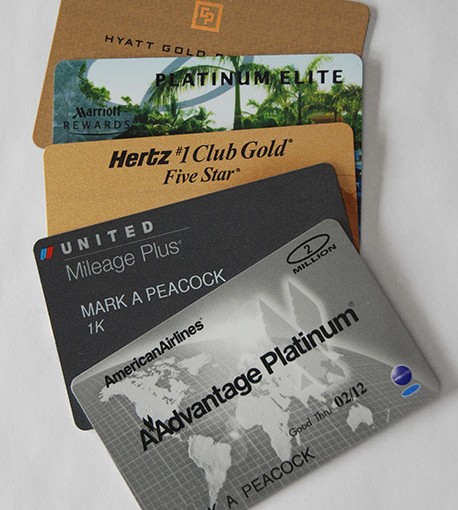
    Full House, Platinum over 1K
    Full House, Platinum over 1K

    I’m getting ready for a stint of international travel — a couple trips to the UK, a vacation to Venice, and then bouncing around southern India. I visited the 2011 Travel Goods show in Chicago for a preview of the new travel goodies I’d be seeing in the shops this spring.  Wading through a front room stacked with luggage, I hit the gadget room with the interesting stuff and interviewed some of the company owners. I also talk about the growing number of wireless WiFi hotspots I’m seeing in hotels, and about the different ways Marriott and United Airlines dropped my frequent flier/frequent sleeper status after my traveling patterns changed.  Also, a listener tells us about a good Air France experience re-routing around an East Coast snow storm, and an audio comment about being sick on the road. Listen through to the end of the podcast for how to enter the latest TravelCommons contest. Here’s a direct link to the podcast file or you can listen to it right here by clicking on the arrow below.


    Here are the transcript from TravelCommons podcast #88:

    • Intro music — Warmth by Makkina
    • Coming to you yet again from the TravelCommons studios. I just can’t seem to get my act together enough to have everything written in time to record from a hotel room, though if there’s going to be an April episode, I’ll need to.  The beginning of April finds me in Venice, wrapping up the Spring Break I discussed in an earlier episode.  I then get a week at home with some family coming in, then down to Florida for a week, then to the UK, and then, the last week of April in India, bouncing across the usual suspects – Bangalore, Pune, and Chennai – with a weekend in the Kerala backwaters.
    • Not that March has been quiet.  I’m just back from a trip to New York earlier this week and then head down to Phoenix next week. I’m hoping to catch a Spring Training ball game while I’m down there.  I’ve been working off and on in Phoenix since the mid-‘90’s and have never been to a Spring Training game.  Every year I say I’m going to carve out time, and every year something comes up.  This year, though.  This will be the year.  Again working on that New Year’s travel resolution about taking more quick breaks.  The fact that I’m still thinking about a New Year’s resolution has to be breaking some sort of rule.
    • Stay with me ‘til the end of this episode – either the preferred way by listening or the ADD way by scrubbing – for a quick TravelCommons contest.
    • Bridge Music — Keep Your Motor Running by Dave Hole

    Following Up

    • OK, let’s see what bits and bobs I have been keeping track of on Evernote, and Twitter, and Facebook…
    • For everyone who watched all the way to the end of the Vietnam video back in September – and for those of you who haven’t, it’s still available on the web site, on the iTunes feed, and on the TravelCommons Facebook page – there’s a picture, a head shot of me, with a boa – the large snake, not the feathered thing — draped around my neck.  You can plainly see the receding graying hair. So it caught me up short when a United gate agent looked at my boarding pass, and then at me, and said “You look too young to have a Mileage Plus number this low.”  It worked – I gave her one of those customer service “attaboys’ they always send to their status fliers.  It reminded me of my last trip to India when the immigration agent looked at me a couple of times and said that I looked much younger than my passport photo.  Either I’ve unknowingly picked up the ability to cloud men’s minds or that picture of Dorian Grey I picked up at a garage sale actually works.
    • We’ve talked in past episodes about how for frequent travelers, the cost of wireless data plans can quickly pay for themselves in avoided hotel WiFi charges – 3-4 nights in a month — if you tend to stay in hotels that still charge for wireless or don’t have precious metal status at chains like Hilton or Marriott.  Anyhow, I’ve seen over the past few months a growing number of wireless hotspots when I pop open my laptop in my hotel room.  I see in the network browser at least 2-3 Verizon hotspots, a Sprint, and every once in a while, a Virgin hotspot.  I guess I shouldn’t be too surprised – most Android phones have 3G hotspot capabilities built in.  I guess it’s the power I’m more surprised about.  If I’m seeing 5 or 6 of these, they’re broadcasting farther than just the adjacent room.  And while most have security enabled, there’s always 1 or 2 running naked.  And this will only increase after AT&T iPhones get hotspot capability with iOS 4.3.  With only 11 channels in the US implementation of WiFi, there’s gonna be some congestion in the air soon.
    • Some good comments also came into the web site, the e-mail box and Twitter since the last episode…
    • Andre – who describes himself as a “long-time listener from Germany” – left this comment on the Winter Travel Tips post
      • Wanted to share a positive experience with an airline call center when I was travelling to the US in January. I flew Air France on the international legs – Stuttgart to Paris-DeGaulle to JFK and back, and used United miles for the domestic portion to Florida – JFK to Washington-Dulles to Miami.
      • As my departure approached, so did a massive snowstorm. Just as I finished packing my luggage the night before departure, Air France e-mailed me that my flight out of Kennedy was canceled.  Indeed, AF kept all 4 of their JFK flights in Paris to keep their schedule from getting screwed up. I called the AF call center. I said that I’m currently in Miami and asked if there was flight to Paris out of here or DC. After waiting on hold for a while the agent transferred me to a special Delta help desk, warning me that I might have to pay extra to fly out of MIA. Next agent told me the same, but she had to talk to AF in Paris anyways.
      • After another wait, she came back, totally astonished that AF, not only accepted the re-routing, but also did that free of charge. I guess they were just happy to have one less passenger standing around in New York.
      • So, there are still moments where you think that you are a valued customer and they care about you.
    • Andre, thanks for that story.  This was a tough winter in the US.  I have a friend from Detroit who was in Boston one week and supposed to be in New York the next.  One of those storms blew through, cancelled his flight, and his next available flight home was the following Monday, when he was supposed to be flying back to New York.  He just hung around Boston for the weekend, bought some new underwear, and then caught Amtrak down to New York Monday morning – much less stressful.
    • Peter Zurich sent in a note about the running thread on the TSA’s full body scanners, specifically about my observation in the last episode about the partial roll out of the scanners.  What good was it to scan 100% of the passengers in ORD’s Terminal 1 last Monday morning – pushing security lines down the concourse, and yet have no scanners at all in alternative airports like Ft Myers, FL.  In this same vein, Peter writes
      • I am all onboard for security, but what we have now is security theatre that is just another meaningless escalation from x-ray to liquid ban to shoes off.  We joked about what a good thing it was that Richard Reid, the shoe bomber, didn’t have it in his underwear, and of course, that’s the next thing that happens, and we get the naked scanners.  On and on it goes…
    • Yes, Peter, and so it does.  One thing the housing market meltdown has done is make people less mobile – they can’t easily get out of their houses to move to another city for a new job.  The number of people flying every week to their jobs is growing.  Making this work requires smooth predictable travel – something the TSA seems to have no interest in facilitating.
    • And finally, yet another audio comment – I love these – this time from Lori Humm, another long-time TravelCommons listener, about a time when she was sick while on the road
    • Lori Humm audio clip
    • Lori, thanks for that story.  Makes me feel a bit of a whiner — Type A flu definitely tops my cold I whined about in the last episode.
    • If you have a question, a story, a comment, a travel tip – the voice of the traveler, send it along.  The e-mail address is comments@travelcommons.com — use the Voice Memo app on your iPhone or something like Virtual Recorder on your Android phone to record and send in an audio comment like Lori or Gary in last month’s episode; send a Twitter message to mpeacock, or you can post your thoughts on the TravelCommons’ Facebook page — or you can always go old-school and post your thoughts on the web site at TravelCommons.com.
    • Bridge Music — Baja Taxi by Brian Buckit

    New Travel Goodies

    • Chris Truelove, another long time TravelCommons listener from the UK, dropped me a line a couple of weeks back, saying that he would be in Chicago for the 2011 Travel Goods show to launch the latest version of his luggage locator tag business. I had mentioned his globalbagtag.com business some episodes ago, and now he’s launching a new line – back2you.com.
    • Always looking for some podcast content – as well as the opportunity to meet a listener – I headed down on Sunday afternoon.
    • McCormick Center in Chicago is one of the world’s largest exhibition spaces, so finding the show took a little bit.  Walking in, it was luggage as far as I could see.  There were lots of colors on display.  Everybody – well, except for Tumi – was looking to make a break from black.  I couldn’t discern a clear alternative, though – was red the new black or was beige.  I did see a surprising number of hardshell rolling bags and in all sorts of wild prints.  Perhaps those are more targeted at the recreational market – can’t say I saw a lot of cheetah-print hardshell bags being put in the overhead on my morning flight to New York last week.
    • In spite of all the colors, my eyes began to glaze over – you can only look at so many suitcases before sleep – or boredom – begins to wash over you.  Then I walked into the back room and things got much more interesting.  Rather than 2-story luggage displays, in here were smaller booths filled with all sorts of travel gadgets.  Even the bags back here had interesting twists. Powerbag showed backpacks and briefcases with built-in batteries, complete with built-in iPhone and USB cords to keep your phones and iPods topped off while walking down the concourse.  And a company called Runnur (http://gorunnur.com/) was selling a fanny pack reengineered into something like a bandolier, slinging everything across one shoulder instead of resting on your back-side.
    • It was here that I found Chris and so, using the Voice Memo app on my iPhone, I asked him to tell me about Back2You (http://back2you.com/)
    • Back2You interview

      Back2You Bag Tag
    • Thanks Chris.  Those tags could come in handy on my upcoming trips to Italy, the UK, and India where I won’t be in any single place more than a couple of days.
    • Walking around the back room, I found some other interesting products
    • TuGo interview
    • I’ll post a picture in the show notes.  I tried TuGo (http://goodtugo.com/)  out last Monday morning in ORD.  It got it on my bag in less than a minute, put my coffee in there, then put my backpack on top of my bag and it worked like a charm.  Not sure if the problem it’s solving is worth the space it takes up in my bag, but it definitely works.
    • One of the themes in the back room seemed to be comfort – as the seat pitch – the distance between rows – shrink and planes get more crowded, people are looking to buy a little something to make the journey more bearable.
    • Kuhi Comfort interview

      TuGo Cupholder
    • I tried the Kuhi Comfort (http://www.kuhicomfort.com/).  It was more comfortable than the typical neck pillow. I’m not sure about the pouch for aromatherapy. I like a little lavender oil as much as the next person, but in coach, where you’re less than a foot from the other passenger’s head – one person’s relaxing aromatherapy is the next person’s eye watering stench…
    • The other theme I picked up was hygiene.  There were a handful of booths selling bed bug powders and plastic barriers.  The booth across from Chris Truelove’s –Shelves to Go (http://www.shelvestogo.net) was selling a packable shelving system – lifts straight out of your bag and hangs on the closet rod – avoiding, as the brochure says, “the risk of possible exposure to dirt and insect infestation” from putting your close in the hotel dresser  — I’ll put a picture in the show notes.
    • And then there was this new twist on the lowly wipe
    • Paper Shower (http://papershower.com/) interview
    • So there you go, no end of stuff to make your travel life a bit easier, and your bag a bit heavier.

      Shelves to Go
    • I’ll put URLs and any pictures I have of these products in the show notes.
    • Bridge Music — Emily C by Fiasco

    Losing Status

    • Back in episode 82, I talked about how my job switch – moving from consulting to being the CIO of a technology company – was changing the way I travel, and how the new destinations were shaking up my frequent traveler program status.
    • It all sorted out in mid-January.  Because of our office locations, I switched from Marriott – where I’d been top-tier Platinum status for at least 7 years – to Hilton for no other reason than sheer convenience.  I hit top tier Hilton – Diamond; gem stones rather than precious metals for Hilton – in December.  And, oddly enough, still haven’t received a new card or welcome packet.  Every other program – you hit a major tier and there are all sorts of thank you letters and program brochures showing up on your doorstep.  Hilton – nothing.
    • As interesting, though was Marriott’s reaction.  I don’t think I stayed enough nights to qualify for any status, but they “soft landed” me.  They dropped me one level down – to Gold, which still gets you free WiFi and free breakfast in the concierge lounge – and an offer to let me buy back my Platinum status for 40,000 points.  Nice approach.  If I thought I’d be staying at more Marriotts this year, I’d have considered the buy back, but I appreciated the soft landing and have stayed at a couple of Marriott since them.
    • United Airlines – not as nice.  No soft landing here.  I dropped two tiers – from 1K to Premiere, which is the status level I’d qualified for by the end of the year.  As I mentioned in episode 84, when I saw in October that I would miss American’s Exec Platinum by about 10,000 miles, I flipped over to United to preserve a minimum level of status.  Which is exactly what I received.  Like Marriott, though, I received an offer to buy back my 1K status, but the price was a bit steeper — $999 plus flying 35,000 qualifying miles in the first quarter 0f 2011.  Neither of those made any sense.
    • I’ll probably go back to my old ways – splitting my mileage between United and American and keeping mid-tier status – Premiere Exec — on United because, with monthly flights to Dallas and Fort Myers, FL where United has little to none non-stop service, there’s no way I’ll make 1K.
    • Friends who left consulting used to joke that first January was one of their most conflicted times – down because they lost status and were now traveling with the peons; but happy with what it represented – that they were spending a lot more time with their families.

    Closing

    • Closing music — iTunes link to Pictures of You by Evangeline
    • OK, that’s it, that’s the end of TravelCommons podcast #88
    • I hope you all enjoyed this podcast and I hope you decide to stay subscribed.
    • Bridge music from Music Alley
    • And now for the contest.  In the past, I’ve run some quick contests to drive iTunes reviews.  This time, I – like every podcaster – am looking to drive Facebook “likes” – there’s got to be a better noun than that – “followers” on Twitter may be a bit creepy, but at least it’s not pathetic.  But, that’s the lingo, so I’ll have to go with it.  Go to the TravelCommons Facebook page – there’s link in the shownotes and a badge above the fold on the first page of the web site – “like” it, and leave a comment.  The best comment, funniest or most insightful as judged by me, wins 2 drink coupons on United Airlines.  I look forward to some good stuff
    • If you have a story, thought, comment, gripe – the voice of the traveler — send ‘em along, text or MP3 file, to comments@travelcommons.com or to @mpeacock on Twitter, or post them on our website at travelcommons.com. Thanks to everyone who has taken the time to send in e-mails, Tweets and post comments on the website
  • Podcast #87 — Sick on the Road; What’s in My Briefcase?

    Podcast #87 — Sick on the Road; What’s in My Briefcase?

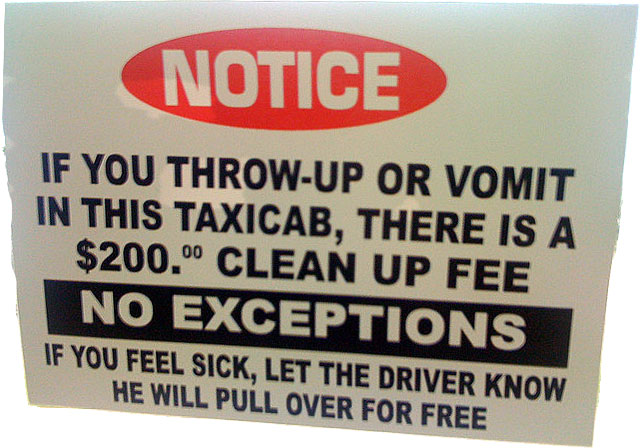
    Warning in a St Louis Taxi
    Warning in a St Louis Taxi

    I skipped the Midwest’s “snow-pocalypse” by flying to Phoenix where it was unseasonably cold — in the 20’s and 30’s F — but without snow. It’s been a cold winter and I came down with some nasty bug while visiting Dallas, which reminded me how miserable it is to be sick while traveling. Before my whining, though, I give a quick status on my New Year’s travel resolutions, my observations on the status of the TSA’s full body scanning program, and my struggles trying to use Avatron’s Air Display app to turn my iPad into a second display for my MacBook Air.  Gary Learned suggests a headset that can defeat overhead PA announcements at airports, and I go through my briefcase — how I’ve changed what I carry for business travel over the past 5 years. Here’s a direct link to the podcast file or you can listen to it right here by clicking on the arrow below.


    Here are the transcript from TravelCommons podcast #87:

    • Intro music — Warmth by Makkina
    • Coming to you from the TravelCommons studios outside of Chicago, IL.  I managed to skip this week’s “snopocalypse” — the 20+ inches of snow that fell here Tuesday and Wednesday.  Instead, I flew down to Phoenix on Tuesday morning – though not without a couple of glitches courtesy of American Airlines – and came back Friday evening.  And yes, I did feel a bit guilty skipping out on the shoveling in the wind and cold, but that’s what kids are for.
    • It has been a cold winter so far.  I was in Dallas a couple of weeks ago where it was rainy, in the low 30’s and the wind was blowing a steady 20 mph – OK, no snow, but not any better than Chicago.  And then even this week in Phoenix – the temperatures were in the 30’s, getting into the 20’s at night.  Yes it was colder in Chicago and elsewhere, but still – where’s that global warming when you really need it.
    • Earlier in January, Phoenix was much nicer – sunny and in the 60’s.  The first couple of days I was there, I was running on autopilot a bit – for lunch, I’d dash out of the office, hop in my rental car and drive the quarter-mile north to the shopping area with the sandwich shops and a Whole Foods.  Driving back the second day, I thought, “What the hell am I doing?  It’s 20 degrees back home!”  The next day, I took an hour for lunch, walked to the Whole Foods, bought myself a cup of soup, sat outside in the sun and ate it, and then walked back to the office.
    • Which kind of reminds me of the New Years resolutions I posted on the TravelCommons site on the first of the year.  #3 was “Take More Quick Breaks” – along the lines of “take advantage of the travel because it sure takes advantage of you…” In the post, I mentioned the afternoons I took to hike up Squaw Peak in Phoenix or walk along the beach in Naples, FL.  Walking along a road to lunch seems a bit of a pathetic reach, but the spirit is there – if you’re traveling from snow to sun for work, don’t forget to grab a couple of rays for yourself.
    • Actually, I did a bit better than that – I went to the BCS college football championship game while in Phoenix, and to a Mavs-Lakers basketball game while in Dallas – something for each week.
    • As for my other resolutions?  “Plan Further Ahead” because airline load factors/seat utilization is moving up again?  I’m doing OK with that – I’m booking out 2-3 weeks in advance, which is a huge improvement for me.
    • “Repack My Briefcase?” – check out the “What’s in my bag” segment a bit later.
    • “Take More Pictures?” – just a marginal improvement – I don’t count taking pictures with my iPhone of bullet points on whiteboards
    • And the toughest one – “Be nicer to TSA agents?”  I was doing better because, at least over the past few trips, they’ve been nicer to me.  I hadn’t been groped or irradiated on my first couple of trips, which will tend to have a positive impact on anyone’s disposition.
    • Bridge Music — Shine by Hungry Lucy

    Following Up

    • The TSA full body scan controversy that was white-hot during the Thanksgiving weekend seems to have cooled quite a bit.  The TSA will say that this is proof the American public supports its program of full body scans or AIT – Advanced Imaging Technology – as they like to call it, and the “enhanced pat-down” as the TSA likes to call it, or the full body grope as the rest of us experience it.
    • I think instead it’s that the TSA has pulled way back on their use of these invasive techniques.  I hadn’t been hit with a full-body scanner or a grope-down from the beginning of December until last week.  When the TSA dropped the scanners into ORD in July, they had everyone go through them, which doubled the screening time – at least.  Then through the Christmas travel season, it seemed that the machines were off more than they were on, and even when they were on, they weren’t not on every security lane, so it was pretty easy to avoid them unless you’re going thru a small security checkpoint – which is how they last caught me in DFW.
    • They also seem to be have slowed the rollout.  I haven’t seen them crop up in any new places.  Terminal 2 in PHX, for example, is still a TSA porn-free zone.  Not that I’m complaining.  Nice to be able to just move through security without having to hold my hands above my head.  And remember when we used to complain about taking our shoes off…
    • However, on my last two trips out of ORD, I was fully irradiated.  Again, it was going through a small checkpoint – the status-only checkpoint in Terminal 3, where American lives.
    • Though the TSA will say that the full-body scan doesn’t take much longer than the metal detector, they’re just flat wrong.  The actual scan – the amount of time you have your arms above your head – is only a few seconds longer than walking through the metal detector, the entire screening process takes much longer.
    • I’m beginning to consider the locations of these full-body scanners when I book flights.  In ORD, it seems easier to avoid them in Terminal 1 than Terminal 3, so my next flight down to Florida I’ve switched over to United. Not completely driven by full-body scanners, but it’s definitely a factor.
    • And continuing my thread about my MacBook Air.  You’ll remember that one of the reasons I chose the 11-inch model was the TSA said it could stay in your briefcase – kinda like a bit iPad.  However, when you briefcase – or backpack – stacks your iPad on top of your MacBook Air, be prepared to pull one of them out.  Talking to a very pleasant TSA X-ray machine operator in ORD, he told me that when they stack up, they get too thick to properly scan.  Makes sense.  I’ve since moved my iPad to a difference section in my backpack – put some papers and magazines between the iPad and the MBA to provide a bit more separation and haven’t had a problem since.
    • A number of folks have asked me why I carry both the iPad and a laptop – and I haven’t been able to come up with a real compelling reason.  As I’ve said before, I like reading on an iPad and writing on a laptop, but does that justify the extra weight and re-packing hassle of the iPad?  I was wishy-washy on that right up to last week when I thought I’d found my killer app for the iPad – Avatron’s Air Display, which turns the iPad into a secondary display for the MacBook when they’re on the same WiFi network.
    • Now here’s a reason.  While I can work on the smaller screen of my 11-inch MBA (or the 10.6-inch HP netbook before that), having a second display certainly makes it easier to “spread out”.  I have two 22-inch monitors on my Windows desktop box at home and love it.  I eagerly dropped the $10 for the Air Display app and fired it up…
    • And was disappointed.  It didn’t work in the office.  OK, our network guys must have it locked down.  Not surprised.  I get back to the Hilton and fire it up – again, no luck.  At home, doesn’t work when associated with my Apple Airport Express, but does – just once – when associated with the access point that’s built into the big AT&T U-verse modem/router thing in the basement.  The only access point I can get Air Display to regularly work on is when I use my Verizon Droid 2 as a 3G hot spot.  That’s a bit of a kludge.
    • When it does work, it’s great – the few times that’s happened.  I’ve been hanging around Avatron’s support forums for about a week now, but haven’t found a solution yet.  Great concept; real spotty execution.  If they can get this to work, my iPad is no longer a heavy Kindle – it’s a real productivity tool.
    • And following up on my thoughts in the last episode about some of the hassles of the “digital nomad” work style when it comes to finding a quiet place for a conference call, Gary Learned sent in some thoughts…
    • Gary Learned audio clip
    • Gary, thanks for that suggestion.  I’m hitting Amazon looking for that earpiece right now,
    • And finally, the Gogo in-flight wireless guys have got a new giveaway as they continue to push awareness of their product.  For February, Gogo is adding Facebook to their set of free sites. After the plane gets above 10,000 ft, fire up your laptop or smartphone and associate with the “gogoinflight” wireless network.  Open your browser and you’ll get the GoGo sign-on page.  On the bottom of the page, you’ll see a set of free web sites – typically the dot com site for the airline you’re flying, a weather site, ….  And now, Facebook.  Nice to know that you can stay socially connected at 35,000 feet.
    • If you have a question, a story, a comment, a travel tip – the voice of the traveler, send it along.  The e-mail address is comments@travelcommons.com — use the Voice Memo app on your iPhone to record and send in an audio comment; send a Twitter message to mpeacock, or you can post your thoughts on the Facebook page with GoGo’s free service — or you can always go old-school and post your thoughts on the web site at T/C.com
    • Bridge Music — Beggarstown by Hollow Horse

    Sick on the Road

    • No, that’s not sick of the road – though that happens at times too.
    • As I mentioned earlier, I was in Dallas a couple weeks ago – when it was just cold and windy; no snow or ice – and scored an invite to a vendor’s suite at the Mavs-Lakers basketball game.  Definitely a premiere game.  I went with a couple of guys from the office.
    • It was a good game – Mavs were down at halftime but came back to beat the Lakers by 10.  During the second half, though, I started to feel a tickle in the back of my throat.  I couldn’t stop coughing – couldn’t seem to “finish up” a cough – and the beer and salsa were beginning to feel a little rough going down.
    • Back in the hotel room, I just couldn’t get warm.  I went to bed, but soon started shivering. The thermostat was just above my head.  I kept pushing the Up button until I heard the heater kick in.  After a while, I finally got warm enough to sleep comfortably.  The next morning I looked at the temperature setting – it was at 78°.
    • It didn’t get much better the rest of the day.  I drug myself through a full day of meetings and got on a United Express regional jet for my flight home that night.  Again, I couldn’t get warm.  Since United Express seems to have followed American in pulling blankets and pillows from its planes, I swaddled myself in my tweed jacket and overcoat, and tried not to cough on the person in the window seat.
    • Now, as being sick on the road goes, this wasn’t that bad.  I’ve gotten food poisoning a couple of times, severely pulled muscles, flown with sinus infections that made my head feel like it was going to split in two during descent…
    • But it did remind me how miserable it is to be sick on the road.  For the most part, you’re alone.  Though you may have co-workers who will try to help you a bit, when they go home to their families, you’re going home to an empty hotel room and are going to have to fend for yourself.
    • And it’s not just that you’re lacking a spouse or child to help you out – bring you a blanket or a cup of tea.  You need to find a pharmacy, perhaps a doctor.  But even then, it can still be a struggle. When I was last in Paris, I tweaked my knee pretty bad and needed some ibuprofen for the pain and swelling.  The hotel concierge pointed me in the direction of a pharmacy a couple of blocks away.  Walking/limping in, I knew I couldn’t ask for Advil or Motrin – those US name brands don’t exist in France.  So I asked for ibuprofen – the generic name of the active ingredient.  Ibuprofen is ibuprofen, I thought.
    • “Ibuprofen, s’il vous plaît” I asked.  The pharmacist cocked an eyebrow and looked at me.  “Ibuprofen, s’il vous plaît”, I said again.  Now the other eyebrow arched.  I fought the urge to say it again, only louder.  What was I missing?  Perhaps my throbbing knee was effecting my pronunciation.  I looked around on the counter; grabbed a pen and flipped over some advertising flyer.  I-b-u-p-r-o-f-e-n, I wrote.
    • “Oh, EE-bu-pro-fen” the pharmacist said, and gave me the container of tablets I had needed since I got up that morning.  Flipping French, I thought, and limped back to my hotel.
    • So what do you do?  Certainly “not getting sick” is the best approach – get enough sleep on the road – often tough to do in strange beds and with full schedules.  I find that the old saw – wash your hands for a full 20 seconds and do it often – has significantly reduced the number of colds I pick up, even when I’m flying a lot.
    • Packing a well-stocked medicine cabinet helps a bit – allergy medicine, cold tablets, throat lozenges, ee-buprofen tablets, ….  For domestic travel, at least, you’re not trying to cure the sickness; just stave off the symptoms long enough so that you can get home and into the hands of your regular care-givers.
    • International travel is a bit dicier.  I know some travelers who have medical jet/air ambulance insurance so that they have a quick way to get back home if something catastrophic happens.
    • While I haven’t done that yet, I am looking for a medical phrase book before my next trip to Europe, complete with pronunciation guides for common drugs.  Ibuprofen, ee-buprofen – geez…
    • Bridge Music — Love Survives by Lovespirals

    What’s in My Bag?

    • One of the New Year’s Travel Resolutions that I posted on the TravelCommons site on Jan 1st was to “unpack and repack my briefcase”.
    • Steve Frick, a long time TravelCommons listener, wrote the next day “did that this weekend. 3 pairs of headphones, approx 2 lbs of loose change, 50+ business cards and at least 15 hotel room keys. No wonder my laptop bag was so heavy.”
    • Five years ago – February 2006 – in episode #33, I did a bit of an audio tour through my briefcase
    • <audio clip>
    • The picture of this de-constructed travel kit is the first picture of the TravelCommons Flickr photostream
    • Five years later, some (and surprisingly only some) of the contents have changed, but the goal is the same – optimizing the trade-off between weight and having everything I need.  There’s always that desire to have everything you could possibly need – to make your briefcase into the road warrior version of Batman’s utility belt, letting you amaze your traveling companions by pulling out just the right thing to solve any travel problem.
    • So you’re always prepared, but you’re always trailing up the rear – either because you’ve got the heaviest bag or because the TSA is always pulling your bag for secondary screening because all that stuff makes them suspicious.
    • And so back to that balancing act – what do I need all the time (and so would be a pain to be without) vs. what can I buy or borrow for the one or two times I need it?
    • The technology has changed quite a bit, as you would guess, in 5 years.  It’s kinda fun looking back.  I’ve traded an IBM ThinkPad for a MacBook Air; a Motorola flip phone and U2-themed iPod Classic replaced by an iPhone; and an Aliph Jawbone 2 Bluetooth headset bumping the Motorola H710.  No need for the Microsoft travel mouse or Bluetooth dongle with the MacBook. Also, my vendor-supplied thumb drives have been upgraded – from 512 MB to 4 GB.
    • I replaced the Swiss Army briefcase – I called it a “poor man’s Tumi” in the podcast – with a backpack. And, of course, the TSA’s liquid ban stopped me from carrying on little bottles of hand lotion. I now grab them from every hotel and leave them scattered around conference rooms and rental cars
    • What’s stayed the same?  The Moleskine notebook, the selection of pens, the pink semi-transparent folder for expense receipts, a bottle with ibuprofen and zyrtec tablets, the iRiver MP3 player and recorder that I use to record these podcasts, and, most importantly, a tin of wintergreen Altoids to counter dry mouth when I fall asleep in flight – a pretty common occurrence.
    • What’s new?  An iPad, an extra battery for my iPhone, an AT&T USB cellular modem which lets me skip paying for slow hotel WiFi, a set of Motorola Bluetooth stereo headphones that I use when I work out, a couple of Tazo green tea bags because in-flight coffee is just horrid, an inhaler to make it easier to breathe when I catch a cold (good advice from a “doc in the box” in San Mateo after being laid low in the SFO Marriott by bronchitis), and a Verizon Droid 2 for the too many times that AT&T’s coverage sucks.
    • The iPad let me ditch the printed reports I used to carry – I hated reading them on a computer screen, but don’t mind it on the iPad.  The iBooks and Kindle apps also let me leave physical books at home.  I also tossed the 3 business card holders I’d accumulated – my backpack has a pocket just for business cards.  And do we really need business cards anymore?  Unless you’re regularly meeting with Asian businessmen, business card exchanges are getting rarer and rarer.
    • So I think I’m traveling lighter.  But it might be a push – what I’ve dropped in paper I think I’ve made up in device chargers.

    Closing

    • Closing music — iTunes link to Pictures of You by Evangeline
    • OK, that’s it, that’s the end of TravelCommons podcast #87
    • I hope you all enjoyed this podcast and I hope you decide to stay subscribed.
    • Bridge music from Music Alley
    • If you have a story, thought, comment, gripe – the voice of the traveler — send ‘em along, text or MP3 file, to comments@travelcommons.com or to @mpeacock on Twitter, or post them on our website at travelcommons.com. Thanks to everyone who has taken the time to send in e-mails, Tweets and post comments on the website
    • Follow me on Twitter
    • “Like” the TravelCommons fan page on Facebook
    • Direct link to the show
  • Podcast #85 — Importance of Hotel Bathrooms; Maximizing Miles

    Safely hunkered down in the TravelCommons studios during the busiest US travel week of the year, I don’t know how I can call this a travel podcast if we don’t talk about the TSA‘s “junk touching” patdowns.  The general traveling public is finally catching up with the frequent traveler set.  The TSA’s claim that it’s groping vs. safety is a false choice — their security theater doesn’t make us any safer.  The increased hassles associated with air travel have increased the fly-vs.-drive breakeven point — almost tripled it according to some.  A new study on the future of hotels neglects one of the most important features of any hotel stay — the bathroom.  And we wrap up talking about mileage tracking websites with the CEO of GoMiles.com.  Here’s a direct link to the podcast file or you can listen to it right here by clicking on the arrow below.


    Here are the transcript from TravelCommons podcast #85:

    • Intro music — Warmth by Makkina
    • Coming to you once again from the TravelCommons studios outside of Chicago, Illinois during the one week a year I make a determined effort to stay off the road.  I wasn’t successful last year – a client scheduled a meeting in Philadelphia the Monday before Thanksgiving, so I did an 18-hour up & back – last flight out Sunday night, returned Monday afternoon – to avoid the building crowds.  But this year, I have a bit more control over my travel schedule.  And that means I actually put my roller bag away – not just leave it lying around empty in the bedroom.
    • I hate to sound elitist, but this week is always amateur week at the airports – families, infrequent fliers.  They’re going to be the ones trying to take a water bottle through the security checkpoint, taking 2-3 shots at the metal detector before getting all their jewelry off; then walking slow, 4 or 5 abreast down the concourse, placing 5-adjective orders at Starbucks, crowding the jetway door trying to board with the handful of elites who couldn’t stay off the road, ….  Why should I torture both of us?  So I stay home and keep myself calm with a weekend long low-grade tryptophan-induced stupor supplemented by a steady diet of football and good-quality beer.
    • Watching the TSA patdown controversy from this distance was entertaining rather than frustrating — even though it cost me the opportunity to earn the special “Don’t Touch my Junk” badge on FourSquare . Coming during “amateur week”, there were more than enough infrequent travelers willing to put themselves in front of a reporter’s microphone and say “I don’t care how long I wait or how they need to touch me; I just want to be safe”. They’re always there when the TSA turns the screw a bit tighter. But this time, there were an equal number of people saying, “Wait a minute”. I thought the woman who walked through LAX screening in a black bikini made the point
    • Though not many people voluntarily chose the full body groping during National Opt-Out Day , the organizers did get an impressive amount of attention focused on the TSA’s screening procedures. By Wednesday, John Pistole, the TSA administrator, must have gotten tired of getting wired up for the umpteenth remote interview with a news show..
    • The pile-up of interviews and media investigations made the point that frequent fliers figured out long ago – the TSA’s justification – the scanning and the gropings are a necessary evil for secure flight – is a false choice. Most frequent fliers don’t think the TSA and their security theater makes us more secure – they’re just one more hassle we have to deal with before we can get to our destination. Last week’s hoopla just drove the point home to everyone else.
    • Bridge Music — DLDN Instrumental by St Paul

    Following Up

    • First of all, here’s a nice audio comment from Linda Martin of the Indie Travel Podcast
    • Linda, thanks for taking the time out from yours and Craig’s jealousy-inspiring tour through Southeast Asia to drop us that line…
    • Thanks also to the folks who “liked” the TravelCommons fan page on Facebook.  And to the folks who follow me on Twitter.  I try to use both services to keep in touch with listeners between episodes – especially with the “expanded spacing” between episodes.  I was scanning the archives the other day looking for the 1st –year recap show to put in the iTunes feed, and I realized that almost half of the TravelCommons episodes – 45% to be exact – were done in that first year.  Of course I had a lot of content to mine – years of travel notebooks – so it was easy to do a weekly show at first.  Now that I’m doing well to keep to a monthly schedule, the Facebook and Twitter “short-burst” messages make it easy for me to talk with everyone – or those who are interested – between episodes.
    • One such item I posted on the Facebook page was a link to an article by Gulliver, the Economist’s business travel blog, which itself linked to an article in the Atlantic about the breakeven point between flying vs. driving. Back in one of my 1st year episodes (#23 to be exact), I calculated the breakeven point to be at the 3 hour/180 mile mark – the distance between Chicago and Indianapolis.
    • Including all the time involved with catching the hour-long flight to Indy — ½ hr drive to ORD, 45 minutes between check-in, security, and boarding, 1-hour flight time, ½ hr for deplaning and getting the rental car, and another ½ hr to drive to the meeting site – got me to 3hrs 15 minutes.
    • But that calculus is 5 years old.  In light of reduced flight availabilities and increased TSA hassles, the Economist and Atlantic writers declared the new fly-vs.-drive breakeven point to be 8 hours or 500 miles – almost triple my number!  “If it’s under 500 miles, I’ll do anything rather than hop on a plane,” says the Atlantic’s Megan McArdle.  “And if it’s over 500 miles, it had better be way over . . . or I’d better be carrying a cooler with a still-beating heart in it.”
    • Anecdotally, I know a number of families who used to fly to places like South Carolina and Florida for Thanksgiving, opted instead for the 10-12-hr drive.  If I’m an airline exec, these numbers tell me that I’m in a no-growth industry; that my one remaining value proposition – we get you there faster than if you can on your own – is being negated by the hassles – both my own and the government’s – that surround me.  And that I should be afraid.
    • Speaking of afraid, I’m sure that everyone will recall the uptick in surgical masks on planes last year during the H1N1 “pandemic”.  After that whole thing died under its own hype, it’s been pretty much back to business as usual – with the exception of the occasional Asian mask wearer.  So I was interested – no, enthralled – when the guy next to me on an ORD-LAX flight whipped out a box of disinfectant wipes and cleaned all the surfaces around him – the seat, the armrests, the headrest, the headrest in front of him, and the tray table.  Even at the height of the H1N1 scare, I’d never seen quite such a swab down.  After he finished, I wished for a big sneeze, but couldn’t muster up much more than a cough.
    • As I mentioned on Twitter at the beginning of the month, I switched over from my little HP netbook to an 11-inch MacBook Air. Yes it’s light, yes it’s cool looking, but when I left it in my backpack going through security at both ORD and Orlando and came away unberated by the X-ray screener, that cinched it – it’s the best Travel PC out there. I posted a full review on the TravelCommon’s website with my impressions after 2 weeks on the road with it. A full month and my thoughts haven’t changed. It can still be a hassle integrating it into my company’s Windows infrastructure, but I can live with it. It’s a great machine.
    • And finally, following up on last episode’s riff on in-flight WiFi, Google’s Christmas present this year to travelers is free Gogo in-flight WiFi on Delta, AirTran, and Virgin America airlines for the holidays – it’s started the weekend before Thanksgiving and runs through Jan 2nd. I don’t think I’ll get to use it – the rest of my travel this year will be on American – but I hope some of you guys get a chance.
    • If you have a question, a story, a comment, a travel tip – the voice of the traveler, send it along.  The e-mail address is comments@travelcommons.com, you can send me a Twitter message at mpeacock, or you can post them on the Facebook page or the web site at TravelCommons.com.
    • Bridge Music — Test Drive by Zapac

    Importance of Hotel Bathrooms

    • Yes, the TravelCommons podcast has long had a close relationship with hotels bathrooms.  Being born in the bathroom of the Wardman Park Marriott in Northwest DC, I think the penultimate bathroom recording was in the shower stall of the Camelback Resort.  The echo was so bad I had to re-record the whole thing.
    • So I was disappointed – to say the least – when reading through Hotels 2020, a future-of-hotels study from Amadeus, a European travel technology company, there was no mention of the importance of the hotel bathroom – or toilette or WC – on the guest experience.
    • Let’s be honest.  When we walk into a new hotel room, we look at the bed first – mostly because, being the biggest thing in the middle of the room, it’s hard not to catch the eye – and then look at the bathroom.
    • It kinda makes sense – unless you have a suite, those are the only two rooms you have, so of course you’re going to check them out.  And, if you think about where you spend your time when in a hotel – you probably spend most of your time in your bed, with the bathroom in second place.  How close a second place – there’s way too many personal issues there for me to sort out in a 5-minute segment.
    • So where did the Hotel 2020 study focus?  The usual suspects – the replacement of the fortress-like front check-in desk with self-service kiosks and live people roaming around with iPads (so we’re replacing front-desk lines with mobbing a wandering clerk?  And that’s progress how?); packing the rooms with even more technology – 3D TVs (so they replace the revenue lost on WiFi with rentals on the 3D glasses), plug-in jacks so we can more easily display the content we’re hauling around on our laptops and iPads and Droid phones; figuring out yet more ways to sell us “ancillary services” – tee times, massages, spa treatments – more ways to make more money from us while we’re at the hotel.
    • But no mention of the bathroom, which I think is a critical mistake.  The hotel bathroom probably the most underestimated, under-recognized cause for guest satisfaction – and dissatisfaction.
    • Think about it –when you look into that bathroom and see a big shower stall, a fluffy robe, and some cook toiletries – a smile comes to your face.  OK, you think, maybe I’ll take an extra long shower – something I don’t get to do at home – try this loofa thing, does the shower gel go on it or on me before it….  Who knows, but it’s fun trying something new.
    • Compare that with the alternative – small bathroom, water-stained tub with a small chest-high showerhead, and nothing more than a small bar of soap.  Not only are you not thinking of purchasing any “ancillary services”, you’re trying to figure out how to get out and book a room down the road.
    • And it makes sense — we all know that our basic physiological needs must be met before we can self-actualize.  And it doesn’t get more basically physiological than the bathroom.  If a hotel can’t deliver a quality bathroom experience, why would I trust it to align my chakras with a hot stone massage?  Give me cut-rate toiletries and I figure you’re cutting corners on the scented oil rub down too?
    • So all you hoteliers, before you get too wrapped around the axle with the latest flat screens and electronic room service ordering and personalized e-mails and electronic concierges.  Make sure you’ve got a great showerhead and toilet that doesn’t run.
    • Bridge Music — Goodbye Sooner or Later by oldDog

    Maximize Your Mile – Interview with Founder of GoMiles.com

    • Miles, points – the one thing that helps make frequent travel bearable is the idea that, through the hassles, you’re earning a free trip to some place you actually want to go.  This year, I used United miles to fly my family of four from Chicago to Vietnam, and used Marriott points to cover the hotel in Hong Kong on our way back.  I also used Hilton points for an anniversary weekend in Chicago – left the kids behind with their grandmother – and will use more United miles for spring break trip to Venice for my wife, my daughter, and me.  Doing the math just on this year’s redemptions – the dollar value of these points adds up.
    • Of course, where there’s value, there’s a business opportunity.  A number of web sites for tracking miles and points have popped up over the past few years.  One of these sites is GoMiles.com – a free service that aggregates points across airline, hotel, and car rental programs and displays them on a single easy-to-read page.  I caught up with the founder and CEO Michael Komarnitsky for a Skype chat on why people use GoMiles…

    Closing

    • Closing music — iTunes link to Pictures of You by Evangeline
    • OK, that’s it, that’s the end of TravelCommons podcast #85
    • I hope you all enjoyed this podcast and I hope you decide to stay subscribed.
    • The bridge music is from ccMixter
    • If you have a story, thought, comment, gripe – the voice of the traveler — send ‘em along, text or MP3 file, to comments@travelcommons.com or to @mpeacock on Twitter, or post them on our website at travelcommons.com. Thanks to everyone who has taken the time to send in e-mails, Tweets and post comments on the website
    • Follow me on Twitter
    • “Like” the TravelCommons fan page on Facebook
    • Direct link to the show
  • Podcast #79 – Skipping Rental Cars, WiFi or 3G?

    Coming to you today from the TravelCommons studios outside of Chicago, Illinois at the end of one of those travel weeks where I lost control of my schedule – DC to Dallas to Houston to LA. In this episode, we talk about the problems with LAX security, my choices for white noise when I’m trying to sleep on an airplane, and the reasons why I’m skipping rental cars. I also talk with Boingo WiFi about the choices frequent travelers are making in going wireless. Here’s a direct link to the podcast file.


    Here are the transcript from TravelCommons podcast #79:

    • Intro music — Warmth by Makkina
    • Coming to you today from the TravelCommons studios outside of Chicago, Illinois, at the end of one of those travel weeks where I lost control of my schedule – the 6am flight to DC on Monday, the 6:30am flight to Houston on Tuesday by way of Dallas, the 6:30pm flight to LA, and then, refusing to take the red-eye, returning home Friday afternoon. Makes next week’s 4 days in Washington seem like a cake walk.
    • Seems like I’m getting more of those.Two weeks ago, my travel week was Monday in Stamford, CT; Tuesday in Providence, RI; Wednesday in Philadelphia; Thursday back in Chicago, and then Friday in San Diego, returning at 6:30am Saturday courtesy of the red eye. I used to be able to sleep on red eyes, but not so much anymore. And with a flight time between LAX and ORD of less than 4 hrs, there’s not a lot of time for sleep – even after scoring a first class upgrade. I was pretty worthless on Saturday – I went straight to bed after getting home and then took a nap later in the afternoon. The red-eye is false economy – I’m not saving time; just snowplowing the problem into the next day. Hence, my lack of enthusiasm for another red-eye this week.
    • I will say this, though. With winter coming in Chicago, I’m starting to look around for strategically located clients – Miami, Phoenix, LA. There are times when travel does have its rewards.
    • Bridge Music — You Are The Reason by C. Layne

    Following Up

    • Robert Fenerty dropped us a line giving his point-of-view on many of the things covered in the last TravelCommons episode:
      • Mark, aboard a flight to Prague, and with 5 weeks of international travel ahead of me, I’m also peering ahead to Thanksgiving. On the other hand, I’ll soon have United 1k status and am looking forward to seeing Versailles, Madrid, and the Dominican Republic. As for keeping touch with my family, I really enjoy giving people a “Skype tour” of my hotel room. I find that the wet running clothes or the ironing board next to the TV provide an easy segue to the events of the day. I’m lucky enough to have a client that pays for resort hotels, so there’s usually something interesting to see and talk about. That could be a dinner plate-sized showerhead or a view of a golf course.
      • As for losing things and making mistakes, my weakness is at the moments of transition. As I leave the car to enter the shuttle, my mind is racing ahead to claim check, the coupon, the passport, and the luggage in the trunk. But not the headlights, which I’ve left on. Perhaps the answer is to pause, consider the requirements of the moment, and not the future. Incidentally, the parking attendant who jumped my car told me about a Prius that idled on and off in their parking lot for a week before running out of gas.
    • Bob, thanks for the note. Reading your itinerary — Versailles, Madrid, and the Dominican Republic – I get a bit jealous. But then I recall times when I had trip itineraries of Paris, London, Dublin, Zurich and other folks would say “Oh, that’s so glamorous”, but the reality was that I was spending my days in Paris, London, Dublin, and Zurich in conference rooms that looked very much like conference rooms in Cleveland, Nashville, Indianapolis, and Atlanta – except with different brands of bottled water and no air-conditioning. Of course, I’m hoping Robert is doing a much better job of work-life balance than I did.
    • Leo Vegoda “@-signed” me on a Tweet from Seoul’s Inchon airport. Leo wrote – “Check in & security at ICN a breeze. Noodles and beancurd delicious. LAX are you listening?”
    • I was thinking about this when I walked into LAX Friday morning for my flight back to Chicago. The lines in Terminal 7 were a zoo at all the screening stations. It looked like a number of Japanese and Mexican tourists weren’t completely clear on the TSA’s 3-1-1 liquid carry-on limits. I saw 1 TSA screener fill an entire gray bin with liquids – toothpaste, shampoo, water bottle, sour cream (?) – from one family. Another woman kept unlocking and relocking her pink rolling bag to pull things out – first, her PC, then a bottle of water, then a jar of honey (?). It was not pretty.
    • Of course, a big part of this is LAX with all its little terminals hanging off the access road, and none of them with enough real estate to house a proper screening set up.
    • Walking into this, I took a deep breath – I wasn’t tight on time, but shuffling through security lines wasn’t the way I wanted to start the day. Sometimes when the main floor of Terminal 7 is bad, I’ll go up to the screening station on the bridge over from the parking garage. I went to ask Airserv women – the contractors at the start of the line checking boarding passes – if that line was any shorter and she spotted the Global Services mark on my United boarding pass and said “But you’re Global Services so you don’t have to worry about that.” She took my boarding pass and driver’s license, walked me past all the lines, dropped the line tape, gave my boarding pass to the TSA guy and escorted me right to an X-ray machine. It was the ultimate – and very timely – line cut. No noodles and beancurd like Leo had (a bit too early for that), but it did give me time to grab a cappuccino before getting on my flight home. And reinforced, once again, the value of being “super elite”
    • I’ve talked in past podcasts about using white noise applications to drown out the cabin noise that my Bose noise-canceling headphones don’t cover. I use a couple of applications on my iPhone – White Noise and Naturespace. White Noise was the first one I used – I liked their Amazon rain forest.
    • But then I flipped over to Naturespace because I thought the stereo quality, “aural spacing” of the sound in the headphones was a good bit better. But now I’m back to White Noise after the latest upgrade because I really like one of the new sounds – the Tibetan Singing Bowl.
    • Maybe it’s just me, but this is the perfect white noise for me. Others I’ve played it for thought it sounded like a huge swarm of mosquitoes, but it’s come in very handy on the string of 6am Monday morning flights I recently had.
    • And just a quick note, for those of you who check out the show notes, I’ve switched over from summary bullet points to more of a transcript. It’s a lot more words, but actually a good bit easier for me. Since the show is usually just me talking – as opposed to many other shows that are interviews or conversations among multiple hosts – I script out a good bit of my show. That may be disappointing to those who thought I was naturally this glib, but it saves me a lot of post-production time – editing out ums, ahs, and narrative dead-ends. Since I have the script, I figured that copy-pasting it is easier than trying to summarize it – sort of the show notes version of Mark Twain’s “I’d have written a shorter letter if I had the time”. So anyhow, starting with TravelCommons #78, you can wade through the gory details of each show by clicking through the “Read the rest of this entry” to the show notes page.
    • If you have a question, a story, a comment – the voice of the traveler, send it along. The e-mail address is comments@travelcommons.com, you can send me a Twitter message at @mpeacock, or you can post them on the web site at travelcommons.com.
    • Bridge Music — Fire In The Day’s Field by the Seldon Plan

    Skipping the Rental Car

    • Two weeks ago, I had to get from downtown Washington DC to a Northern Virginia suburb for a client dinner. I looked at the Metro map, rang up some car services, but finally gritted my teeth and rented a car. That’s pretty much my attitude toward car rentals these days — the choice of last resort. It wasn’t always this way. But with cost and fee increases, shrinking fleets, and more inconvenient locations, I work hard to skip the rental car counter.
    • The biggest issue is cost. Rental car prices have soared — increasing an average of 60-70% over last year. But prices are just part of the story. Additional fees and taxes can add another 50% to the number that finally hits your credit card. The concession recovery fee that airports and train stations charge is usually one of the bigger charges. Avis hit me with 11.11% concession recovery fees on recent trips through Seattle-Tacoma and LAX airports, and a 10% fee for renting at Philadelphia’s 30th Street train station. Picking up the car in town doesn’t always dodge this fee. Hertz leveled a 13% concession recovery fee on a rental from the San Francisco Marriott hotel. On top of that, the rental companies add on a customer facility charge, a vehicle licensing fee, and an energy recovery fee. And then the state and local governments’ turn. My Sea-Tac rental receipt shows a 9.5% sales tax plus a 9.7% rental tax. California adds 3.5% tourism assessment fee. My Philadelphia rental had 4% passenger car rental tax (split between the state and the city) plus a $2/day state surcharge. Just across these four examples, fees and taxes added 27-51% to the final cost of my rental.
    • Another problem is being able to get a car. The easiest way for rental car companies to make more money is to increase each car’s utilization — the number of days it’s rented. Makes sense, but when demand for cars increases just a bit, the pickings start to get slim. Last month, I flew from LAX to Washington-Dulles and planned to rent a car because it would be a bit cheaper than the round-trip cost of a cab to/from DC. I landed at Dulles around midnight. Wheeling my bag across the empty Avis Preferred parking spaces, I saw a huge Ford F150 4×4 King Cab pick-up truck. ”They can’t be serious,” I thought. Oh yes, they were — that was their idea of the intermediate size car I had requested. This wasn’t going to fit in a parking garage in downtown DC. I walked back to the rental bus and asked the driver to take me to the taxi line.
    • Of course, the drive back to the airport taxi line wasn’t a short one because airport authorities have been aggressively relocating rental car companies to “improved” consolidated facilities that are a 15-20 minute drive from the airport. Frequent travelers work hard to reduce the time spent getting from one point to another — maintaining airline status so they can use the short security line, carrying on their bags so they don’t have to wait by the luggage carousel. Renting a car used to be a quick transaction — walk off the plane, across to the parking lot, and into your rental car. It’s still that way at smaller airports like Nashville and Little Rock, but at airports like Cleveland, Baltimore-Washington, and Phoenix, you need to pack a lunch.
    • I used to enjoy renting cars. Now, I avoid it. Hikes in prices and fees have made taxis and private car services more competitive, and moves to push rental lots way off property have made the alternatives a lot more convenient. Last year, at the tipping point where the cost of rental car was the same or maybe even a bit more than the cost of a taxi, I’d take the rental car. I enjoyed the flexibility of having a car, and even looked forward to finding a fun car in the Avis lot or under the Hertz Gold canopy. Now, I’ll pay extra to avoid them. While I work every year to make sure I keep my Marriott Platinum status, I fell out of Hertz’s President’s Circle without a care.
    • Bridge Music — White Oak by Fernwood

    The Best Way to Drop Wires

    • Working in airplanes, airports, hotels, Starbucks, and the back seats of taxis, frequent travelers are always trying to figure out the best way to work wirelessly.
    • This week, Boingo introduced an app on the BlackBerry platform for its WiFi service. At first, I didn’t think much of it, but then I got thinking – why would I want WiFi if I have 3G? I see more and more 3G modems hanging off of laptops. Is WiFi fading out?
    • I spoke with Christian Gunning of Boingo and asked him just this question as I was sitting in Houston-Hobby airport waiting for my flight to LA
    • “It’s not an either/or,” he said, “the two technologies are complimentary.” In high-traffic/high-“loiter” areas like airports, 3G cells get maxed out by people entertaining themselves with streaming multimedia. While one cell can handle 600 voice calls, data quickly consumes those slots, pushing the capacity down to 50-80 calls. Moving that streaming data over to a Boingo WiFi hot spot gives much better throughput.
    • Makes sense, but what about the cost? I can get a 3G mobile plan from AT&T or Verizon for $60/month. I can get close to that in a couple of days with WiFi – paying $10 for a day pass in the airport, another $10 at Starbucks, and then another $10 in the hotel at night.
    • Christian pointed out that Boingo’s monthly WiFi plan costs $10 for unlimited bandwidth – as compared to the 5GB caps typical for 3G modems –covers 58 airports, Starbucks, McDonald’s, and many hotels. Their smartphone plan – for iPhones and Blackberries – is 2 bucks cheaper. And as they continue to sign reciprocal agreements with other network companies, their coverage expands.
    • He makes a compelling case for the continued relevance of WiFi – it’s built into every recent laptop, its higher bandwidth is better for multimedia, and the performance isn’t as variable as 3G.
    • My cut at it is – unfortunately, a frequent traveler needs both. WiFi is great when you’re sitting in an airport or in a Starbucks; it’s no good when you’re inside the airplane waiting to take off or in long cab ride – because you’ve sworn off rental cars – or in a hotel with lousy broadband, because it’s not just 3G cells that can get flooded with streaming videos of , uh, artistic content.

    Closing

    • Closing music — iTunes link to iconPictures of You by Evangeline
    • OK, that’s it, that’s the end of TravelCommons podcast #79
    • I hope you all enjoyed this podcast and I hope you decide to stay subscribed.
    • The bridge music is from Magnatune, the we are not evil label. You Are the Reason by C Layne, Fire in the Day’s Field by the Seldon Plan, and White Oak by Fernwood. You can find these and more at magnatunes.com.
    • If you have a story, thought, comment, gripe – the voice of the traveler — send ‘em along, text or MP3 file, to comments@travelcommons.com or to @mpeacock on Twitter, or post them on our website at travelcommons.com. Thanks to everyone who has taken the time to send in e-mails, Tweets and post comments on the website
    • Follow me on Twitter
    • Direct link to the show
  • Podcast #75 – Can’t I Fly Unplugged, How I Got Here

    Recorded in the St Louis Airport Marriott courtesy of a blown connection by Southwest. We clean out the TravelCommons mail bag, going through listener comments on disabling in-flight electronics, eating alone, and finding good non-chain food on the road. We talk about the sudden collapse of the CLEAR registered traveler program and if in-flight WiFi will really improve frequent traveler productivity. I also give a little personal history about how I came to travel so much. Here’s a direct link to the podcast file.


    Here are the show notes from TravelCommons podcast #75:

    • Intro music — Warmth by Makkina
    • Recorded in the St Louis Airport Marriott due to a missed connection courtesy of Southwest Airlines
    • This is a pretty big miss by Southwest. It’ll be a while before they see me at Midway again
    • Haven’t been doing quite as much travel as usual. Passenger traffic in May was down over 9% , and I personally contributed to that trend
    • Bridge Music — Ice Hotel by Mario Grigorov

    Following Up

    • Thanks to everyone for the best wishes tweets, e-mails and website comments on last month’s 4th anniversary show
    • Simon Mikkelsen provided a nice fact-based response to my rant about the mess of in-flight electronics regulations
    • The CLEAR registered traveler program replaced its web site with a single white page announced its immediate shutdown. Guess I made the right decision not renewing my membership
    • Bridge Music — Giving In by Brad Senne

    Can’t I Fly Unplugged?

    • Joint American Airlines/HP survey says most ” tech-savvy frequent flyers” think WiFi is more important than food.
    • A not-so-surprising coincidence given AA’s recent announcement of their roll-out of the Gogo inflight Internet service.
    • I rate airport food availability much higher than WiFi — especially if I’m getting on a flight heading to or from the West Coast.
    • I think my productivity increases without inflight WiFi, but that’s because I use a full-featured laptop
    • However, the emerging class of netbooks, with their corollary assumption of constant Internet connectivity – the model of a low-powered client leveraging the power and storage of the cloud — would need in-flight WiFi to be productive
    • Bridge Music — Traveling Light by Adam Fielding

    How I Got Here

    • Simon Mikkelsen wrote “I’ve had a question for a long time. What is your job? We’ve heard a bit from time to time, but what requires so much travel?”
    • Have tended not put too much of my personal background into TravelCommons. Kind of a corollary tag line – it’s more about the journey than the presenter. But after so many of you have stuck it out through 4 years and now 75 episodes, I thought I owed you a bit of background.
    • I’m in consulting now, but traveled a lot even when I had real jobs
    • When I joined Deloitte Consulting in Detroit, the real travel began. I made it to Northwest’s top tier in 9 months and had 750,000 miles in 4 years

    Closing

    • Closing music — iTunes link to iconPictures of You by Evangeline
    • Bridge music from Magnatune
    • Feedback at comments@travelcommons.com or right here in the comments section below
    • Follow me on Twitter
    • Direct link to the show